Share to
Gansu
Tianshui
2025Hot Springs in Tianshui|trip.com
Hot Springs in Tianshui
3.8
Introduction Hot Springs in Tianshui
IntroductionSome information may have been translated by Google Translate
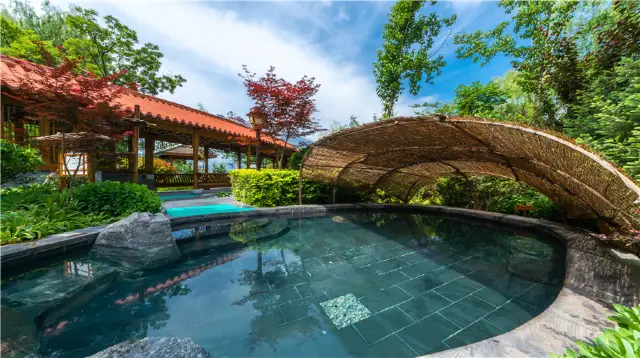
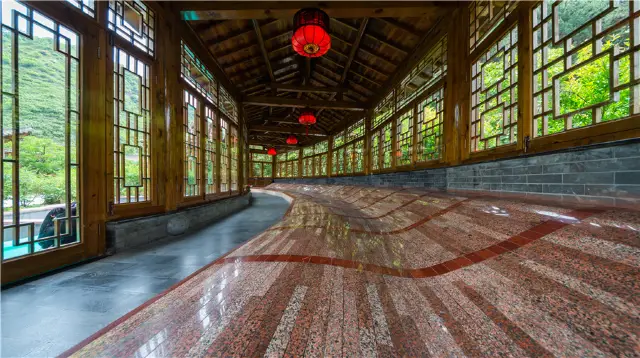
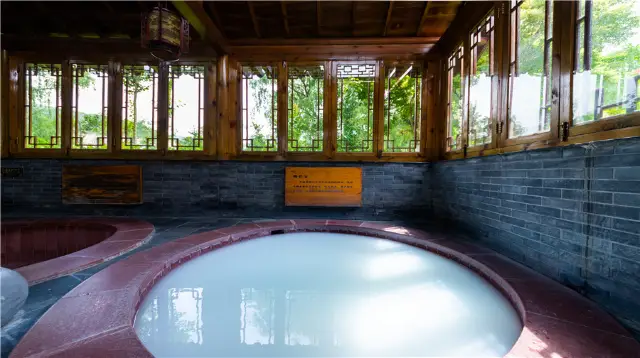
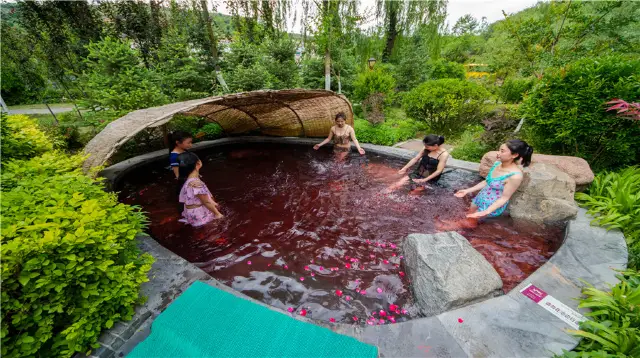
Taking a hot spring bath in Tianshui is an encounter between the body and mind and nature. Whether it is Tangyu Hot Spring in Qingshui County, Wushan Hot Spring in Wushan County, or Maijishan Hot Spring, they all attract many tourists with their unique water quality. In Tangyu Hot Spring in Qingshui County, tourists can enjoy the beautiful scenery of the red frost leaves dyeing the mountaintops while immersing themselves in the misty hot springs, allowing the body and mind to be completely relaxed. Wushan Hot Spring is surrounded by mountains on three sides and has an elegant environment. It is an ideal place for recuperation, rehabilitation, health care, and tourism. Maijishan Hot Spring combines hot springs with beautiful mountains and rivers. Here, you can soak in the hot spring while enjoying the beautiful scenery of Maiji Mountain, which is surrounded by thousands of niches and treasures in the south, and Du Fu Thatched Cottage in the north.
Trip Moments Hot Springs in Tianshui
Hot Springs in Tianshui Trip Moments

Maijishan Grottoes
Maijishan Grottoes were established during the Later Qin period of the Sixteen Kingdoms and have undergone continuous excavation and renovation through the Western Qin, Northern Wei, Western Wei, Northern Zhou, Sui, Tang, Song, Yuan, Ming, and Qing dynasties, spanning over 1,600 years. Due to earthquakes over the centuries, the central cliff collapsed, naturally dividing the cliff into two parts: the East Cliff and the West Cliff. There are currently 194 numbered caves. The name 'Maijishan' comes from the mountain's resemblance to a stack of wheat. The grottoes are carved into a vertical cliff face that is 20-80 meters high and 200 meters wide. There are 194 caves in total, with 54 on the East Cliff and 140 on the West Cliff, containing over 7,800 statues made of clay, stone, and clay-covered stone. The largest statue, the Great Buddha on the East Cliff, stands 15.8 meters tall. There are also over 1,000 square meters of murals. The cave structures include various styles such as square human-shaped roofs, four-slope roofs, flat roofs, gabled roofs, square lintel flat roofs, square four-cornered pointed Buddhist niches, and small round shallow niches. The caves are connected by plank roads. Both the interiors and exteriors of the caves mostly imitate wooden structures. Maijishan Grottoes are one of the four major grottoes in China, known as the 'Oriental Sculpture Gallery.' The other three grottoes are Longmen Grottoes, Yungang Grottoes, and Dunhuang Mogao Grottoes.

Tianshui, Gansu | Maijishan
Maijishan Grottoes, located in Maiji District, Tianshui City, Gansu Province, is one of the four major grottoes in China. It is famous for its exquisite stone carving art, steep geographical location, and long history and culture. Here, you can enjoy the tranquility of ancient temples and the magnificent natural scenery. It is definitely a beautiful secret place worth visiting! 🌟Maijishan Features [[One]] A Buddhist Kingdom on a Cliff: Unlike the horizontal grottoes of the other three major grottoes, Maijishan Grottoes are carved on cliffs over 100 meters high, with caves arranged vertically on the cliff. [[Two]] Cultural Continuity: The other grottoes developed in stages, such as the Mogao Grottoes, which focused on the Tang and Song dynasties, and the Yungang and Longmen Grottoes, which focused on the Northern Wei dynasty. Maijishan, however, has a clear evolution of sculpture styles over a thousand years, from the simple and solemn style of the Later Qin dynasty, to the elegant and delicate style of the Northern Wei dynasty, to the round and smooth style of the Northern Zhou dynasty, to the plump and round style of the Sui and Tang dynasties, and finally to the realistic and innovative style of the Song dynasties. [[Three]] Nationalization and Secularization: The Mogao Grottoes have exotic charm, the Yungang Grottoes have the majestic and rough style of the northern frontier, the Longmen Grottoes have the royal style of elegance and grandeur, while the Maijishan Grottoes reflect the characteristics of nationalization and secularization. Ancient craftsmen integrated their thoughts, feelings, and spiritual experiences into the silent sculptures, creating the timeless Oriental smile and many classic sculptures.

Travel Notes on Xinjiang (Part 3: Tianshui, Gansu)
Last year, on my way to Xinjiang, I passed through Tianshui. At that time, her spicy hot pot was not as popular as it is now, otherwise I would definitely have to try a couple of bowls... I had watched some documentaries about the Maijishan Grottoes, and since I was passing by, I naturally had to visit the site in person. Let me share a few potentially useful tips: First, within the core area of the scenic spot, there are local villagers' homestays with decent conditions. Staying here, you can find the best spot to view Maijishan from a distance. Cars can be parked by their roadside (you might get a ticket, but the homestay owner said that for out-of-town cars, the first time is just a warning, with no points deducted or fine imposed). After all, the parking lot at the bottom of the scenic area is a certain distance from the entrance to the grottoes, and it's uphill. Getting up early allows you to visit first thing in the morning and avoid the crowds. Second, the more exquisite special caves of Maijishan Grottoes, like those in Dunhuang, have an additional charge per cave, and it's said that viewing all the special caves would cost over 2000 yuan. Third, most of the ordinary caves are also viewed through tight wire mesh, but there are some who have mastered the angles and can take complete photos through the tiny holes in the mesh. Fourth, those who are afraid of heights should proceed with caution when visiting, and also be mindful during windy and rainy weather. Fifth, do not trust the so-called guides by the roadside. Although they are cheap, charging only 50 yuan, they just hold an album and give you a few minutes of explanation at the entrance plaza without even entering the actual scenic area. It's better to watch some videos online by yourself. If you really want a guide, you can contact the official scenic area.

historicculture
naturalwonders
culturalattractions
nationalpark
hiking
Maijishan Grottoes
I set out on a mission to travel the starting points of the historical silk road, as a solo traveler who speaks very little Chinese. This opportunity put me at the forefront of seeing some places that seem far flung from the mass cities in the east. Maijishan Grottoes are carved into the beautiful mountain the rises from the ground, high into the sky. There are intricately carved designs and Buddhas on this beautiful mountain, that allowed travelers to stop, rest and pray for good passage. On the day I arrived, the weather was bad, so you couldn't climb the grottoes themselves, but to see this beautiful place is worth it. I stayed in the village just outside of the scenic area, I suggest for any future travelers, you visit the city of Tianshui, and take a bus or a taxi to the scenic area. #historicculture#naturalwonders#culturalattractions#nationalpark#hiking
4

Visit Maijishan to see China's earliest transformation paintings!
Maijishan Grottoes is a large grotto temple on the Silk Road. It was first built during the Later Qin of the Sixteen Kingdoms (384–417 AD) and is one of the representative grotto groups of the Northern Dynasties in China. Grotto 127 is the most famous of the Maijishan Grottoes. The Shanzi Jataka painting is composed of scenes such as the king's outing, hunting, accidentally shooting Shanzi who was fetching water, visiting blind parents, and the gods saving him. In Buddhist statues, Kasyapa and Ananda stand on the left and right of the Buddha as his disciples. Kasyapa is the oldest of the Buddha's ten disciples and is known as the "First of the Arhats." He is famous for his strict asceticism and meditation. The common fate bird has two heads and one body. It is said that "when one head prospers, the other prospers; when one head dies, the other dies." In Buddhist stories, the two heads of this bird are jealous of each other and fight, eventually eating poison and dying. The boy has one body and two heads, with a face like a full moon, reflecting the Mahayana Buddhist idea of "neither one nor two."

Maijishan Grottoes | Xianren Cliff
⛰️The wind of history blows in your face, and the smile that has settled for thousands of years quietly blooms on the mountain wall. These frozen vividness makes Maijishan have joys and sorrows. 🤜🏻🤛🏻You can see the endless woods, the endless mountains, the ingenious grottoes and the crowds of tourists when you come. There are really too many people. The time to go up the mountain is not counted. From the beginning of the queue to check the ticket, this team probably queued for two and a half hours. 👀If you want to go to the special cave, you must arrive early. When I arrived at 10 o'clock, there was no special cave 133. I originally wanted to choose 135, but the result said that there were places, but I had to wait for explanation and formation. A girl next to me said she had been waiting for 2 hours. I still choose to save time and prepare to go to Xianren Cliff later. ⛰️If you go up the mountain, just follow the flow of people. There is no 1.2 line for us to distinguish. Just go down the mountain directly. The grottoes I saw are really shocking, and the greenery I see when I turn around is very refreshing. 👔The wind on the mountain is super big now, it's very cold, you must wear more! There is also a long line, there is no toilet on the mountain, and you should also pay attention to the amount of drinking water and bring some snacks to pad your stomach when queuing. 🚗In terms of transportation, we took the No. 34 bus directly to the terminal from the train station. 🎫Must! Must! Buy in advance! Because the tickets for the day must be sold out.

Tianshui, a city with a rich cultural heritage!
🍒 Tianshui, known as the 'Little Jiangnan of Longxi' and also as the hometown of Emperor Xuanyuan, is an important birthplace of Chinese civilization and the Chinese nation, with a long history and numerous scenic spots. 🧚 If you don't know where to go for a holiday, why not come here for a stroll and some good food? It's a great choice! ⭐️ Recommended Attractions ⭐️ 📍 Maijishan Grottoes The scenery around the grottoes is beautiful, with lush cypresses and pines, wildflowers, and thick grass. Surrounded by green mountains on all sides, with thousands of hills and ravines, the cliffs of Maijishan are almost vertical to the ground. It is spectacular to see hundreds of caves and Buddha statues carved into such steep cliffs. 📍 Xianren Cliff The biggest highlight of Xianren Cliff is the temple complex under the cliff, which still retains many Buddha statues from the Ming and Qing dynasties. The stone cliff and the lush forest are integrated, neither losing the majesty of the mountain nor the greenery of the trees. 📍 Fuxi Temple Here, you can feel the strong cultural and historical atmosphere. Fuxi Temple is built along the street, with courtyards nested within each other, four entrances and four courtyards, grand and serene. 📍 Nanzhaizi The layout of Nanzhaizi basically follows the traditional Chinese courtyard house. Hu's residence, although a courtyard house, is different from the courtyard houses in Beijing. Beijing courtyard houses, whether the main house or the wing rooms, are all constructed with a saddle roof structure, while Hu's residence, except for the main house and the back seat, uses the Tianshui residential construction method known as 'one-slope water', which has a strong local characteristic. 📍 Gangu Daxiang Mountain Many halls in Daxiang Mountain are lined up along the ridge, extending from the foot to the top of the mountain. The 'Great Buddha Hall' in the sixth cave is famous. The Great Buddha is a semi-circular carved stone with clay sculpture, well-preserved above the abdomen, and the knees below seem to have been restored in later times. 📍 Wushan Shuilian Cave Wushan Shuilian Cave is a natural rock cave about 50 meters high and more than 20 meters deep, with a constant trickle inside. During rainy days, the water flows straight down from the eaves like a water curtain, hence the name. It combines bas-reliefs, niches, hanging sculptures, and murals, integrating Buddhist culture from the Northern Wei, Northern Zhou, Sui, Tang, Five Dynasties, Song, Yuan, Ming, and Qing dynasties, which is unique in the country. ✅ Recommended Food 💫 Tianshui Guagua: The texture is very soft, and it tastes spicy and refreshing with seasonings like sesame paste, chili oil, garlic paste, and vinegar. 💫 Tianshui Sa Fan: Sa Fan is made from corn and other grains, turned into a paste, and eaten with homemade pickles, sauerkraut, shredded potatoes, etc. 💫 Jiangshui: It has the effect of cooling and clearing heat. The local Jiangshui noodles are a specialty, with a delicious and slightly sour taste that you must try if you have the chance. 💫 Pork Fat Box: Crispy, fluffy, and richly flavored. ❗️❗ Important Notes ❗❗ ❇️️ The temperature difference between day and night in the northwest region is quite large, with frequent night rains, so it is recommended to bring a thicker coat and an umbrella.

Maijishan Grottoes.
The Maijishan Grottoes are located in Maiji District, Tianshui City, Gansu Province. They are one of the four major grottoes in China, and are as famous as the Mogao Grottoes, Longmen Grottoes, and Yungang Grottoes. The following is a detailed introduction to the Maijishan Grottoes: I. History Construction time: The Maijishan Grottoes were built during the Later Qin period of the Sixteen Kingdoms, and have been excavated and repaired for more than 1,600 years through more than ten dynasties such as the Northern Wei, Western Wei, Northern Zhou, Sui, Tang, Five Dynasties, Song, Yuan, Ming, and Qing, forming the spectacular scene we see today. Protection status: On March 4, 1961, the Maijishan Grottoes were approved by the State Council of the People's Republic of China as the first batch of national key cultural relics protection units. On June 22, 2014, as part of the "Silk Road: Chang'an-Tianshan Corridor Road Network", the Maijishan Grottoes were announced by UNESCO as a World Cultural Heritage. II. Geographic Location and Features Geographic location: The Maijishan Grottoes are located on the north side of the western end of the Qinling Mountains. They are a solitary peak in the Xiaolong Mountains, 142 meters high, and are named after the shape of the mountain like a farmer's wheat stack. Features: The Maijishan Grottoes are known for their exquisite clay sculpture art and are known as the "Oriental Sculpture Exhibition Hall". There are 221 existing caves, 3,938 various statues with 10,632 bodies, and 979.54 square meters of murals. These statues and murals not only show the superb skills of ancient artists, but also reflect the development and evolution of Chinese clay sculpture art. III. Management and Protection Management agency: The Maijishan Grottoes Art Research Institute is the protection management agency of the Maijishan Grottoes, mainly responsible for the research of grotto art, cultural relics protection and utilization, reception of domestic and foreign tourists, and external publicity. Protection work: The protection of the Maijishan Grottoes has always been valued, and scientific methods and means are used for protection and research to ensure that this precious cultural heritage is properly preserved and inherited. IV. Tourism and Visit Opening hours: The opening hours of the Maijishan Grottoes are generally from morning to afternoon every day (the specific time may be adjusted due to seasons and holidays), and tourists can visit and tour during this time period. Visit notes: In order to protect the cultural relics and environment in the grottoes, tourists need to abide by relevant regulations when visiting, such as not touching or damaging cultural relics, not smoking, etc. At the same time, it is recommended that tourists inquire about ticket information and traffic routes in advance to better arrange their itinerary. V. Cultural Value Artistic value: The clay sculptures and murals of the Maijishan Grottoes have extremely high artistic value, showing the creativity and aesthetic concepts of ancient artists. Historical value: As a cultural heritage that has lasted for more than a thousand years, the Maijishan Grottoes have witnessed the historical changes and cultural exchanges in ancient China and have important historical value. Scientific value: The Maijishan Grottoes also provide rich materials and historical facts for future generations to study Chinese Buddhist culture, religious art, architectural technology, etc., and have significant scientific value. In summary, the Maijishan Grottoes are a precious cultural heritage that integrates artistic, historical, and scientific values, and are worth visiting and exploring by every tourist.
4

A Glimpse of Eternity: Majishan Grottoes, I Feel Elevated
Exploring Majishan Grottoes: My Cultural Journey Majishan Grottoes is located in Tianshui City, Gansu Province, with a very advantageous geographical location, about 30 kilometers from Tianshui City. It is known as the "Treasure of Oriental Art" and is one of the four major grottoes in China. Travel process and experience sharing When I arrived at Majishan Grottoes, the first thing that caught my eye was the spectacular mountain and many Buddha statues. The ticket is about 80 yuan, and the opening hours are from 8 am to 6 pm every day. I suggest you arrive as early as possible, so you can avoid the crowd and slowly appreciate every detail. Mountain climbing journey I chose to start hiking from the foot of the mountain, along the winding path, surrounded by lush trees and fresh air. Although climbing the mountain is a bit tired, every step can hear the singing of birds, and occasionally there are squirrels jumping by, which is really special healing! There are many carvings and murals along the way, especially those colorful Buddhist arts, which really opened my eyes. Every time I get to a cave, I can't help but stop and carefully observe the details and expressions of the carvings. The guide's explanation also allowed me to better understand the history behind these arts. Grotto exploration When I arrived at the main scenic spot of Majishan, it seemed to have traveled through thousands of years. Each grotto has its own unique style and story, such as the kindness of the "Thousand-Hand Guanyin" and the solemnity of the "Sakyamuni", which really shocked me. I especially like Cave 45, where the murals are well preserved, the colors are still bright, and I seem to be able to hear the ancient chanting. Here, I also met some other tourists, and we discussed the beauty of these artworks together, which really made people feel a blend of cultures. Every grotto seems to be telling the story of history, which gives me a deeper understanding of Buddhist culture. Recommended food After playing, my stomach started to growl, and I decided to try the local specialties at the nearby "Majishan Restaurant". The "Tianshui Ramen" here is really not to be missed. The noodles are chewy, the soup is rich, and I feel full of energy when I eat a bowl! In addition, don't forget to try the "hand-caught mutton", which is fragrant but not greasy, and it is a perfect match with the local seasoning! Precautions When playing in Majishan Grottoes, safety is the first consideration, especially when climbing stone steps. It is recommended to wear a pair of comfortable shoes, prepare water and snacks, because the climbing process may be longer. It is best to set off early in the morning, so you can avoid high temperatures and enjoy the fresh air in the mountains. In addition, because the light in the grotto is dim, pay attention to adjusting the camera settings when taking pictures to keep the picture clear and bright. Personal feelings This trip to Majishan Grottoes was very rewarding. On this quiet land, I not only appreciated exquisite works of art, but also felt the charm of an ancient civilization. Especially after appreciating those carvings, I was full of awe in my heart and had a deeper reflection on history and culture. On the journey, the exchanges with other tourists also made me feel the joy of travel. We share each other's stories, encourage each other, and seem to find resonance in this ancient mountain. In short, this trip made me full of yearning for Majishan Grottoes, it is definitely worth a visit! I hope my sharing can help your travel plan
4

8-Day Hanzhong-Longnan-Gannan Itinerary: A Must-Read Guide!
Hey guys! Here's an 8-day itinerary for Hanzhong-Longnan-Gannan, with a variety of activities in three different places! This super useful guide will make your trip even more exciting! -- 🚩Itinerary: Day 1: Guangzhou👉Nanchong Airport👉Nanchong Head to Nanchong and rest after arrival to adjust to the time difference. Day 2: Qingmuchuan Ancient Town Spend the whole day exploring Qingmuchuan Ancient Town and enjoy the ancient architecture and culture. Day 3: Guan'e Valley Visit Guan'e Valley and marvel at the wonders of nature and the magnificent scenery. Day 4: Zhagana Visit Zhagana and experience the local culture and natural beauty. Day 5: Tangke👉Yellow River Nine Bends👉Langmu Temple👉Guomang Wetland👉Hezuo Visit several attractions along the way, enjoy the grandeur of the Yellow River and the tranquility of the wetland, and end the day in Hezuo. Day 6: Sangke Grassland Explore Sangke Grassland and enjoy the vastness and harmony of nature. Day 7: Maijishan Grottoes Visit Maijishan Grottoes and explore the treasures of Buddhist art. Day 8: Langzhong Ancient City Visit Langzhong Ancient City and enjoy the charm of the ancient city before ending your trip. -- Must-Visit Attractions: - 🏞️Zhagana: Enjoy the magical scenery, explore Tibetan wooden houses, and experience the simple rural life. - 🙏Maijishan Grottoes: A treasure trove of Buddhist art, harmoniously coexisting with the natural beauty. - 🏰Langzhong Ancient City: Wander through the ancient streets and alleys, enjoy the local customs, and feel the weight and charm of history. -- Travel Essentials: 🎒 👗 Clothing: Windbreaker, warm coat, comfortable sneakers, to cope with the changing weather. 📄 Documents: ID card, driver's license, cash, and credit card, for a worry-free trip. 🎈 Others: Sunscreen, sunglasses, and common medicines, for a more comfortable trip. Don't forget to bring your camera to capture the beautiful moments! -- If you like Hanzhong, Longnan, and Gannan, don't forget to follow me for more exciting guides! 🌟

11月好去處2024
sunway
中國內地景點
中國旅行
Maijishan Grottoes
The Maijishan Grottoes hold significant historical, artistic, and cultural value, making them a must-see attraction! There is a distance from the entrance to the site, but the scenic area offers shuttle buses that can take you directly to the grottoes with a ticket purchase. If time and physical condition permit, it takes about 20 minutes to walk there. The statues in the Maijishan Grottoes have compassionate, kind, and serene expressions. The murals are rich in content, vibrant in color, and have smooth lines. The existing nine imitation wooden cliff buildings were carved during the Northern Wei to early Tang periods. While viewing the murals and statues, you can also enjoy the beautiful scenery. Unfortunately, some of them have weathered over time, and their appearances have become blurred. It's a pity we couldn't visit earlier! Address: No. 2, Quanhu Road, Maiji District, Tianshui City, Gansu Province

48 hours in Tianshui.
🕐️DAY 1: Morning: Take a train to Tianshui Station. You can take a taxi or bus to Fuxi Temple (we recommend taking a taxi as Didi prices may be high). There are some local snacks at the entrance of Fuxi Temple for breakfast. Tianshui Museum is behind Fuxi Temple. No ticket is required, but you need to make a reservation in advance. Afternoon: Take a rest at the hotel at noon and then go out for a walk, such as the Little Potala Palace next to Fuxi Temple. Evening: Have some spicy hot pot and then visit Tianshui Ancient City. The lights are beautiful. There are also some small shops where you can buy souvenirs. 📝Tips: Book a hotel near Fuxi Temple for easy access to other places. 🕐️DAY 2: Morning: Have breakfast and then take a bus to Maijishan Grottoes at the entrance of Fuxi Temple. You can also take a private car. Afternoon: You can ride a horse and see the grottoes up close at Maijishan. We don't recommend climbing the grottoes for the elderly and children as there are many stairs and it may be inconvenient. Evening: Take a bus to Tianshui Station and then take a train home.
More Recommendations
More Recommendations
Popular Types of Attractions in Tianshui
Historical attractions | Nature and wildlife | Natural scenery | Mountain climbing | Sightseeing tours | Night view | Boat tour | Cultural institutions | Museums | Themed exhibition halls | Science & technology museums | Outdoor activities | Mountain climbing | Hiking | Parks | Amusement parks | Ice and snow parks | Exhibitions & events | Performances | Exhibitions | Concerts | Leisure activities | Farms and pastures | Camping and campsites | Spa/massage | Water sports
Popular Restaurants in Tianshui
E-DING HOTPOT | Changjigugu | 天水麦积山温泉旅游酒店·温泉宴府 | YI DING LOU SHOU ZHUA WANG | 祥和生态农庄 | 新大漠红柳烤肉餐厅 | 清真伊香蘭餐厅 | 海底捞火锅(秦州万达店) | 方宇餐饮(金宇·盛世年华店) | 嘉孚酒店·餐饮部 | 海英麻辣烫(中华西路步行街店) | 德克士(大众中路店) | KFC (maiji) | 德克士(甘谷店) | 小马砂锅(商埠路步行街店) | 肯德基(大众店) | Yingbinlou | 吴大师呱呱面皮(育生巷店) | 天水兰天春乐美食城(天水兰天城市广场店) | 麻辣有约 | 麻辣有约 | 胖子鱼·鲜鱼火锅(全国总店) | 必胜客(天水店) | 努亥东乡手抓面片 | 荷琴麻辣店 | 清真马玉林串串香(一马路店) | 怡轩园鱼庄 | Mayuanwaishaguolaodian | 清真·马玉林串串香(莫尔街店) | SHAN SHUI YUAN DA JIU DIAN BAI LE MEN CAN YIN BU
Recommended Attractions at Popular Destinations
Popular Attractions in Bangkok | Popular Attractions in Manila | Popular Attractions in Tokyo | Popular Attractions in Taipei | Popular Attractions in Hong Kong | Popular Attractions in Seoul | Popular Attractions in Kuala Lumpur | Popular Attractions in Los Angeles | Popular Attractions in Shanghai | Popular Attractions in New York | Popular Attractions in Shenzhen | Popular Attractions in Osaka | Popular Attractions in Singapore | Popular Attractions in London | Popular Attractions in Guangzhou | Popular Attractions in San Francisco | Popular Attractions in Beijing | Popular Attractions in Macau | Popular Attractions in Bali | Popular Attractions in Jakarta | Popular Attractions in Paris | Popular Attractions in Ho Chi Minh City | Popular Attractions in Istanbul | Popular Attractions in Phuket | Popular Attractions in Chicago | Popular Attractions in Seattle | Popular Attractions in Toronto | Popular Attractions in Orlando | Popular Attractions in Cebu | Popular Attractions in Chiang Mai
Popular Ranked Lists
Top 50 Best Things to Do in Bali | Popular Luxury Hotels in Cam Lam District | Top 50 Best Things to Do in Seogwipo | Top 10 Must-Visit Restaurants in Bad Ischl | Top 50 Must-Visit Restaurants in London | Top 10 Best Things to Do in Kathmandu | Top 50 Must-Visit Restaurants in Munich | Top 50 Must-Visit Restaurants in Bangkok | Popular Luxury Hotels in Al Dhafra | Top 50 Best Things to Do in Honolulu | Popular Luxury Hotels in Southbank | Top 50 Must-Visit Restaurants in Auckland | Top 50 Must-Visit Restaurants in Xi'an | Top 50 Must-Visit Restaurants in Koh Samui | Top 50 Best Things to Do in Jakarta | Top 50 Luxury Hotels in Dubai | Top 50 Must-Visit Restaurants in Macau | Top 50 Best Things to Do in Seoul | Top 50 Best Things to Do in Prague | Top 50 Best Things to Do in Tokyo | Top 50 Best Things to Do in Cairo | Top 50 Must-Visit Restaurants in Frankfurt | Top 20 Luxury Hotels in Kyoto Prefecture | Top 10 Luxury Hotels in Sentosa | Top 50 Must-Visit Restaurants in Athens | Top 50 Best Things to Do in Milan | Popular Luxury Hotels in Phnom Penh | Top 50 Must-Visit Restaurants in Milan | Top 50 Must-Visit Restaurants in Sapporo | Top 50 Best Things to Do in Paris
Popular Trip Moments
Winter Travel Guide for Southeast Longdong: One Ticket for 8 Major Attractions, Half-Price Stone Caves and Ice & Snow Fun! | Tianshui Four-Day Tour Complete Guide | Ancient Temple and Grotto Hidden Experiences | Jintian Yuhua Hotel: Buddha statue views from your window + smart living – the pinnacle of vacation accommodations in Gansu! | Who understands! Entering the real-life "Floating Wonderland" in Pingshan Gorge | Exploring Gansu's treasure: this "wheat stack" hides a millennium-old artistic miracle | 【Winter Exclusive! Magical Benefits at Maiji Mountain Grand Scenic Area: Half Price + Free Tickets to Explore Southeast Longdong | Danxia Secret Realm Ancient Site Exploration | Winter Secret Tours in Gannan and Other Places – Miss It and Wait a Year | 8-Day Tour of Linxia and Surrounding Areas: Super Detailed Guide Incoming | 50+ Sisters' Travel Diary | Guizhou | Huangguoshu Waterfall Low Energy | Tianshui is not just about Maijishan! Please keep this 3-day, 2-night slow travel guide handy | Come to Huangguoshu to get a rainbow photo | Maijishan Buddha Kingdom: The Millennium Eastern Smile on the Cliff | Discover the treasure hotel in Tianshui! | A new landmark for accommodation in Tianshui! | Six-Hour Express Tour of Huangguoshu · Self-Driving Version | Wanzhou Panoramic Three-Day Tour Highlights (Classic Combination) | Self-Drive and Chartered Car 5-Day Complete Guide to the Gannan Secret Realm | Second visit to Watkins Glen, New York State | A must-visit fairyland in Tianshui! Every snap is wallpaper-worthy at Xianren Cliff | Sunny day perfect for ancient architecture check-in | The sky mirror of Tianshui, Maijishan Grottoes are truly legendary! | Must-see autumn travel activities in Lanzhou and other places are amazing | Tianshui City launches regional cooperation "One Ticket for Multiple Tours" mechanism | Boundary Stone Cultural and Creative Seal Blessing ~ Wushan's New Business Card | Northwest Loop Must-Visit! Complete Guide to Maijishan Grottoes + Money-Saving Tips | This is not a mountain, but a suspended "Oriental Sculpture Gallery" | Have you checked in at the thousand-year-old ginkgo tree on Huaguo Mountain?
More Things To Do in Tianshui
Tianshui Travel Photography[Driver and director + aerial microfilm + makeup and clothing + itinerary customization + free negatives + unlimited number of people] | Tianshui Travel Photography[Wedding photo micro-movie aerial photography/wedding follow-up photography/makeup and clothing/charter tour guide customization] | Maijishan Grottoes/One of the Four Great Grottoes+Hu Family Ancient Residence+ guide/ private charter/No shared tour O | China Gansu Province interpreter Guide local guide explanation private charter Pick-up and drop-off/photographer shoot/business escort/medical escort/travel guide/travel interpreter customization | Mainland China 5G eSIM | Day Pass/Total Data Package | ChatGPT Available | 24-Hour Billing | 1-30 Days | QR Code | Mainland China | 5G/4G eSIM | Supports TikTok & ChatGPT (Partial Only) | Day Pass/Total Package | 24H Billing | 1–30 Days | QR code | Mainland China/Hong Kong/Macau 5G eSIM | Daily Package/Total Data Package | 24-Hour Billing | 1-30 Days | QR Code | Global (66 countries) | 4G/5G eSIM | Total Package | 1-7 days | 24H Billing | Real-Name Auth Required (Hong Kong & Taiwan) | QR code | Mainland China/Hong Kong/Macao/Taiwan | 5G eSIM | Day Pass/Total Package | 24H | 1-30 days | QR code | Mainland China 5G eSIM | Three Network Coverage | Daily/Data Package | 1-30 Days | Calendar Day Billing | QR Code | Asia 9 Destinations 5G eSIM | Japan, Thailand, Vietnam, Indonesia, Korea & More | 1–30 Days | Instant QR | Mainland China · Hong Kong · Macau 5G eSIM | ChatGPT & TikTok | 1–30 Days / 365 Days | Instant QR | Mainland China 5G eSIM | ChatGPT & TikTok | 1–30 Days / 365 Days | Instant QR | Global 77 Countries 4G/5G eSIM | TikTok & ChatGPT Available | Day Pass/Total Data Package | 24-Hour Billing | 1-30 Days | QR Code | China Mainland 5G/4G eSIM | DayPass / Total | 500MB/day - Total 30GB | 1-30 Days | 24-Hour Billing | QR Code | China Mainland, Hong Kong&Macau eSIM | DayPass /Total | 500MB/day-total 30GB | 1-30 days | QR code | Global 108 Destinations 5G eSIM | One eSIM, Worldwide Coverage | 1–30 Days | Instant QR | Asia 8 countries 4G/5G eSIM | DayPass/Total | 1-30 days | QR code | [5G SIM Card] China 5G Universal SIM Card Total 10GB/15GB/30GB/45GB High-speed 5G Unlimited Data (Pick up at Shanghai Pudong Airport) | China, Hong Kong, and Macau | 5G eSIM | Unlimited data | High-speed network | No need to remove the card | Natural day | QR code | Travel Photography in Cheng County[Jifeng Mountain wedding photography package with aerial shots, videography, and multilingual guide services] | Orange World eSIM | 4G/LTE | 1GB-20GB total for 30 days | 24-hour billing | QR code | [China, Hong Kong and Macau] 4G network | Unlimited traffic | Self-pickup at the airport | WiFi rental, high-speed traffic, shared by multiple people, ready to use at startup, 12H standby, 24H customer service | 5G SIM Card: China Unicom 5G SIM Card | Unlimited calls and internet (24-hour pickup | Shanghai Pudong T1/T2) | Mainland China | 5G eSIM | Some plans include voice calls | Some plans support TikTok & ChatGPT | Daily/All-inclusive packages | 1-365 days | Calendar days | QR Code | Mainland China/Hong Kong/Macau eSIM | 5G/4G | Daily/Total Data Package | 1-30 days | Calendar Day Billing | QR code | Yaliaojia Greater China Card | Mainland China/Hong Kong/Macau/Taiwan | Phone number included | App registration available|Receive SMS|365 days | No real-name required for inland use | Asia (12 countries) | 4G/5G eSIM | Total Package | 365-day validity | 24H Billing | Real-Name Verification Required for Hong Kong & Taiwan | QR code | China (Mainland and Macau) 5G/4G eSIM|China Unicom official product | [China Mainland] eSIM | SIM to China | 8GB 8days 4G high speed