Anhui

Things to do in Anhui

Search attractions or local attractions & tours
Search

Explore top experiences

Top 10 attractions in Anhui

View all Attractions
Mount Huangshan Scenic Area
2026 Asia 100 - Best Things to Do

Mount Huangshan Scenic Area

9.1
4.8/5
73.8k reviews

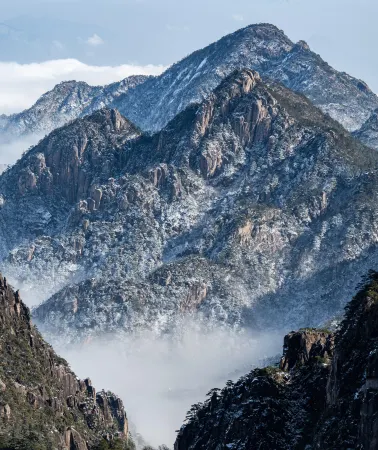
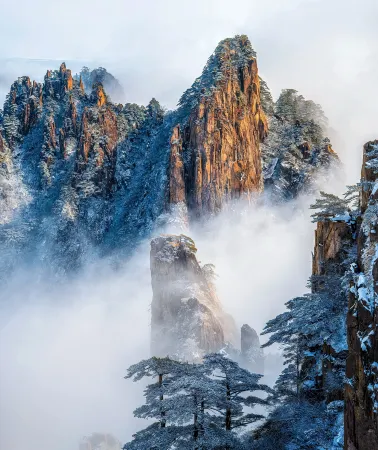
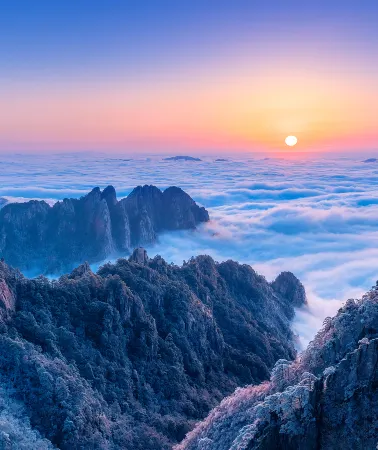
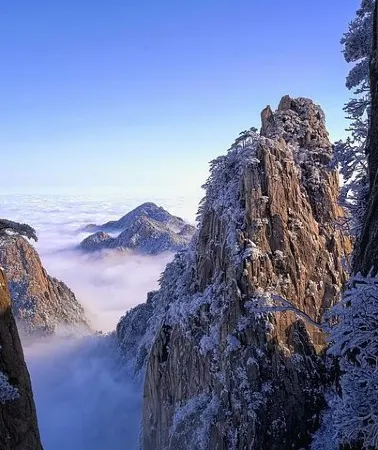
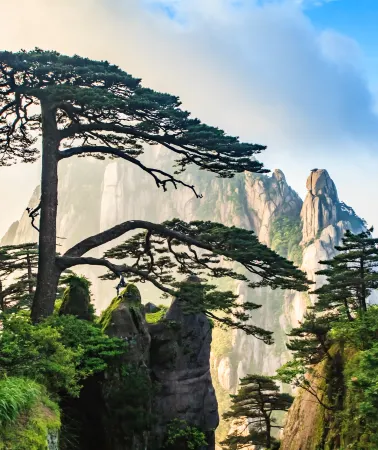
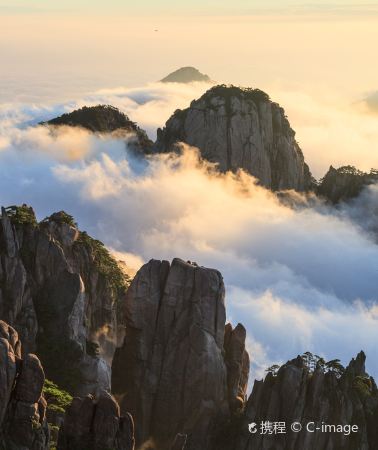
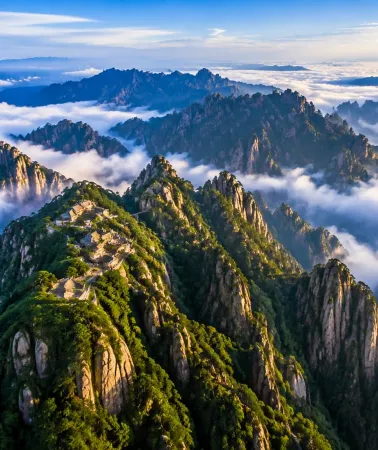
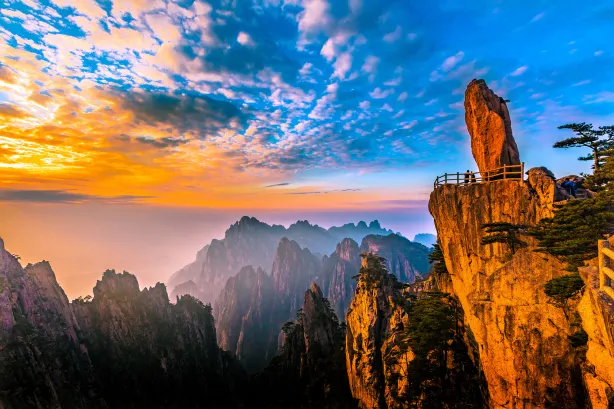
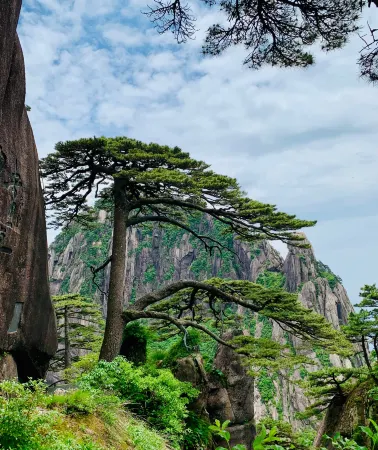
Mount Huangshan Scenic Area is located in Tangkou Town, Huangshan District, Huangshan City. Since ancient times, Mount Huangshan has been one of China's most renowned mountains. Its peculiar pines, strange rocks, sea of clouds, and hot springs are known as the "Four Wonders" of Mount Huangshan. In addition to these, rime, snowscapes, and sunrises are also views that visitors will not miss. There is an ancient saying: "Having visited the Five Great Mountains, one need not look at any other mountains; having visited Mount Huangshan, one need not look at the Five Great Mountains." The attraction is divided into the south gate, west gate, and north gate. The vast majority of visitors enter and exit through the south gate, which has two entrances and exits—front mountain and back mountain—both close to Tangkou Town at the foot of the mountain. The town has also become a transfer hub for visiting Huangshan, and many visitors arrive here in advance to stay overnight. From Tangkou Town to the attraction entrance, you need to take the Huangshan New National Line shuttle bus, which stops at the front mountain gate (Ciguang Pavilion), the back mountain gate (Yungu Temple), and the Huangshan-Hot Spring attraction. Visiting the attraction mainly involves two routes up the mountain, the front mountain and the back mountain, both leading to one of the main peaks, Bright Summit. On the other side of Bright Summit, there is also a loop route — the West Sea Grand Canyon. Front mountain The front mountain refers to the hiking route starting from Ciguang Pavilion to Yuping Tower at the summit (accessible directly by the Yuping Cable Car), as well as the Mount Huangshan Scenic Area - Lotus Peak and Tiandu Peak areas at the summit. The scenery of the front mountain is grand and majestic, making it very suitable for enjoying panoramic views from the cable car. Both the highest peak, Mount Huangshan Scenic Area - Lotus Peak, and the other main peak, Tiandu Peak, are located here (the two peaks open alternately). There are also classic attractions such as the Guest-Greeting Pine, Jiulong Peak - Carp Back, Hundred-Step Ladder, One-Line Sky, and Tianhai. Back mountain The back mountain refers to the hiking route from Yungu Temple to Bai'e Ridge (accessible directly by the Mount Huangshan Yungu Cableway), as well as the mountaintop areas behind Bai'e Ridge such as Shixin Peak, Mount Huangshan Scenic Area - Shizi Peak, and West Sea Grand Canyon - Paiyun Pavilion. The scenery of the back mountain consists mostly of exquisite mountain views, suitable for enjoying on foot along the way. Flying Stone and Monkey Watching the Sea are both located here. West sea grand canyon West sea grand canyon officially opened in 2000. The canyon is deep and the scenery is very magnificent, and it is known as the true gathering place of Huangshan's essential scenery. West sea grand canyon can be entered from West Sea Grand Canyon - Paiyun Pavilion in the summit area of the back mountain, and after looping around inside the canyon, you return to the main peak area of Tianhai. It takes about 2 hours to walk down from West Sea Grand Canyon - Paiyun Pavilion to the bottom of the canyon, and then you can take a cable car to Tianhai. Route recommendations The standard way to visit Huangshan is a two-day tour, with routes divided into ascending via the front mountain and descending via the back mountain (front mountain - West Sea Grand Canyon - back mountain) or ascending via the back mountain and descending via the front mountain (back mountain - West Sea Grand Canyon - front mountain). Ascending via the front mountain and descending via the back mountain is suitable for taking the cable car up and walking down, which is both relaxing and allows you to enjoy the exquisite scenery of the latter half. However, since the essential route of the West Sea Grand Canyon runs from West Sea Grand Canyon - Paiyun Pavilion to Tianhai, you will have to backtrack along a section of the trail. It is possible to visit Huangshan in just one day, but the itinerary will be tight. It is recommended to ascend via the rear mountain and descend via the front mountain, taking the cable car both ways, and to either skip climbing the main peaks of the front mountain (Mount Huangshan Scenic Area - Lotus Peak / Tiandu Peak) or skip the West Sea Grand Canyon. Stay selection There are several accommodation options at the summit, mainly concentrated in areas such as Guangming Peak Tianhai, West Sea Grand Canyon-Paiyun Pavilion, Bai'e Ridge, and North Sea. Guangming Peak Tianhai is a great spot for watching the sunrise, and it is also suitable for storing luggage while exploring the West Sea Grand Canyon. Bai'e Ridge is the upper station of the Huangshan Yungu Cableway on the rear mountain; if you typically enter the attraction from the rear mountain in the afternoon, staying here is quite convenient.

China · Huangshan City
Hongcun Village
No. 1 of Night Attractions in Anhui

Hongcun Village

8.6
4.5/5
50.3k reviews

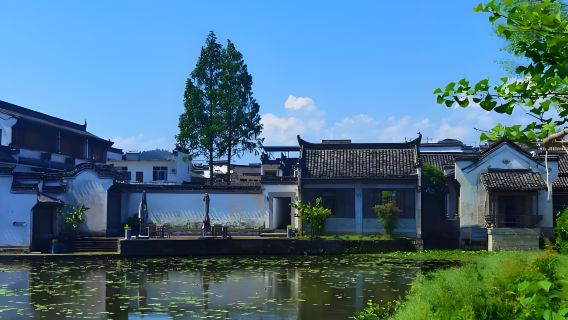
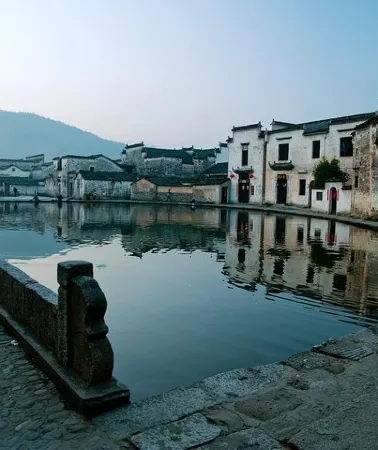
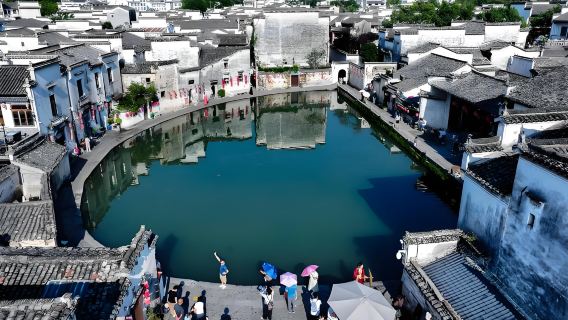
Hongcun Village is a classic Huizhou-style ancient village, renowned as a "village in a Chinese painting." A visit here offers two unmissable experiences: first, the water landscapes shaped by its irrigation system, with Nanhu Lake and Yuezhao Pond as the crown jewels; second, the exquisite "three carvings" of Huizhou architecture—brick, stone, and wood carvings—intricate enough to rival paper-cut art. Here, cultural heritage and natural beauty blend seamlessly into a harmonious whole. The ancient village was first built during the Shaoxing era of the Southern Song dynasty and gradually developed from the Yongle era of the Ming dynasty into a unique "ox-shaped village" layout. The two ancient trees at the village entrance form the "ox horns," the densely packed Ming and Qing Huizhou-style buildings in the village form the "ox body," the four bridges over the stream west of the village form the "ox feet," Yuezhao Pond is the "ox stomach," Nanhu Lake is the "ox belly," and the water channels flowing past every household are the "ox intestines." Sightseeing can begin at Nanhu Lake in the south of the village. Nanhu Lake is a bow-shaped artificial lake dug during the Wanli era of the Ming dynasty, with a broad expanse of water; the Huabridge crossing the lake is where Li Mubai led his horse in the film Crouching Tiger, Hidden Dragon. On the north bank of the lake, Nanhu Academy was formed by merging six original private schools by the lakeside, and its layout is exceptionally spacious. Heading north along the lake's north bank, visitors can also stop by ancient residences such as Jingde Hall and Wang Daxie's Former Residence (Zhenqi Hall). Continuing north leads to Yuezhao Pond at the village center, a half-moon-shaped pond dug during the Yongle era of the Ming dynasty, surrounded by Huizhou-style buildings reflected in its waters—one of the best spots for photography in the ancient village. However, visitors crowd around Yuezhao Pond year-round, so patience is needed to capture an empty shot. At the center of Yuezhao Pond's north bank stands Lexu Hall, also known as the Wang Clan Ancestral Hall, a surviving Ming dynasty building in the village with a simpler style than Qing dynasty architecture. On the western end of Yuezhao Pond's north side is Jingxiu Hall, built during the Qing dynasty. Further north, visitors can tour Chengzhi Hall, the residence of late Qing salt merchant Wang Dinggui. The residence is fully equipped with a study, kitchen, stable, bodyguard room, and servants' quarters, and even includes a "Paishan Pavilion" for playing mahjong; the house has its own pond and well, so water is available without leaving the premises. The exquisite Huizhou three carvings are worth examining closely—some wood carvings are even coated with gold powder, lavish and magnificent. Other ancient buildings in the village worth seeing include Deyi Hall, Shuren Hall, and Taoyuan Residence.

China · Yi County
Jiuhua Mountain
No. 3 of Best Things to Do in Southern Anhui

Jiuhua Mountain

8.4
4.8/5
28.8k reviews

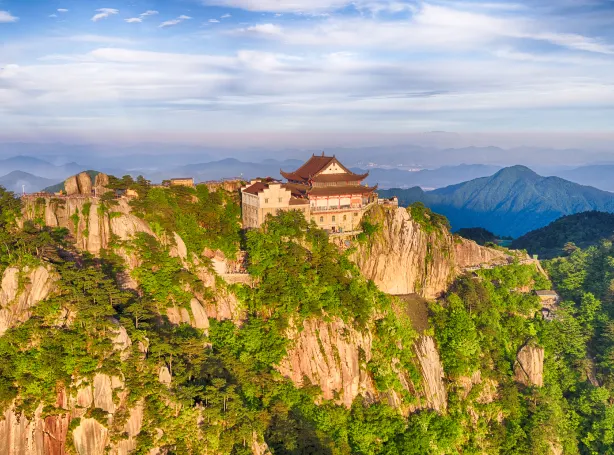
Jiuhua Mountain is located southeast of Chizhou. During the Kaiyuan reign of the Tang Dynasty (719 AD), Prince Jin Qiaojue of the ancient Silla Kingdom (an ancient regime on the Korean Peninsula) came here to practice Buddhism. Because various auspicious signs before and after his death closely resembled those of Ksitigarbha Bodhisattva, he was recognized as an incarnation of Ksitigarbha Bodhisattva and revered as Jin Ksitigarbha. Thus, Jiuhua Mountain became Ksitigarbha Bodhisattva's bodhimanda and, together with Mount Putuo, Mount Wutai, and Emeishan, was listed as one of the Four Sacred Buddhist Mountains. The preserved bodies of eminent monks from various dynasties are a major feature here. Under the perpetually humid climate, the bodies of these monks have been preserved after their passing. Currently, there are five such flesh-body bodhisattvas available for viewing. Jiuhua Street on the mountain is ring-shaped and serves as the core tourist hub of the attraction. Most trips to the various attractions start from Jiuhua Street, and many important temples are also located here. Temples are scattered throughout the mountain, and three key temples are recommended: Baisui Palace, the Hall of the Flesh Body, and Huacheng Temple. Except for Baisui Palace, which is built on a small hill, the latter two are both within the area of Jiuhua Street. To reach Baisui Palace, it takes about half an hour on foot up the mountain, or you can take the cable car. Baisui Palace enshrines the flesh body of the Ming Dynasty monk Wuxia, one of the oldest extant flesh-body bodhisattvas on Jiuhua Mountain, who was imperially conferred the title of "Response Body Bodhisattva." The Hall of the Flesh Body enshrines the flesh body of the Tang Dynasty Jin Dizang; the flesh body is sealed within a pagoda, so visitors cannot directly view the true body, but they may walk clockwise around the pagoda inside the hall. Huacheng Temple is the founding ancestral temple of Jiuhua Mountain and also the site of the Jiuhua Mountain History and Cultural Relics Museum, which houses the "Huayan Blood Sutra," copied by monk Wuxia over twenty-eight years using his own finger blood, a national first-class cultural relic. In addition to the two flesh bodies at Baisui Palace and Roushen Baodian, the other three flesh-body bodhisattvas are: Monk Mingjing of Zhantan Zen Forest, Monk Ciming of Dizang Zen Temple, and Master Renyi, a bhikkhuni, of Tonghui Zen Forest. Master Renyi is a bhikkhuni flesh body that can be visited. These three temples are all located on Jiuhua Street and can be visited in sequence. In the evening, the Qiyuan Zen Temple, the foremost of the four great monasteries, is brightly lit, and many large-scale Buddhist ceremonies are held here. Travelers may observe quietly, but must strictly observe Buddhist etiquette, refraining from loud noise and pointing at will. Travelers on a 1-day tour generally only need to visit the key temples; those with plenty of energy can continue upward from Baisuigong to Dongya Temple, and walk from Roushen Hall to **Shangchan Hall and Xiaotiantai**. Travelers on a 2-day tour can visit temples on the first day and hike up the mountain to enjoy the natural scenery on the second day, with three options: the Tiantai scenic area, the Huatai scenic area, or the ridge traverse from Tiantai to Huatai. Visiting Tiantai or Huatai separately generally takes about half a day; the Tiantai–Huatai traverse is a hiking route with a certain level of intensity, so it is recommended to set aside a full day. Tiantai is located on the south side, with its entrance at Fenghuang Pine south of Jiuhua Street; from Tiantai Temple at the top, you can enjoy the sunrise and sea of clouds and overlook the panoramic view of Jiuhua Street. Huatai is located in the northern part of the attraction, where the natural scenery is more pristine and pure, with exotic peaks and grotesque rocks scattered in varied forms; every May, rhododendrons bloom across the mountains in succession. The entrances to the two scenic areas are far apart, but they are connected by a hiking trail along the ridge. This place is foggy year-round, especially in spring and fall, when clouds and mist shroud the temple, giving it a sense of a Buddhist wonderland. Foggy days are often accompanied by drizzle, so bringing a rain poncho is recommended. In winter, snowy scenery is common in the mountains, but the steps are wet and slippery, so be sure to take anti-slip precautions when climbing.

China · Qingyang
Huizhou Ancient City
No. 1 of Family-friendly Attractions in Anhui

Huizhou Ancient City

8.1
4.2/5
2.7k reviews

The ancient city of Huizhou is located in Shexian County.LianjiangNorth Bank, originally built in the Qin Dynasty, became the seat of the ancient Huizhou Prefecture after the Tang Dynasty. Tang Xianzu's line, "My life's most cherished dream, yet I never dreamt of Huizhou," has captivated countless hearts. The city gates, archways, and the unique prefectural government offices still allow visitors to experience the ancient charm.Huizhou PrefectureThe legacy of the past. There are several roads leading into the ancient city, and it doesn't really matter which road you choose. The ancient city isn't very big; you can visit all the main attractions by walking around. It's near Renhe Tower in the north.Huiyuan GardenTicket offices are available at both the Nanqiao Tower and the Duojingyuan visitors Center outside the southern barbican. Among the several city gates of Huizhou Ancient City, the Nanqiao Tower is quite unique, with 13 pairs of pillars forming the gate frame, arranged in a row inside the gate opening to support the tower. It is said that this "row of pillars" is the authentic city gate style of the Northern Song Dynasty. The Xu Guo Stone Archway, located inside the East Watchtower (Yanghe Gate), is the essence of the entire ancient city, built in the twelfth year of the Wanli reign of the Ming Dynasty (1584 AD). The archway has eight pillars, with a cross-section shaped like the Chinese character "口" (kou), creating a three-dimensional structure. Both the four exterior and four interior sides can be viewed. Twelve stone lions guard the base of the pillars, and the upper part features exquisite stone carvings. Currently, this is the only ancient archway of its kind, highlighting the distinguished status of its owner, Xu Guo, a veteran of three reigns. Many attractions in the ancient city radiate from the Xu Guo Stone Archway. To the west, you can visit the Huizhou Prefectural Government Office, a modern reconstruction modeled after the Ming Dynasty government office; to the east, you can visit the memorial hall of Tao Xingzhi, a native of Shexian County; and to the north, you can visit...Huiyuan Garden,butHuiyuan GardenThe area is filled with antique-style buildings. Doushan Street, located in the northeast of the ancient city, brings together Hui-style ancient residences, archways, and ancient wells. Strolling along the ancient street paved with bluestone slabs and cobblestones is a truly delightful experience. Leaving the ancient city from the barbican, cross the "Taiping Bridge," a stone bridge built during the Hongzhi era of the Ming Dynasty, and you will arrive at...LianjiangSouth bank, here isTaibai TowerHe Xin'an Stele Garden.Taibai TowerBuilt to commemorate Li Bai, the Xin'an Stele Garden houses the Ming Dynasty calligraphic works *Yu Qingzhai Tie* and *Qingjiantang Tie*, which are worth visiting for calligraphy visitors. Along...LianjiangHeading east, the Changqing Temple Pagoda, built in the second year of the Xuanhe era of the Northern Song Dynasty (1119 AD), is rarely visited. However, it offers a truly unexpected surprise to visitors who get close: each layer of the outer pagoda has colorful murals, which have become blurred over the years and cannot be seen from a distance. The last attraction, Yuliang Scenic attraction, is located 2 kilometers east of the ancient city. The entrance is at...LianjiangThe north bank is the only way to get back to the north bank after visiting Changqing Temple Pagoda; if you're coming from the south bank, you'll need to cross Taiping Bridge again.Yuliang DamYou have to go around to Ziyang Bridge to cross the river. The main attractions of Yuliang attraction areLianjiangMing DynastyYuliang DamWhether or not you can walk up to the dam depends on...LianjiangThe water level is high; if it floods the ancient dam, it becomes impossible to climb it. When you reach the dam, remember to look for the small stone slabs, called "ingot locks," embedded horizontally between the long stone slabs; these help stabilize the dam. Also, look for the sluice gate in the center of the dam for drainage. If you'd like to take a ride on one of the locals' small boats along the shore...LianjiangThe price is negotiable. Residents still live on Yuliang Old Street on the north bank, and as always, they hang their bedsheets to dry in front of the ancient buildings; time seems to stand still here. The ancient city is lit up at night, offering stunning night views. (The text abruptly shifts to a description of the ancient city.)Tao Xingzhi Memorial HallThe nearby Shexian Jiuyue Huizhou Inn (Huizhou Ancient City Branch) offers accommodation, and there are more options outside the ancient city. Restaurants are concentrated in...Huiyuan GardenIn addition, local specialties include Huizhou Yipin Guo (a type of hot pot), a large pot layered with chicken, duck, meat, and fried tofu, garnished with egg dumplings, which is very tempting. Other dishes worth trying include hairy tofu and stinky mandarin fish. If you come across a vendor selling preserved vegetable pancakes, you can buy some to eat while you stroll around; they are very delicious.

China · She County
Cheng Kan
No. 2 of Fall Viewing Attractions in Anhui

Cheng Kan

7.9
4.3/5
5k reviews

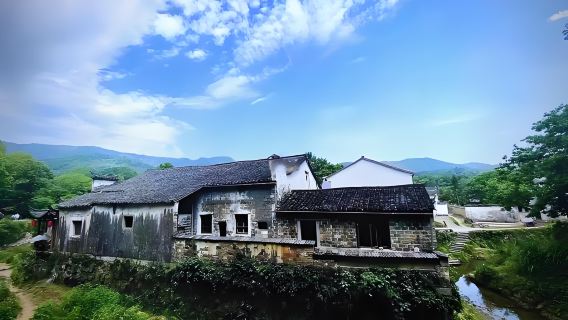
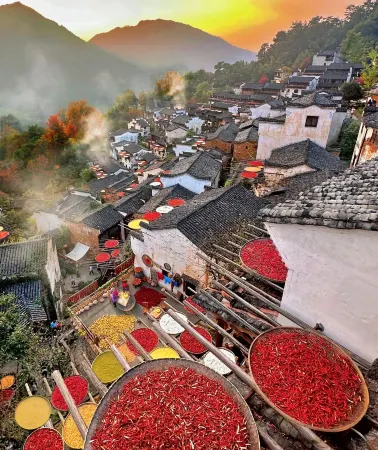
Cheng Kan is located in Huizhou District, Huangshan City. It is a thousand-year-old ancient village whose site and layout were chosen according to the yin-yang and bagua theory in the I Ching. At the end of the Tang Dynasty, the Luo family moved here from Nanchang, Jiangxi, and built the village according to the mountains and terrain. The streets and alleys extend in all directions, and entering the village is like entering a bagua maze. Eight peaks surround the village, and the Congchuan River flows through it in an "S" shape, naturally forming the dividing line of the yin-yang fish of the bagua. The entire village is like a living feng shui scroll. The ancient village preserves a large number of buildings from the Song, Yuan, and Ming dynasties, and such a wide chronological span is very rare among Hui-style villages. Changchun She in the southeast corner was first built in the Song Dynasty and is a community house for worshiping the earth god; Huanxiu Bridge in the northeast was built in the Yuan Dynasty, with a pavilion at the bridgehead, and Huanxiu Xuan beside the bridge houses many old Huizhou wood carvings and embroideries; Luo Huitai Residence, also from the Yuan Dynasty, also has a long history. When it comes to exquisite architecture, the Zhenjing Luo Dongshu Ancestral Hall (Baolun Ge) in the northeast of the village is the first choice. The hall of the second courtyard of this three-courtyard ancestral hall hangs a plaque written by Dong Qichang, and several thick and tall golden nanmu pillars stand in the hall; the two ends of the beams and architraves in Baolun Ge of the third courtyard are exquisitely carved, and many painted patterns on the beams can still be vaguely recognized today. The Ming Dynasty Yanyi Hall is three stories high, and its gate covered with iron nails and its beam and pillar components are impressive; the window railing carvings of Luo Runkun Residence are exquisite, and the beauty's leaning rail upstairs is also quite distinctive. Longxing Bridge in the southeast corner outside the village is a relatively large surviving Ming Dynasty single-arch stone bridge in southern Anhui, spanning the river with a majestic appearance. At the village entrance, white walls and black tiles are reflected in Yongxing Lake, making it a great place to photograph a panoramic view of the ancient village. In spring, rapeseed flowers bloom outside the village; in summer, lotus flowers in the lake shine in the sun; different seasons reveal village scenery with different charms. The village still preserves traditional folk customs such as the Lantern Festival fish lantern parade and autumn shaiqiu, and the ancient breath of life continues among the white walls and dark tiles.

China · Huangshan City
Sanhe Ancient Town
No. 4 of Night Attractions in Anhui

Sanhe Ancient Town

7.8
4.7/5
4.4k reviews

Sanhe Ancient Town is situated at the southern tip of Feixi County in Hefei, where the Fengle River, Hangbu River, and Xiaonan River converge. The town derives its name from these three waterways, with the name "Sanhe" appearing as early as the Ming Dynasty and officially becoming Sanhe Town during the Qing Dynasty. In 1858, Taiping Rebellion generals Chen Yucheng and Li Xiucheng achieved a decisive victory over the Xiang Army here, historically known as the "Great Victory of Sanhe." The triumphal arch at the town entrance, Yingwang Mansion, and ancient city walls still bear witness to this turbulent period. The old bluestone-paved streets stretch along the river, lined with contiguous Huizhou-style residences featuring gray brick walls and soaring horse-head gables, blending water-town alleys with Huizhou-style markets seamlessly. Most tours begin at Sanxian Bridge in the town center. To its northwest stands the seven-story Guocui Tower, offering panoramic views of the town and displaying Huizhou artifacts like sedan chairs, inscribed tablets, carved beds, and stone carvings. Nearby, the Dafu Mansion (Sanhe Folk Museum) recreates an official residence's hall with exquisite wood carvings, including an oversized abacus over one meter long. Northeast of the bridge, Xiangu Tower is a Huizhou-style temple funded by merchants including the owner of the time-honored pastry shop "Zhonghexiang." Heading north along the east bank of Xiaonan River leads to ancient West Street, paved with bluestones and once bustling with shops—Liutongxinglongzhuang still maintains its original commercial layout. South along the west bank brings you to Quezhu Covered Bridge, named after Sanhe's ancient moniker "Quezhu," featuring a two-tiered eaves corridor with "beauty's seat" railings perfect for resting and enjoying the waterfront. The southern area around Old South Street and Wannian Street clusters notable former residences, including those of physicist Chen-Ning Yang, general Sun Liren, and Helu. During the Anti-Japanese War, young Chen-Ning Yang sheltered here with his family. Nearby, the famous "One-Person Alley" narrows to barely accommodate a single visitor, making it a popular photo spot. Further south stand Wannian Temple, Chenghuang Temple, and the historic Wannian Stage—Sanhe being the birthplace of Lu Opera, whose authentic melodies often grace the stage during festivals. Local snacks concentrate near Sanxian Bridge: freshly fried Sanhe rice dumplings with crispy shells, shrimp paste, crispy duck, and various river delicacies represent regional cuisine, while tea-flavored dried tofu makes for perfect street-side nibbling. Rice wine and feather fans serve as portable souvenirs. In 2026, Sanhe became a key filming location for CCTV's Spring Festival Gala Hefei segment, with its night scenes of a thousand fish lanterns captivating nationwide audiences.

China · Feixi
Xidi
No. 3 of Night Attractions in Anhui

Xidi

7.7
4.6/5
12.3k reviews

Xidi is a typical Huizhou-style ancient village in Yi County, and together with Hongcun it is known as one of the two great ancient villages of southern Anhui. If Hongcun is known for its waterscape, Xidi focuses more on the architecture itself—the village preserves a well-laid-out complex of Ming and Qing dynasty buildings, with exquisite craftsmanship in the "three Huizhou-style carvings" of brick, stone, and wood. The patterns and branches are so finely detailed that they are a highlight worth savoring throughout the ancient village. Most residents of the village share the last name Hu. Legend has it that they are descendants of Li Ye, Emperor Zhaozong of Tang, who changed their surname to Hu to escape the chaos of war and have lived here for generations ever since. The ancient village was first built during the Huangyou era of the Northern Song dynasty. During the Ming and Qing dynasties, as Huizhou merchants rose to prominence, extensive construction took place, and a large number of Hu merchants returned home to build residences, once giving Xidi hundreds of courtyard houses. The ancient village was laid out in the shape of a boat, spanning three streams. In the south, the Qianbian Stream and Houbian Stream converge at Huiyuan Bridge inside the village to form the Xi Stream, which then joins the Shewu Stream to the north at the village entrance. All the streams flow from east to west, and this is how Xidi, meaning "westward flow," got its name. The main entrance is in the southwest corner, and the first thing that meets the eye is the Hu Wenguang Memorial Archway, built in the sixth year of the Wanli reign of the Ming Dynasty. It is entirely carved and built from local "Yi County bluestone" marble, with five tiers of stone carvings stacked layer upon layer, grand and imposing. Beside the archway, the broad surface of Mingjing Lake is a good spot for photographing the reflections of Hui-style buildings. Entering the village, Ruiyu Ting at the Henglu Street intersection is a typical Huizhou merchant residence. The couplets in the hall are quite meaningful, such as "Happiness is earned through hard work; good bargains often come from being willing to take a loss," which discusses business principles and also contains a philosophy of life. Heading east along the Front Stream, Jing'ai Hall is one of the larger surviving ancestral halls in the village. The "filial piety" character hanging in the center is ingeniously designed—the right half resembles a person bowing with hands clasped, while the left half resembles a monkey, meaning that only those who observe filial piety are truly human, and those who are unfilial are like macaques. Shangde Hall upstream is one of the oldest surviving Ming Dynasty buildings in the village. In addition, Taoli Yuan, which pairs a residence with a study hall; the Hui-style courtyards West Garden and East Garden; Dunren Hall, the late-life residence of the Qing Dynasty Huizhou merchant Hu Guansan; as well as Zouma Lou, Xiulou, and Zhuimu Hall, each have their own features and are worth visiting one by one. Art academy students often come here to sketch, and the young people setting up easels among the white walls and black tiles have also become a scene of the ancient village.

China · Yi County
Ancient Huizhou Cultural Tourism Area
No. 2 of Night Attractions in Anhui

Ancient Huizhou Cultural Tourism Area

7.6
4.3/5
255 reviews

The Ancient Huizhou Cultural Tourism Area is located in Huangshan City, Anhui Province, the birthplace of Huizhou culture. The ancient city of Huizhou is the seat of the Huizhou government and is one of the four best-preserved ancient cities in China. The Tangyue Archway Group is the largest archway community in China. It consists of seven closely connected stone arches in the Ming and Qing Dynasties. Tang Mo has the reputation of the first village of Shuikou Garden in China. The idyllic scenery is elegant and chic, and the French romantic style is closely related to the ancient villages of Huizhou. Chengkan is known as the first Fengshui village in China. It integrates natural landscapes as a whole. According to the location and layout of the Eight Diagrams Fengshui theory in the Book of Changes, it interprets the philosophical theory that the heaven and the earth are interdependent. The Qiankou Residential House is known as a living monograph of the folk architectural art of the Ming and Qing Dynasties in my country, and it is a collection of the most classic and representative Huizhou Residential Houses in Huizhou during the Ming and Qing Dynasties. The Ancient Huizhou Cultural Tourism Area presents the "Hui culture", one of the three major regional cultures of China, perfectly and vividly to the world through the gathering of ancient city life, ancestral hall culture, archway culture, Huizhou merchant culture, village culture and residential culture.

China · She County
Qiyun Mountain
No. 7 of Best Things to Do in Southern Anhui

Qiyun Mountain

7.6
4.7/5
7.5k reviews

Qiyun Mountain has been active since the Tang Dynasty, and some spectacular cliff carvings can be seen on the mountain. The Danxia landform has brought a rounded red mountain to Qiyun Mountain, which is in sharp contrast with the verdant vegetation on the mountain. Qiyun Mountain is 33 kilometers west of Huangshan City, with an altitude of 585 meters. The mountain is not high, but it is relatively large. It is divided into four areas: Yuehua Street Attraction, Loushanglou Attraction, Yunyan Lake Attraction, and Hengjiang Attraction. If you think it is "just a small mountain", you have only visited the Yuehua Street Attraction, which is the essence of the front mountain, and this is the content of a one-day tour; for a two-day tour, you can first visit the Yuehua Street Attraction, and on the second day you can go to the Loushanglou Attraction on the back mountain; as for the Yunyan Lake Attraction, it is too far away and generally no tourists go there. The hiking trail of Qiyun Mountain is at Dengfeng Bridge, 600 meters away from the lower station of the cable car. When taking a bus to Qiyun Mountain, you must tell the driver where you want to get off. It takes about an hour to walk up the mountain to reach the upper station of the cable car. It is recommended to take the cable car when going up the mountain, so that you can enjoy the rural scenery below the mountain. When you get out of the upper station of the cable car to Feiyun Pavilion, remember to look back at the mountain below. The best time to visit Qiyun Mountain is when the rape-flowers bloom in April. The golden flower fields and the Hui-style villages with white walls and black tiles are like a Chinese painting. The main attraction in the front mountain is the cliff carvings, with the Zhenxian Cave House being the most spectacular. There are caves all over the cliffs, with the four characters "天开神秀" written on the top. In the caves, there are various gods and immortals. From the top of the cliff, there is a pearl spring dripping into the clear pool below the cliff. Then walk to Yuehua Street. At the end of the street, through the doorway is a gourd-shaped stone archway "Xiao Hutian", and you will reach a cave. If you look carefully at the top of the cave, you will see footprints left by dinosaurs in ancient times. It takes about half an hour to climb from Yuehua Street to the peak of Qiyun Mountain. Most tourists return to Yuehua Street. If you want to go to the back mountain, you can stay in Yuehua Street for one night, otherwise you will not have enough time. Yuehua Street is a village on the mountainside with limited reception capacity. Although there are not many tourists staying in the mountain, it is better to make reservations in advance. There are also old houses in hotels with better conditions, such as the century-old Changsheng Building. The accommodation conditions are average, but you can see the sea of clouds in front of the building. Walking from the front mountain to Yuehua Street, there is Xianglu Peak on the right hand side. It is the representative of all the peaks of Qiyun Mountain because of its exquisite shape. There is a pavilion on the top of the peak. There is a road leading to the top of the peak from Zhenxian Cave Mansion, but the road is not easy to walk. It is recommended to put the luggage at the accommodation on Yuehua Street and then go back to the mountain climbing place. If you don't know where to climb, you can ask the hotel owner or villagers in detail. Don't climb on rainy days because the road is slippery. The next day, we went upstairs in the back mountain. There were no supply stations along the way, so we had to prepare enough water and dry food. After watching the sunrise on the peak in the morning, we returned to Yuehua Street and headed towards Yuxu Palace. There was a fork in the road leading to Fangla Village. If you have good stamina and can run fast, you can go and take a look. Otherwise, it is recommended to go straight upstairs. We walked in the mountains and could no longer see the scenery below the mountain. There were very few people along the way, and it felt like "the whole mountain is yours." On the way, you will pass the downhill road leading to the bamboo raft dock. If there is a mountain guard on duty at the pavilion at the intersection, you can leave your luggage there and pick it up when you come back from here. Going forward, you will encounter another fork in the road. The right side leads to the reservoir, and the left side with the covered bridge is the correct road. When you reach the upper floor, you can see the naturally formed upper and lower layers of caves. Backpackers will set up tents here. The terrain is flat and can shelter from wind and rain. Go down the mountain from the road leading to the bamboo raft pier, and take a bamboo raft to drift all the way to Dengfeng Bridge. Dengfeng Bridge is a stone bridge built during the Wanli period of the Ming Dynasty. On the other side is a Hui-style village. When the rape-flowers bloom, the scenery in this area is no less beautiful than those popular rape-flower viewing spots in Anhui and Wuyuan. When the golden sun sets and the night falls, the town of Qiyun is brightly lit and bustling. Qiyun iron flowers bloom in the sky, bringing romance; fish lanterns parade in the streets with the blessings of Huizhou for 600 years; standing on the Dengfeng Bridge, you can also see the 100-meter golden dragon winding forward with fireworks all over the sky. As a new landmark for Huangshan night tours, Qiyun Mountain Resort has created the [Baiyue Night Carefree] special night tour IP, introducing a number of intangible cultural heritage interpretations, and highly presenting the thousand-year folk romance through the inheritance and innovation of intangible cultural heritage skills, helping the development of Huangshan's night tour economy, promoting the continuous renewal of Huangshan's night tour forms, and bringing tourists a beautiful holiday life with fireworks and nights.

China · Xiuning

Traveller favourites curated for you

Experiences you can't miss in Anhui

Featured Culture & history in Anhui

View all Culture & history
Hongcun ancient village and Huizhou cultural experience (departing from Huangshan)
󱌍
Duration: 10.5 hrs
English
Free cancellation
Instant confirmation
9% off
Limited-time sale
FromIDR 1,019,190IDR 1,132,433
[Premium private tour] One-day private chartered car tour to Mount Huangshan Xidi Ancient Village + Hongcun
󱌍
FromIDR 1,951,953
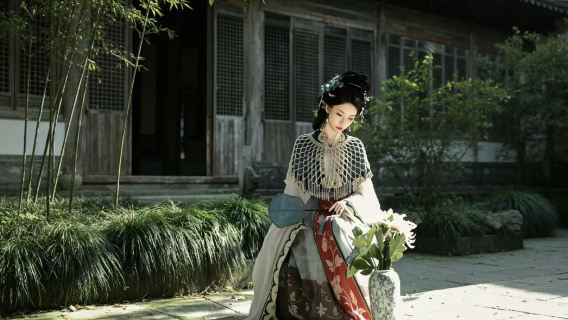
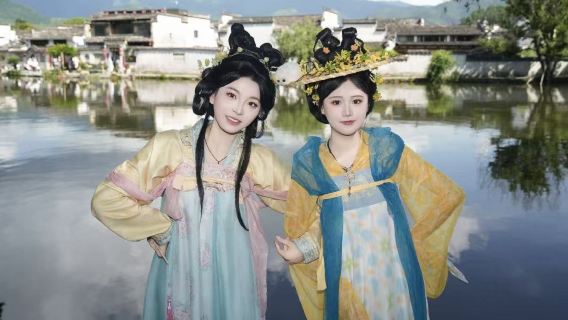
Anhui Huangshan Hongcun Fanghuage costume experience (costume rental + exquisite styling + quality service)
󱌍
FromIDR 318,919
Anhui Huangshan Cheng Kan Jiaoyang Hanfu experience (costume rental + exquisite styling + follow-shoot service)
󱌍
FromIDR 267,568

Featured Day tours in Anhui

View all Day tours
Huangshan Day Trip | Includes Admission Ticket for a Relaxed Tour of the Famous Mountain/Optional Hotel Pick-up/Drop-off or English-speaking Guide
󱌍
FromIDR 805,406
Huangshan Day Tour with Round-Trip Yungu Cable Car | Mini Group or SIC Coach Available
󱌍
Duration: 8.5 hrs
English
Free cancellation
Instant confirmation
FromIDR 2,490,117
1 Day Guided Adventure Tour of Yellow Mountain
Trip.Select
󱌍
5.0/5
· 1 review· 27 booked
Duration: 7 hrs
English
Free cancellation
Instant confirmation
FromIDR 1,822,754
Classic 1-day Tour to Hongcun + Xidi in Anhui (Join-in Tour/Private Guided Tour in Chinese & English)
Trip.Select
󱌍
5.0/5
· 3 reviews
Duration: 7 hrs
English
Free cancellation
Instant confirmation
FromIDR 2,832,433
Xidi & Ox-Shaped Hongcun Village, UNESCO World Heritage Huangshan Day Private Tour
󱌍
Duration: 7.6 hrs
English
Free cancellation
Instant confirmation
FromIDR 1,425,502
Huangshan Scenic Area+Yungu Cableway1-day Tour
Trip.Select
󱌍
4.2/5
· 5 reviews· 47 booked
Duration: 10 hrs
English
Free cancellation
Instant confirmation
FromIDR 3,362,666

More things to do

Private Tours in Anhui

View More Private Tours in Anhui
Group Tours in Anhui

View More Group Tours in Anhui
Free things to do in Anhui

What travellers say about Anhui

user-avatar
晓心心November 15, 2026
5.0
I've been to Huangshan twice now, and the biggest surprise is that I'm not afraid at all. Walking on the mountain paths, I don't feel scared at all. Walking close to the edge is like walking on flat ground. Ahead, everything is shrouded in mist, and visibility is only about ten meters ahead. What's in the distance? What do the trees look like? You have to get close to see. My fear of heights is completely useless here. I also have to praise the cable car; it's so convenient and saves so much effort. 😀 I'm looking forward to my third trip to Huangshan.

Mount Huangshan Scenic Area

user-avatar
M25***09November 15, 2026
5.0
The beauty of Hongcun is truly indescribable! South Lake and Moon Pond reflect the white walls and black tiles, while wood carvings, brick carvings, and stone carvings are hidden among the ancient houses. In the afternoon, we were greeted by the golden sunrise on the mountains. We even visited the King's Mud Craftsmen's Workshop, where clay was sculpted with the artist's skill. Every scene and object was a delightful experience. 🍃

Hongcun Village

user-avatar
M28***97November 15, 2026
5.0
I've wanted to visit Jiuhua Mountain for a long time. There's a town on the mountain called Jiuhua Town, and there are many Buddhist temples around it. It truly deserves to be called a Buddhist holy site. Unfortunately, the weather was bad, so I couldn't go up the mountain and could only walk around the town.

Jiuhua Mountain

user-avatar
M54***51November 9, 2026
5.0
Our second stop in Huizhou was a charming, quaint place, less commercialized. Compared to other tourist attractions that feel like copycat sites, Huizhou Ancient City has its own unique character and is definitely worth recommending.

Huizhou Ancient City

user-avatar
HeatherNovember 13, 2026
5.0
The first ancient village we visited in Huangshan was small, but it showcased the Hui-style architecture. Wandering through the alleys felt like stepping back a hundred years, experiencing the lifestyle of the ancients.

Cheng Kan

user-avatar
黄海大智若愚November 12, 2026
5.0
Each of the four exhibition halls has its own unique characteristics and is the most important highlight of the ancient town's history and culture. However, the equipment, exhibits, and services in some exhibition halls are inadequate and need to be standardized and improved.

Sanhe Ancient Town

user-avatar
_We***23November 13, 2026
5.0
A very satisfying stay! The room was spotless, with great natural light and ventilation, and the bed was very comfortable. The staff were attentive and responsive to our needs. The location is excellent, convenient for travel, and surrounded by amenities. The attention to detail was remarkable, showing a high level of care. Overall, it was excellent value for money and I highly recommend it!

Xidi

user-avatar
五行缺土26October 4, 2026
4.0
A combined ticket for the Tangyue Memorial Archway Complex and the Bao Family Garden is available. The Tangyue Memorial Archway Complex comprises seven archways from the Ming and Qing dynasties belonging to the Bao family. The stone carvings are rich in historical significance, and a guided tour is highly recommended. The Bao Family Garden primarily features Hui-style bonsai and can be visited briefly. The combined ticket costs 98 yuan, which is slightly high overall.

Ancient Huizhou Cultural Tourism Area

user-avatar
驴友1124November 15, 2026
4.0
The scenic area is quite large. We walked and played non-stop, and the large loop took us 5 hours. The Nine Miles and Thirteen Pavilions might deter some people, as we were sweating profusely as we climbed. The scenery was really beautiful, and the Taoist culture was also very rich. Minors were not allowed to visit the Taoist temples. Although Fang La Cave and Fang La Village were difficult to climb, the scenery was good, and the view from the highest peak was absolutely stunning.

Qiyun Mountain

user-avatar
M31***69November 1, 2026
5.0
When visiting Chizhou, the first stop is the Guniujiang Scenic Area. It's lush and green everywhere you look. We happened to be there on a rainy day, so the air was fresh, the birds were singing, the flowers were blooming, and the negative oxygen ion content was extremely high. It was so comfortable!

Guniujiang Nature Reserve

Trip Moments in Anhui

Frequently asked questions

When choosing a tour, start with how much time you have and the kind of experience you're looking for. Trending options right now include Huangshan Day Trip | Includes Admission Ticket for a Relaxed Tour of the Famous Mountain/Optional Hotel Pick-up/Drop-off or English-speaking Guide, Huangshan Day Tour with Round-Trip Yungu Cable Car | Mini Group or SIC Coach Available, and 1 Day Guided Adventure Tour of Yellow Mountain. Check the real-time availability and itinerary before you book.

As of November 16, 2026, the reference price for day tours and activities in Anhui is around IDR 805,406 – IDR 3,362,666. Rates vary by duration, group size, transport, tickets, meals, and any special admission requirements. Before you book, please confirm the billing currency and whether the price is quoted per person or per group.

Get help anytime, anywhere within 30 secondsContact customer support

Change and cancellation policies vary by attractions and tours. Please check the product details page for more information.

Ticket prices may vary between weekdays and weekends, as well as during peak and off-peak seasons. When booking with Trip.com, you can also use Trip Coins to get extra savings. For more tips on booking discounted tickets, please visit Trip.com for the latest information.