Anren

Things to do in Anren

Search attractions or local attractions & tours
Search

Explore top experiences

Top 10 attractions in Anren

View all Attractions
Orange Isle Scenic Area
No. 4 of Best Things to Do in Hunan Jiangxi Fujian Region

Orange Isle Scenic Area

9
4.6/5
13.7k reviews

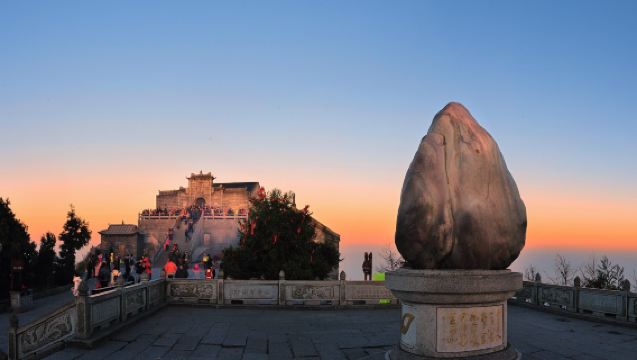
Orange Isle Scenic Area is a narrow sandbar lying across the heart of the Xiang River in Changsha, stretching approx. five km. It faces Yuelu Mountain to the west and borders Changsha's old city to the east, surrounded by water on all sides. Named after the abundant orange trees planted on the isle, it was historically called Shuiluzhou. Formed by river alluvium, this sandbar has existed for over a millennium, where the "River and sky in evening snow" scenery was once among the Eight Views of Xiaoxiang. In 1925, the poem "Spring in a pleasure garden - Changsha" was composed here, with its iconic line "Alone I stand in the biting fall, watching the Xiang River flow north past Orange Isle's head," which made this riverine landmark widely renowned. The highlights of the visit are concentrated at the islet's head: A granite art sculpture over 30 m tall, modeled after the 1925 youth image, stands facing the river as Changsha's highly recognizable landmark. Nearby, the Questioning Heaven Platform extends toward the river center, where leaning on the railing reveals the mighty Xiang River flowing northward, with Yuelu Mountain and the city skylines on both banks facing each other across the water. The Songju Pavilion, white marble poetry stele, and the 200-year-old ancient phoenix tree at the islet head are all in this area. Heading north from the islet head, a hundred-acre orange orchard bears golden fruits in fall, while bamboo groves, peach orchards, plum gardens, and osmanthus groves take turns showcasing seasonal flora. The historic Zhuzhang Ferry (where Zhu Xi and Zhang Shi once crossed the Xiang River for lectures) and the Huxiang Culture Exhibition Hall are scattered along the way. At the islet's tail, the reconstructed Jiangshen Temple and Gongji Tower area was precisely where ancients admired the "River and sky in evening snow" scenery. The island is long and narrow, making round-trip walks quite tiring. A sightseeing train is available for transportation, with multiple stops along the way for hopping on and off. Travelers with limited time are advised to head straight to the island's tip to see the sculpture and river views, then stroll leisurely along the riverside path. At dusk, watching the sunset over the Xiang River and seeing the lights gradually illuminate both shores from the island's tip is especially worth setting aside time for.

China · Changsha
Hunan Museum
2027 Asia 100 - Best Things to Do

Hunan Museum

8.8
4.8/5
16.4k reviews

Hunan Museum is a relatively large history and culture museum in Hunan Province, and among its collections, the artifacts unearthed from the Mawangdui Han Tombs are particularly representative. "The Changsha Mawangdui Han Tombs Exhibition" is the museum's permanent exhibition, presenting in a concentrated way the precious artifacts unearthed from three Western Han tombs. One of the most striking exhibits in the exhibition is the plain silk unlined robe with straight-cut front, as thin as cicada wings and weighing less than 50 grams, whose weaving technique is astonishing. In addition, visitors can see well-preserved printed silk padded robes, fine and elegant embroidery, brightly glossy painted lacquerware, and an exquisite T-shaped painted silk painting. More than 100,000 characters of silk manuscripts were unearthed from Tomb No. 3, among which are many lost texts long since gone from circulation, covering fields such as philosophy, history, astronomy, and medicine. The "Topographic Map of the Southern Part of the Changsha Kingdom," also from Tomb No. 3, was drawn using techniques broadly similar to those of modern maps and holds important value in the study of ancient maps. The well-preserved body of Lady Xin Zhui unearthed from Tomb No. 1 has survived intact for more than two thousand years and is another major highlight of the exhibition. The museum also features permanent exhibitions such as "Hunan People: A Historical and Cultural Exhibition of the Three Xiang Regions," displaying collections including Shang and Zhou bronzes, ceramics from famous Hunan kilns, and Ming and Qing calligraphy and paintings, presenting the historical and cultural threads of Hunan from different dimensions. The Mawangdui Han Tomb Exhibition and the Three Xiang Historical and Cultural Exhibition together form the museum's two core exhibitions, and are well worth setting aside ample time to view in detail.

China · Changsha
Mount Hengshan
No. 8 of Night Attractions in Hunan

Mount Hengshan

8
4.5/5
6.7k reviews

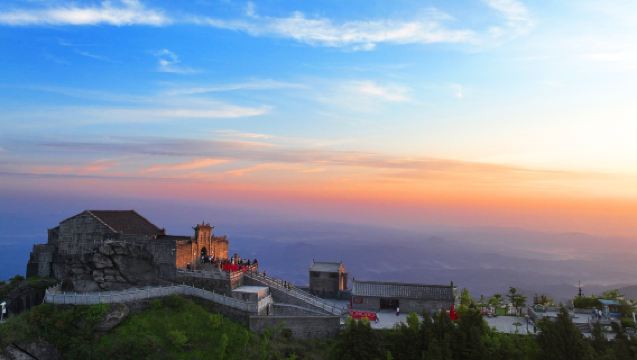
Mount Hengshan is located in Nanyue district, Hengyang. Its highest peak is Zhurong peak, at an elevation of approx. 1300 m. Among the "Five Great Mountains", Mount Heng is located furthest south. Its relatively favorable climate means the mountain is verdant all year round, with lush trees, earning it the reputation of being the "most beautiful of the Five Great Mountains". Mount Hengshan is mainly composed of the central attraction and a few other small attractions. When most visitors refer to "Hengshan," they mean the central attraction. The "Nanyue Grand Temple" in Nanyue Town at the foot of Mount Hengshan is an important attraction besides the central attraction, and it is a massive ancient palace-style architectural complex in southern China. Mount Heng is a sacred site of Chinese Buddhism, where the "Nanyue school" of the Southern Chan tradition was founded, and its dharma lineage gave rise to the Weiyang and Linji schools, which spread throughout China and overseas. In addition, this is also a sacred site of the War of Resistance in southern China. At the foot of Xianglu Peak, the "Nanyue Martyrs' Shrine" commemorates and buries Chinese soldiers who died on the frontal battlefields of the War of Resistance. When visiting the central attraction, you can choose to walk the entire way, or combine walking with the eco-friendly bus (including the cableway). For most ordinary visitors, the latter is recommended, as it will leave you with more energy to appreciate the beautiful scenery in the mountains and experience the cultural connotations of Nanyue. Route recommendations If you choose to travel on foot and by eco-friendly bus (including the cableway), then visiting Mount Heng in one day is not a particularly strenuous task. You can first visit the "Nanyue Grand Temple" in Nanyue Town, and then enter the central attraction. The basic route is:Martyr's Shrine-Hengyang Mount Hengshan Tourist Area-Banshan Pavilion-Magu Wonderland-Mojing Terrace-Hengyang Mount Hengshan-Hengyang Mount Hengshan Tourist Area-Nantianmen-Zhurong Peak. If you have more time, then spending two days touring Mount Hengshan will yield more rewards. The general route is similar to the "1-day tour" above; since you have ample time, after visiting the Fuyan Temple in Mount Hengshan in Hengyang, you can then go to the Sutra Library Hall in the Mount Hengshan tourist area in Hengyang and stay for a while—it is extremely tranquil there. In the early morning of the second day, you can also head to the "Sun-Watching Terrace" to watch the sunrise.

Hengyang · 82.9 km from Anren
Gaoyiling Tourist Area
No. 16 of Best Things to Do in Hunan and Hubei

Gaoyiling Tourist Area

8
4.5/5
5.4k reviews

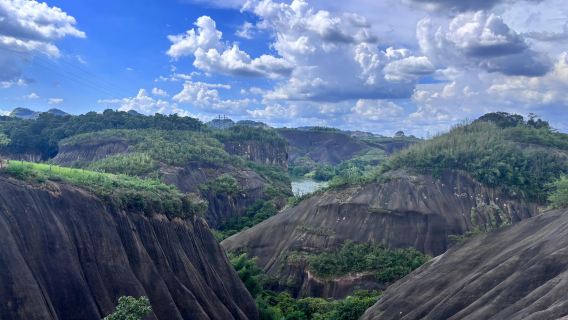
Gaoyiling Tourist Area is a natural attraction centered on Danxia landforms. Unlike many Danxia views that feature only mountains without water, this area's red cliffs and crimson rock faces are dotted with emerald pools, and the lake at the foot of the hills is as clear as jade. Viewed from above, dark green pools encircle the crimson ridges, often vividly likened to a "heavenly lake" embracing an "octopus," with the contrast between red and green creating a highly distinctive scene. The attraction's trail runs along the mountain ridge, with the core highlights concentrated at several spots: Dragon's Back Ridge, Monitor Lizard Lake, and the cliffside plank walkway. Dragon's Back Ridge is a narrow ridge at the top of the mountain, with sheer cliffs on both sides; walking along it offers a panoramic view of the Danxia landscape, and it is also a popular photo spot. Monitor Lizard Lake takes its name from a Danxia rock formation in the lake that resembles a monitor lizard lying in wait; during the dry season the rock's full outline is revealed, vivid and lifelike. The cliffside plank walkway is built against the cliff face, with a deep canyon below, leading to a sliver of sky — stone walls press in on both sides, and at the narrowest point only two people can squeeze through sideways. The Hundred-Step Sky Ladder is a steep flight of stone steps, and after reaching the top the view opens up wide. The tour route follows the ridge trail as its main line, with little shade along the way and strong sun exposure. Danxia elements such as mountains, waters, springs, caves, villages, cliffs, and flatlands are all present here; among them, "flatland" is the local term for flat areas atop Danxia peaks, and the Meili Flat area is planted with bamboo groves, serving as a rest stop along the hike.

Chenzhou · 84.2 km from Anren
Mount Yuelu
No. 1 of Fall Viewing Attractions in Hunan

Mount Yuelu

8.3
4.6/5
5.5k reviews

Mount Yuelu stands on the west bank of the Xiang River and is a landmark mountain in Changsha. At its foot lies the Yuelu Academy, founded during the Northern Song Dynasty, a millennium-old institution sharing the mountain's name. Ascending from here leads to Qingfeng Gorge, where the Aiwan Pavilion, named after Du Mu's poetic line "I stop my carriage to admire the maple woods at dusk," is surrounded by maple trees. Midway up the mountain, the ancient Lushan Temple, established in the Western Jin Dynasty over 1,700 years ago, features a lush six-dynasty-era podocarpus tree in front of its sutra repository. At the summit stands the Yunlu Palace, a Taoist temple built during the Ming Dynasty, offering panoramic views of the Xiang River and Changsha's urban area. The mountain's historical sites extend further, with the Yu King Stele, Python Cave, and Changsha Battle Memorial Stele scattered along its trails. Modern figures such as Huang Xing, Cai E, and Chen Tianhua are also buried here, making the mountain a condensed repository of profound modern history. Most cultural attractions are concentrated near the south gate, where you can visit major historic sites in sequence from Yuelu Academy to Aiwan Pavilion. For those preferring not to hike, a cableway station near the east gate allows easy ascent, eliminating most uphill climbing. With an elevation of about 300 m and well-developed trails, reaching the summit on foot is manageable. Ancient trees like Jin dynasty podocarps, Tang dynasty ginkgos, Song-Yuan era camphor trees, and Ming-Qing maple-chestnuts line the paths, making the entire mountain resemble a natural botanical museum. In late fall when maple leaves turn red across the slopes, it becomes an ideal time for hiking. Allocate half a day to leisurely photograph Aiwan Pavilion and the mountaintop viewpoints.

China · Changsha
Du Fu Pavilion
2027 Global 100 - Night Attractions

Du Fu Pavilion

8.2
4.6/5
10.9k reviews

Du Fu Pavilion is a Tang-style garden architecture built to commemorate the great Tang dynasty poet Du Fu. It stands on the Xiang River scenic belt in Changsha, gazing across the river at Orange Isle and Yuelu Mountain. In his later years, Du Fu lived in Changsha twice, renting a simple building by the Xiang River; because the house faced the river, he named it "River Pavilion," where he spent the final years of his life and wrote a large number of poems. The present pavilion was completed and opened to the public in 2005. Its main structure has four stories and stands approx. 18 m tall, with vermilion columns paired with antique lattice windows and a roof covered in dark blue-green glazed tiles, making it a highly recognizable landmark on the east bank of the Xiang River. The pavilion houses a Du Fu memorial hall, with a statue of Du Fu standing in the center. The poet's life is depicted on the walls in the form of paintings, and works by renowned calligraphers and painters such as Zhang Daqian and Lin Sanzhi are also displayed in the hall. The exhibitions on each floor follow Du Fu's travels and poetic works in Hunan as the main thread, presenting the wandering trajectory of the Poet Sage in his later years and the poems he composed during his time in Hunan through steles, calligraphy and paintings, and multimedia means. The pavilion also features a tea room where visitors can sip tea while gazing at the scenery on both banks of the Xiang River in the distance. After nightfall, the pavilion lights up, and the warm yellow glow reflects on the surface of the Xiang River, making it a popular night-view photo spot along the river. The pavilion also offers an immersive night tour experience, based on Du Fu's life experiences wandering in Xiaoxiang in his later years. With the help of digital light-and-shadow technology, the artistic conception of Du Fu's poems is transformed into real-life scenes. As visitors stroll through the corridors, they may unexpectedly encounter "people in the poems" dressed in ancient-style costumes, experiencing a thousand years of poetic charm among the corridors and pillars of the pavilion.

China · Changsha
Yue Yang Tower
No. 1 of Family-friendly Attractions in Hunan

Yue Yang Tower

8.1
4.6/5
11.5k reviews

"Be the first to worry about the world's worries and the last to enjoy its pleasures"—this line from Fan Zhongyan's Northern Song dynasty essay "Yueyang Tower chronicle" made Yue Yang Tower by Dongting Lake a household name. The main tower, Yueyang Tower, is said to have evolved from a naval review tower built by Lu Su of Eastern Wu during the Three Kingdoms period. Alongside Yellow Crane Tower in Hubei and Tengwang Pavilion in Jiangxi, it is hailed as one of the three great towers of southern China. Poets like Li Bai, Du Fu, Meng Haoran, and Bai Juyi once climbed it to compose verses. From the top floor, leaning on the railings, you can take in the vast expanse of Dongting Lake stretching hundreds of miles, with Junshan Island visible across the waters—where timeless verses and the lake's beauty converge in this moment. The tower itself is an architectural treasure: its three-story, triple-eave structure is built entirely of wood with mortise-and-tenon joints—no iron nails used—and four golden nanmu pillars run straight from the ground to the rooftop. The helmet-shaped roof, called "helmet crown," is supported by layered ruyi bracket sets, a rare design among surviving ancient towers in China. Inside, carved Qing-dynasty panels of "Yueyang Tower chronicle" are preserved—pause to admire them when ascending. The small attractions within the attraction each have their own highlights: near the gate, the "Five-dynasty towers" use bronze miniature models to recreate Yueyang Tower's different architectural styles from the Tang, Song, Yuan, Ming, and Qing dynasties, showcasing a millennium of changes at a glance. On the lakeshore in front of the main tower, ancient iron artifacts resembling shackles and weighing several tons are displayed—their casting era and purpose remain debated, forming a long-standing historical mystery. Additionally, there are the Shuanggong Shrine commemorating Fan Zhongyan and Teng Zijing, the stele corridor engraved with poems about the tower from various dynasties, and the Xiaoqiao Tomb—said to belong to the wife of Three Kingdoms general Zhou Yu—waiting to be explored. If you wish to extend your itinerary, you may also take a boat tour of Dongting Lake and visit Junshan Island on the opposite shore. The nearby Bianhe Street, a cobblestone-paved antique-style street, is lined with local snack stalls and souvenir shops, making it convenient to explore along with the nearby Baling Square.

China · Yueyang
Jiangxi WuGong Mountain Scenic Area
No. 6 of Family-friendly Attractions in Jiangxi

Jiangxi WuGong Mountain Scenic Area

7.9
4.7/5
92 reviews

Jiangxi Wugong Mountain is located in the west of Jiangxi, spanning the three cities of Pingxiang, Yichun, and Ji'an. It has scenic spots such as Pingxiang Wugong Mountain, Yichun Mingyue Mountain, Anfu Wugong Mountain, and Anfu Yangshimu. It is a large-scale mountain type integrating human landscape and natural landscape. Scenic spot; Jiangxi Wugong Mountain-Pingxiang Wugong Mountain Scenic Spot is located in the southeast of Pingxiang City, belonging to the northern section of the Luoxiao Mountains on the border between Hunan and Jiangxi. It is a large-scale mountain-type scenic spot with the most abundant tourism resources in western Jiangxi Province. In history, it was once known as the three famous mountains in the south of the Yangtze River together with Lushan Mountain and Hengshan Mountain, and it is known as "the first martial arts in Hengshou and Luwei". Baihe Peak (Golden Summit), the main peak of Wugong Mountain, is 1918.3 meters above sea level. Jiangxi Wugong Mountain-Yichun Mingyue Mountain Scenic Spot is located 15 kilometers southwest of the central city of Yichun, with a total area of 389 square kilometers. Mingyue Mountain has four major resources of "mountain, spring, Zen, and agriculture". It is a scenic spot featuring "sightseeing, leisure and vacation, health care and religious tourism" as a whole. Jiangxi Wugong Mountain-Anfu Wugong Mountain is located in Taishan Township, Anfu County, Jiangxi Province. The depth of the scenic spot is about 150 kilometers. It is the highest mountain in Jiangxi. In history, Wugong Mountain was once known as the three famous mountains in the south of the Yangtze River together with Hengshan Mountain and Lushan Mountain, and was named "the first of Hengshan and Luwei in martial arts". Wugong Mountain is a scenic spot integrating human landscape and natural landscape. It is a mountain under development among the famous mountains in the south of the Yangtze River. , and natural landscape and intact original ecological environment, with charm. Jiangxi Wugong Mountain-Anfu Yangshimu Scenic Area is located in the northwest of Wugong Mountain in Anfu County, Jiangxi Province, a scenic spot, a national natural heritage site, a national forest park, and a national geological park. The scenic spot is dominated by granite peak forest landforms, which are majestic and majestic in various poses and with different expressions.

China · Luxi
Pingxiang Wugong Mountain Scenic Area
No. 3 of Fall Viewing Attractions in Jiangxi

Pingxiang Wugong Mountain Scenic Area

7.9
4.6/5
12.3k reviews

Wugong Mountain is located inLuoxiao MountainsNorthern section, main peakWhite crane peak(Golden Summit) The altitude is approx. 1,900 m. As the mountain range spans two cities, Wugong Mountain is divided into the Pingxiang and Anfu attractions, each with its own characteristics. Pingxiang Wugong Mountain Scenic Area is known for its classic alpine meadows, and travelers who come to Wugong Mountain for hiking and sightseeing usually choose Pingxiang. The attraction includesYangshi Peak, Golden Summit, Fayunjie attraction, and Jiulong Mountain. Among these, Golden Summit has well-developed trails and cable cars for ascending and descending the mountain, making it the most developed tourist route in Wugong Mountain. Reaching the golden summit, watching the sunrise and sunset, and admiring the sea of clouds and starry sky are the three major experiences here, and many hiking and photography enthusiasts choose to team up for a trekYangshi Peak- Fayunjie attraction - Golden Summit - Jiulong (three days) is considered one of the more challenging hiking routes in East China. Ordinary travelers typically combine walking with cable cars to explore Golden Summit in one or two days, enjoying the sunrise and sea of clouds, which is much more relaxed. The trail at Golden Summit roughly forms a "P" shape. To the right of the entrance are two-level cable cars leading to the mountain top, while the left side includes attractions such as the Diaoma Zhuang in Jiangxi Wugong Mountain National Scenic Area,Hero slopeThe hiking trails of the attraction. The "three major experiences" itinerary is as follows: start at noon on the same day, hike up from the right side with the assistance of a cableway, stay overnight at the golden summit, watch the sunrise and sea of clouds early the next morning, then continue counterclockwise to return via the left hiking trail. On the way from the entrance to the lower cableway station, you'll pass Shigu temple and Wugong Mountain Cultural Park in Pingxiang Wugong Mountain National Scenic Area, where you can spend half an hour for a brief visit. Sitting on the cable car, you'll see steep peaks and cliffs with pristine secondary forests above, and lush bamboo groves and terraced fields below, offering delightful views. If hiking up, you'll encounter scenic spots like Jinxin bridge, Jinxin waterfall, and Muzi rock along the way. Both options have their merits. If you don't want to miss either, you can choose to hike this section when descending the next day. After getting off the cable car, you'll enterValley of good fortuneIn this area, you will feel the air becoming fresh. The Zijigong Temple next to the cable car station is also called "Zhong'an," where the Prince of Wugong Mountain is enshrined. After visiting Ziji palace, it's time to ascend to the summit. You can take the left path to Diaoma Zhuang in Jiangxi Wugong Mountain National Scenic Area, the middle path to Echo Valley in Pingxiang Wugong Mountain National Scenic Area, or the right path toValley of good fortune, the Diaoma stake route follows the stream upwards, passes the Diaoma stake plank walkway, and climbsHero slope, until reaching the alpine meadow at the summit. The trail is quite steep, winding along sheer cliffs and ancient forests, requiring significant physical exertion. Echo Valley in Pingxiang Wugong Mountain National Scenic Area is an old official path, featuring attractions like the echo wall and Leida Gorge.Valley of good fortuneThis is a mountain path specially built for travelers in recent years. It takes approx. 1.5 hrs to walk from here to the Golden Summit. For those who prefer not to walk, there is an additional cable car ride available, making it very user-friendly. The suspension bridge direction is usually chosen, starting fromValley of good fortuneUp, down to Diaoma Zhuang in Jiangxi Wugong Mountain National Scenic Area. Walking onValley of good fortuneThe trail boasts a thriving ecosystem, with rock formations like the Lucky Star Rock resembling a deity of fortune and the Wishing Stone shaped like a heart.Talent platformThe Inquiry Platform in Pingxiang Wugong Mountain National Scenic Area offers a panoramic view of the kilometer-long suspended wooden plank trail behind it, making it an ideal spot for photography. However, due to the steep terrain and limited space, visitors should exercise caution when crowded. At the end of Fuxing Valley trail lies the kilometer-long wooden plank path, where you can take a breather after the climb while walking on the flat planks. This section also serves as a scenic corridor, showcasing not only the undulating mountain ranges but also unique Wugong Mountain flora like Jiangxi azaleas and pleiones, with distant views of forest terraces. The suspension bridge and glass viewing platform along the way can be thrilling; those with acrophobia can take the regular trail beside the suspension bridge. Upon reaching the lower station of the secondary cableway, take the cable car up and walk a short distance to witness Wugong Mountain's distinctive alpine meadow view and the thousand-year-old altar. On the way from the secondary cableway upper station to the alpine meadow, there are several remarkable rock views worth seeing, such as the "Wugong divine fist" resembling a clenched fist and the majestic and profound "Wugongshan god"Etc., follow the trail through the meadow, where scattered ancient altars serve as a link between humans and the heavens, dating back approx. 1700 years, and are a signature view of Mount Wugong. Continue forward past Baihe Temple, where you'll find a row of small houses for stay and meals. Further ahead at Guanyin Dang is a camping site suitable for pitching tents. This is also the camping ground for the Wugong Mountain tent festival held every September, where the colorful tents on the meadow create a spectacular sight. Stay overnight in the mountains, and early the next morning when the red sun rises from the horizon, the mountain gradually turns crimson, creating a vast and open feeling. After sunrise, you can witness the spectacular sea of clouds. Especially in fall, with reeds blooming across the mountains and golden meadows shining brilliantly under the sunlight. After watching the sunrise, pass by Double Breasts Peak, take photos at Jiangxi Wugong Mountain National Scenic Area—Diaoma Stake, and explore Fayunjie attraction withHero slopechoose the latter at the fork in the road and walk pastHero slopeAfter climbing hundreds of steep stone steps, you'll return to the easier cobblestone path. Walk past the Diaoma Zhuang boardwalk, continue forward for about 1 km, and you'll reach the Ziji Palace Cableway Station. From here, take the downhill ride back to the main gate. Exiting the gate and turning right leads to water features like the Seven Immortals Pool and Red Rock Valley Waterfall. If time permits, you could allocate half a day to explore these sights as well.

China · Luxi

Experiences you can't miss in Anren

Featured Day tours in Anren

View all Day tours
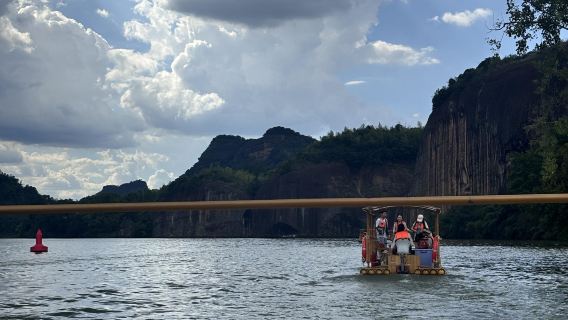
One-Day Tour to Mount Heng (Nanyue), Grand Temple, and Zhurong Peak from Changsha
󱌍
Duration: 12.8 hrs
English
Free cancellation
Instant confirmation
Book now for tomorrow
FromBRL 371.24
Departing from Changsha | One-day private tour of Hengshan Mountain, Nanyue Grand Temple, and Zhurong Peak / English-speaking guide optional
󱌍
FromBRL 668.65
Anren Today's weatherFoggy 6-17℃
Anren weather for the next 2 days11/20: 6-17℃, 11/21: 7-20℃

Free things to do in Anren

What travellers say about Anren
user-avatar
蜂鸟树叶November 14, 2026
5.0
The snowfall at Orange Isle was truly moving. The immersive performance with children, featuring ever-changing scenery and a dreamlike interplay of light, shadow, and mist, brought the Eight Views of Xiaoxiang to life. A blend of ancient and modern, brimming with poetic charm, the experience was unforgettable and well worth seeing!

Orange Isle Scenic Area

user-avatar
瑞提拉岛孙权November 16, 2026
5.0
It was autumn break, so it was packed with people; people from all over the country flocked to the provincial museum. Our guide, Wenzi, gave a very detailed explanation. Although she calls herself a "Hunan girl," her cultural heritage is anything but lacking. We learned a lot about Han Dynasty history at Mawangdui; it's a city with a rich cultural heritage.

Hunan Museum

user-avatar
Anonymous userNovember 4, 2026
5.0
The scenic area boasts beautiful scenery, with breathtaking views at every turn, fresh air, and lush greenery. The trails are well-planned, clearly marked, and equipped with restrooms and rest areas. The scenery is even more stunning than photos, making for photogenic shots from every angle. Visitor services are attentive, and the commercialization is moderate, avoiding excessive noise. A stroll through the area is relaxing, a true escape from the city's hustle and bustle, making it a truly therapeutic trip and well worth a special trip.

Mount Hengshan

user-avatar
M26***09November 17, 2026
4.0
Don't trust people who offer to take you up the mountain from the parking lot; if you're physically fit, it's better to climb up and walk around yourself. The whole trip took 4 hours, which wasn't too bad, not too tiring. Even a 10-year-old could easily manage it. The Danxia landform is definitely worth seeing if you've ever seen anything like it; it's a truly awe-inspiring display of nature's artistry.

Gaoyiling Tourist Area

user-avatar
205***51November 17, 2026
5.0
The hotel rooms are clean, tidy, and comfortable, with high-quality bedding. The buffet breakfast offers a wide variety of choices, including Hunan rice noodles and stinky tofu. There is also a free laundry room, a gym, and free parking. I will definitely come back next time. Ah Song's service is excellent.

Mount Yuelu

user-avatar
Anonymous userNovember 10, 2026
5.0
The inside shows Du Fu’s life and poems. The real highlight is the night view. When the lights turn on, the pavilion looks stunning. It’s a fantastic spot to watch sunsets over the river and catch fireworks from Orange Island. Many visitors love taking photos here in Hanfu. They have an interesting show that you can watch outdoor before heading inside.

Du Fu Pavilion

user-avatar
gz伊妹儿June 16, 2021
5.0
Yunyang Mountain has pleasant scenery, pristine natural scenery, and a natural oxygen bar. It is good to climb the mountain and see the beautiful scenery. It is very interesting and cost-effective. It is a niche attraction and a good choice. It is great.

Yunyang Mountains Scenic Area

user-avatar
139***56November 18, 2026
4.0
Of the three famous towers south of the Yangtze River, only Yueyang Tower remained unvisited, so I came here with high expectations. Climbing the tower, I gazed upon the vast expanse of Dongting Lake, read the "Record of Yueyang Tower," and felt the timeless spirit of Fan Zhongyan, who famously said, "Be the first to worry about the world's troubles and the last to enjoy its pleasures." Within the park, there's also the Shuanggong Ancestral Hall, where you can learn about the stories of Teng Zijing and Fan Zhongyan; the ancient architecture is quite charming. The scenery is beautiful during the day, but at night, when the lights come on, it offers a completely different experience. It's definitely worth a special trip when visiting Yueyang.

Yue Yang Tower

user-avatar
夜空星城July 6, 2026
5.0
The experience of visiting Wugong Mountain was quite good. The hiking route was of moderate difficulty and not strenuous. The view from the summit was expansive, overlooking vast meadows. The breeze was pleasant and refreshing. There were also ample supply points along the way, so I didn't need to bring too much with me. It was a very relaxing trip.

Jiangxi WuGong Mountain Scenic Area

user-avatar
M10***38November 12, 2026
5.0
Excellent value for money! The rooms are clean, the bedding is comfortable, and the front desk staff are very attentive. They offer free luggage storage and hiking pole rentals. Parking is convenient for those driving, and there are charging stations available. Highly recommended for hikers!

Pingxiang Wugong Mountain Scenic Area

Trip Moments in Anren

Popular cities near Anren

Frequently asked questions

What are the recommended tours and excursions in Anren?

When choosing a tour, start with how much time you have and the kind of experience you're looking for. Trending options right now include One-Day Tour to Mount Heng (Nanyue), Grand Temple, and Zhurong Peak from Changsha, 1-day Tour to Dongjiang Lake + Longjing Valley + Bailang Scenic Area + Gao Yiling in Chenzhou, Hunan (Chinese and English Services Available), and Departing from Changsha | One-day private tour of Hengshan Mountain, Nanyue Grand Temple, and Zhurong Peak / English-speaking guide optional. Check the real-time availability and itinerary before you book.

As of November 19, 2026, the reference price for day tours and activities in Anren is around BRL 371.24 – BRL 1,404.68. Rates vary by duration, group size, transport, tickets, meals, and any special admission requirements. Before you book, please confirm the billing currency and whether the price is quoted per person or per group.

Get help anytime, anywhere within 30 secondsContact customer support

Change and cancellation policies vary by attractions and tours. Please check the product details page for more information.

Ticket prices may vary between weekdays and weekends, as well as during peak and off-peak seasons. When booking with Trip.com, you can also use Trip Coins to get extra savings. For more tips on booking discounted tickets, please visit Trip.com for the latest information.