Things to do in Changle
Explore top experiences
Top 10 attractions in Changle


Ancient Town of Qingzhou
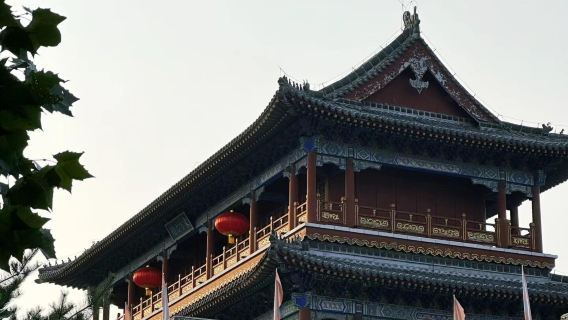
Qingzhou is one of the ancient nine provinces of China. Since the early Western Han Dynasty, six cities—Guang County, Guanggu City, Dongyang City, Nanyang City, Dongguan Weizi City, and Qicheng—were successively built on this land, with a continuous urban history spanning over two thousand years. Today, the Ancient Town of Qingzhou has been comprehensively protected and restored, forming three major districts: the Beiguan ancient block in Dongyang City, the Ouyuan historical and cultural block and the South Gate block in Nanyang City, and the Zhaode ancient block in Dongguan Weizi City. Government buildings, traditional residences, and classical gardens are scattered across hundreds of ancient streets and alleys, such as North Gate Street and East Gate Street, with their blue bricks and dark tiles showcasing distinct Ming and Qing architectural styles. Unlike many entirely reconstructed ancient towns, this is a "living ancient town," where original residents still live in the old streets and alleys, and intangible cultural heritage items like the cuoqin are passed down on the streets, blending the vibrancy of daily life with ancient charm. A visit can begin by ascending the Fucai Gate Tower at the south gate of ancient Nanyang City for a panoramic view of the town's sea of dark tiles. Ouyuan is a preserved classical garden within the town, originally the eastern garden of the Ming Dynasty's Prince of Heng's residence and later the private garden of Feng Pu, a grand secretary during the Qing Kangxi era. Its three-peak rockery embodies the grandeur of northern landscapes. Figures like Fan Zhongyan and Ouyang Xiu once served as officials here, and Li Qingzhao lived in Qingzhou for over a decade, composing numerous ci poems. Historical relics like the Qingzhou Prefecture Examination Hall are also scattered throughout the streets, where traces of this cultural legacy can often be encountered. The main street is densely lined with shops, but to avoid crowds, one can turn into the side alleys or head straight to Zhaode Ancient Street—where rows of Ming and Qing-era houses remain, with wooden doors, stone steps, and flagstone paths offering a glimpse of old Qingzhou's daily life.Qingzhou · 31.4 km from Changle

Shihuyuan
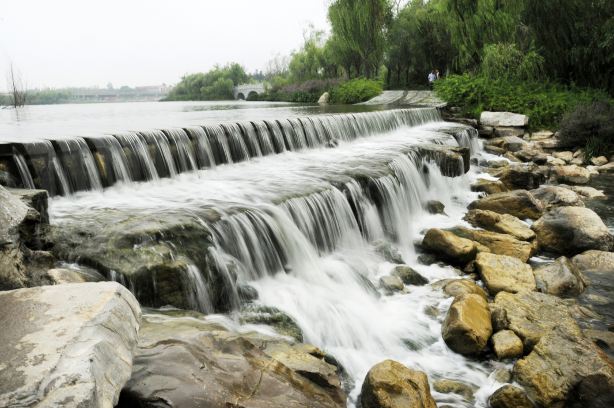
Shihu Garden is located at Hujiapaifang Street, Weicheng District, Weifang City, which includes rockery, waterfalls, ponds, and bridges. The entire building and layout of Shihu Garden is compact and not crowded. It is a relatively complete Jiangnan style garden that is protected in the north of the Yangtze River. The elegant architecture of Shihu Garden, the beauty of its scenery, and rich cultural heritage are rare in northern landscape architecture.Weifang · 24.6 km from Changle

Yunmen Mountain Scenic Area
[Zhonghua Shoushan · Fairyland Cloud Gate] Yunmen Mountain scenic area in Qingzhou is famous for the thousand-year-old story of "May you live as long as the Southern Mountain" and is known as "the No. 1 Mountain of Ancient Chinese Longevity Culture". This famous mountain in central Shandong, with an altitude of 421 meters, integrates geological wonders, religious heritage and cultural treasures. It is not only a national geological park, but also the core attraction of Qingzhou Ancient City Tourist Area. 🌟 Key Highlights The Longest Birthday in the World – Yunmen Offering Longevity The giant Ming Dynasty cliff carving of the character "寿" (longevity) on the shady side of the mountain is 7.5 meters high and 3.7 meters wide, with the character "寸" (inch) alone reaching a height of 2.3 meters, symbolizing "no one is as tall as an inch." Legend has it that it was carved by Zhou Quan, the official in charge of the imperial kitchen of the Prince of Heng, during the Jiajing era of the Ming Dynasty, to celebrate the Prince's birthday. Despite enduring 500 years of wind and rain, it remains imposing. Furthermore, the legend of "a snow-covered man presenting a longevity gift to the Prince of Heng" adds a mystical aura to this giant longevity carving. A thousand-year-old secret realm where Buddhism and Taoism coexist The Sui and Tang Dynasty Grottoes: 272 stone Buddhas stand quietly in the mountains in 5 grottoes in Shanyang. The earliest inscription can be traced back to the ninth year of the Kaihuang era of the Sui Dynasty (589 AD). It is a rare early Buddhist art relic in Shandong. Taoist holy sites: Wangshou Pavilion, Wanchun Cave (the final resting place of Chen Tuan) and other ancient sites are scattered throughout the area. The stone carvings with inscriptions such as "The God is Here" and "Transcending the Dust and Dreams" written by Xue Suo are elegant and vivid, fully demonstrating the Taoist immortal spirit. Geological wonders and natural scenic spots Yunmen Mountain scenic area- Yunmen Wonderland: The natural cave "Yunmen Cave" through the main peak, Dayunding, is shrouded in clouds and mist during the summer and autumn seasons, making the temples on the mountaintop appear and disappear, creating a fairyland-like atmosphere. It is known as the first of the eight scenic spots of ancient Qingzhou. Hongdan Cliff Landform: Along the way to climb the mountain, you can see ochre-red cliffs and pine trees, which are even more magnificent at sunrise. Guo Moruo once praised it as "the red trees and cliffs are worse than any painting". 🚶 Visitor Guide Classic route (2-3 hours): Mountain Gate → Guanshou Pavilion (panoramic view of the giant longevity statue) → Wangshou Pavilion → Giant Longevity Stele on Cliff (take photos) → Yunmen Cave (pass through the gate of clouds and mist) → Tianxian Yunu Temple (Ming Dynasty stone arched building without beams) → Donglangfeng Pavilion (overlooking the panoramic view of Qingzhou). Cultural Exploration: Along the way, you can admire inscriptions from various dynasties such as "Hai Dai Majestic Style" and "Old Man in a Raincoat Lying on Bean Rock", explore the stone statue of Chen Tuan and the poem inscription of "Snow Raincoat" in Wanchun Cave, and feel the artistic conception of "sleeping soundly in the deep night with white clouds rising".Qingzhou · 33.7 km from Changle

Ouyuan Garden
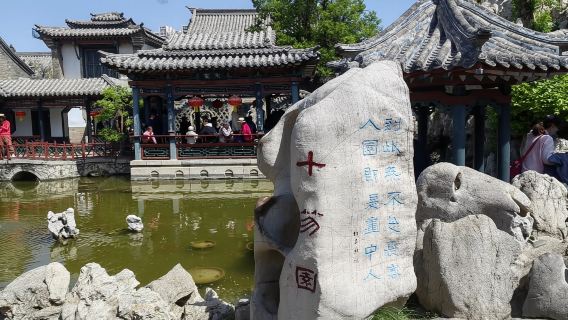
Ouyuan, also known as "Feng Family Garden", was the east garden of the Hengwang Palace in the Ming Dynasty. It has a history of more than 500 years. Later, it became the residence of Feng Pu, a university scholar of Wenhua Palace during the reign of Emperor Kangxi of the Qing Dynasty, after he retired and returned to his hometown. The Feng family was a famous family in Qingzhou during the Ming and Qing Dynasties. Since the ancestor Feng Yu, generations of officials have been honest and upright, and the tradition of poetry, books and literature has been passed down from generation to generation.Qingzhou · 31.5 km from Changle

Mount Taishan
Crowned as "The King of the Five Sacred Mountains", Mount Tai has been one of China's most famous mountain peaks since ancient times. A large and impressive rock mass covering 25,000 ha and rising to 1,545 m above the surrounding plateau, Mount Taishan is considered one of the most beautiful scenic spots in China and was an important cradle of oriental East Asian culture since the earliest times. The mountain was an important object of the cult worship of mountains even before 219 BCE, when the Qin Emperor paid tribute to the mountain to inform the gods of his success in unifying all of China. Watching the sunrise and catching the spectacular sea of clouds are common activities that visitors engage in. You are also encouraged to explore the ancient sites, engravings, and religious temples to understand the role of Mount Tai in China's long history.China · Tai'an

Tsingtao Beer Museum
The Tsingtao Beer Museum is located at No. 56 Dengzhou Road, the birthplace of Tsingtao beer. This century-old factory, housed in a 1903 German-style industrial complex, witnesses China's beer industry journey from its infancy to prominence. As China's first beer-themed model for industrial heritage revitalization, the museum transforms weathered red-brick workshops into immersive spaces using precious early equipment like old motors, mash kettles, and boiling kettles. Visitors walking through the century-old memory corridor can touch over 30,000 artifacts from the German occupation era while overlooking the smart production lines of the "lighthouse factory" through glass walls. Through the dialogue between traditional wooden fermentation tanks and fully automated filling equipment, they decode the evolution of Chinese manufacturing from artisanal heritage to digital transformation. With the innovative concept of "living heritage + technological empowerment," the museum breaks free from the static display constraints of industrial sites. The VR brewing lab allows visitors to become brewers adjusting malt ratios, while the hop recognition system decodes the scientific secrets behind beer flavors. Personalized beer label printing customizes brews, turning taste into portable urban memories. This cultural landmark, bearing Qingdao's industrial DNA, not only showcases its benchmark value in cultural-tourism integration through honors like "national first-class museum" and "China's top 10 cultural heritage tourism cases," but also injects more sustainable vitality into the century-old factory by being selected as a "national cultural industry demonstration base." It continues to brew the city's cultural richness from industrial heritage amid the tides of time.China · Qingdao

Laoshan Scenic Spot
Laoshan scenic spot is located in eastern Qingdao, bordering the Yellow Sea to the east and south. Known as the "famous mountain on the sea", its highest peak stands at approx. 1,100 m above sea level.JufengThe attraction is renowned as a famous Taoist mountain for its grandeur, magnificence, uniqueness and beauty. Its Taoist temples, sunrise and sea of clouds allPrestigious. The scenic area mainly consists of seven major scenic zones: Laoshan's grand peak scenic area, Liuqinghe scenic area, Laoshan's taiqing scenic area, Qipan stone, Laoshan's yangkou scenic area, Laoshan's jiushui scenic area, and Laoshan's hualou scenic area. There are four touring routes in total, including three land routes (southern line, eastern line, and central line) and one water route. The scenic highlights include grand peak sunrise, taiqing water moon, and haiqiao fairy mound.Huayuan stacked stonesJiushui mingyi and others together form the twelve scenic spots of the attraction. Huashan scenic area in Laoshan is far from the sea and not located inLaoshan MountainThe area sees fewer visitors. The Laoshan Jiushui scenic area is renowned for its water features, with streams and springs throughout, offering beautiful scenery. For the average visitor, the truly worthwhile routes are the Laoshan grand peak scenic area and the Liuqinghe-Yangkou scenic area line - one day is sufficient for each route. These areas contain the most spectacular natural landscapes of the attraction. The liuqinghe scenic area - laoshan yangkou scenic area, also known as the southern route, is one of the earlier developed attractions here. It closely follows the coastline and features the famous attraction laoshan taiqing palace, making it the most popular route for visitors. The basic route through the attraction is liuqinghe scenic area - taiqing palace scenic area - huayan temple, with the endpoint at laoshan yangkou scenic area. Since the highlight of this route lies in the laoshan yangkou scenic area, it's recommended to plan your time wisely when visiting the preceding attractions. Laoshan Taiqing palaceStrange tales from a Chinese studioMediumLaoshan MountainThe birthplace of the Taoist priest's story. Inspired by his visit to Laoshan Taiqing Palace, Pu Songling wrote "The Taoist Priest of Laoshan" here. Visitors can see the wall described in Pu Songling's work where the Taoist priest of Laoshan walked through. Huayan Temple - the existing Buddhist temple in the attraction. Since the Laoshan Yangkou scenic area is close toHuanghaiHere you can enjoy the sea view and feel the ocean breeze. Of course, besides its beautiful scenery, the Yangkou scenic area of Laoshan Mountain offers the challenging Mitian cave - winding, steep, and narrow, with sections so dark you can't see your hand in front of your face and so tight you have to squeeze through sideways, significantly enhancing the adventure. You can reach Mitian cave either on foot or by cable car. Upon reaching the mountaintop, you can take photos, admire the scenery, and gaze at the Yellow Sea in the distance. Remember to bring a flashlight to fully appreciate the cave's spectacular formations. Besides the Laoshan Yangkou scenic area, the second highlight of the attraction is the Laoshan grand peak scenic area. This area features the main peak of the mountain, with the summit being the highest point. Primarily focused on hiking, it's the most physically demanding part of the attraction. The grand peak scenic area boasts magnificent rock formations - you can see the sea on clear days and a sea of clouds on overcast days. Watching the sunrise from the summit offers breathtakingly beautiful views.China · Qingdao

Baotu Spring
Baotu Spring is located in the bustling downtown area of Jinan, bordered by Qianfo Mountain to the south, Daming Lake attraction to the north, and connected to Quancheng Square to the east. This spring-themed garden is renowned as the "No. 1 spring under heaven" and ranks first among Jinan's "72 famous springs," with a history spanning over 2,000 years. It has also frequently appeared in literary works, most notably in Lao She's "Baotu Spring." Visitors come here to witness the spectacular sight of the three gushing springs. The main spring serves as the park's centerpiece, with its crystal-clear water gushing in three separate jets day and night, reaching several feet high during peak flow. The spring is surrounded by large stone masonry and guardrails, allowing visitors to overlook the spectacular sight of the three jets from the railings. A dark green stone tablet inscribed with "No. 1 spring" stands nearby, bearing the calligraphy of Licheng's Wang Zhonglin from the Tongzhi era of the Qing Dynasty. In the vicinity, over thirty other famous springs are scattered, including Jinxian Spring, Shuyu Spring, Xibo Spring, Liuxu Spring, Huanghua Spring, Dukang Spring, and Bailong Spring. July and August, when local rainfall is abundant, make for the best season to observe these springs. In the height of summer, visitors can get up close with the springs in the park. Some springs have no railings around them, with stone paths in the pools where water flows over. Visitors can step into the pools to interact with the water, walking on the stone paths where their feet will get wet from the cool spring water. Besides water interaction, there are free drinking springs available for visitors by the pools. On the east side of the springs stands the Wangheting teahouse, specially catering to visitors.This springFragrant tea brewed with water at a moderate price. In addition to the springs, another highlight of the park is its magnificent south gate, adorned with grandeur and elegance. The horizontal plaque above the gate, inscribed with "Baotu Spring" in golden characters on a blue background, bears the imperial handwriting of Emperor Qianlong from the Qing Dynasty. It is acclaimed as the "first gate" of Chinese classical gardens. In previous years, seasonal water stoppages frequently occurred here, but through recent conservation efforts, normal water levels have been largely restored. Additionally, the attraction regularly hosts various cultural events. Every year on the first day of the lunar new year, a lantern festival is held for 20 days. In late September, there's a spring water culture festival lasting about 10 days, featuring folk activities, calligraphy and painting exhibitions, and traditional opera performances for visitors to enjoy. From late October to late November, a chrysanthemum exhibition takes place where the golden fall scenery of gushing springs and blooming chrysanthemums creates a spectacular sight well worth seeing. In addition, the attraction has launched a cruise route. After visiting the attraction, interested visitors can board the cruise at the dock, passing through the west gate bridge in Jinan's old town, the east gate of Wulongtan Park, and entering Wulongtan Lock, Jinan's first passenger ship lock in history, where they can experience a drop of over 2 m. Sitting on the east side of the boat, visitors can also see the relief of "Jinan's eight scenic views". The riverbanks along the route are lined with aquatic plants, and the water is crystal clear. The cruise finally passes through Yanbo Bridge and enters the Daming Lake attraction.China · Jinan

Daming Lake Scenic Area
Daming Lake Scenic Area is located in the northeast of downtown Jinan, the northern part of the Old Town. It is a park that integrates bodies of water, garden landscape, and ancient architecture. Daming Lake is in the center of the park. Or one could say that the park is built along the lake. Daming Lake is a natural lake. The water source comes from many springs in the city. It has a long history, dating back to the Northern Wei Dynasty. In the park, you can visit the Lao She Memorial. In summer, you can enjoy the lotus blossoms in the garden.China · Jinan

Badaguan
Badaguan is a coastal neighborhood in the southern part of Qingdao, nestled between the southern foothills of Taiping Mountain, Huiquan Cape, and Taiping Cape. It earned its name from eight streets named after ancient passes, with roads like Shaoguan Road, Zhengyangguan Road, and Shanhaiguan Road now forming a crisscrossing network. The area is shaded by lush trees, dotted with deep courtyards, and offers a tranquil atmosphere with few pedestrians. This neighborhood boasts hundreds of old villas built in the 1920s and 1930s, showcasing a blend of architectural styles from Russia, Britain, Germany, Denmark, Japan, and more, earning it the nickname "International Architecture Expo." Among them, the seaside Huashi Building is a European castle-style structure built with multicolored stones and is one of the few villas open to the public, allowing visitors to explore inside and enjoy sea views from its rooftop platform. On Juyongguan Road, the Princess Building is a Danish-style villa with green walls and red tiles, named after a Danish princess and known for its photogenic charm. The Marshal Building on Shanhaiguan Road is a Japanese-style villa where several founding marshals once stayed. Note that most villas here are not open to the public, so visitors can only admire their exteriors. A unique feature of Badaguan is its "one tree per road" theme: Shaoguan Road is lined with flowering peach trees that bloom brilliantly in spring; Ningwuguan Road is adorned with crabapple flowers in late spring and early summer; Zhengyangguan Road is filled with crape myrtles throughout summer and autumn; Jiayuguan Road is flanked by maple trees turning red and yellow in late autumn; Juyongguan Road is carpeted with golden ginkgo leaves; Zijingguan Road features evergreen cedars; while Shanhaiguan Road and Linhuaiguan Road are lined with plane trees and junipers, respectively. Each season transforms the neighborhood into a different landscape. Walking south to the end of these roads leads to the seaside, adjacent to the Second Bathing Beach, where fine sand contrasts with red-tiled villas, embodying Qingdao's classic "red tiles, green trees, blue sea, and azure sky" scenery. This area is a popular spot for wedding photos and a quintessential place for strolls and photography in Qingdao.China · Qingdao
Experiences you can't miss in Changle
Featured Cultural experiences in Changle
View all Cultural experiences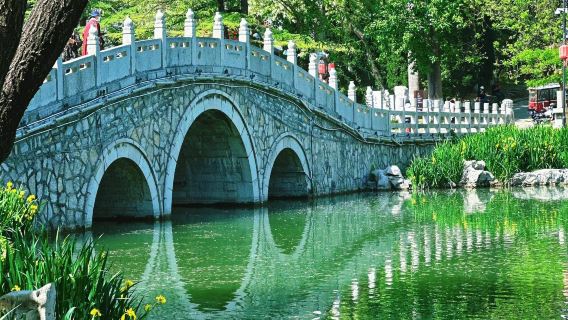


Featured Day tours in Changle
View all Day tours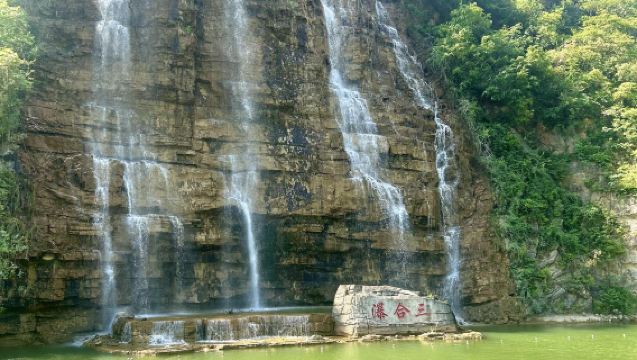

FromUS$170.04
FromUS$204.04
More ways to travel from Changle
Private Tours in Changle
View More Private Tours in Changle

Free things to do in Changle
Ancient Town of Qingzhou
Qingzhou · 31.4 km from ChangleBook now for tomorrow, Cancel anytimeShihuyuan
Weifang · 24.6 km from ChangleBook now for tomorrow, Cancel anytimeYunmen Mountain Scenic Area
Qingzhou · 33.7 km from ChangleBook now for tomorrow, Cancel anytimeOuyuan Garden
Qingzhou · 31.5 km from ChangleMount Taishan
China · Tai'anImmediate access, Book now for today, Cancel anytimeTsingtao Beer Museum
China · QingdaoBook now for tomorrow, Cancel anytimeLaoshan Scenic Spot
China · QingdaoBook now for tomorrow, Cancel anytimeBaotu Spring
China · JinanBook now for tomorrow, Cancel anytimeDaming Lake Scenic Area
China · JinanBadaguan
China · Qingdao
What travellers say about Changle

268***26October 7, 2026
5.0
When visiting Qingzhou Ancient City, the Fucai Gate Tower is a must-see, considered the heart of the ancient city. There aren't many other attractions within the ancient city, but the tower has a great location, with convenient access via sightseeing electric carts. There are also plenty of food stalls to explore nearby.
Ancient Town of Qingzhou

Natasha...October 14, 2026
5.0
Although the scenic area isn't large, it boasts pavilions, towers, and flowing streams, and even includes the filming location for the TV series "Journey to the West," Gao Lao Zhuang. It's worth a visit if you're passing by, but not worth making a special trip. The nearby commercial area isn't very busy, but finding a beverage shop to enjoy a cup of tea is a great way to relax.
Shihuyuan

阿黛adelOctober 14, 2026
5.0
The mountain is not very high, with an altitude of just over 400 meters. However, there is not much scenery along the way, and the climb is a bit tiring. The scenery is only beautiful when you reach the character "寿" (longevity). At the top, the wind feels very comfortable.
Yunmen Mountain Scenic Area

M26***89September 30, 2026
5.0
Qingzhou, one of the Nine Provinces, has a long history. Although the city wall was built later, you can see a panoramic view of the ancient city from the top. In addition, the Imperial Examination Hall is very famous and produced more than 800 Jinshi (successful candidates in the highest imperial examinations).
Ouyuan Garden

Anonymous userOctober 19, 2026
4.0
Suggest to reach in in early afternoon for a short trek around the area and catch the sunset. stay for a night to see the sunrise next day. Very beautifu & memorablel views. Great food condidered considered its so high up..
Mount Taishan

SuperooOctober 20, 2026
5.0
It's a grand building with lovely gardens. Just a long queue getting in so make sure you get your tickets before arriving. Interesting historical look into beer in Qingdao and the different collaborations on packaging. When they say "fresh beer" - it means it's yeast (German appay) fermented but less filtered. Creamier, and yummier imo
Tsingtao Beer Museum

钧媗October 18, 2026
4.0
Yangkou Scenic Area isn't very strenuous, but it's mostly steps. This is especially unfriendly to people with bad knees, as the entire route is almost entirely stairs with no uphill climbing. Many people buy cable car tickets. However, buying the cable car means missing out on the opportunity to enjoy the scenery while walking. It's truly a difficult choice.
Laoshan Scenic Spot

大鲁迪October 19, 2026
5.0
Finally, I saw Baotu Spring, which I'd read about in textbooks! The three springs gushing upwards were truly breathtaking. The gardens were antique and elegant, the pool water was crystal clear and emerald green, and the air was filled with cool spring steam—a very pleasant place to stroll. No wonder it's called the "Number One Spring Under Heaven"—definitely worth a visit!
Baotu Spring

Bolton ChenOctober 19, 2026
4.0
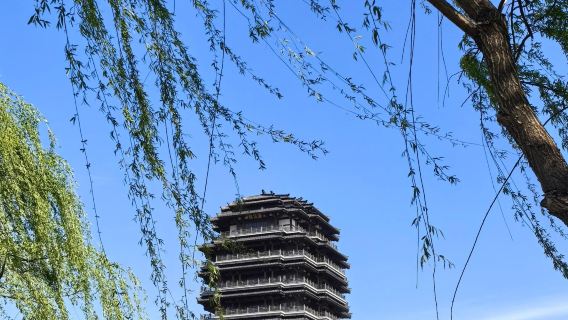
Daming Lake holds the story of Emperor Qianlong and Xia Yuhe's "epic, tragic love" 😂 "Your Majesty, do you still remember Xia Yuhe by Daming Lake?"—When Emperor Qianlong toured the south, he encountered Xia Yuhe playing the zither in the Yuhe Hall, fell in love at first sight, wrote a poem and presented her with a fan, vowing that "a true friend is hard to find." However, after more than a decade apart, Yuhe fell ill with longing and died with her zither in her arms 😢 However, there is no historical record of this person; it's purely a romantic fiction by Qiong Yao. The lake shimmers, lotus flowers fill the pond, and the saying "lotuses on all four sides, willows on three" is truly fitting. The illuminated Chaoran Tower is even more breathtaking.
Daming Lake Scenic Area
Anonymous userOctober 7, 2026
5.0
Absolutely beautiful. The interior features exquisite and unique artwork. The courtyard has a distinctive layout, and the rooms are all unique, reflecting different architectural styles from various countries. Worth a visit.
Badaguan


