Things to do in Dehra
Explore top experiences
Top 10 attractions in Dehra
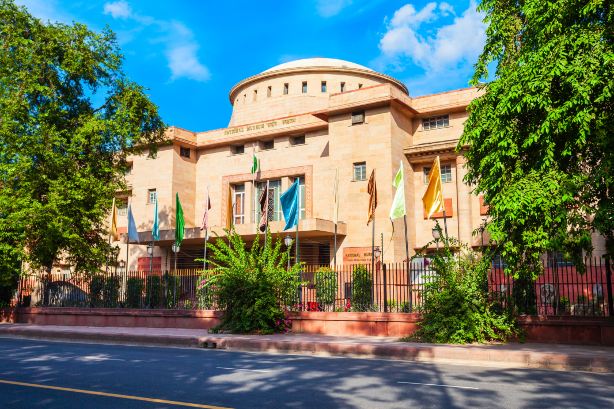

National Museum, New Delhi
National Museum, New Delhi is a comprehensive museum in India. It houses over 200,000 artifacts, spanning from the Indus Valley Civilization to the modern era. The collection includes stone sculptures, Buddha statues, miniature paintings, textiles, coins, weapons, and more, with the three-story exhibition halls generally arranged by era and category. Highlights worth prioritizing: The "Dancing Girl" bronze figurine unearthed from Mohenjo-daro in the Harappa Gallery is about 4,500 years old and measures only about 10 cm, making it one of the iconic artifacts of the Indus Valley Civilization. The Buddhist Art Gallery displays relics unearthed from the Piprahwa Stupa, some of which are now housed in this museum, and are frequently visited by Buddhist devotees and tourists. Gandhara sculptures depict the Buddha using Hellenistic realistic techniques, contrasting with the soft and restrained indigenous style of the Gupta period. Mughal court miniature paintings and South Indian temple bronze sculptures are also rich in highlights. Among them, the Central Asian Gallery is particularly worth seeing—it displays Silk Road artifacts obtained by British archaeologist Aurel Stein during his three expeditions to Central Asia in the early 20th century: silk and hemp banners from theDunhuang Library Cave, murals from Turpan's Tuyugou and Bezeklik Caves, pottery figurines and "Fuxi and Nuwa" silk paintings unearthed from the Astana Tombs, etc. These were transported to New Delhi in 1918 and later incorporated into the museum's collection, where they remain today. The gallery is extensive with a long walking route, so you can use the audio guide to help understand the numerous mythological and Buddhist images.New Delhi · 37.7 km from Dehra

Drizzling Land
Basantpur Saitli · 15.6 km from Dehra

Ghantaghar Ramlila Maidan
Ghaziabad · 17 km from Dehra

SkyJumper Trampoline and Amusement Park
Ghaziabad · 16.3 km from Dehra

Sriram Leela Committee, Pilkhuwa
Hapur · 8 km from Dehra

Ch. Charan Singh Park
Ghaziabad · 11.6 km from Dehra

ISKCON Temple, Ghaziabad
Ghaziabad · 15.3 km from Dehra

Chhota Haridwar
Yusufpur Manota · 16.5 km from Dehra

Dasna Devi Mandir
Ghaziabad · 8 km from Dehra

Yogaanusar(Meditation, pranayam, asana )
Ghaziabad · 12.3 km from Dehra
Experiences you can't miss in Dehra
Featured Cultural experiences in Dehra
View all Cultural experiences
4.5/5
· 2 reviewsFree cancellation
Book now for today
From£42.56
Free cancellation
Instant confirmation
Book now for tomorrow
10% off
Limited-time sale
From£35.45£39.39
Free cancellation
Instant confirmation
Book now for tomorrow
From£52.52
Free cancellation
Instant confirmation
Book now for tomorrow
From£30.64

Free cancellation
Instant confirmation
Book now for today
From£534.59
5.0/5
· 4 reviewsFree cancellation
Book now for tomorrow
5% off
Limited-time sale
From£4.51£4.75

Free cancellation
Instant confirmation
Book now for today
From£561.32

Free cancellation
Instant confirmation
Book now for today
From£498.95
Featured Day tours in Dehra
View all Day tours
4.3/5
· 16 reviews· 122 bookedFree cancellation
Instant confirmation
Book now for tomorrow
From£40.27

5.0/5
· 1 review· 26 bookedFree cancellation
Instant confirmation
Book now for tomorrow
From£35.02

3.7/5
· 3 reviews· 36 bookedFree cancellation
Instant confirmation
Book now for tomorrow
From£39.39
5.0/5
· 6 reviewsFree cancellation
Instant confirmation
Book now for tomorrow
10% off
Limited-time sale
From£23.63£26.26


5.0/5
· 1 reviewFree cancellation
Instant confirmation
Book now for tomorrow
From£26.26
5.0/5
· 1 reviewFree cancellation
Instant confirmation
Book now for tomorrow
10% off
Limited-time sale
From£22.85£25.39
Free cancellation
Instant confirmation
Book now for tomorrow
From£78.78
Featured Food & drink in Dehra
View all Food & drink
Free cancellation
Instant confirmation
Book now for today
10% off
Limited-time sale
From£38.53£42.82
5.0/5
· 4 reviewsFree cancellation
Book now for tomorrow
5% off
Limited-time sale
From£21.00£22.11

Free cancellation
Book now for tomorrow
5% off
Limited-time sale
From£23.26£24.49

Free cancellation
Book now for tomorrow
5% off
Limited-time sale
From£30.47£32.08

Free cancellation
Book now for tomorrow
5% off
Limited-time sale
From£27.63£29.09

5.0/5
· 1 reviewFree cancellation
Book now for tomorrow
5% off
Limited-time sale
From£4.50£4.74
Free things to do in Dehra

What travellers say about Dehra

Athambawa JaleelOctober 3, 2026
5.0
The National Museum in New Delhi, established in 1949, houses more than 200,000 art objects spanning over 5,000 years of Indian art, history, and craftsmanship, making it one of the most significant cultural institutions in the country. Its collection covers an extraordinary range: Indus Valley Civilization artifacts from Harappa and Mohenjo Daro, Buddhist relics, miniature paintings (one of the largest such collections in the world), sculpture, jewellery, textiles, coins, and decorative arts from across the subcontinent. Many visitors describe the Harappa and Mohenjo Daro galleries as a particular highlight, and the museum is genuinely vast, large enough that serious history enthusiasts could easily spend a full day exploring it rather than the typical 90 minute to 3 hour visit most people manage. Entry is inexpensive for locals (around Rs. 20 to 50) and more for foreign visitors (roughly Rs. 500), and an audio guide, widely recommended by reviewers for the depth it adds, is available for a small additional fee.That said, recent reviews paint a mixed and somewhat inconsistent picture of the visitor experience. Several travelers in 2024 and 2025 reported the museum "in transition," with large sections, sometimes cited as 60 percent or more, closed for renovation or packed away ahead of a planned move to a new building, meaning some of the most famous pieces may simply not be on view depending on when you visit. Complaints about weak or absent air conditioning, poor signage and wayfinding between galleries, inconsistent availability of the audio guide and highlights tours, and notably unhygienic restrooms in the older sections come up repeatedly, alongside criticism that newer galleries (such as the upgraded Tribal and Colombian art sections) are far better maintained than the aging ground floor and main Harappan displays.
National Museum, New Delhi

Nick DixitOctober 19, 2022
5.0
such a powerful and positive vibe. hare rama and Hare Krishna chanting give full energy
ISKCON Temple, Ghaziabad