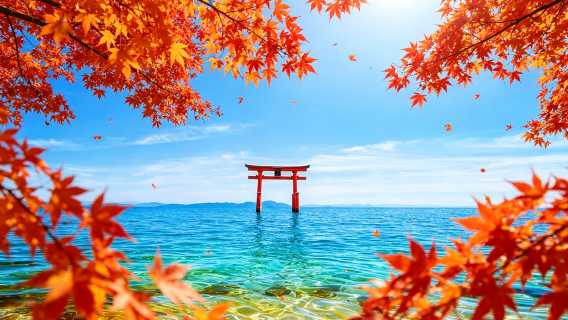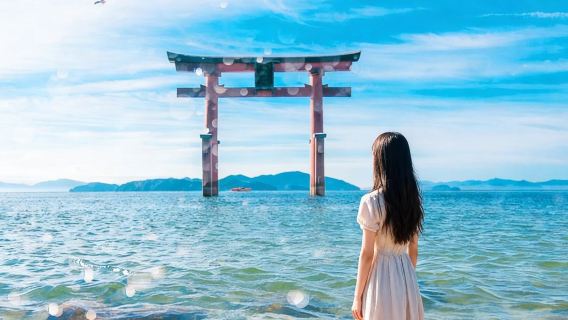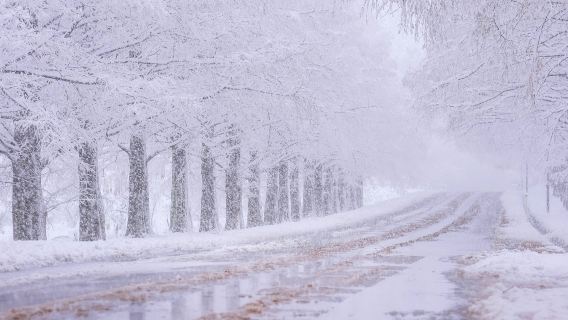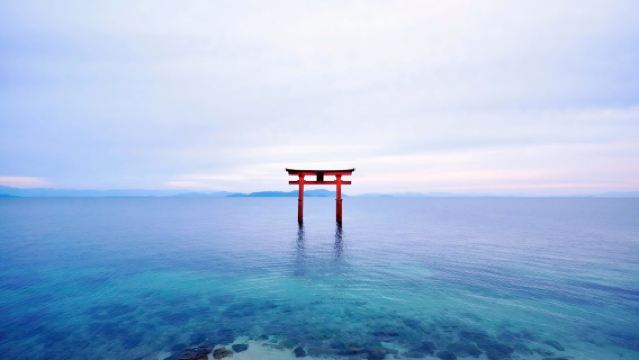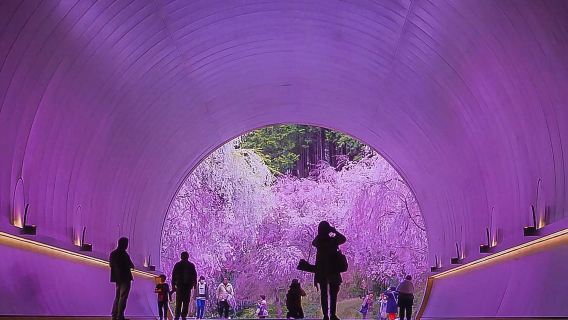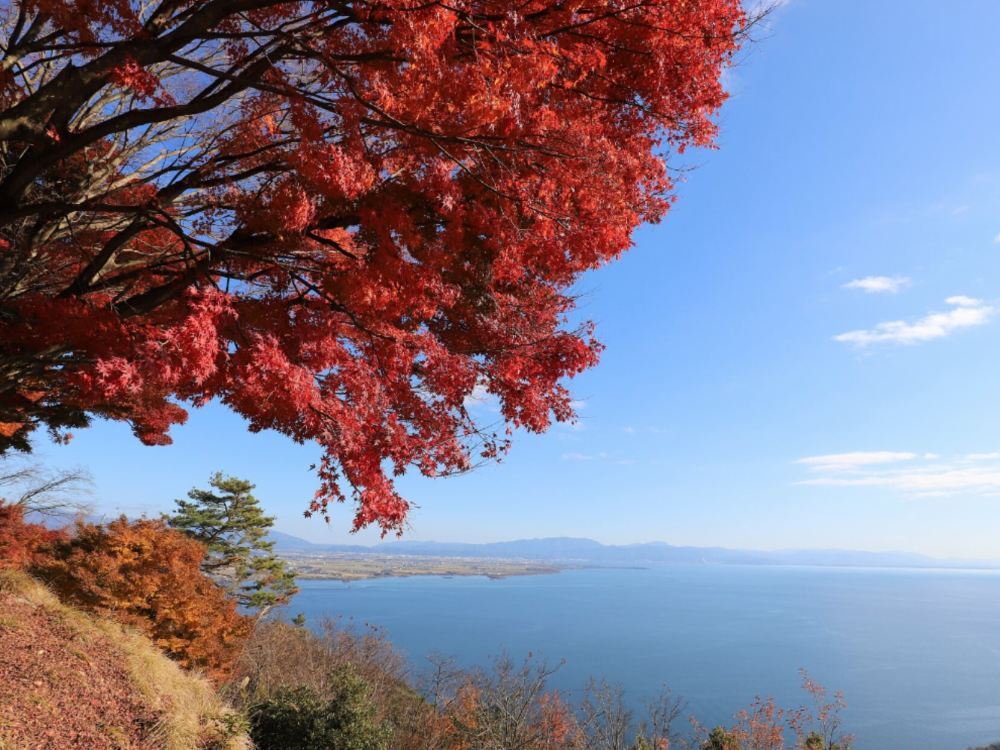
▲ Lake Biwa is the largest freshwater lake in Japan by area, historically known as the "Lake of Omi." Its waters are clear, and the scenery around the lake is rich and diverse. Unlike the compact Zen atmosphere of Kyoto's temples, Lake Biwa's charm lies in its openness and expansiveness, where lake views and red maple leaves complement each other, bringing together ancient temples, metasequoia trees, small towns, and lake scenery all at once—a treasure route not to be missed during the Kansai autumn foliage season.
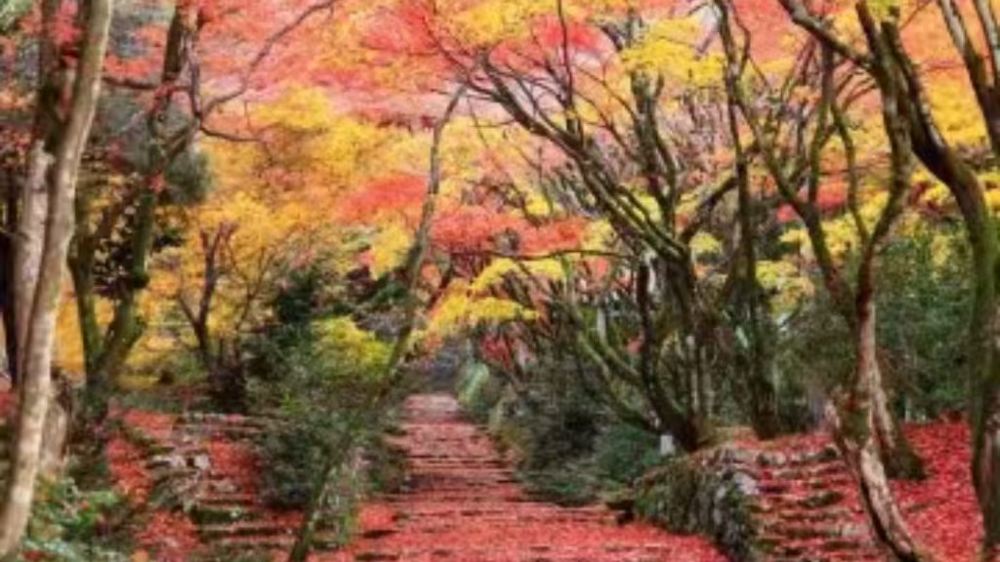
▲ Keisokuji Temple is located in Nagahama, Shiga Prefecture, and is a well-known autumn foliage spot in the Omi region. The stone-step approach leading to the main hall is its most famous highlight, with approx. 200 maple trees growing along the path. During autumn foliage season, fallen maple leaves cover the tiered stone steps, and the brilliant red leaves contrast with the old stone walls in a quiet and soothing scene.
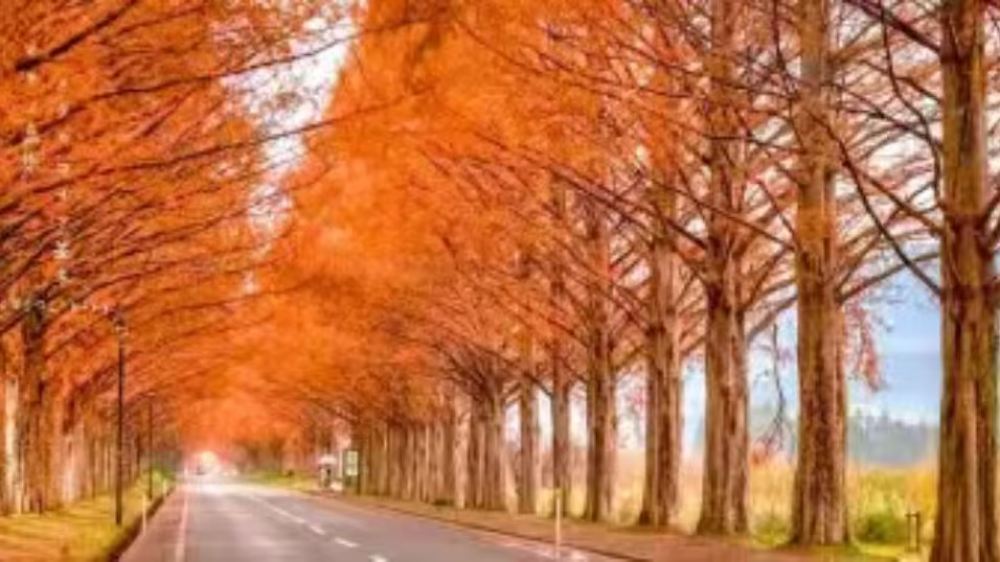
▲ The metasequoia avenue on Makino Plateau in Takashima, Shiga is a super-famous fall photo spot road in Kansai. Nearly 500 metasequoia trees line both sides of the entire road in neat rows, stretching approx. 2.4 km. In late fall, the whole stretch turns a rich caramel orange-red, and the branches and leaves meet overhead to form a natural archway—driving through it feels like stepping into an oil painting.
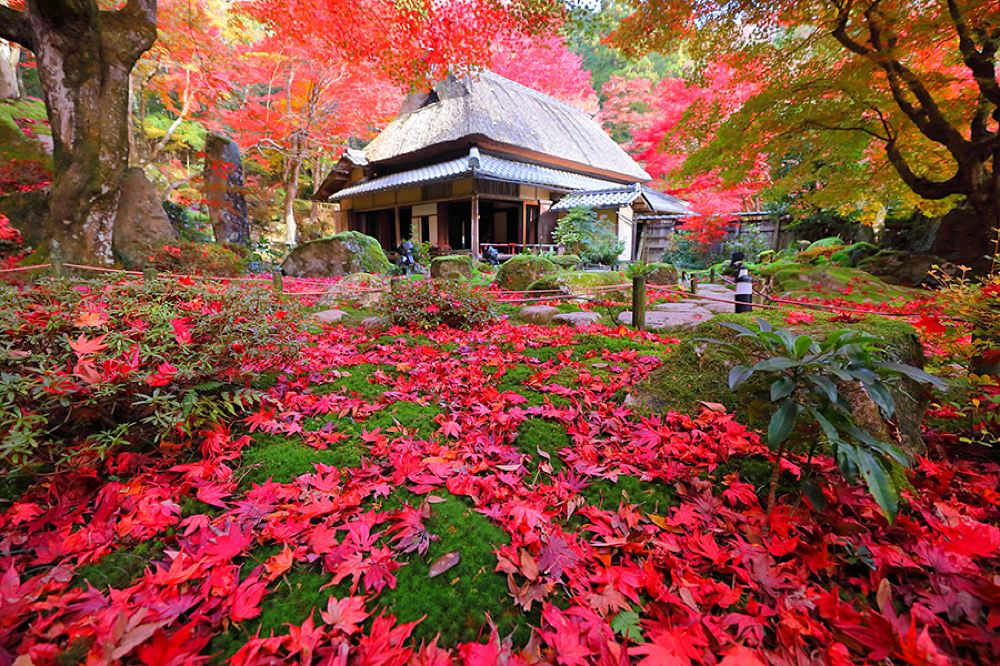
▲ Kyorinbo Temple is located in Azuchi-cho, Omihachiman, Shiga Prefecture. It is an ancient Tendai sect temple said to have been founded in 605 by Prince Shotoku. Because its garden is covered with giant mossy rocks, it is known as the "Temple of Stones." The temple is open to the public only in spring and fall, giving it an air of mystery. Its famous garden is said to have been created by the master garden designer Kobori Enshu, with huge rocks, moss, and flowing water forming a classic Japanese strolling garden, while an early Edo-period thatched-roof study hall stands quietly on the grounds. In late fall, all 300 ancient maples turn red, contrasting with the surrounding grove of green bamboo for a striking display of red and green.