


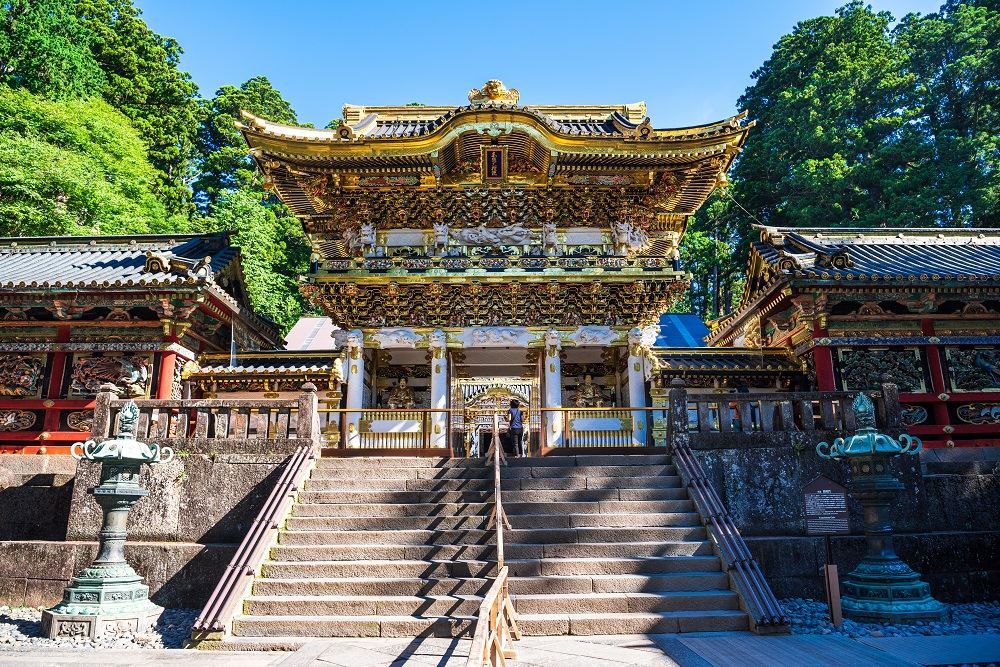
▲ The national treasure "Yomeimon Gate" of Nikko Toshogu Shrine is resplendent in gold, featuring over 500 meticulously crafted polychrome carvings of the utmost splendor. Because it is so captivating that one never tires of looking at it, it is known as the "Gate of the Setting Sun."
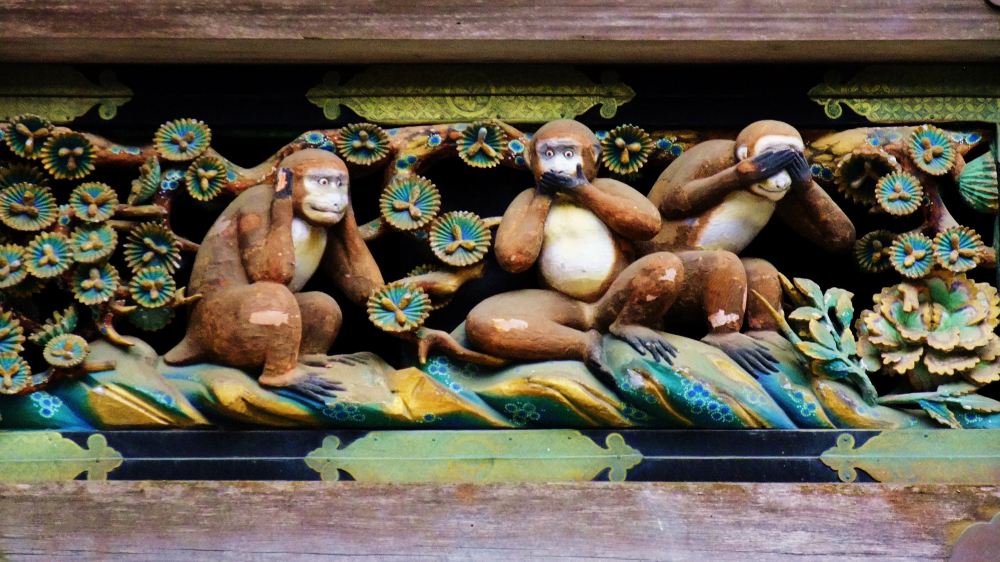
▲ The famous "Three Wise Monkeys" wood carving at the World Heritage Site Nikko Toshogu Shrine covers its ears, mouth, and eyes respectively, embodying the meaning of "hear no evil, speak no evil, see no evil." It is vivid and interesting, and contains profound life philosophy.
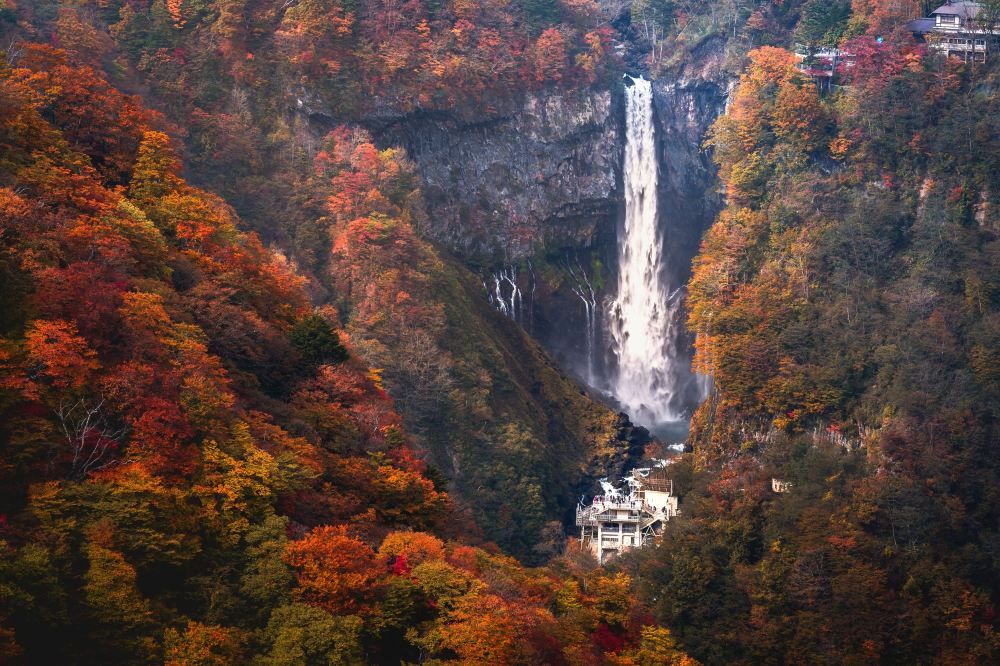
▲ In late fall, Kegon Waterfalls is closely surrounded by fiery red and golden maple leaves. Visitors can look up from the observation deck below to admire the magnificent sight of the waterfall cascading down up close and experience the beautiful scenery where fall colors and the plunging waterfall interweave.
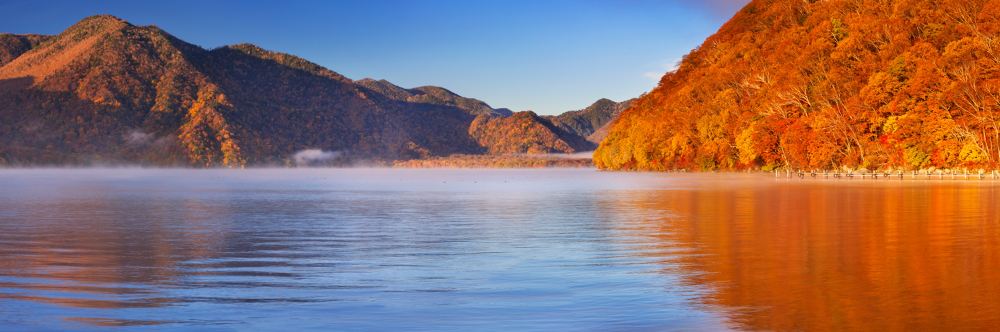
▲ In the early morning, a light mist gently shrouds the surface of Lake Chūzenji, making it look like a fairyland. The rising sun dyes the red leaves on the mountains a dazzling golden-red, reflected on the calm lake surface, presenting a dreamy and serene autumn morning scene.
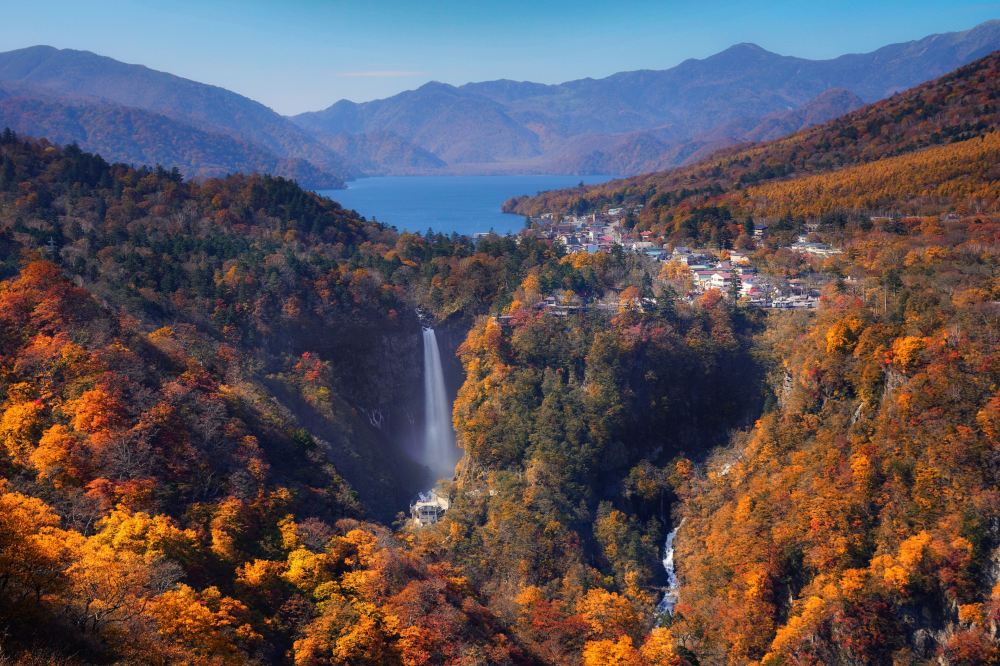
▲ In the depths of fall, the mountains of Nikkō are dyed in brilliant golden yellow and orange-red, and Kegon Waterfalls cascade down through the gorge, together with the distant Lake Chūzenji and the lakeside town, forming a richly layered autumn scene
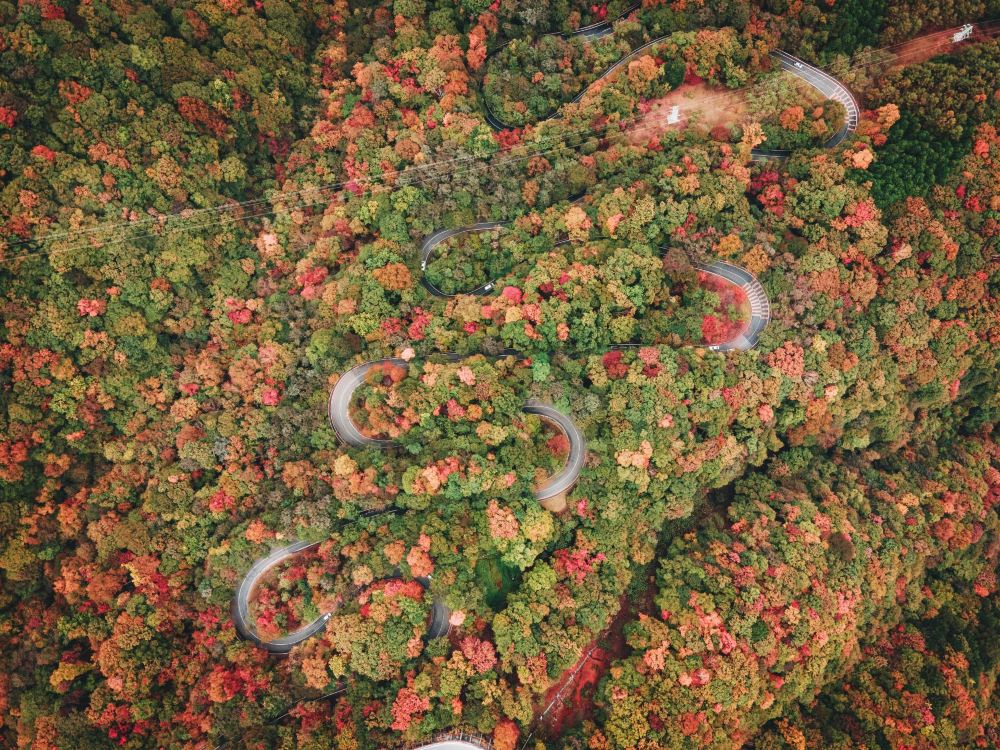
▲ Look down on the "Irohazaka" in fall, where the winding mountain road threads through a sea of brilliantly colored maple foliage like a ribbon dancing among the mountains, making it one of Japan's most iconic destinations for self-drive tours and fall foliage viewing
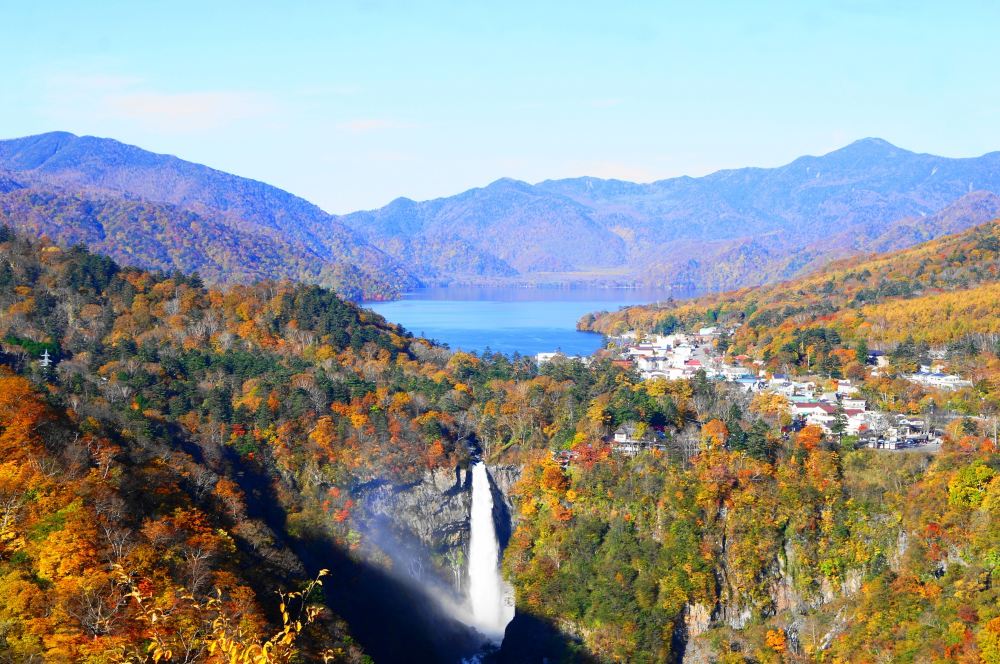
▲ The deep blue lake water and the autumn leaves that have dyed the layered forest complement each other, and the lake water cascades down from the cliff, forming the magnificent Kegon Waterfalls, fully showcasing nature's uncanny craftsmanship
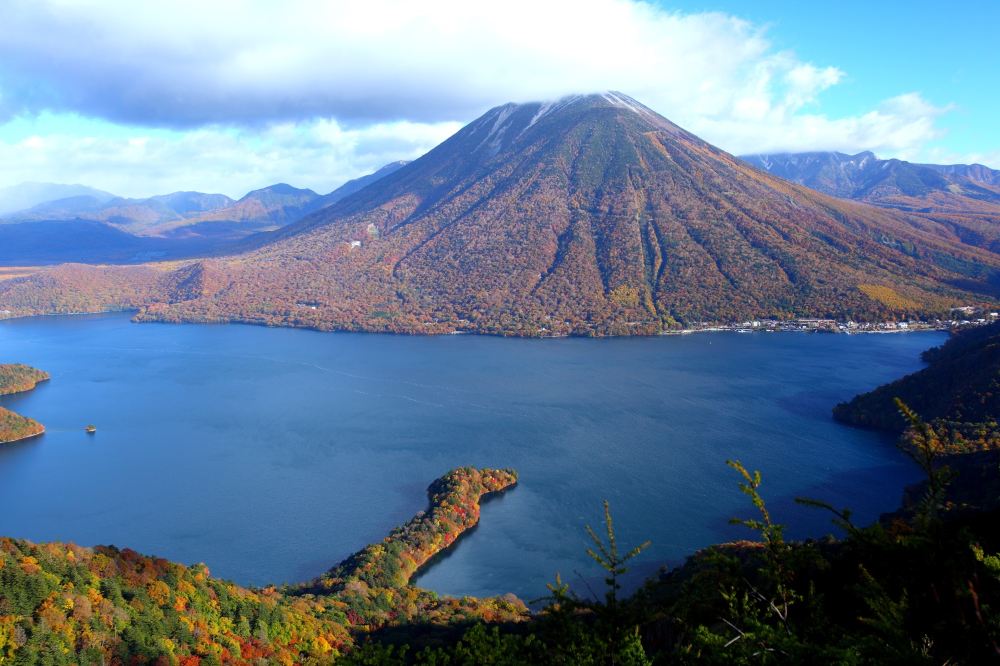
▲ Lake Chūzenji, at an elevation of 1,269 m, is serene and profound, backed by the majestic and colorful Mt. Nantai, with breathtaking lake and mountain scenery that represents the iconic natural beauty of Nikkō
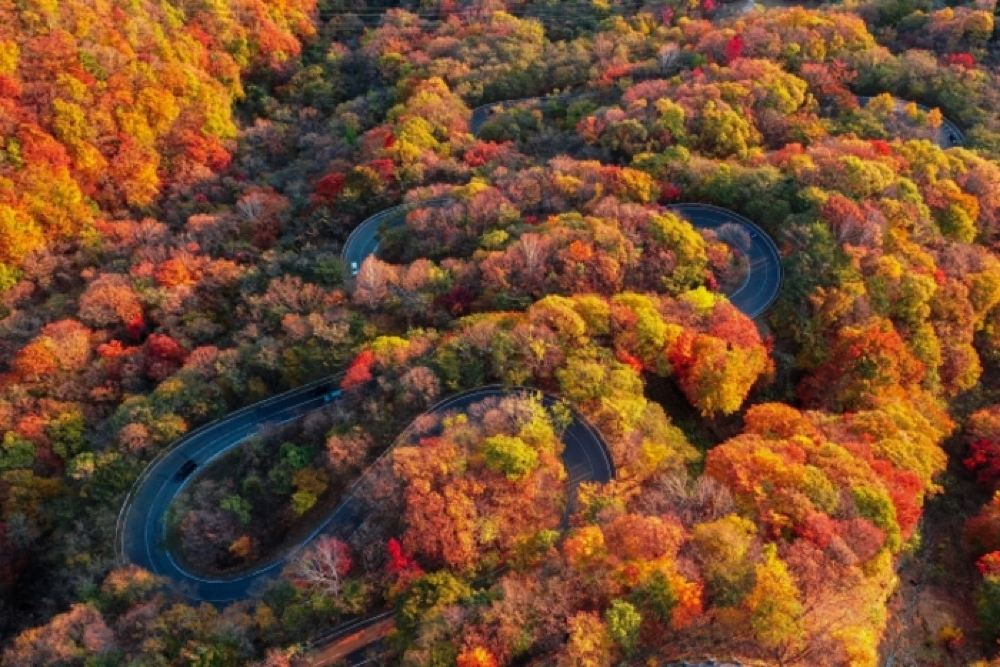
▲ In the golden fall season, the Irohazaka Route is wrapped layer upon layer in fiery red and golden hues across the mountains, with a series of hairpin turns winding through the brilliant red leaves, presenting a breathtaking autumn spectacle
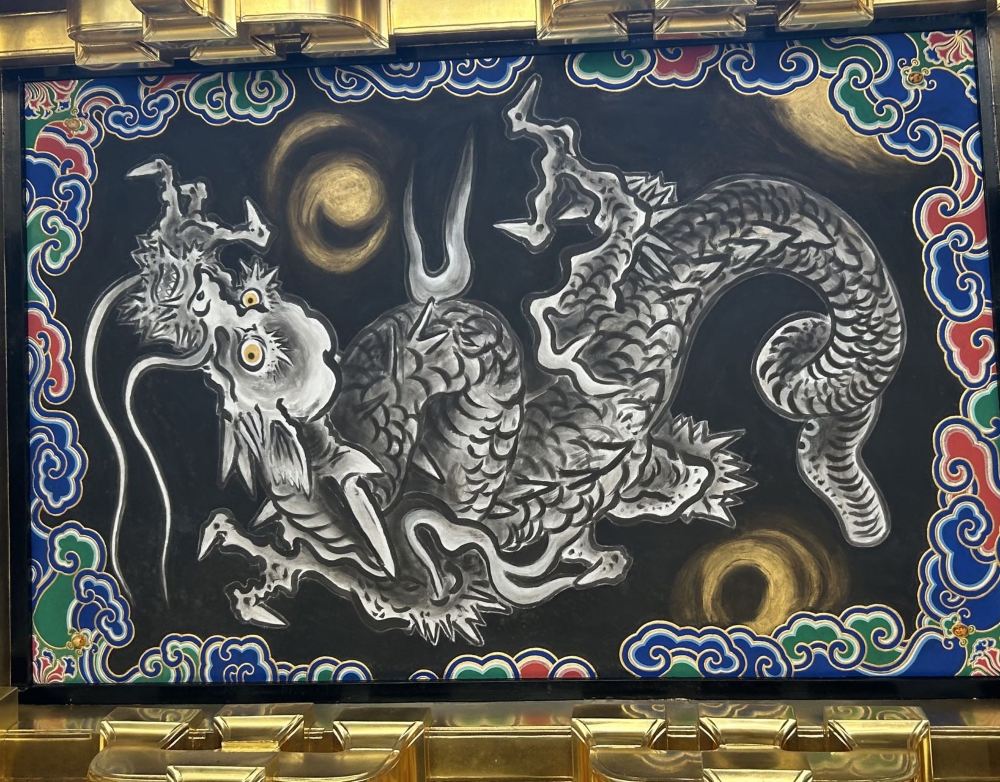
▲ The large ink wash painting "Crying Dragon" on the ceiling of the Honjido Hall (Yakushido Hall) at Nikko Toshogu Shrine is lifelike and highly striking; when you clap your hands directly beneath the dragon's head, an echo like a dragon's roar is produced, which is truly magical.

▲ The traditional kaiseki "Aoi Gozen" carefully prepared with Nikko's specialty "yuba" (tofu skin), paired with a steaming hot pot and sweet chestnut steamed rice. The elegant and refined plating fully showcases the delicate flavors of traditional Japanese cuisine.
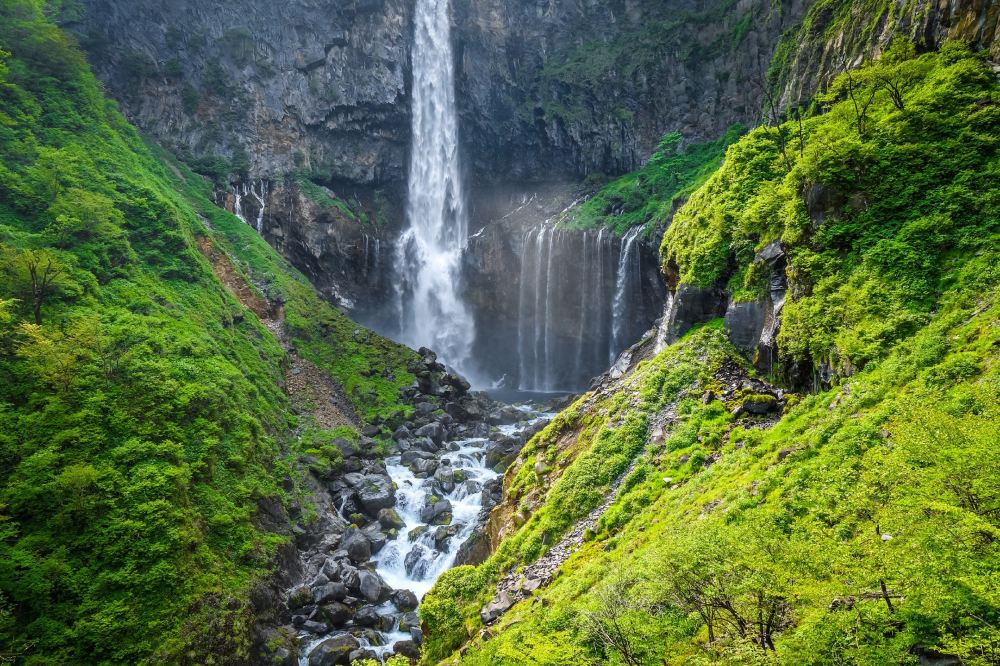
▲ As one of Japan's three great waterfalls, Kegon Waterfalls, surrounded by fresh summer greenery, plunges from a 97 m high cliff, filling the air with mist and creating a striking contrast with the surrounding verdant valley, offering a cool and awe-inspiring visual experience
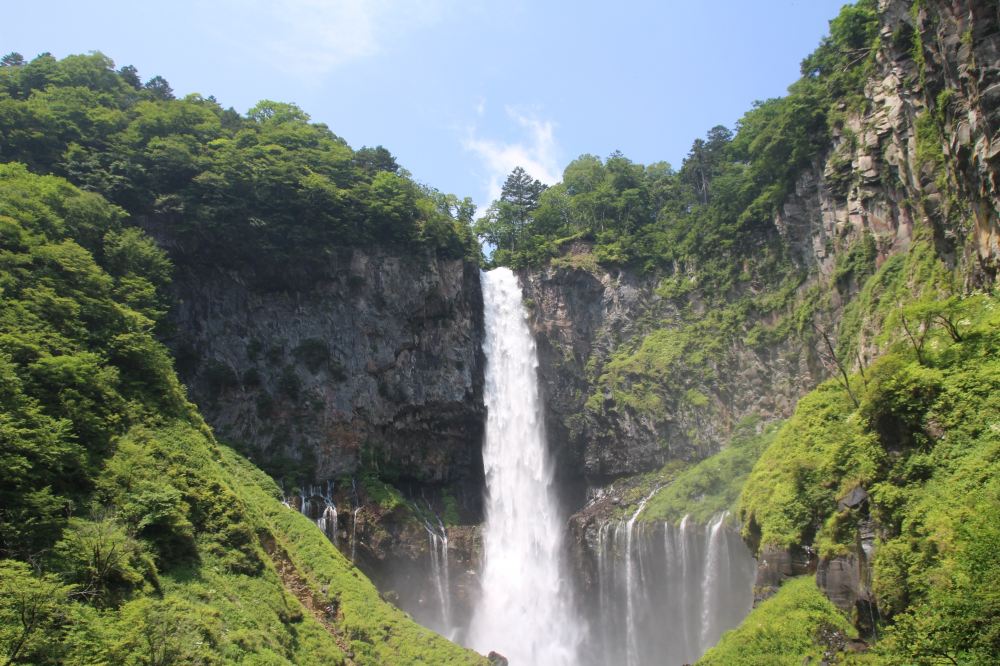
▲ Kegon Waterfalls under the clear sky is nestled in the lush greenery of midsummer, with water plunging straight down from the steep rock face, roaring and magnificent, appearing even more majestic and refreshing under the sunlight
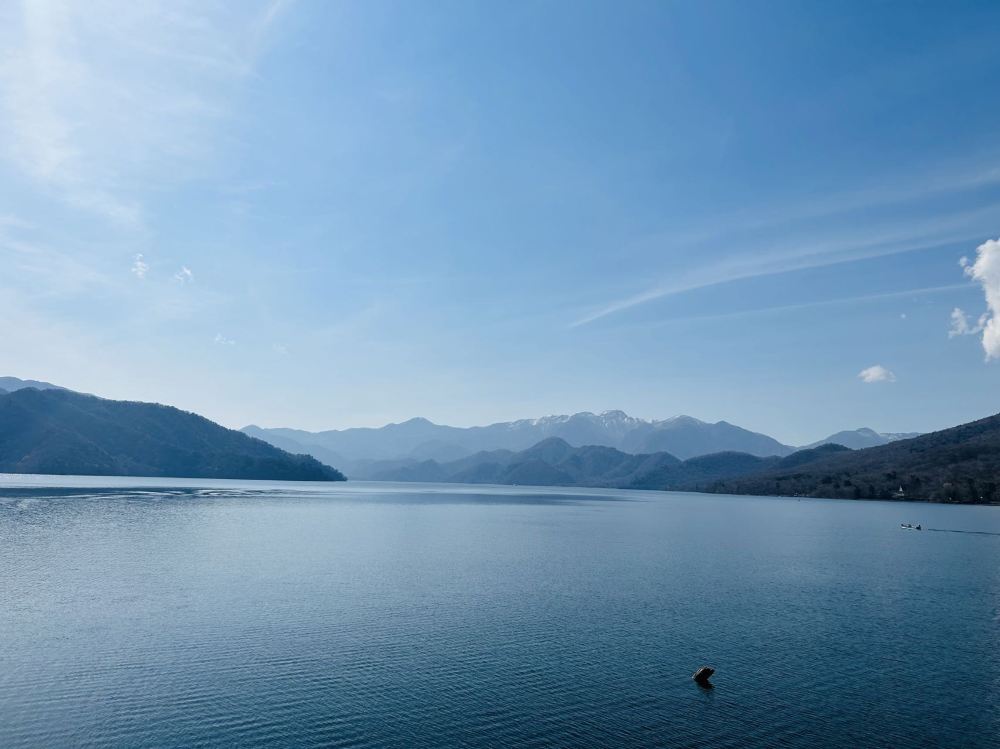
▲ Under a clear sky, Lake Chūzenji is expansive and serene, with delicate ripples rising on the lake surface. The distant rolling mountains are dotted with faint patches of lingering snow, presenting a fresh and soothing scene of lake and mountain scenery under the soft sunlight.
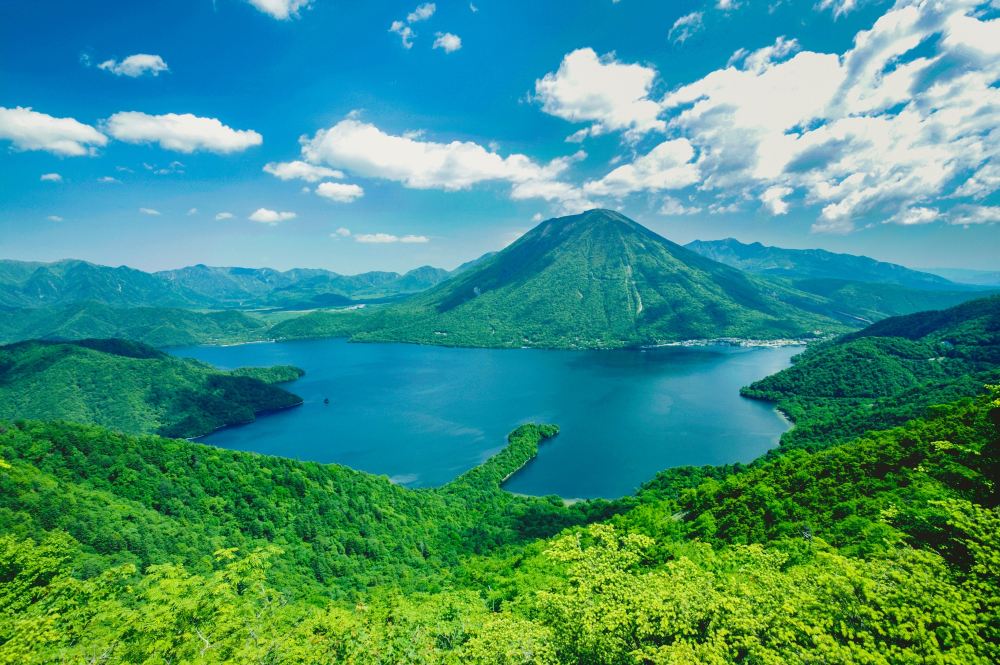
▲ In midsummer, Lake Chūzenji and Mt. Nantai are completely covered in lush greenery. The azure, mirror-like lake water, the emerald mountains, and the blue sky with white clouds complement each other, presenting a spectacular summer scene full of vitality and energy.