


Naples national archaeological museum: The treasure trove of ancient Roman civilization
Naples national archaeological museum is located in the historic center of Naples, not far from Piazza Dante and Naples railway station, serving as one of the most important archaeological museums in Italy and globally. Founded in the mid-18th century by Spanish King Charles III, it was initially established to save the precious artifacts of the Farnese family. Later, with large-scale excavations at Vesuvius sites such as Pompeii and Herculaneum, numerous unearthed relics were transferred here, making this museum a key to understanding ancient Roman civilization.
Step into the museum and you will embark on a journey through time to ancient Greece, Rome, and Egypt. It saves one of the world's largest collections of Roman-era artifacts, especially murals, mosaics, and daily objects from the ruins of Pompeii and Herculaneum, vividly recreating the life of Romans before the volcanic eruption in 79 AD.
Highlights of the core collection: Must-see art treasures
Farnese collection is one of the museum's crown jewels, inherited by the Bourbon dynasty from the Farnese family. Here are displayed two pinnacle works of ancient Roman sculpture: the Farnese bull is the largest extant single-piece ancient marble sculpture, standing 3.75 m tall, depicting the mythological scene of Zeus's sons Amphion and Zethus punishing Dirce; the Farnese Hercules shows the classic pose of the hero resting on his club, with remarkably detailed muscle definition. The hall also contains numerous ancient Greek and Roman sculptures, reliefs, and busts, most life-sized, with some being colossal and highly realistic.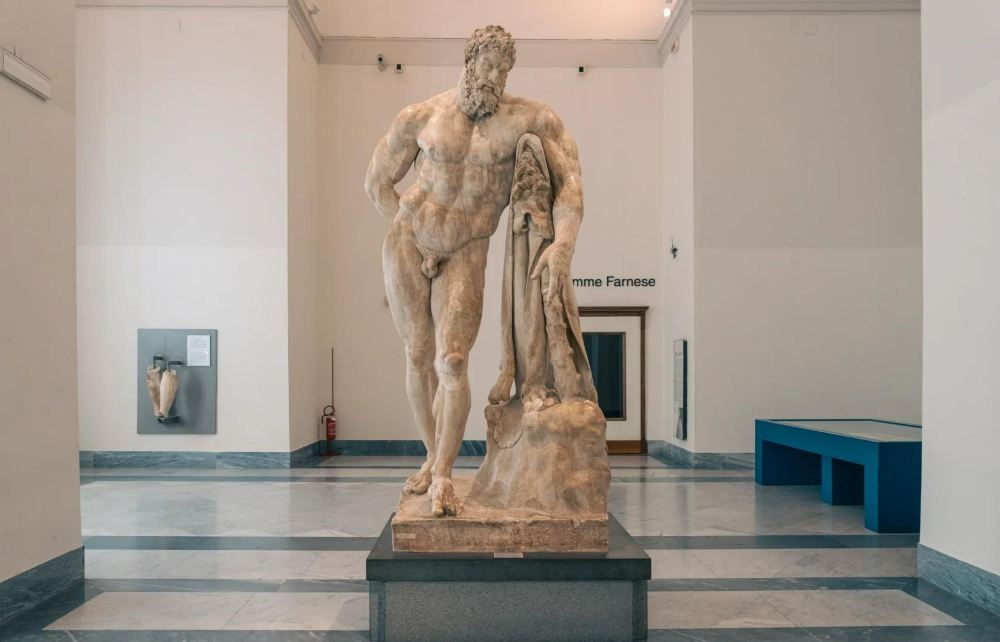
The treasures of Pompeii and Herculaneum are another core highlight of the museum. The famous Alexander Mosaic, composed of approx. 1.5 million tiny tesserae, depicts the grand battle scene between Alexander the Great and Persian Emperor Darius III—standing before it, you can almost hear the warhorses' neighs from millennia ago. Murals from the mysterious Villa of the Mysteries vividly portray Dionysian rituals, with colors still strikingly vibrant, showcasing astonishing pigment techniques from 2,000 years ago. The museum also displays numerous bronze artifacts, glassware, jewelry, and carbonized bread and food unearthed from the ruins, vividly outlining ancient Romans' daily lives.
The Egyptian collection is Italy's most important collection after the Egyptian Museum of Turin, boasting a large number of ancient Egyptian artifacts, including mummies, sarcophagi, statues of gods, and papyrus documents. The underground level mainly houses mummies, and its tranquil atmosphere is perfect for slow exploration.
The secret chamber is a distinctive exhibition area of the museum, featuring a collection of artworks and everyday objects related to erotic themes from ancient Rome. This chamber was once only accessible to researchers for a long time, but it is now open to the public, showcasing the private lives of the Romans in a candid way. Be prepared before visiting.
Opening hours info
Opening hours: Daily 09:00–19:30, last admission at 18:30.
Regular closing days: Every Tuesday, and January 1, May 1, and December 25.
Audio guide: rental approx. €5, duration 1.5 hrs, available in English, French, Italian and more.
Recommended visiting duration: 2–4 hr. The collection is extremely extensive, with visitors reporting that even 5 hours felt insufficient.
Address and transportation
- Address: Piazza Museo, 18/19, 80135 Napoli NA, Italy
- Subway: Take line 1 to Museo station and arrive upon exit; take line 2 to Piazza Cavour station, walk 100 m west.
- Walk: approx. 30 minutes from Naples central train station
Visitor information
1. Visit with Pompeii
It is highly recommended to visit the archaeological museum to continue viewing unearthed artifacts after touring sites like Pompeii and Herculaneum for a complete archaeological journey. The ruins show empty houses and debris, while the museum preserves objects used by people at that time, murals on walls, and mosaics on floors—only by combining both can you truly piece together a complete picture of ancient Roman life.
2. Security check and admission
Entry requires security screening via metal detectors, and large luggage must be stored. Free admission on the first Sunday of each month, with some galleries like the secret cabin and Egyptian exhibition hall remaining closed.
3. Photo regulations
Photography is allowed, but please turn off the flash to protect the artifacts. The use of tripods and video recording equipment is prohibited.
4. Accessibility
The museum has wheelchair accessible pathways, allowing wheelchair users to visit with ease. All areas and surfaces are wheelchair accessible.
5. Guest ID
Visitors enjoying free or discounted tickets must present a valid ID (passport) to verify their age and nationality.
6. No pets allowed
No pets allowed in the museum.
7. Facilities
The venue is equipped with vending machines, automatic coffee machines, a bookstore, and free restrooms.