


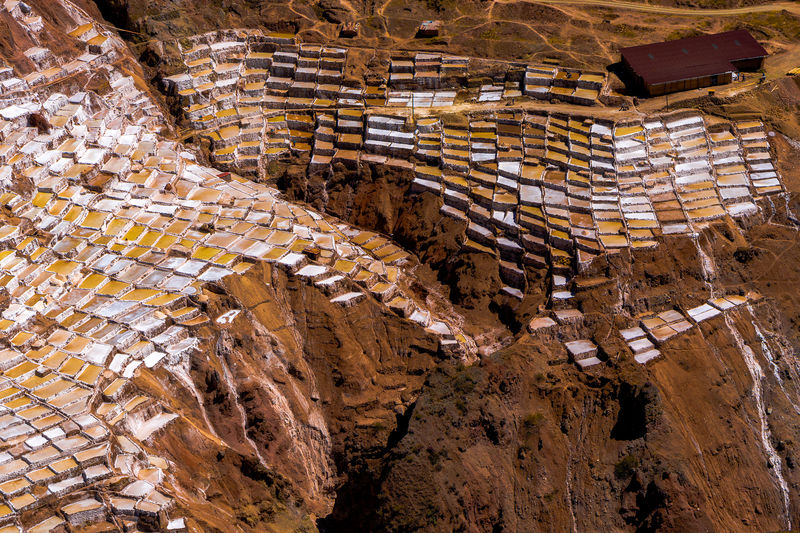
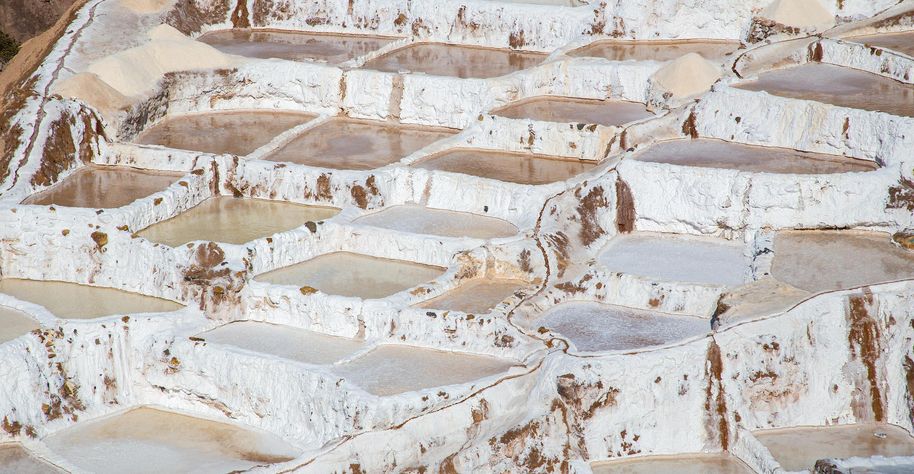
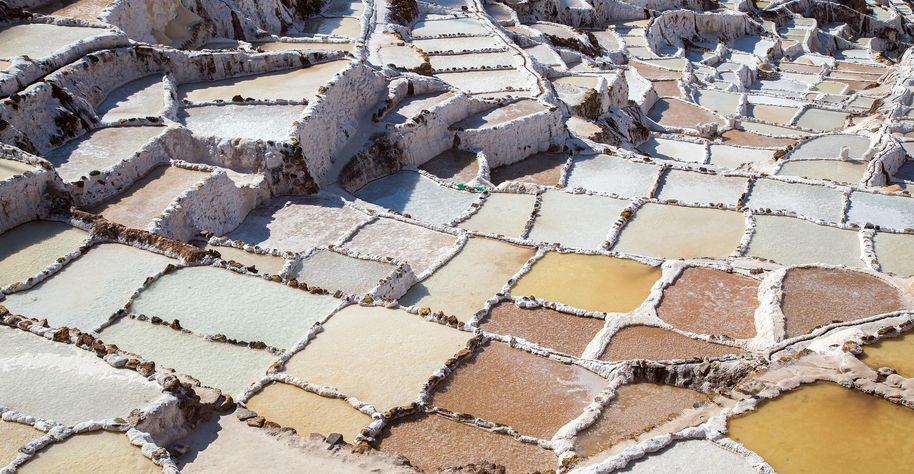

▲ Nestled among the mountains of Peru's Sacred Valley, the Maras salt ponds resemble scattered mirrors, with over 3,000 terraced pools cascading down the slopes. Underground salt springs flow gently, crystallizing into pink-white salt under the plateau's fierce winds and sunlight. Each pond glows with the soft luster of millennia, weaving together nature's gift and human craftsmanship into a harmonious masterpiece.

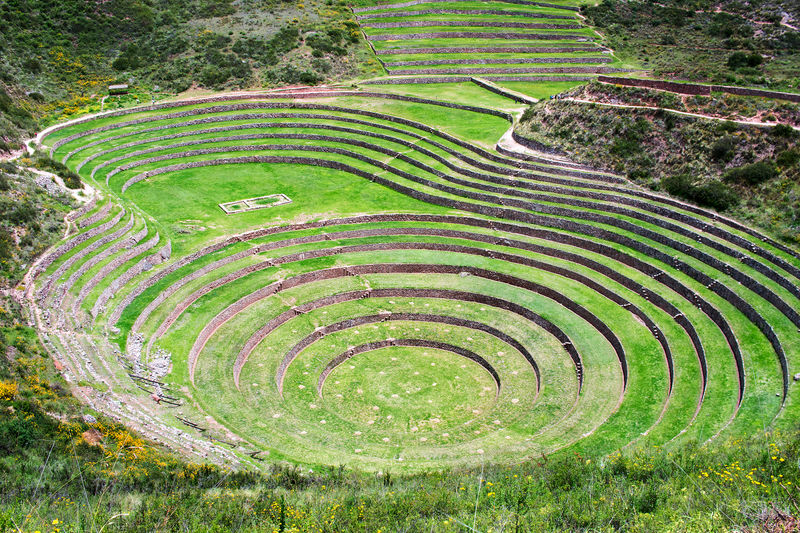
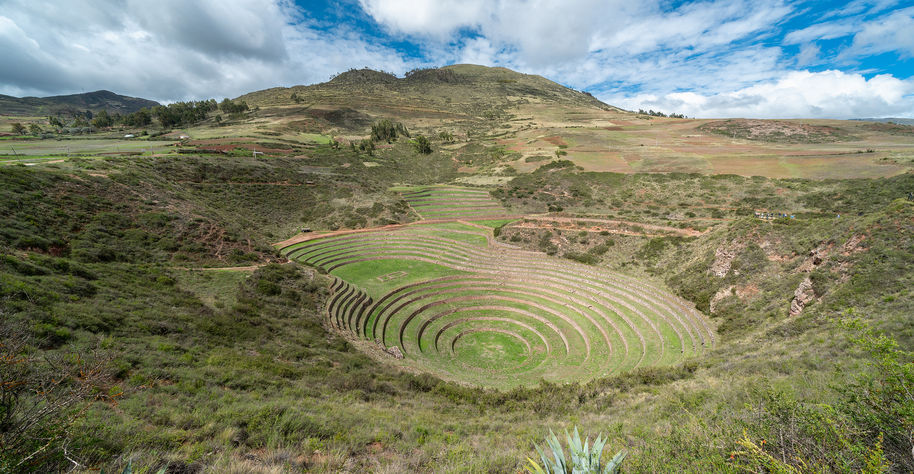
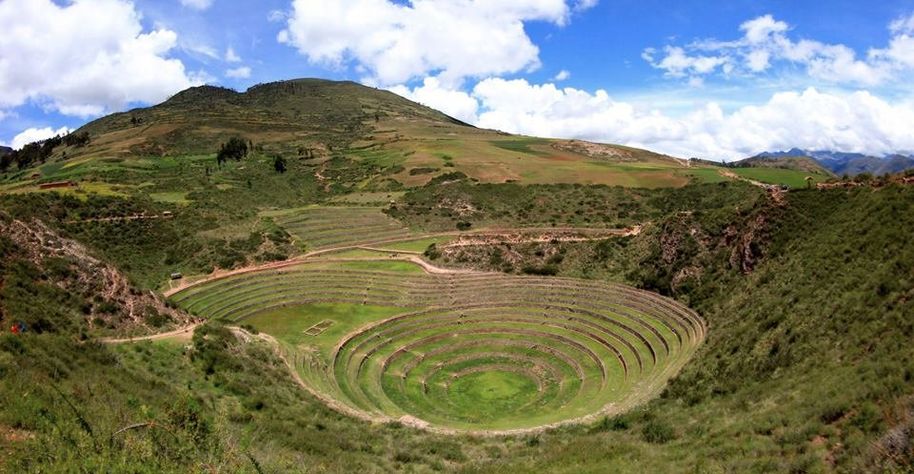
▲ In the sunken earth, concentric terraces descend layer by layer like an ancient theater. This was the Incas' "agricultural laboratory" – with dramatic temperature variations between different levels simulating diverse climates from coast to highland, used for crop experiments and cultivating superior varieties. It silently speaks of the ancient Incas' profound understanding of nature and land.

▲ The town of Chinchero is located in Peru's Sacred Valley of the Incas at a high altitude. Originally inhabited by the Ayarmaca tribe, it was later incorporated into the Inca Empire. The Inca emperor established it as a royal estate and summer retreat, constructing temples, palaces, and terraces, making it an important commercial and agricultural hub along ancient routes. During the Spanish colonial period, the town suffered war damage, and colonists built churches atop Inca ruins, creating a unique blend of ancient Inca stone walls and colonial architecture. Today, the town preserves Quechua traditions, handwoven textiles, and ancient farming culture, standing as an authentic heritage village with rich cultural significance in the Sacred Valley.