


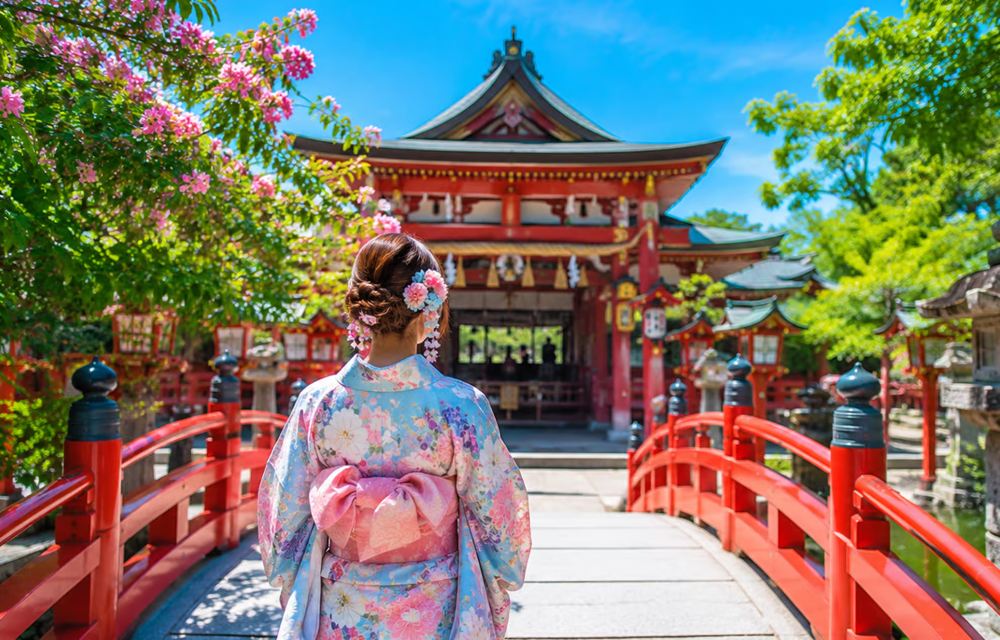
▲ Dazaifu Tenmangu is home to one of Japan's most important shrines. This shrine enshrines Sugawara no Michizane, known as the "god of learning" or the god of Japan's national university entrance exams. During exam seasons, many Japanese students visit specifically to pray for academic success. With a history of over 1,000 years, Tenmangu Shrine has always welcomed visitors from all over.
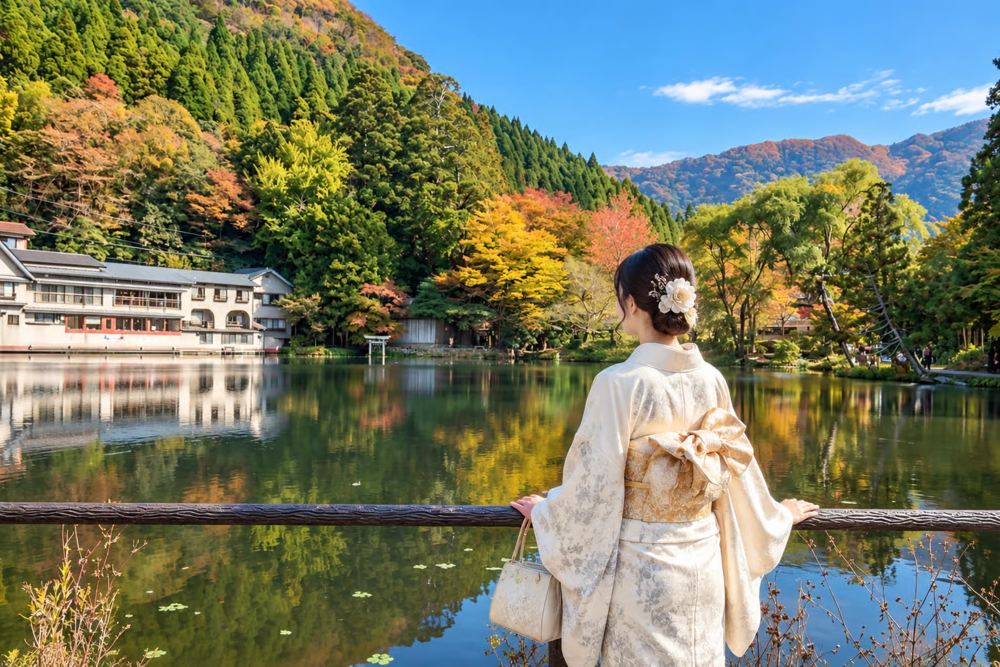
▲ If interested, you can experience the kimono trial project. There are rental shops nearby where you can choose your own hair and makeup and kimono styles, adding more color to your travel photos.
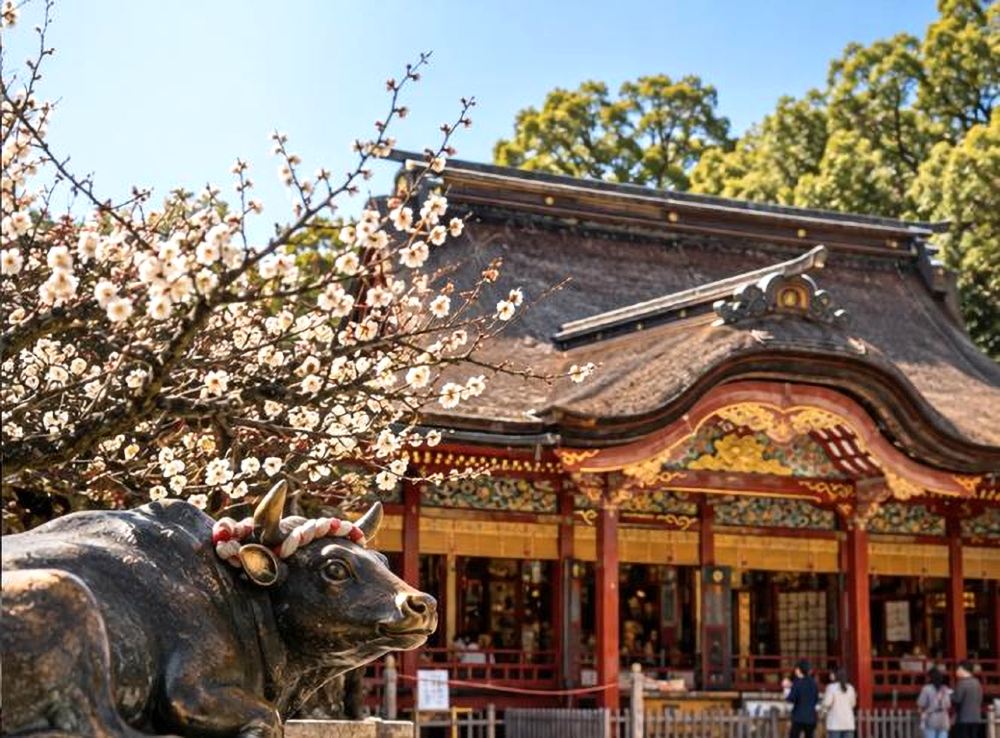
▲ Sugawara no Michizane was exiled from Kyoto to the distant Dazaifu in Kyushu. Before leaving, he gazed at the plum tree in his Kyoto home and composed a famous waka poem, which roughly translates to: "When the spring breeze blows, oh plum blossoms, please send your fragrance. Even if your master is no longer here, do not forget spring." This gave rise to Japan's famous "Flying Plum Legend." It is said that the plum tree, longing for its master, flew from Kyoto to Dazaifu overnight. The "flying plum" tree beside the main hall of Dazaifu Tenmangu Shrine today symbolizes this legend.

▲ Ume branch cakes originated from a folk tale of the Heian period, with a history spanning over a thousand years. Legend has it that the great scholar Sugawara no Michizane was framed and exiled from Kyoto to the remote Dazaifu, where he lived in poverty, lacking food and clothing. A local elderly woman, deeply sympathetic to his plight, secretly passed freshly made red bean paste mochi cakes skewered on plum branches through the window of his dwelling to help stave off his hunger. After Sugawara no Michizane passed away, an old woman, moved by his special fondness for plum blossoms during his lifetime, continued to place glutinous rice cakes on plum branches and bring them to his tomb as offerings. These cakes with plum branches gradually came to be called "ume branch cakes" by the locals.
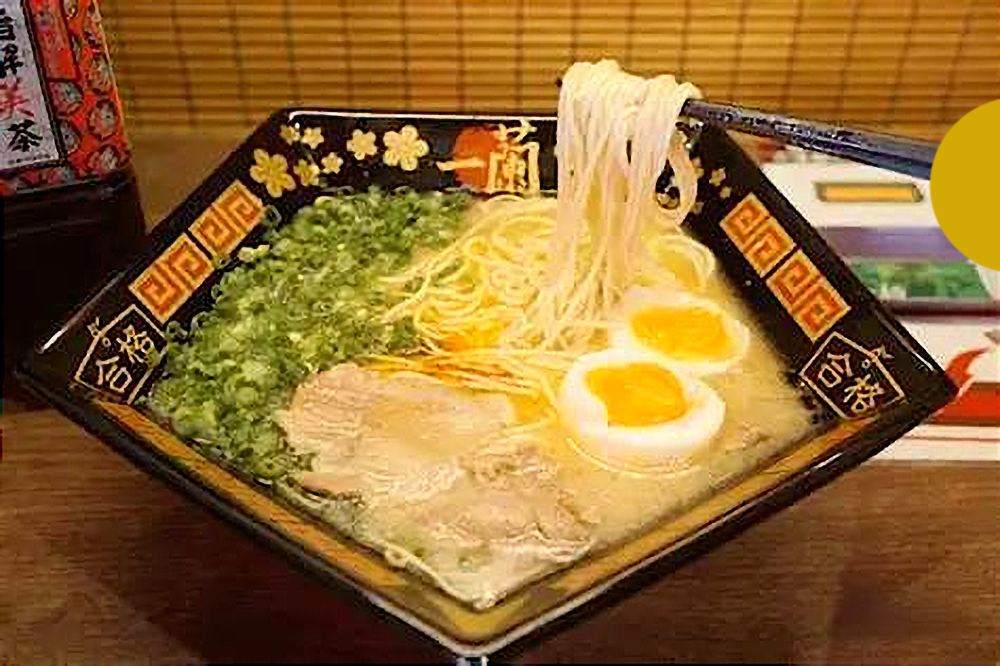
▲ The limited edition passing ramen served in a pentagonal bowl is only available at Ichiran Dazaifu Sando, the Ichiran ramen shop next to Dazaifu Tenmangu Shrine in Fukuoka. This pentagonal bowl is a specially designed "passing bowl" by the store. In Japanese, "pentagon" (gokaku) and "passing" (gokaku) are pronounced exactly the same. It was created specifically for students visiting Dazaifu Tenmangu Shrine to pray for admission to good schools. The rim of the bowl is adorned with plum blossoms, the symbol of Dazaifu, and ema wishing plaques for academic success. At the bottom of the bowl hides the phrase "certain victory," which can only be seen after finishing the soup—a unique design detail exclusive to this restaurant.
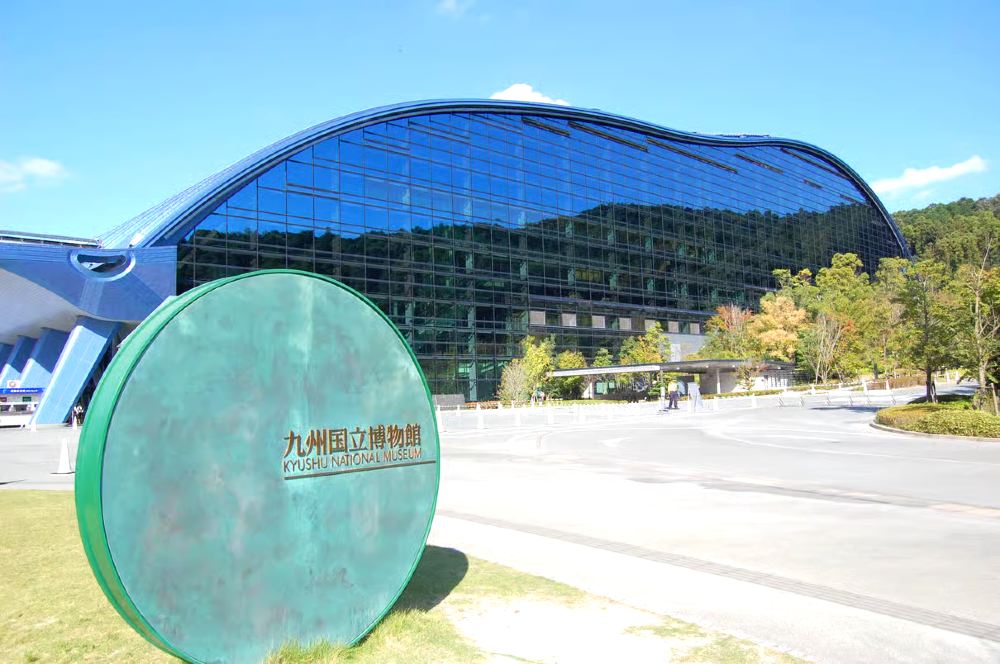
▲ Kyushu National Museum is Japan's fourth largest national museum, with the theme: "The formation of Japanese culture from the perspective of Asian history." It displays exhibits unearthed from historical sites, witnessing Japan's frequent exchanges with various parts of Asia since ancient times. The 4,000-square-meter permanent exhibition on the 4th floor, "The ocean route, the Asian route," is divided by timeline from the Paleolithic to the Edo period. The museum houses over 10,000 items, including 4 national treasures and 42 important cultural properties, as well as numerous China-related artifacts such as ancient gold seals that testify to Sino-Japanese exchanges.