


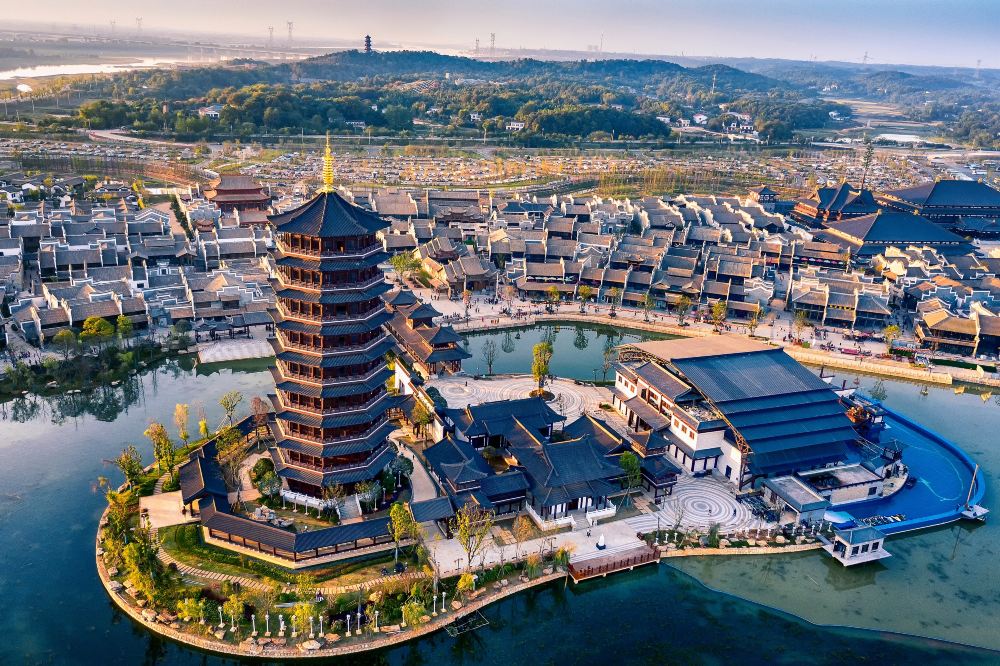
▲ [Tongguan Kiln Ancient Town] Tongguan Kiln Ancient Town is built on the site of the Tang Dynasty Changsha Kiln, recreating the bustling market atmosphere of a prosperous Tang-era porcelain city, with gray-tiled flying eaves, pavilions and towers, ancient opera stages, and thousand-year-old kiln sites arranged throughout. Changsha Tongguan Kiln was an important starting point of the ancient Maritime Ceramic Road; the Belitung shipwreck yielded a large number of exported porcelain pieces, and the town's Belitung stunt show uses water and fire effects to recreate the story of the shipwreck's voyage, delivering a thrilling and moving experience. The town preserves porcelain-making workshops where visitors can observe up close such processes as wheel throwing and porcelain painting, and the dazzling array of ceramic cultural creative products is a feast for the eyes; Chinese-style parades, flower-drum opera, and intangible cultural heritage acrobatics take turns on stage, and strolling the stone-paved alleys in traditional costume offers photo opportunities at every turn. As dusk falls into night, the ancient pagoda lights up, and intangible heritage molten iron fireworks and light shows unfold in succession, weaving together the thousand-year kiln fire and the vibrant life of the prosperous Tang, bringing Tang Dynasty porcelain culture vividly before visitors' eyes.
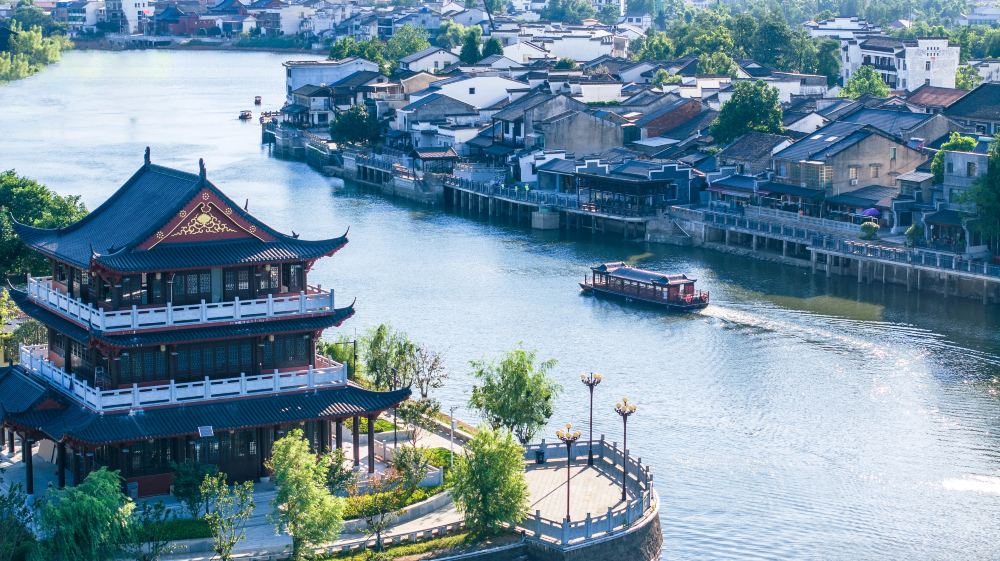
▲ [Jinggang Ancient Town] Jinggang Ancient Town is a well-preserved thousand-year-old water transport port on the banks of the Xiang River. Legend has it that it was named after Li Jing stationed troops there during the Tang Dynasty. In the late Qing Dynasty and early Republic of China, it was a bustling commercial port in central Hunan, known as "Little Hankou." The layout of eight streets, four lanes, and seven wharves has been preserved to this day. The warm, century-old granite-paved old street stretches along the riverbank, flanked by brick-and-wood houses from the late Qing Dynasty and early Republic of China. Money houses, grain shops, handicraft workshops, and folk museums are arranged in sequence, and stilted houses stand by the water's edge. The ancient town is home to Zeng Guofan's Jinggang Water Battle site, the Shadow Puppetry Art Museum, Hongtai Workshop, and the Folk Culture Relics Museum, where intangible cultural heritage shadow puppetry and flower-drum opera are frequently performed. Along the streets are local snacks such as Jinggang dried tofu, fire-baked fish, and sweet rice wine, brimming with lively everyday atmosphere. Nearby, the Xiang River wharf check-in spot offers an open view with a gentle river breeze and distant views of the fields, echoing the ancient town and old streets and fully presenting the timeless charm of old Changsha's waterborne commercial port.