



▲ Haeundae Blueline Park Built on the 4.8 km section of the old Donghae Nambu Line railway between Haeundae Mipo, Cheongsapo, and Songjeong, it is served mainly by the beach train and the sky capsule, and is one of the core tourism facilities of the Busan Haeundae Special Tourist Zone. The Haeundae Beach Train is a tourist train that lets visitors enjoy the spectacular scenery of the East Busan coast along the way, and it also serves as transportation connecting Haeundae Mipo, Cheongsapo, and Songjeong on a round-trip route. The Haeundae Sky Capsule, meanwhile, is a monorail that runs on an elevated track 7 to 10 m above the ground along the 2 km round-trip section between Mipo and Cheongsapo, allowing passengers to slowly take in the ocean view from above inside the cabin, which is both romantic and full of fun.

▲ Address: 116 Cheongsapo-ro, Haeundae-gu, Busan Operating hours [Haeundae Beach Train / Haeundae Blueline Park Sky Capsule] - Winter (November–February) 09:00–18:00 - Seasonal transition period (March–April/October) 09:00–18:30 - Peak season (May–Jun/Sep) 09:00–19:30 - Extreme peak season (Jul–Aug) 09:00–20:30

▲ Haeundae

▲ Songdo Marine Cable Car, located at Songdo Beach, was restored after 29 years to revive the reputation of Songdo Beach, Korea's first public beach. Busan Air Cruise runs between Songnim Park on the east side of the beach and Amnam Park on the west side, and is a new model with 39 cabins, including crystal cabins with transparent floors. Riding through the air, you can take in the spectacular scenery of the entire Songdo area at a glance. In addition, Korea's first cable car museum "Songdo Doppelmayr World," Asia's first sky swing "Sky Swing," a theme park photo zone, and various other facilities and attractions offer a variety of charming experiences for visitors.

▲ Address 171 Songdohaebyeon-ro, Seo-gu, Busan (Amnam-dong)

▲ Operating hours January–February, December 09:00–20:00 Mar–Jun, Sep–Nov 9:00 AM–9:00 PM Jul–Aug 09:00–22:00
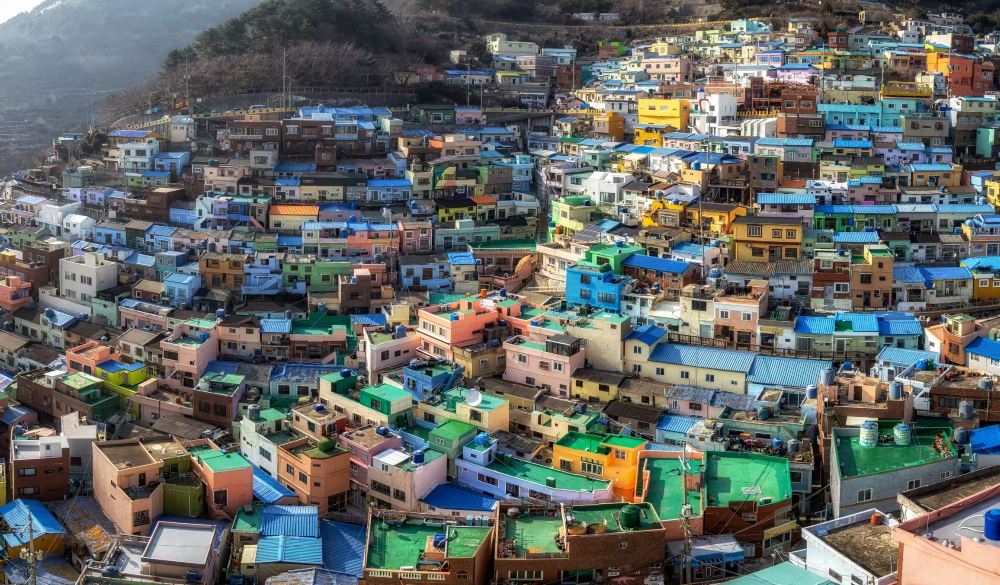
▲ South Korea fall attractions Colorful hillside cabins paired with fallen leaves create a gentle atmosphere
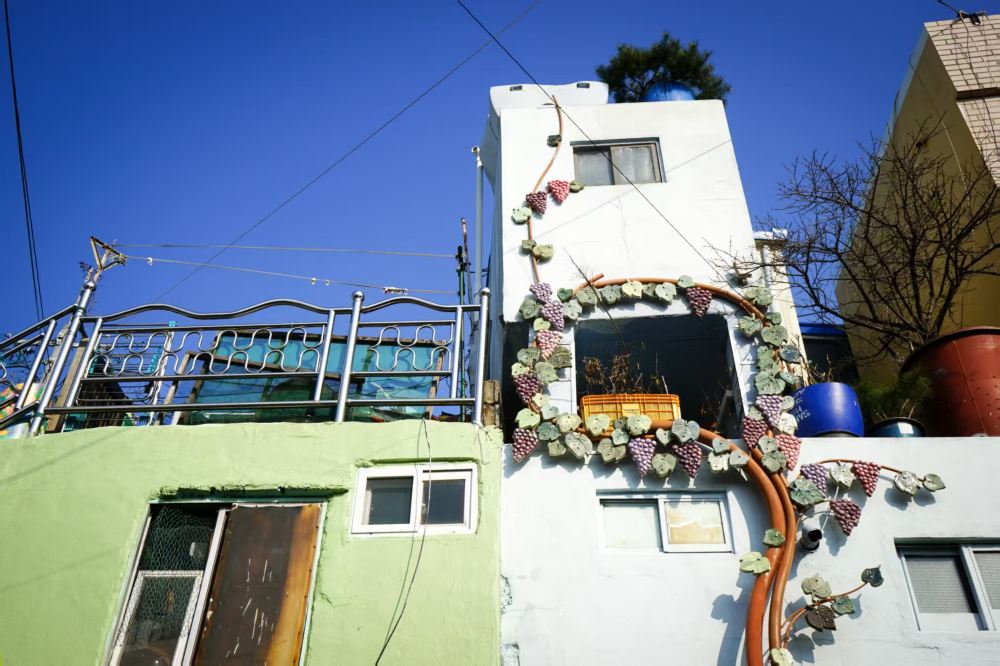
▲ Gamcheon Culture Village is a place that bears witness to the history of Busan. In the 1950s, many refugees of the Korean War came to Busan and eventually settled here, where their descendants have lived ever since. The orderly terraced collective houses along the mountain paths, together with the labyrinth-like alleys that branch out in all directions, form the unique view that is exclusive to Gamcheon Culture Village. Originally an old hillside residential area in Busan, the village was transformed through an urban regeneration project, with colorful paintings and cute installations adding an artistic atmosphere and turning it into a famous tourist attraction visited by 1.85 million people each year. The cute crayon-style terraced houses built along the slopes and the maze-like alleys make the village feel like a fairy-tale world. In addition, the village received the Presidential Award at the 2016 Korea Space Culture Awards. Visitors to Gamcheon Culture Village can enjoy beautiful natural scenery and picturesque village views, admire the various sculptural works installed throughout the alleys, or try various craft activities at the workshops of resident artists, which is why it attracts so many visitors.
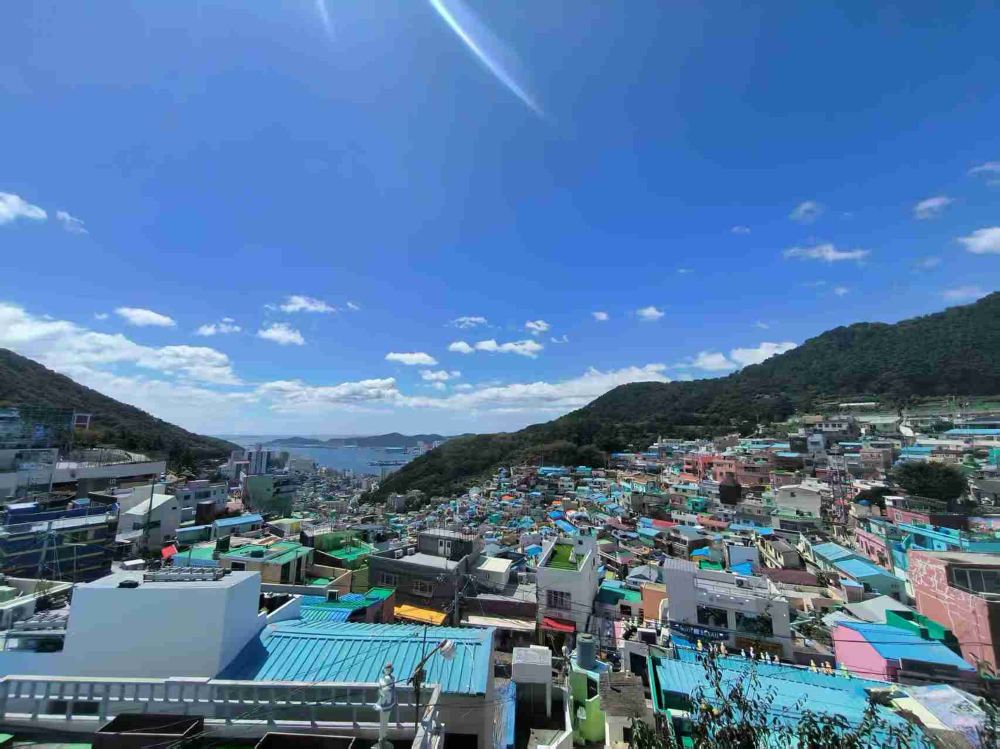
▲ Address 203 Gamnae 2-ro, Saha-gu, Busan Operating hours * The cultural village is a living space for local residents. Although it is open to visitors year-round, please observe proper etiquette and keep noise to a minimum during your visit.

▲ Taejongdae is located on the mountain of Dong 3-2-dong, Yeongdo-gu, Busan, South Korea. It is named after King Taejong Muyeol of Silla, who once toured this place, and is a protected cultural property of Busan. The attraction is situated at the southern tip of Yeongdo, surrounded by the sea on three sides, with a 250 m peak at its center and over 200 species of trees, including pine forests, distributed around it. Together with Oryukdo, it forms a representative rocky coastal view of Busan. Core attractions include Sinseon Rock, Mangbuseok, and Yeongdo Lighthouse. Among them, Sinseon Rock was formed approximately 120,000 years ago during the Quaternary Ice Age, Mangbuseok carries a folk legend, and the lighthouse observation deck offers a distant view of Tsushima Island

▲ Due to long-term seawater erosion, the mountains below the lighthouse have formed cliffs over 100 m high. Fairy Rock is located here. Legend has it that immortals once played and enjoyed themselves here, hence the name "Fairy Rock." According to geological surveys and analysis, this site is a product of the dry ice age approximately 120,000 years ago. On Fairy Rock, you can see a solitary, lonely stone, which is the Waiting-for-Husband Rock. There is a Waiting-for-Husband Rock on Fairy Rock. It is said that a woman waited here every day for her husband, who had been forcibly taken to Japan, to return, and eventually turned into a stone statue.

▲ Cobblestone Field: At Pebble Beach, pebbles of various sizes can be seen everywhere. In the past, Pebble Beach was the place where haenyeo relied on going out to sea to fish for their livelihood. Although these stone steps have been repaired countless times, one can still see the hardships the haenyeo once endured for survival. Although Pebble Beach has now lost the bustling fishing scenes of the past, quietly listening to the sound of pebbles rolling after the waves recede and watching seagulls flying across the sky is also quite pleasant.

▲ Busan Tower is a landmark building of Busan as a whole. It was built in 1973 and is 120 m tall. The observation deck at the top of Busan Tower was built with reference to the canopy of Dabotap Pagoda at Bulguksa Temple in Gyeongju, South Korea. In addition to the observation deck, the tower also houses cultural facilities such as a cafe, a children's amusement park, an instrument museum, a cultural heritage exhibition hall, and an aquarium. From the observation deck, visitors can enjoy a 360-degree panoramic view of Busan, and the night view is especially famous. After purchasing tickets, visitors can take the elevator to the top-floor observation deck and look down at the main streets of downtown Busan and sights such as Jagalchi Market, Gukje Market, Steel Drum Market, and Yeongdo Bridge.

▲ The core view in Yongdusan Park is Busan Tower, which stands 120 m tall. The observation deck at the top of the tower incorporates Buddhist architectural elements and offers a 360-degree view over Busan Port, Yeongdo Bridge, and the city panorama, and on clear days you can gaze as far as Tsushima Island. The statue of Admiral Yi Sun-sin and the Citizens' Bell Pavilion are historical and cultural landmarks, and the latter is the venue for the bell-ringing ceremony on New Year's Eve [3]. The night view, where the sea and the city intertwine under the illumination, is especially renowned.

▲ The bronze statue of Admiral Yi Sun-sin commemorates the national salvation hero of the Japanese invasions of Korea, Admiral Yi Sun-sin. The statue, also known as the Chungmugong statue, is 12 m tall.