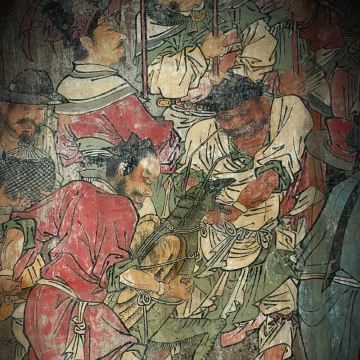

▲ The Jiyi Temple is located in Yangwang Village, Yangwang Township, Xinjiang County. Commonly known as the Yangwang Temple, it is a commemorative temple dedicated to Houji, Boyi, and Yu the Great. It was announced as a Major Historical and Cultural Site Protected at the National Level (fifth batch) in 2001, and its existing main structures are relics from the Ming dynasty. The founding date of the temple is unknown. According to stele inscriptions, it was rebuilt during the Zhiyuan era of the Yuan dynasty, the main hall was rebuilt in the 15th year of the Hongzhi era of the Ming dynasty (1502), it was expanded during the Zhengde era, and repairs were carried out during both the Qing dynasty and the Republic of China period.
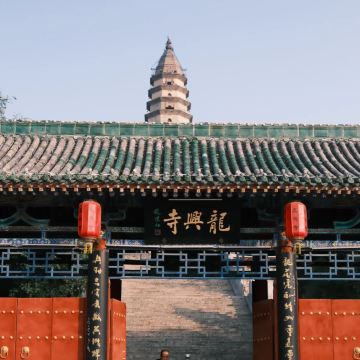

▲ Longxing Temple stands on the elevated ground at the end of North Street in Xinjiang County seat. It was announced as a sixth-batch Major Historical and Cultural Site Protected at the National Level in 2006, dating from the Yuan to Qing dynasties. The temple was first built in the Tang dynasty under the original name Biluo Temple. In the 1st year of the Xianheng era of Emperor Gaozong of Tang (670), it was renamed Longxing Palace, and later, because Zhao Kuangyin, Emperor Taizu of Song, once stayed here, it was renamed Longxing Temple. The temple faces south with its back to the north, and its surviving structures include the Mahavira Hall and the Longxing Temple Pagoda.

▲ Fusheng Temple is located in Guang Village, Zezhang Town, 17 km northwest of Xinjiang County seat. It was announced as a fifth-batch Major Historical and Cultural Site Protected at the National Level in 2001, and its existing structures are relics from the Yuan and Ming dynasties. According to historical records, the temple was imperially established during the Zhenguan era of the Tang dynasty, repaired in successive dynasties of the Song, Jin, and Yuan, and extensively renovated in the 11th year of the Hongzhi era of the Ming dynasty (1498); in the 3rd year of the Dading era of the Jin dynasty (1163), it was granted the name "Fusheng Temple."
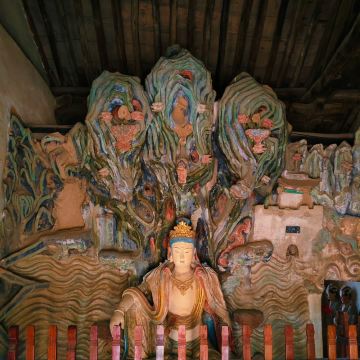

▲ Baitai Monastery is located southwest of Guangma Village, Quanzhang Town, Xinjiang County. Also known as Puhua Monastery, it was announced as a sixth-batch Major Historical and Cultural Site Protected at the National Level in 2006, dating from the Jin to Qing dynasties. The monastery's founding date is unknown. According to stele inscriptions, it was already rebuilt in the 14th year of the Kaiyuan era of the Tang dynasty (726), reconstructed during the Dading and Mingchang eras of the Jin dynasty, repaired again in the 15th year of the Zhizheng era of the Yuan dynasty (1355), and further repaired and expanded multiple times in the 6th year of the Zhengde era of the Ming dynasty (1511) and during the Qing dynasty.
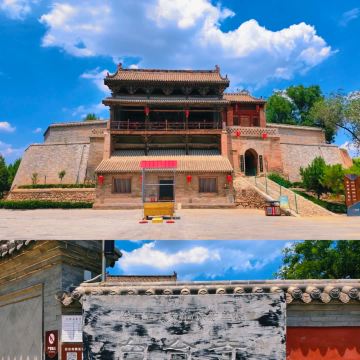

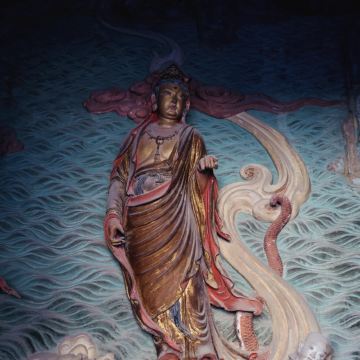
▲ Most of the surviving buildings in the temple are relics from the Jin and Yuan dynasties. The Fazang Pavilion seen upon entering is a unique Yuan Dynasty structure. The door beneath the east side hall leads to the rear courtyard and around to the pavilion's second floor. Viewed from the front, the Fazang Pavilion has 3 tiers of eaves; from the side, it has a suspended gable roof—a rare structure approaching a three-tier suspended gable roof, though strictly speaking it is not a true three-tier suspended gable roof. On the first floor of the pavilion are 3 polychrome sculptures (Fig. 6). The central image, the Medicine Buddha, is an original Yuan Dynasty work, while the Sunlight and Moonlight Bodhisattvas on either side are newly made replacements after being stolen. The second floor enshrines Ksitigarbha Bodhisattva and the Ten Kings of Hell, along with a Water-Moon Guanyin (Fig. 5). Although it is a Ming Dynasty sculpture, the restoration colors are overly garish, and only the Water-Moon Guanyin retains a trace of its original spirit.