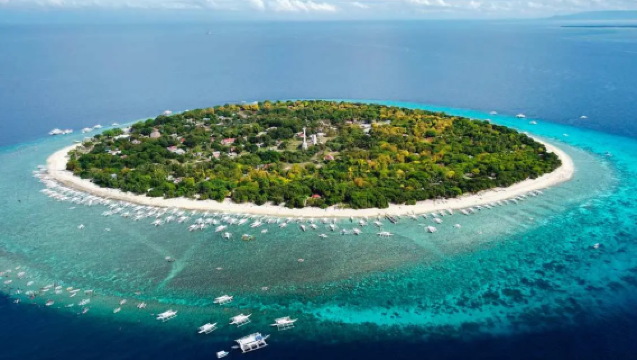
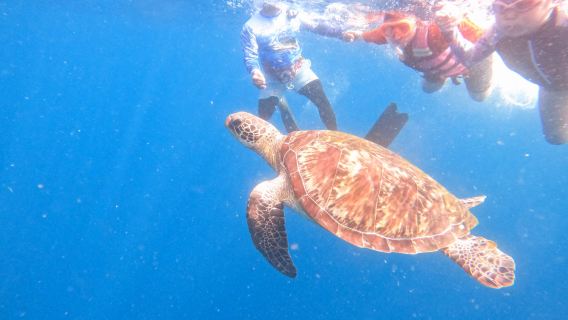
▲ First stop: Balicasag Island A small circular coral island, designated a marine protected area since 1985, only a few hundred m in diameter, ringed by white sand and dotted with a few coconut palms, with the real highlight lying underwater near the shore. On the west side, an underwater cliff appears just tens of m from the shore; in the shallows are hard coral gardens with clownfish and butterflyfish darting about, while one step deeper plunges straight into deep blue, where schools of jackfish often swirl into vortexes along the cliff edge. Green sea turtles and hawksbill turtles forage in the seagrass beds, and snorkelers wearing life jackets lying on the water's surface can see them raise their heads to breathe; sightings are more likely around Turtle Corner. A small round coral island designated a marine sanctuary in 1985. It measures only a few hundred metres across—white sand, a handful of palms, a fishing village—and the real draw sits just under the surface. On the west side the drop-off begins metres from shore: hard coral gardens and clownfish in the shallows, then the floor falls away into deep blue, with jackfish schooling along the edge. Green and hawksbill turtles graze the seagrass; float on the surface in a life vest and they surface to breathe right beside you.

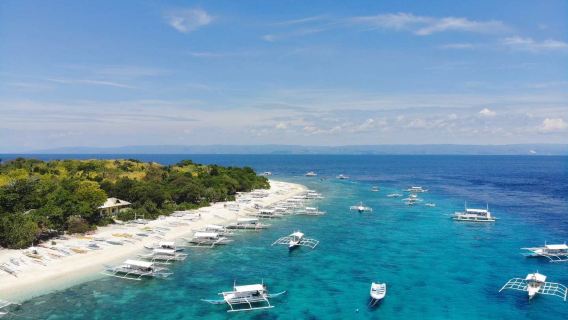
▲ Stop 2: Alona Beach Located on the southwest side of Panglao Island, Bohol Island, this is a roughly 600 m stretch of coral-white sand with fine, soft texture and layered blue-green water—the fixed departure beach for southern-route island hopping. During the day, the beach is quiet and the waves are gentle; wade in for a few minutes and small fish will gather around your feet. After 3–4 pm, when the sunlight softens, the water feels even more comfortable—avoid the midday sun. Dusk is when the atmosphere here shifts—restaurants set their seating out on the sand, fire dancers light up, beers are cracked open, and the whole coastline transitions from afternoon languor into a mellow, tipsy rhythm. Dive shops, homestays, spas, and restaurants are densely packed along the beach—a few minutes' walk gets you seafood barbecue or a booking for the next day's island-hopping trip. On the southwest tip of Panglao Island, Alona Beach is a coral-white strip roughly 600 metres long, with sand soft as flour and water that shifts from pale green to blue. Mornings are quiet—wade a few steps in and small fish gather at your ankles. By mid-afternoon the glare eases and the water feels gentler, which is when most people head back in. Then dusk flips the mood: restaurants carry tables onto the sand, fire dancers light up, and the whole shoreline shifts from afternoon laziness to easy evening buzz. Dive shops, guesthouses, spas and grills sit shoulder to shoulder along the sand, so dinner or a next-day island booking is a few minutes' walk away