Qingzhou

Things to do in Qingzhou

Search attractions or local attractions & tours
Search

Explore top experiences

Top 10 attractions in Qingzhou

View all Attractions
Ancient Town of Qingzhou
No. 3 of Night Attractions in Shandong

Ancient Town of Qingzhou

8.1
4.5/5
4.6k reviews
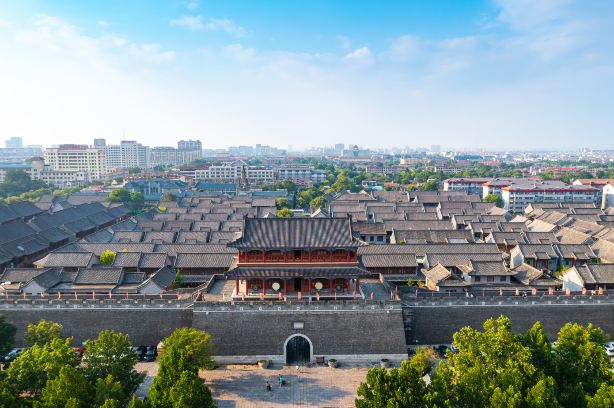
Qingzhou is one of the ancient nine provinces of China. Since the early Western Han Dynasty, six cities—Guang County, Guanggu City, Dongyang City, Nanyang City, Dongguan Weizi City, and Qicheng—were successively built on this land, with a continuous urban history spanning over two thousand years. Today, the Ancient Town of Qingzhou has been comprehensively protected and restored, forming three major districts: the Beiguan ancient block in Dongyang City, the Ouyuan historical and cultural block and the South Gate block in Nanyang City, and the Zhaode ancient block in Dongguan Weizi City. Government buildings, traditional residences, and classical gardens are scattered across hundreds of ancient streets and alleys, such as North Gate Street and East Gate Street, with their blue bricks and dark tiles showcasing distinct Ming and Qing architectural styles. Unlike many entirely reconstructed ancient towns, this is a "living ancient town," where original residents still live in the old streets and alleys, and intangible cultural heritage items like the cuoqin are passed down on the streets, blending the vibrancy of daily life with ancient charm. A visit can begin by ascending the Fucai Gate Tower at the south gate of ancient Nanyang City for a panoramic view of the town's sea of dark tiles. Ouyuan is a preserved classical garden within the town, originally the eastern garden of the Ming Dynasty's Prince of Heng's residence and later the private garden of Feng Pu, a grand secretary during the Qing Kangxi era. Its three-peak rockery embodies the grandeur of northern landscapes. Figures like Fan Zhongyan and Ouyang Xiu once served as officials here, and Li Qingzhao lived in Qingzhou for over a decade, composing numerous ci poems. Historical relics like the Qingzhou Prefecture Examination Hall are also scattered throughout the streets, where traces of this cultural legacy can often be encountered. The main street is densely lined with shops, but to avoid crowds, one can turn into the side alleys or head straight to Zhaode Ancient Street—where rows of Ming and Qing-era houses remain, with wooden doors, stone steps, and flagstone paths offering a glimpse of old Qingzhou's daily life.Qingzhou · 353m from downtown
Yunmen Mountain Scenic Area
No. 4 of Best Things to Do in Weifang

Yunmen Mountain Scenic Area

6.2
4.6/5
1.9k reviews
[Zhonghua Shoushan · Fairyland Cloud Gate] Yunmen Mountain scenic area in Qingzhou is famous for the thousand-year-old story of "May you live as long as the Southern Mountain" and is known as "the No. 1 Mountain of Ancient Chinese Longevity Culture". This famous mountain in central Shandong, with an altitude of 421 meters, integrates geological wonders, religious heritage and cultural treasures. It is not only a national geological park, but also the core attraction of Qingzhou Ancient City Tourist Area. 🌟 Key Highlights The Longest Birthday in the World – Yunmen Offering Longevity The giant Ming Dynasty cliff carving of the character "寿" (longevity) on the shady side of the mountain is 7.5 meters high and 3.7 meters wide, with the character "寸" (inch) alone reaching a height of 2.3 meters, symbolizing "no one is as tall as an inch." Legend has it that it was carved by Zhou Quan, the official in charge of the imperial kitchen of the Prince of Heng, during the Jiajing era of the Ming Dynasty, to celebrate the Prince's birthday. Despite enduring 500 years of wind and rain, it remains imposing. Furthermore, the legend of "a snow-covered man presenting a longevity gift to the Prince of Heng" adds a mystical aura to this giant longevity carving. A thousand-year-old secret realm where Buddhism and Taoism coexist The Sui and Tang Dynasty Grottoes: 272 stone Buddhas stand quietly in the mountains in 5 grottoes in Shanyang. The earliest inscription can be traced back to the ninth year of the Kaihuang era of the Sui Dynasty (589 AD). It is a rare early Buddhist art relic in Shandong. Taoist holy sites: Wangshou Pavilion, Wanchun Cave (the final resting place of Chen Tuan) and other ancient sites are scattered throughout the area. The stone carvings with inscriptions such as "The God is Here" and "Transcending the Dust and Dreams" written by Xue Suo are elegant and vivid, fully demonstrating the Taoist immortal spirit. Geological wonders and natural scenic spots Yunmen Mountain scenic area- Yunmen Wonderland: The natural cave "Yunmen Cave" through the main peak, Dayunding, is shrouded in clouds and mist during the summer and autumn seasons, making the temples on the mountaintop appear and disappear, creating a fairyland-like atmosphere. It is known as the first of the eight scenic spots of ancient Qingzhou. Hongdan Cliff Landform: Along the way to climb the mountain, you can see ochre-red cliffs and pine trees, which are even more magnificent at sunrise. Guo Moruo once praised it as "the red trees and cliffs are worse than any painting". 🚶 Visitor Guide Classic route (2-3 hours): Mountain Gate → Guanshou Pavilion (panoramic view of the giant longevity statue) → Wangshou Pavilion → Giant Longevity Stele on Cliff (take photos) → Yunmen Cave (pass through the gate of clouds and mist) → Tianxian Yunu Temple (Ming Dynasty stone arched building without beams) → Donglangfeng Pavilion (overlooking the panoramic view of Qingzhou). Cultural Exploration: Along the way, you can admire inscriptions from various dynasties such as "Hai Dai Majestic Style" and "Old Man in a Raincoat Lying on Bean Rock", explore the stone statue of Chen Tuan and the poem inscription of "Snow Raincoat" in Wanchun Cave, and feel the artistic conception of "sleeping soundly in the deep night with white clouds rising".Qingzhou · 5.1 km from downtown
Tuoshan
No. 11 of Fall Viewing Attractions in Weifang

Tuoshan

4.9
4.5/5
248 reviews
Qilu Buddhist Kingdom - Hidden Gem of Camel Mountain Camel Mountain, a national AAA-rated attraction renowned as the "Oriental Sculpture Gallery," is celebrated alongside Yunmen Mountain as the "Twin Gems of Shandong Grottoes." This millennium-old peak, standing at 408m, harmoniously blends Buddhist artistry, Taoist mystique, and geological wonders. As a nationally protected cultural heritage site, it forms an integral part of Qingzhou's ancient city tourism district. 🌟 Core Highlights Famous grotto sculptures of Qilu - Buddhist relics from the Northern Zhou to High Tang dynasties On the southeastern cliffs of Camel Mountain's main peak, five cave temples and one group of cliffside statues stand quietly. The 638 stone Buddha statues from the Northern Zhou to Tang dynasties still retain traces of cinnabar pigments after weathering centuries. The 7.5-meter-tall Amitabha Buddha in Cave 3, with its compassionate expression and flowing robe folds resembling drifting clouds, is considered an iconic Sui dynasty masterpiece. Cave 2's Avalokitesvara Bodhisattva wears a jeweled crown with miniature Buddha figures and cascading ornaments, epitomizing the grandeur of High Tang artistry. The flying apsaras reliefs in Cave 4 appear so dynamic with their fluttering scarves that they seem ready to leap from the walls, prompting Guo Moruo to praise: "Camel Mountain's caves rival the Longmen Grottoes." China's Natural Wonder - The Mountain Buddha and Cloud Gate Longevity Character Echo Each Other from Afar From the Buddha Viewing Platform, you can gaze upon a 2,600-meter-long mountain formation resembling a reclining Buddha to the southeast. Nine mountain peaks form the Buddha's head, with an elongated nose and slightly parted lips that create the miraculous illusion of "chanting scriptures" when viewed from different angles. Even more astonishing, the Camel Mountain Grottoes were all carved facing this colossal Buddha, forming a breathtaking scene of "ten thousand Buddhas paying homage." Together with the giant "Longevity" character on Yunmen Mountain, they create the millennium wonder of "radiant longevity and Buddha." Representative Taoist architecture – Haotian Palace and Qibao Pavilion The Haotian Palace atop the mountain, originally built during the Yuan Dynasty, stands as a significant Taoist architectural complex in Shandong Province. Its stone-built, beamless arched structure—the "Seven Treasures Pavilion"—is considered an architectural marvel. Constructed entirely of stone without a single nail or rivet, it has withstood wars and bears only three bullet marks while remaining steadfast. Inside the hall, the vividly painted statues of the Three Pure Ones appear as fresh as ever. Over 120 stone inscriptions within and around Haotian Palace document its thousand-year history of rise and fall, with the Yuan Dynasty's "Imperial Incense Offering Stele" serving as a particularly valuable artifact for Taoist historical research.Qingzhou · 5.5 km from downtown
Qingzhoufu Examination Hall

Qingzhoufu Examination Hall

4.6
4.3/5
194 reviews
The Qingzhoufu Examination Hall is located on Wei Street (also known as East Gate Street) in the ancient city of Qingzhou. During the Ming Dynasty, it initially served as the administrative office of the Shandong Provincial Administration Commission before gradually falling into disuse after the relocation to Licheng. Later, it was converted into Yunmen Academy, a place for scholars to study and pursue knowledge. By the fourth year of the Yongzheng reign in the Qing Dynasty, Yunmen Academy became exclusively designated as the "examination venue for imperial envoys," officially adopting the name "Examination Hall." From then on, it served as the Qingzhoufu Examination Hall for selecting xiucai (scholars) and was commonly referred to as the Examination Hall. Nestled within this historic city, the Qingzhoufu Examination Hall has witnessed a wealth of cultural and historical heritage. Qingzhoufu Examination Hall showcases the profound cultural heritage of ancient Qingzhou. The exhibition hall features both an introduction to the imperial examination system and a wealth of physical artifacts related to these historical exams, offering visitors a rich and diverse display. Stepping into the Imperial Examination Museum, visitors are first greeted by a statue of Confucius, the revered sage, standing in the central courtyard. The complex features three exhibition halls each on the eastern and western sides. The eastern halls showcase a concise history of the imperial examination system, along with artifacts related to Qingzhou's historical figures: textbooks, student calligraphy practice books, and even cheating notes (proving academic dishonesty has ancient roots). A meticulously recreated examination cell depicts a scholar deep in thought, resting his chin on his left hand as he writes, with only a brush, paper, and inkstone on the desk and a food box beneath—a stark reminder that candidates endured nine days in these cramped conditions. The western halls highlight Qingzhou's examination graduates and top scholar culture, displaying lists of successful candidates, portraits of civil and military champions, and a replica of Zhao Bingzhong's top scholar examination paper alongside family genealogies and literary collections. Two octagonal pavilions in the southeast and southwest corners respectively exhibit ancient study rooms, Qingzhou's academies, its distinguished examination candidates, and commemorative arches. The museum's northern wall features a sealed ceremonial gate flanked by name lists of historical top scholars and portraits of Qing Dynasty officials in rank-specific robes. Just beyond the gate stands the four-story wall of Yumen Bilingual School, emblazoned with two golden characters—"Ming De" (illustrious virtue)—that glow strikingly at sunset, symbolizing the enduring mission of education.Qingzhou · 485m from downtown

Traveller favourites curated for you

Experiences you can't miss in Qingzhou

More things to do

Qingzhou Today's weatherFoggy 5-19℃
Qingzhou weather for the next 2 days11/3: 7-21℃, 11/4: 9-20℃

Free things to do in Qingzhou

What travellers say about Qingzhou

user-avatar
_wa***96October 30, 2026
4.0
Standing at the city gate, you can overlook the entire ancient city, and the Catholic church in the distance is also clearly visible. Overall, the scenery is acceptable. However, the service attitude and awareness of the ancient city staff need to be improved, as soft services are an important aspect of the tourism industry.

Ancient Town of Qingzhou

user-avatar
138***98October 21, 2026
5.0
9:00-17:00|Last entry at 16:00, clearing area at 16:30 Closed Mondays (Open as usual on public holidays) Address: No. 7688 Yangtianshan Road Three Treasures of the Museum|Must-See! Qingzhou Smile · Longxing Temple Buddhist Statues (4F) A gentle touch of the East spanning 500 years, a top-tier online sensation, with an amazing atmosphere. Ming Dynasty Top Scholar's Scroll (2F) The only extant authentic work by a Ming Dynasty top scholar in China, 2460 neat small regular script characters, the pinnacle of ancient scholarship. Jade Bi for Prosperous Descendants (2F) Exquisitely carved from Hetian black jade during the Han Dynasty, brimming with auspicious meaning, with exquisite craftsmanship.

Qingzhou Museum

user-avatar
阿黛adelOctober 14, 2026
5.0
The mountain is not very high, with an altitude of just over 400 meters. However, there is not much scenery along the way, and the climb is a bit tiring. The scenery is only beautiful when you reach the character "寿" (longevity). At the top, the wind feels very comfortable.

Yunmen Mountain Scenic Area

user-avatar
馋兔奶May 9, 2025
5.0
One-day tour: Visit Huanghuaxi Tourist Area in the morning to enjoy the natural landscapes such as canyons, waterfalls, and streams; go to Tianyuan Valley Tourist Area in the afternoon to experience the culture of the three religions and military camps. Two-day tour: Visit Huanghuaxi Tourist Area on the first day, rest in the service area of ​​Taihe International Hotel at night, and experience entertainment facilities. Visit Tianyuan Valley Tourist Area on the second day to slowly savor the cultural heritage. Main attractions Huanghuaxi Tourist Area: There are many waterfalls and stream landscapes such as Sanhe Waterfall, Daughter Spring, Yinhe Gorge, and Water Curtain Waterfall, as well as peculiar rock landforms such as "Three Saints Stone", "Danqing Cliff", and "Stone Shrimp Rock". Tianyuan Valley Tourist Area: With "harmony" as the core, there are religious buildings such as Taihe Temple, Wanfo Hall, Bixia Palace, and Confucian Temple, as well as Tang Saier's military camp ruins, such as Jijiding, Yingxiang Mountain, and Zhongjunzhai.

Taihe Mountain Scenic Area

user-avatar
Anonymous userMay 31, 2026
5.0
This is my second time visiting Huanghuaxi, and the scenery is beautiful. Lots of water and many waterfalls. The only downside is that rafting is too expensive. I'll come again in autumn. The weather is great today.

Huanghuaxi Scenic Area

user-avatar
Anonymous userOctober 31, 2026
5.0
Ou Garden, named for its unique and coincidental nature, has a history of over 500 years. The garden features the only surviving Kangxi-style rockery in northern China, along with four unusual stones inscribed with "Fortune, Longevity, Health, and Peace," and a Ming Dynasty osmanthus tree.

Ouyuan Garden

user-avatar
王小皮同学August 8, 2026
5.0
Strolling through the secluded ancient alleys, the old houses are well-preserved, and traces of time are everywhere. The local farm food is authentic, and the villagers are warm and friendly. Away from the hustle and bustle of the city, you can immerse yourself in the slow life of the countryside and have a perfect experience.

Jingtang Ancient Town

user-avatar
一懒众衫小吖September 12, 2026
4.0
The steps are quite high on each level, making the climb tiring. The advantage is that it's less crowded and quieter, but supplies are limited along the way; only Haotian Palace has a self-service water dispenser with a refrigerator, so bring your own water before you start. The worst part is the grottoes… they're all surrounded by metal fences… the viewing experience is poor. Parking is convenient within the scenic area.

Tuoshan

user-avatar
mujinhuakai624October 6, 2026
5.0
It was a lot of fun! Aside from the cave being a bit of a letdown, we bought the full package for 198 yuan and went on the roller coaster, the glass bridge, and the rafting. There was a shuttle service to and from the bottom, and we also saw a circus. It was very convenient, and the kids were thrilled. It's a great place to bring children, and the price is very reasonable.

Jiulongyu

user-avatar
喜欢旅游的双子座May 31, 2026
5.0
It contains brief introductions to the top scholars (Zhuangyuan) of Shandong Province from various periods, precious historical documents. Through the yellowed pages, one can understand the interesting souls of this culturally rich land of ancient Qingzhou. They were incorruptible officials, admired by the world.

Qingzhoufu Examination Hall

Trip Moments in Qingzhou

Popular cities near Qingzhou

Frequently asked questions

How can I contact Trip.com customer support?

Get help anytime, anywhere within 30 secondsContact customer support

Change and cancellation policies vary by attractions and tours. Please check the product details page for more information.

Ticket prices may vary between weekdays and weekends, as well as during peak and off-peak seasons. When booking with Trip.com, you can also use Trip Coins to get extra savings. For more tips on booking discounted tickets, please visit Trip.com for the latest information.