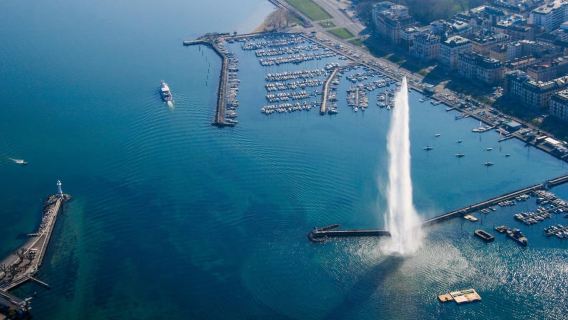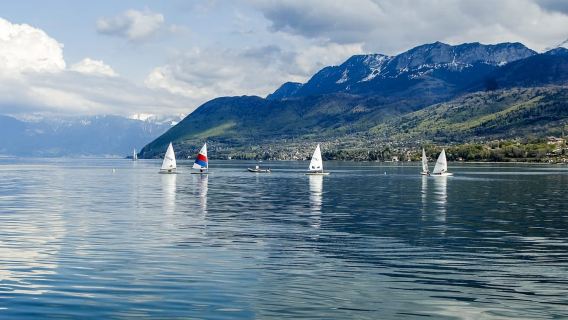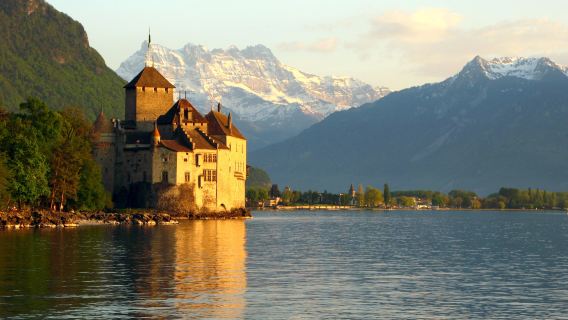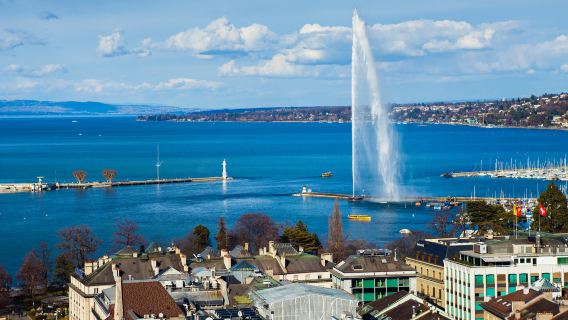

▲ Lake Geneva is located at the border between Switzerland and France, and is the largest lake in Western Europe. The northern shore and the eastern and western ends of the lake belong to Switzerland, while the southern shore is part of France. The lake covers an area of 582 square kilometers, with a crescent shape, stretching approximately 75 kilometers from east to west and reaching a maximum width of about 14 kilometers from north to south. Its deepest point is 330 meters. Formed by the melting of the Rhône Glacier in the Alps, the Rhône River is the main river that feeds and drains Lake Geneva. The lake boasts many distinctions, such as its mild climate and being the largest body of water in Central Europe. The "Jet d'eau" fountain on the lake is a symbol of Geneva, with water jets reaching up to 140 meters high. Visitors can enjoy boat tours to admire the scenic beauty of the lake, mountains, and surrounding castles and vineyards.


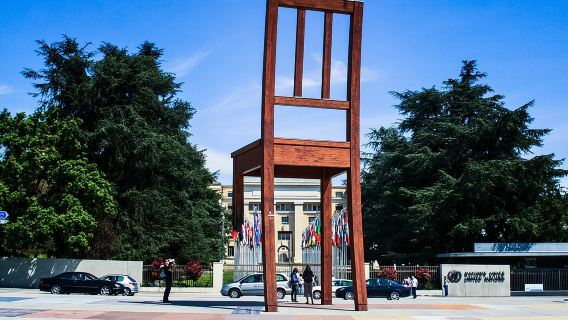
▲ In the square opposite the Palace of Nations in Geneva, Switzerland, stands a striking wooden chair with a broken leg. Designed by Swiss artist Daniel Berset and crafted by carpenter Louis Geneva, it is 12 meters high and weighs 5.5 tons, making its debut on August 18, 1997. With one leg incomplete, this chair symbolizes the harm caused to humanity by landmines and cluster bombs in a direct and shocking way. According to statistics, approximately 110 million active landmines are distributed across more than 70 countries worldwide, with about 800 people dying each month and thousands more being maimed due to landmine explosions. The broken-legged chair constantly reminds people of the immense danger that weapons left over from war pose to civilians, calling on the international community to pay attention to and promote the prohibition of landmines, and advocate for peace. Today, it has become an iconic landmark of Geneva.

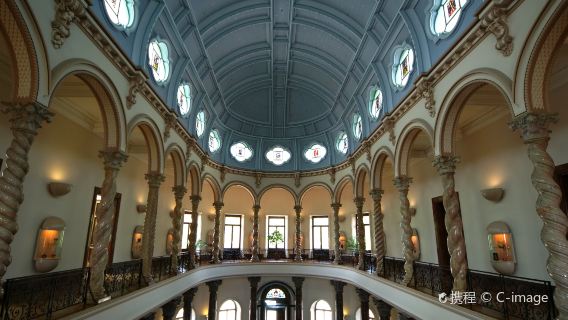
▲ The Palace of Nations is a renowned landmark in Geneva, Switzerland, located within Ariana Park by Lake Geneva. Serving as the European headquarters of the United Nations, it stands on international territory. Constructed in the 1930s, the complex comprises four grand buildings: the Assembly Hall at its center, flanked by the Library and new wing to the north, and the Council Chamber to the south. Its architecture blends classical and modern styles, featuring Italian limestone and Jura limestone for exteriors, while interiors showcase marble from France, Italy, and Sweden – embodying its "international character." Housing institutions like the UN Human Rights Council, it hosts numerous global conferences annually. The Palace also preserves nearly 10,000 artworks spanning diverse genres, making it a significant cultural hub.


▲ UNESCO - Bern Old Town is located in Berne, the capital of Switzerland, and was built between the 12th and 15th centuries. It was inscribed on the UNESCO World Cultural Heritage list in 1983. Situated on a rocky hill embraced by a bend of the Aare River, the old town is surrounded by water on three sides. It features Europe's longest covered shopping and walking arcades, stretching 6 kilometers. The streets are adorned with numerous fountains dating back to the mid-16th century, earning it the well-deserved title of "Fountain City." Additionally, the old town boasts architectural marvels such as the Cathedral of Bern, Switzerland's tallest church, and the Clock Tower, which dates back to the 13th century. UNESCO - Bern Old Town perfectly blends medieval charm with modern urban functionality, exuding unique allure.


▲ The Swiss Clock Tower - Zytglogge, also known as the Berne Clock Tower, is located in the city center of Berne, Switzerland, and is one of the city's iconic historical buildings. Constructed between 1218 and 1220, it originally served as the city's western gate defense tower before undergoing multiple renovations and restorations. In 1530, a mechanical clock mechanism designed by clockmaker Caspar Brunner was added, which has been operating with precision ever since. This 54-meter-high tower features a blend of Gothic and Baroque architectural styles. Four minutes before each hour, mechanical figurines come to life, presenting performances such as a knight's parade, a time-announcing rooster, and dancing bears, vividly recreating medieval life scenes and attracting numerous visitors to witness the spectacle.