


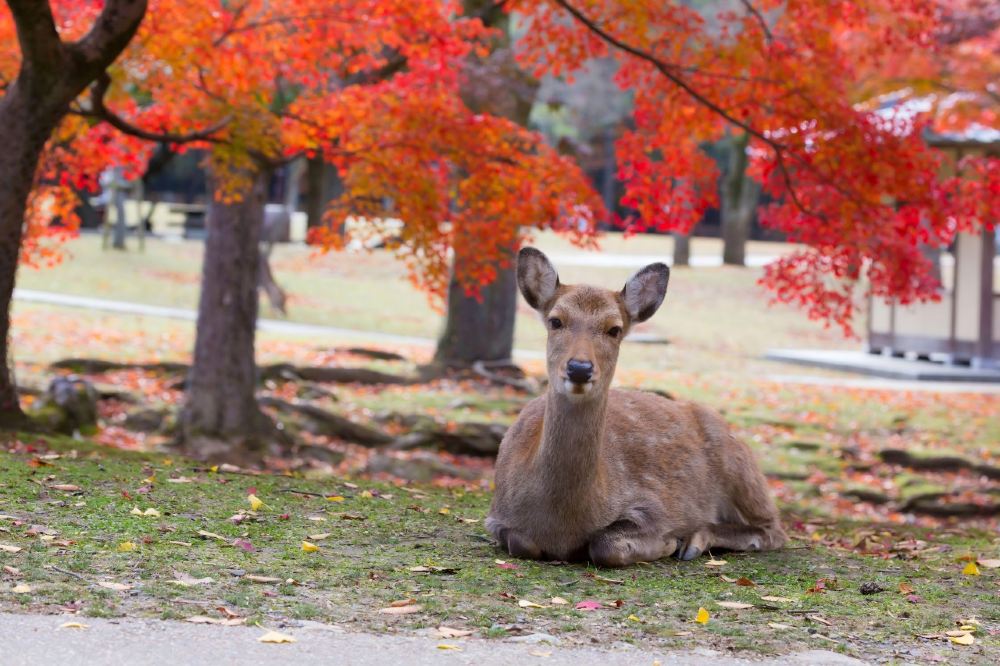
▲ In Nara, deer are not just scenery for viewing, but the city's soul revered as "divine messengers" since ancient times, freely roaming between ancient temples and open lawns.

▲ Holding a deer biscuit, gently surrounded by docile fawns, watching them lower their heads to sniff and amble leisurely—in that moment, divinity blends tenderly with the mundane, and humanity resonates quietly with nature.
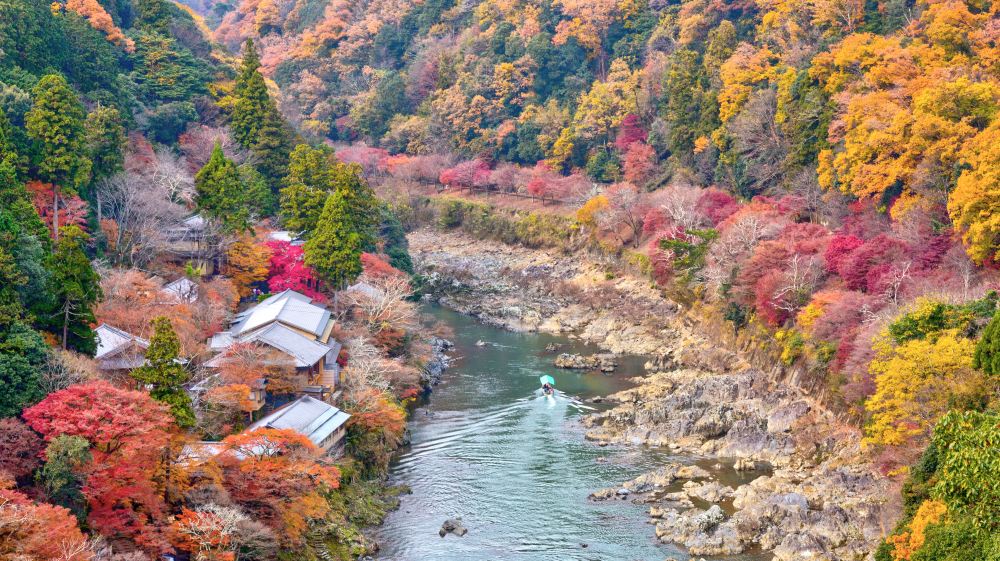
▲ Arashiyama unfolds like an ink-wash scroll, where clear streams caress rocky banks, emerald bamboo groves frame ancient temples, and nature and culture blend seamlessly.

▲ Whether it's spring with blooming cherry blossoms, summer with lush greenery, fall with fiery maple leaves, or winter with snow-covered paths, the changing seasons endow this land with serene and profound poetry.

▲ Spanning the Ōi River, Togetsukyō Bridge captures the essence of Kyoto's millennium-old aesthetics with its graceful arc. Its name, derived from the classical imagery of "the moon crossing the sky," embodies unparalleled romance.

▲ Standing at the heart of the bridge, spring cherry blossoms fall like snow while autumn maples blaze like flames, with distant mountains standing in silent opposition and a murmuring stream below—as if stepping into an elegant painting of the Heian period, where echoes of the past linger as rickshaw bells jingle by.

▲ Hundreds of transparent cylindrical pillars stand like a forest, each suspending a handwoven traditional kimono—some as vibrant as sunset clouds, others as elegant as the moon—transforming into a flowing rhythm of colors through the interplay of light and shadow.

▲ This is not just an exhibition space, but an immersive Japanese-style artistic ceremony that blends traditional craftsmanship, modern design, and sensory experiences, captivating visitors to linger and reluctant to leave.

▲ Deep in the Sagano area, thousands of towering bamboo stalks rise from the ground, weaving into a serene and winding green passage. Sunlight filters through the leaves, scattering golden fragments across the moss-covered stone path.

▲ Strolling through, the only sound is the whisper of wind through bamboo leaves, and footsteps instinctively soften, as if stepping into an otherworldly realm detached from the clamor of the mundane—a sanctuary of tranquility and meditation.

▲ The garden of Tenryu-ji ingeniously incorporates the "borrowed scenery" of Arashiyama and Kameyama, framing distant mountain mists within the emerald waters of Sōgen Pond, creating an immortal masterpiece in Japanese garden history.

▲ Before the dry landscape, white sand ripples like waves, and under the abbot's corridor, water glimmers. Whether it's the auspicious symbolism of the twin turtle and crane islands or the meditative metaphor of the dragon gate waterfall, all silently speak of Zen's profound philosophy.
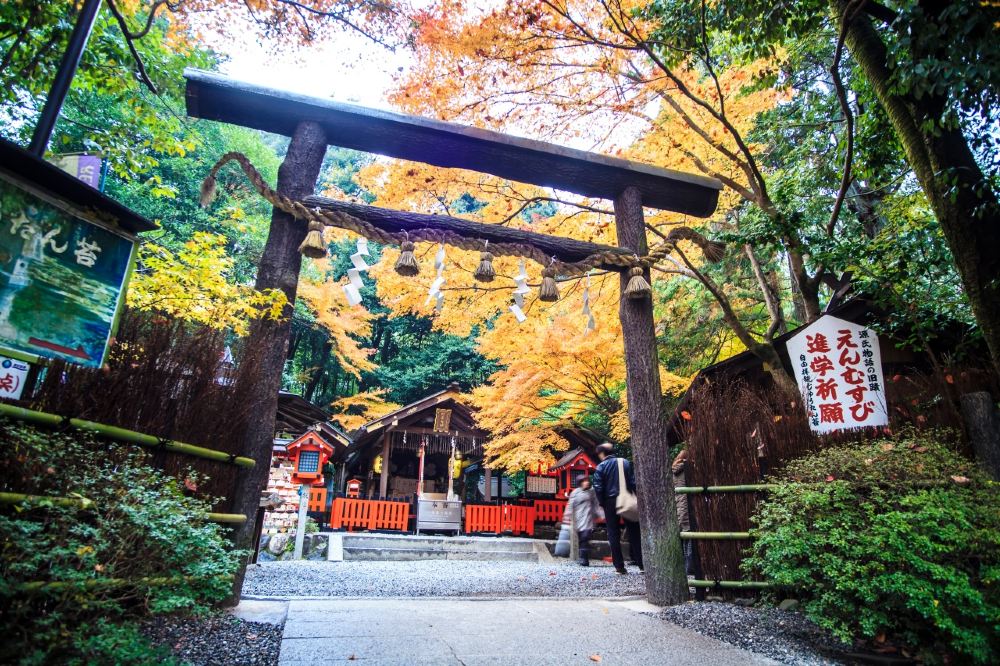
▲ The iconic black torii gate of Nonomiya-jinja Shrine retains its natural hinoki cypress color without paint, symbolizing the purity and devotion of love; hang an ema votive tablet under the ancient eaves, write your wish, and let the breeze gently carry your thoughts to the ears of the deities.
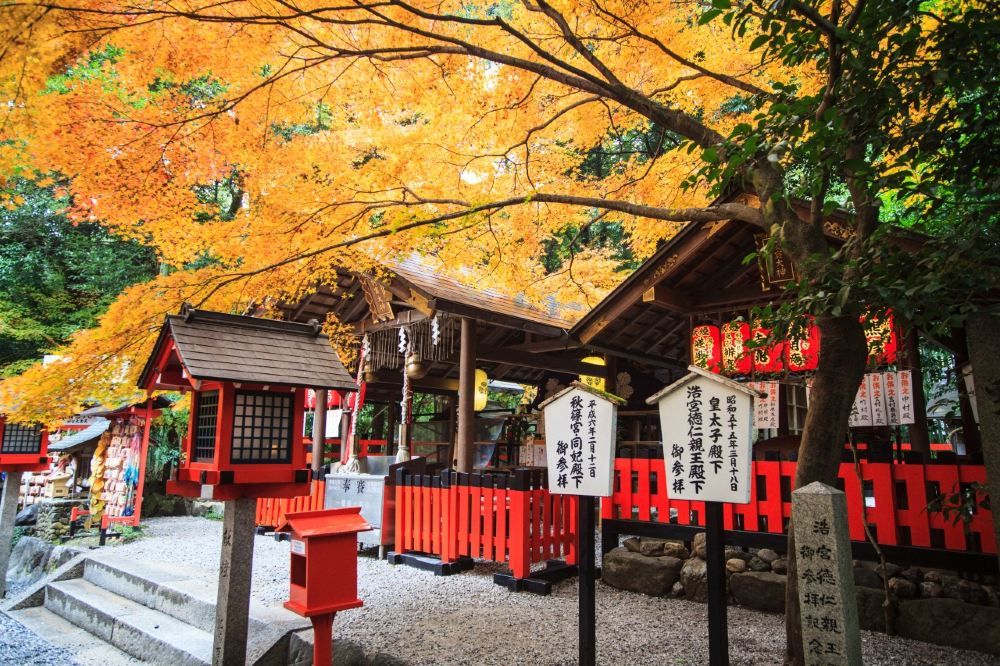
▲ Nestled deep in the bamboo shadows of Arashiyama, Nonomiya-jinja Shrine has been a sacred site for imperial purification rituals from the Heian period, and is now renowned for blessing good matches and happiness.

▲ Fushimi Inari Taisha is a sacred site for millions of Japanese worshippers. The endless rows of red torii gates form the spectacular Senbon Torii (Thousand Torii Gates) corridor, where sunlight filters through the gaps, creating a mystical atmosphere as if stepping into a mysterious world.
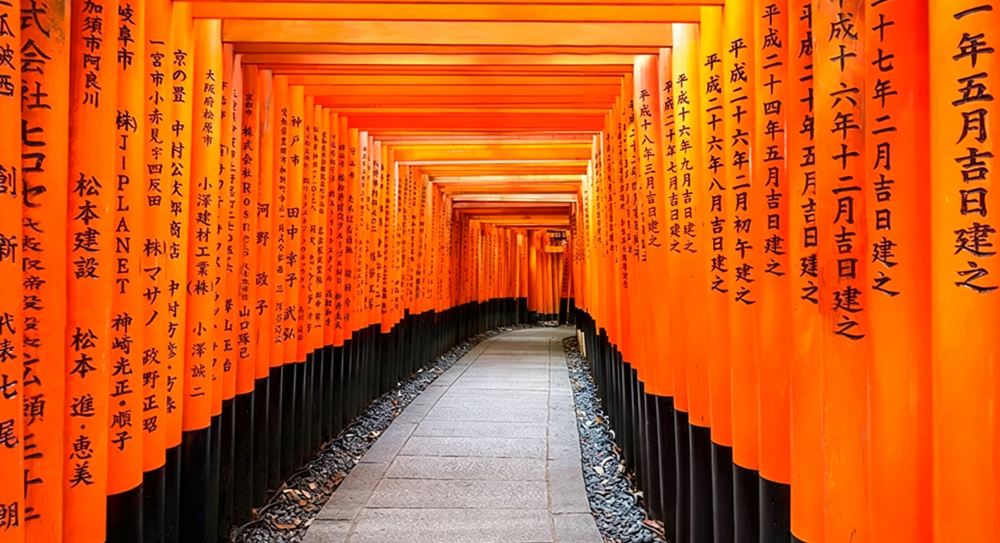
▲ Walking through the dappled light tunnel, footsteps instinctively soften as wind chimes whisper like divine murmurs; sunlight spills through crevices, illuminating not just the mountain path but also the devout anticipation in one's heart.