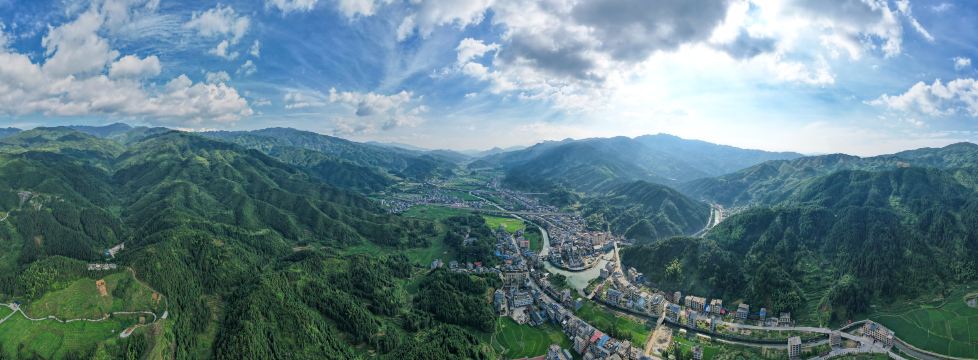
Things to do in Dongkou
Explore top experiences
Top 10 attractions in Dongkou

Luoxi National Forest Park
Luoxi National Forest Park is located in the southwest of Hunan Province, within Luoxi Yao Ethnic Township, Dongkou County, Shaoyang City. On November 15, 2006, it was approved for construction as a provincial forest park by the People's Government of Hunan Province (Document No. Xiang Zheng Ban Han [2006] 232). On December 17, 2011, it was upgraded from a provincial forest park to a national forest park, and in December 2013, it was officially rated as a national 3A-level scenic area. The total area of the forest park is 29,811.8 hectares. The natural scenery of Luoxi National Forest Park is primarily characterized by mountains and waters, which are picturesque. There are 13 mountains with an altitude of over 1,000 m, such as Puzinao (1,821 m above sea level) and Gaodeng Mountain (1,581.4 m above sea level). There are 9 major rivers, and it is one of the sources of the Yuan River and Zishui. The primitive ancient Yao villages and their folk customs give the forest park warmth and character. The park has 4 major scenic areas: Wanzhangyan Scenic Area, Gaodeng Mountain Scenic Area, Xiangqian Ancient Trail Scenic Area, and Gongxi Lake Scenic Area. Its famous attractions mainly include the Longtou Sandiao Waterfall Group, Puzhao Temple, Baoyao Ancient Village, and Bayou River eco-rafting.Dongkou · 34.5 km from downtown

Cai E Mansion
The Cai E Mansion is located at the corner of Huilong Street in Shanmen Town, Dongkou County, Shaoyang City, Hunan Province, at the foot of the western side of Xiuyun Mountain, and on the north bank of the Huangni River. A small alley leads to the Xiuyun Nanyue Temple and Dongkou County No. 4 Middle School. General Cai E was born on the Shuidong Dam in Shuidong Town, Dongkou County, Hunan Province (one theory suggests Cai E was born in Jiangjiachong, Qinmu Township, Shaoyang County, Hunan Province). At age 5, he moved to Wangjiaqiao, Xishanmen, Wugang Prefecture (now Shanmen Town, Dongkou County, Hunan Province), and spent his youth in Shanmen Town.Dongkou · 21.5 km from downtown
Xuefeng Mountain
Xuefeng Mountain in Dongkou County belongs to the southwestern section of the Primitive Jiangnan Ancient Land and features an arc-shaped structure that protrudes to the northwest. It is characterized by the widespread distribution of the Pre-Sinian Lengjiaxi Group and Banxi Group, a set of strata composed of low-grade metamorphic slate, metamorphic sandstone, and phyllite. Sinian metamorphic clastic rocks are also well-developed, with exposures of strata composed of Early Paleozoic Cambrian to Silurian slate, limestone, and fine sandstone in between. Due to the uplift caused by the Caledonian movement, a series of NNE–NE trending uplifts and depressions were formed. Furthermore, the strong influence of the Yanshan movement generated a series of NNE-trending faults and folds, which further established the structural geomorphological pattern of Xuefeng Mountain.Dongkou · 7.4 km from downtown


Tianmen Mountain National Forest Park
Tianmen Mountain National Forest Park is named after the natural wonder "Tianmen Mountain National Forest Park - Tianmen Cave." When visiting the attraction, you can enjoy a bird's-eye view of the winding Heaven-Linking Avenue and the stunning mountain scenery from the cable car. The brave can also walk along the cliff-hugging glass skywalk for an exhilarating aerial experience. Tianmen Mountain National Forest Park is located close to Zhangjiajie city. The Tianmen Cave in the park is a natural karst cave, and locals believe it leads directly to heaven. For ordinary travelers, Tianmen Cave is not open year-round. During winter each year, due to snow and icy roads, both Tianmen Cave and the Avenue toward Heaven (a winding mountain road with 99 turns) leading to it are closed. The lower station of the attraction's cableway is located in Guanliping, Yongding District, and the upper station isTianmen MountainTop. In 2020, the attraction opened the express cableway. The lower station of the express cableway is near the entrance to Tianmen Mountain, and the upper station is atTianmen CaveNear the parking lot. Tianmen Mountain National Forest Park is filled with ancient towering trees and intertwined vines. The attraction is divided into several main areas, including Tianmen Mountain National Forest Park - Tianmen Cave, central route, eastern route and western route. Travelers can choose different routes and areas to explore based on their preferences and physical condition. The core attraction along the central route is Tianmen Mountain Temple. Nearby lies the "Child-seeking cave," where folk legends claim Guanyin, the child-giving bodhisattva, manifested her divine power—devout prayers here are believed to grant offspring. The western route's highlight is a 60 m-long glass walkway clinging to sheer cliffs, with fully transparent flooring that induces both vertigo and exhilaration as visitors tread above abysses. Currently, the eastern route and Panlong Cliff each feature their own approx. 60 m glass walkways. No stay is allowed in the attraction, so it can only be visited within one day. There is a "Cherry Bay Restaurant" near Tianmen Mountain Temple, which offers snacks and fast food. Near the lower station of Tianmen Mountain cableway, there is transportation to the "Grand Canyon Theater", where you can watch the live show and magical musical "Tianmen Fox Fairy". Adapted from the mythological tale "Liu Hai cuts firewood", it tells a touching love story between a human and a fox. With live music, lighting effects, and captivating scenes like a giant moon, fox spirit transformations, snowflakes filling the sky, and high-altitude flying bridges, this legendary romance is vividly brought to life.China · Zhangjiajie

Zhangjiajie National Forest Park
Zhangjiajie National Forest Park is where Zhangjiajie tourism originates. "Everyone knows Zhangjiajie, but who recognizes Wulingyuan?" Many visitors are confused about the relationship between Zhangjiajie and Wulingyuan. Generally, Zhangjiajie refers to both Zhangjiajie City and the Zhangjiajie attraction. The Zhangjiajie attraction specifically means Zhangjiajie National Forest Park, which—together with Tianzi Mountain, Suoxi Valley, and Yangjiajie—forms the Wulingyuan scenic area. Since Zhangjiajie National Forest Park was developed earlier and gained greater fame, even Zhangjiajie City was renamed after it. As a result, people commonly use "Zhangjiajie National Forest Park" or "Zhangjiajie attraction" to refer to the Wulingyuan scenic area. "Three thousand spectacular peaks and eight hundred beautiful waters." The three thousand spectacular peaks, in particular, are world-renowned. Wulingyuan's mountains stand apart from famous peaks around the world. Across its 398-square-kilometer area, over 3,000 densely packed sandstone pillars rise dramatically, with 243 exceeding 1,000 meters in height. When sea of clouds roll in, these pillars appear to float without foundation, soaring straight into the sky. Alongside North America's redwood forests and Greenland's glaciers, they form one of Earth's four great geological wonders. Located at low altitudes in the subtropical zone, Wulingyuan thrives with lush forests and abundant water sources, supporting numerous endangered plant and animal species. Each pillar teems with life. The natural pillars, bridges, canyons, waterfalls, streams, pools, caves, and dense broadleaf forests often shroud in mist and clouds, enhancing their breathtaking beauty. This unique landscape creates a spectacular scene described as "majestic mountains, elegant waters, peculiar peaks, secluded gorges, and exquisite caves," earning its reputation as "an enlarged bonsai and a miniature fairyland." On December 14, 1992, the UNESCO World Heritage Committee unanimously voted to include Wulingyuan on the World Heritage List, filling China's gap of having no World Natural Heritage sites. Its recognized outstanding universal value lies in its exceptionally rare quartz sandstone peak forest landform, which possesses extremely high aesthetic value. UNESCO states: "Wulingyuan's scenery can be compared to several national parks and monuments in the United States, such as the Grand Canyon, as well as the sandstone peaks of Western Australia's Purnululu region. However, due to Wulingyuan's lower elevation and subtropical location, it boasts lush forests, abundant water sources, and numerous towering peaks that display more vertical profiles than the heritage sites in the U.S. and Australia." The visually stunning Pandora planet in the globally popular 2009 movie "Avatar" captivated countless viewers, with its floating mountains inspired by Wulingyuan. Additionally, Wulingyuan served as the filming location for Chinese literary classics like "Dream of the Red Chamber" and "Journey to the West," as well as movies such as "Zhong Kui: Snow Girl and the Dark Crystal" and "Monster Hunt." In 2010, Wulingyuan's unique landform was officially named the "Zhangjiajie landform," becoming a globally recognized term and one of the few landform types in the world named after a specific region. Attraction highlights Yuanjiajie: Step into Pandora from Avatar Yuanjiajie served as the filming location for the "Hallelujah Mountains" in the movie Avatar. Here, you can explore the magical world of floating peaks scattered like stars across the landscape. If you're lucky enough to visit during a light rain or just after the rain clears, you'll witness the breathtaking scenery of mist-shrouded, layered mountain peaks. Mihun Terrace is the ideal vantage point, offering panoramic views of hundreds of towering stone peaks that create a majestic atmosphere. You can also see the renowned "World's First Bridge," a natural wonder spanning two mountains with a vertical drop of 357 meters. Tianzi Mountain: Where the Emperor's Return Makes Other Mountains Pale in Comparison Exploring Tianzi Mountain, you'll encounter extraordinary geological formations and peculiar peaks like the Imperial Writing Brush, Fairy Presenting Flowers, Commander's Platform, Sky-High Farmland, and Immortal Bridge. Don't focus too much on how closely these natural shapes resemble their names - the true charm lies in the mountain's "primordial natural beauty." The misty atmosphere after rainfall creates an ethereal fairyland experience, while winter transforms the landscape into an even more enchanting silver wonderland. Huangshi Village: Reach the summit for breathtaking mountain views "Without ascending Huangshi Village, your trip to Zhangjiajie is incomplete." Huangshi Village is a scenic viewpoint within Zhangjiajie National Forest Park, surrounded by sheer cliffs and lush greenery, with its summit often shrouded in mist. Reaching the top of Huangshi Village offers panoramic views that let you experience the majestic feeling of "seeing all other mountains appear small." Yangjiajie: Thrills Amidst the Peaks Yangjiajie is primarily known for its pristine natural beauty, featuring towering mountains and narrow paths that make it famous for its "perilous" reputation, beloved by backpackers and adventurers. Within the attraction, Black Dragon Village is one of Zhangjiajie's most magical spots. Once inhabited by bandits from western Hunan, it was later renamed after the TV series "The Suppression of Bandits in Black Dragon Mountain." The village is built along the mountainside, with only one path leading up and down—requiring visitors to use both hands and feet to climb to the summit. Suoxi Valley: Nature's Ink Wash Masterpiece Suoxi Valley, also known as Suoxi, gets its name from the rope-like shape of its winding streams. Unlike the more rugged areas of the forest park, this mist-shrouded valley features crystal-clear streams that flow year-round, surrounded by graceful peaks at every turn. The Ten Mile Gallery stands as the crown jewel of Suoxi Valley—a 5km-long canyon filled with fragrant wildflowers and extraordinary rock formations. Walking through this landscape feels like stepping into a living Chinese landscape painting. Golden Whip Stream: Filming Location of "Journey to the West" Golden Whip Stream Canyon is the earliest developed area in the attraction, where a crystal-clear stream flows through the valley flanked by towering peaks and lush greenery. This location served as one of the filming sites for the classic TV series "Journey to the West," allowing fans to visit iconic scenes like the Water Curtain Cave and the Mountain-Splitting Rescue.China · Zhangjiajie

Orange Isle Scenic Area
Orange Isle Scenic Area is a narrow sandbar lying across the heart of the Xiang River in Changsha, stretching approx. five km. It faces Yuelu Mountain to the west and borders Changsha's old city to the east, surrounded by water on all sides. Named after the abundant orange trees planted on the isle, it was historically called Shuiluzhou. Formed by river alluvium, this sandbar has existed for over a millennium, where the "River and sky in evening snow" scenery was once among the Eight Views of Xiaoxiang. In 1925, the poem "Spring in a pleasure garden - Changsha" was composed here, with its iconic line "Alone I stand in the biting fall, watching the Xiang River flow north past Orange Isle's head," which made this riverine landmark widely renowned. The highlights of the visit are concentrated at the islet's head: A granite art sculpture over 30 m tall, modeled after the 1925 youth image, stands facing the river as Changsha's highly recognizable landmark. Nearby, the Questioning Heaven Platform extends toward the river center, where leaning on the railing reveals the mighty Xiang River flowing northward, with Yuelu Mountain and the city skylines on both banks facing each other across the water. The Songju Pavilion, white marble poetry stele, and the 200-year-old ancient phoenix tree at the islet head are all in this area. Heading north from the islet head, a hundred-acre orange orchard bears golden fruits in fall, while bamboo groves, peach orchards, plum gardens, and osmanthus groves take turns showcasing seasonal flora. The historic Zhuzhang Ferry (where Zhu Xi and Zhang Shi once crossed the Xiang River for lectures) and the Huxiang Culture Exhibition Hall are scattered along the way. At the islet's tail, the reconstructed Jiangshen Temple and Gongji Tower area was precisely where ancients admired the "River and sky in evening snow" scenery. The island is long and narrow, making round-trip walks quite tiring. A sightseeing train is available for transportation, with multiple stops along the way for hopping on and off. Travelers with limited time are advised to head straight to the island's tip to see the sculpture and river views, then stroll leisurely along the riverside path. At dusk, watching the sunset over the Xiang River and seeing the lights gradually illuminate both shores from the island's tip is especially worth setting aside time for.China · Changsha

Fanjing Mountain
Fanjing Mountain is located in Tongren, northeastern Guizhou province, with an elevation of 2,572 m. As the highest peak of the Wuling Mountains, it is a member of the UNESCO "Man and Biosphere" program, a World Natural Heritage site, and a national 5A-level tourist attraction. The Mount Fanjing Biosphere Reserve covers a total area of 428.63 km². The mountain is characterized by its pristine wilderness, majestic peaks, layered ridges, crisscrossing streams, and cascading waterfalls. Its iconic attractions include the Red Clouds Golden Summit, Yuejing Mountain, the 10,000-meter Sleeping Buddha, Mushroom Rock, the Ten Thousand Scrolls of Scriptures, Jiulong Pool, and Phoenix Mountain. Mount fanjing was originally named "three valleys", derived from "pure land of brahma". The buddhism here originated in the tang dynasty and flourished in the ming dynasty, making it a historic buddhist mountain. Additionally, mount fanjing boasts abundant wildlife resources, including rare species such as the guizhou golden monkey and dove tree. Mount Fanjing is the main peak of the Wuling mountain range, located at the junction of Jiangkou, Yinjiang, and Songtao counties. With its massive and majestic form reaching into the clouds, it was revered as the ancestor of famous mountains as early as the beginning of the Ming dynasty and is a renowned Buddhist sacred site. Additionally, Mount Fanjing boasts vast areas for viewing red leaves. Every fall, the layered forests are dyed in vibrant hues, with the red leaves complementing the mountain temples. Here, you can take a cable car to overlook the endless stretches of red foliage or stroll along the mountain paths, surrounded by fiery red leaves on both sides and above. The red cloud golden summit is the core of Foshan. The two temples standing majestically on the peak, with two buddhas presiding, create an infinite dharma realm. This masterpiece of the Southern Song Dynasty's White Lotus Society in constructing a "pure land on earth" is a miracle in the history of Buddhist development on famous mountains. Take the sightseeing bus from the attraction entrance to the cableway, then ride the cableway up and walk straight to the top to see the famous "mushroom stone." True to its name, it has a large top and a small base, resembling a mushroom, standing approx. 10 m tall and having been on the mountain for 1 billion years. To the left of the mountaintop is the red golden cloud summit, and to the right is the old golden summit, both incredibly spectacular.China · Jiangkou

Elephant Hill Scenic Area
The Elephant Hill Scenic Area is located in the heart of Guilin, at the confluence of the Li River and the Peach Blossom River. It derives its name from its resemblance to a giant elephant stretching its trunk to drink from the sweet waters of the Li River. In his work "Records of Elephant Hill," Shu Shu, a Qing Dynasty official from the Ministry of Works, wrote: "The marvels of Guangxi lie in its mountains; the marvels of Guangxi's mountains lie in their rocks, and the elephant-shaped hill facing the provincial capital is the most marvelous of all." With its lifelike form, the attraction captivates visitors and stands as a quintessential representation of Guilin's landscape. In 1995, it was designated as the city emblem of Guilin. The main attractions in the scenic area include: Elephant Hill and Water Moon, Puxian Pagoda, Elephant Hill Scenic Area and Guilin Sanhua Liquor, Elephant Hill Scenic Area - Love Island, and Elephant Hill Scenic Area - Yunfeng Temple Taiping Heavenly Kingdom Exhibition Hall. Elephant trunk hill and water moon cave "Elephant trunk hill and water moon" is a spectacular wonder here, as described in the poem by Ji Bei Hermit of the Song Dynasty.Harmony of water, moon and caveThe poem reads: "The moon is beneath the water, the moon floats upon the water. The water flows but the moon stays, the moon departs yet the water still flows." On a moonlit night, visiting the Water Moon Cave at the Elephant Trunk Hill attraction presents a magical scene where the moon in the sky, the cave, and the water reflect each other beautifully. Inside the cave, you can find the "Poem and Preface of the Morning Sun Pavilion" by Zhang Xiaoxiang from the Song Dynasty and works by Fan Chengda.Inscription on the water and moon caveAnd over 50 precious cliff carvings including Lu You's poetry manuscripts. Xiangshan scenic area - Puxian pagoda Winding up along the rocky cliffs, you can see the Puxian pagoda standing tall amidst the greenery from afar. Built during the Ming dynasty, this 13.6m-high solid brick lama-style pagoda has a history of over 400 years. On the northern side of the pagoda, there is a line-engraved bluestone statue of a bodhisattva, with the mantra "Namo Puxian Bodhisattva" inscribed above it, hence the name Puxian pagoda in the Xiangshan attraction. Buddhist scriptures record that Puxian bodhisattva's mount is a six-tusked white elephant, making the pagoda's location atop Xiangshan mountain a perfect embodiment of this scripture. Elephant Hill Scenic Area and Guilin Sanhua liquor This is a natural wine cellar, with two-thirds of the mountain being hollow. It stays warm in winter and cool in summer, maintaining a constant temperature of 19°C and humidity above 90% year-round. Since the Song Dynasty, it has served as an official cellar for storing Sanhua wine. Sanhua wine is colorless and transparent, with a fragrant yet spicy taste. It drawsLi RiverWith the essence of the mountains and the soul of the Li River, it has become a representative of China's rice-aroma liquor. The cellar liquor was designated as a tribute to the imperial court as early as the Northern Song Dynasty and is one of the three treasures of Guilin. To date, nearly a thousand tons of liquor are stored in the caves. Love island Love island is located on the north side of the attraction, adjacent toLi RiverIt is another scenic viewpoint for distant viewing. The island boasts a beautiful environment and lush vegetation, making it a popular dating spot for locals in the 1970s, hence the name "love island". Today, it serves as an outdoor photography base for wedding celebrations against the backdrop of Guilin's landscape, where couples make their vows of love under the witness of the elephant trunk hill and the moon reflected in the water.China · Guilin

Hunan Museum
Hunan Museum has a rich collection of cultural relics, especially of those from the Mawangdui Han Dynasty Tombs. The Mawangdui Han Dynasty Tombs Exhibition is a permanent exhibit at Hunan Museum. It features thin-as-cicada-wing plain yarn garments, undamaged printed cotton gowns, all kinds of exquisite embroidery, brightly painted lacquer wares, delicate and detailed paintings, and so on.China · Changsha

Xijiang Qianhu Miao Village
Xijiang Qianhu Miao Village is a collection of over ten natural villages built along the mountainside, inhabited by the "Xi" clan of the Miao people. The village features layers of wooden stilt houses on the slopes, with coffee-colored old houses nestled against lush green mountains. The Baishui River divides the village in two. The side of the river (to the left after entering the Xiaobei Gate for travelers) is mainly a commercial pedestrian street, while the opposite side (to the right after entering the Xiaobei Gate for travelers) is primarily the viewing platform overlooking the village. Upon arriving at Xijiang Qianhu Miao Village, you'll see a gate with the plaque "Xijiang Qianhu Miao Village" after getting off at the parking lot. From this gate to the village is a 1.5 km walk, which you can cover either by electric bikes or on foot. After this 1.5 km stretch, you'll encounter another gate similar to the one at the parking lot, also bearing the "Xijiang Qianhu Miao Village" plaque—this marks the true entrance to the village. First drink the welcoming wine, then enter the village. The first thing you see is the commercial pedestrian street, selling a dazzling array of Miao ethnic specialty products. The most eye-catching are the Miao silver ornaments. Kongbai in Xijiang town of Leishan near the Miao village is a well-known silversmith village, where almost all the men master the silver ornament making techniques, and the craftsmanship of Miao silver is exquisite. The performance venue in the pedestrian street area offers Miao ethnic song and dance shows. You can also visit the Xijiang Miao Ethnic Museum and the Drum Head's House (the Miao king's residence, where a bronze drum is enshrined). Alternatively, take a stroll along the Baishui River to see the wind-and-rain bridges with roofed eaves sheltering from the elements, or the low, narrow wooden plank bridges. At the end of the village lies a pastoral landscape, where even during peak season few visitors come. Across the river is a station for electric bikes to the viewing platform, but walking there isn't far, and several spots along the way offer excellent views. Upon reaching the viewing platform, wait for nightfall—the grand spectacle of Xijiang is just beginning. Thousands of lights illuminate from beneath the eaves of wooden stilt houses, dotted like stars to outline the entire Miao village in the shape of an ox head. It's hard to imagine such a brilliantly lit scene in a mountain village. Returning to the viewing platform at dawn, the Miao village is shrouded in mist as the first sunlight gilds the wooden houses golden. Smoke curls up from chimneys, marking the start of a new day. In Miao villages, you can often see Miao women with their hair buns coiled on top of their heads and adorned with large flowers. Just looking isn't enough—you can also rent a few sets of Miao costumes to dress up as a Miao woman yourself. It's especially beautiful and very popular among young women. Xijiang Qianhu Miao Village has mature tourism development, with no worries about food and accommodation. For dining, the famous option is the long-table banquet. Restaurants in the village will often ask if you'd like to try it—simply joining tables to make them longer counts as a long-table banquet, serving as a fun experience. The authentic long-table banquet is held outdoors, with dozens of tables connected end-to-end, sometimes so long that you can't see from one end to the other. These are set up during important festivals or when significant group tours visit, so don't miss the chance if you encounter one. The cuisine of southeastern Guizhou tends to be sour, and the village's specialty dishes include sour fish soup, pickled vegetables, and cured meat.China · Leishan
Free things to do in Dongkou
Luoxi National Forest Park
Dongkou · 34.5 km from downtownOrange Isle Scenic Area
China · ChangshaHunan Museum
China · Changsha
Mount Yuelu
China · Changsha
Fenghuang Ancient Town
China · Fenghuang County
Li Zijian Art Museum
China · Changsha
Zhenyuan Ancient Town
China · Zhenyuan County
Yangshuo West Street
China · Yangshuo
What travellers say about Dongkou

gz伊妹儿July 5, 2020
5.0
Luoxi National Forest Park has nice scenery, pristine natural landscape, a natural oxygen bar, and a summer resort. You can climb the mountain and see the beautiful scenery. The green scenery is refreshing. It is a good choice, great.
Luoxi National Forest Park

86338633March 30, 2025
5.0
Cai E, formerly known as Cai Genyin, was born in 1882 in a small vendor's home in Shaoyang, Hunan. In the "Cai E Mansion" in his hometown, there is a detailed introduction to his life experience. When visiting it, people not only admire the great achievements of this man who was praised as the "first person to rebuild the republic" for opposing Yuan Shikai's enthronement, but are also very interested in his love story.
👍When Cai Genyin was 4 years old, he followed his father to the home of Liu Huige, a famous rich man in the village, to sell tofu. Seeing that he was handsome and smart, the owner wanted to recognize him as a child and betrothed his eldest daughter Liu Changgu to him. The two were 7 years apart in age. Liu Huige valued this prospective son-in-law very much and let him study in his private school and become a classmate with Liu Changgu. But the rich lady had no feelings for this poor boy who was shorter than her. The two always divided the river and ruled separately. They never had the affection of childhood sweethearts, but often saw the enemy and usurpation.
Cai E Mansion

还不曾去过倒悬山!May 23, 2022
4.0
There are said to be 75 wind turbines on the top of the mountain, which is 65 meters high in the thick clouds and is located at the junction of the Yunnan-Guizhou Plateau and the eastern region.
Xuefeng Mountain

_TS***0sOctober 25, 2026
4.0
Check the weather frequently and even then make sure it is really clear becaise we only caught a glimpse of the hole and nothing up there. Due to only line C working there are a lot of people waiting in line.
Tianmen Mountain National Forest Park

limonzOctober 25, 2026
5.0
This is absolutely the most wondrous natural wonder in the world. As you walk along please read all the signages of earths natural wonders and how it came about. We feel we are high above the clouds. Misty and surreal.. a must visit
Zhangjiajie National Forest Park

YazonDinAltOctober 23, 2026
4.0
Orange Island is a bit of a mixed experience, and I'm honestly not entirely sure whether I'd consider it a must-visit in Changsha.It's a large, green, and pleasant park, with beautiful riverside views and plenty of space for walking. If you enjoy places with historical significance or simply want to experience a different side of the city, it's definitely worth considering.Most visitors seem to take the sightseeing train to the southern end of the island, where the famous Mao Zedong statue is located. That's also where you'll find plenty of people taking photos, so don't expect a particularly quiet experience.The main downside is that visiting the island takes quite a bit of time, especially if you want to explore it properly. And while it's certainly a nice place, I'm not sure the experience justifies spending several hours here if you have a limited amount of time in Changsha and other places you'd like to see.On the other hand, if you're simply looking for a relaxing walk through a green park, with opportunities to stop by the river and enjoy the scenery, it's a lovely option.Overall, I'd say it's worth visiting if you have some extra time or are particularly interested in Chinese history. Otherwise, I wouldn't necessarily put it at the very top of your Changsha itinerary.
Orange Isle Scenic Area

Anonymous userOctober 23, 2026
5.0
It’s misty but at least not raining, climbed all 3 peaks- 红云今顶、老金顶 和蘑菇石… Into the park at 7.42am, no queues at all and out around 2pm after conquering all 3 peaks!
Fanjing Mountain

M45***48September 25, 2026
5.0
When visiting Guilin, a must-see is Elephant Trunk Hill, the city's iconic landmark. It truly lives up to its reputation as the face of Guilin's landscape; only by seeing it in person can one truly appreciate the wonders of nature. The entire mountain sits on the banks of the Li River, resembling a giant elephant bowing to drink from the water. The Water Moon Cave cuts through the mountain, its reflection shimmering in the water, creating the famous Elephant Trunk Hill and Water Moon spectacle—a flowing ink painting.
The scenic area is clean and comfortable, with walking paths built along the Li River, shaded by lush trees, making for a delightful stroll. You can climb the mountain for panoramic views of Guilin, or find classic vantage points along the riverbank to capture stunning, atmospheric photos. Boat trips are also available, offering a different and breathtaking perspective of Elephant Trunk Hill from the river.
The scenic area is conveniently located in the city center, with excellent transportation and comprehensive facilities. Every step reveals a new vista, allowing you to truly experience the unparalleled beauty of Guilin's landscape. Don't miss it when traveling to Guilin; it's definitely worth a visit.
Elephant Hill Scenic Area

尘尘October 23, 2026
5.0
The Hunan Provincial Museum boasts a magnificent collection of artifacts, connecting the Hunan civilization from Shang and Zhou bronzes to the Mawangdui Han Dynasty tombs. The museum houses a large number of national treasures, witnessing the splendor and legend of southern civilization. What makes the Hunan Provincial Museum unique compared to other museums is that it has replicated the tomb pit of Lady Xin Zhui from the Mawangdui Han Dynasty tombs at a 1:1 scale, extending across multiple exhibition halls. Visitors can see from above ground to underground, from everyday scenes to coffins and remains. Being there is truly awe-inspiring.
Hunan Museum
Anonymous userOctober 22, 2026
5.0
Choosing the right accommodation is crucial when visiting the Miao Village! The view from Luanxi is absolutely stunning; you can admire the stilted houses and the lights of countless homes right from your room, without having to squeeze onto the viewing platform. It's just steps from the popular photo spots, the room was impeccably clean, and the bedding was comfortable. Once we arrived at the scenic area, the butler helped with our luggage, explained the sightseeing routes, and recommended some delicious restaurants – we ate there twice! The hotel offers afternoon tea and a bedtime soup; highly recommended, I'll definitely stay here again next time I visit the Miao Village.
Xijiang Qianhu Miao Village


