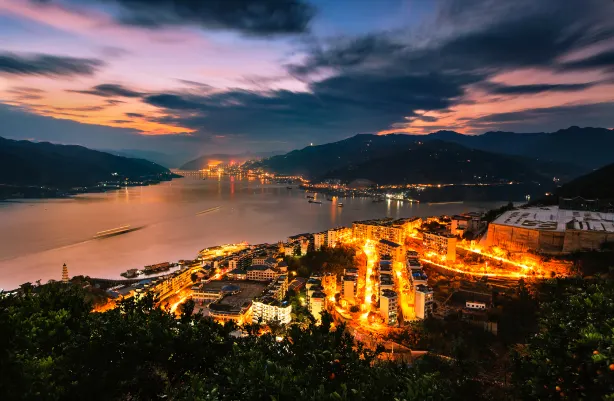
Fengjie County

Things to do in Fengjie County

Search attractions or local attractions & tours
Search

Explore top experiences

Top 10 attractions in Fengjie County
View all Attractions
White Emperor City Qutang Gorge Scenic Spot
No. 5 of Fall Viewing Attractions in Chongqing

White Emperor City Qutang Gorge Scenic Spot

7.8
4.6/5
4.1k reviews

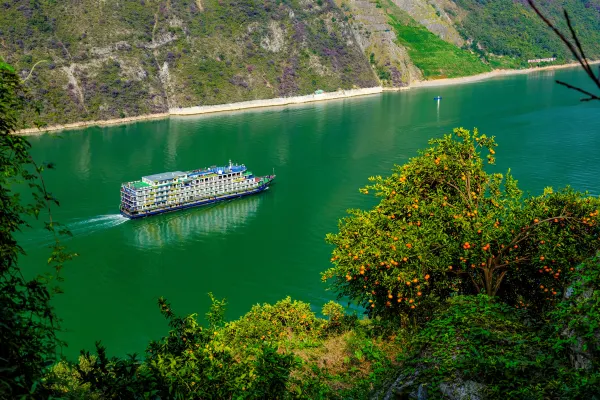
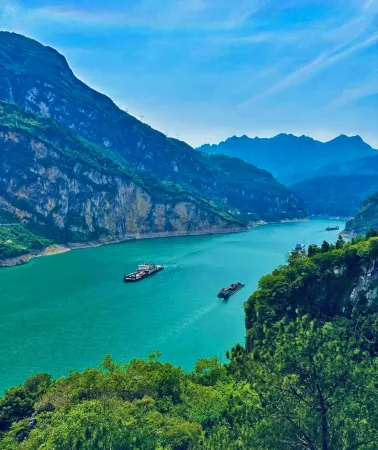
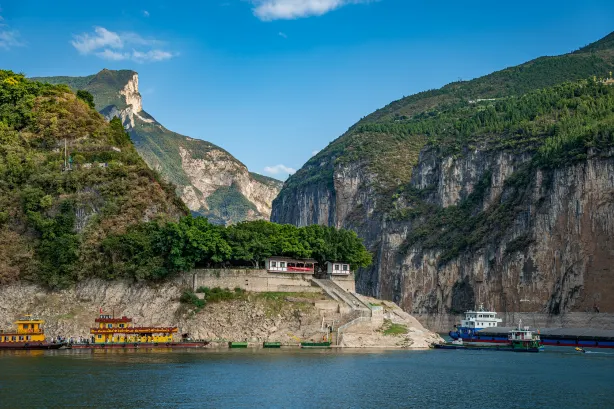
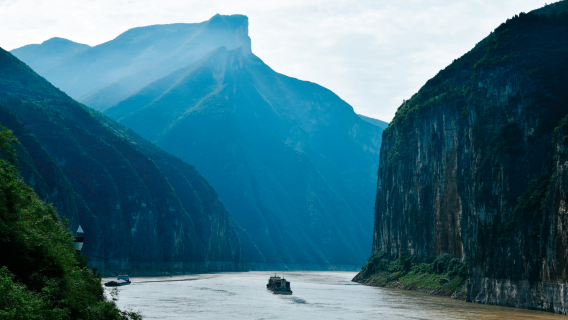
White Emperor City Qutang Gorge Scenic Spot is located by the river in Fengjie County, Chongqing, at the western entrance of the Yangtze River's Three Gorges. It consists of two parts: White Emperor City and Qutang Gorge. A historic island city surrounded by water meets a majestic and precipitous gorge gateway, where natural landscapes, Three Kingdoms relics, and millennia of poetry converge. When cruising through the Three Gorges, the gorge's panoramic scroll often begins unfolding here. White Emperor City, originally named White Emperor City Qutang Gorge Scenic Spot, was built by Gongsun Shu in the late Western Han Dynasty as a fortified city, where he proclaimed himself the "White Emperor," a name that has endured to this day. During the Three Kingdoms period, Liu Bei retreated here after his failed eastern campaign and entrusted his son to Zhuge Liang on his deathbed. The colorful sculptures in the Entrusting the Orphan Hall at the White Emperor Temple recreate this historical episode. Interestingly, while the temple's name remains unchanged, it now enshrines Liu Bei and Zhuge Liang, who were honored during the Ming Dynasty. The Mingliang Hall, Wuhou Shrine, and Star-Gazing Pavilion are built along the mountainside, while the eastern and western stele forests display inscriptions from various dynasties, worth a slow-paced appreciation. The site is also renowned as the "City of Poetry": Li Bai, pardoned and returning east, penned the timeless line "Leaving at dawn the White Emperor crowned with cloud"; Du Fu, residing in Kuizhou for nearly two years, left behind over 400 poems; and Liu Yuxi composed "Bamboo Branch Songs" while serving as the governor of Kuizhou. After the Three Gorges Reservoir was filled, the rising river level turned White Emperor Mountain into an isolated island in the high gorge's flat lake, accessible only via a long covered bridge. The Qutang Gorge stretches approx. 8 km in total. Though not the longest among the Three Gorges, it is renowned for its majestic and precipitous scenery. The gorge entrance, called Kuimen or Qutang Pass, features the sheer cliffs of Chijia Mountain and Baiyan Mountain standing opposite each other, abruptly narrowing the river. Here, the Yangtze forces its way through the pass, which has served as the vital waterway to and from Sichuan since ancient times. It also appears on the back of the fifth series CNY 10 banknote. While sailing through the gorge, visitors can spot the hanging coffins at Wind Box Gorge high on the cliffs, the orderly arranged Meng Liang's Ladder holes on Baiyan Mountain's precipice, and numerous cliff inscriptions. When visiting, consider first walking across the covered bridge to the island to explore the Tuogu Hall, stele forest, and Star Observation Pavilion, then head to the Kuimen viewing platform behind Baidi Temple—directly facing Kuimen, it offers the same perspective as depicted on the back of the CNY 10 banknote. Matching a bill with the actual view for photos has become a classic activity. To truly experience the canyon's narrowness and the river's rush, take a boat through Qutang Gorge—looking back at the cliffs from the water is far more awe-inspiring than viewing from the shore.

Fengjie County · 12.7 km from downtown
From VND 230,770
Peak of Three Gorges Scenic Area
No. 4 of Fall Viewing Attractions in Chongqing

Peak of Three Gorges Scenic Area

7.4
4.7/5
1.3k reviews

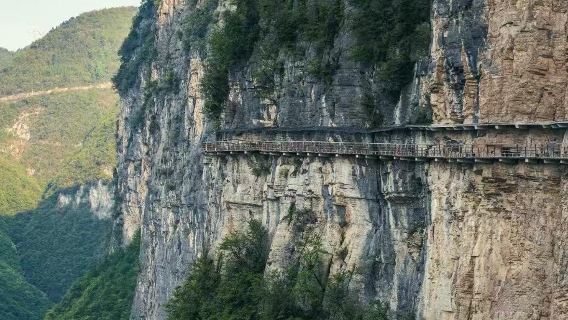
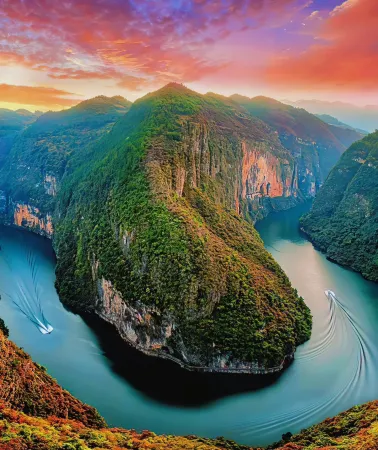
Peak of Three Gorges is located on the summit of Chijia Mountain in Fengjie County, above Kuimen. It stretches over 10 km, starting from Zuofangcao in the north, overlooking Baiyan Mountain to the south, Baidi Poetry City to the west, and Wushan Airport to the east. The attraction is named after a line from Du Fu's "Ten Quatrains of Kuizhou Songs": "Chijia and Baiyan both pierce the sky, with houses winding up to the mountain peak." The area where the attraction is located is said to be one of the birthplaces of ancient Kui music and the legendary birthplace of the ancient musician "Kui." Themed around music culture, the attraction combines landscape views with ancestor worship and elegant music and dance, featuring scenic nodes such as the Kui Drum Altar, the Siwang Music Altar, the Ancestor of Music Statue, the Kui Character Gate, the Bamboo Rhythm Elegant Railing, and the Welcome Terrace. At an altitude of approximately 1,388 m, it is one of the highest points for overlooking the Three Gorges of the Yangtze River. Upon reaching this place, surrounded by mist and rolling mountains, visitors can overlook the jade-belt-like Yangtze River winding through the gorges. The attraction features a glass walkway, where visitors can overlook the full panorama of Qutang Gorge from above and take in the intertwined scenery of steep cliffs, perilous drops, thrills, and wonders.

Fengjie County · 16.3 km from downtown
From VND 269,231
Qutang Gorge
Selected for Best Things to Do in Chongqing

Qutang Gorge

5.5
4.7/5
272 reviews

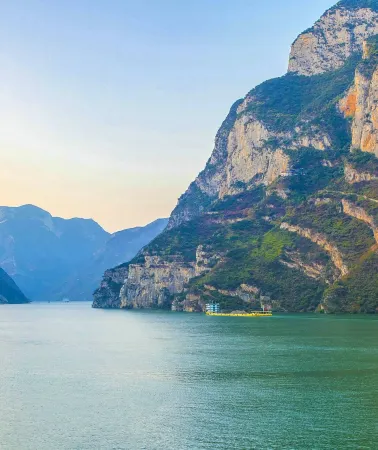
The Baidicheng (White Emperor City) and Qutang Gorge attraction is located on Baidi Mountain along the northern bank of the Yangtze River at the entrance to Qutang Gorge in Fengjie County, Chongqing. Situated at the western gateway to the Three Gorges of the Yangtze River, it faces Kuimen to the east, Baiyan Mountain across the river to the south, connects to Fengjie County town to the west, and backs against Jigong Mountain to the north, approximately 10 km east of Fengjie County town. Covering an area of 6 km², the attraction primarily consists of two major sections: Baidicheng and Qutang Gorge, featuring numerous historical sites that blend natural scenery with cultural heritage, poetic charm with wartime history. It serves as the starting point to experience the majestic beauty of the Yangtze Three Gorges. In 1978, Baidicheng became one of China's first officially opened tourist attractions. Originally named Ziyang City, Baidi City was fortified by Gongsun Shu during the late Western Han Dynasty. In 25 AD, he proclaimed himself the White Emperor and renamed the city Baidi City. In 36 AD, the Baidi Temple was constructed on Baidi Mountain to honor Gongsun Shu. During the Ming Dynasty in 1533, the temple began enshrining Liu Bei and Zhuge Liang instead. Throughout the Tang and Song Dynasties, renowned poets like Li Bai, Du Fu, Bai Juyi, and Liu Yuxi visited, resided, or served as officials here, leaving behind timeless poetic works, earning it the reputation as the "City of Poetry." After the Three Gorges Dam project raised water levels to 175m, Baidi City became an island surrounded by water, now a verdant oasis amidst the "calm lake within towering gorges." Qutang Gorge, adjacent to Baidi City, spans 8 km and combines grandeur, wonder, danger, and steepness, making it the shortest, narrowest, and most perilous section of the Three Gorges. On the northern bank within Qutang Gorge, the Chijia Mountain features three major cultural sites—Laoguanmiao, Daxi, and Wushan Ape Man—along with attractions like the Laoguanmiao signal tower, Chijia Tower, ancient cannon emplacements, cliffside plank paths, and hanging coffins in Fengxiang Gorge. The southern bank's Baiyan Mountain showcases remnants of the Mengliang Ladder ancient plank path, cliff carvings, Rhinoceros Gazing at the Moon Peak, and Ape Man Peak, encapsulating two million years of China's human development history. The "Kuimen" at Qutang Gorge, also known as Qutang Pass, is a breathtaking natural wonder hailed as "the most majestic gateway under heaven." Located at the western entrance of Qutang Gorge, it historically guarded the passage between Sichuan to the west and Hubei to the east, making it a strategic military stronghold throughout Chinese history. Towering cliffs stand like sentinels on both banks—sheer precipices carved by nature's chisel, plunging vertically into the roaring Yangtze River where the legendary Yanyu Rock once stood as a navigational landmark. Here, the gorge narrows to a celestial slit, the river squeezes through nature's grand gateway, and the valley clasps the mighty waterway in its grip—this is Kuimen. Renowned for its awe-inspiring grandeur, Kuimen earned ancient praise as "the world's most heroic pass" and modern acclaim as "China's iconic mountain-and-water gateway." Its majestic profile graces the background of the 10-yuan note in China's fifth series of renminbi currency.

Fengjie County · 12.7 km from downtown
Kui Gate

Kui Gate

5
4.6/5
104 reviews

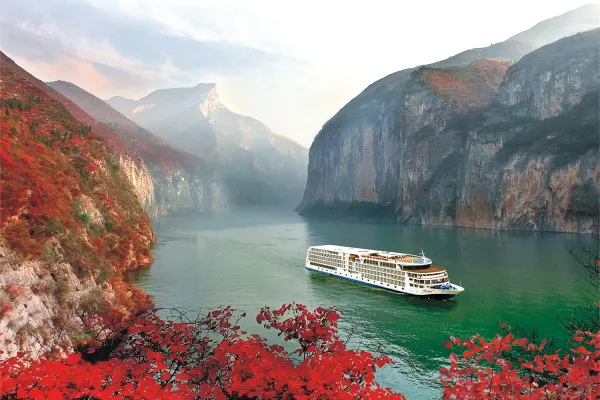
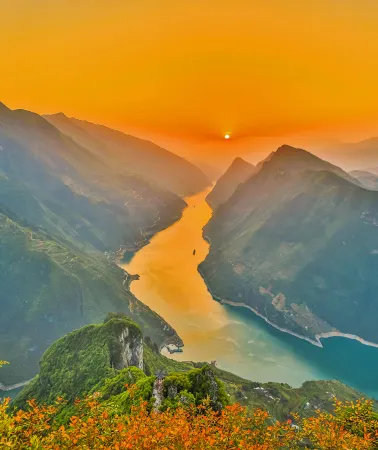
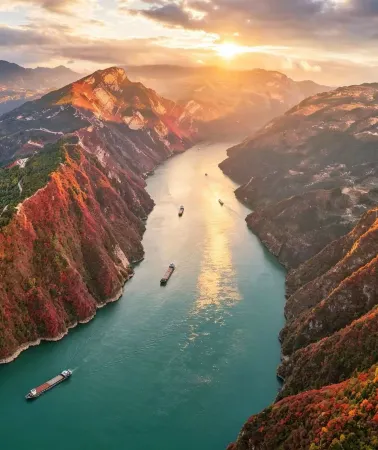
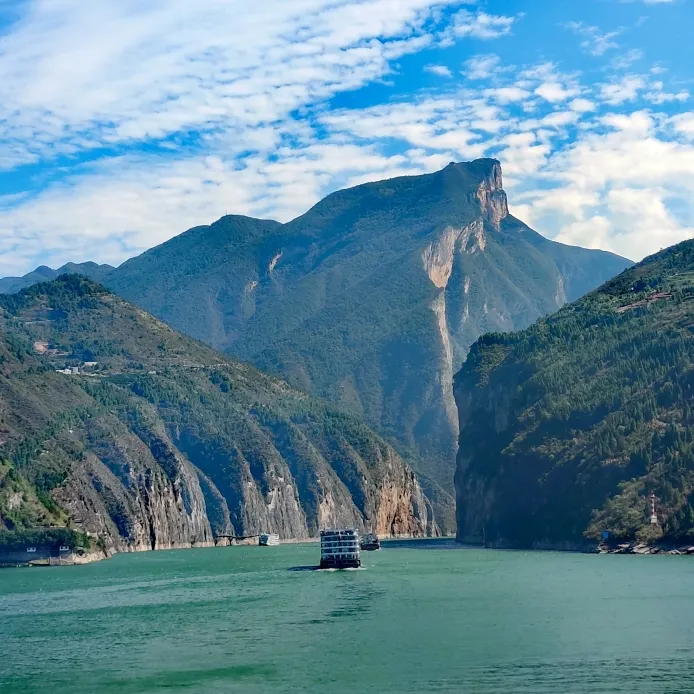
Zhankuimen stands majestically at the western entrance of the Qutang Gorge and serves as the western gateway to the Yangtze River Three Gorges, also known as "Kui Gate." This "gate" is formed by the Chijia Mountain on the north bank and the Baiyan Mountain on the south bank facing each other across the river: the peaks on both banks are over 1 km above sea level, and the river is no more than 100m wide at its narrowest point. The waters of the upper Yangtze River converge at this gate before entering the gorge, and passing ships travel through it as if passing through a giant, naturally formed gateway. The image on the back of the 10 yuan banknote of the fifth series of the renminbi features this majestic view. The two mountains offer a striking contrast: Chijia Mountain is ochre-red throughout due to its iron oxide-rich rock layers, while Baiyan Mountain is as white as salt because its cliffs are covered with calcium-rich aqueous solutions; the red and white peaks face each other across the river. The cliff overlooking the river on the south bank is known as the "Fenbi Wall." Since the Song Dynasty, it has been home to a collection of cliff inscriptions, among which the ten large characters inscribed by Sun Yuanliang, "Zhankuimen is the most magnificent in the world, ships pass by gently," and Li Duanhao's seal script "How majestic is Zhankuimen" are particularly eye-catching; before the impoundment of the Three Gorges, these inscriptions were cut, relocated, and replicated onto higher cliffs, where they can still be seen when passing by boat today. In the past, the waters of the Yangtze River vied to enter through this single gate, creating turbulent currents. Du Fu's line, "All waters meet at Fu and Wan, and vie to enter the Qutang Gate," describes this very scene; after the impoundment of the Three Gorges, the river surface became wider and calmer, allowing cruise ships to pass through the gate with ease. Looking east from the high ground around White Emperor City is the classic vantage point for admiring this gorge gate; in late fall, the red leaves on both banks create layers of color that contrast with the ochre-red Chijia Mountain, making the colors appear even more intense.

Fengjie County · 11.4 km from downtown
White Emperor City

White Emperor City

5
4.6/5
18 reviews

White Emperor City is located on the north bank of the Yangtze River at the mouth of Qutang Gorge. It was named after Gongsun Shu, who built a city here and proclaimed himself the "White Emperor." During the Three Kingdoms period, after being defeated in the Battle of Yiling, Liu Bei retreated to this place (historically known as Yongan) and entrusted his young son to Zhuge Liang. This event, historically known as the "Entrustment at White Emperor City," is the core of its profound historical heritage. White Emperor City is known as the "City of Poetry." Li Bai's famous line, "Leaving White Emperor City at dawn amidst colorful clouds, I reached Jiangling in a single day," made it a household name. Poets throughout history, such as Du Fu, Bai Juyi, Liu Yuxi, and Su Shi, have all visited and composed poems here. Inside the city, the Mingliang Palace in Baidi Temple houses statues of Liu Bei, Zhuge Liang, Guan Yu, and Zhang Fei, while the Chengdu Wuhou Shrine Museum is dedicated to the worship of Zhuge Liang. White Emperor City is also a classic spot for viewing the magnificent scenery of Kui Gate. Climbing to the top offers a panoramic view of the rushing Yangtze River and the mountains at the mouth of Qutang Gorge. After the water impoundment of the Three Gorges Project, this area became surrounded by water on all sides, turning it into an island in the middle of the river, connected to the north bank by a covered bridge. The city also preserves the ruins of the city walls built during the Southern Song Dynasty. Excavated artifacts, such as iron thunder bombs and iron arrowheads from the Song-Mongol War, bear witness to a history of defense during the transition between cold and hot weapons.

Fengjie County · 11 km from downtown
Kuizhou Ancient City
No. 1 of Night Attractions in Fengjie County

Kuizhou Ancient City

4.5
4.7/5
13 reviews

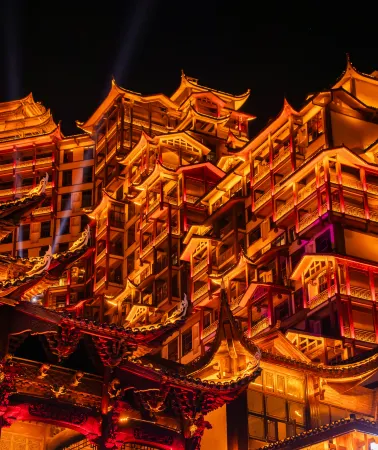
Kuizhou Ancient City is located on the banks of the Yangtze River in Fengjie County. Fengjie was historically known as Qutang Gorge. It was the land of the Kui State during the Spring and Autumn period and one of the settlements of the Ba people. The Qin Dynasty established Yufu County here. In the Tang Dynasty, it was renamed Fengjie to honor Zhuge Liang's "entrusting of the orphan and the mission, standing firm in the face of great crisis," and over 2,300 years of administrative history are embedded in this stretch of the riverbank. After the water impoundment of The First Village of the Three Gorges, the thousand-year-old county town sank to the bottom of the river. The remaining city walls and the complex of ancient buildings in the ancient city today have become the resting place for the urban memories of old Fengjie. The old city gates and walls are the core highlights here. Old Fengjie originally had five city gates along the river; after wars, only the Great and Small South Gates remained, named Yidou Gate (Great South Gate) and Kaiji Gate, respectively. The former takes its name from the line "Always looking toward the capital while leaning on the North Star" from a poem by Du Fu when he lived in Qutang Gorge, while the latter comes from the line "The loyal minister who served two dynasties" praising Zhuge Liang. Before the water impoundment of The First Village of the Three Gorges, the stones of Yidou Gate (Great South Gate) were dismantled and moved piece by piece, then rebuilt at the current site according to their original scale, form, and craftsmanship. Walking through the bluestone gate, one can still imagine the grandeur of the old city standing by the river. Fengjie is known as the "City of Poetry." Poets throughout history, such as Li Bai, Du Fu, Bai Juyi, and Liu Yuxi, have all written poems here. Du Fu lived here for nearly two years and left behind over 400 poems, accounting for about one-third of his extant works. The ancient city area is not crowded, making it suitable for a leisurely stroll: walk along the city wall for a while, examine the mottled stone blocks under the gate, then visit the Kuizhou Museum within the ancient building complex to understand the origins of this city through the artifacts of the Gorge, and end your trip to the City of Poetry by watching the sunset by the riverside city gate.

Fengjie County · 8.4 km from downtown
Free attraction

Experiences you can't miss in Fengjie County

Featured Day tours in Fengjie County

View all Day tours
Featured Culture & history in Fengjie County

View all Culture & history
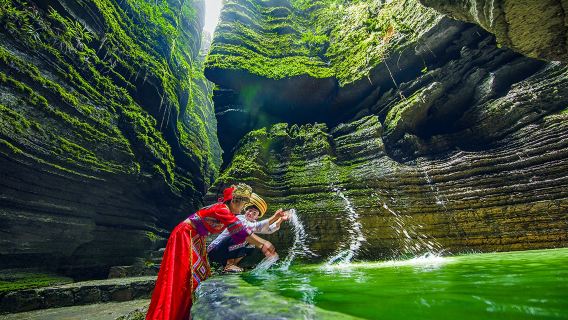
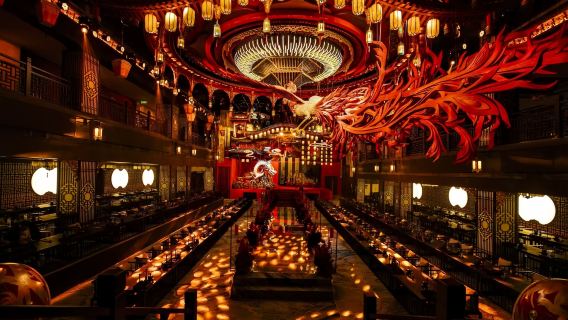
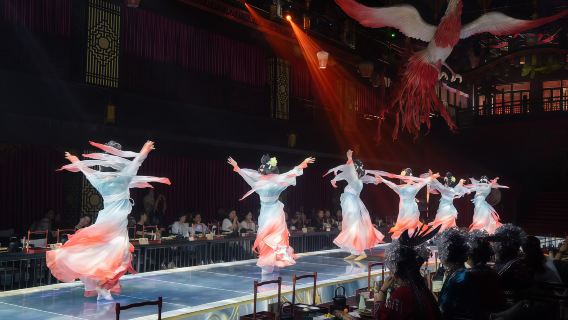
Enshi Shangfu Banquet: Tujia-Miao Immersive Dinner Show & Dual Costume Styling
󱌍
Duration: 1.5 hrs
English
Free cancellation
Instant confirmation
Book now for tomorrow
FromVND 1,711,539
Enshi Shangfu Feast: Tujia-Miao & Han-Tang Costumes, Folk Live Show & Selenium Set Meals
󱌍
Duration: 1.5 hrs
English
Free cancellation
Instant confirmation
Book now for tomorrow
FromVND 1,534,616
[Hubei] Xilankapu ethnic song and dance experience (immersive performance + Tujia folk customs)
󱌍
FromVND 838,462

More things to do

Fengjie County Cruises

See all cruises
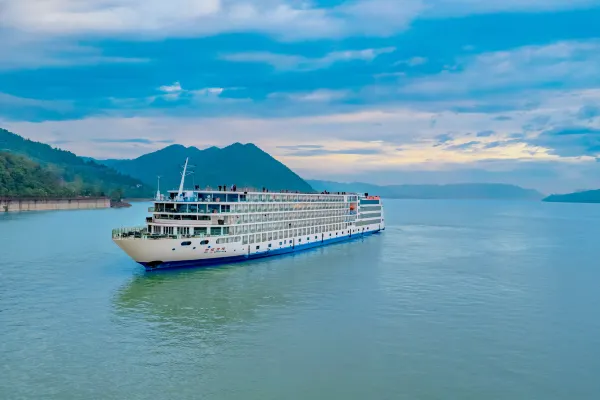

Private Tours in Fengjie County

View More Private Tours in Fengjie County
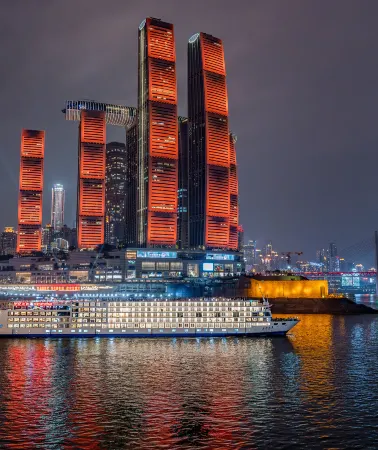
Group Tours in Fengjie County

View More Group Tours in Fengjie County
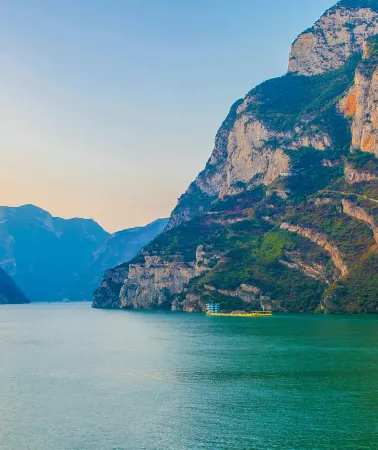

Fengjie County Today's weatherClear 10-19℃
Fengjie County weather for the next 2 days11/29: 10-20℃, 11/30: 10-21℃

Free things to do in Fengjie County

What travellers say about Fengjie County

user-avatar
颠牛November 26, 2026
5.0
The Baidi City Qutang Gorge Scenic Area is quite nice. The time spent visiting is just right, not too tiring, and the scenery is beautiful. It's a great place to bring kids for a stroll. The boat trip to the small island to see the Qutang Gorge and the Three Gorges is spectacular.

White Emperor City Qutang Gorge Scenic Spot

user-avatar
M41***93November 27, 2026
5.0
There are three routes to the top of the Three Gorges. Hiking from Baidi City requires a high level of physical fitness. You can also take a cable car or a shuttle bus. We chose the shuttle bus, which goes directly to the summit for 30 yuan per person, a reasonable price. The summit is ablaze with autumn leaves, a vibrant display of color. The view of the Qutang Gorge is truly magnificent.

Peak of Three Gorges Scenic Area

user-avatar
zha***20February 10, 2025
5.0
Qutang Gorge is really beautiful! Kuimen is very majestic. It feels good to take a boat for an in-depth tour to travel through Qutang Gorge. Overlooking the top of the Three Gorges, revisiting the story of the Three Kingdoms at Baidi Temple, and thinking about the historical figures! The 365 steps of Baidi Temple are really tiring😦

Qutang Gorge

user-avatar
M35***00June 22, 2025
5.0
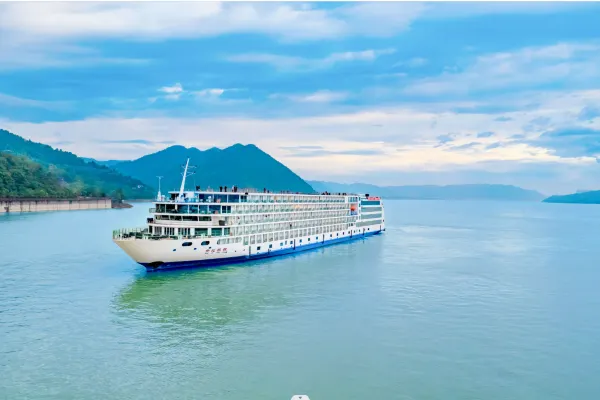
The Qutang Gorge is featured on the back of the 10 RMB banknote. The 10 RMB note uses the Qutang Gorge as its main scene, showcasing the majestic and precipitous natural landscape of the Three Gorges of the Yangtze River. Here, two mountains stand facing each other, and the river rushes forward, making it one of the iconic sights of the Three Gorges. Enter the world behind the RMB! 🌊 The grandeur of the Qutang Gorge is an exclamation mark as the Yangtze River cleaves through the mountains; standing here, even breathing feels imbued with timeless poetry. Board a Yangtze River Three Gorges cruise and check out China's most imposing natural landmark! 📸 Every frame of the Qutang Gorge is a masterpiece of nature; every click of the shutter creates an epic photograph. On the cruise, you can not only admire the beautiful and magnificent Qutang Gorge and experience the surging waters of the Yangtze River, but also enjoy various activities and music. Enjoy the cruise's delicious food, attentive service, and high value for money. 👍👍🔥⛵️⛵️📷

Kui Gate

user-avatar
SacchariflorusAugust 15, 2023
5.0
It is worth a visit, the scenery is beautiful. You can see Qutang Gorge, take a boat to the museum, go to the fort, and climb the mountain to the top of the Three Gorges. It is an AAAAA-level scenic spot, and the Yangtze River Three Gorges is a national scenic spot, with a double reputation as a scenic spot!

White Emperor City

user-avatar
墨漠陌大April 6, 2025
5.0
夔州古城位于重庆奉节县白帝镇,紧临瞿塘峡长江,古城部分建筑例如依斗门永乐宫是在老奉节县城被淹没前搬迁至此的。古城内还有耀奎塔,夔州博物馆,城墙等。均可以免费游览。在这里除了欣赏美景以外,还能学习到很多历史文化知识。

Kuizhou Ancient City

user-avatar
焦虑的李先森October 5, 2026
5.0
The best way to get a close-up view of Qutang Gorge and Kuimen.

Baota Ping

user-avatar
最佳拍档4555July 5, 2023
5.0
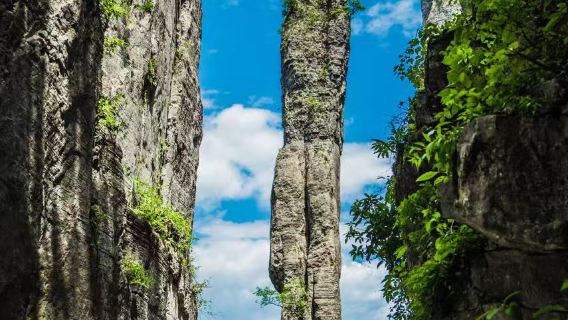
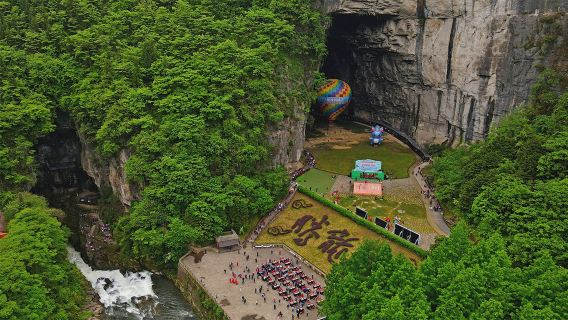
Fengjie Tiankeng Difeng Scenic Area has a variety of karst landforms, including stone forests, peak forests, karst caves, depressions, natural bridges, falling streams, blind valleys, funnels, and vertical shafts. It also has trickling streams, primitive grasslands, and lush forests in the mountains above 1,000 meters above sea level. In addition, the simple and rich Tujia mountain village customs in the area have formed a paradise that countless Chinese and foreign tourists linger on. The world wonder Tiankeng and Difeng Scenic Area is located in the southern mountainous area of ​​Fengjie County in the west of the Three Gorges of the Yangtze River. It is adjacent to Qutang Gorge of the Three Gorges Scenic Area in the north, Hubei Enshi Tujia and Miao Autonomous Prefecture in the south, and Wushan Longgupo Ancient Human Cultural Site in the east. The entire scenic area is located in a "V"-shaped basin formed by the confluence of Jiupan River and Maze River. It is 37.5 kilometers long from east to west and 19.5 kilometers wide from north to south, covering an area of ​​340 square kilometers. It has five major scenic areas, namely Tiankeng and Difeng, Longqiao River, Maze River, Jiupan River, and Maocaoba. They are respectively composed of the wide valley terrain in the upper reaches, the canyon, water-eliminating cave and difeng in the middle reaches, and the underground river part in the lower reaches. It is in the shape of a V opening in the northeast. There are unique landscapes and rare animals and plants in the gorge. There are more than 70 scenic spots of various sizes, including Taoyuan River, Han Kuimen, Shenxian Cave, Tiankeng, Difeng, Maocaoba, and Longqiao River.

Sinkhole and Fissure National Key Scenic Area

Trip Moments in Fengjie County

Popular cities near Fengjie County

Frequently asked questions

When choosing a tour, start with how much time you have and the kind of experience you're looking for. Trending options right now include Majestic Kuimen, the Poetic Fengjie County: "Baidi City, Kuizhou Ancient City, and the Summit of the Three Gorges", 1-day tour from Chongqing to Qutang Gorge in the Three Gorges, and 1-day tour to Enshi Grand Canyon Scenic Area [pure play] [city transfer] [English-speaking guide optional]. Check the real-time availability and itinerary before you book.

As of November 28, 2026, the reference price for day tours and activities in Fengjie County is around VND 3,607,693 – VND 10,882,868. Rates vary by duration, group size, transport, tickets, meals, and any special admission requirements. Before you book, please confirm the billing currency and whether the price is quoted per person or per group.

Get help anytime, anywhere within 30 secondsContact customer support

Change and cancellation policies vary by attractions and tours. Please check the product details page for more information.

Ticket prices may vary between weekdays and weekends, as well as during peak and off-peak seasons. When booking with Trip.com, you can also use Trip Coins to get extra savings. For more tips on booking discounted tickets, please visit Trip.com for the latest information.