Gulang

Things to do in Gulang

Search attractions or local attractions & tours
Search

Explore top experiences

Top 10 attractions in Gulang

View all Attractions
Mati Grottoes Tourism Area
No. 20 of Best Things to Do in Gansu-Qinghai Area

Mati Grottoes Tourism Area

7.3
4.6/5
2.7k reviews

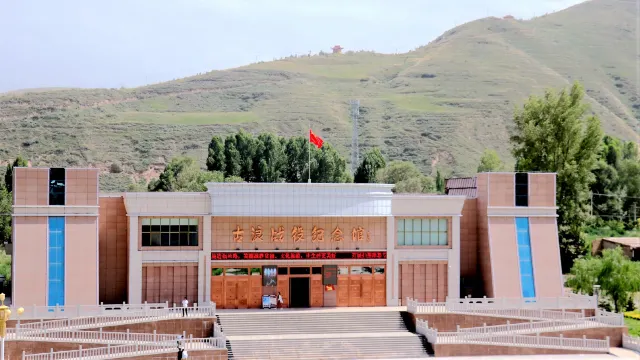
The Mati Grottoes Tourism Area is located at the foot of the Qilian Mountains in Sunan Yugur Autonomous County, Zhangye. This grotto temple complex was first built during the Northern Liang period of the Sixteen Kingdoms and continued to be carved for over a thousand years. It was renamed Puguang Temple during the Yongle era of the Ming Dynasty and was historically renowned alongside the Mogao Caves in Dunhuang and the Yulin Caves in Guazhou as a major center of Buddhist art along the Hexi Corridor. The grotto complex consists of Shengguo Temple, Puguang Temple, the Thousand Buddha Caves, Jinta Temple, and the Upper, Middle, and Lower Guanyin Caves, with over 70 surviving cave niches. Early on, Han Buddhism flourished here, while Tibetan Buddhism gradually rose after the Yuan Dynasty. The coexistence of Han-style halls and Tibetan Buddhist temples on the same mountain is a distinctive feature that sets this grotto complex apart from most others. Legend has it that a heavenly horse left its hoofprint here, giving the mountain and temple their names. The deep hoofprint can still be seen on a bluestone slab in the Mati Hall today. The "Thirty-three heavens" grotto is the iconic view here: over 20 caves across seven tiers are carved into the steep red sandstone cliff in a pagoda-like formation, with halls and pavilions suspended layer by layer. All passageways are hewn into the rock—some so narrow and steep that only one person can pass at a time, requiring visitors to climb on hands and knees along zigzagging stone steps and wooden ladders. From the upper caves, one can overlook the river valley and grasslands at the foot of the Qilian Mountains. The grand Tibetan Buddha Hall, also called the Standing Buddha Hall, extends over 30 m deep, with niches densely lining its encircling corridor, most housing statues from the Yuan Dynasty. The Thousand Buddha Cave, an earlier-excavated section of the complex, preserves intact stone sculptures of one Buddha flanked by two disciples, while nearby cliffs feature extensive relief carvings of stone pagoda forests. The attraction stretches several km deep, with the main route connecting several areas including the "Thirty-three heavens" grottoes, King Gesar's hall and the Thousand Buddha caves, which are some distance apart. Taking the shuttle bus within the attraction will save energy, and walking through the main grotto areas generally takes approx. three hrs. King Gesar's hall features statues depicting the heroic tales of the Tibetan epic figure King Gesar, which can be viewed along the way. It's worth noting that many of the early statues and murals in the grottoes have suffered damage over time, and some of what we see today are later restorations. Rather than fixating on the original millennium-old artworks, it's better to focus on the experience of climbing the cliffside grottoes themselves, along with the Qilian snow-capped mountains, pastoral grasslands and rich Yugur ethnic culture.

China · Sunan
Wuwei Confucius Temple
No. 2 of Best Things to Do in Wuwei

Wuwei Confucius Temple

6.1
4.6/5
530 reviews

Wuwei Confucian Temple is located in the southeast of Wuwei City and is also the location of Wuwei City Museum. This Confucian Temple was built in the Ming Dynasty, with a large scale and a high status in history. Today, you can come here to worship the first sage Confucius, visit the quaint historical buildings and courtyards, and visit the many cultural relics collected in the museum. The Confucian Temple is very large, with a depth of nearly 200 meters and a width of more than 100 meters. After entering, you can walk and play. Generally, it is advisable to play for 1-2 hours. There are many ancient buildings in the temple, such as Chongsheng Temple, Zunjing Pavilion, Zhuangyuan Bridge, Shanmen, etc. There are also some towering ancient trees in the courtyard. The whole scenic area is antique and suitable for visiting and taking pictures. When visiting the Confucian Temple, you can pay attention to the many plaques hanging on the building, some of which are written in ancient Uighur and Western Xia scripts, which are very special. The inscriptions in the temple are also worth noting. Some of the inscriptions have all the jinshi who have ever been out of Wuwei. You can go and see. In addition to the buildings and courtyards, the Confucian Temple is also the location of the Wuwei City Museum. There are exhibitions about the history of Wuwei. You can visit here and learn about the heyday of ancient Liangzhou in history. The Zhuangyuan Bridge in the Confucian Temple is covered with red banners with various gold prayer lists, and many parents with students at home will come here to offer incense and pray for blessings.

Wuwei · 55.3 km from Gulang
THE YELLOW RIVER TOWER
No. 4 of Night Attractions in Gansu

THE YELLOW RIVER TOWER

7.1
4.6/5
846 reviews

THE YELLOW RIVER TOWER is a landmark antique-style pavilion built by Lanzhou for the Yellow River. The main tower stands approx. 93 m tall with 16 floors, located at a major bend of the Yellow River in Lanzhou. It integrates Yellow River culture exhibitions, elevated viewing, and live performances. The core experience here is admiring the river from the tower. The 16th-floor "Lanzhou in the clouds" observation deck offers a panoramic view of the S-shaped river bend skirting the city and urban landscapes on both banks. At dusk when the sunset glow blankets the river, many travelers specifically choose this time to ascend the tower. Each floor houses thematically diverse exhibits: the 11th-floor Lanzhou city memory exhibition resembles a 3D photo album, narrating urban stories of the Yellow River flowing through the city; the 13th-floor features a premium Yellow River stone exhibition displaying uniquely shaped rocks polished by millennia of river erosion; the 15th-floor Lanzhou memories·light and shadow museum immersively showcases the four seasons of the "Golden City" through projections, also making it photogenic; the 14th-floor Yellow River study allows visitors to enjoy tea and books while overlooking the river, and families with children can explore the 8th-floor exhibition themed on ancient animal fossils. After nightfall, the live performance "Ode to the Yellow River·Great Lanzhou" uses the entire tower as its backdrop, projecting the Yellow River's flow and Lanzhou's urban memories onto the night-lit facade through chapters like "Origin of the great river," "Golden great city," "Folk great charm," and "Orchid great state." The neon-outlined tower reflection dancing with its watery counterpart becomes the nightlife highlight. We recommend arranging your itinerary with daytime tower visits, sunset viewing at dusk, and evening performances to fully experience THE YELLOW RIVER TOWER's essence in one trip.

China · Lanzhou
Maya Snow Mountain
No. 2 of Fall Viewing Attractions in Wuwei

Maya Snow Mountain

5.2
4.1/5
35 reviews

It is called Anigazhuo in Tibetan and is located in the west of Tianzhu County, 35 kilometers away from Tianzhu County. It runs from northwest to southeast. It is about 45 kilometers long from east to west and about 10 kilometers wide from north to south. Mount Sumeru, 4447 meters above sea level. Maya Snow Mountain is named after the teeth that resemble a horse and are covered with snow all year round. At the foot of Maya Snow Mountain, there is Yinyin grassland stretching for more than 10 kilometers. Every year on June 13 of the lunar calendar, local herdsmen will hold a grand ceremony of offering sacrifices to Tianchi in Maya Snow Mountain. The Tianchi Lake is tightly embraced by cliffs and cliffs. It is about 0.5 square kilometers in size and looks like a crescent moon. The water of the pool is clear and blue, and the four seasons are as usual. There is a huge rock standing on the top of the Maya Snow Mountain, with a crack in the middle, as if a sharp blade was split. According to legend, King Gesar used this stone to test his sword when he went on an expedition, hence the name "Sword Test Stone". Every July and August, Maya Snow Mountain has a unique natural phenomenon. If there is a loud noise or roar at the top of the mountain, there will be thunder and thunder, dense clouds and mist, and heavy rain pouring down in moments, which is hard to prevent. . After a short while, the fog dissipated, and the snow-capped snow peaks reappeared in front of the eyes against the green grassland. At about 6 in the morning, when you climb the mountainside of the tent mountain in Wushaoling, you can clearly see the Ma Ya Zhaohui. It is generally divided into three stages: "morning light, red sun bathing peak, sun dew and gold". In less than a minute or two, it slowly turned into light red, golden yellow, and milky white, and its landscape was very beautiful.

Tianzhu · 43.2 km from Gulang
Gulang Today's weatherHazy -3-11℃
Gulang weather for the next 2 days11/13: -2-12℃, 11/14: -3-3℃

Free things to do in Gulang

What travellers say about Gulang

user-avatar
_We***90November 8, 2026
5.0
Thank goodness the weather was perfect; it snowed the day before we went. The mountain scenery, the snowscape, and the grottoes blended together beautifully. The scale of the grottoes exceeded our expectations. We didn't have time to climb the Thousand Buddha Temple later. I'll definitely come back next time! ✅ The climb itself was a process of spiritual practice, and the beautiful scenery along the way cleansed my soul. A place I must visit in this lifetime.

Mati Grottoes Tourism Area

user-avatar
柚子胡椒October 22, 2026
4.0
Revered as the crown jewel of Longyou Confucian temples, this is the largest and best-preserved Confucian temple in Northwest China. Construction began during the Zhengtong era of the Ming Dynasty, nearly 600 years ago. Its unique layout, combining temple and academy (Wenchang Palace + Confucius Temple + Confucian Academy), is quite distinctive. The biggest highlight is the dozens of ancient plaques in the Guiji Hall, spanning from the Kangxi era of the Qing Dynasty to the Republic of China period. The calligraphy is rich and varied, with two particularly noteworthy plaques: "The City Never Sleeps" and "Gathering Talent and Promoting Discipline," both renowned in China, showcasing exceptional calligraphic quality and well worth close examination. The courtyard is filled with ancient cypress trees, red walls, and gray tiles, offering a tranquil and serene atmosphere, rarely crowded, making it perfect for taking photos. Located in the city center, not far from the Leitai Han Tomb, it's a convenient stop along the way, ideal for tourists interested in history, calligraphy, and ancient architecture. The Pan Pond and Zhuangyuan Bridge are worth a stroll, symbolizing success in the imperial examinations.

Wuwei Confucius Temple

user-avatar
M29***39August 21, 2026
4.0
The walkway was damaged in the middle, and I accidentally stepped into it, scraping my arm and leg. My arm immediately swelled up into a big bump, and the scraped area on my leg turned purple.

Zhuaxixiulong Grassland

user-avatar
士多啤梨味&October 12, 2026
4.0
The scenic area seemed reasonably priced, and the scenery was very beautiful. However, the facilities within the area weren't particularly interesting. It's best to come here at sunset to watch the Yellow River. Overall, the experience was still worthwhile.

THE YELLOW RIVER TOWER

user-avatar
Anonymous userAugust 26, 2026
5.0
The Leitai Han Tomb, located in Wuwei, Gansu Province, is the site where the iconic "Flying Horse of Gansu" (bronze galloping horse) was unearthed, a symbol of Chinese tourism. Above ground lies the Leitai Temple, a Taoist holy site from the Ming and Qing dynasties, while underground lies a Han Dynasty tomb dating back nearly two thousand years. The main attractions are threefold: First, the national treasure, the bronze galloping horse (Flying Horse of Gansu), currently housed in the Gansu Provincial Museum. Second, the bronze chariot and horse procession, composed of 99 bronze figurines (including warriors, servants, chariots, and horses), is the largest Eastern Han Dynasty bronze chariot and horse procession discovered to date, recreating the grandeur of the tomb's occupant, "Zhang Jun" (who held the official position of "Governor of Zhangye"). Third, the ancient Han Dynasty well, where coins thrown in appear magnified due to perspective and optical principles. The tomb is low and cramped, requiring visitors to crouch in many places.

Leitai Han Culture Museum

user-avatar
💗任槑槑💗August 13, 2026
4.0
Taking kids to see the Maya Snow Mountain? A distant view is enough! The jagged, snow-capped mountain stands majestically before you, a truly breathtaking sight. No need for a long hike; simply park along the roadside to admire the view, making it incredibly family-friendly. Climbing to the summit would be quite challenging, so enjoying the scenery from afar with children is perfect. The journey follows the Hexi Corridor, with snow-capped mountains paired with grasslands, creating a rich and varied landscape. Stop along the way to take photos and experience the unique grandeur of Northwest China.

Maya Snow Mountain

user-avatar
nature-volunteerOctober 10, 2026
5.0
I was fortunate enough to encounter autumn snow in Qilian County, and the mountains of Zhuoer Mountain were blanketed in silver. Shepherds grazed their sheep on the mountaintop meadows, and the view from the observation deck was exceptionally magnificent. Transportation: Take a bus from Xining to Qilian County, then a taxi to Zhuoer Mountain Scenic Area. During the off-season, the scenic area shuttle bus is not running; you can ask the driver to take you directly to the visitor center. There are sightseeing buses within the scenic area that go directly to the summit platform. Dining: Limited options during the off-season; you'll need to find your own food. Delivery services are limited and do not deliver to guesthouses near the scenic area. Seeing the snow-capped mountains, forests, meadows, and Danxia landforms made the trip worthwhile!

Zhuoer Mountain Scenic Area

user-avatar
Bolton ChenNovember 1, 2026
4.0
This package is amazing value! The 718 yuan four-person package includes a full boat tour of the Yellow River Grand Canyon (Route B, sightseeing bus, water conservancy hub, viewing bridge, 108 pagodas, boat tour of the ten-mile-long canyon, Qingtongxia Stone Carvings, Sleeping Buddha Mountain, Dayu Cultural Park, and shuttle bus), plus a hot pot for four. Sitting on a panoramic glass-bottomed boat, with the magnificent scenery of the Yellow River Grand Canyon outside and a steaming hot pot inside, this "raising chopsticks towards the Yellow River" experience is absolutely unique! A review could go like this: Qingtongxia Yellow River Grand Canyon, a double treat of boat tour + hot pot! The 718 yuan four-person package is incredibly cost-effective, including all attractions on Route B. The most amazing part is enjoying hot pot on the boat—outside the window are the towering mountains of the ten-mile-long canyon, below is the rolling Yellow River, and inside the steaming boat, every bite is a mouthful of fresh, flavorful food and a taste of the landscape—you won't find this experience anywhere else! Passing by the 108 Pagodas and the Dayu Cultural Park, you can enjoy both food and sights, a double treat for your eyes and taste buds. Highly recommended for those who want to add a unique experience to their trip; remember to make a reservation in advance!

Qingtongxia Yellow River Grand Canyon Tourist Area

user-avatar
冬去 春来 新开始 游May 31, 2025
5.0
A treasure trove of historical knowledge. Adults and children can visit and learn more about Wuwei during the Five Liang Period and the Western Han Dynasty.

Wuwei Kumarajiva Temple

user-avatar
蕾静June 22, 2026
5.0
Upon arriving at the Yellow River area, we headed straight there. We wanted to try the famous "Flying Yellow River" (Yellow River Zipline). The package included a round-trip cable car ticket uphill, which was thoughtful, but it was incredibly crowded today. We queued for almost an hour, put on the ropes, and when it was our turn, we were told we couldn't wear glasses! My heart sank. But the ride itself was still exhilarating, and we were even able to ride back up – excellent value for money! Afterwards, we went sandboarding. No long queues! We found a less crowded, steep slope, sat firmly, gripped the board tightly, didn't brake, closed our eyes, and just went down. The sand was fine, the speed was fast, the wind was whistling, and landing with a mouthful of sand was still fun. Finally, a reminder: bring plenty of water, wear sunscreen, and be careful as dust easily gets into your phone in the sand. Put it in a sealed bag, and wash your face in the Yellow River afterwards – perfect!

Tengger Desert

Trip Moments in Gulang

Popular cities near Gulang

Frequently asked questions

How can I contact Trip.com customer support?

Get help anytime, anywhere within 30 secondsContact customer support

Change and cancellation policies vary by attractions and tours. Please check the product details page for more information.

Ticket prices may vary between weekdays and weekends, as well as during peak and off-peak seasons. When booking with Trip.com, you can also use Trip Coins to get extra savings. For more tips on booking discounted tickets, please visit Trip.com for the latest information.