Hualong

Things to do in Hualong

Search attractions or local attractions & tours
Search

Explore top experiences

Top 10 attractions in Hualong

View all Attractions
Kumbum Monastery
No. 3 of Best Things to Do in Qinghai

Kumbum Monastery

8.2
4.7/5
18.7k reviews

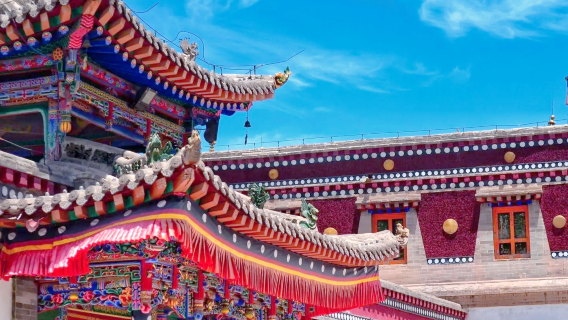
Kumbum Monastery is one of the important monasteries of the Gelug (Yellow Hat) sect of Tibetan Buddhism and the birthplace of Tsongkhapa, the founder of the Yellow Hat sect. The monastery features magnificent architecture, abundant treasures, and a strong religious atmosphere, making it one of the more popular travel destinations in Xining. Overview of the visit It has distinct differences in architectural layout compared to Han Chinese Buddhist temples in inland China: the complex here is not symmetrically arranged along a central axis. The monastery is an ancient architectural complex composed of numerous halls, scripture halls, stupas, and colleges, with each sutra hall, main hall, and stupa irregularly distributed on a small hill. Travelers can explore the site in a relatively free manner rather than following a straight path along a central axis. The Great Golden Roof Hall of Kumbum Monastery is the center of the entire architectural complex. It is said that Master Tsongkhapa was born here, and when he was born, his umbilical cord blood dripped on this spot, from which a bodhi tree grew. Later, a stupa was built around the tree, and a monastery was constructed, hence the name. Believers hold that this tree and stupa are the embodiment of the master. The three unique features of the attraction: butter sculptures, murals, and appliqué embroidery. Butter sculptures are made by mixing butter with various pigments to mold and carve into figures of Buddhas, people, flowers, birds, animals, and pavilions. Travelers can admire exquisite butter sculptures at the butter sculpture hall inside the temple (located far from the main gate). Vibrant centuries-old murals can be appreciated in the main halls, corridors, and front galleries of the temple. Appliqué embroidery involves cutting colored satin into desired shapes, such as Buddha figures or animals, stuffing them with wool or cotton, and embroidering them onto cloth hangings. In the temple's great sutra hall, two rare large appliqué embroidery pieces—"Sixteen Arhats Displaying Divine Powers" and "Eight Immortals Crossing the Sea"—hang on either side. The four major religious festivals (based on the lunar calendar): 1. Cham dance (14th day of the first month) and butter sculpture exhibition (15th day of the first month); 2. Cham dance (14th day of the fourth month), Buddha unveiling, and Cham dance (15th day of the fourth month); 3. Buddha unveiling, Cham dance (6th day of the sixth month), and golden Buddha procession (8th day of the sixth month); 4. Full-day Buddha unveiling (22nd day of the ninth month) and Cham dance (23rd day of the ninth month). During these festivals, activities like Buddha unveiling and ritual dances take place, attracting large crowds of devotees and travelers, creating a lively atmosphere.

Xining · 76.1 km from Hualong
Qinghai Tibetan Culture Museum
No. 2 of Best Things to Do in Qinghai

Qinghai Tibetan Culture Museum

8.2
4.8/5
10.3k reviews

Qinghai Tibetan Culture MuseumIt is a comprehensive museum themed on Tibetan medicine culture and featuring Tibetan culture.Qinghai Tibetan Culture Museum(also known as Qinghai Tibetan Culture Museum) is located in Xining, the capital of Qinghai Province in the eastern part of the Qinghai-Tibet Plateau. It officially opened in September 2006. The museum has basically formed a "one museum with two halls" layout, featuring 16 exhibition halls including the Silk Road and Tibetan civilization, the grand view of Chinese Tibetan art painting, and the history of Tibetan medicine.Qinghai Tibetan Culture MuseumThe collection is rich, historic, and diverse, possessing high historical, scientific, and artistic value. The museum houses the Guinness World Record-holding thangka masterpiece, "The Grand Thangka of Tibetan Culture and Art," which is 618 m long. It was planned by renowned thangka master Zongzhe Lajie and completed by 400 painters over four years. Its content encompasses the Tibetan understanding of the universe, the formation of the Qinghai-Tibet Plateau, history, religion, medicine, culture, art, and folklore. With its intricate details and brilliant colors, it is a magnificent sight and can be called an encyclopedia of Tibetan culture, hailed as a "contemporary national treasure." Through four major series—ancient books and documents, Tibetan medical thangkas, ancient Tibetan medical instruments, and Tibetan material specimens—the museum comprehensively displays the long history, profound theoretical system, clinical practice, and unique preparation techniques of Tibetan medicine, with four ancient books included in the National Catalogue of Precious Ancient Books. The Silk Road and Qinghai-Tibet Civilization exhibition hall uses history as its temporal dimension and the vast plateau landscape as its geographical dimension. Through thousands of precious cultural relics such as silk, gold and silver ware, and coffin paintings, it highlights Tibetan cultural elements and showcases the origin, inheritance, rise, and prosperity of the Qinghai-Tibet Plateau civilization throughout the long river of history. The Tibetan carpet exhibition hall is one of the largest exhibitions of ancient carpets in China, displaying more than 400 Tibetan carpet artifacts from different periods and eras, featuring magnificent patterns, intense colors, and unique ethnic styles and local characteristics. At the same time, there are also Tibetan-style architectural exhibition halls, Tibetan calligraphy art exhibition halls, as well as temporary exhibition halls, multimedia screening rooms, academic lecture halls, and cultural relic storage rooms, providing strong capabilities for inheritance, protection, and research, as well as conditions for cultural exchange.Qinghai Tibetan Culture MuseumIt will continuously improve the level of cultural relic preservation, exhibition design, scientific research, and management operations, becoming a platform for promoting ethnic unity and social development, a broad stage for cultural dissemination and academic exchange, a research center for cultural relic protection and Tibetan studies, and an exhibition center for treasured literature and collections, showcasing the splendid civilization and culture of the Tibetan Plateau to the world.

Xining · 80.6 km from Hualong

Experiences you can't miss in Hualong

Featured Culture & history in Hualong

View all Culture & history
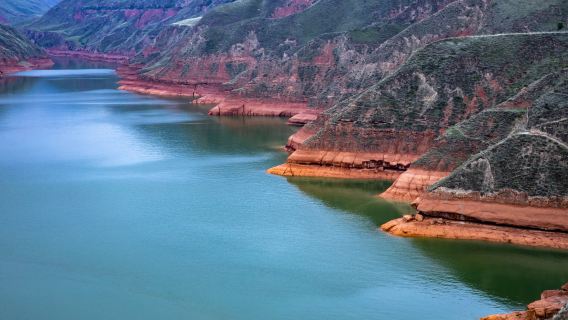
[Private charter] Liujiaxia 1-day tour + Bingling Cave-Temple Complex + Huangtao viewing platform + Liujiaxia Bridge
󱌍
5.0/5
· 10 reviews· 56 booked
Duration: 7.1 hrs
English
Free cancellation
Book now for tomorrow
From€47.29
One-day tour from Lanzhou to Bingling Cave-Temple Complex, Liujiaxia, and the Yellow River-Tao River confluence
󱌍
Duration: 8 hrs
English
Free cancellation
Instant confirmation
Book now for tomorrow
From€41.70
Xining Laji Mountain + Kumbum Monastery + Zongkala Tse Half-Day Tour - Visit Three Iconic Landmarks in Half a Day
󱌍
5.0/5
· 1 review
Duration: 5.5 hrs
English
Free cancellation
Instant confirmation
Book now for tomorrow
From€46.33
1-day private chartered tour to Liujiaxia (Binglin Temple Grottoes + Huangtao Viewing Platform + Liujiaxia Bridge)
󱌍
5.0/5
· 9 reviews· 29 booked
Duration: 5.5 hrs
English
Free cancellation
Instant confirmation
Book now for tomorrow
From€47.02
Depart from Xining: Kumbum Monastery Half-Day Tour with Private Car Service & Tickets Included
󱌍
Duration: 3 hrs
English
Instant confirmation
Book now for tomorrow
From€95.28
Private pick-up&drop-off service including | Qinghai one-day tour: Ta'er Monastery + Tibetan Culture Museum + 618-meter Tibetan cultural Thangka
󱌍
5.0/5
· 1 review
Duration: 8.6 hrs
English
Free cancellation
Instant confirmation
Book now for tomorrow
From€67.41
Xining Laji Mountain & Kumbum Monastery & Zongka Laze Private Half-Day Tour
󱌍
Duration: 3 hrs
English
Instant confirmation
Book now for tomorrow
From€95.28
Xining Laji Mountain & Kumbum Monastery & Zongkharaze Half-Day Tour: Private Car Service
󱌍
Duration: 3 hrs
English
Instant confirmation
Book now for tomorrow
From€120.80

Featured Day tours in Hualong

View all Day tours
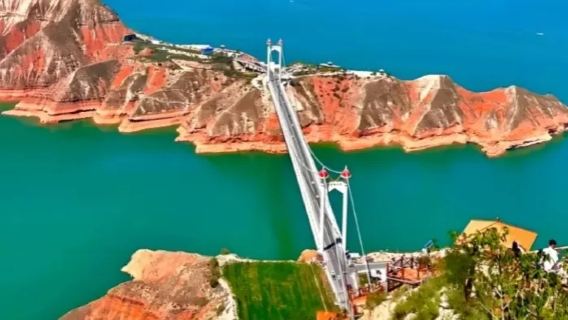
One-Day Group Tour from Lanzhou: Ink Danxia, Liujiaxia, and Bingling Cave-Temple
󱌍
3.9/5
· 9 reviews· 82 booked
Duration: 5.5 hrs
English
Free cancellation
Instant confirmation
Book now for tomorrow
From€65.32
Liujia Gorge + Water-ink Danxia (private charter) 1-day tour [Danxia + Yellow River-Tao River confluence + Bingling Cave-Temple Complex]
󱌍
5.0/5
· 16 reviews· 95 booked
Duration: 7.5 hrs
English
Free cancellation
Instant confirmation
Book now for tomorrow
77 travellers saved
From€56.81
Xining Kumbum Monastery + Qinghai Lake + Laji Mountain one-day tour (White clouds, blue lake and golden roof gaze at each other from afar)
󱌍
4.0/5
· 2 reviews
Duration: 9 hrs
English
Free cancellation
Instant confirmation
Book now for tomorrow
From€54.05
Exclusive Tour | Kanbula One-Day Trip: Geological Forest Park + Zongka Sacred Lake + Glass Viewing Bridge
󱌍
4.5/5
· 2 reviews
Duration: 9.5 hrs
English
Free cancellation
Instant confirmation
Book now for tomorrow
From€69.31
Hualong Today's weatherFoggy -5-3℃
Hualong weather for the next 2 days11/16: -8-1℃, 11/17: -12-0℃

Free things to do in Hualong

What travellers say about Hualong
user-avatar
水漫三楼September 3, 2026
5.0
Xiaqiong Monastery, located in Chafu Township, northwest of Hualong Hui Autonomous County, Haidong City, Qinghai Province, was first built in 1349 (the ninth year of the Yuan Dynasty's Zhizheng era). It was the place where Tsongkhapa, the founder of the Gelug school of Tibetan Buddhism, studied and discussed Buddhist scriptures as a child, and is one of the most famous Gelug monasteries in Qinghai. Built against the mountainside, Xiaqiong Monastery covers a total area of ​​270,000 square meters, comprising 27 building complexes of varying sizes, more than 2,260 halls and monks' quarters, and 26 wooden buildings. Since its founding, eleven halls have been built, including the Hall of the Bodhisattva of Wonderful Sound, the Maitreya Hall, the Golden Roof Hall, the Atisha Hall, the Vajra Buddha Hall, the Supporting Buddha Hall, the Incense Offering Hall, the Ksitigarbha Bodhisattva Hall, the River-Watching Maitreya Hall, the Mountain Buddha Hall, and the Protector Deity Hall, forming an ancient architectural complex combining Han and Tibetan artistic styles. On March 5, 2013, Xiaqiong Monastery was designated as a National Key Cultural Relics Protection Unit (seventh batch) by the State Council of the People's Republic of China. Xiaqiong Monastery was founded by Chokyi Gyaltsen, the mentor of Tsongkhapa. Originally a Kadampa monastery, it converted to the Gelug school after Tsongkhapa founded it, along with other Kadampa monasteries. Due to its connection with Tsongkhapa, it is often referred to as the "Source of the Gelug School." Xiaqiong Monastery is situated with Babaoshan Mountain to the north, resembling a yellow tortoise crouching behind; the Yellow River to the south, like a blue dragon swimming in front; Jiangru Mountain to the east, like a gray tiger lying on its left; and Dorfu Mountain to the west, like a red bird soaring on its right. The east, west, and north sides are surrounded by overlapping peaks, with the Iron Rope Ridge running north-south, resembling a camel caravan winding southwards. The southern cliff is hundreds of feet high and exceptionally precipitous… Because the cliff behind the monastery resembles a vulture spreading its wings, it is called "Xiaqiong Monastery." The Living Buddha of Xiaqiong Monastery, Choktsang Hutuktu, is considered the reincarnation of Chokyi Dondrup Rinchen. According to the *History of Politics and Religion in Amdo*, when Choktsang Rinpoche Awang Thubten Shih-shu first visited the monastery, he said in the Great Buddha Hall, "I have placed a vajra and a bell here." He then plucked the vajra and bell from the lotus stem in the hand of a Bodhisattva statue; these had originally been placed there by Chokyi Dondrup Rinchen. Subsequently, successive Choktsang Hutuktu were revered as the abbots of Xiaqiong Monastery, becoming the highest-ranking Living Buddha in the area. Emperor Qianlong personally conferred this title and bestowed a golden seal upon them. Xiaqiong Monastery integrates the Yellow River landscape, natural scenery, and Tibetan Buddhist culture; it not only allows visitors to appreciate the grandeur of the "Nine Bends of the Yellow River" and the beauty of nature, but also to understand and appreciate the profound depth of Tibetan Buddhism.

Xiaqiong Temple

user-avatar
非凡轶生September 13, 2023
5.0
Lijiaxia Reservoir is located in the northwest of Jianzha County, Qinghai Province, China. It is a large reservoir mainly used for power generation, with irrigation and flood control functions. It is built on the main stream of the Yellow River, located downstream of Longyangxia Reservoir and Laxiwa Reservoir, and upstream of Liujiaxia Reservoir. It is adjacent to Kanbula National Forest Park.

Lijiaxia Reservoir

user-avatar
M32***23April 21, 2022
5.0
This place is very beautiful, you can come and have a look

Deji Village Scenic Area

user-avatar
富得🥑油September 4, 2025
5.0
The Qiankunwan Museum consists of an introductory hall and three specialized exhibition halls: the Geological Science Hall, the History and Culture Hall, and the Folk Customs Hall. Together, they paint a magnificent picture of "Charming Yanchuan," showcasing the magnificent beauty and wonders of this land. The Folk Customs Hall is the museum's most vibrant corner. Reproductions of cave dwellings in northern Shaanxi recreate the scenes of life on the banks of the Yellow River. Yanchuan is known as the "Hometown of Folk Paper-Cutting," and its paper-cutting and cloth-stacked paintings have both been designated national intangible cultural heritage, showcasing the charm of this folk art.

Yellow River First Bend Scenic Area

user-avatar
M49***27July 18, 2021
4.0
In the mountains 20 kilometers south of Ledu City, an ordinary Lama temple on the Qinghai-Tibet Plateau won the favor of Zhu Yuanzhang. Compared with the Taer Temple, which was established earlier, spontaneously planned and built by believers, and had no influence in the Ming Dynasty, the Qutan Temple is particularly prominent.        During the Hongwu period of the Ming Dynasty, the country had been settled, but there were occasional riots on the border. The abbot of the temple, Sanluo Zang, came forward to persuade the various tribes in the area to submit to the Ming Dynasty and was granted by the emperor: Sanluo Zang was the chief of the Xining Seng Gang, in charge of 13 tribes, and was granted a golden plaque of Qutan (Qutan, meaning Gautama in Tibetan). Since then, successive emperors of the Ming Dynasty have been rewarded, and the temple has become more prosperous.        The temple basically adopts the Han-style temple system, and the stele pavilion, bell and drum tower and treasure hall constitute a typical official building complex in the early Ming Dynasty. Although it is located in the mountains, the landscape is excellent - it is backed by Luohan Mountain and faces the Qutan River. The Han-style central axis is symmetrically arranged, which is rare in Tibetan Buddhism. Based on the royal bloodline, the overall pattern is calm and majestic, imitating the royal architectural style and main pattern, which is a great gift and status symbol in the class-strict imperial society.        Today, the temple presents the ancient building as its original appearance, with a strong sense of time. The two wings are arched upwards and connected with the unique corridors. The treasure is the huge colorful murals - 2,300 square meters of Ming and Qing murals with rich and gorgeous colors, delicate and vivid brushwork, clear and natural layers, and a strong sense of realism, which is extremely precious.

Qutan Temple

user-avatar
Anonymous userNovember 13, 2026
5.0
Kumbum Monastery is a must-see attraction in Xining, and many people who travel the Qinghai-Gansu Grand Loop make it their first stop. When I visited, one area of ​​the monastery was under renovation, but it didn't prevent me from seeing the key sights. A thorough visit might take several hours, as you can't walk too fast at high altitudes.

Kumbum Monastery

user-avatar
Anonymous userNovember 14, 2026
5.0
I never expected to spend two hours just looking at the Thangka paintings on the fourth floor 🥲 The beauty and awe are truly beyond what can be captured in photos. The costumes on the second floor were a dazzling array. I basically spent three hours in the South Hall, and I was too tired to walk around the North Hall, so I only managed an hour.

Qinghai Tibetan Culture Museum

user-avatar
Anonymous userNovember 11, 2026
5.0
The salt flats are beautiful and vast, but it was cloudy when I went, which affected my photography. Fortunately, the sun came out for a while later, making it much brighter. Shoe covers are available for rent, which was quite convenient. It's a great place to relax and unwind; if I had more time, I would have enjoyed it more thoroughly.

Chaka Salt Lake

Trip Moments in Hualong

Popular cities near Hualong

Frequently asked questions

When choosing a tour, start with how much time you have and the kind of experience you're looking for. Trending options right now include One-Day Group Tour from Lanzhou: Ink Danxia, Liujiaxia, and Bingling Cave-Temple, Liujia Gorge + Water-ink Danxia (private charter) 1-day tour [Danxia + Yellow River-Tao River confluence + Bingling Cave-Temple Complex], and Xining Kumbum Monastery + Qinghai Lake + Laji Mountain one-day tour (White clouds, blue lake and golden roof gaze at each other from afar). Check the real-time availability and itinerary before you book.

As of November 15, 2026, the reference price for day tours and activities in Hualong is around EUR 54.05 – EUR 69.31. Rates vary by duration, group size, transport, tickets, meals, and any special admission requirements. Before you book, please confirm the billing currency and whether the price is quoted per person or per group.

Get help anytime, anywhere within 30 secondsContact customer support

Change and cancellation policies vary by attractions and tours. Please check the product details page for more information.

Ticket prices may vary between weekdays and weekends, as well as during peak and off-peak seasons. When booking with Trip.com, you can also use Trip Coins to get extra savings. For more tips on booking discounted tickets, please visit Trip.com for the latest information.