The Ili River Valley National Wetland Park, as the richest ecological core area in Xinjiang in terms of biodiversity, boasts unique wetland landscapes, abundant flora and fauna, and a comprehensive ecological protection system, making it a model national wetland park integrating ecological protection, scientific research and education, and leisure tourism. The following is an in-depth review from four dimensions: ecological value, landscape features, visitor experience, and management and protection:
I. Ecological Value: Xinjiang's "Gene Bank" of Biodiversity
1. Unparalleled Species Richness in Xinjiang
The park records 149 species of higher plants, including one species of national second-class protected wild plant; and 130 species of vertebrates, including 18 species of national first- and second-class protected animals and the Ili River endemic naked-bellied sturgeon (a national second-class protected aquatic wild animal). For example, the yellow-throated bee-eater is frequently active during its breeding season in May, becoming a "star species" for birdwatchers; in 2024, over 800 swans were observed overwintering here, confirming its status as an important stopover for migratory birds.
2. Diverse Wetland Types and Significant Ecological Functions
The park encompasses four main wetland types: floodplains, herbaceous marshes, forest marshes, and reservoir wetlands, forming a three-dimensional ecological chain of "rivers-marshes-secondary forests-sandbars." Among them, the reed wetlands, despite their low soil fertility, provide a stable habitat for waterfowl through the slow decomposition characteristics of microorganisms; the *Ligustrum lucidum* wetland, due to its seasonal flooding, serves as a typical example of saline-alkali land ecological restoration.
3. A Benchmark Case of Grazing Land Restoration Projects
Huocheng County designated 5,000 mu (approximately 333 hectares) of permanent grazing-free zones and invested funds in species surveys and ecological restoration, increasing the wetland coverage to 95.4%. For example, the expansion of the *Elaeagnus angustifolia* flower fields (blooming in May) and *Tamarix chinensis* forests provides sheltered habitats for birds. Combined with artificial feeding and conservation efforts, the number of swans has increased to several hundred annually, highlighting the effectiveness of ecological protection.
II. Landscape Features: A "Pearl of the Frontier" with Scenery in All Seasons
1. Summer: A Summer Paradise and a Photographer's Mecca
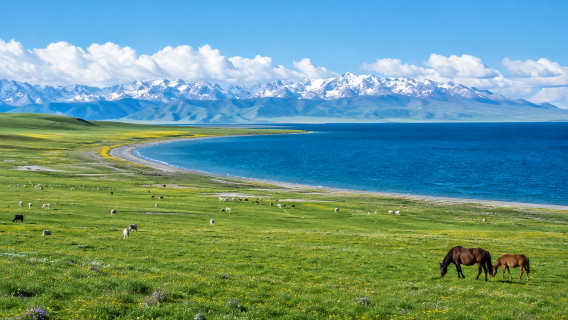
In the height of summer, the wetland's abundant water creates a cool microclimate, with the perceived temperature dropping by 5°C. Visitors can enjoy boating in the reed marshes, cycling along the wooden boardwalk, or experiencing the mist-shrouded cooling system. The scenery of the Tianshan snow-capped peaks alongside the wetland has become a classic spot for photographers, especially at sunrise when the morning mist swirls around the sandbars and birds dance together, resembling a traditional Chinese ink painting.
2. Winter: A Winter Wonderland and a Birdwatching Feast
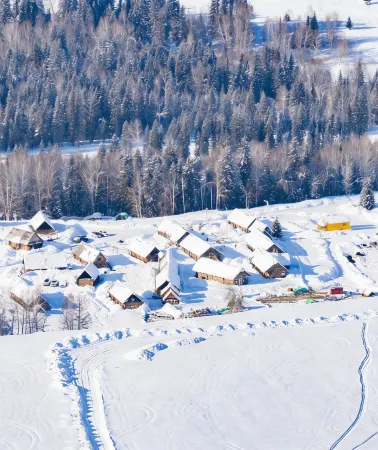
While some areas of the wetland freeze over in winter, the Swan Lake area remains fluid, attracting a large number of migratory birds. Visitors can observe mute swans, white pelicans, and other national second-class protected animals up close, or participate in the "Snow Birdwatching Photography Competition." In the winter of 2025, the park launched the "Ice and Snow Ecological Study Camp," combining scientific explanations with hands-on observation, which is very popular with families.
3. Spring and Autumn: A Vibrant Ecological Transition Zone
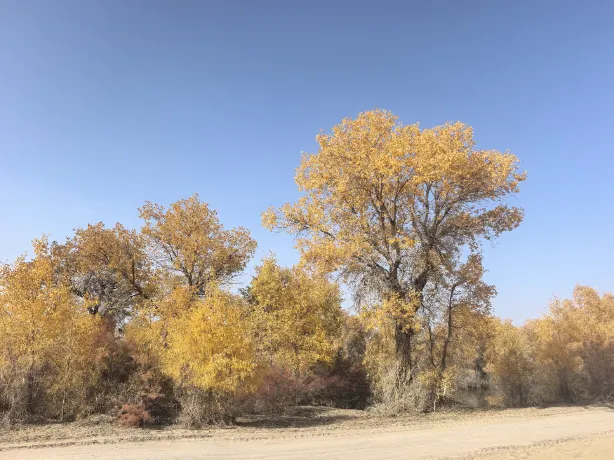
In spring (April-May), the oleaster flowers bloom, filling the air with fragrance; in autumn (September-October), the reeds turn yellow, creating vibrant patches of color with the red willow and tamarisk. During this time, the park offers an "ecological hiking route," allowing visitors to traverse different wetland types and observe the patterns of plant community succession.
III. Visitor Experience: A Well-Functioned Ecotourism Destination
1. Human-Centered Infrastructure Design
• 24-Hour Opening: Meets the needs of photography enthusiasts for morning and evening shots, and allows for nighttime observation of nocturnal animals such as night herons and owls.
• Accessibility Facilities: The boardwalk is flat throughout and equipped with birdwatching binoculars for rent, convenient for elderly visitors and people with disabilities.
• Smart Guided Tour System: Access audio guides on wetland plants and birds by scanning QR codes, supporting AR augmented reality functionality.
2. Diverse and Featured Activities
• Ecological Education: Regularly held "Wetland Little Guardians" study tours, where children can participate in water quality testing and insect specimen making. • Cultural Experiences: Integrating with nearby attractions such as Huiyuan Ancient City and Tukai Desert, the park offers themed routes combining wetlands and history, and wetlands and desert.
• Leisure and Entertainment: Facilities such as a children's playground, fishing area, and folk food street cater to family visitors.
IV. Management and Protection: A Model of Scientific Planning and Community Co-governance
1. Refined Management through Functional Zoning
The park is divided into ecological conservation areas (52%), restoration and reconstruction areas (16%), education and display areas (5%), rational utilization areas (25%), and management and service areas (2%). For example, the conservation areas are under complete closure, allowing only researchers to enter; the restoration and reconstruction areas repair degraded areas through artificial wetland construction and vegetation replanting.
2. Innovative Community Participation Mechanisms
The park collaborates with surrounding herders on an "ecological compensation plan," employing them as wetland patrollers, solving employment issues and enhancing ecological awareness. By 2025, the park will have established a "wetland education base" with primary and secondary schools in Huocheng County, receiving over 20,000 students annually. 3. A Well-Developed Scientific Research and Monitoring System
A long-term monitoring station has been established in cooperation with the Ecological Research Center of the Chinese Academy of Sciences, and regular "Wetland Health Assessment Reports" are published. For example, infrared camera monitoring has revealed that the habitat range of the black stork, a Class I protected animal in China, has been expanding year by year, confirming the effectiveness of ecological restoration.
V. Comprehensive Evaluation and Recommendations
Strengths Summary:
• Outstanding Ecological Value: As a core area of biodiversity in Xinjiang, it plays an irreplaceable role in regional ecological balance.
• Year-Round Tourism: Summer for escaping the heat, winter for birdwatching, and spring and autumn for hiking, meeting tourism needs throughout the year.
• Scientific and Standardized Management: Clear functional zoning, a mature community participation mechanism, and a well-developed scientific research and monitoring system.
Improvement Recommendations:
• Enhance Peak Season Carrying Capacity: Given the large number of visitors on summer weekends, it is recommended to add temporary birdwatching platforms and shuttle buses.
• Strengthen International Cooperation: Establish a cross-border conservation alliance with Central Asian national wetland parks to jointly monitor migratory bird routes.
• Deepen cultural integration: Explore the connections between wetlands and historical and cultural sites such as the Silk Road and the Yili General's Mansion, and create distinctive cultural IPs.