
Things to do in Jiashan
Explore top experiences
Top 10 attractions in Jiashan


Xitang Historic Town of China
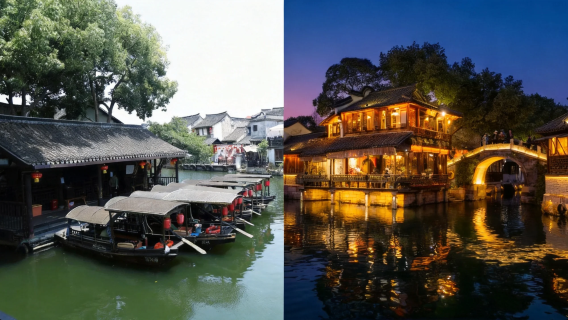
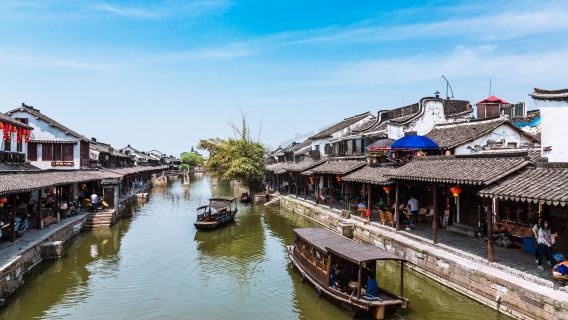
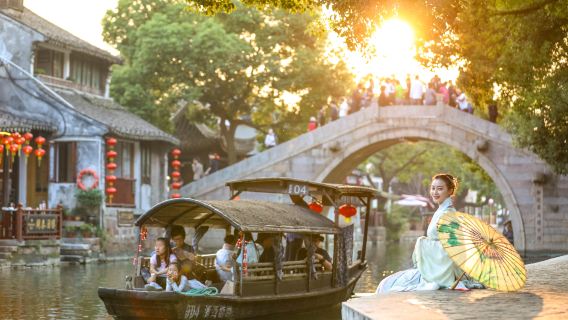
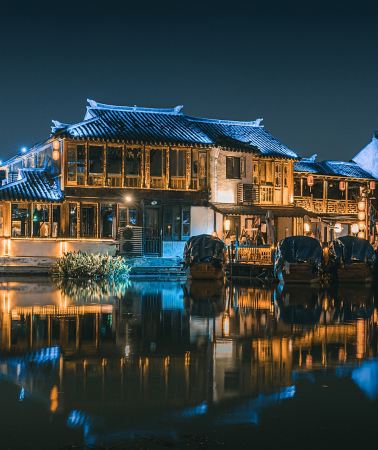
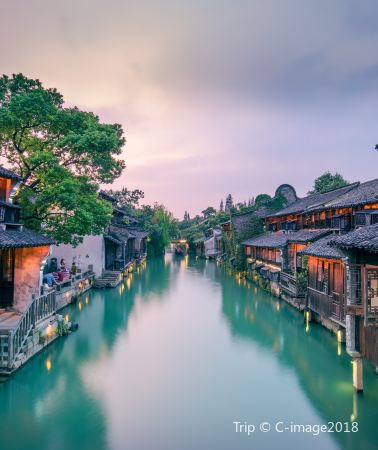
Xitang Historic Town of China is located in Jiashan, Zhejiang, at the junction of Jiangsu, Zhejiang and Shanghai. Historically known as Xietang and Pingchuan, it was the border area between the Wu and Yue states during the Spring and Autumn period, earning the description "Wu's root and Yue's corner." Unlike many overly commercialized water towns, it remains home to numerous local residents. At dawn, seniors can often be seen washing clothes by the riverbanks, while in the afternoon, they leisurely play chess under the covered corridors, giving it the reputation of "a living millennia-old town." Its three distinctive features—numerous bridges, alleyways and covered corridors—set it apart from other Jiangnan water towns. A nearly km-long covered corridor runs along the river, concentrated around Chaonandai and Beizha streets. Sheltered from rain while walking beneath it, this structure earned the poetic name "misty rain corridor." One side of the corridor features shops selling local specialties and snacks alongside residential houses, while the riverside offers occasional backrest benches for watching paddle boats pass by. During rainy seasons, sitting under the eaves to listen to rainfall and observe the water creates a uniquely charming waterscape. The town also boasts over a hundred ancient alleys, mostly paved with stone slabs. Among these, Xixia Street's Shipi Lane stands out—its narrowest section measures less than m wide, requiring pedestrians to sidle past each other while glimpsing only a sliver of sky above, famously called "Xitang's thread of sky." Over twenty ancient stone bridges span the river in the old town: Yongning Bridge offers a prime vantage point to overlook the river confluence and rows of dark-tiled roofs, with particularly clean photo opportunities during quiet early mornings. Songzi Laifeng Bridge stands out among Jiangnan's ancient bridges with its roofed top and stone seating for rest. Huanshou Bridge provides distant views of layered gray rooftops, while Wan'an Bridge served as the filming location for the finale chase scene in "Mission: Impossible III," where Tom Cruise sprinted through the town's streets and bridges. Xiyuan Garden and Zui Garden within the town exemplify delicate Jiangnan estate gardens—the former being a Ming dynasty private residence featuring pavilions, towers, and rockeries with fish ponds, the latter showcasing works by printmaker Wang and his son. Grand residences like Zhongfu Hall preserve traditional wealthy family layouts, with Huguo Suiliangwang Temple and Shengtang Temple maintaining strong incense traditions. The Button Museum, Chinese Wine Culture Museum, and Jiangnan Tile-ends Exhibition Hall house local folk memories. As night falls, Xitang dons a different face, with red lanterns lighting up one after another. Bars line Tangdong Street, filled with alternating songs and music, creating a striking contrast to the town's rustic daytime charm. Here, you might take a paddleboat ride—a cruise pier sits by Songzi Laifeng Bridge, offering a particularly delightful view of the waterfront lights reflecting on the water. Stroll a few steps, and you'll encounter street snacks like stinky tofu, tofu pudding, steamed pork with rice flour, braised pork, gorgon fruit cake, and glutinous rice balls. Authentic Jiangnan dishes can be savored at old restaurants along Beizha Street. Visiting in late autumn, you may catch the Hanfu Culture Week, initiated by lyricist Vincent Fang and held annually for over a decade, when the town brims with flowing traditional robes, enhancing its ancient ambiance. Travelers preferring tranquility can stay at alleyway inns away from the bar street—only by spending a night can one witness the quiet, unspoiled morning charm of the ancient town.Jiashan · 13 km from downtown

LEGOLAND® Shanghai Resort
LEGOLAND® Shanghai Resort is the ultimate LEGO® theme park and hotel destination for kids and their families! Build memories that last a lifetime on over 75 interactive rides, shows and attractions as well as thousands of LEGO models crafted with more than 85 million LEGO bricks across eight immersive ‘lands', that let kids and adults' imagination and creativity go wild.Shanghai · 17.6 km from Jiashan

Aficion Chocolate Village
Wandering in Aficion Chocolate Town, rows of European-style buildings offer a romantic and exotic atmosphere that gives visitors the impression that they in another country. You will witness the magic of chocolate being produced, listen to some wonderful stories about chocolate, and feel the charm of cocoa beans. Families can bring kids to the DIY production area and enjoy the fun together. You can embrace the charm of chocolate culture and savor the sweetness of chocolate with every step.Jiashan · 7.7 km from downtown

Fengjing Ancient Town
Fengjing Ancient Town is located in the southwest corner of Shanghai. It is a classic example of a traditional, southern Chinese water town. The river running through the village acted as a natural border between the Wu and Yue states in the Spring and Autumn Period (770-476 BCE). The town spanned across the border of Wu and Yue resulting in Fengjing being hailed as the "famous historical town of Wu and Yue." As many as 52 bridges dot the landscape. Among them is the ancient Zhihe Bridge, which was built in the Yuan dynasty approximately 700 years ago. Compared to other popular water towns in southern China, Fengjing does not get quite as many tourists. You can leisurely admire the unspoiled, rural landscape, with its small bridges and flowing rivers.Shanghai · 10.6 km from Jiashan

Yunlan Bay Hot Spring
Yunlan Bay Shuanglian Hot Spring Resort's outdoor spring pool area is exquisitely landscaped. The serene ambiance features a fusion of oriental garden landscapes and Western spiritual spa therapy treatments to soothe and indulge the senses, whether indoors or outdoors. Because the physiotherapy needs of visitors are different, there are sixty pools in nine main outdoor hot spring areas to choose from. The Liuhe Physiotherapy Area is especially suitable for older visitors. Younger visitors like the Qiongjiang Spa for facial and skin treatments. There is also a water paradise designed with children in mind, suitable for the whole family to enjoy together.Jiashan · 5.7 km from downtown

Covered Corridors
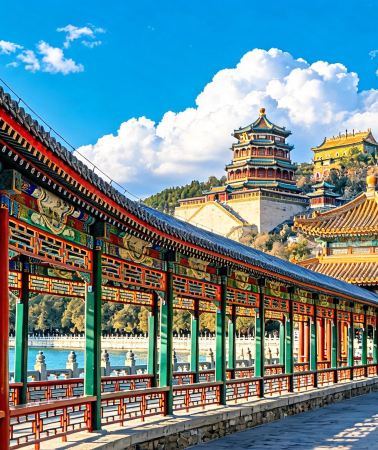
Ceilinged Corridors are also called the rain corridors. Many ancient towns south of the Yangtze River have them. It looks like a street with wooden pillars and tile roofs. The rain corridor in Xitang is very distinctive because if you walk along the river in the old town, there will always be a shelter for you. Especially on rainy days, walking under the porch and listening to the patter of rain and the mysterious scenery outside the corridor. There is a strong artistic conception, so the rain corridor of Xitang has the reputation of "ceilinged corridor". The total length of the rain corridors in Xitang is nearly a thousand meters. Most of them are built on the riverside. Walking among the corridors, you can visit the various shops along the street. Sometimes there are sculling boats slowly shuttling tourists.Jiashan · 13.1 km from downtown

Jiaxing South Lake Scenic Area
South Lake is named for its location in the south of Jiaxing city. It is also one of "the 3 famous lakes in Jiangnan" along with Xuanwu lake in Nanjing, and West Lake in Hangzhou. Not only is it a scenic area, it's also an important revolutionary memorial site in the modern history of China. In 1921, the Communist Party of China was founded while on a tourist boat on South Lake in Jiaxing. If you find yourself along the lake on a rainy day, don't miss the sight of mist rising up over the lake. You can also rent a boat and go out on the lake to enjoy the views.Jiaxing · 18.5 km from Jiashan

Yuehe Historic District
Yuehe Historic District is a remarkably well-preserved Jiangnan water town district within Jiaxing's old city. The Beijing-Hangzhou Grand Canal flows along one side of the district, its winding path embracing the city in a crescent shape—the origin of the name "Yuehe." Since the Southern Song Dynasty, this area has been a hub for merchants and bustling markets, reaching its peak during the Ming and Qing dynasties. Today, it retains its "three rivers and three streets" framework: the Grand Canal, Outer Yuehe, and Inner Yuehe run in parallel, accompanied by Zhongji Road, Tannong, and Xiushuidou Street. The layout of alternating rivers and streets, combined with riverside corridors and wharves, showcases the classic Jiangnan water town aesthetic, offering a glimpse into the prosperity of the old Jiaxing "Jiangnan Prefecture City."Jiaxing · 18 km from Jiashan

Songzilaifeng Bridge
Songzilaifeng Bridge is located on the east side of Xiaotong Street in the ancient town of Xitang. It is a three-hole stone bridge connecting the smoke and rain corridor. It is a bridge that visitors to Xitang will pass. The bridge was first built in 1637 (Ming Chongzhen ten years), was rebuilt twice in the Qing Dynasty, and then rebuilt in 1997. There are flower walls in the middle of the bridge, and the bridge is divided into two sides. Pedestrians can walk each side. There are sheds on the top of the bridge, red and sturdy tiles, guardrails on both sides, and long stone seats for people to rest.Jiashan · 13.1 km from downtown

Zhouzhuang
Zhouzhuang is a renowned water town in Jiangnan, featuring crisscrossing waterways and Ming and Qing dynasty buildings lining the rivers. The twin bridges depicted by artist Chen Yifei capture the gentle charm of "small bridges, flowing water, and homes." The southern part of the ancient townSouth LakeVast and beautiful. When the lights come on at night, Zhouzhuang takes on a whole new charm. Tour highlights Ancient mansions with brick-carved gate towers in the misty rain of Jiangnan The architecture in zhouzhuang primarily consists of jiangnan-style residences, including nearly a hundred ancient courtyard houses, most of which date back to the ming and qing dynasties. Surrounded by water on all sides, the ancient town was shaped by its rivers, with intersecting waterways forming a grid-like pattern embedded within the town. This unique layout creates streets that follow the water's edge and markets that line these streets. Above zhouzhuang's water alleys, 14 ancient stone bridges from the yuan, ming, and qing dynasties remain well-preserved. These ancient bridges, water alleys, and historic houses truly embody the poetic scene of "small bridges, flowing water, and homes." Visit ancient dwellings and trace the footsteps of famous figures There are many ancient residential architectural relics here, with the famous ones being zhouzhuang zhang hall, zhouzhuang shen hall, and the mysterious zhouzhuang ancient town - shen wansan's water tomb, which is said to be his cenotaph. Zhouzhuang shen hall was built by shen wansan's descendants and is a well-preserved qing dynasty residence in zhouzhuang. Its ingenious structure allows visitors to glimpse the life traces of a wealthy magnate in jiangnan, and even touch the legendary "treasure basin." Originally named yishun hall, zhouzhuang zhang hall was built earlier in the ming dynasty and later transferred to the zhang family during the qing dynasty, renamed zhouzhuang zhang hall. It is a typical ming dynasty official residence. The rowing boats in the water alleys are a beautiful dream of the water town. Zhouzhuang is a small town, with its length and width both approx. 1-2 km, making it perfect for exploring on foot. However, taking a boat ride along the waterways is highly recommended. The boats in the ancient town are wooden vessels covered with traditional blue floral cloth, accommodating 1-6 passengers. The boatwomen often sing local Wu dialect folk songs, adding a charming water-town ambiance. "Only in Zhouzhuang" immersive multi-dimensional space theater "Zhouzhuang: A Dream Within A Dream" is an immersive multi-dimensional theatrical experience designed to transport audiences on a "journey of self-encounter" through layered dreams. The story follows Zhou He, a youth traveler attending an astronomy enthusiasts' gathering in Zhouzhuang, who witnesses the dreams and life of his Song Dynasty namesake from 900 years ago. During the 80-minute performance, audiences enter the dreams of both contemporary Zhou He and his Song Dynasty counterpart, following four chapters - "Old dreams", "Entering the painting", "Going to war", and "Finding the way" - to explore the aesthetic world of the Song Dynasty and the ancient water town of Zhouzhuang, witnessing the pursuits of its historical figures through cross-temporal dialogues. Leisurely life, enjoy relaxation with ease Zhouzhuang is a perfect place to relax. In the morning, you can enjoy the breeze by the river and savor some Jiangnan-style breakfast. During the day, you can stroll around the town, listen to opera while drinking tea at a teahouse, or read a book with coffee at a café. In the evening, you can unwind with a drink at a quiet bar, where many bars feature live singers or performances. Featured shopping Zhenfeng cultural street: Selling jiangnan handicrafts, including homespun cloth,Bamboo woven crafts and more, most suppliers close at sunset. Quanfu South Road cultural and creative street: Features intangible cultural heritage shops like Xiuniang Silk and Zhu Bingren Copper.There are also Daoxiangcun, Crab Buddy and PinKu Workshop.And delicious food and goods like Sencui women's clothing. ZhouzhuangAccommodation If conditions permit, consider staying overnight in the ancient town to gain a deeper understanding of the place. There are many local family-run inns, mostly located along the river with backyard spaces, offering a pleasant and quiet environment. You can choose one based on your preferences. ZhouzhuangFood When visiting Zhouzhuang, the local snacks are not to be missed. Around Zhenfeng Cultural Street and near Shen Hall in Zhouzhuang, you'll find numerous specialty snack shops. Here, you can discover various Jiangnan-style pastries like qingtuan (green rice cakes) and wadixu (crispy sock-sole pastries), as well as chengyao cakes. Stroll around and savor these treats as you explore. Must-try dishes include Wanshi trotters, grandma's pickles, white silk fish, and sanweiyuan (three-flavor balls), all iconic flavors of Zhouzhuang. Whether in bustling markets or quiet alleys, you'll encounter century-old culinary traditions. Take your time to appreciate these delicacies that carry the memories of Zhouzhuang, making them an unforgettable part of your journey.Kunshan · 32.3 km from Jiashan
Experiences you can't miss in Jiashan
Featured Culture & history in Jiashan
View all Culture & history
Free cancellation
Book now for tomorrow
FromDKK 1,062.47

4.5/5
· 93 reviews· 3.9k bookedFree cancellation
Instant confirmation
Book now for today
86 bookings in 7 days
FromDKK 326.38

4.9/5
· 94 reviews· 2.1k bookedInstant confirmation
Book now for today
33 consecutive positive reviews
FromDKK 249.06


4.8/5
· 71 reviews· 276 bookedFree cancellation
Instant confirmation
Book now for tomorrow
94.4% of travelers recommend
FromDKK 179.76


4.9/5
· 1.1k reviews· 7.9k bookedFree cancellation
Instant confirmation
Book now for tomorrow
100 consecutive positive reviews
FromDKK 984.14

5.0/5
· 4 reviews· 85 bookedFree cancellation
Instant confirmation
Book now for tomorrow
FromDKK 527.22
Featured Spa & wellness in Jiashan
View all Spa & wellness
4.7/5
· 9 reviews· 258 bookedFree cancellation
Instant confirmation
Book now for today
FromDKK 199.84
5.0/5
· 1 review· 24 bookedFree cancellation
Instant confirmation
Book now for tomorrow
FromDKK 189.8

Free cancellation
Instant confirmation
Book now for tomorrow
FromDKK 1,560.68
Free cancellation
Instant confirmation
Book now for tomorrow
FromDKK 389.64
Free cancellation
Book now for tomorrow
FromDKK 263.11
FromDKK 468.64
Free cancellation
Book now for tomorrow
FromDKK 729.32
Featured Day tours in Jiashan
View all Day tours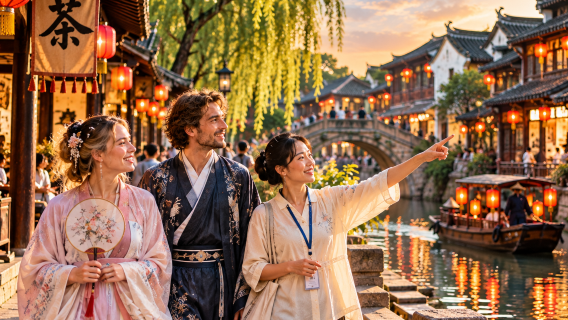
Free cancellation
Instant confirmation
Book now for tomorrow
FromDKK 591.49

5.0/5
· 1 reviewFree cancellation
Instant confirmation
Book now for tomorrow
FromDKK 619.27

Instant confirmation
Book now for tomorrow
FromDKK 511.68
Free cancellation
Instant confirmation
Book now for tomorrow
FromDKK 1,418.5

Free cancellation
Instant confirmation
Book now for tomorrow
FromDKK 607.32


5.0/5
· 1 reviewFree cancellation
Book now for tomorrow
FromDKK 1,554.15
Featured Food & drink in Jiashan
View all Food & drink
4.6/5
· 104 reviews· 3.9k bookedFree cancellation
Instant confirmation
Book now for tomorrow
80 bookings in 7 days
FromDKK 178.76
4.7/5
· 57 reviews· 1.9k bookedBook now for tomorrow
93% of travelers recommend
FromDKK 148.63
5.0/5
· 36 reviews· 720 bookedFree cancellation
Book now for tomorrow
36 consecutive positive reviews
FromDKK 96.41
4.8/5
· 29 reviews· 715 bookedFree cancellation
Book now for tomorrow
264 travellers saved
FromDKK 141.6
4.6/5
· 14 reviews· 469 bookedFree cancellation
Book now for tomorrow
FromDKK 135.57
4.6/5
· 21 reviews· 355 bookedFree cancellation
Instant confirmation
Book now for today
FromDKK 349.47

4.3/5
· 8 reviews· 302 bookedFree cancellation
Instant confirmation
50% off
Limited-time sale
FromDKK 340.43DKK 680.86
4.8/5
· 315 reviews· 2.1k bookedFree cancellation
Instant confirmation
Book now for today
95.6% of travelers recommend
FromDKK 853.59
More things to do
Private Tours in Jiashan
View More Private Tours in Jiashan

Group Tours in Jiashan
View More Group Tours in Jiashan

Jiashan Today's weatherFoggy 12-24℃
Jiashan weather for the next 2 days10/31: 16-25℃, 11/1: 15-25℃
Free things to do in Jiashan
Fengjing Ancient Town
Shanghai · 10.6 km from JiashanJiaxing South Lake Scenic Area
Jiaxing · 18.5 km from JiashanYuehe Historic District
Jiaxing · 18 km from Jiashan
Zhujiajiao Ancient Town
Shanghai · 33.7 km from Jiashan
South Lake Red Boat
Jiaxing · 17.9 km from Jiashan
Nanxun Ancient Town
Huzhou · 47.4 km from Jiashan
The Bund
Shanghai · 70.1 km from Jiashan
Zicheng Ruins Park
Jiaxing · 18.3 km from Jiashan
Guangfulin Cultural Relics Park
Shanghai · 36.4 km from Jiashan
Misty Rain Pavilion
Jiaxing · 17.9 km from Jiashan
What travellers say about Jiashan

_TI***esOctober 28, 2026
5.0
Among many touristic cities with ancient vibes, Xitang was very outstanding. It is not very crowded in late October, but cozy and nice, with many stores and street food. As Xitang is not as famous as Fenghuang or Suzhou, the prices for everything, including souvenirs, are very modest. The boat trip under the red lanterns is the must!
Xitang Historic Town of China

Anonymous userOctober 27, 2026
5.0
It was more fun than I expected, and another reason was that there weren't many people that day, so the queue wasn't long.
There were lots of games for kids, making it perfect for very young children.
It would be worth going a second time, but it's just too far away.
LEGOLAND® Shanghai Resort

熊蜂October 12, 2026
5.0
Chocolate Town has many varieties of chocolates to buy, as well as many park activities. You can also visit the chocolate factory to see how chocolate is made.
Aficion Chocolate Village

衔春归玄燕May 1, 2026
5.0
Nestled in Jinshan District, Shanghai, at the border of Shanghai and Zhejiang, lies Fengjing, an ancient water town steeped in a thousand years of history. Known as the "Root of Wu and Corner of Yue" due to its location at the confluence of the Wu and Yue regions, this town boasts a unique architectural style and a long history, making it one of the largest and best-preserved water towns in Shanghai.
Fengjing's history can be traced back to the Southern Liang Dynasty, when it began as a village. It gradually flourished into a market and then a town during the Song and Yuan Dynasties. Its original name, "Bainiu Town," witnessed the passage of time until it was officially renamed Fengjing Town at the end of the Ming Dynasty. This name has remained to this day, becoming an indispensable cultural symbol of Shanghai.
Strolling through the streets and alleys of Fengjing, one can easily notice the unique architectural style—on one side are lotus-leaf walls, with blue bricks and gray tiles revealing the gentleness and beauty of a Jiangnan water town; on the other side are horse-head walls, with upturned eaves displaying the boldness and resilience of the Han Dynasty in the north. This fusion of northern and southern cultures is a unique reflection of Fengjing as the "Root of Wu and Corner of Yue."
Looking back at Fengjing's glorious past, the Yuan Dynasty was its most prosperous period for commerce. Merchants flocked to both banks of the city river, and the long corridor built along the river not only connected the main commercial street of the ancient town but also became an important venue for commercial exchange. Today, although time has passed and the Fengxi Corridor no longer enjoys its former glory—only 268 meters of the original 1000-meter-long corridor have been restored—the legend of "no umbrella in summer, no wet shoes in the rain" still circulates in every corner of the ancient town, witnessing Fengjing's antiquity and resilience.
Fengjing Ancient Town
Anonymous userMarch 15, 2026
5.0
New hotel, fantastic!
The room didn't have any new renovation smells, very satisfied. The environment and views are top-notch, and the butler service was very attentive and responsive. The breakfast was also plentiful, I'll definitely come again.
Yunlan Bay Hot Spring

胰岛素抵抗February 23, 2023
4.0
A scenic spot in Xitang Ancient Town, there are many small restaurants and B&Bs around it. You can also go boating on the river next to it, and there are different scenery at night, so there are more tourists. There are also many shops selling various small commodities along the river.
Covered Corridors

Hossain Hoq ProhorJune 26, 2026
5.0
Jiaxing South Lake Scenic Area is a famous historical and scenic destination in eastern China. Known for its tranquil waters, lush gardens, and cultural significance, the area offers a peaceful retreat for visitors. The picturesque lake is surrounded by traditional pavilions, bridges, and walking paths, creating a charming atmosphere for relaxation and sightseeing. One of its highlights is the historic Red Boat, an important symbol in modern Chinese history. Visitors can enjoy boat rides, admire beautiful landscapes, and explore nearby cultural attractions. Jiaxing South Lake Scenic Area is an ideal destination for history enthusiasts, nature lovers, and photographers alike.
Jiaxing South Lake Scenic Area

chen7711November 25, 2025
5.0
Moon River Historic District (Jiaxing Moon River Ancient Street) is a charming old street in the Jiangnan water town area. Below is its introduction, historical background, features, and travel suggestions:
* Best Time to Visit:* Evening or nighttime offers the best atmosphere: The riverside and ancient streets are even more classically beautiful when the lights are on.
* How to Explore:* You can stroll through the old streets and alleys, experiencing the small bridges, flowing water, and old shops; or take a boat trip on the Moon River/Grand Canal to experience the water town charm.
* Must-See/Recommended Locations:* Zongzi Culture Museum: Learn about the history and culture of Jiaxing zongzi (sticky rice dumplings).
* Established Shops (Pastries, Braised Duck, Silk): A combination of shopping and dining.
* Ancient Bridges and Covered Corridors: Take photos and experience traditional architecture.
* Accommodation Suggestions:* There are characteristic inns/hotels in or near the district, such as Jiaxing Moon River Inn, which is located within the district.
Yuehe Historic District

辰宁在心February 1, 2023
4.0
The Songzi Laifeng Bridge is an important scenic spot in the Xitang Ancient Town Scenic Area in Jiashan, and it is also a must-visit place for tourists to Xitang. The original bridge was built in the late Ming Dynasty, and the current bridge was rebuilt in 1997. There are various messages and graffiti from tourists on the white wall of the bridge.
Songzilaifeng Bridge

M26***16October 17, 2026
5.0
It wasn't peak season, so it was a great place to stroll around. There were fewer people, and more seating options at the back. Seating was limited at the beginning. Tea shops were a bit pricey, but that's to be expected since it's a tourist area. There are plenty of restaurants near the exit, so you can choose according to your needs. Just ask about the prices beforehand; there are several ticket options, but they're all reasonably priced.
Zhouzhuang


