
Things to do in Leshan
Explore top experiences
Top 10 attractions in Leshan


Baoguo Temple
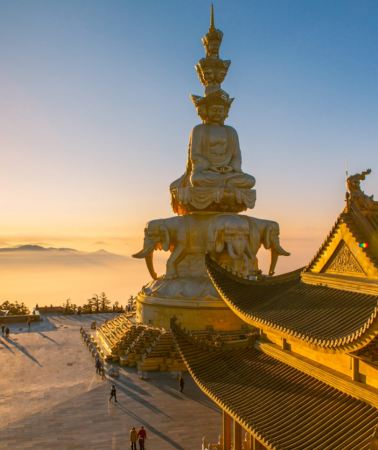
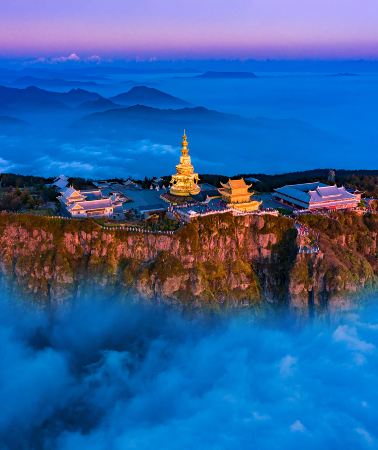
The Baoguo Temple, not far from Mount Emei, was built in the Wanli Period of the Ming Dynasty and is the starting point for most tourists to visit the Emei Mountain Scenic Area. The plaque of the "Baoguo Temple" on the temple gate is from the hand of Emperor Kangxi of the Qing Dynasty. It is also the center of the Buddhist activities in the mountains. The main hall is the Maitreya Hall, the Daxiong Hall, the Seven Buddha Hall and the Puxian Hall. Today it is home to the Emeishan Buddhist Association, where many large ceremonies are held.Emeishan City · 5.4 km from downtown

Dadu River Jinkou Grand Canyon Scenic Area
The Jinkou River Grand Canyon, which starts from the Wusi River in the west and freezes to the Jinkou River, spans the Jinkou River District of Leshan City, Sichuan Province. Hanyuan County in Ya'an City and Ganluo County in Liangshan River. It has a total length of 26 kilometers, the width of the valley is less than 200 meters, and the depth of the valley is 2600 meters. The peaks on both sides of the canyon protrude, and the dangerous rocks stand up, forming various pictographic landscapes, like people and beasts, lifelike, overlapping mountains, shady trees, waterfalls, various mountain flowers and wild grasses competing for beauty, forming a gorgeous scenery. , natural and elegant. There are many small ravines along the canyon, which are well-proportioned. Among them, the most famous one is the one-line sky. The cliffs on both sides of the gully are close to each other. When you look up, you can only look at the sky. Follow it to enter the Laochang Valley to the center of the ditch. This section is a few kilometers long. The road is even more amazing, with ravines and cliffs, gurgling streams, chirping birds and beasts, and sheep intestines trails, which are completely "malicious" manifestations of nature.Leshan · 78 km from downtown

Suji Ancient Town
Suji Ancient Town was built in the Sui Dynasty with a long history of over 1,400 years, boasting the Tang DynastyTennoji, over 30 cultural relics and historic sites such as Rugong Bridge from the Qing Dynasty, and a 4A-level attraction, the Leshan Ebony Cultural Museum. Suji Ancient Town is located at the center of the three world heritage sites: Leshan Giant Buddha, Mount Emei, and Dongfeng Weir. Since ancient times, it has been a must-pass place for Buddhists on their pilgrimage to the sacred Mount Emei, leaving behind footprints and poems by literati throughout history. The Emei River,Qingyi River, Linjiang RiverWinding its way through, the unique dock culture gave birth to the nationally renowned intangible cultural heritage delicacy "Qiaojiao beef," celebrated as a land of fish and rice, the hometown of dragon lanterns, and a cradle of calligraphy and painting. It has been honored with numerous accolades including Sichuan's first batch of Tianfu tourism towns, Sichuan's first batch of characteristic towns, Sichuan's historical and cultural district, "New Landmark of Bashu Cultural Tourism Corridor," the second batch of "Sichuan Cultural and Creative Markets," and the Sichuan "Golden Panda" Award. Frequently featured in CCTV special reports, it is a widely known hub of vibrant life, acclaimed as "the first pilgrimage site of Mount Emei and the premier town of Qiaojiao beef."Leshan · 10.3 km from downtown

Luocheng Ancient Town
The architectural layout of Qianweiluo City is very unique. The reason for the construction of this small town is very interesting. According to legend, during the Chongzhen period of the Ming Dynasty, a foreign scholar came here. Seeing the local people suffering from water shortage and extremely inconvenient life, he could not help but recite a few words "Luocheng is dry at the wharf, and the clothes do not last long. If you want water to become a river, Luocheng builds a boat. The boat travels in the water, and if there is a boat, there will be water.” The local people actually believed that the renovation of the building was a good way to solve the problem of water shortage, so they donated money to build it. Rare town. This boat-shaped ancient town is more than 2,000 meters long and 650 meters wide. The main street runs north-south, narrow at both ends and wide in the middle. The street is undulating like a deck in the waves; the theater in the street is so high, like a high sail. The Lingguan Temple at the end of the street is like the cabin of a sailing ship. There is a row of shade corridors about 200 meters long and 6 meters wide on both sides of the street, which are like boat awnings, also known as "boat hall street". This surviving old street still retains some of the cultural features of the old Sichuan culture in the Ming and Qing Dynasties.Qianwei County · 21 km from downtown

Dongfeng Weir-Qianfo Rock
The core Attraction Dongfengyan was built in the first year of Emperor Kangxi of the Qing Dynasty, that is, in 1662 AD, and has been in use for more than 350 years. It is the third world heritage site in Leshan City after Leshan Giant Buddha and Mount Emei. Qianfoyan was excavated in the Sui Dynasty, flourished in the Tang Dynasty, and continued to the Ming and Qing Dynasties. The statues are arranged in a staggered manner, with a few occupying a cave alone and hundreds of them gathered in one cave. The beautiful shapes, exquisite craftsmanship, different postures, and colorful colors show the high level of stone carving art in ancient China. In 2006, Jiajiang Qianfoyan Grottoes, as a Tang Dynasty cultural relic, was approved to be included in the sixth batch of national key cultural relics protection units. Irrigation projects and historical landscapes complement each other, and water control inscriptions and grotto statues coexist harmoniously, which not only spreads irrigation civilization, but also profoundly expresses the important connotation of irrigation culture. In addition to Dongfeng Weir and Qianfoyan Grottoes, the core Attraction also has a wide range of water culture inscriptions from past dynasties, Yuelangchang Wonderland, Cassia Stone, Lingyan Fairy Cave, Peiyu Mountain Spring, Daguan Cliff, and Tieshi Xiongguan. The Attraction is full of green mountains, clear springs and waterfalls, and lush bamboo forests, with a variety of scenery.Jiajiang · 3 km from downtown

Fuhu Temple
Fuhu Temple was built in the Tang Dynasty and was rebuilt in Shaoxing during the Southern Song Dynasty. During the reign of Shunzhi in the Qing Dynasty, the monk of Guanzhi led his disciples to rebuild the temple, named "Huxi Zen Forest", also known as Fuhu Temple. The reason for the name of Fuhu Temple is that there is a tiger wound in the mountains near the temple. The temple gentleman built the "Zunsheng Building" town here and changed its name to Fuhu Temple. Another argument is due to the Fuhu Temple. The mountain shape is like a tiger and takes the name of the temple.Emeishan City · 6.5 km from downtown

Dafochan Temple
The Great Buddha Temple is located in the urban area of Mount Emei. It is a new monastery next to the Mount Emei Buddhist College. It is huge in scale and is said to be the largest Buddhist college in Asia. The entire temple is magnificent, and the temple also imitates a golden dome on a mountain. The Great Buddha Temple sits west to east, and its overall layout is divided into three functional areas: the north (adjacent to the urban area) is the Buddhist pilgrimage area, that is, the religious ceremony space, the middle is the Buddhist garden culture sharing area, and the south is the Buddhist college education area, that is, Sichuan Buddha. College (Emeishan Buddhist College). There are also many banyan trees and bodhi trees in the temple that are more than 500 years old.Emeishan City · 1.5 km from downtown

Jiayang Suoluo Lake Scenic Area
Jiayang's Suoluo Lake was created after the construction of a hydropower dam on the Mabian River. The lake features a broad surface and very clear water. You can take a tour boat onto Suoluo Lake and enjoy the scenery with green hills on both banks, a perfect scenic vista of lake and mountain. When you reach the Suoluo Ravine, you will find the ravine covered in lush suoluo trees (spinulose tree fern), which sway gently in the breeze. The Jiayang Suoluo Lake Tourism Scenic Area is like a virgin old-growth forest, quiet and beautiful.Qianwei County · 14.7 km from downtown

Tiedaobing Museum
Leshan · 77.6 km from downtown

Luomu Ancient Town
Emeishan City · 10 km from downtown
Experiences you can't miss in Leshan
Featured Day tours in Leshan
View all Day tours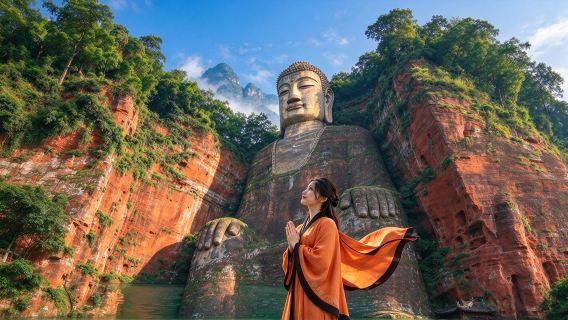

4.9/5
· 5.1k reviews· 12.6k bookedFree cancellation
Instant confirmation
Book now for tomorrow
98.9% of travelers recommend
From€34.64
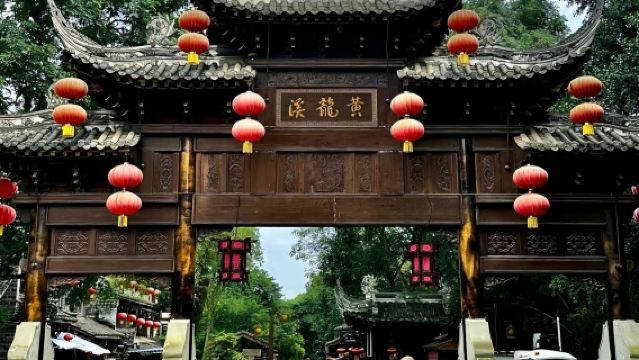
4.8/5
· 30 reviews· 315 bookedFree cancellation
Instant confirmation
Book now for tomorrow
9% off
Limited-time sale
From€43.94€48.82
4.7/5
· 264 reviews· 2.5k bookedFree cancellation
Instant confirmation
Book now for tomorrow
92.8% of travelers recommend
From€29.54

4.9/5
· 6.2k reviews· 8.9k bookedFree cancellation
Instant confirmation
Book now for tomorrow
100 consecutive positive reviews
From€34.64
![Panda Base + Leshan Giant Buddha Day Trip [All tickets included | Optional English-speaking guide | Explore the ancient town]](https://ak-d.tripcdn.com/images/0356l12000rw8k9jx53D4_C_568_320.jpg?_fr=wc)
4.9/5
· 155 reviews· 1.3k bookedFree cancellation
Instant confirmation
Book now for tomorrow
24 consecutive positive reviews
From€82.96
![Leshan Giant Buddha + Mount Emei Day Trip [Optional: Round trip from Leshan + boat tour of the Giant Buddha OR mountain climbing of the Giant Buddha]](https://ak-d.tripcdn.com/images/0356312000nzgw7z615D7_C_568_320.jpg?_fr=wc)
4.9/5
· 12.3k reviews· 11k bookedFree cancellation
Instant confirmation
Book now for tomorrow
66 consecutive positive reviews
From€129.94
![Leshan Giant Buddha 1-day tour [includes boat ticket + live guide · small group of up to 8 people · optional Chinese/English]](https://ak-d.tripcdn.com/images/0354h12000r4v4004846C_C_568_320.jpg?_fr=wc)
4.9/5
· 223 reviews· 2.2k bookedFree cancellation
Instant confirmation
Book now for tomorrow
97.3% of travelers recommend
From€53.43
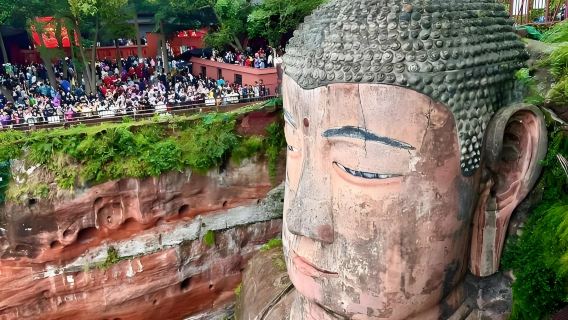
4.6/5
· 20 reviews· 267 bookedFree cancellation
Instant confirmation
Book now for tomorrow
Save €0.51
From€49.83€50.34
Featured Outdoor experiences in Leshan
View all Outdoor experiences
5% off
Limited-time sale
From€144.91€152.54
![Mount Emei Golden Summit + Leshan Giant Buddha pure play 1-day tour [optional private tour · guide in Chinese and English]](https://ak-d.tripcdn.com/images/0356q12000twol4v7E38C_C_568_320.jpg?_fr=wc)
5.0/5
· 12 reviews· 26 bookedFree cancellation
Instant confirmation
From€131.55
Free cancellation
Instant confirmation
Book now for tomorrow
From€103.09
Instant confirmation
From€183.05
From€411.85
Save €4.33
From€82.31€86.64
![[Chengdu Downtown - Mt. Wawu of China] Direct Shuttle + Scenic Area Admission Ticket - Hassle-Free Departure](https://ak-d.tripcdn.com/images/0350y12000pd64kvlA02F_C_568_320.jpg?_fr=wc)
5.0/5
· 2 reviewsFree cancellation
Instant confirmation
From€42.10
![Chengdu Wawu Mountain Group Day Tour: Marvel at the Spectacular Table-Shaped Landform [Includes Admission + Dual Cable Cars + Direct Shuttle]](https://ak-d.tripcdn.com/images/0352f12000pd66knv76E6_C_568_320.jpg?_fr=wc)
Free cancellation
Instant confirmation
From€61.48
Featured Nature & wildlife in Leshan
View all Nature & wildlife
4.9/5
· 18 reviews· 373 bookedFree cancellation
Instant confirmation
Book now for tomorrow
9% off
Limited-time sale
From€50.90€56.55

Free cancellation
Instant confirmation
Book now for tomorrow
9% off
Limited-time sale
From€95.08€105.64

5.0/5
· 5 reviews· 67 bookedFree cancellation
Instant confirmation
Book now for tomorrow
10% off
Limited-time sale
From€53.27€59.19

5.0/5
· 1 reviewFree cancellation
Instant confirmation
Book now for tomorrow
From€80.27
![1-day tour to Chengdu research base of giant panda breeding + Leshan giant Buddha [English-speaking guide with morning pickup in Chengdu]](https://ak-d.tripcdn.com/images/0355m12000rbgx7ds3021_C_568_320.jpg?_fr=wc)
4.8/5
· 9 reviews· 29 bookedFree cancellation
Instant confirmation
Book now for tomorrow
10% off
Limited-time sale
From€63.79€70.88
Free cancellation
Instant confirmation
Book now for tomorrow
Save €0.99
From€97.05€98.04
5.0/5
· 1 reviewFree cancellation
Instant confirmation
Book now for tomorrow
From€52.09
Free things to do in Leshan
Baoguo Temple
Emeishan City · 5.4 km from downtownDadu River Jinkou Grand Canyon Scenic Area
Leshan · 78 km from downtownSuji Ancient Town
Leshan · 10.3 km from downtownLuocheng Ancient Town
Qianwei County · 21 km from downtownDongfeng Weir-Qianfo Rock
Jiajiang · 3 km from downtownFuhu Temple
Emeishan City · 6.5 km from downtownDafochan Temple
Emeishan City · 1.5 km from downtownJiayang Suoluo Lake Scenic Area
Qianwei County · 14.7 km from downtownTiedaobing Museum
Leshan · 77.6 km from downtownLuomu Ancient Town
Emeishan City · 10 km from downtown
More ways to travel from Leshan
Private Tours in Leshan
View More Private Tours in Leshan

Group Tours in Leshan
View More Group Tours in Leshan


What travellers say about Leshan

Dr. Kudrin TravelMarch 16, 2026
5.0
Baoguo Temple - where it all begins and endsYou know, there's a special magic to traveling returning to where you started and realizing you're a completely different person. That Mount Emei, which seemed like a pretty picture on the first day, has now become a part of you. That your knees remember every stone, and your lungs remember every breath of air at an altitude of three thousand meters. Baoguo Temple awaited us below. And it was the perfect end point.Baoguo, also known as the "Temple of Gratitude to the Motherland," stands at the very beginning of the trail, at the foot of the mountain. On the first day, we were in such a hurry to get going that we left it for last, like a delicious dessert saved for last. And we did the right thing. The temple is about 450 years old. It was founded during the Ming Dynasty, in the 16th century, and since then it has faithfully fulfilled its purpose: meeting pilgrims, seeing them off to the top, and welcoming them back when they descend, tired and happy. Can you imagine how many stories it has witnessed? How many knees, like mine, have trembled before its gates?In the Hall of the Seven Buddhas, I encountered the purple bronze Huayan Pagoda. The same one, with 14 stories and 4,700 small Buddhas on its body. But the temple's crowning glory is, without a doubt, the bell. A huge bronze bell, weighing over 10 tons. Locals call it the "Bashu Bell King" (named after the ancient kingdom of Sichuan). Transportation: Take bus #5 in Emeishan; it goes directly to the temple. The price is only 1.5 yuan. It's almost ridiculous: 1.5 yuan for a ticket to a place that will nourish your memories for years. Buses run every 10 minutes, so you won't have to wait even during rush hour.You can, of course, take Didi—it's about 20 yuan and takes 25 minutes. But if you're not as exhausted as we were from descending the mountain, the bus is a more authentic option. You'll get locals to join you, you'll enjoy the scenery outside the window.
Baoguo Temple

不吃香菜的牛排骨March 30, 2026
5.0
Jinkou Grand Canyon is actually a section of the Dadu River Geopark within the Jinkou River. It features a reservoir and dam, a waterway highway and a suspension bridge, cliffside villages and a railway corps museum. The cliffs on the banks are colorful, and the rushing water below reflects the emerald green. The majestic beauty and grandeur of Jinkou Grand Canyon are truly breathtaking!
Dadu River Jinkou Grand Canyon Scenic Area

最美不过蓝天May 1, 2025
4.0
Leshan Suji Ancient Town is located in the Shizhong District of Leshan City, about 10 kilometers away from the urban area. Suji Ancient Town is a food gathering place in Leshan and the birthplace of Qiaojiao Beef. There are various snacks in the ancient town and places for river swimming. It is a good place for leisure, entertainment and delicious food.
Suji Ancient Town
M36***84June 16, 2020
4.0
The ancient town is relatively small and can be visited in half an hour, but it is very charming. It may be because the town is relatively small, so it really feels like an ancient town. The road from the tourist center to the boat-shaped street is very quiet, but it makes people feel very relaxed. There is a narrow stone-paved path between the quaint buildings, which is really impressive. The boat-shaped street is mainly for drinking tea and playing cards, which is also very good. The remote town and the lively tea street are really a good match. Except for the boat-shaped street, the other alleys are relatively narrow, but they are also very fun (I personally prefer the alley of the Changchun barber shop, hehe). After crossing the boat-shaped street is another street, which is mainly a market, where you can buy some small things. Overall, it is quite good, but it is a bit small. If you don’t like the ancient streets with a strong commercial atmosphere like Luodai and Kuanzhai in Chengdu, it is still worth a visit!
Luocheng Ancient Town

空山小雨October 1, 2024
5.0
The scenic area is along the Qingyi River, with beautiful scenery. There are not many people on National Day. There are many exquisite Buddha statues, and the Sakyamuni statue is also painted. The Dongfeng Weir Dam can be seen clearly when you climb up the mountain. In short, it is good to take a walk
Dongfeng Weir-Qianfo Rock

leonlai520September 4, 2026
5.0
Fuhu Temple is free and doesn't require ID. Although it's only a little over 1 kilometer from Baoguo Temple, it's not a flat, straight path, but a winding mountain road with ups and downs. In the sweltering heat of early August, walking 1 kilometer uphill, especially since Fuhu Temple itself is built into the mountainside, meant climbing a long flight of stairs even after reaching the temple gate, and more stairs inside, so we opted to pay for parking rather than hike. It turned out that paying for parking saved us a lot of energy. Fuhu Temple itself is quite nice and worth a visit. However, every temple on Mount Emei involves endless climbing and walking, so be prepared for the physical and mental strain.
Fuhu Temple

仙山萌爷November 15, 2025
5.0
The vibrant colors of the chrysanthemums are as if the world has spilled its palette, creating a beautiful contrast with the lush green leaves, painting a picture that is both serene and passionate, and evoking the elegant poetic imagery of "the cold flowers have all faded, but the chrysanthemums alone fill the branches."
Dafochan Temple

Anonymous userMay 27, 2024
5.0
When you arrive in Jiayang, you must go down to a mine and dig a few shovels of coal. It is a great experience. Going down the mine, you can feel the sound and light of the gas explosion, ride the monkey car, learn about the history and development of mining, and see a lot of mining machinery. Except for the time spent queuing for the monkey car, the whole process was very happy. Although I was exhausted after climbing the slope of the Cong Mine, it was still very interesting. I also saw a giant salamander.
Jiayang Suoluo Lake Scenic Area

刘闲人September 1, 2025
5.0
The Railway Corps Museum is nestled in the heart of the Jinkou Grand Canyon on the Dadu River. From its perch, visitors can admire Dawa Mountain, the world's highest table-shaped mountain, and explore the Third Front Memory District along the river. Jinkouhe District has launched three premium tourist routes: the "Grand Canyon Red Study Tour," the "Dawa Mountain Wetland Ecological Tour," and the "August Forest Yi Family Customs Tour," showcasing breathtaking natural scenery, diverse cultural history, and unique ethnic customs.
Tiedaobing Museum

binger1031February 20, 2026
5.0
(1) Luomu Ancient Town, which locals usually call Qinglong, is not far from Mount Emei. There are few outsiders. Spring is beautiful here. Come and visit on a nice day. (2) Located on the eastern foot of Mount Emei, it was first built in the first year of Wude of Emperor Gaozu of Tang (618 AD). After the county was abolished and the town was changed in the Song Dynasty, it became one of the five towns of Emei. The ancient town has eight main streets and seven alleys. It retains the wooden structure of mortise and tenon beams and stone slab streets from the Ming and Qing Dynasties. It had already formed a settlement in the Shang and Zhou Dynasties. In the Ming and Qing Dynasties, it became the first stop of the Tea Horse Road into the mountains. The existing Taoist relics have a deep connection with the "Seventh Taoist Grotto-Heaven" of Mount Emei. The worship activities are still held on the sixth day of the sixth lunar month. [1] [5] The traditional handicrafts in the town have continued to this day, covering blacksmith shops, bamboo weaving workshops, tofu workshops and other businesses. Special snacks include handmade mooncakes, tofu pudding and so on.
Luomu Ancient Town
Popular cities near Leshan


Frequently asked questions
What are the must-do things in Leshan?
Don't miss these attractions in Leshan: Baoguo Temple, Dadu River Jinkou Grand Canyon Scenic Area, and Suji Ancient Town. If you like Day tours, try Leshan Giant Buddha Day Tour from Chengdu: 9:30 AM Departure & Optional Walking/Boat Tour (Lunch Included). If you enjoy Outdoor experiences, try Sichuan Leshan Giant Buddha + Oriental Buddha Capital + Jiayang Small Train 1-day tour with bilingual service.
What are the recommended tours and excursions in Leshan?
When choosing a tour, start with how much time you have and the kind of experience you're looking for. Trending options right now include Leshan Giant Buddha Day Tour from Chengdu: 9:30 AM Departure & Optional Walking/Boat Tour (Lunch Included), 1-day Tour to Leshan Giant Buddha & Huanglongxi Town (Departing from Chengdu), and Full-day Panda Base +Leshan Giant Buddha Tour( OR Half-day Panda Base Tour). Check the real-time availability and itinerary before you book.
What's the typical cost of day tours and activities in Leshan?
As of October 15, 2026, the reference price for day tours and activities in Leshan is around EUR 29.54 – EUR 129.94. Rates vary by duration, group size, transport, tickets, meals, and any special admission requirements. Before you book, please confirm the billing currency and whether the price is quoted per person or per group.
How can I contact Trip.com customer support?
Get help anytime, anywhere within 30 secondsContact customer support
Can I change or cancel my booking?
Change and cancellation policies vary by attractions and tours. Please check the product details page for more information.
How can I get discounted prices?
Ticket prices may vary between weekdays and weekends, as well as during peak and off-peak seasons. When booking with Trip.com, you can also use Trip Coins to get extra savings. For more tips on booking discounted tickets, please visit Trip.com for the latest information.
Trip.com picks
Popular cities in China
Popular Leshan Tours
Best Leshan Experiences
Recommended Car Rentals in China
Things to do in ShanghaiThings to do in GuangzhouThings to do in JiuzhaigouThings to do in ChinaThings to do in ZhuhaiThings to do in HarbinThings to do in SanyaThings to do in ShenzhenThings to do in SuzhouThings to do in TaipeiThings to do in BeijingThings to do in HangzhouThings to do in DujiangyanThings to do in MacauThings to do in Zhangjiajie
Chengdu Leshan Giant Buddha + Suji Ancient Town + food 1-day tour Chengdu Leshan Giant Buddha Scenic Area Private Day TourXi'an to Leshan Giant Buddha 1-day tour Chengdu Leshan Giant Buddha + Sichuan Opera Face-Changing Show + Hot Pot Meal Private Day TourPanda base & Leshan Giant Buddha 1-day challenge tour 1-day tour for Chengdu Tianfu airport transfer + Leshan Giant BuddhaLeshan Rail Station - Leshan Giant Buddha Private Round-Trip Transportation1-day tour from Chongqing to Chengdu panda base and Leshan Giant Buddha Full-day Panda Base +Leshan Giant Buddha TourLeshan Giant Buddha + Huanglongxi Town 1-day tour The Research Base of Giant Panda Breeding+Leshan Giant Buddha Day Tour:Ticket+Private CarChengdu Leshan Giant Buddha Day TourLeshan Giant Buddha Day Tour from Chengdu: 9:30 AM Departure & Optional Walking/Boat Tour Chengdu panda base + Leshan Giant Buddha + Zhanggongqiao food English small group 1-day tourChengdu Classic Private Day Tour to Panda Base and Leshan BuddhaLeshan ActivitiesLeshan Restaurant DiscountsLeshan SurfingLeshan Day ToursLeshan SIM CardLeshan TransportationLeshan Spa & MassageWellness & Spa in LeshanCar rentals in TaipeiCar rentals in BeijingCar rentals in Hong KongCar rentals in Shanghai