Mingguang

Things to do in Mingguang

Search attractions or local attractions & tours
Search

Explore top experiences

Top 10 attractions in Mingguang

View all Attractions
Mount Huangshan Scenic Area
2026 Asia 100 - Best Things to Do

Mount Huangshan Scenic Area

9.1
4.8/5
73.7k reviews

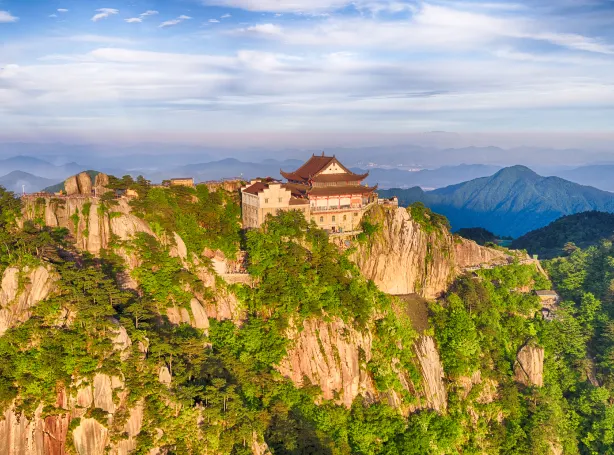
Mount Huangshan Scenic Area is located in Tangkou Town, Huangshan District, Huangshan City. Since ancient times, Mount Huangshan has been one of China's most renowned mountains. Its peculiar pines, strange rocks, sea of clouds, and hot springs are known as the "Four Wonders" of Mount Huangshan. In addition to these, rime, snowscapes, and sunrises are also views that visitors will not miss. There is an ancient saying: "Having visited the Five Great Mountains, one need not look at any other mountains; having visited Mount Huangshan, one need not look at the Five Great Mountains." The attraction is divided into the south gate, west gate, and north gate. The vast majority of visitors enter and exit through the south gate, which has two entrances and exits—front mountain and back mountain—both close to Tangkou Town at the foot of the mountain. The town has also become a transfer hub for visiting Huangshan, and many visitors arrive here in advance to stay overnight. From Tangkou Town to the attraction entrance, you need to take the Huangshan New National Line shuttle bus, which stops at the front mountain gate (Ciguang Pavilion), the back mountain gate (Yungu Temple), and the Huangshan-Hot Spring attraction. Visiting the attraction mainly involves two routes up the mountain, the front mountain and the back mountain, both leading to one of the main peaks, Bright Summit. On the other side of Bright Summit, there is also a loop route — the West Sea Grand Canyon. Front mountain The front mountain refers to the hiking route starting from Ciguang Pavilion to Yuping Tower at the summit (accessible directly by the Yuping Cable Car), as well as the Mount Huangshan Scenic Area - Lotus Peak and Tiandu Peak areas at the summit. The scenery of the front mountain is grand and majestic, making it very suitable for enjoying panoramic views from the cable car. Both the highest peak, Mount Huangshan Scenic Area - Lotus Peak, and the other main peak, Tiandu Peak, are located here (the two peaks open alternately). There are also classic attractions such as the Guest-Greeting Pine, Jiulong Peak - Carp Back, Hundred-Step Ladder, One-Line Sky, and Tianhai. Back mountain The back mountain refers to the hiking route from Yungu Temple to Bai'e Ridge (accessible directly by the Mount Huangshan Yungu Cableway), as well as the mountaintop areas behind Bai'e Ridge such as Shixin Peak, Mount Huangshan Scenic Area - Shizi Peak, and West Sea Grand Canyon - Paiyun Pavilion. The scenery of the back mountain consists mostly of exquisite mountain views, suitable for enjoying on foot along the way. Flying Stone and Monkey Watching the Sea are both located here. West sea grand canyon West sea grand canyon officially opened in 2000. The canyon is deep and the scenery is very magnificent, and it is known as the true gathering place of Huangshan's essential scenery. West sea grand canyon can be entered from West Sea Grand Canyon - Paiyun Pavilion in the summit area of the back mountain, and after looping around inside the canyon, you return to the main peak area of Tianhai. It takes about 2 hours to walk down from West Sea Grand Canyon - Paiyun Pavilion to the bottom of the canyon, and then you can take a cable car to Tianhai. Route recommendations The standard way to visit Huangshan is a two-day tour, with routes divided into ascending via the front mountain and descending via the back mountain (front mountain - West Sea Grand Canyon - back mountain) or ascending via the back mountain and descending via the front mountain (back mountain - West Sea Grand Canyon - front mountain). Ascending via the front mountain and descending via the back mountain is suitable for taking the cable car up and walking down, which is both relaxing and allows you to enjoy the exquisite scenery of the latter half. However, since the essential route of the West Sea Grand Canyon runs from West Sea Grand Canyon - Paiyun Pavilion to Tianhai, you will have to backtrack along a section of the trail. It is possible to visit Huangshan in just one day, but the itinerary will be tight. It is recommended to ascend via the rear mountain and descend via the front mountain, taking the cable car both ways, and to either skip climbing the main peaks of the front mountain (Mount Huangshan Scenic Area - Lotus Peak / Tiandu Peak) or skip the West Sea Grand Canyon. Stay selection There are several accommodation options at the summit, mainly concentrated in areas such as Guangming Peak Tianhai, West Sea Grand Canyon-Paiyun Pavilion, Bai'e Ridge, and North Sea. Guangming Peak Tianhai is a great spot for watching the sunrise, and it is also suitable for storing luggage while exploring the West Sea Grand Canyon. Bai'e Ridge is the upper station of the Huangshan Yungu Cableway on the rear mountain; if you typically enter the attraction from the rear mountain in the afternoon, staying here is quite convenient.

China · Huangshan City
Humble Administrator's Garden
2026 Asia 100 - Best Things to Do

Humble Administrator's Garden

8.8
4.6/5
88.2k reviews

The Humble Administrator's Garden is a famous garden in Suzhou, with water as its central feature, surrounded by artfully arranged rockeries and exquisite courtyard buildings, all flourishing with plants. This exemplary Jiangnan garden, along with Beijing's Summer Palace, Chengde Mountain Resort, and Suzhou's Lingering Garden, is collectively known as the "four great gardens of China" and has been inscribed on the World Cultural Heritage list. The garden's design is exquisitely crafted, offering "a unique view with every step" as you explore, with every corner embodying the charm of Jiangnan water towns. Its winding paths lead through layered archways and stone walls with intricate cutouts, where no two pavilions or windows are alike—each perfectly complemented by surrounding flora to create picturesque scenes. You could easily spend hours photographing here. The garden is divided into eastern, central, and western sections, each with distinct features. The central garden largely preserves the simple and natural style of Ming Dynasty gardens, representing the essence of the entire complex and warranting thorough exploration. The eastern garden offers more open spaces, while the western garden features exquisite architecture. At the southern end of the Humble Administrator's Garden lies Suzhou Garden Museum, China's specialized museum dedicated to garden art. Humble Administrator's Garden features major views including Lanxue hall, Hanqing pavilion, Yuanxiang hall, Xiangzhou boat, Thirty-six mandarin ducks hall, and bonsai garden. Two particularly interesting sights stand out: first is the "borrowed view of Beisi pagoda"—when looking westward from the east garden, the pagoda 1 km away appears within the garden, creating a popular photo opportunity for travelers, with this borrowed scenery technique visible throughout the grounds during exploration. Second is the "small flying rainbow bridge" in the central garden, where vermilion railings reflected in water resemble a rainbow, forming an exceptionally beautiful view centered on this bridge. The garden's floral displays change with the seasons: azalea exhibition in spring, lotus exhibition in summer, chrysanthemum exhibition in fall, and fruit bonsai exhibition around the Spring Festival.

China · Suzhou
Niushou Mountain Cultural Tourism Zone
No. 2 of Best Things to Do in Jiangsu

Niushou Mountain Cultural Tourism Zone

8.6
4.7/5
35.5k reviews

Niushou Mountain Cultural Tourism Zone, also known asNiushou Mountain Cultural Tourism Zone, it is named for its two peaks, one in the east and one in the west, which resemble the two horns of an ox's head. Niushou Mountain Cultural Tourism Zone boasts beautiful scenery and has long enjoyed the reputation of "Spring Niushou." In ancient times, it featured such Jinling scenic spots as Niushou Smoke and Mist and Zutang Temple's Resounding Tin Staff, and it also preserves many historical sites, such as the Jiangning section of the ancient fortifications where Yue Fei fought against the Jin, and the Zheng He Cultural Park. Usnisa Palace The Usnisa Palace is themed around the enshrinement of the Buddha's parietal bone relic and is divided into two parts: the large dome and the small dome, symbolizing outer offerings and inner offerings. The Usnisa Palace utilizes the original mine pit to build an underground palace, with six levels below ground and three levels above ground, appearing very solemn and magnificent. The parietal bone relic of Shakyamuni Buddha was enshrined at the Niushou Mountain Cultural Tourism Zone in October 2015. Visitors may go to the Usnisa Palace to pay homage on special Buddhist festivals. For specific times to view the relic, please call the attraction for inquiries. A thousand years of history Niushou Mountain Cultural Tourism Zone is a Buddhist sacred site. The Buddha Cave Temple, built by Sikong Xu Du in the second year of the Tianjian era of the Liang Dynasty (503 AD), was the first temple on Niushou Mountain, and Li Yu, the last ruler of the Southern Tang, renamed it Hongjue Temple. During the Tang Dynasty, Chan Master Farong, hailed as the "Bodhidharma of East China," founded the Niutou Chan School on Niushou Mountain, known in ancient times as "Jiangbiao Niutou." The founding of the Niutou Chan School served as an important bridge in the true transformation of Indian Chan into Chinese Chan! Niushou Mountain Cultural Tourism Zone - Taohua Stream Niushou Mountain Cultural Tourism Zone - Taohua Stream is located at the east entrance of Niushou Mountain Cultural Tourism Zone, with a total area of 14.87 hectares, approximately 220 mu. The peach blossoms selected are 26 varieties suitable for growing in the Nanjing area, making it a new view created by the Niushou Mountain attraction. A small stream winds down from Yinlong Lake, its water babbling, with peach trees planted on both sides. In spring, the buds gradually bloom, and a sea of flowers is intoxicating.

China · Nanjing
Slender West Lake
2026 Global 50 - Spring Outings

Slender West Lake

8.5
4.7/5
83.9k reviews

"In March when flowers bloom, head to Yangzhou." When visiting Yangzhou in spring, a trip to Slender West Lake is a must. This narrow stretch of waterway offers the perfect blend of natural beauty and cultural heritage. Stroll along the banks to admire scenic views, explore historic pavilions adorned with classical poetry and paintings, or cruise the lake by boat to experience the leisurely pleasure Emperor Qianlong once enjoyed during his royal visits. The attraction is quite expansive, stretching from the Great Rainbow Bridge in the southeast all the way north along the lake to Guanyin Mountain, passing dozens of attractions along the way. There are four main entrances (east, south, west, and north), with most visitors starting their tour at the south entrance on Great Rainbow Bridge Road. This renowned lakeside garden boasts breathtaking natural views. In spring, the area is shaded by lush willows and adorned with camellias, pomegranates, azaleas, and peach blossoms, attracting visitors from across the country to enjoy the seasonal blooms. For centuries, countless literati have lingered here, composing poetry and creating paintings that left behind numerous artistic treasures and stories. The site also features many landscape structures ingeniously designed to harmonize with its natural surroundings. The Five Pavilion Bridge in Shugang Slender West Lake Scenic Area is the iconic attraction with over 200 years of history. Featuring five wind pavilions atop, each of the bridge's fifteen arches cradles a moon during full moon nights. Another renowned attraction is the Twenty-Four Bridge, inspired by Du Mu's poetic line "Where is the jade-like beauty teaching flute-playing on the moonlit Twenty-Four Bridge?" While the original bridge no longer exists, visitors can admire its reconstructed version today. This was also a stop during Emperor Qianlong's southern tours in the Qing Dynasty. Architectural views like the Great Rainbow Bridge, Slender West Lake Scenic Area's Fishing Terrace, White Pagoda, and the Twenty-Four Bridges' Xichun Platform all bear inseparable historical anecdotes connected to Emperor Qianlong. During summer nights, the illuminated pavilions and moonlit reflections on the lake create a magical atmosphere. The nightlife experience here is entirely boat-based, offering a relaxing way to beat the summer heat while enjoying gentle lake breezes.

China · Yangzhou
Nanjing Hongshan Forest Zoo
2026 Global 100 - Family-friendly Attractions

Nanjing Hongshan Forest Zoo

8.3
4.7/5
25.1k reviews

Nanjing Hongshan Forest Zoo is located in the north of Nanjing, built along three hills: Dahongshan, Fangniushan, and Xiaohongshan. With a green coverage rate of over 85%, the rolling hills form a unique forest view. The zoo brings together rare wild animals from around the world and adopts an immersive multi-species mixed-housing model, allowing animals to naturally express their instincts in environments that simulate their native habitats. The nearly 30 venues in the park are divided into three major zones by hill. The Dàhóngshān zone is mainly home to fierce beasts and native species, including the Tiger Area, Bear Area, Chinese Felid House, Felid Planet, Wolf Area, Native Species Conservation Area, Meerkat House, Monkey Hill, and Giraffe House; the Fàngniúshān zone brings together the Koala House, Gaoligong Exhibition Area, Gondwana Exhibition Area, Asian Primate Area, Orangutan House, and Hippo House; the Xiǎohóngshān zone is mainly composed of bird exhibition areas, including the Tropical Bird House, Hornbill Garden, Muntjac and Reeve's Muntjac Slope, Parrot House, Pheasant Garden, and Rare Bird Garden. Among them, the Gondwana Exhibition Area is themed on the ancient continent of Gondwana, presenting the ecological landscape of species from the Southern Hemisphere; the Gaoligong Exhibition Area focuses on the biodiversity of Gaoligong Mountain in Yunnan; and the Native Species Conservation Area is dedicated to the conservation and wild release of China's native wildlife, making it one of the park's signature exhibition areas. Both the Koala House and the Giant Panda House are popular venues in the park. Nanjing Hongshan Forest Zoo was among the first domestic zoos to cancel animal performances and stop visitor feeding activities. With the core philosophy of "everything for the animals," it focuses on ecological renovation of venues and improvement of animal welfare. The park also undertakes the rescue and rehabilitation of wildlife in the Jiangsu region, rescuing a large number of injured and stray wild animals every year.

China · Nanjing
Jiuhua Mountain
No. 3 of Best Things to Do in Southern Anhui

Jiuhua Mountain

8.4
4.8/5
28.8k reviews

Jiuhua Mountain is located southeast of Chizhou. During the Kaiyuan reign of the Tang Dynasty (719 AD), Prince Jin Qiaojue of the ancient Silla Kingdom (an ancient regime on the Korean Peninsula) came here to practice Buddhism. Because various auspicious signs before and after his death closely resembled those of Ksitigarbha Bodhisattva, he was recognized as an incarnation of Ksitigarbha Bodhisattva and revered as Jin Ksitigarbha. Thus, Jiuhua Mountain became Ksitigarbha Bodhisattva's bodhimanda and, together with Mount Putuo, Mount Wutai, and Emeishan, was listed as one of the Four Sacred Buddhist Mountains. The preserved bodies of eminent monks from various dynasties are a major feature here. Under the perpetually humid climate, the bodies of these monks have been preserved after their passing. Currently, there are five such flesh-body bodhisattvas available for viewing. Jiuhua Street on the mountain is ring-shaped and serves as the core tourist hub of the attraction. Most trips to the various attractions start from Jiuhua Street, and many important temples are also located here. Temples are scattered throughout the mountain, and three key temples are recommended: Baisui Palace, the Hall of the Flesh Body, and Huacheng Temple. Except for Baisui Palace, which is built on a small hill, the latter two are both within the area of Jiuhua Street. To reach Baisui Palace, it takes about half an hour on foot up the mountain, or you can take the cable car. Baisui Palace enshrines the flesh body of the Ming Dynasty monk Wuxia, one of the oldest extant flesh-body bodhisattvas on Jiuhua Mountain, who was imperially conferred the title of "Response Body Bodhisattva." The Hall of the Flesh Body enshrines the flesh body of the Tang Dynasty Jin Dizang; the flesh body is sealed within a pagoda, so visitors cannot directly view the true body, but they may walk clockwise around the pagoda inside the hall. Huacheng Temple is the founding ancestral temple of Jiuhua Mountain and also the site of the Jiuhua Mountain History and Cultural Relics Museum, which houses the "Huayan Blood Sutra," copied by monk Wuxia over twenty-eight years using his own finger blood, a national first-class cultural relic. In addition to the two flesh bodies at Baisui Palace and Roushen Baodian, the other three flesh-body bodhisattvas are: Monk Mingjing of Zhantan Zen Forest, Monk Ciming of Dizang Zen Temple, and Master Renyi, a bhikkhuni, of Tonghui Zen Forest. Master Renyi is a bhikkhuni flesh body that can be visited. These three temples are all located on Jiuhua Street and can be visited in sequence. In the evening, the Qiyuan Zen Temple, the foremost of the four great monasteries, is brightly lit, and many large-scale Buddhist ceremonies are held here. Travelers may observe quietly, but must strictly observe Buddhist etiquette, refraining from loud noise and pointing at will. Travelers on a 1-day tour generally only need to visit the key temples; those with plenty of energy can continue upward from Baisuigong to Dongya Temple, and walk from Roushen Hall to **Shangchan Hall and Xiaotiantai**. Travelers on a 2-day tour can visit temples on the first day and hike up the mountain to enjoy the natural scenery on the second day, with three options: the Tiantai scenic area, the Huatai scenic area, or the ridge traverse from Tiantai to Huatai. Visiting Tiantai or Huatai separately generally takes about half a day; the Tiantai–Huatai traverse is a hiking route with a certain level of intensity, so it is recommended to set aside a full day. Tiantai is located on the south side, with its entrance at Fenghuang Pine south of Jiuhua Street; from Tiantai Temple at the top, you can enjoy the sunrise and sea of clouds and overlook the panoramic view of Jiuhua Street. Huatai is located in the northern part of the attraction, where the natural scenery is more pristine and pure, with exotic peaks and grotesque rocks scattered in varied forms; every May, rhododendrons bloom across the mountains in succession. The entrances to the two scenic areas are far apart, but they are connected by a hiking trail along the ridge. This place is foggy year-round, especially in spring and fall, when clouds and mist shroud the temple, giving it a sense of a Buddhist wonderland. Foggy days are often accompanied by drizzle, so bringing a rain poncho is recommended. In winter, snowy scenery is common in the mountains, but the steps are wet and slippery, so be sure to take anti-slip precautions when climbing.

China · Qingyang
Langya Mountain Scenic Area
No. 11 of Best Things to Do in Anhui

Langya Mountain Scenic Area

7.4
4.7/5
3.8k reviews

Langya Mountain is named after the title bestowed by Sima Rui, the first emperor of the Eastern Jin Dynasty. It is located in the southwest of Chuzhou City. It integrates the city and the mountain, is rich in historical and cultural resources, and has beautiful natural scenery. It is the location of the "No. 1 Pavilion in the World" Zuiweng Pavilion, one of the first national AAAA-level tourist attractions, a national scenic spot and a national forest park.The Langya Mountain Scenic Area covers an area of 115 square kilometers, including three major areas: Zuiweng Pavilion Area, Puxian Area, and Qingliuguan Area. The Langya Mountain Scenic Area is located in the Zuiweng Pavilion Area, covering an area of 4.98 square kilometers. It is a rich place for historical and cultural resources and ecological landscape resources of Langya Mountain, including five major tourist areas: Zuiweng Pavilion Cultural Theme Area, Tongleyuan Study and Tourism Area, Langya Secret Realm Exploration Area, Nantianmen Sightseeing Area, and Shenxiu Lake Leisure and Sports Area.Langya Mountain is a famous cultural mountain. Since the Tang Dynasty, a large number of historical celebrities such as Li Youqing, Wei Yingwu, Ouyang Xiu, Su Shi, Zeng Gong, Wang Anshi, Xin Qiji, Song Lian, Wang Yangming, Wen Zhengming, etc. have left a large number of handed down works about Langya Mountain. The great writer Ouyang Xiu of the Song Dynasty "The Drunkard" In "The Pavilion", "The Drunkard's intention is not in the wine, but in the mountains and rivers" has become a popular saying throughout the ages, and the Drunkard's Pavilion is also known as "the best pavilion in the world". There are 2 national key cultural relics protection units in the scenic area - Langya Mountain cliff carvings and stele inscriptions (especially the seven cliffs from the Tang Dynasty and the stele "The Drunken Old Pavilion" written by Su Shi are rare treasures) and Wuliang Hall, 4 The province's key cultural relics protection units are the Langya Temple ancient building complex built in the Tang Dynasty, Qingliuguan built in the Five Dynasties, Zuiweng Pavilion ancient building complex built in the Song Dynasty and Fengle Pavilion ancient building complex.Langya Mountain is an ecological pure land, located in a humid monsoon climate zone, with distinct four seasons, pleasant scenery, rich animal and plant resources, and a forest coverage rate of over 85%. Langya Elm and Zuiweng Elm are rare tree species unique to Langya Mountain. The plum tree "Oumei" planted by Ouyang Xiu is one of the four great plum longevity stars in China. Langya Creek, Glass Swamp, Rangquan, Zhuoyingquan and other mountain springs and Guiyun Cave, Xuehong Cave, Chongxi Cave and other caves are the "Nine Caves and Eighteen Springs" scenic spots of Langya Mountain."The drunkard's intention is the mountains and rivers of Langya". The rich natural and cultural landscapes of Langya Mountain make it famous as one of the "eight famous scenic spots" with "famous people, famous pavilions, famous texts, famous monuments, famous springs, famous caves, famous forests, and famous gardens". An ecological pure land and a famous cultural mountain, Langya Mountain welcomes you.

Chuzhou · 62.1 km from Mingguang
Nanjing Museum
No. 2 of Family-friendly Attractions in Jiangsu

Nanjing Museum

8.2
4.7/5
4.2k reviews

The Nanjing Museum is located at the southern foot of Purple Mountain, on the north side of Zhongshan Gate. Here, you can see ancient artifacts such as the jade burial suit sewn with silver thread, appreciate painting and calligraphy art, and even take a stroll down old streets for a journey through time. Museum historyThe museum was established in 1933 and completed in 1948, with its main hall modeled after the mountain gate of Dule Temple in Tianjin. After expansion in 2009 and opening to the public on November 6, 2013, it became the second largest museum in China after the National Museum of China, featuring six halls: the History Hall, Special Exhibition Hall, Digital Hall, Art Hall, Republican Era Hall, and Intangible Cultural Heritage Hall. Museum layoutThe museum's main buildings are divided into two sections, left and right. After walking a short distance on the right side, you will reach the museum's old main hall, modeled after the Dule Temple. Behind the "Dule Temple" is the History Gallery, while the other five galleries are all on the left side. You can either tour from the five galleries on the left to the History Gallery on the right, or from the History Gallery to the five galleries on the left. It is recommended to visit the History Gallery first, because the special exhibition hall housing the "treasure of the museum" is located to the left of the History Gallery. You can follow the order of History Gallery - Special Exhibition Hall - Digital Gallery - Republican Era Gallery - Art Gallery - Intangible Cultural Heritage Gallery to tour the entire museum. History exhibition hallThe history museum displays cultural relics arranged in chronological order from ancient times to the Ming and Qing dynasties. Walking through it feels like strolling through five thousand years of Jiangsu's civilization. Highlights include: the jade burial suit sewn with silver thread, a wall built brick by brick during the Southern and Northern Dynasties with brick carvings faintly depicting the "Seven Sages of the Bamboo Grove" upon closer inspection, and more. Special exhibition hallThe "Splendors of the Prosperous Age" area of the special exhibition hall displays official kiln porcelain from the Qing Dynasty, the "Fine Clocks and Watches Exhibition" displays ancient Chinese timekeeping devices and Western clocks and watches, and "Approaching Buddhist Statues" features resplendent, exquisitely crafted Buddhist statues. As for the "treasure of the museum," the gilt Tibetan-style stupa from the early years of the Zhengtong reign of the Ming Dynasty (1436–1439 CE), a single exhibit occupies an entire room, and its sheer grandeur alone is stunning enough. This museum treasure was unearthed from the underground palace of the Hongjue Temple Pagoda on Niushou Mountain in Nanjing. On a square red sandstone base, four blue-and-white porcelain vases surround a golden stupa in the center, and in front of the stupa is a small gold coffin and silver outer coffin, upon which lies a golden reclining statue of Shakyamuni. Digital galleryThe digital pavilion uses modern technology to present ancient themes, with exhibits such as the animation "Picture Scroll of Scenes in the Southern Capital" (similar to the Along the River During the Qingming Festival in the China Pavilion at the World Expo). What is quite interesting is that there are many interactive games here, and you can touch the screen to play games set in ancient times. Art venueThe art museum displays sculptures, calligraphy, and paintings. The exhibited paintings by Fu Baoshi, which use Chinese ink painting techniques to depict Eastern European red-roofed buildings, squares, and sculptures, are quite distinctive. Republic of China galleryThe Republic of China Gallery has transformed the entire indoor space into a street scene from the Republic of China period. Trams are displayed on the street, and shops with Republic-era style line both sides, open for business and selling items that evoke nostalgia. At a general store, you can buy "mouse droppings" (also known as kumquat pills), a snack from childhood. The post office offers Nanjing Museum postmarks, and at the Librairie Avant-Garde upstairs, the staff wear period clothing; if you want to mail a postcard, the bookstore also sells stamps. Intangible cultural heritage museumThe intangible cultural heritage museum displays folk handicrafts such as woodblock prints, paper cuttings, gold foil, and festive lanterns. Here you can enjoy performances such as Kunqu opera, Baiju, and Pingtan. Reference performance times: 14:00-16:00.In the small theater, you can watch 3D films for free, and the film is about 20 minutes long.The small theater in the intangible cultural heritage museum will also be open to the public on weekends and public holidays at 19:00 if there are traditional Chinese opera performances, and tickets are required.

China · Nanjing
Mingguang Today's weatherFoggy 9-15℃
Mingguang weather for the next 2 days11/16: 6-14℃, 11/17: 2-13℃

Free things to do in Mingguang

What travellers say about Mingguang

user-avatar
晓心心November 15, 2026
5.0
I've been to Huangshan twice now, and the biggest surprise is that I'm not afraid at all. Walking on the mountain paths, I don't feel scared at all. Walking close to the edge is like walking on flat ground. Ahead, everything is shrouded in mist, and visibility is only about ten meters ahead. What's in the distance? What do the trees look like? You have to get close to see. My fear of heights is completely useless here. I also have to praise the cable car; it's so convenient and saves so much effort. 😀 I'm looking forward to my third trip to Huangshan.

Mount Huangshan Scenic Area
user-avatar
_GG***36November 14, 2026
4.0
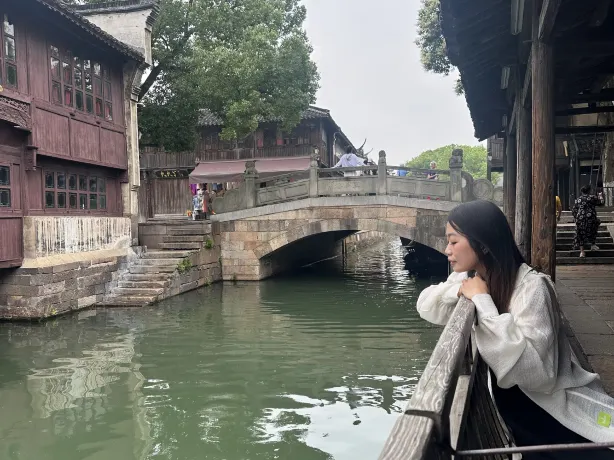
This is such a beautiful place. Aside from being too crowded, the scenery is absolutely stunning. It gives you a feeling of being somewhere in Japan, yet it still has a distinctly Chinese charm. Getting here from Suzhou Railway Station is also very easy and straightforward, with clear directions along the way.

Humble Administrator's Garden

user-avatar
Anonymous userNovember 11, 2026
5.0
It's quite fun; experience a cyberpunk-style Buddhist worship. Besides the Buddha Palace, there are many other things to do at Niushou Mountain. If you only visit the core attractions (2-3 hours), you could easily spend a whole day there. I recommend taking the bus; buying a combined ticket is more cost-effective and saves energy.

Niushou Mountain Cultural Tourism Zone

user-avatar
M47***89November 14, 2026
5.0
The sensory experience was excellent. I've always wanted to visit Slender West Lake. The first half was by boat, and the second half was on foot. It was a wonderful experience; the landscape was picturesque, with beautiful scenery everywhere. It's just that the travel time was too short, so we had to end the trip quickly. I'll definitely come again next time.

Slender West Lake

user-avatar
Anonymous userNovember 15, 2026
4.0
My child came during autumn break, and it was incredibly crowded! Luckily, the weather was perfect – not too hot, not too cold – and every leaf I photographed was beautiful. We visited every exhibit, entering from the south gate. Since I prefer walking, we didn't take the sightseeing bus; it seemed okay, no need to buy a ticket. The ups and downs weren't as dramatic as I expected. The food inside was quite good, with a wide variety of options.

Nanjing Hongshan Forest Zoo

user-avatar
M28***97November 15, 2026
5.0
I've wanted to visit Jiuhua Mountain for a long time. There's a town on the mountain called Jiuhua Town, and there are many Buddhist temples around it. It truly deserves to be called a Buddhist holy site. Unfortunately, the weather was bad, so I couldn't go up the mountain and could only walk around the town.

Jiuhua Mountain

user-avatar
夏日清风cynNovember 1, 2026
4.0
Langya Mountain Scenic Area (5A), located in the northwest suburbs of Chuzhou City, is a national scenic spot and national forest park. It is renowned for Ouyang Xiu's "Record of the Drunken Pavilion" and enjoys the reputation of "no other mountain after Penglai" (Figure 2). Based on our 3-hour time limit and senior-friendly requirements, AI provided a core itinerary: "Langya Pavilion + Langya Temple + Shenxiu Lake + Drunken Pavilion," a route that proceeds from high to low, avoiding backtracking, ensuring efficiency and a good experience. Enter from the North Gate of the scenic area, take the shuttle bus to Nantianmen, and ascend to Langya Pavilion (Figure 1), the highest point in the scenic area, overlooking the city of Chuzhou—a crucial node for hiking and sightseeing. Then descend hundreds of steps to Langya Ancient Temple (Figure 3). Originally built in the Tang Dynasty, it is an important remnant of Buddhist culture. The path descends gently... Wangbitan is nestled in a valley. Shenxiu Lake (Figure 4) has a wide expanse with a winding bridge and a pavilion in the center, perfect for boating and sightseeing. Finally, the core of the scenic area is the Zuiweng Pavilion (Figure 5), hailed as the "Number One Pavilion Under Heaven." Built by Ouyang Xiu during the Qingli era of the Song Dynasty, it is a cultural landmark and symbol of Langya Mountain. Other smaller scenic spots include Yingxiang Pavilion (Figure 6), Yefang Garden (Figure 7), and Zuiweng Pool (Figure 8). Returning to the North Gate, it was nearly 5 PM. The setting sun cast its golden rays upon the slightly weathered ancient buildings, the shadows of the trees swaying gently, a scene of timeless beauty (Figure 9).

Langya Mountain Scenic Area

user-avatar
E04***87November 13, 2026
5.0
Teacher Dong's professional skills are truly amazing! The content and teaching methods are very suitable for children. Although the number of people was indeed very large this time, the arrangements were handled very well. We would definitely work with her again.

Nanjing Museum

Trip Moments in Mingguang
Popular cities near Mingguang

Frequently asked questions

How can I contact Trip.com customer support?

Get help anytime, anywhere within 30 secondsContact customer support

Change and cancellation policies vary by attractions and tours. Please check the product details page for more information.

Ticket prices may vary between weekdays and weekends, as well as during peak and off-peak seasons. When booking with Trip.com, you can also use Trip Coins to get extra savings. For more tips on booking discounted tickets, please visit Trip.com for the latest information.