Pucheng

Things to do in Pucheng

Search attractions or local attractions & tours
Search

Explore top experiences

Top 10 attractions in Pucheng

View all Attractions
West Lake
2026 Global 100 - Best Things to Do

West Lake

10
4.7/5
37.4k reviews

West Lake is the core scenery of Hangzhou, with cloud-covered mountains on three sides and the city on one, and the two long causeways, Su Causeway and Bai Causeway, lie across the lake surface, dividing the water into several stretches large and small. Among the lakeside highlights, the "Ten Scenes of West Lake" handed down from the Southern Song dynasty rank first, and together with the later "New Ten Scenes of West Lake" and the "Three Reviews of the Ten Scenes of West Lake," over a hundred attractions spread out along the lake shore and the surrounding mountains, with pavilions, terraces, temples, and pagodas, gardens, causeways, and islands setting off one another against the distant mountains and nearby waters; the legend of the Broken Bridge, where Bai Niangzi and Xu Xian met, adds a touch of story to the lake and hills. There is no need to insist on visiting every spot; simply choosing a stretch of shoreline and wandering slowly is pleasant enough. You can explore West Lake on foot, by cycling, by the sightseeing electric shuttle that circles the lake, or by boat. The shuttle route makes exactly one full loop around the lake, saving effort and being convenient; cycling along the lakeside is leisurely and romantic, with many public bicycle rental points along the shore; if you want to take a boat, the several piers around the lake offer different boat types and routes, and it is recommended to take a boat to Three Pools Mirroring the Moon in the center of the lake while enjoying the lake views from the water along the way; alternatively, you can hail a rowboat at the lakeside and let the boatman row you around the lake for a more free and flexible experience. Attractions on the north shore are concentrated. The usual route starts from Lingering Snow on the Broken Bridge in the northeast corner, follows Bai Causeway to Solitary Hill, and along the way you can see cultural views such as the Xiling Seal Art Society, the Zhejiang Provincial Museum, the China Seal Museum, and Zhongshan Park–Pavilion for Releasing Cranes, taste a bowl of authentic West Lake vinegar fish at Louwailou, and then pass Xiling Bridge to the Temple of King Yue and Breeze-Ruffled Lotus at Quyuan Garden. In summer when the sun is strong, you might instead walk along Beishan Road, hide under the dense shade of the trees, and look at the curve of Broken Bridge and the swaying weeping willows on Bai Causeway; along the way there are many entrances where you can climb Baoshi Hill for high views; in the evening, the live performance Impression West Lake on Yue Lake is also well worth seeing. If you have plenty of time and energy, you can also get on the Su Causeway from around the Temple of King Yue and walk to enjoy the full view of West Lake. Hubin Road to Nanshan Road along the southeast shore is another area with a dense concentration of attractions. Hubin Road sits at the junction of the urban area and the scenic area, right next to the downtown commercial district, making it suitable for a short stop for travelers on a tight itinerary; by the lake there is also the iconic musical fountain and a cruise pier. From Hubin Road heading south along Nanshan Road, Orioles Singing in the Willows, the Long Bridge, Leifeng Pagoda, and Evening Bell at Nanping Hill line up one after another, and further west is Viewing Fish at Flower Harbor. The distances between adjacent attractions are convenient to cover on foot or by sightseeing bus, and you can choose a few to visit according to your preferences. Leifeng Pagoda and Evening Bell at Nanping Hill are best scheduled for the evening—listening to the bell at Jingci Temple and climbing Leifeng Pagoda to look down over the lakes and hills in the twilight are both excellent experiences.

China · Hangzhou
Wuyishan National Park
2026 Global 50 - Cool Water Escapes

Wuyishan National Park

8.6
4.6/5
13.5k reviews

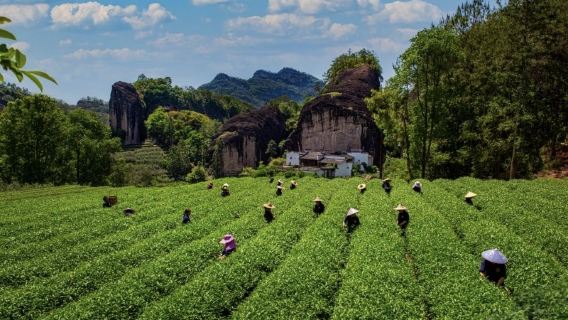
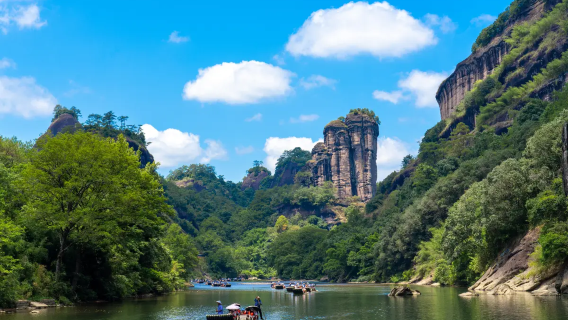
Wuyishan National Park is located in the northern section of the Wuyishan mountain range in northwestern Fujian, stretching across the border area between Fujian and Jiangxi provinces. It is one of China's first established national parks, and Wuyishan itself was inscribed as a UNESCO World Heritage Site for both culture and nature as early as 1999. The park was formed by integrating the former Wuyishan National Nature Reserve and Wuyishan Scenic Area: the Tongmu area in the north focuses on ecological conservation and scientific research, preserving a rare intact mid-subtropical forest ecosystem at this latitude. The main peak of the Wuyishan range, Mount Huanggang, is also located here, and this core area does not offer regular tourism activities. Sightseeing activities are concentrated in the scenic areas along both banks of the Nine-bend Stream, namely the four major sections: Tianyou Peak to Taoyuan Cave, Nine-bend Stream to Wuyi Palace, One-line Sky to Tiger Roaring Rock, and Dahongpao to Water Curtain Cave. The attractions in the scenic area are relatively scattered with considerable distance between them. A leisurely visit typically requires two to three days. If you only have one day, start by ascending Tianyou Peak for a panoramic view of the emerald waters and crimson mountains along the Nine-bend Stream, then take a bamboo raft downstream from Xingcun Wharf. Along the way, you'll pass landmarks like Jade Maiden Peak, Great King Peak, cliff inscriptions, and suspended boat coffins. The rafting journey ends at Wuyi Palace, making it an ideal classic route. Tea enthusiasts may prefer spending time on the leisurely Rock Bone Floral Trail between Dahongpao and Water Curtain Cave. This gentle path connects core Wuyi rock tea production areas like Liuxiangjian and Huiyuankeng, offering a uniquely fragrant experience. With two days, you can cover all four major sections. For more time, consider visiting the ancient tea merchants' residences in Xiamei Village, the starting point of the ancient Tea Horse Road, or exploring the ruins of the Minyue King's City near Chengcun Village—the latter also being part of Wuyishan's world heritage site. Bamboo rafting is very popular, so please make arrangements in advance during peak season. To get close to the ecological heart of the park, you can take the Wuyishan National Park No. 1 scenic route. Places like Moon Bay and Qinglong Waterfall are suitable for self-drive or private charter. As for food, street snacks like flat meat dumplings and Vietnamese noodles are common, while Langu smoked goose and local dishes cooked with alpine bamboo shoots and mushrooms are also worth trying.

Wuyishan · 64.1 km from Pucheng
Wangxian Valley
2026 Global 100 - Night Attractions

Wangxian Valley

9
4.5/5
26.8k reviews

Wangxian Valley is located at the northern foot of Lingshan Mountain, hidden among mountain streams and gorges. It was formerly an abandoned granite quarry and, after years of ecological restoration, has been built into the valley town it is today. The attraction is structured around the Jiuniu Stream Gorge, where streams flow through the valley and waterfalls cascade in layers; the Sandie Waterfall and Sankou Pot are among its most recognizable natural views. In summer, visitors can also experience gorge rafting that winds through the ancient town. The cliffside building complex on Baihe Cliff is the attraction's signature view. On the nearly 100-meter-high cliff face, cantilevered guest rooms, plank walkways, and viewing platforms climb upward in a zigzag pattern, looking up from the valley floor like pavilions in the sky. After nightfall, the cliff lights come on one after another, and the entire valley resembles a painted scroll of lights; standing on Lanyue Bridge and gazing at the full panorama of Baihe Cliff is a classic photo spot here. The Yanpu Old Street in the valley restores the appearance of traditional dwellings in northeastern Jiangxi, with rammed earth walls, bluestone slab paths, and horse-head walls interwoven throughout. Workshop Street is lined with traditional handicraft workshops for brown sugar, brewing, papermaking, cloth dyeing, and more, where you can watch ancient production methods on site; Mingchan Alley gathers intangible cultural heritage crafts such as bamboo weaving and woodwork. Bawei Street offers a dazzling array of Jiangxi-style snacks such as dengzhan guo and taro dumplings. When visiting, it is recommended to enter the attraction in the afternoon so that you can clearly see the gorge landforms in daylight without missing the spectacular lighting after nightfall. The entire route requires walking and climbing stairs, so comfortable, slip-resistant shoes are advisable.

China · Shangrao
Mount Huangshan Scenic Area
2026 Asia 100 - Best Things to Do

Mount Huangshan Scenic Area

9.1
4.8/5
73.7k reviews

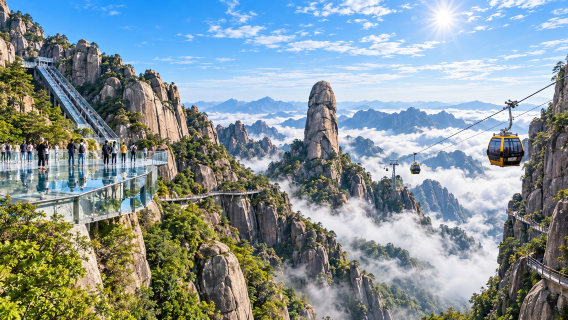
Mount Huangshan Scenic Area is located in Tangkou Town, Huangshan District, Huangshan City. Since ancient times, Mount Huangshan has been one of China's most renowned mountains. Its peculiar pines, strange rocks, sea of clouds, and hot springs are known as the "Four Wonders" of Mount Huangshan. In addition to these, rime, snowscapes, and sunrises are also views that visitors will not miss. There is an ancient saying: "Having visited the Five Great Mountains, one need not look at any other mountains; having visited Mount Huangshan, one need not look at the Five Great Mountains." The attraction is divided into the south gate, west gate, and north gate. The vast majority of visitors enter and exit through the south gate, which has two entrances and exits—front mountain and back mountain—both close to Tangkou Town at the foot of the mountain. The town has also become a transfer hub for visiting Huangshan, and many visitors arrive here in advance to stay overnight. From Tangkou Town to the attraction entrance, you need to take the Huangshan New National Line shuttle bus, which stops at the front mountain gate (Ciguang Pavilion), the back mountain gate (Yungu Temple), and the Huangshan-Hot Spring attraction. Visiting the attraction mainly involves two routes up the mountain, the front mountain and the back mountain, both leading to one of the main peaks, Bright Summit. On the other side of Bright Summit, there is also a loop route — the West Sea Grand Canyon. Front mountain The front mountain refers to the hiking route starting from Ciguang Pavilion to Yuping Tower at the summit (accessible directly by the Yuping Cable Car), as well as the Mount Huangshan Scenic Area - Lotus Peak and Tiandu Peak areas at the summit. The scenery of the front mountain is grand and majestic, making it very suitable for enjoying panoramic views from the cable car. Both the highest peak, Mount Huangshan Scenic Area - Lotus Peak, and the other main peak, Tiandu Peak, are located here (the two peaks open alternately). There are also classic attractions such as the Guest-Greeting Pine, Jiulong Peak - Carp Back, Hundred-Step Ladder, One-Line Sky, and Tianhai. Back mountain The back mountain refers to the hiking route from Yungu Temple to Bai'e Ridge (accessible directly by the Mount Huangshan Yungu Cableway), as well as the mountaintop areas behind Bai'e Ridge such as Shixin Peak, Mount Huangshan Scenic Area - Shizi Peak, and West Sea Grand Canyon - Paiyun Pavilion. The scenery of the back mountain consists mostly of exquisite mountain views, suitable for enjoying on foot along the way. Flying Stone and Monkey Watching the Sea are both located here. West sea grand canyon West sea grand canyon officially opened in 2000. The canyon is deep and the scenery is very magnificent, and it is known as the true gathering place of Huangshan's essential scenery. West sea grand canyon can be entered from West Sea Grand Canyon - Paiyun Pavilion in the summit area of the back mountain, and after looping around inside the canyon, you return to the main peak area of Tianhai. It takes about 2 hours to walk down from West Sea Grand Canyon - Paiyun Pavilion to the bottom of the canyon, and then you can take a cable car to Tianhai. Route recommendations The standard way to visit Huangshan is a two-day tour, with routes divided into ascending via the front mountain and descending via the back mountain (front mountain - West Sea Grand Canyon - back mountain) or ascending via the back mountain and descending via the front mountain (back mountain - West Sea Grand Canyon - front mountain). Ascending via the front mountain and descending via the back mountain is suitable for taking the cable car up and walking down, which is both relaxing and allows you to enjoy the exquisite scenery of the latter half. However, since the essential route of the West Sea Grand Canyon runs from West Sea Grand Canyon - Paiyun Pavilion to Tianhai, you will have to backtrack along a section of the trail. It is possible to visit Huangshan in just one day, but the itinerary will be tight. It is recommended to ascend via the rear mountain and descend via the front mountain, taking the cable car both ways, and to either skip climbing the main peaks of the front mountain (Mount Huangshan Scenic Area - Lotus Peak / Tiandu Peak) or skip the West Sea Grand Canyon. Stay selection There are several accommodation options at the summit, mainly concentrated in areas such as Guangming Peak Tianhai, West Sea Grand Canyon-Paiyun Pavilion, Bai'e Ridge, and North Sea. Guangming Peak Tianhai is a great spot for watching the sunrise, and it is also suitable for storing luggage while exploring the West Sea Grand Canyon. Bai'e Ridge is the upper station of the Huangshan Yungu Cableway on the rear mountain; if you typically enter the attraction from the rear mountain in the afternoon, staying here is quite convenient.

China · Huangshan City
Wuyuan Huangling Scenic Area
2026 Global 50 - Spring Outings

Wuyuan Huangling Scenic Area

9
4.6/5
24.1k reviews

Wuyuan Huangling Scenic Area sits among the Shi'er Mountains of Wuyuan, with the ancient village of Huangling at its core—a Huizhou ancient village nearly six hundred years old. The village is built along steep mountain slopes, where "there is no flat ground three chi wide"; residences are arranged in a fan-shaped, terraced layout around the water outlet, with white walls and dark tiles layered one upon another on the cliffside, earning it the name "Tiyun Renjia" (Households in the Terraced Clouds). Surrounded by ancient trees and terraced fields, it is itself a three-dimensional painting of a mountain village. Huangling is the birthplace of the "shaiqiu" (autumn sun-drying) culture. Constrained by the terrain, villagers have since ancient times set up drying racks on rooftops to dry crops; every fall, red chili peppers, yellow chrysanthemums, pumpkins, and more fill the rooftop drying trays, with colors shifting as the seasons change. In spring, rapeseed flowers bloom in layers across ten thousand mu of terraced fields, dotted with pink peach blossoms and snow-white pear blossoms; the lower-elevation first-phase flower sea and the higher-elevation second-phase Gaoling flower sea bloom in succession, with the flowering period lasting into April. Riding the cable car up the mountain, visitors can overlook the entire golden flower field, and the view is especially open when passing the Leixin Bridge glass walkway, with layered terraced fields and distant mountains below. Tianjie in the village is the main sightseeing axis paved with bluestone slabs, linking classic Huizhou-style ancient buildings; shops line the street with workshops behind storefronts, and along the way visitors can taste authentic Wuyuan snacks such as steamed cakes, Qingming guo, and huizhi guo, and also take part in making folk snacks and handicrafts. Visiting in fall, besides the spectacular shaiqiu scene, the village's red maples are also a highlight, with maple forests fully tinted and echoing the harvest colors drying on the rooftops. Throughout the year, Huangling has something to offer in every season, and its core charm always lies in the unique Huizhou everyday vitality of this mountain village.

China · Wuyuan
Ge's Fairy Village
No. 3 of Night Attractions in Jiangxi

Ge's Fairy Village

8.5
4.8/5
12.6k reviews

Ge's fairy village is located in Yanshan County, Shangrao City, Jiangxi Province. It was invested and constructed by Xinbang Group in June 2016, with a total investment exceeding 1.569 billion yuan. Backed by the thousand-year-old Taoist mountain Ge's Fairy Mountain, it aims to become "a new landmark of Jiangxi tourism." The project is divided into two phases, with a planned construction area of approx. 300,000 square meters. The core attraction area covers 650 mu, including three main sections: the distribution center area, Ge's Fairy Village resort, and the Tianjing Terrace attraction. Future development will continue to expand outward along the valley. Ge's fairy village is developed around the Ge's fairy mountain attraction, inspired by the cultivation stories of immortal Ge Xuan on the mountain. It integrates the cultural essence of Taoism with classical landscape painting aesthetics, recreating the mountain village scene where Ge Xuan lived and practiced during the late Han dynasty. Using water, bamboo, and village as creative elements, it aims to create a natural sanctuary and fairy village combining eco-tourism, leisure vacations, business conferences, and Taoist cultural experiences. Introduction to attractions in Ge's fairy village Yuánfāng - Heaven and earth hidden in the mountains and forests The name "Elements" is derived from the Taoist concept of "the sky is round and the earth is square." The bronze compass within Elements, meticulously crafted by renowned artists, embodies the Taoist understanding and profound mastery of the universe's principles. The overall design follows the concept of a "vanishing building," featuring a facade of glass mirrors and bamboo. From a distance, the glass mirrors reflect the natural scenery of the mountains, making the structure appear hidden within the forest. Without careful observation, one might easily overlook the building and the hidden paradise behind it. Zhongmiao pavilion - profound and mysterious, both real and illusory Zhongmiao pavilion is the highest point of the attraction, featuring an ancient architectural structure. The main building stands 26 m tall with a three-story, four-pillar pure wood design. Pavilions are typically used for storing books or enshrining deities, which adds more cultural significance to this structure. In the evening, the solemn and magnificent Zhongmiao Pavilion show takes place here, where the combination of modern technological lighting and ancient architecture creates a dreamlike and visually stunning experience. Culture has a long history The ancestral hall square mainly consists of the jiao altar at the center and the Ge Weng ancestral hall. The jiao altar is a place for capping, wedding, and sacrificial ceremonies. It served as the venue for ancient capping rites, wedding ceremonies, and rituals praying to deities. Traditional folk cultural performances are staged in the central area of the ancestral hall square. Dust-washing gate·Emerald pool - Wash away the mundane Under the moonlight, seekers perform the traditional Taoist greeting, embracing the path of Taoism. The "gate of purification," crafted with mist curtain installations, presents a mesmerizing interplay of light and shadow amidst ethereal fog, cleansing worldly dust from those who journey from afar. Water curtain film - magnificent and breathtaking The water stage at Zhongmiao Pavilion presents a grand live-action water screen movie every evening, where the fusion of water screens and light creates a dazzling visual feast. Performers dance to the rhythm of alternately intense and soothing music, bringing to life a series of dramatic legendary tales from a flourishing era. China town artifact culture museum - A long history of town artifact culture The China town artifact culture museum is located at the entrance of Lingbao Fairy Street, featuring horse-head walls that showcase the distinctive Huizhou architectural style. Inside, visitors can explore China's ancient town artifact culture through exhibition areas, retail zones, and workshop sections, gaining a deeper understanding of this cultural heritage while admiring historical artifacts.

Yanshan · 84.6 km from Pucheng
Lingyin Feilai Peak Scenic Area
No. 1 of Best Things to Do in West Lake

Lingyin Feilai Peak Scenic Area

8.8
4.6/5
26.7k reviews

Lingyin Feilai Peak Scenic Area is located west of West Lake Scenic Area, including Lingyin Temple andFeilai peakTwo main views.Feilai peakNot large or tall, yet it gathers hundreds of statues of bodhisattvas and eminent monks from different dynasties, creating a beauty of fusion. The Lingyin Temple in the mountains is a famous ancient temple in Hangzhou, bustling with incense offerings. Lingyin Feilai Peak Scenic Area itself is not very large, and you can explore it on foot. After entering the main gate, turn left, and you'll see it in no time.Feilai peak, following the forest trail for less than 5 minutes, you'll see the entrance to Qinglin Cave. It's said that the stone slab in front of the cave was once the sleeping bed of Ji Gong, and lying on it is believed to free one from worldly troubles, attracting many travelers to take a rest here. Heading north, the Yuru Cave houses exquisite statues of the Eighteen Arhats from the Northern Song Dynasty, with additional finely crafted statues of the Six Patriarchs of Zen Buddhism on both sides of the cave's eastern entrance. The Longhong cave ahead is commonly known asGuanyin caveInside, there is a rock crevice known as "a thread of sky." Not everyone can see the light passing through the crevice, so you often see people craning their necks to look up. The cliff outside the cave is covered with stone carvings of Buddha statues. At the lower part, you can see the Song Dynasty carving of "the white horse carrying scriptures." The Ligong Pagoda at the entrance of Longhong Cave is the only remaining Ming Dynasty pagoda in Hangzhou. Following the Cold Spring Stream from here, you can also see the big-bellied Maitreya. Opposite the stone carvings stands the famous Lingyin Temple, which is open to the public free of charge but requires real-name reservation in advance, and is still well worth a visit. The statue of Skanda in the heavenly king hall is a relic from the Southern Song dynasty, carved from a single piece of camphor wood, making it extremely precious. The newly renovated Yongfu Temple in Hangzhou is located next to Lingyin Temple. Follow the signs uphill to reach it. Besides the serene ancient architecture, the temple grounds also feature a tea plantation and many ancient trees, offering quite a scenic view. Visitors must return the same way from Yongfu Temple. For those who wish to hike, there is a fork in the path halfway back to Lingyin Temple, leading to Taoguang Temple's exit and onward to Beigao Peak. This route is quiet with few people, making for a pleasant walk. Beigao Peak can be reached by hiking or taking a cable car. At the summit, the Temple of the First Wealth God under Heaven is one of Hangzhou's famous ancient temples.

China · Hangzhou
Lingyin Temple
No. 3 of Best Things to Do in Zhejiang

Lingyin Temple

8.7
4.7/5
21.1k reviews

Lingyin Temple, also known as "Yunlin Temple," is located at the foot of Lingyin Mountain on the west side of West Lake. With its serene environment, it is the oldest renowned temple in Hangzhou, preserving numerous exquisite cultural relics from various dynasties. This is the place where Jigong became a monk, and it is said that prayers made here are very efficacious, attracting a continuous stream of worshippers every day. Seventeen hundred years of trials have made Lingyin Temple a treasure trove of history and culture: the plaque inscribed "Yunlin Chan Temple" hanging in the heavenly king hall was written by Emperor Kangxi of the Qing dynasty; the stone pagoda in front of the main hall and the stone sutra pillar in front of the heavenly king hall are relics from the Wuyue period of the Five Dynasties and Ten Kingdoms; the temple houses precious Buddhist artifacts such as ancient palm-leaf scriptures, a gilded statue from the Eastern Wei dynasty, a handwritten copy of the "Diamond Sutra" by Dong Qichang of the Ming dynasty, and the wooden dragon sutra from the Yongzheng era of the Qing dynasty. Lingyin Temple is also where the monk "Jigong" (Daoji) was ordained. In the Daoji Chan Master Hall of Lingyin Temple, a statue of Jigong is enshrined, holding a broken fan in his right hand, prayer beads in his left, and resting his right foot on a wine jar. Lingyin Temple is nestled against the Northern Peak and faces Feilai Peak. Though Feilai Peak is not tall, it features numerous fantastically shaped caves and over 340 Buddhist rock carvings dating back to the Five Dynasties period, making it a rare gem of ancient grotto art in southern China. The temple enjoys year-round bustling incense offerings, especially on the first and fifteenth days of the lunar month or major Buddhist festivals, when devotees flock from all directions, creating massive crowds.

China · Hangzhou

Experiences you can't miss in Pucheng

Featured Culture & history in Pucheng

View all Culture & history
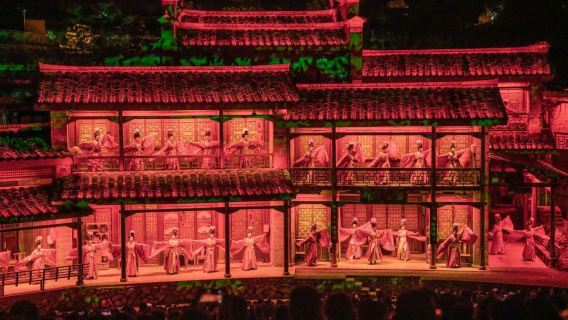
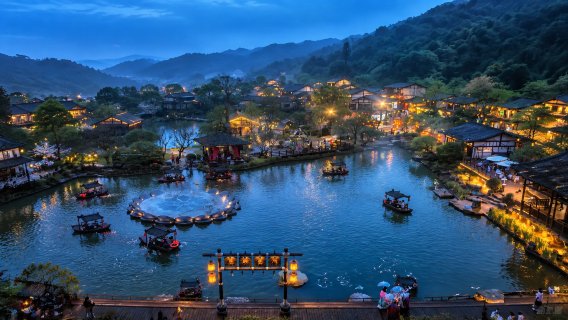
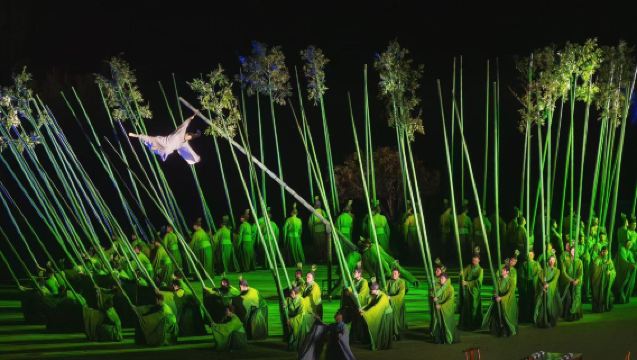
Half-day tour of Wuyishan Impression Da Hong Pao live performance: Experience millennia of tea culture and folk customs
󱌍
5.0/5
· 5 reviews· 48 booked
Duration: 1 hr
English
Instant confirmation
Book now for tomorrow
FromUS$34.05
Shangrao to Gexian Village private 1-day tour (includes admission ticket)
󱌍
Duration: 9.5 hrs
English
Free cancellation
Instant confirmation
Book now for tomorrow
10% off
Limited-time sale
FromUS$122.40US$136.01
Fujian Wuyishan "Impression Da Hong Pao" (Live view performance + Wuyishan nightlife + Nine-bend danxia)
󱌍
5.0/5
· 1 review· 22 booked
Duration: 3 hrs
English
Free cancellation
Book now for tomorrow
FromUS$35.65
World dual heritage Wuyishan | Jiuquxi Bamboo Rafting · sightseeing bus shuttle · intangible cultural heritage tea culture experience
󱌍
FromUS$35.65
[Fujian] "Moon Over Wuyi" Performance (270° panoramic spectacle + Zhu Xi's ritual music ceremony)
󱌍
FromUS$28.16
[Fujian] "Moon Over Wuyi" Performance show/concert ticket (immersive water stage + Song Dynasty painting elements)
󱌍
4.0/5
· 1 review
Duration: 1.1 hrs
English
Free cancellation
Instant confirmation
FromUS$28.16

Featured Day tours in Pucheng

View all Day tours
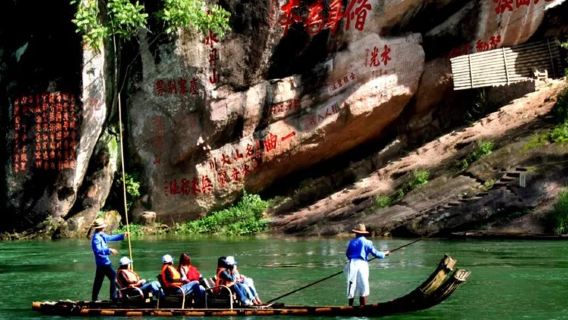
Wuyishan Classic Spots +Jiuquxi Bamboo Raft 1-Day Tour(Optional Impression Dahongpao Show)
Trip.Select
󱌍
4.8/5
· 5 reviews· 49 booked
Duration: 15.4 hrs
English
Free cancellation
Instant confirmation
Book now for tomorrow
FromUS$55.51
Wuyishan + Nine-Bend Stream Bamboo Rafting Day Tour (Optional Impression Dahongpao Show)
Trip.Select
󱌍
Duration: 14.7 hrs
English
Free cancellation
Instant confirmation
Book now for tomorrow
FromUS$60.97
Door-to-door pickup | Shangrao Lingshan 1-day tour + cable car + sky mirror + strange rocks and sea of clouds
󱌍
Duration: 8 hrs
English
Free cancellation
Instant confirmation
Book now for tomorrow
FromUS$53.63
From Shangrao: 1-day tour to Wuyishan [Private charter | Chinese/English guide]
󱌍
FromUS$335.72
Pucheng Today's weatherFoggy 15-24℃
Pucheng weather for the next 2 days11/16: 15-21℃, 11/17: 13-20℃

Free things to do in Pucheng

What travellers say about Pucheng

user-avatar
Anonymous userOctober 14, 2026
5.0
My second visit to West Lake was great; the boat tour was excellent. The dock was easy to find, the staff were very friendly, provided clear explanations, and helped with any issues. There were also sightseeing buses, which were nice but a bit pricey. Taking the boat tour and then walking around was both perfectly fine.

West Lake

user-avatar
小马儿小驴儿November 15, 2026
5.0
Wuyishan truly lives up to its reputation as a World Heritage Site, with its Danxia landforms and emerald waters creating a picturesque landscape. A bamboo raft ride on the Nine Bend Stream offers crystal-clear waters, with towering peaks appearing one after another, while the boatman recounts local legends, creating a tranquil and idyllic experience. Climbing Tianyou Peak, though the stone steps are steep, offers a breathtaking and expansive view overlooking the winding stream from the summit. Tea gardens stretch across the mountains, filling the air with the aroma of rock tea, while cultural stone carvings blend seamlessly with the natural scenery. This place possesses both the natural charm of the mountains and the profound cultural heritage of tea, offering a relaxed pace perfect for a tranquil and leisurely journey, well worth a special trip.

Wuyishan National Park

user-avatar
Anonymous userOctober 5, 2026
5.0
Ershibadu Ancient Town is located at the junction of Zhejiang, Fujian, and Jiangxi provinces, known as "one foot in three provinces." Its architectural style blends Huizhou style with characteristics of the three provinces, featuring white walls, black tiles, and exquisite wood carvings. Recommended tour route: Entrance → Agricultural Museum → North Gate → Military Official's Office → Wenchang Palace → Dialect Surname Celebrity Hall → Military Intelligence Bureau Female Agent Exhibition Hall → Longxing Money Exchange, approximately 2 hours in total. Highlights include the well-preserved Wenchang Pavilion, the Dialect Hall, and the Qing Dynasty-style wood carvings on the money exchange's gate tower. The area is relatively uncommercialized. The scenic area is small. If time permits, it can be combined with visits to nearby Xianxia Pass or Qingyang Mao Clan Cultural Village. Overall, it is suitable for tourists who enjoy history and culture and a leisurely pace. Driving is recommended as parking is convenient.

Nianbadu Ancient Town

user-avatar
点点唐唐October 20, 2022
4.0
I went to Xitou Village for the first time in 2020 and was attracted by the quietness and simplicity there. I went to Xitou Village again in 2022. Because of the repeated epidemic, there were not many people. Walking into the village, local specialties are sold all the way. Every family is similar. Because there is not much rain this year, the water in the stream is small, so you can go in the water at noon. But it is very cold at night, so you have to wear a thick coat.

Xitou Village

user-avatar
F.May.TauNovember 13, 2026
5.0
This stay exceeded my expectations. The location is excellent and convenient; the room was thoroughly cleaned and odor-free; the bathroom had a separate shower and toilet, stable water pressure and temperature, and good soundproofing, making it very quiet at night. The staff were friendly and responsive. The breakfast had a good variety of options and was reasonably tasty. Overall, the facilities and service were excellent, and I recommend staying here.

Wangxian Valley

user-avatar
Anonymous userNovember 13, 2026
5.0
The cable car from the East Gate of Huangshan takes half an hour to get up the mountain. Sitting on it, you can enjoy a clear and direct view of the beautiful scenery below. The scenery along the way is beautiful, and the overall effect is very good. It saves time and effort, as well as the physical strength and time of hiking up the mountain. The experience and comfort are excellent.

Mount Huangshan Scenic Area

user-avatar
Anonymous userNovember 14, 2026
4.0
I've been there. It's a great place to relax, but it's very crowded, even in the off-season. Popular spots have long queues, and some inconsiderate people just keep taking pictures without considering those waiting behind them. There's no time limit; they could learn from Wangxian Valley and set time limits for taking photos at popular spots.

Wuyuan Huangling Scenic Area

user-avatar
慢热°FNovember 15, 2026
4.0
If you're planning a photoshoot, I strongly advise against going on a rainy day. There are many stairs, and the steps are uneven with puddles. Your clothes will get wet, and so will your shoes and other clothing. There were still 20,000 people on a Saturday. On a sunny day, it will be even more crowded, but there will be more photogenic spots. If you're not planning a photoshoot, don't want to take pictures, and don't need to spend that much time there, just get an evening ticket. It's not very worthwhile.

Ge's Fairy Village

user-avatar
135***16November 14, 2026
5.0
The Feilai Peak Sculptures are located on the northern slope of Feilai Peak in front of Lingyin Temple in Hangzhou, Zhejiang Province, nestled among cliffs and caves. The complex contains over 380 statues dating from the Five Dynasties to the Yuan Dynasty, making it the largest grotto sculpture group in Zhejiang Province. The group's construction began in 951 AD with the carving of the "Three Western Saints" niche in Qinglin Cave. It comprises 115 niches with over 390 statues and more than 330 cliff inscriptions, encompassing both Han and Tibetan artistic styles.

Lingyin Feilai Peak Scenic Area

user-avatar
Miguel KrekaNovember 4, 2026
4.0
There was no real guide at the pinned location, only two person that gave me a qr code to picture it so i could have it for the next temple visit. Also the lady that will accompany to the gate to get through temple security check will tell you that you have to buy flowers to get inside the temple. Flowers cost 39¥. Everything else beside the guide persons was incredible. Totally worth visiting

Lingyin Temple

Trip Moments in Pucheng

Popular cities near Pucheng

Frequently asked questions

When choosing a tour, start with how much time you have and the kind of experience you're looking for. Trending options right now include Wuyishan Classic Spots +Jiuquxi Bamboo Raft 1-Day Tour(Optional Impression Dahongpao Show), Wuyishan + Nine-Bend Stream Bamboo Rafting Day Tour (Optional Impression Dahongpao Show), and Door-to-door pickup | Shangrao Lingshan 1-day tour + cable car + sky mirror + strange rocks and sea of clouds. Check the real-time availability and itinerary before you book.

As of November 15, 2026, the reference price for day tours and activities in Pucheng is around USD 53.63 – USD 404.59. Rates vary by duration, group size, transport, tickets, meals, and any special admission requirements. Before you book, please confirm the billing currency and whether the price is quoted per person or per group.

Get help anytime, anywhere within 30 secondsContact customer support

Change and cancellation policies vary by attractions and tours. Please check the product details page for more information.

Ticket prices may vary between weekdays and weekends, as well as during peak and off-peak seasons. When booking with Trip.com, you can also use Trip Coins to get extra savings. For more tips on booking discounted tickets, please visit Trip.com for the latest information.