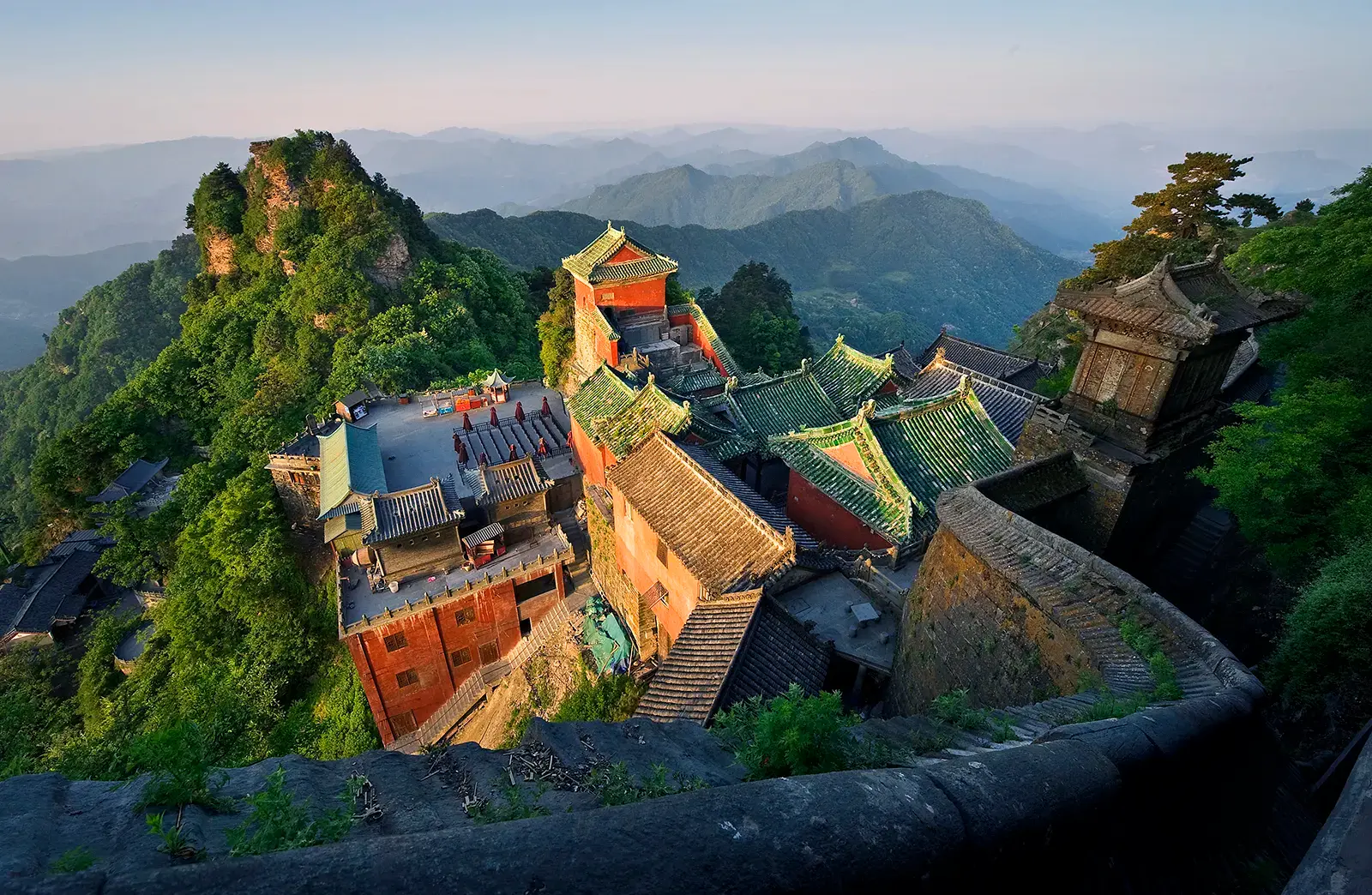
Things to do in Wudang Mountains
Explore top experiences
Top 10 attractions in Wudang Mountains


Experiences you can't miss in Wudang Mountains
Featured Culture & history in Wudang Mountains
View all Culture & history
5.0/5
· 1 reviewFree cancellation
Book now for tomorrow
FromTWD 12,789
Free cancellation
Instant confirmation
Book now for tomorrow
FromTWD 8,795
More things to do
Wudang Mountains Today's weatherFoggy 11-18℃
Wudang Mountains weather for the next 2 days11/7: 5-21℃, 11/8: 7-17℃
Free things to do in Wudang Mountains

What travellers say about Wudang Mountains

爱家小胡November 4, 2026
5.0
Wudang Mountain is a place of great beauty. The 80-kilometer winding mountain road from the visitor center to the scenic area is served by shuttle buses – a service that deserves praise, as the drivers are highly skilled. This Taoist holy site boasts a rich cultural heritage and is well worth a visit.
Wudang Mountains

M31***95October 10, 2026
5.0
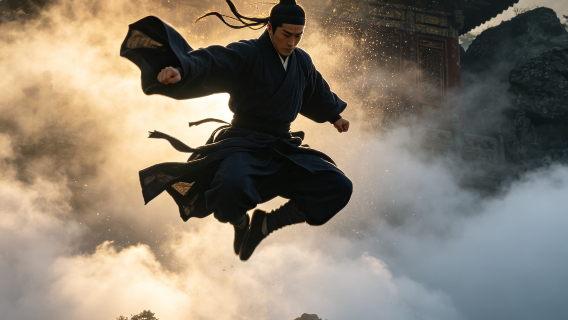
Visit the immersive performance "A Dream of Wudang" during the National Day holiday! The stage design and special effects are stunning, with high-altitude wire work and Tai Chi performances creating a truly immersive atmosphere. The story recounts the history of Wudang's construction. The only downside is the crowds during the holiday; early arrival is recommended.
Wudang Yimeng Scenic Area

山风小甜饼August 13, 2025
5.0
Wudang Golden Summit is the most worthwhile place to visit in Wudang Mountain. Especially after climbing the steep stairs with trembling legs, listening to the crows' calls, and seeing the small house on the top of the mountain, you will feel emotional. What's more, the Golden Summit is built with oriental aesthetics, very beautiful and noble.
Wudang Mountain Scenic Area - Golden Summit

涧松听雨July 8, 2025
5.0
Nanyan Palace is an extremely important and distinctive part of the ancient buildings in Wudang Mountain. It enjoys a high reputation, mainly based on the following points:
1. Excellent geographical location and breathtaking architectural wonders:
• "Hanging Temple"-like steepness: The biggest charm of Nanyan Palace is that it is built on a cliff. Its main building is built on the mountain and embedded between the cliffs. In particular, the famous "Dragon Head Incense" (also known as Dragon Head Stone) extends about 3 meters from the cliff and overlooks the deep valley. It is extremely breathtaking and is one of the most iconic landscapes in Wudang Mountain. This "fairy mountain and pavilion"-like architectural art embodies the ancient people's philosophical thought of "harmony between man and nature" and extraordinary engineering technology.
• Magnificent natural scenery: Located at the southern foot of Wudang Mountain, it has a wide view. From here, you can see the Golden Summit (Tianzhu Peak) from a distance, overlooking the mountains and valleys. When surrounded by clouds and mist, it is like a fairyland.
2. Profound Taoist cultural heritage and historical value:
•The core place of Zhenwu Emperor belief: It is said to be the "holy land" where Zhenwu Emperor attained enlightenment and ascended to heaven, and it has a high status in Taoist legends. The Liangyi Hall and Tianyi Zhenqing Palace Stone Hall in the palace are important places for Taoist activities.
•Royal style: As a Taoist palace built by the royal family of the Ming Dynasty (built by imperial order in the 10th year of Yongle), its architectural regulations are not as grand as Taihe Palace and Zixiao Palace due to terrain restrictions, but it still reflects the solemnity and style of royal architecture.
•World Cultural Heritage: As a core component of the "Wudang Mountain Ancient Buildings", it was listed in the "World Heritage List" by UNESCO in 1994.
3. Exquisite architectural art and stone carvings:
•Stonework model: Tianyi Zhenqing Palace is a stone hall with an imitation wooden structure, all made of stone carving and mortise and tenon joints, with exquisite craftsmanship. It is a masterpiece of stone structure architecture in the Yuan Dynasty and has great historical and artistic value.
•Rich Taoist stone carvings: There are many exquisite cliff carvings, steles, and stone carvings related to legendary stories such as "Prince Lying on the Dragon Bed" preserved inside and outside the palace, which are rich in cultural connotations.
•Unique palace layout: Due to the terrain restrictions, its layout is not the traditional central axis symmetry, but cleverly follows the mountain terrain, with a unique style.
4. Important pilgrimage and tourism nodes:
•Important starting point/passing point for climbing the Golden Summit: For tourists who hike to the Golden Summit, Nanyan Palace is a must-go place and an important rest and supply station.
•Core attractions are concentrated: In addition to Longtouxiang and Tianyi Zhenqing Palace, there are also Nantianmen, Xuandi Temple Ruins, Feisheng Rock, Dressing Table, Langmei Temple and other attractions densely distributed with rich content.
Some aspects that need attention (not negative, but objective reminders):
•The terrain is steep and you need to be cautious when visiting: Especially the road to Longtouxiang is narrow and steep, and you need to pay attention to safety when there are many people. In order to protect the cultural relics and tourists' safety, it is now forbidden to burn incense on the Dragon Head Stone (you can burn incense in the newly built incense burner next to it).
• Some buildings are ruins: They have been damaged in history (such as thunder and fire, war), and some buildings (such as the Xuan Emperor Hall) are now ruins, but you can still feel the scale and atmosphere of the past.
Nanyan Palace

云石雨September 3, 2023
4.0
The Dragon Head Incense is a stone beam with a dragon carving beside the cliff outside the "Tianyi Zhenqing Wanshou Palace Stone Hall" in Nanyan. The stone beam is suspended 2.9 meters in the air and is about 30 centimeters wide. There is a coiled dragon carved on it, and an incense burner is carved on the top of the dragon head. Therefore, it is known as "the best incense in the world - Dragon Head Incense". This is one of the most beautiful landscapes in Wudang Mountain. You must go and see it.
Dragon Head Incense

浪漫的追August 8, 2025
5.0
玉虚宫,隐匿在武当山脚下的宫殿,真的太震撼了!玉虚宫保存着永乐年间的“三朝五门”建制。玉宫门的门钉多为横九路、竖九路,九路门钉是皇家宫殿独有的标识,象征着皇权的至高无上。据说武当山总共就12座御碑亭,玉虚宫就有4座。
Yuxu Palace
鲲哥爱旅游July 19, 2024
5.0
The Purple Sky Palace is one of the most complete existing palaces in Wudang Mountain. It is located at the foot of Zhanqi Peak, northeast of Tianzhu Peak, the main peak of Wudang Mountain. It was first built during the Xuanhe period of the Song Dynasty. After being rebuilt and expanded during the Yuan, Ming and Qing dynasties, it has formed its current size. The Purple Sky Palace is not only famous for its exquisite architecture and profound cultural connotations, but also for its unique geographical location, and is known as a Feng Shui treasure land. The surrounding peaks naturally form a throne shaped like two dragons playing with a pearl, making the Purple Sky Palace particularly sacred and solemn.
Zixiao Palace

水漫三楼January 21, 2026
5.0
The first major transfer point for the internal shuttle bus service within the Wudang Mountain Scenic Area is Taizipo, whose core attraction is Fuzhen Temple. Legend has it that when Emperor Yongle (Zhu Di) of the Ming Dynasty was building the Forbidden City in the north and constructing the Wudang Mountains in the south, he revered Zhenwu the Great as the place where he practiced as a prince. The Nine-Bend Yellow River Wall, the Patriarch Hall, and the Five Clouds Tower are must-see attractions in the Taizipo Scenic Area. The Five Clouds Tower's top floor, with its unique twelve-beam pillar structure, is particularly remarkable and rarely seen in the world, leaving visitors in awe.
Taizi Slope

玩嗨了January 4, 2021
5.0
The Wudang Museum houses the precious cultural relics of Wudang Mountain and the origin and history of Wudang Kung Fu, and introduces the history and culture of Wudang Mountain in detail. It is a good historical review after visiting Wudang Mountain. After visiting the museum, I feel very touched and meaningful.
Wudang Museum

桃子妖妖妖October 28, 2026
5.0
Qiongtan Temple is the most important transit point in Wudang Mountain.
If you want to reach the Golden Summit, this is the most important transit point in Wudang Mountain, bar none.
Qiongtan is located southeast of Tianzhu Peak, where the Golden Summit is situated. It is a rare plateau in the mountain, said to be the place where Zhenwu the Great was bestowed his title after achieving enlightenment. From Qiongtan, you can see the Golden Summit in the distance.
Qiongtan is both the starting point of the Wudang Mountain passenger cableway and the starting point of the ancient sacred path leading to the Golden Summit. It can be reached directly by scenic shuttle bus and is an important tourist distribution center in Wudang Mountain. The shuttle bus ride from the visitor center at the foot of the mountain to Qiongtan takes about one hour. From Qiongtan to the Golden Summit, the cable car takes only 6 minutes, while the hike involves climbing 1800 steps and takes approximately 2-3 hours.
Originally, three Taoist temples—Upper Temple, Middle Temple, and Lower Temple—were built on Qiongtan Terrace. Their original names were Baiyuguitai, Ziyue Qiongtan, and Yulexiaotai, respectively. The Middle Temple is the best preserved of the three, currently containing a Yuan Dynasty stone hall and 17 rooms including the main hall, Dragon and Tiger Hall, and side halls rebuilt during the Qing Dynasty. The remaining 100-plus rooms were renovated in 1999. The Upper and Lower Temples are essentially ruins now.
Due to time constraints, I did not go inside. The entrance to the Middle Temple is the starting point of the hiking trail; I recommend it to anyone walking to the Golden Summit.
Three Views of Qiongtai
Trip Moments in Wudang Mountains


Popular cities near Wudang Mountains


Frequently asked questions
How can I contact Trip.com customer support?
Get help anytime, anywhere within 30 secondsContact customer support
Can I change or cancel my booking?
Change and cancellation policies vary by attractions and tours. Please check the product details page for more information.
How can I get discounted prices?
Ticket prices may vary between weekdays and weekends, as well as during peak and off-peak seasons. When booking with Trip.com, you can also use Trip Coins to get extra savings. For more tips on booking discounted tickets, please visit Trip.com for the latest information.