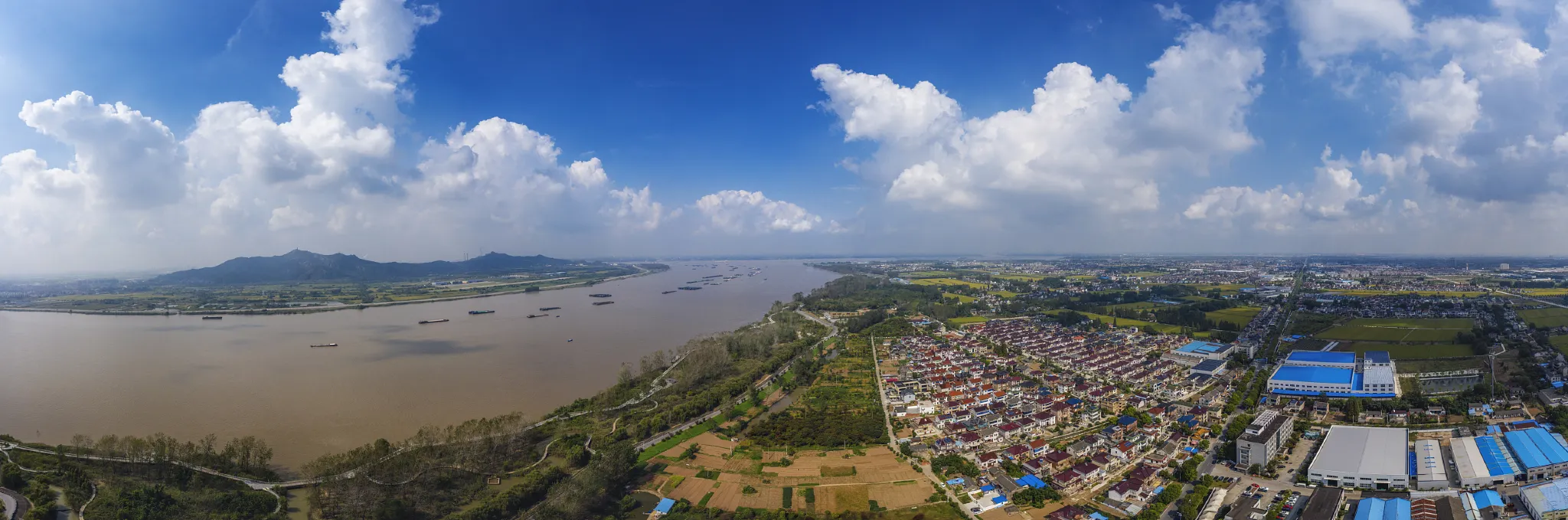
Yangzhong

Things to do in Yangzhong

Search attractions or local attractions & tours
Search

Explore top experiences

Top 10 attractions in Yangzhong

View all Attractions
Slender West Lake
2026 Global 50 - Spring Outings

Slender West Lake

8.5
4.7/5
83.8k reviews

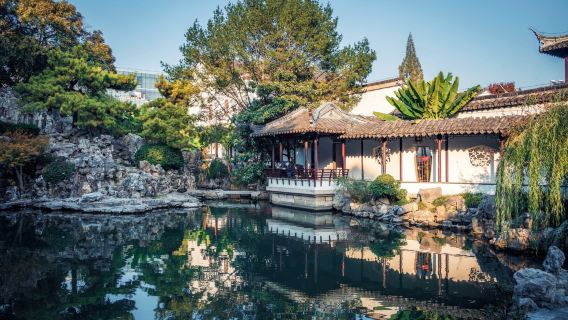
"In March when flowers bloom, head to Yangzhou." When visiting Yangzhou in spring, a trip to Slender West Lake is a must. This narrow stretch of waterway offers the perfect blend of natural beauty and cultural heritage. Stroll along the banks to admire scenic views, explore historic pavilions adorned with classical poetry and paintings, or cruise the lake by boat to experience the leisurely pleasure Emperor Qianlong once enjoyed during his royal visits. The attraction is quite expansive, stretching from the Great Rainbow Bridge in the southeast all the way north along the lake to Guanyin Mountain, passing dozens of attractions along the way. There are four main entrances (east, south, west, and north), with most visitors starting their tour at the south entrance on Great Rainbow Bridge Road. This renowned lakeside garden boasts breathtaking natural views. In spring, the area is shaded by lush willows and adorned with camellias, pomegranates, azaleas, and peach blossoms, attracting visitors from across the country to enjoy the seasonal blooms. For centuries, countless literati have lingered here, composing poetry and creating paintings that left behind numerous artistic treasures and stories. The site also features many landscape structures ingeniously designed to harmonize with its natural surroundings. The Five Pavilion Bridge in Shugang Slender West Lake Scenic Area is the iconic attraction with over 200 years of history. Featuring five wind pavilions atop, each of the bridge's fifteen arches cradles a moon during full moon nights. Another renowned attraction is the Twenty-Four Bridge, inspired by Du Mu's poetic line "Where is the jade-like beauty teaching flute-playing on the moonlit Twenty-Four Bridge?" While the original bridge no longer exists, visitors can admire its reconstructed version today. This was also a stop during Emperor Qianlong's southern tours in the Qing Dynasty. Architectural views like the Great Rainbow Bridge, Slender West Lake Scenic Area's Fishing Terrace, White Pagoda, and the Twenty-Four Bridges' Xichun Platform all bear inseparable historical anecdotes connected to Emperor Qianlong. During summer nights, the illuminated pavilions and moonlit reflections on the lake create a magical atmosphere. The nightlife experience here is entirely boat-based, offering a relaxing way to beat the summer heat while enjoying gentle lake breezes.

Yangzhou · 39.6 km from Yangzhong
He Garden
Selected for Best Things to Do in Jiangsu

He Garden

7.5
4.7/5
13.9k reviews

He garden, originally named Jixiao villa, is the crowning masterpiece among Yangzhou's private gardens. It is a national key cultural relics protection unit and a national AAAA-level tourist attraction, and was named among the first batch of national key parks alongside Beijing's Summer Palace and Suzhou's Humble Administrator's Garden. The most distinctive architectural feature of He garden is its 1,500 m double-decker corridor, renowned as the "first corridor under heaven," which creates both the convenience of interconnected pathways and the beauty of winding variations. Experts consider it the prototype of China's modern overpasses. Another highlight is the "first mountain under heaven" in Pianshi mountain house, a unique rockery masterpiece created by the great painter-monk Shitao. Famous scholar Yu Qiuyu remarked that in the history of Chinese gardening, Pianshi mountain house is something to look up to. Contemporary experts in ancient architecture and gardens like Tong Jun, Liu Dunzhen, Pan Guxi, Luo Zhewen, and Chen Congzhou have all praised He garden's unique gardening techniques, calling it "a solitary example among Jiangnan gardens." Mr. Luo Zhewen even inscribed it as "the first garden of the late Qing dynasty." Stepping into He garden is like entering a magnificent historical and cultural scroll. It reveals the complex psychological journey of a legendary figure who was simultaneously an official, salt merchant, recluse, and educator. It vividly portrays the rise and fall of an aristocratic family transitioning from feudalism to enlightenment, and it brings to life the rich supplementary stories of China's turbulent modern history.

Yangzhou · 36.8 km from Yangzhong

Experiences you can't miss in Yangzhong

Featured Culture & history in Yangzhong

View all Culture & history
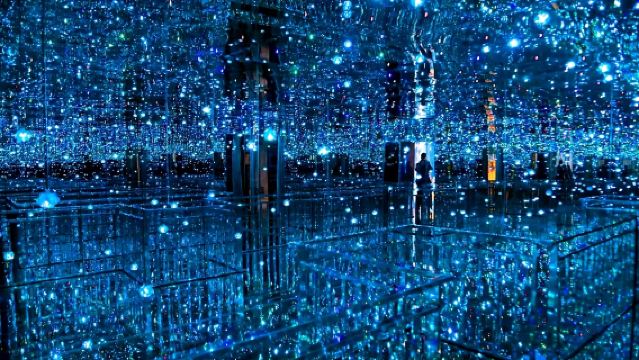
Nanjing Van Gogh Star Sky Art Museum (immersive 4D light show + sunflower field tour)
󱌍
4.0/5
· 7 reviews· 83 booked
Duration: 2 hrs
English
Free cancellation
Instant confirmation
FromSEK 68.00
Nanjing Private Guided Day Tour: Dr. Sun Yat-sen's Mausoleum, The Ming Tomb, and Meiling Palace
󱌍
FromSEK 890.00
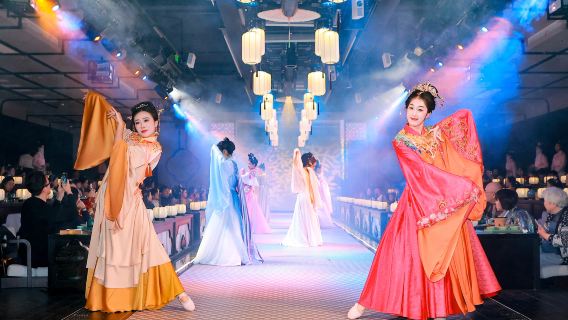
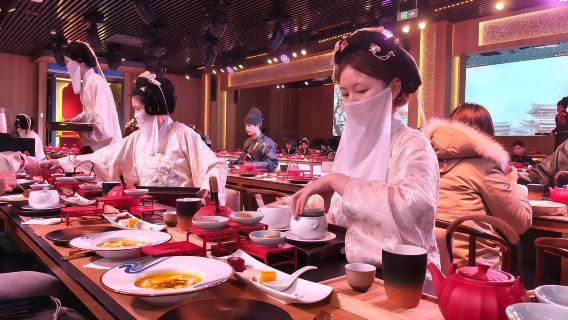
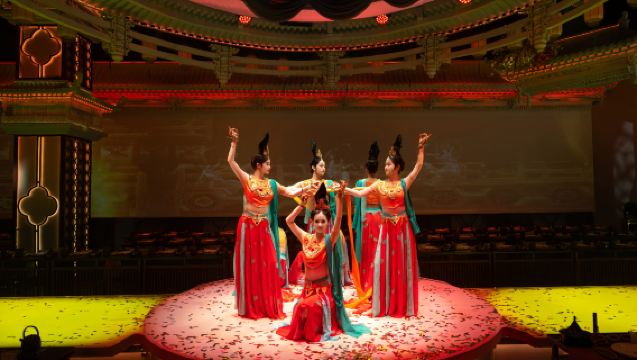
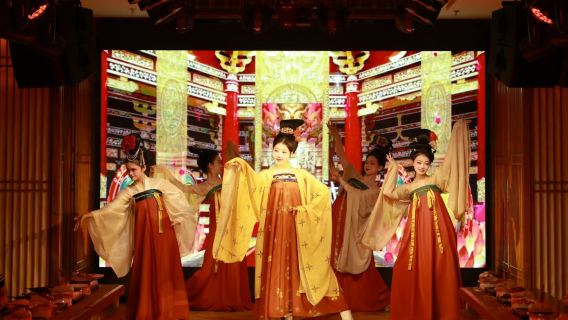
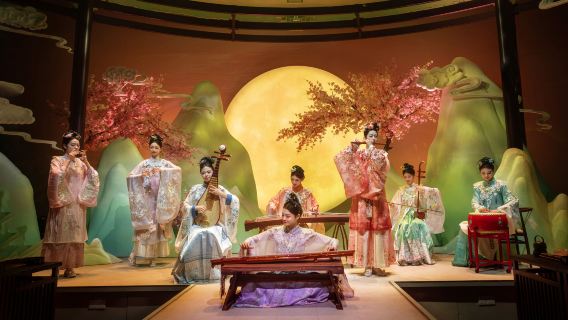
Nanjing Yanle Feast Under Heaven | Immersive Six Dynasties Royal Banquet Show
󱌍
Duration: 2 hrs
English
Free cancellation
Instant confirmation
Book now for tomorrow
FromSEK 809.00
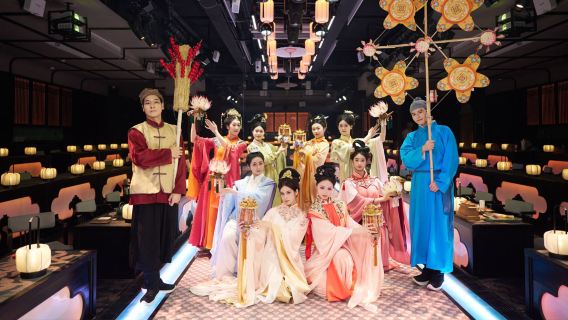
Nanjing Jinling Menghua: Hanfu Styling, Six Dynasties Dinner Show & Jinling Cuisine
󱌍
Duration: 2 hrs
English
Free cancellation
Instant confirmation
FromSEK 450.00
Modern urban nightlife in Nanjing | A 2-hour night tour of Xinjiekou to understand why Xinjiekou is so impressive
󱌍
FromSEK 853.00
Yanyue Feast Under Heaven, Ancient Jinling Banquet with Optional Hanfu & Live Performance
󱌍
FromSEK 959.00

Featured Day tours in Yangzhong

View all Day tours
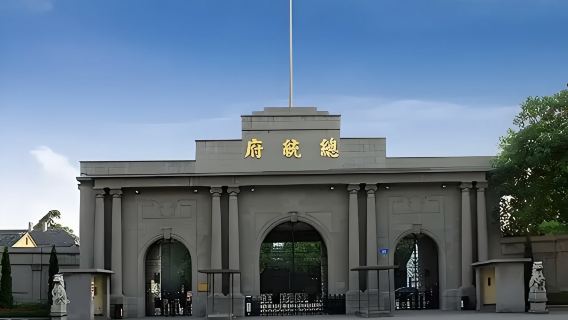
Nanjing Presidential Palace + Niushou Mountain + Dr. Sun Yat-sen's Mausoleum + Meiling Palace + Nanjing Confucius Temple 1-Day Tour
Trip.Select
󱌍
4.9/5
· 14 reviews· 70 booked
Duration: 10.2 hrs
English
Free cancellation
Instant confirmation
FromSEK 2,474.00
Presidential Palace + The Ming Tomb + Meiling Palace + Lingyuan Road + Open-Air Music Hall + Nanjing Confucius Temple 1-Day Tour
Trip.Select
󱌍
5.0/5
· 11 reviews· 35 booked
Duration: 9 hrs
English
Free cancellation
Instant confirmation
FromSEK 2,474.00
Flexible Private Day Tour of Nanjing City Highlights
Trip.Select
󱌍
5.0/5
· 4 reviews· 21 booked
Duration: 11.3 hrs
English
Free cancellation
Instant confirmation
Book now for tomorrow
FromSEK 554.00

Featured Food & drink in Yangzhong

View all Food & drink

Yangzhong Today's weatherLight rain 14-18℃
Yangzhong weather for the next 2 days11/14: 11-18℃, 11/15: 9-19℃

Free things to do in Yangzhong

What travellers say about Yangzhong
user-avatar
AlfredYDYNovember 1, 2026
5.0
As a descendant of a veteran naval officer, I feel extremely honored to be able to visit and see my country's first-generation replenishment ship and destroyer. I also forwarded the photos to the veteran, who expressed great satisfaction.

Taizhou Navel Vessel Cultural Park

user-avatar
152***20November 12, 2026
4.0
During my visit to the Slender West Lake scenic area in Yangzhou, I happened to be there during the autumn chrysanthemum exhibition. Seeing all kinds of chrysanthemums vying for attention, displaying various shapes and forms, was truly a feast for the eyes. The scenery of the scenic area is beautiful. We first took a pleasure boat tour and then walked back, slowly experiencing the beauty of Slender West Lake. The graceful and charming scenery of this Jiangnan water town was delightful and unforgettable.

Slender West Lake

user-avatar
YoYo_D1l9r9b1June 2, 2026
5.0
The Carved Building at the Port is located in Gaogang, Taizhou. It's a private residence built during the Qing Dynasty. The building isn't large, but it's covered inside and out with wood and brick carvings. The beams and windows are decorated with scenes from operas and auspicious patterns. The garden has artificial hills and ponds, and a walk around it takes about an hour. The Jinshi Residence and the Sifang Building are also nearby and can be visited together.

Kouan Wood Carving Mansion Scenic Area

user-avatar
Anonymous userNovember 12, 2026
5.0
A combined ticket offers a 10 yuan discount. Both Ge Garden and He Garden exceeded my expectations. I originally thought they would be small gardens, but Ge Garden is surprisingly large, unique, and beautiful—definitely worth a visit. The Slender West Lake scenic area is also quite large.

Geyuan Garden

user-avatar
Anonymous userNovember 12, 2026
5.0
The only truly amazing thing was that same-day tickets were cheaper than booking tickets for the following days. It was incredibly good value – a huge courtyard with a second floor, perfect for exploring. The signs inside were very clear, and even in the off-season, it was still quite crowded, creating a lively and charming atmosphere. Definitely worth a visit.

He Garden

user-avatar
Anonymous userNovember 12, 2026
5.0
Hiking Beigu Mountain alone for 30 yuan during the off-season is a great deal. The mountain is only 55 meters high, not tiring, but the stone steps of the Dongwu Ancient Road can be a bit strenuous, so wear comfortable shoes. Enter from the South Gate and follow the Dongwu Ancient Road—Iron Pagoda—"The First Landscape Under Heaven" stone inscription—Ganlu Temple—Beigu Tower. The whole route takes about 1.5 hours without backtracking. Climbing Beigu Tower is a must. You can get free shoe covers at the entrance. The moment you reach the top, the Yangtze River unfolds beneath your feet, and you instantly understand Xin Qiji's line, "The scenery of Beigu Tower is breathtaking." It's very quiet to stroll alone, with few crowds.

Zhenjiang Beigushan Scenic Spot

user-avatar
🍭宝爷🍭因材施教November 11, 2026
5.0
A guided tour of the Grand Canal of China is a must, and you need to allow sufficient time for it. Taking your time to explore the exhibits and listening to the guided tour of Hall 1 requires at least an hour and a half, as the guided tours delve into the fundamental historical context, making it more time-consuming than a cursory glance. Thank you to Ms. Qiao Meihong for her meticulous and professional explanation; I immediately grasped the Chinese development philosophy—a mindset that connects everything. Moreover, she was very considerate of the elderly and children in our group, ensuring they could also enjoy the exhibits comfortably.

China Grand Canal Museum

user-avatar
老钱贝勒October 31, 2026
4.0
Visit Jiaoshan to see the "Epitaph for the Buried Crane," considered the ancestor of large-character calligraphy. The Jiaoshan Stele Forest (Baomoxuan) is located on Jiaoshan Mountain in the heart of the Yangtze River in Zhenjiang. It is the premier stele forest south of the Yangtze River, and is considered on par with the Xi'an Stele Forest. Western Slope Cliff Inscriptions: Stretching over 200 meters along the riverside cliff, there are more than 80 inscriptions from the Six Dynasties to the Song and Qing Dynasties, including Tang Dynasty verses from the Diamond Sutra, an inscription by Mi Fu, and Lu You's inscription on viewing the "Epitaph for the Buried Crane" in the snow. Courtyard and Corridor Display of Steles: Over 400 steles spanning the Six Dynasties, Tang, Song, Yuan, Ming, Qing, and Republican periods, encompassing regular, cursive, clerical, and seal scripts. Treasure of the Museum: The "Epitaph for the Buried Crane" The "Epitaph for the Buried Crane" is a cliff inscription commemorating the burial of a crane, praised by Huang Tingjian as the ancestor of large-character calligraphy. Origin of the Original Stone: Originally carved on the cliff face of Leihongyan at the western foot of Jiaoshan Mountain, it is said to have been carved in the thirteenth year of the Tianjian era of the Southern Liang Dynasty (514 AD). At some unknown time, the cliff collapsed and fell into the Yangtze River, where it remained submerged for over seven hundred years. In the fifty-first year of the Kangxi reign of the Qing Dynasty (1712 AD), Chen Pengnian raised funds to salvage the stone, retrieving five fragments containing 93 characters (11 of which are missing). These fragments were moved to Dinghui Temple and protected with a pavilion. Later, they were moved to a special room in the Stele Forest for preservation and exhibition, which is the original stone we see today. The original text contained approximately 178 characters, but only fragments remain today. Rubbings are divided into two categories: the precious Song Dynasty "pre-drowning rubbing" (rubbings before it fell into the water) and Qing Dynasty rubbings after it was recovered from the water. The mystery of the author (unresolved). The inscription uses only the pseudonym: "Written by Huayang Zhenyi, written by Shanghuangshan Qiao," without a real name. Several schools of thought have emerged regarding its authorship: Mainstream: Tao Hongjing of the Southern Dynasties (a recluse in Huayang, the most widely accepted). Others: Wang Xizhi, Gu Kuang of the Tang Dynasty, Wang Zan, etc., with ongoing academic debate. The calligraphic style is a landmark cliff inscription marking the transition from seal script and clerical script to regular script, blending the two styles with elements of running script: Brushwork: Primarily rounded strokes with concealed tips, occasionally using angular turns, with a strong seal script influence, seemingly soft yet powerful; Character structure: Broad and spacious, adapting to the shape of the stone, characters vary in size and posture, without deliberate uniformity; Composition: Rarely seen in ancient times, read vertically from left to right, elegant and unrestrained, with a lofty and ancient feel, reminiscent of a crane soaring into the distance; The "Shimen Ming" in the north and the "Yizhe Ming" in the south are considered twin peaks of cliff inscriptions, influencing countless calligraphers such as Huang Tingjian and Gong Zizhen. Huang Tingjian famously said: "No large characters surpass the 'Yizhe Ming.'"

Jiaoshan Mountain

user-avatar
E33***29November 11, 2026
5.0
Definitely worth a visit! The interplay of light and shadow, the perfect blend of ancient charm and modernity, makes you feel as if you've traveled through time along the ancient canal. The guide's explanations are also very vivid. The views from outside the cabin are great, but it's really cold this time of year! You'll need to wear plenty of layers. The views from inside the cabin are also nice, and it's warmer.

Yangzhou Ancient Grand Canal

user-avatar
Matt justMarch 13, 2025
5.0
• Unique natural landscape: Mount Qishan has rich ancient volcanic geological features, such as "36 cliffs" and "72 strange caves". The mountain is oriented north-south, and the main peak is about 200 meters above sea level. Although it is not towering into the clouds, its unique landform and rich vegetation make it a rare natural landscape. The mountains are lush with trees and the scenery varies in each season. After climbing to the top, you can overlook the confluence of the Yangtze River and Jiajiang River, as well as the thousands of acres of fertile fields and villages in Jingkou. When the weather is suitable, you can also see the sea of ​​clouds rolling, like a fairyland. • Profound history and culture: Mount Qishan has a long history. It was originally named Ruishan. Legend has it that Qin Shihuang believed that "Rui" had the aura of a king and changed its name. This is a battleground for military strategists. During the Opium War in 1840, the defenders of the Mount Qishan Pass Fort fought fiercely with the British army. Engels once highly praised the Battle of Zhenjiang. In addition, there is the Baoen Pagoda, the first tower of the Yangtze River, on the main peak, the thousand-year-old Shaolong Zen Temple at the foot of the mountain, and the Huayang Temple, which was built in the third year of Yuanjia in the Southern Song Dynasty. • Rich leisure and entertainment: At the foot of the mountain, there is the Tuju Mountain RV Campground, where you can experience RV accommodation, and the camp will also hold bonfire parties and other activities. In addition, there are geothermal hot springs here, and you can go to the hot springs to relax when you are tired of climbing. Moreover, the scenic spot is open to the public for free, and it is cost-effective. However, some tourists think that the mountain is small for people with a sports foundation, the environment on the top of the mountain is average, and there are many small vendors. But overall, the natural landscape and cultural landscape of the mountain complement each other, which can meet the needs of different tourists and is worth a visit. The highlights of Mount Qishan mainly include natural landscapes, historical and cultural relics, leisure and entertainment, etc. The following is a detailed introduction: Unique natural landscape • Ancient volcanic geological features: Located in the Yangtze fold belt under the Yangtze platform, there are layered or nearly layered volcanic rocks, including perlite, zeolite and bentonite, etc., with "36 cliffs" and "72 strange caves", which integrate the four characteristics of majestic, dangerous, beautiful and strange • Beautiful landscape: The mountain is steep and consists of Wufeng Mountain and Guishan Mountain, with an altitude of 285 meters and lush forests on the mountain. Climbing to the top, you can overlook the confluence of the Yangtze River and Jiajiang River, as well as the thousands of acres of fertile fields and villages in Jingkou, with a very broad view. Rich historical and cultural relics • Baoen Tower: Located on the top of Mount Qishan, it is the first tower seen from the Yangtze River from Wusongkou. It was built by Chen Guanyang, a Dongxiang person during the Chongzhen period of the Ming Dynasty, with the intention of encouraging diligence and gratitude. • Ancient Fortress of Qishan: During the Opium War in 1840, the first shot of the peripheral battle to defend Zhenjiang was fired here. It formed a pincer attack with Jiaoshan Fortress and Xiangshan Fortress. It was an important gateway to the throat of the Yangtze River. It was listed as a cultural relic protection unit of Jiangsu Province in 1982. • Shaolong Zen Temple: Located at the foot of Wufeng Mountain on the northern foot of Qishan Mountain, it was first built during the Baoli period of the Tang Dynasty. The temple has yellow walls and green tiles, and the sound of bells, drums and Buddhist chants is melodious. In 1983, it was listed as one of the top ten important temples in the province. • Huayang Temple: Built in the third year of Yuanjia in the Southern Song Dynasty, it was originally named Renjing Temple. It was renamed Huayang Temple in the eighth year of Zhenghe in the Northern Song Dynasty. It is the largest Taoist holy place in Dongxiang, Zhenjiang. It has the Wei Fashi Stele, which is an important cultural relic in the history of Chinese stone carving

Chui Mountain

Trip Moments in Yangzhong

Popular cities near Yangzhong

Frequently asked questions

When choosing a tour, start with how much time you have and the kind of experience you're looking for. Trending options right now include Nanjing Presidential Palace + Niushou Mountain + Dr. Sun Yat-sen's Mausoleum + Meiling Palace + Nanjing Confucius Temple 1-Day Tour, Presidential Palace + The Ming Tomb + Meiling Palace + Lingyuan Road + Open-Air Music Hall + Nanjing Confucius Temple 1-Day Tour, and Flexible Private Day Tour of Nanjing City Highlights. Check the real-time availability and itinerary before you book.

As of November 13, 2026, the reference price for day tours and activities in Yangzhong is around SEK 420 – SEK 2,474. Rates vary by duration, group size, transport, tickets, meals, and any special admission requirements. Before you book, please confirm the billing currency and whether the price is quoted per person or per group.

Get help anytime, anywhere within 30 secondsContact customer support

Change and cancellation policies vary by attractions and tours. Please check the product details page for more information.

Ticket prices may vary between weekdays and weekends, as well as during peak and off-peak seasons. When booking with Trip.com, you can also use Trip Coins to get extra savings. For more tips on booking discounted tickets, please visit Trip.com for the latest information.