Yu County

Things to do in Yu County

Search attractions or local attractions & tours
Search

Explore top experiences

Top 10 attractions in Yu County

View all Attractions
Yingxian Wooden Pagoda
No. 3 of Best Things to Do in Shanxi

Yingxian Wooden Pagoda

8.6
4.8/5
25.7k reviews

Yingxian Wooden Pagoda is centered on the Sakyamuni Pagoda of Fogong Temple. This pure wooden pavilion-style pagoda was first built in the second year of Qingning of the Liao Dynasty (1056) and later expanded and completed during the Mingchang period of the Jin Dynasty. It is the oldest surviving wooden pagoda in China. The pagoda has five visible stories, with concealed stories inserted between them, making nine stories in total, and stands about 67 m tall. Apart from the stone platform base on the first story, the main body of the pagoda is built entirely of wood, connected using traditional mortise-and-tenon craftsmanship, and the whole pagoda uses more than 50 types of bracket sets, demonstrating exquisite structural design. For more than nine hundred years, the pagoda has withstood many major earthquakes and modern artillery bombardment and still stands today. Due to the need for cultural relic protection, visitors may only visit the first floor inside the pagoda. There is a door on each of the north and south sides of the first floor. In the center of the inner chamber is a seated statue of Shakyamuni about 10 m tall, with a dignified face and a solemn expression. Looking up, you can see the exquisite coffered ceiling at the top. On the walls of the inner chamber are painted six Buddha images of Tathagata, and on the walls on both sides of the doorway are painted Liao Dynasty-style murals featuring Vajra, disciples, and offering figures, with bright colors and lifelike figures. Multiple plaques from various dynasties hang under the eaves of each story of the wooden pagoda, two of which were written by Ming emperors and are particularly striking. Under the south eaves of the fifth story hangs the plaque "Supreme Divine Craftsmanship," written by Zhu Di, Emperor Chengzu of Ming, when he climbed the pagoda during a northern military campaign in the Yongle era; under the south eaves of the fourth story hangs the plaque "Wonder of the World," written by Zhu Houzhao, Emperor Wuzong of Ming, when he ascended the pagoda to feast and reward his ministers after the Yingzhou victory in the Zhengde era. These plaques are not only calligraphic treasures but also record the intersection of the wooden pagoda with historical figures, together with the architecture itself forming a distinctive cultural view of the attraction.

China · Ying County
Prince Kung's Palace Museum
2026 Asia 100 - Best Things to Do

Prince Kung's Palace Museum

8.6
4.8/5
38.2k reviews

Prince Kung's Palace Museum is located by the Shichahai lakeside and stands as one of the best-preserved princely mansions from the Qing dynasty in Beijing. It originally served as the residence of Heshen, a powerful official during Emperor Qianlong's reign. After Heshen's downfall, the property was granted to Prince Qing Yonglin, and later to Prince Gong Yixin during the Xianfeng era, hence the name "Prince Kung's Palace." This mansion witnessed the entire decline of the Qing dynasty, earning the saying "One Prince Kung's Palace, half the history of the Qing dynasty." The complex features a mansion in the front and a garden at the rear, both laid out along central, eastern, and western axes with meticulous order and grandeur. The mansion consists of multiple siheyuan courtyards connected along a central axis: The central Yinan Hall, roofed with green glazed tiles, follows the specifications of a prince's main hall. On the eastern route, the two-courtyard complex of Ledao Hall and Duofu Pavilion once served as the residence of Heshen's son Fengshen Yinde and Princess Hexiao of the Gulun rank, with Ledao Hall later becoming Prince Gong's living quarters. The western route features delicate refinement, with Xijin Study standing out particularly – its partitions are entirely made of exquisitely carved nanmu wood, modeled after the Ning Shou Palace in the Forbidden City. This extravagant construction later became one of Heshen's listed crimes. At the mansion's end stands a two-story elongated building commonly called "Ninety-nine and a half rooms," its rear wall punctuated by a row of variously shaped decorative windows. Legend claims this was the treasure vault and marks the boundary between mansion and garden. The garden, named Cuijin Garden, was reconstructed by Prince Gong's commissioned artisans, blending the charm of Jiangnan landscapes with northern architectural layouts. Its three marvels are the Western-style gate carved from white marble, the stele inscribed with the character "Fu" (blessing) by Emperor Kangxi, and the grand all-wood theater. Hidden in the Secret Cloud Cave within rockeries, the "Fu" stele conceals wishes for numerous descendants, abundant harvests, talent, longevity, and blessings in its strokes—easily missed if one isn't attentive. The theater, an enclosed wooden structure, reportedly projects vocals throughout without amplification. Bat motifs dominate the garden's "blessing" theme: the Bat Pool, Bat Hall, and painted beams interplay harmoniously. From the Moon-Inviting Platform, visitors overlook the entire garden, while the Winding Stream Pavilion preserves the refined legacy of ancient floating wine cup poetry. When touring, you may first follow the central axis to see the mansion, then pass through the western gate to enter and appreciate the garden in detail. There are usually more travelers visiting during holidays, so it's advisable to start early and allow enough time to slowly savor the history and details of this princely mansion.

China · Beijing
Summer Palace
No. 13 of Best Things to Do in North China

Summer Palace

8.4
4.7/5
52.2k reviews

The Summer Palace was originally an imperial palace and garden of the Qing Dynasty emperors, also known as Qingyi Garden. Built on the foundation of Kunming Lake and Longevity Hill and following the design techniques of Jiangnan gardens, it is the largest and best-preserved imperial garden extant in China, with highly elegant scenery and many precious cultural relics, and is known as the "Museum of Royal Gardens." Area overview: The Summer Palace is grand in scale and can be divided into three areas: the political activity area centered on the Hall of Benevolence and Longevity; the imperial and empress living area, mainly comprising the Hall of Jade Ripples and the Hall of Joyful Longevity; and the garden sightseeing area, mainly along the Long Corridor, the Back Hill, and the West Area. About three-quarters of the park is occupied by Kunming Lake. Along the lakeshore are more than 100 buildings of various types—pavilions, terraces, towers, galleries, and waterside pavilions—totaling over 3,000 rooms, among which the Tower of Buddhist Incense, the Long Corridor, the Marble Boat, Suzhou Street, and the Seventeen-Arch Bridge are all household representative structures and unmissable places when visiting the Summer Palace. Boating on Kunming Lake: When visiting the Summer Palace, in addition to touring the resplendent halls and buildings, you can take a cruise within the attraction and boat on Kunming Lake, which is both relaxing and pleasant without missing the sightseeing. There are more than ten cruise docks in the park, including the Bafang Pavilion, Wenchang Pavilion, Hall of Jade Ripples, Cloud-Dispelling Hall, Shizhang Pavilion, Bronze Ox, Marble Boat, and South Lake Island docks, with 5 different types of cruise: pedal boats, rowboats, battery-powered boats, dragon boats, and large painted boats. Cruise prices and routes vary, so you can choose according to your needs. On-site food & beverages: The Summer Palace is quite large, and a complete visit takes at least 4-5 hours. If you get tired and hungry while strolling, you can sit down and recharge. There are three fast-food kiosks in the park, located at Zhichun Pavilion, the east nine rooms of Cloud-Dispelling Hall, and Shizhang Pavilion, mainly serving everyday meals and noodles at relatively reasonable prices. If you want to match the occasion, there is also a traditional restaurant in the park specializing in imperial court cuisine: Tingli Hall, where you can taste food with imperial court flavors, though the prices are somewhat higher than everyday dishes.

China · Beijing
Mutianyu Great Wall
No. 2 of Global Traveller-Picked Attractions in Beijing

Mutianyu Great Wall

8.4
4.8/5
38k reviews

The Mutianyu Great Wall is nestled among the Yanshan mountain ranges in Huairou, Beijing. It is one of the best-preserved and most picturesque sections of the Ming Dynasty Great Wall, renowned as "the finest segment of the ten-thousand-li Great Wall." Its construction traces back to the Northern Qi Dynasty's wall, with General Xu Da overseeing its reconstruction on the Northern Qi ruins during the early Ming Dynasty. The Mutianyu Pass was established in 1404 (the 2nd year of the Yongle reign), and further renovations were conducted under Tan Lun and Qi Jiguang during the Longqing era. The brick-and-stone walls and watchtowers seen today are largely Ming-era structures. Along the Ming Great Wall defense line, this section connects Juyong Pass to the west and Gubeikou to the east, serving as a vital military stronghold guarding the capital since ancient times. This section of the Great Wall has distinctive architectural features: the Zhengguan platform uniquely clusters three watchtowers together, with its gate unusually positioned on the eastern side rather than centrally—a rare design in Great Wall construction. Unlike most sections fortified only on the outer side, its crenellations line both flanks, reflecting strategic considerations for dual-front defense. Between the eastern vantage point at Dajiao Tower and Zhengguan platform, watchtowers stand densely within just a few hundred meters. From Dajiao Tower's summit, the wall snakes along mountain ridges amid verdant peaks, offering panoramic views and prime photography spots—a location featured in the film If You Are the One 2. This area has over 90% forest coverage on its mountains. In spring and summer, lush greenery fills the view; in late fall, red leaves blanket the hills; and in winter, snow drapes the landscape in silver—each season offers unique scenery. You can take a cable car or ropeway uphill, then switch to an open slide through the forest for a fun and effortless descent. Compared to other open sections of the Great Wall in Beijing, this area sees fewer crowds, making it ideal for a half-day visit. Walk leisurely between watchtowers and look back from different vantage points to capture varied perspectives of the wall and surrounding mountains.

China · Beijing
Shanxi Museum
2026 Asia 100 - Family-friendly Attractions

Shanxi Museum

8.1
4.8/5
3.5k reviews

"Five thousand years of history can be seen in Shanxi." Located on Binhe West Road in Taiyuan, the Shanxi Museum showcases the essence of Shanxi's cultural relics. The museum consists of a main building and four corner annexes, with the main building resembling both a dipper and a ding vessel, serving as the primary venue for travelers to view the collection. The main building has four floors. The first-floor lobby features a general service desk, while the second and third floors host thematic exhibitions on history and culture. The fourth floor showcases art-themed exhibitions, which together form the permanent displays of the Shanxi Museum. After entering the first-floor lobby, proceed to the second floor via the stairs to begin the historical journey themed "Soul of Jin." The cultural and historical thematic exhibition showcases the highlights of Shanxi's five-thousand-year civilization through numerous precious artifacts, ranging from ancient human relics to the rise and fall of Shanxi merchants during the Ming and Qing dynasties over five centuries. During your visit, several exquisite artifacts are not to be missed. The bird zun, a bronze ritual vessel from the Western Zhou period, was used in the ancestral temple sacrifices of the Jin marquis. The bird zun features an exquisitely crafted design with a phoenix as its main form. On the phoenix's back rests a small bird, serving as the handle for the vessel's lid. At the tail of the phoenix, an elephant is depicted, with its long trunk perfectly balancing the phoenix's two legs to form a stable tripod base. This artifact is a representative piece among the bronze collections in the museum. In addition, you can also admire: the Houma covenant texts, which are oath documents from the Spring and Autumn period used by the ministers of the Jin state; the lacquered wooden panel paintings, a painted screen from the Northern Wei dynasty depicting colorful stories from the "Biographies of Exemplary Women"; the white marble sarcophagus, a relic from the Sui dynasty, belonging to a tomb occupant who was a member of the Central Asian Yu people, with intricate carvings both inside and outside the sarcophagus, featuring figures with deep-set eyes, high noses, and black hair, characteristic of the Mediterranean Caucasian race. In the cultural thematic exhibition, you can also learn about the origins and development of Buddhism and traditional opera in Shanxi. The fourth floor of the main hall features an art thematic exhibition area. Among them, the "Timber and earth splendor" - ancient architectural art thematic exhibition showcases Shanxi's status as a province rich in cultural relics and ancient structures. "For above-ground relics, look to Shanxi" - Shanxi is renowned as the "treasure trove of ancient Chinese architecture," boasting over half of China's above-ground ancient structures with comprehensive categories, especially in the quantity of religious buildings. If you're a fan of ancient architecture, this is a must-visit. The Shanxi Museum also hosts temporary exhibitions periodically. At the first-floor lobby service desk, services such as hiring on-site guides (Chinese and English) and renting audio guides are available. The main building also houses a restaurant and a tea house for visitors.

China · Taiyuan

Experiences you can't miss in Yu County

Featured Culture & history in Yu County

View all Culture & history
Shanxi Datong Hanging Temple+Yungang Grottoes+Wooden Pagoda 1-Day Transfer Service [Private Car]
󱌍
5.0/5
· 2 reviews
Duration: 8 hrs
English
Free cancellation
Instant confirmation
Book now for tomorrow
From£12.47
※1-day private charter tour to Xuankong Temple + Yungang Grottoes in Datong [Hotel pickup included]
󱌍
4.9/5
· 61 reviews· 283 booked
Duration: 9.8 hrs
English
Free cancellation
Instant confirmation
Book now for tomorrow
61 consecutive positive reviews
From£38.24
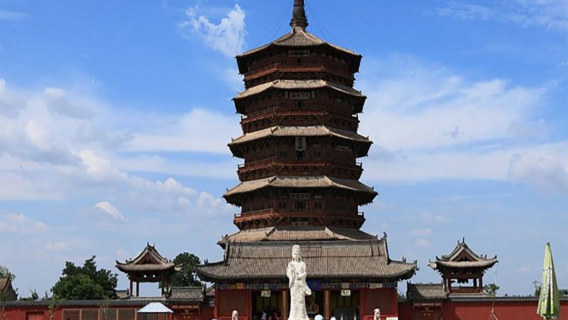
※1-day private charter tour to Xuankong Temple + Ying County Wooden Pagoda + Yungang Grottoes | Door-to-door pickup in Datong city
󱌍
4.9/5
· 54 reviews· 225 booked
Duration: 11 hrs
English
Free cancellation
Instant confirmation
Book now for tomorrow
54 consecutive positive reviews
From£40.79
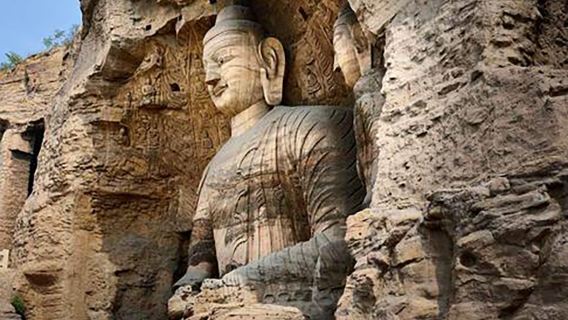
※Xuankong Temple + Yungang Grottoes + Huayan Monastery 1-day tour by private charter [Exclusive private charter with hotel pickup]
󱌍
4.7/5
· 19 reviews· 79 booked
Duration: 10.8 hrs
English
Instant confirmation
Book now for tomorrow
From£47.80
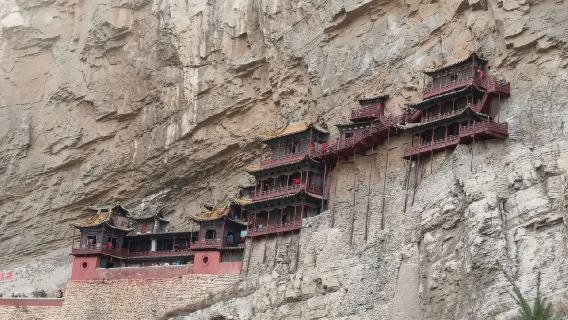
※Datong Xuankong Temple + Ying County Wooden Pagoda Private Charter 1-Day Tour [Flexible Departure Time | Train Station Pickup]
󱌍
5.0/5
· 9 reviews· 51 booked
Duration: 6.9 hrs
English
Instant confirmation
Book now for tomorrow
From£43.34
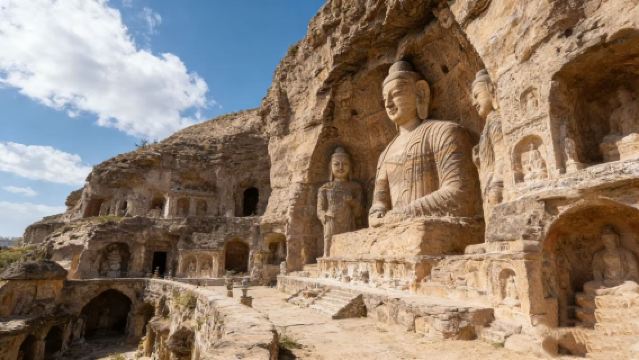
Datong: Hanging Temple & Yungang Grottoes Classic Day Tour | CITS × ZANBUS
󱌍
5.0/5
· 3 reviews· 38 booked
Duration: 8.5 hrs
English
Free cancellation
Instant confirmation
From£77.75
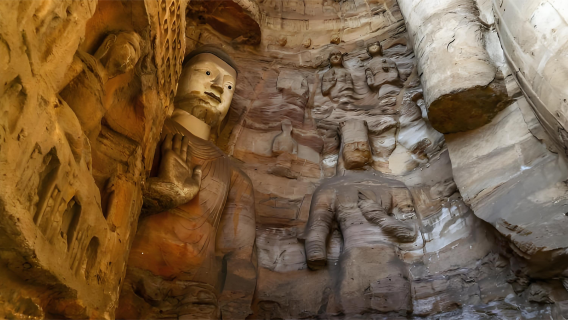
[Private customized] One-day private chartered car tour to Datong Yungang Grottoes, Xuankong Temple, and Yingxian Wooden Pagoda in Shanxi
󱌍
From£81.00
Yu County Today's weatherClear -7-5℃
Yu County weather for the next 2 days11/10: -4-10℃, 11/11: -4-12℃

Free things to do in Yu County

What travellers say about Yu County

user-avatar
HuijunC.November 5, 2026
5.0
It’s truly breathtaking beautiful, the temple is surrounded by canyon and ihangijg at cliff and looks very stunning, the walk out the temple CNA gets scary if you afraid of heights.

Xuankong Temple

user-avatar
阿哈哈哈November 8, 2026
4.0
Overall, it's great and very meaningful, with a long history and rich culture. The whole visit takes about 30 minutes. It's a marvel of nail-free mortise and tenon joints. The entire tower is built entirely with wooden mortise and tenon joints, without using any iron nails. It has a strong visual impact. Seeing the thousand-year-old wooden tower in person is very impressive. If you like ancient architecture, you must come.

Yingxian Wooden Pagoda

user-avatar
BottSparrowNovember 8, 2026
4.0
It's really amazing place to discover about Heshen's life. The Palace quite big and has many rooms to explore. Besides, they has many exhibition inside a room so you can know more about Heshen life. It also has many good view in courtyard, lake to enjoy the nature.

Prince Kung's Palace Museum

user-avatar
_TI***hpNovember 8, 2026
4.0
The main temple is amazing and it’s lovely to walk around the grounds and get space away from the hustle & bustle so make sure to walk around the grounds… but it’s SO busy with people dressed up trying to take photos for their social media, you can barely move! I’d still go back to see the main temple though and the culture is interesting to observe!

Temple of Heaven

user-avatar
Anonymous userNovember 8, 2026
5.0
Very interesting guide, totally recommended sun 老师。 Totally amaze on his storytelling.

Summer Palace

user-avatar
厦门戴尔November 8, 2026
5.0
Liang Sicheng praised it as a national treasure-level ancient building, and it truly lives up to its reputation! He was amazed by the grandeur and exquisite beauty of ancient Chinese architecture… He suggested simplifying the ticketing system as much as possible, adding more ticket windows, and linking to major tourism platforms to facilitate ticket purchases and visits for tourists.

Huayan Temple

user-avatar
MeAndtheMapNovember 9, 2026
5.0
The visit to Mutianyu Great Wall was definitely the highlight of my trip to China. Seeing it and being there itself makes me feel so happy, it’s a dream come true to finally seeing what I’ve just read from the history books before. Though it’s almost 2 hours away from Beijing, the travel is worth it. Bring lots of energy as you climb, it’s not for easy knees 😂😂😂 and if you missed your breakfast from the capital, there’s a lot of food stalls and restaurants options once you reach here. The toboggan is a must to try but the queue made it impossible for us as we have to wait for another 2.5 hours to experience it, so we let go of it.

Mutianyu Great Wall

user-avatar
white20October 26, 2026
5.0
It's worth visiting. I went there when I was younger, but I lacked knowledge then. Now, the more I see, the more I appreciate it. The silver Buddha, dragon carvings, and murals are known as the "Three Wonders." The architecture blends Han and Tibetan styles, and the incense and ancient charm coexist. It's worth a thorough visit.

Dazhao Temple

user-avatar
天地有形January 21, 2025
5.0
Chongtai Temple is not only a religious place, but also has a theater, a fitness square, public toilets, a library, and even a stray dog ​​base. It has what other big temples have, and it also has things that big temples don't have. This is the main reason and significance for a small village temple to be listed as a national protected folk temple. It is worth lingering and pondering.

Chongtai Temple

user-avatar
M27***92November 5, 2026
5.0
With extensive knowledge and engaging explanations, the speaker clearly explained the stories behind the cultural relics. Thoughtful consideration and warm, courteous service made the entire trip fulfilling and comfortable – a truly unforgettable travel experience.

Shanxi Museum

Trip Moments in Yu County

Popular cities near Yu County

Frequently asked questions

How can I contact Trip.com customer support?

Get help anytime, anywhere within 30 secondsContact customer support

Change and cancellation policies vary by attractions and tours. Please check the product details page for more information.

Ticket prices may vary between weekdays and weekends, as well as during peak and off-peak seasons. When booking with Trip.com, you can also use Trip Coins to get extra savings. For more tips on booking discounted tickets, please visit Trip.com for the latest information.