
Things to do in Baoji
Explore top experiences
Top 10 attractions in Baoji


Baoji Bronze Ware Museum
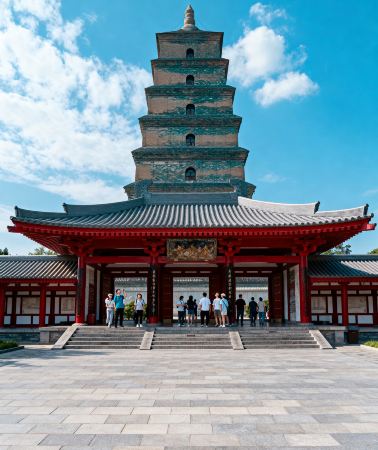
The Baoji Bronzeware Museum is in the Chinese Shi-ku Garden of Baoji City, "the hometown of bronzeware." The museum has four exhibition halls, and Halls 1 and 2 are the focuses of the tour. The museum displays high quality bronzeware, such as the Hu gui from the period of King Li of Zhou and the treasures of Qin Duke Bo. The He zun, which is inscribed with the words "Here in China I dwell," is kept here.Baoji · 4.3 km from downtown

Shi-ku Garden in China
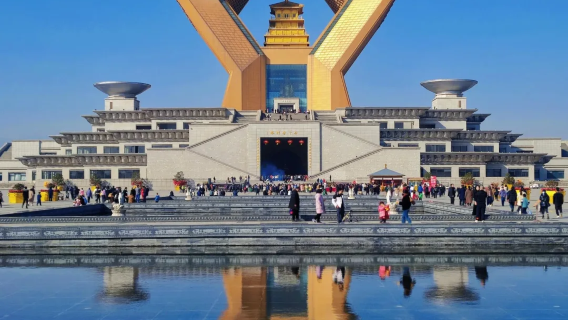
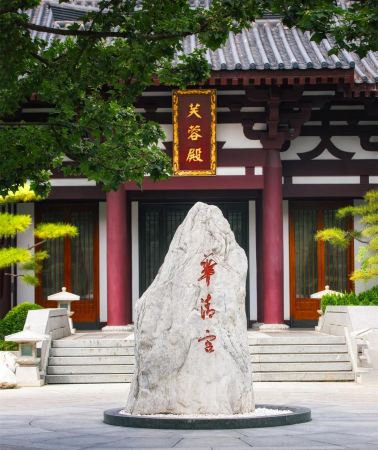
Shi-ku Garden in Chinais located on Shigu Mountain on the south bank of the Wei River in Baoji, to the north it overlooks the Wei River, to the east it borders the Yinxiang River, and to the south it adjoins Tiantai Mountain National Forest Park. Legend has it that the pre‑Qin stone drums unearthed in the early Tang were found in this area. The ten granite, drum‑shaped stones are inscribed with stone drum script, a writing that follows bronze script and anticipates small seal script. The Tang writer Han Yu wrote the "Song of the stone drums" to praise their value, and the original artifacts are now kept at The Palace Museum in Beijing, soShigu Mountaintook its name from this association. The park spreads along the mountain slope, integrating site conservation, bronze exhibitions, stone drum culture displays, garden sightseeing, and archaeological research into a cultural ecology park. At a high point in the park, the Shigu Pavilion is the landmark building. Modeled on Qin and Han styles, its outer‑five, inner‑nine tiering is especially striking, and from the pavilion you can look down on the urban areas on both banks of the Wei River. At the foot of the mountain, the Baoji Bronze Ware Museum houses Western Zhou bronze masterpieces such as the He zun and the Lai pan. The museum and the Shigu Pavilion, one high and one low, form the main tour route. You can also walk past the Zhou Culture Wall, the Han character gallery, the plaza for heaven worship and ancestor veneration, and the Shigu Mountain corridor bridge. At night, the Shigu Pavilion and the corridor bridge are illuminated, and the park takes on a different atmosphere.Baoji · 4.4 km from downtown

Qinling Mountains
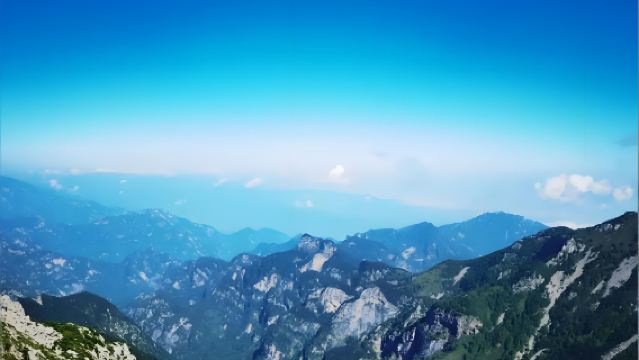
The Qinling Mountains are a massive mountain range spanning central China, with the main body located in southern Shaanxi, stretching over 1,000 km from east to west. The northern foothills hug the Guanzhong Plain, which was formed by the alluvial deposits of theWei River, while the southern slopes gently descend into theHan Rivervalley. The ridgeline serves as the watershed between the Yellow River and Yangtze River systems and, together with the Huai River, forms the geographical boundary between northern and southern China: the north of the mountains is dry with little rain, where wheat fields connect to loess plateaus; the south is warm and humid with plenty of rain, where paddy fields and evergreen broad-leaved forests gradually unfold. The Baxiantai Summit on the main peak,Mount Taibai, has an altitude of 3,771.2 m. The high-altitude areas preserve cirques, horns, and stone seas carved by Quaternary glaciers. Along the climbing route, you can also encounter alpine lakes such asDaye Lake. Snow on the summit can last from late fall until the following midsummer, and even in July or August, you may encounter residual snow and biting mountain winds. From the foot of the mountain to the summit, vegetation changes layer by layer in the order of warm temperate, temperate, cold temperate, and frigid zones. This mountain range is also home to rare animals: giant pandas, golden snub-nosed monkeys, takins, and crested ibises all inhabit this area, and nature reserves such as Foping and Changqing protect theQinling giant panda. Famous mountains such as Mount Hua and Maiji Mountain also belong to this range. In ancient times, people chiseled plank roads such as the Baoxie Road and Chencang Road along the canyons. The "difficulty of the road to Shu is harder than ascending to heaven," as lamented by Li Bai, refers precisely to this perilous route.Taibai County · 13.5 km from downtown

Tangzhen, Taibaishan
Taibai Mountain Tang Town is located in Mei County. It has many antique buildings and a large number of green plants. It has a strong ancient charm and is very suitable for taking pictures.Mei County · 19.6 km from downtown

Xifu Old Street
Xifu Old Street is located in Shengliyuan, Beipo, Baoji City. It consists of two parts: the "Old Street District" and the "Guild Hall District". The Old Street District is based on the brilliant food culture of Baoji. The Workshop Street restores and reproduces traditional crafts. The Snack Street gathers all kinds of special snacks in Xifu, which will dazzle you and make you linger. The Guild Hall District is mainly composed of Dang Chongya Mansion and Mashao Mask Museum, forming a historical and intangible cultural heritage base. Combined with Xifu's unique folk culture and architectural culture, with culture as the soul, architecture as the form, and experience as the core, it restores the historical humanities and market life customs of ancient Chencang, and presents the "beauty of Xifu" hidden deep in our memory one by one.Baoji · 9.3 km from downtown

Baoji Xueshan Cave Forest Park
Baoji Xueshan Cave Forest Park is located in the southeast of Baoji City and is a tourist destination that blends natural scenery with Taoist culture. The park is divided into two major scenic areas: Xueshan Cave and Shijiegou, each with its own unique features. Xueshan Cave is famous for its naturally formed cave, which is approx. 23 m deep and 5 m high. It is said to be the place where Qiu Chuji, a representative figure of the Quanzhen School of Taoism, practiced in seclusion. The temple complex outside the cave was built spontaneously by pilgrims. The 7-story pavilion was built against the mountain and resembles a pagoda, showcasing a unique Taoist architectural style. Shijiegou Scenic Area is the center of the park's natural attractions, gathering rich animal and plant resources and unique geological landscapes. In Shifogou and Shuilonggou, unique rocks and streams complement each other, forming attractions such as the Great Stone Buddha, Daughter's Cliff, and General's Gorge, which are lifelike and breathtaking. Attractions in Shuilonggou, such as Tiger Claw Cliff and Dingtianzhu, attract visitors with their masterful natural formations. Baoji Xueshan Cave Forest Park is not only a paradise for nature lovers but also an ideal place to explore Taoist culture and appreciate the beauty of unique rocks.Baoji · 17 km from downtown

Zhouyuan Museum
The Zhouyuan Museum is built on the Zhouyuan site. The museum covers an area of 3,400 square meters, and the museum exhibits are divided into two parts, indoor and outdoor. The indoor exhibition has 4 exhibition halls, which are divided into Zhouyuan historical relics exhibition, Western Zhou calligraphy art exhibition, Western Zhou wine culture exhibition and special exhibition of Zhouyuan precious cultural relics. There are 3,375 collections of various types in the museum, from primitive society to Ming and Qing Dynasties, with a large number of cultural relics in the Western Zhou Dynasty. Among them, the oracle bone inscriptions as small as corn are micro-carvings in the early days of my country; the historical wall plates, which are known as "bronze history books"; A group of 103 sets of bronze wares unearthed from the cellar are eye-catching; there are also courtyards, bricks and tiles, beading and so on in the early days of our country. The outdoor exhibition includes the foundation sites of two large-scale building complexes, the Western Zhou Zongmiao and the Western Zhou Palace. The architectural site of Fengchu Village is 46 meters long from north to south and 23.5 meters wide from east to west. The houses face south. The early tiles of our country were found here. The architectural site of Zhaochen Village is large in scale, and it may have been a majestic palace building in the past.Fufeng County · 12.1 km from downtown

Water City: Three Kingdoms Town
Shuicheng Three Kingdoms Town is a national AAAA-level Attraction. The area where the Attraction is located is the remains of the ancient battlefield where Zhuge Liang and Sima Yi confronted each other along the banks of the Wei River in 234 AD (234 AD). Zhuge Liang later passed away in Wuzhangyuan. The mottled war relics on this land have disappeared with the passage of time, but the stories here have never stopped. Those bravery, determination and wisdom have become a kind of culture here, and the origins have been passed down. Today, we recall history and inherit culture. Shuicheng Three Kingdoms Town combines domestic and foreign scientific and technological means to reproduce the historical features of the year and create a western tourist and cultural resort! The Water City Three Kingdoms Town Attraction relies on the authentic historical culture of the Three Kingdoms, embraces the unique charm of the Weihe Wetland, and integrates the classic historical allusions of the Three Kingdoms. With a new perspective and a combination of reality and fiction, it creates a comprehensive Three Kingdoms cultural experience site with the Three Kingdoms cultural experience as the core, deeply integrating performances, food, entertainment, leisure, and vacation. The Water City Three Kingdoms Town is committed to integrating regional historical culture and fusing modern fashion elements. It will fully and vividly display the "long-standing local cultural stories" through the functional combination of Dreaming of the Three Kingdoms, Stories of the Three Kingdoms, and Customs of the Three Kingdoms. Adhering to the southern design concept of "the city is built in the water, and people travel on the water", the Attraction will be built into a characteristic ancient town surrounded by water systems, ancient buildings and pleasant scenery, thus forming a Three Kingdoms cultural experience site with a clear theme, rich business types, and the integration of architectural landscapes and cultural arts. Visitors can "travel through time" and feel the different folk customs of the north and south during the Three Kingdoms period.Qishan · 15.6 km from downtown

Baoji Botanical Garden
Baoji Botanical Garden was established in 1979, formerly known as Baoji City Nursery, and officially changed its name to Baoji Botanical Garden in 1985. There are 10 gardens, 3 areas and 1 site: Peony Garden, Begonia Garden, Cherry Plum Garden, Bitao Garden, Lilac Garden, Bamboo Garden, Chinese Rose Garden, Pomegranate Garden, Magnolia Garden, and Hundred Gardens. , Qinling introduction area, gymnosperm area, aquatic plant area, city tree city flower sparse forest grassland. Among them, there are about 180 species of Qinling plants, and more than 20 species of rare and endangered plants. The peony garden of Baoji Botanical Garden covers an area of more than 70 mu, planting more than 300 kinds of foreign fine and rare varieties, such as Central Plains peony, Lanzhou peony, Pengzhou peony and peony, and more than 30,000 plants, which are very popular among citizens and tourists. Every year when the flowers bloom, there is an endless stream of tourists, and it enjoys a high reputation and reputation in the Baoji area and even the province. Baoji Botanical Garden receives more than one million visitors annually. There are flowers in four seasons and scenery in every season. Every flower season is full of people. "Why do you need to go to Luoyang to watch flowers, you can enjoy peonies in the botanical garden". People come to watch the flowers and enjoy the scenery. Baoji Botanical Garden has become a favorite among citizens and tourists. Flower viewing spot. Since last year, under the care of the main leaders of the municipal government, new improvements have been made to the tourist area, building corridors, pavilions, pavilions, etc., adding cultural content and local characteristics, enriching plant varieties, and improving the overall landscape of the botanical garden.Baoji · 12.4 km from downtown

Fenghuang Lake Scenic Area
Phoenix Lake Scenic Area, located in Fengxian County, Baoji City, is an artificial scenic spot constructed in recent years. There are artificial scenic spots such as hydrophilic landscape corridor, star waterfall, waterscape audio-visual feast, music fountain, etc. A major feature. The scenic spot has a strong human history. It is named after the totem Phoenix of the Chinese nation. Fengxian County has been one of the birthplaces and settlements of the Qiang people since ancient times. It enjoys the reputation of "Hometown of Phoenix" and "Hometown of Qiang People". At present, four major theme parks have been developed and built in the scenic area, which reflect the moon culture as the main theme and the Moon Bay Ecological Leisure Park, which reflects the regional customs. It is also an excellent place to overlook the county seat; there is also the landmark landscape of the county seat - Fenghe Mountain Buddhist Theme Park, where incense is flourishing all year round; in addition, there is Baozi Mountain Botanical Sightseeing Park, where there are viewing platforms, picking areas, and farmhouses. and other attractions.Feng County · 415m from downtown
Experiences you can't miss in Baoji
Featured Day tours in Baoji
View all Day tours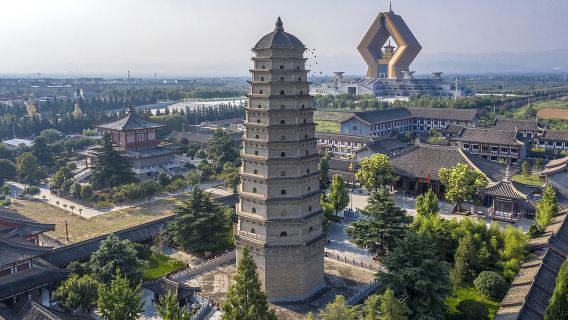
4.9/5
· 407 reviews· 415 bookedFree cancellation
Instant confirmation
Book now for tomorrow
99.3% of travelers recommend
FromCAD 440.65
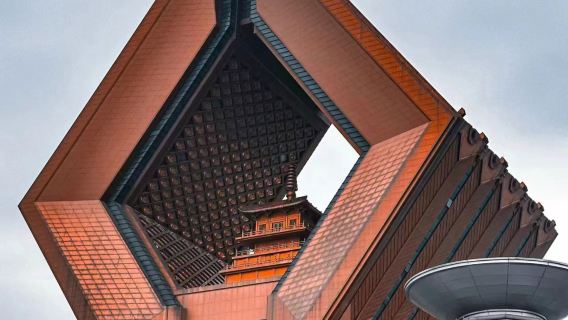
4.9/5
· 20 reviews· 68 bookedFree cancellation
Instant confirmation
Book now for tomorrow
81 travellers saved
FromCAD 288.00
![[Chartered car with morning pick-up on the Third Ring Road] One-day in-depth tour of Famen Temple, Qianling Mausoleum, and Maoling Mausoleum (Western Route) | Family trip](https://ak-d.tripcdn.com/images/0355c12000s2niijw5EC4_C_568_320.jpg?_fr=wc)
Free cancellation
Instant confirmation
Book now for tomorrow
FromCAD 42.17
Free cancellation
Instant confirmation
Save CAD 0.76
FromCAD 75.24CAD 76
Free cancellation
Instant confirmation
Book now for tomorrow
FromCAD 128.03
![Xi'an Famen Scenic Area + Qianling Mausoleum + Maoling Mausoleum 1-Day Private Charter Tour [Includes Complimentary Famen Scenic Area Ticket]](https://ak-d.tripcdn.com/images/0354y12000lb6mao4D0E7_C_568_320.jpg?_fr=wc)
Instant confirmation
Book now for tomorrow
Save CAD 0.71
FromCAD 70.69CAD 71.4
Free cancellation
Instant confirmation
Save CAD 0.76
FromCAD 75.24CAD 76
5.0/5
· 1 reviewInstant confirmation
Book now for tomorrow
Save CAD 1.02
FromCAD 100.39CAD 101.41
Free things to do in Baoji
Baoji Bronze Ware Museum
Baoji · 4.3 km from downtownShi-ku Garden in China
Baoji · 4.4 km from downtownQinling Mountains
Taibai County · 13.5 km from downtownTangzhen, Taibaishan
Mei County · 19.6 km from downtownXifu Old Street
Baoji · 9.3 km from downtownBaoji Xueshan Cave Forest Park
Baoji · 17 km from downtownZhouyuan Museum
Fufeng County · 12.1 km from downtownWater City: Three Kingdoms Town
Qishan · 15.6 km from downtownBaoji Botanical Garden
Baoji · 12.4 km from downtownFenghuang Lake Scenic Area
Feng County · 415m from downtown
More ways to travel from Baoji
Private Tours in Baoji
View More Private Tours in Baoji


What travellers say about Baoji

blu***hhAugust 15, 2026
5.0
The teacher's explanations made our visit truly meaningful. The explanations were very comprehensive and detailed; I'll need to review some of the points later. I really liked the architectural style of the Baoji Bronze Museum; it was definitely worth the long journey.
Baoji Bronze Ware Museum

首席监理May 30, 2022
4.0
The Chinese Stone Drum Park is one of the key tourist and cultural scenic spots in Baoji City, Shaanxi Province. It is located on the Stone Drum Mountain, where the Stone Drum, which was praised by Kang Youwei as "China's No. 1 Antiquity", was unearthed. It is adjacent to Yinxiang River in the east, Jifeng Mountain, the main peak of Qinling Mountains in the south, the urban area in the west, and the Weihe River in the north. It covers an area of more than 500 acres and has a total construction area of 47,000 square meters. It is a cultural ecological park with the theme of Zhou and Qin history and culture. There are five major areas, Baoji Bronze Museum, Chencang Stone Drum Pavilion, Qin Culture Square, Stone Drum Square, and Jinshi Garden, which integrate site protection, bronze exhibition, stone drum culture display, garden sightseeing, archaeological research and leisure and entertainment, and fully display the profound history and culture of Baoji as the birthplace of Zhou and Qin culture.
Through the protection and shaping of natural landscapes, the park has become a collection of the five characteristics of Baoji, Shaanxi, namely, mountain, water, forest, plateau, and city. Through the integration and reproduction of Zhou and Qin history, the park has become a microcosm of ancestral culture and a charming place with both natural and humanistic characteristics. The two iconic buildings of the China Stone Drum Park, Chencang Stone Drum Pavilion and Baoji Bronze Museum, have become the new city coordinates of Baoji.
Shi-ku Garden in China

M27***06June 12, 2025
4.0
The Qinling Mountains can be divided into the Qinling Mountains in a narrow sense and the Qinling Mountains in a broad sense. The Qinling Mountains in a narrow sense are limited to the mountains between the Weihe River and the Hanjiang River in the southern part of Shaanxi Province.
The Qinling Mountains in a broad sense start from Kunlun in the west, pass through Longnan and southern Shaanxi in the middle, and end at the Dabie Mountains of Hubei, Henan, Anhui and Zhangbaling near Bengbu in the east. It is the watershed between the Yangtze River and the Yellow River.
The Qinling Mountains are not only the boundary between the north and south of China, but also the dividing line of the differences in geography, climate and resources between the north and the south. Different climates, different water and soil, different social living habits such as diet, architecture and transportation, have evolved into differences in the overall customs and habits of the society over time.
The Qinling Mountains are revered as the dragon vein of Chinese civilization. The main peak, Taibai Mountain, is 3771.2 meters above sea level and is located in Baoji City, Shaanxi Province. The Qinling Mountains are the boundary between the Guanzhong Plain and southern Shaanxi in Shaanxi Province.
Qinling Mountains

无为的无心草November 12, 2025
5.0
Here are some activities available in Tang Town, Taibai Mountain in November:
● Deer Wilderness Family Park: Located at the foot of Taibai Mountain, this family park features hot springs and is surrounded by mountains and water. Here you can see resident animals, surrounded by lush greenery, and experience the primal vitality and healing power of nature, making it perfect for families with children.
● Sunrise and Sea of Clouds Viewing: Purchase a deluxe package for the sunrise and sea of clouds to admire the breathtaking scenery of a vast expanse of clouds and the rising sun.
● Feeding Sika Deer: Feeding sika deer in Tang Town, Taibai Mountain, is a truly therapeutic experience.
● Taking Hanfu Photoshoots: In the unique environment of Tang Town, wear Hanfu for a stunning photoshoot and create lasting memories.
● Enjoying a Private Hot Spring Villa: Stay at the Taibai Mountain Tang Town Joyful Private Hot Spring Villa B&B and relax in a private hot spring at the foot of Taibai Mountain.
Tangzhen, Taibaishan

娴雅小溪July 10, 2022
4.0
Xifu Old Street: Located in the Xifu Tiandi Folk Sightseeing Tourist Area on the Beipo Shengli Plateau in Jintai District, Baoji City, it is a man-made street block dominated by folk culture, including three characteristic streets: Wenchang Street, Fengshan Street, and Yuyang Street, which mainly sell Baoji area's special food and snacks.
Xifu Old Street

星光456September 20, 2025
5.0
In the hot summer, walk into the Qinling Snow Mountain Cave Forest Park, where trees and wild grass are lush and green, and the sounds of birds and grasshoppers merge into one. Feel the unfettered joy in the jungle under the blue sky and white clouds.
Baoji Xueshan Cave Forest Park

水漫三楼June 17, 2026
5.0
The Baoji Zhouyuan Museum is a specialized museum located in Zhaochen Village and Jingdang Village, Famen Town, at the border of Fufeng County and Qishan County, Shaanxi Province. This area was the living and settlement area of the pre-Zhou people. Built in 1987 based on the archaeological excavation of the Zhouyuan site, it was rated as a national second-class museum in 2018. The museum, based on the core area of the Zhouyuan site, exhibits over 10,000 artifacts, including the foundations of Western Zhou ancestral temples and palaces, as well as bronzes, oracle bones, and jade artifacts. Among them, the bronze vessels such as the Zhe Gong and Shi Qiang Pan are renowned for their long inscriptions and large scale. Zhouyuan, located in western Guanzhong Plain, about 100 kilometers from Xi'an, encompasses most of present-day Fengxiang, Qishan, Fufeng, and Wugong counties. Historical records indicate that the ancestor of the Zhou people, Gugong Danfu, led his people to settle in the area south of present-day Qishan, known as "Zhou." The Zhou state was named after this location. The land here is fertile, with abundant rainfall and a mild climate. Before King Wen of Zhou, it was the center of Zhou people's activities. The world-renowned Zhouyuan Site is located within a 20-square-kilometer area at the border of Qishan and Fufeng counties. Archaeological surveys have uncovered the ancestral temples, tombs, treasuries, and documents (bronze inscriptions and oracle bone inscriptions) of the Zhou royal family. The northwestern part is the palace and ancestral temple area (present-day Fengchu Village in Qishan County and Zhaochen Village in Fufeng County). The southeastern part was the residential area of the Zhou people, as well as a workshop area for smelting bronze, firing pottery, and carving bone artifacts (present-day Qizhen, Zhuangbai, Qijia, and Yuntang Village in Huangdui Township, Fufeng County). The southwestern part is the burial area (present-day Hejia Village and Li Village in Jingdang Township, Qishan County). Zhouyuan is known as the "Hometown of Bronze Ware," with an unparalleled history and quantity of unearthed bronze artifacts. Bronze artifacts have been unearthed here since the third year of the Shenjue era of Emperor Xuan of Han (58 BC), with numerous significant discoveries. Zhouyuan is a veritable underground treasure trove of cultural relics. In 1982, the State Council listed it as a second batch of national key cultural relics protection units.
Zhouyuan Museum

清风若溪April 30, 2020
4.0
Shuicheng Three Kingdoms Town is a charming town built based on the real Three Kingdoms history and culture. It is located in the eastern section of Caijiapo Chuangye Road, Qishan County, Baoji City, Shaanxi Province, and is adjacent to the "Waterside" Weihe Wetland Park. The scenic spot integrates classic historical stories of the Three Kingdoms, leisure and entertainment, snacks and food, cultural performances, etc., allowing tourists to deeply experience the Three Kingdoms culture while tasting local food.
Water City: Three Kingdoms Town

有文化的女士February 22, 2023
5.0
It is worth going, there are many flowers, and there are flowers all year round. There are peonies in spring and chrysanthemums in autumn. This describes that there are many types of these two flowers and a large planting area. Although other flowers are not as many as these two flowers, they are also very beautiful.
Baoji Botanical Garden

飞鸟与鱼0010June 14, 2020
5.0
Phoenix Lake Scenic Area is located in Feng County, Baoji City, Shaanxi Province, China. The forest coverage rate in the scenic area is 75.8%. The air is fresh, the climate is humid, there is no severe cold in winter and no scorching heat in summer. It is mainly composed of natural and cultural landscape resources.
Fenghuang Lake Scenic Area


