Changfeng

Things to do in Changfeng

Search attractions or local attractions & tours
Search

Explore top experiences

Top 10 attractions in Changfeng

View all Attractions
Mount Huangshan Scenic Area
2027 Global 50 - Fall Viewing Attractions

Mount Huangshan Scenic Area

9.1
4.8/5
74k reviews

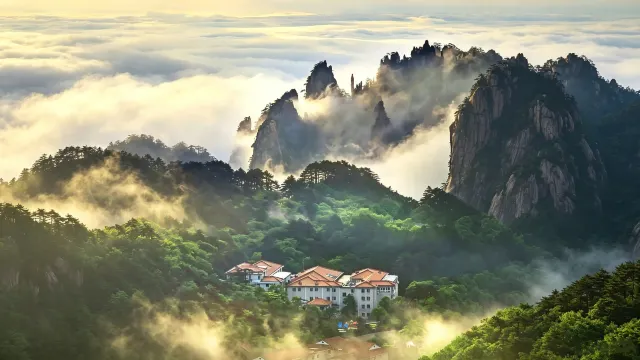
Mount Huangshan Scenic Area is located in Tangkou Town, Huangshan District, Huangshan City. Since ancient times, Mount Huangshan has been one of China's most renowned mountains. Its peculiar pines, strange rocks, sea of clouds, and hot springs are known as the "Four Wonders" of Mount Huangshan. In addition to these, rime, snowscapes, and sunrises are also views that visitors will not miss. There is an ancient saying: "Having visited the Five Great Mountains, one need not look at any other mountains; having visited Mount Huangshan, one need not look at the Five Great Mountains." The attraction is divided into the south gate, west gate, and north gate. The vast majority of visitors enter and exit through the south gate, which has two entrances and exits—front mountain and back mountain—both close to Tangkou Town at the foot of the mountain. The town has also become a transfer hub for visiting Huangshan, and many visitors arrive here in advance to stay overnight. From Tangkou Town to the attraction entrance, you need to take the Huangshan New National Line shuttle bus, which stops at the front mountain gate (Ciguang Pavilion), the back mountain gate (Yungu Temple), and the Huangshan-Hot Spring attraction. Visiting the attraction mainly involves two routes up the mountain, the front mountain and the back mountain, both leading to one of the main peaks, Bright Summit. On the other side of Bright Summit, there is also a loop route — the West Sea Grand Canyon. Front mountain The front mountain refers to the hiking route starting from Ciguang Pavilion to Yuping Tower at the summit (accessible directly by the Yuping Cable Car), as well as the Mount Huangshan Scenic Area - Lotus Peak and Tiandu Peak areas at the summit. The scenery of the front mountain is grand and majestic, making it very suitable for enjoying panoramic views from the cable car. Both the highest peak, Mount Huangshan Scenic Area - Lotus Peak, and the other main peak, Tiandu Peak, are located here (the two peaks open alternately). There are also classic attractions such as the Guest-Greeting Pine, Jiulong Peak - Carp Back, Hundred-Step Ladder, One-Line Sky, and Tianhai. Back mountain The back mountain refers to the hiking route from Yungu Temple to Bai'e Ridge (accessible directly by the Mount Huangshan Yungu Cableway), as well as the mountaintop areas behind Bai'e Ridge such as Shixin Peak, Mount Huangshan Scenic Area - Shizi Peak, and West Sea Grand Canyon - Paiyun Pavilion. The scenery of the back mountain consists mostly of exquisite mountain views, suitable for enjoying on foot along the way. Flying Stone and Monkey Watching the Sea are both located here. West sea grand canyon West sea grand canyon officially opened in 2000. The canyon is deep and the scenery is very magnificent, and it is known as the true gathering place of Huangshan's essential scenery. West sea grand canyon can be entered from West Sea Grand Canyon - Paiyun Pavilion in the summit area of the back mountain, and after looping around inside the canyon, you return to the main peak area of Tianhai. It takes about 2 hours to walk down from West Sea Grand Canyon - Paiyun Pavilion to the bottom of the canyon, and then you can take a cable car to Tianhai. Route recommendations The standard way to visit Huangshan is a two-day tour, with routes divided into ascending via the front mountain and descending via the back mountain (front mountain - West Sea Grand Canyon - back mountain) or ascending via the back mountain and descending via the front mountain (back mountain - West Sea Grand Canyon - front mountain). Ascending via the front mountain and descending via the back mountain is suitable for taking the cable car up and walking down, which is both relaxing and allows you to enjoy the exquisite scenery of the latter half. However, since the essential route of the West Sea Grand Canyon runs from West Sea Grand Canyon - Paiyun Pavilion to Tianhai, you will have to backtrack along a section of the trail. It is possible to visit Huangshan in just one day, but the itinerary will be tight. It is recommended to ascend via the rear mountain and descend via the front mountain, taking the cable car both ways, and to either skip climbing the main peaks of the front mountain (Mount Huangshan Scenic Area - Lotus Peak / Tiandu Peak) or skip the West Sea Grand Canyon. Stay selection There are several accommodation options at the summit, mainly concentrated in areas such as Guangming Peak Tianhai, West Sea Grand Canyon-Paiyun Pavilion, Bai'e Ridge, and North Sea. Guangming Peak Tianhai is a great spot for watching the sunrise, and it is also suitable for storing luggage while exploring the West Sea Grand Canyon. Bai'e Ridge is the upper station of the Huangshan Yungu Cableway on the rear mountain; if you typically enter the attraction from the rear mountain in the afternoon, staying here is quite convenient.

China · Huangshan City
Hongcun Village
No. 1 of Night Attractions in Anhui

Hongcun Village

8.6
4.5/5
50.5k reviews

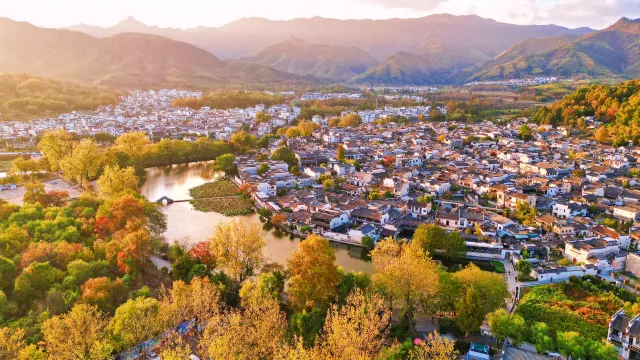
Hongcun Village is a classic Huizhou-style ancient village, renowned as a "village in a Chinese painting." A visit here offers two unmissable experiences: first, the water landscapes shaped by its irrigation system, with Nanhu Lake and Yuezhao Pond as the crown jewels; second, the exquisite "three carvings" of Huizhou architecture—brick, stone, and wood carvings—intricate enough to rival paper-cut art. Here, cultural heritage and natural beauty blend seamlessly into a harmonious whole. The ancient village was first built during the Shaoxing era of the Southern Song dynasty and gradually developed from the Yongle era of the Ming dynasty into a unique "ox-shaped village" layout. The two ancient trees at the village entrance form the "ox horns," the densely packed Ming and Qing Huizhou-style buildings in the village form the "ox body," the four bridges over the stream west of the village form the "ox feet," Yuezhao Pond is the "ox stomach," Nanhu Lake is the "ox belly," and the water channels flowing past every household are the "ox intestines." Sightseeing can begin at Nanhu Lake in the south of the village. Nanhu Lake is a bow-shaped artificial lake dug during the Wanli era of the Ming dynasty, with a broad expanse of water; the Huabridge crossing the lake is where Li Mubai led his horse in the film Crouching Tiger, Hidden Dragon. On the north bank of the lake, Nanhu Academy was formed by merging six original private schools by the lakeside, and its layout is exceptionally spacious. Heading north along the lake's north bank, visitors can also stop by ancient residences such as Jingde Hall and Wang Daxie's Former Residence (Zhenqi Hall). Continuing north leads to Yuezhao Pond at the village center, a half-moon-shaped pond dug during the Yongle era of the Ming dynasty, surrounded by Huizhou-style buildings reflected in its waters—one of the best spots for photography in the ancient village. However, visitors crowd around Yuezhao Pond year-round, so patience is needed to capture an empty shot. At the center of Yuezhao Pond's north bank stands Lexu Hall, also known as the Wang Clan Ancestral Hall, a surviving Ming dynasty building in the village with a simpler style than Qing dynasty architecture. On the western end of Yuezhao Pond's north side is Jingxiu Hall, built during the Qing dynasty. Further north, visitors can tour Chengzhi Hall, the residence of late Qing salt merchant Wang Dinggui. The residence is fully equipped with a study, kitchen, stable, bodyguard room, and servants' quarters, and even includes a "Paishan Pavilion" for playing mahjong; the house has its own pond and well, so water is available without leaving the premises. The exquisite Huizhou three carvings are worth examining closely—some wood carvings are even coated with gold powder, lavish and magnificent. Other ancient buildings in the village worth seeing include Deyi Hall, Shuren Hall, and Taoyuan Residence.

China · Yi County
Niushou Mountain Cultural Tourism Zone
No. 2 of Best Things to Do in Jiangsu

Niushou Mountain Cultural Tourism Zone

8.6
4.7/5
35.7k reviews

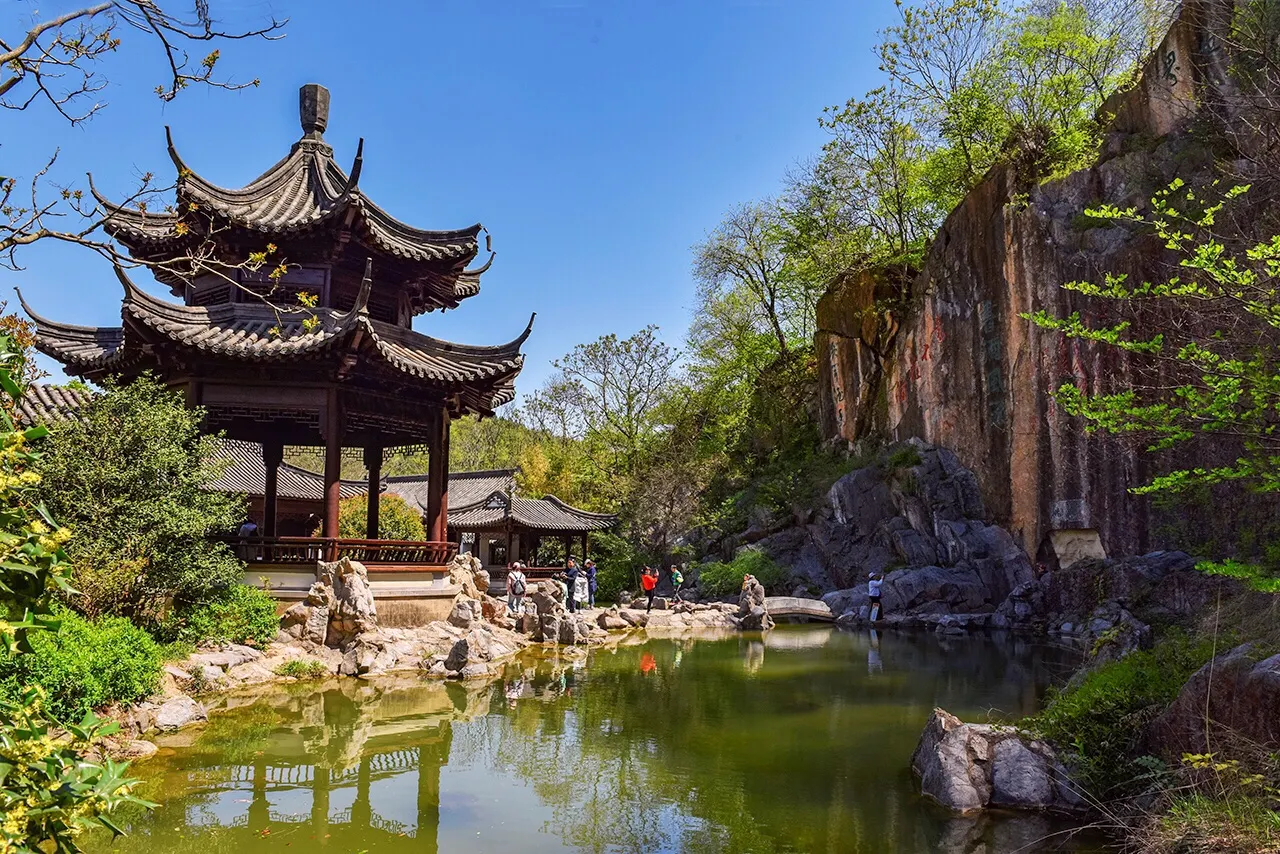
Niushou Mountain Cultural Tourism Zone, also known asNiushou Mountain Cultural Tourism Zone, it is named for its two peaks, one in the east and one in the west, which resemble the two horns of an ox's head. Niushou Mountain Cultural Tourism Zone boasts beautiful scenery and has long enjoyed the reputation of "Spring Niushou." In ancient times, it featured such Jinling scenic spots as Niushou Smoke and Mist and Zutang Temple's Resounding Tin Staff, and it also preserves many historical sites, such as the Jiangning section of the ancient fortifications where Yue Fei fought against the Jin, and the Zheng He Cultural Park. Usnisa Palace The Usnisa Palace is themed around the enshrinement of the Buddha's parietal bone relic and is divided into two parts: the large dome and the small dome, symbolizing outer offerings and inner offerings. The Usnisa Palace utilizes the original mine pit to build an underground palace, with six levels below ground and three levels above ground, appearing very solemn and magnificent. The parietal bone relic of Shakyamuni Buddha was enshrined at the Niushou Mountain Cultural Tourism Zone in October 2015. Visitors may go to the Usnisa Palace to pay homage on special Buddhist festivals. For specific times to view the relic, please call the attraction for inquiries. A thousand years of history Niushou Mountain Cultural Tourism Zone is a Buddhist sacred site. The Buddha Cave Temple, built by Sikong Xu Du in the second year of the Tianjian era of the Liang Dynasty (503 AD), was the first temple on Niushou Mountain, and Li Yu, the last ruler of the Southern Tang, renamed it Hongjue Temple. During the Tang Dynasty, Chan Master Farong, hailed as the "Bodhidharma of East China," founded the Niutou Chan School on Niushou Mountain, known in ancient times as "Jiangbiao Niutou." The founding of the Niutou Chan School served as an important bridge in the true transformation of Indian Chan into Chinese Chan! Niushou Mountain Cultural Tourism Zone - Taohua Stream Niushou Mountain Cultural Tourism Zone - Taohua Stream is located at the east entrance of Niushou Mountain Cultural Tourism Zone, with a total area of 14.87 hectares, approximately 220 mu. The peach blossoms selected are 26 varieties suitable for growing in the Nanjing area, making it a new view created by the Niushou Mountain attraction. A small stream winds down from Yinlong Lake, its water babbling, with peach trees planted on both sides. In spring, the buds gradually bloom, and a sea of flowers is intoxicating.

China · Nanjing
Slender West Lake
2027 Global 50 - Spring Outings

Slender West Lake

8.5
4.7/5
84.1k reviews

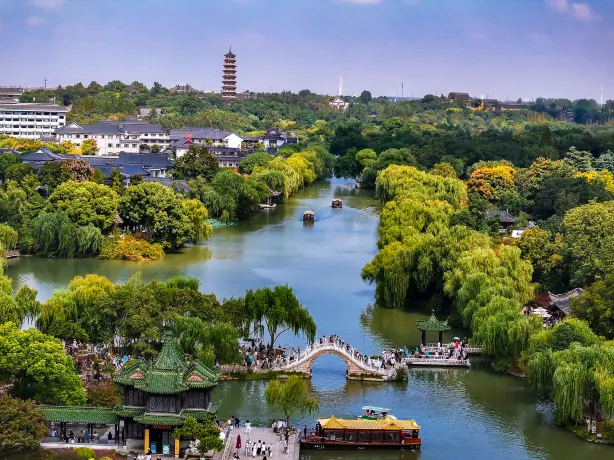
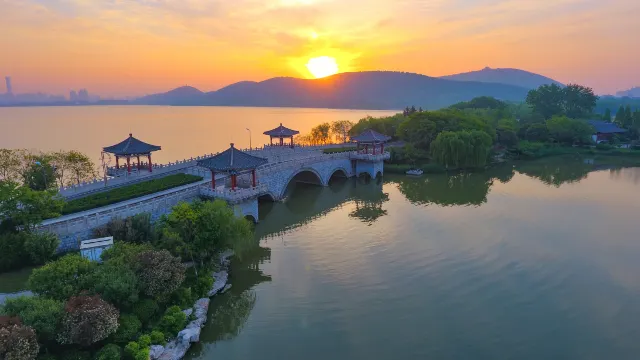
"In March when flowers bloom, head to Yangzhou." When visiting Yangzhou in spring, a trip to Slender West Lake is a must. This narrow stretch of waterway offers the perfect blend of natural beauty and cultural heritage. Stroll along the banks to admire scenic views, explore historic pavilions adorned with classical poetry and paintings, or cruise the lake by boat to experience the leisurely pleasure Emperor Qianlong once enjoyed during his royal visits. The attraction is quite expansive, stretching from the Great Rainbow Bridge in the southeast all the way north along the lake to Guanyin Mountain, passing dozens of attractions along the way. There are four main entrances (east, south, west, and north), with most visitors starting their tour at the south entrance on Great Rainbow Bridge Road. This renowned lakeside garden boasts breathtaking natural views. In spring, the area is shaded by lush willows and adorned with camellias, pomegranates, azaleas, and peach blossoms, attracting visitors from across the country to enjoy the seasonal blooms. For centuries, countless literati have lingered here, composing poetry and creating paintings that left behind numerous artistic treasures and stories. The site also features many landscape structures ingeniously designed to harmonize with its natural surroundings. The Five Pavilion Bridge in Shugang Slender West Lake Scenic Area is the iconic attraction with over 200 years of history. Featuring five wind pavilions atop, each of the bridge's fifteen arches cradles a moon during full moon nights. Another renowned attraction is the Twenty-Four Bridge, inspired by Du Mu's poetic line "Where is the jade-like beauty teaching flute-playing on the moonlit Twenty-Four Bridge?" While the original bridge no longer exists, visitors can admire its reconstructed version today. This was also a stop during Emperor Qianlong's southern tours in the Qing Dynasty. Architectural views like the Great Rainbow Bridge, Slender West Lake Scenic Area's Fishing Terrace, White Pagoda, and the Twenty-Four Bridges' Xichun Platform all bear inseparable historical anecdotes connected to Emperor Qianlong. During summer nights, the illuminated pavilions and moonlit reflections on the lake create a magical atmosphere. The nightlife experience here is entirely boat-based, offering a relaxing way to beat the summer heat while enjoying gentle lake breezes.

China · Yangzhou
Jiuhua Mountain
No. 3 of Best Things to Do in Southern Anhui

Jiuhua Mountain

8.4
4.8/5
28.9k reviews

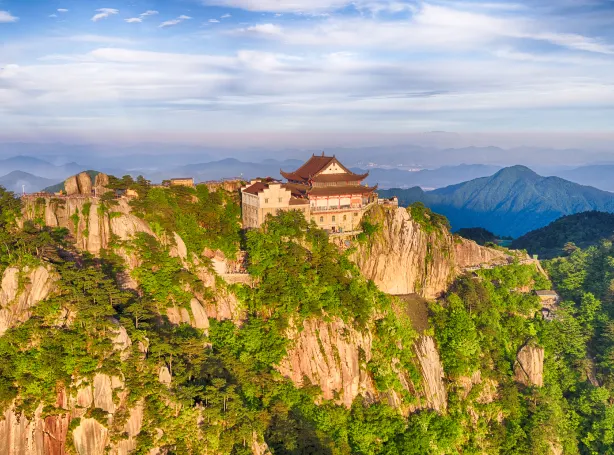
Jiuhua Mountain is located southeast of Chizhou. During the Kaiyuan reign of the Tang Dynasty (719 AD), Prince Jin Qiaojue of the ancient Silla Kingdom (an ancient regime on the Korean Peninsula) came here to practice Buddhism. Because various auspicious signs before and after his death closely resembled those of Ksitigarbha Bodhisattva, he was recognized as an incarnation of Ksitigarbha Bodhisattva and revered as Jin Ksitigarbha. Thus, Jiuhua Mountain became Ksitigarbha Bodhisattva's bodhimanda and, together with Mount Putuo, Mount Wutai, and Emeishan, was listed as one of the Four Sacred Buddhist Mountains. The preserved bodies of eminent monks from various dynasties are a major feature here. Under the perpetually humid climate, the bodies of these monks have been preserved after their passing. Currently, there are five such flesh-body bodhisattvas available for viewing. Jiuhua Street on the mountain is ring-shaped and serves as the core tourist hub of the attraction. Most trips to the various attractions start from Jiuhua Street, and many important temples are also located here. Temples are scattered throughout the mountain, and three key temples are recommended: Baisui Palace, the Hall of the Flesh Body, and Huacheng Temple. Except for Baisui Palace, which is built on a small hill, the latter two are both within the area of Jiuhua Street. To reach Baisui Palace, it takes about half an hour on foot up the mountain, or you can take the cable car. Baisui Palace enshrines the flesh body of the Ming Dynasty monk Wuxia, one of the oldest extant flesh-body bodhisattvas on Jiuhua Mountain, who was imperially conferred the title of "Response Body Bodhisattva." The Hall of the Flesh Body enshrines the flesh body of the Tang Dynasty Jin Dizang; the flesh body is sealed within a pagoda, so visitors cannot directly view the true body, but they may walk clockwise around the pagoda inside the hall. Huacheng Temple is the founding ancestral temple of Jiuhua Mountain and also the site of the Jiuhua Mountain History and Cultural Relics Museum, which houses the "Huayan Blood Sutra," copied by monk Wuxia over twenty-eight years using his own finger blood, a national first-class cultural relic. In addition to the two flesh bodies at Baisui Palace and Roushen Baodian, the other three flesh-body bodhisattvas are: Monk Mingjing of Zhantan Zen Forest, Monk Ciming of Dizang Zen Temple, and Master Renyi, a bhikkhuni, of Tonghui Zen Forest. Master Renyi is a bhikkhuni flesh body that can be visited. These three temples are all located on Jiuhua Street and can be visited in sequence. In the evening, the Qiyuan Zen Temple, the foremost of the four great monasteries, is brightly lit, and many large-scale Buddhist ceremonies are held here. Travelers may observe quietly, but must strictly observe Buddhist etiquette, refraining from loud noise and pointing at will. Travelers on a 1-day tour generally only need to visit the key temples; those with plenty of energy can continue upward from Baisuigong to Dongya Temple, and walk from Roushen Hall to **Shangchan Hall and Xiaotiantai**. Travelers on a 2-day tour can visit temples on the first day and hike up the mountain to enjoy the natural scenery on the second day, with three options: the Tiantai scenic area, the Huatai scenic area, or the ridge traverse from Tiantai to Huatai. Visiting Tiantai or Huatai separately generally takes about half a day; the Tiantai–Huatai traverse is a hiking route with a certain level of intensity, so it is recommended to set aside a full day. Tiantai is located on the south side, with its entrance at Fenghuang Pine south of Jiuhua Street; from Tiantai Temple at the top, you can enjoy the sunrise and sea of clouds and overlook the panoramic view of Jiuhua Street. Huatai is located in the northern part of the attraction, where the natural scenery is more pristine and pure, with exotic peaks and grotesque rocks scattered in varied forms; every May, rhododendrons bloom across the mountains in succession. The entrances to the two scenic areas are far apart, but they are connected by a hiking trail along the ridge. This place is foggy year-round, especially in spring and fall, when clouds and mist shroud the temple, giving it a sense of a Buddhist wonderland. Foggy days are often accompanied by drizzle, so bringing a rain poncho is recommended. In winter, snowy scenery is common in the mountains, but the steps are wet and slippery, so be sure to take anti-slip precautions when climbing.

China · Qingyang
Nanjing Hongshan Forest Zoo
2027 Global 100 - Family-friendly Attractions

Nanjing Hongshan Forest Zoo

8.3
4.7/5
25.3k reviews

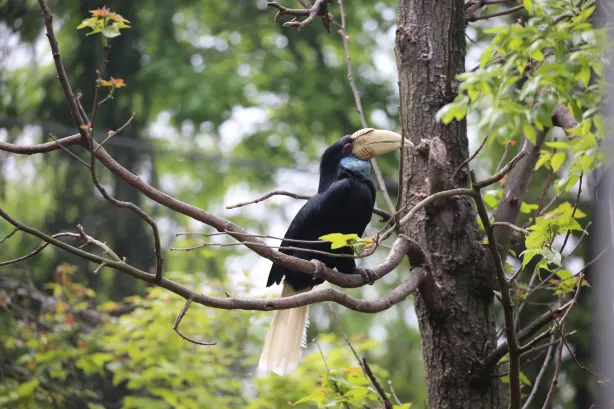
Nanjing Hongshan Forest Zoo is located in the north of Nanjing, built along three hills: Dahongshan, Fangniushan, and Xiaohongshan. With a green coverage rate of over 85%, the rolling hills form a unique forest view. The zoo brings together rare wild animals from around the world and adopts an immersive multi-species mixed-housing model, allowing animals to naturally express their instincts in environments that simulate their native habitats. The nearly 30 venues in the park are divided into three major zones by hill. The Dàhóngshān zone is mainly home to fierce beasts and native species, including the Tiger Area, Bear Area, Chinese Felid House, Felid Planet, Wolf Area, Native Species Conservation Area, Meerkat House, Monkey Hill, and Giraffe House; the Fàngniúshān zone brings together the Koala House, Gaoligong Exhibition Area, Gondwana Exhibition Area, Asian Primate Area, Orangutan House, and Hippo House; the Xiǎohóngshān zone is mainly composed of bird exhibition areas, including the Tropical Bird House, Hornbill Garden, Muntjac and Reeve's Muntjac Slope, Parrot House, Pheasant Garden, and Rare Bird Garden. Among them, the Gondwana Exhibition Area is themed on the ancient continent of Gondwana, presenting the ecological landscape of species from the Southern Hemisphere; the Gaoligong Exhibition Area focuses on the biodiversity of Gaoligong Mountain in Yunnan; and the Native Species Conservation Area is dedicated to the conservation and wild release of China's native wildlife, making it one of the park's signature exhibition areas. Both the Koala House and the Giant Panda House are popular venues in the park. Nanjing Hongshan Forest Zoo was among the first domestic zoos to cancel animal performances and stop visitor feeding activities. With the core philosophy of "everything for the animals," it focuses on ecological renovation of venues and improvement of animal welfare. The park also undertakes the rescue and rehabilitation of wildlife in the Jiangsu region, rescuing a large number of injured and stray wild animals every year.

China · Nanjing

Experiences you can't miss in Changfeng

Featured Day tours in Changfeng

View all Day tours
Changfeng Today's weatherClear 2-13℃
Changfeng weather for the next 2 days11/25: 4-15℃, 11/26: 7-21℃

Free things to do in Changfeng
What travellers say about Changfeng
user-avatar
卓尔不群12345October 6, 2024
4.0
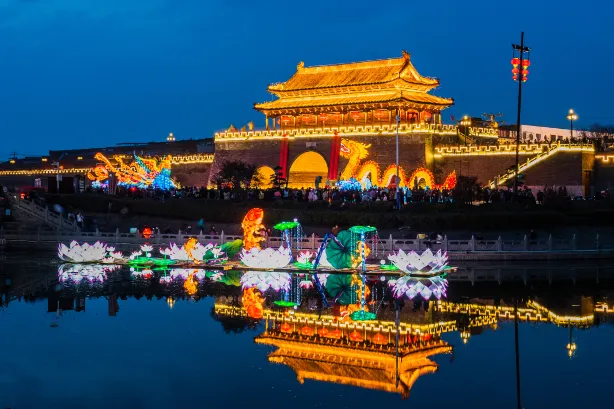
There is nothing to see during the day, but the light show and iron flower at night are worth seeing. The lanterns along the way also took some effort, but they are a bit rough. There were a lot of people during the National Day, but it didn't feel crowded.

China Intangible Cultural Heritage Park

user-avatar
M23***89May 3, 2020
5.0
The ring-tailed lemurs that live in Madagascar are here. Look at how agile they are. It is said that the fluffier the tail, the more lively the personality! You can also experience hand-feeding at the site. Get up close and personal with them!

Sunshine Coast Water World

user-avatar
白驹幕府过隙July 28, 2025
4.0
跟著電視劇爆紅的景點。從市區乘坐122路到達底站再步行十分鐘左右。景區並沒有建設好,周邊環境也是很雜亂,基本是開放式的。核心的幾座建築只能參觀外觀,內部是不開放的。基本沒有服務設施,不過九龍崗鎮上是什麼都有。

Jiulonggang Republican Era Town

user-avatar
茉粒爱自由November 22, 2026
4.0
Huangshan ⛰️, a must-visit place in this lifetime. Despite a pre-planned trip and a sudden typhoon 🌀, we still went. There was fog while waiting for the cable car in the morning, and I thought I wouldn't see any good scenery, but the surprise came very quickly. As soon as we got off the cable car, we were greeted by a sea of ​​clouds—it was breathtaking and soothing. We arrived at Bright Summit at noon, and then the fog became extremely thick, with very low visibility. A day spent experiencing both clear skies and a sea of ​​fog.

Mount Huangshan Scenic Area

user-avatar
Trip.cnNovember 23, 2026
4.0
Up close, you can see the Hui-style architecture; in the distance, you can see the mountains surrounding the village. The scenery of southern Anhui is all in Hongcun. Strolling along the stone-paved streets of the ancient village, it feels like you have traveled back to a day hundreds of years ago. It would be even more perfect if there were fewer hawkers and noise.

Hongcun Village

user-avatar
LeanzippyNovember 23, 2026
5.0
Niushou Mountain Cultural Tourism Zone is a massive, peaceful sanctuary in Nanjing that is well worth a visit. The park covers such a large area and offers a relaxing atmosphere away from the busy city. There are several distinct, impressive buildings to explore; from the intricate, modern architecture of the Usnisa Palace to traditional pagodas and quiet mountain temples. Recommended to wear comfortable walking shoes and set aside at least half a day to take everything in at an unhurried pace.
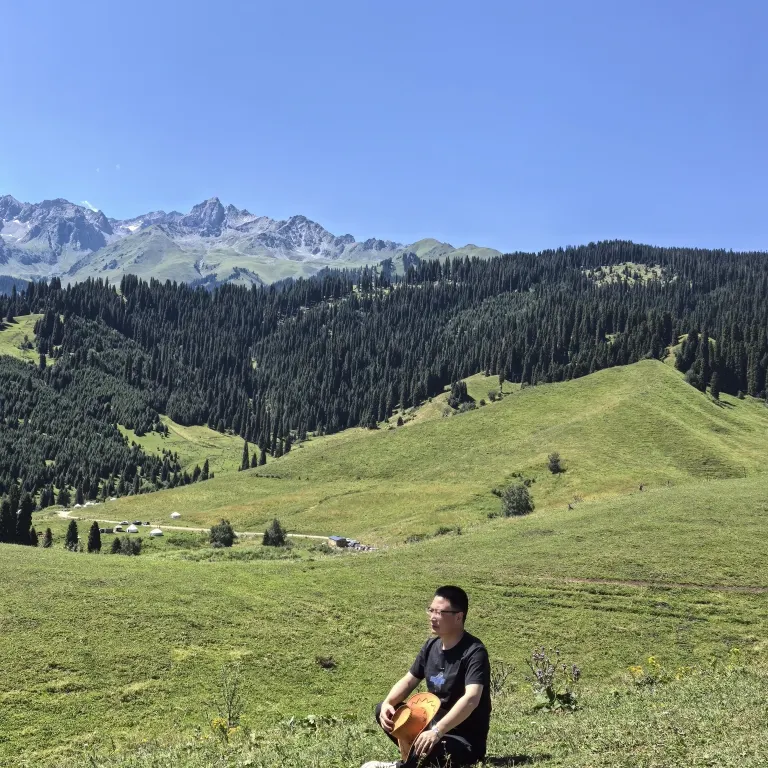
Niushou Mountain Cultural Tourism Zone

user-avatar
M41***19November 23, 2026
5.0
The overall design leans towards wabi-sabi, without excessive or complicated decorations, yet exuding refinement in every detail. The light gray walls, plain curtains, and sunlight dappling the floor all create a sense of tranquility. In this environment, even time seems to slow down.

Slender West Lake

user-avatar
帕夫 go365March 6, 2025
5.0
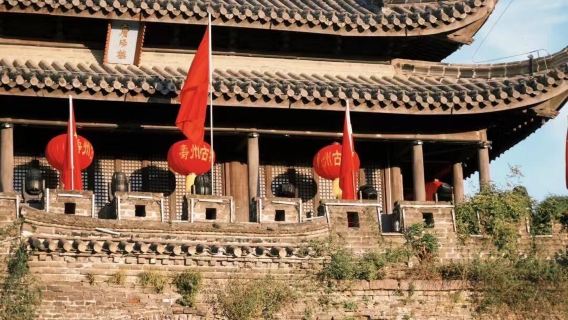
寿县古城历史悠久,文化底蕴深厚。古城墙是寿县古城的一大亮点,沿着古城墙漫步,欣赏城墙上的砖瓦和箭楼,感受古代军事防御的场景。此外,寿县古城的特色小吃种类繁多,口味独特,如寿县大救驾、寿县牛肉汤等,都很有特点。

Shouxian Ancient City

user-avatar
darlineliuNovember 17, 2026
5.0
It's a very worthwhile place to visit. The pilgrimage route itself cultivates rational awareness and clears away physical and mental fatigue. Aside from peak season, the off-season from November 15th to January 15th, if you avoid the autumn break for primary and secondary school students (around November 14th-20th), will have fewer tourists and a more pleasant trip.

Jiuhua Mountain

user-avatar
pig羊羊November 24, 2026
5.0
The African section is probably the most exciting part of the entire park; it's very well-planned. However, there aren't many animal species. Walking the whole thing takes a really long time, about four or five hours. It's quite physically demanding with children.

Nanjing Hongshan Forest Zoo

Trip Moments in Changfeng

Popular cities near Changfeng

Frequently asked questions

What are the recommended tours and excursions in Changfeng?

When choosing a tour, start with how much time you have and the kind of experience you're looking for. Trending options right now include 1-day tour to You's Family Garden + Balihe + Qinghe Song Street in Fuyang, Anhui with Chinese and English services available, Hefei, Anhui: Customized private charter 1-day tour | One booking per group | Available in multiple languages including English, Russian, Spanish and Korean, and Hefei 1-day Tour: Sanhe Ancient Town + Hechai 1972 + Anhui Museum (Chinese and English Services Available). Check the real-time availability and itinerary before you book.

As of November 24, 2026, the reference price for day tours and activities in Changfeng is around EUR 136.1 – EUR 336.25. Rates vary by duration, group size, transport, tickets, meals, and any special admission requirements. Before you book, please confirm the billing currency and whether the price is quoted per person or per group.

Get help anytime, anywhere within 30 secondsContact customer support

Change and cancellation policies vary by attractions and tours. Please check the product details page for more information.

Ticket prices may vary between weekdays and weekends, as well as during peak and off-peak seasons. When booking with Trip.com, you can also use Trip Coins to get extra savings. For more tips on booking discounted tickets, please visit Trip.com for the latest information.