


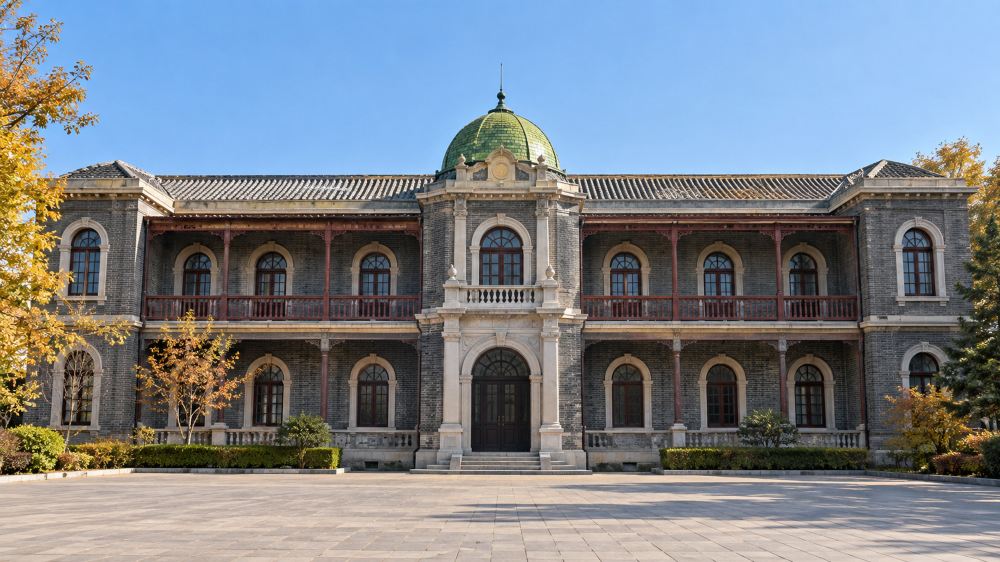
▲ The PALACE MUSEUM OF THE PUPPET MANCHUKUO is located at No. 5, Guangfu North Road, Kuancheng District. It preserves the palace site used by Puyi during the puppet Manchukuo period established with Japanese support. Its predecessor was related to the salt administration agencies of Jilin and Heilongjiang provinces. From 1932 to 1945, it served as Puyi's imperial residence. It began functioning as an exhibition site in 1962 and was renamed the PALACE MUSEUM OF THE PUPPET MANCHUKUO in 2000. The architecture, original displays, and historical materials collectively present the relationship between personal destiny and the history of Northeast China's occupation.

▲ Changchun Confucius Temple Museum is located on Dongtian Street, with Confucius temple architecture and traditional ritual culture as its themes. The courtyards, halls, and central axis space present the architectural order of Confucius worship sites, while also allowing visitors to understand the historical and cultural layers of Changchun through architectural details.

▲ Victory Park is located at the intersection of Renmin Street and Beijing Street in Changchun. The park preserves a water surface from the Toudaogou water system, with trees and walkways along the shore surrounding the water feature. The silhouette of the Ferris wheel adds a striking skyline to this urban park.

▲ Beijing Street West Historical and Cultural Block is located on the west side of Beijing Street, where the buildings, storefronts and open spaces along both sides of the street collectively form the daily streetscape of Kuancheng area. It is an urban space dominated by streets and alleys, where short streets, storefronts and pedestrian activities are all intertwined within the same block.

▲ Xinmin Avenue preserves the street scale and historic architectural courtyards left by Changchun's modern urban planning. The broad road, central green spaces, and old buildings with diverse facades form a continuous streetscape. In recent years, newly opened cultural spaces and small shops have emerged around these buildings, transforming the historic structures from isolated relics into a still-vibrant neighborhood.