


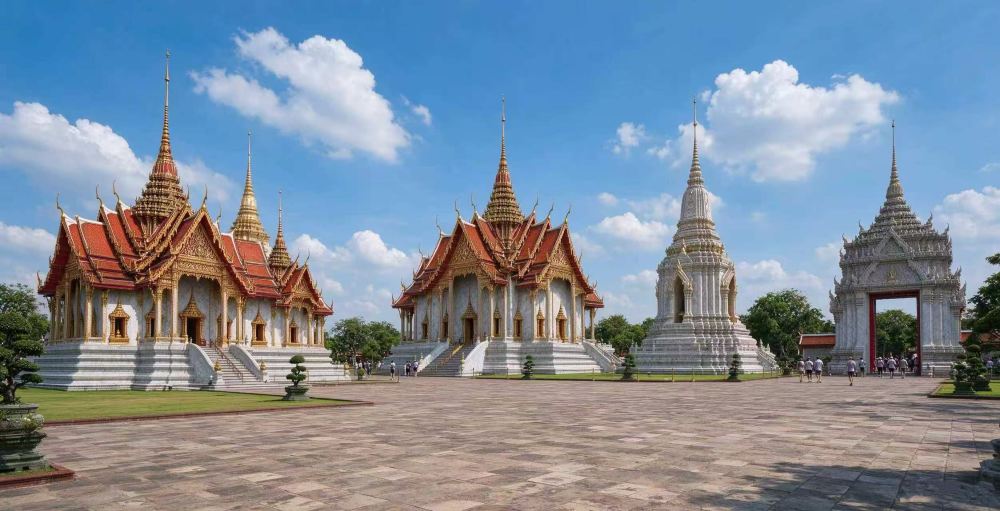
▲ The Ancient City, a large open-air heritage park, replicates ancient royal architectures from various Thai dynasties. The Ancient City, also known as the Seventy-Two Provinces, is located in Samut Prakan Province, Bangkok. It is a large open-air museum spanning over 200 acres. The park is laid out in the shape of Thailand's territorial outline, featuring over 120 historical sites from all 77 provinces of Thailand. It includes full-scale replicas of iconic palaces and ancient temple ruins from dynasties like Sukhothai and Ayutthaya. Without traveling across the country, visitors can explore 800 years of Thai history and civilization in just one day. The park showcases traditional Thai architecture set amidst lush lawns and greenery, with tiered Thai spires against the blue sky. From grand royal palaces to rustic red-brick temples, it also served as a filming location for the popular Thai drama "Love Destiny," making it ideal for photo opportunities in traditional Thai attire. Given its vast size, travelers can opt to rent golf carts for a leisurely tour of this three-dimensional museum of Siamese history, immersing themselves in Thailand's ancient architectural art and religious culture.
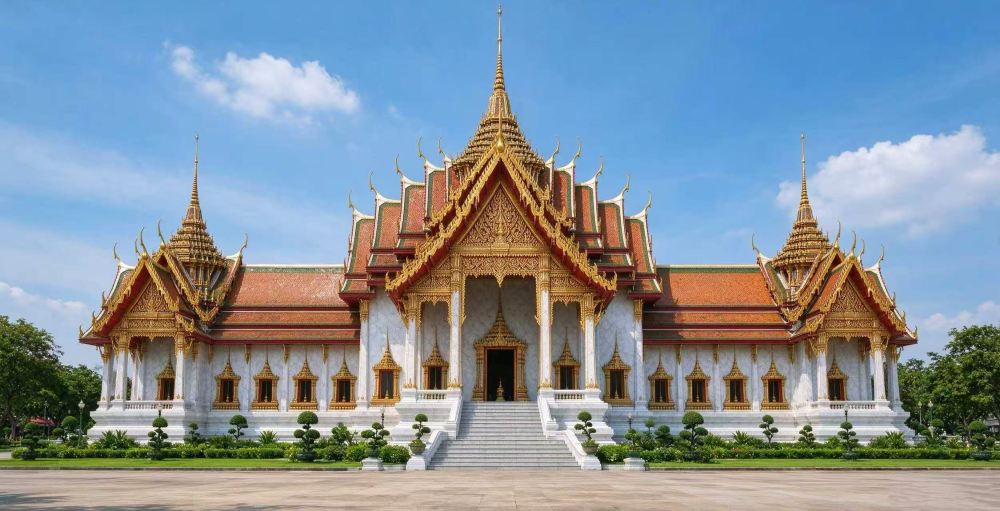
▲ The Sanphet Prasat Palace in The Ancient City, a replica of the Ayutthaya Kingdom palace, is a photogenic ancient architecture spot with rich ambiance. The Sanphet Prasat Palace is the core landmark in The Ancient City, modeled after the royal main hall of the Ayutthaya Kingdom. In ancient times, it served as the venue for grand ceremonies and receiving foreign envoys. The original structure was destroyed in the 1767 war, and this hall was meticulously reconstructed based on archaeological records. The palace features a unique design, with its silhouette resembling a sailing ship. Its layered tin roofs exude a heavy texture, while the windows are adorned with exquisite mother-of-pearl carvings, showcasing intricate craftsmanship. The grand interior houses royal artifacts, recreating the courtly splendor of the Ayutthaya Kingdom's golden age. Thailand's King Rama IX once hosted Britain's Queen Elizabeth II here, reflecting its profound historical significance. As a masterpiece of Ayutthaya architecture, the ornate palace facade and spacious courtyard create a rich classical ambiance under the light, making it a popular photo spot in The Ancient City.
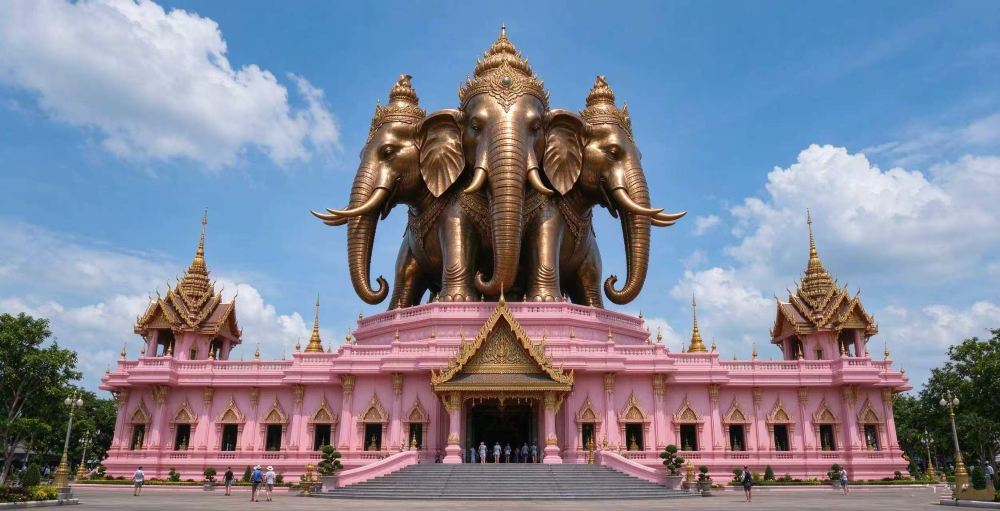
▲ The Erawan Museum, a giant copper elephant statue, a dreamy pink palace, a popular landmark in Bangkok. The Erawan Museum is located in Samut Prakan, adjacent to The Ancient City. Also known as the Pink Elephant Museum by visitors, it is a highly recognizable internet-famous attraction in Bangkok. The visually striking landmark of the entire building is the giant three-headed elephant statue standing atop the pink palace, reaching a height of 43.6 m. The statue is entirely crafted from hundreds of thousands of hand-made copper pieces, with a total weight of 250 tons. The three-headed elephant originates from Hindu mythology as the mount of the god Indra, symbolizing auspiciousness and power. The palace's exterior walls feature a soft beige-pink hue, adorned with intricate traditional Southeast Asian patterns, complemented by surrounding gardens and water features, creating a fairy-tale ambiance. The museum, built over a decade by a Thai collector, is designed according to the Buddhist concept of the three realms, integrating religious culture, sculptural art, and architectural aesthetics. From afar, the massive copper elephant standing atop the pink palace offers a breathtaking sight, making it a must-visit landmark for visitors exploring Bangkok's outskirts.
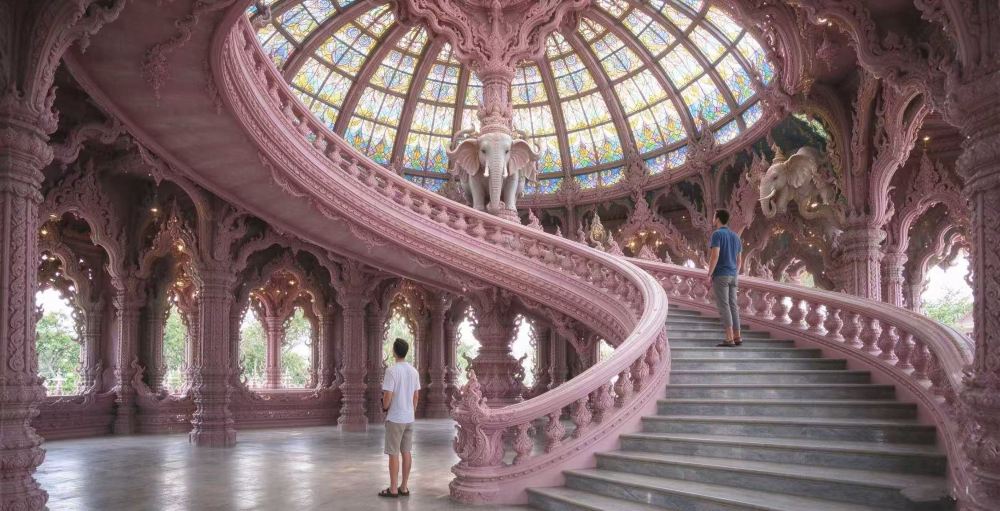
▲ Inside The Erawan Museum, the internet-famous spiral staircase and painted dome offer premium photo spots. The spiral staircase is located in the human world hall on the first floor of The Erawan Museum, a highly popular Internet-famous photo spot. The staircase features an elegant spiral curve design, divided into pink and white twin staircases, with handrails and walls adorned with intricate reliefs, extending upward to the massive stained glass dome at the top. The dome depicts a mythological cosmic scene, with sunlight filtering through the colored glass to cast a dreamy, kaleidoscopic glow in the hall. The walls are painted with celestial-themed frescoes, blending Thai carvings and European dome art into a uniquely lavish style. Ascending the spiral steps leads to the passageway in the elephant's leg, guiding visitors toward the heaven-level exhibition hall. The space exudes a strong ambiance with graceful lines, making it easy to capture stunning shots—whether looking up at the dome or down at the spiral staircase. Combining artistic beauty with religious symbolism, this spot is a must-visit for visitors exploring the museum.

