



▲ From Seoul, our first stop is the majestic Seoraksan, listed by UNESCO. The main peak of Seoraksan, Daecheongbong, stands at 1,708 m, making it the third highest peak in Korea. Here, breathing in the fresh air and immersing yourself in the tranquil atmosphere of unique rock formations and lush trees will instantly relax you. You can also take a cable car (cable car fee not included) to overlook the granite peaks and vast forests, and on clear days, you can even see the East Sea in the distance—a classic view of Seoraksan. This is not only a famous mountain in Korea but also the "epitome of fall." When the valleys, streams, and peaks are painted in red and gold, you'll feel like you've stepped into an oil painting.

▲ Every fall, Seoraksan turns into a fairy-tale world of red and yellow. It is one of the earliest places in Korea to enter the maple leaf season, with beautiful layers of valleys, peaks, and vast red foliage, making it ideal for nature lovers and hikers.
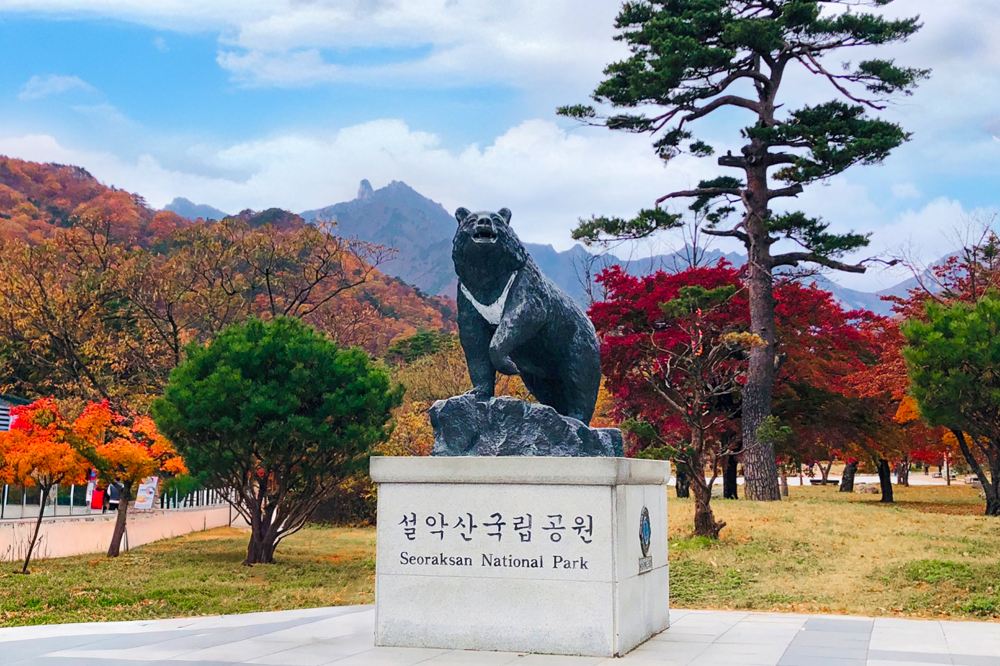
▲ Seoraksan national park, located in Gangwon Province in northeastern South Korea, is one of the country's most popular and famous national parks, as well as a UNESCO-designated biosphere reserve.

▲ Heungguksa temple, founded in 652, is one of Korea's historic Buddhist temples. Built against the mountain, it is surrounded by ancient trees and blends harmoniously with the majestic mountain view. The temple houses the reunification Buddha, a symbol of peaceful reunification between the north and south—a 14.6 m tall, 108-ton bronze statue that leaves a profound impression. Heungguksa also preserves several ancient structures and Buddhist artifacts, exuding solemnity and Zen tranquility.

▲ High peaks of the Taebaek Mountains are covered in snow from November to February, with mist swirling through the mountains like a fairyland, making a snow-trek incredibly healing. After a snowfall, Seoraksan feels like stepping into a fairy-tale world, with white-barked birch forests bowing under the weight of thick snow, and every step sinking into the soft, white powder.

▲ Nami Island gained fame as a filming location for "Winter Sonata" and is hailed as the "Korean version of Watarase Keikoku Valley." The island's metasequoia and ginkgo paths stretch straight ahead with neatly aligned trees, offering exceptionally fresh air. The entire island resembles a vast ecological park where you can spot squirrels, rabbits, peacocks, and other animals strolling or feeding. Walking along Nami Island's renowned "Ginkgo Avenue" and "Maple Trail" in fall is a delightful experience. Whether you want to capture romantic travel photos or let your kids explore nature's beauty, this place is perfect. Nami Island in fall is like a painting, a poem, and a cherished autumn memory in the hearts of Koreans.

▲ Visiting Nami Island in winter is like stepping onto the set of the Korean drama "Winter Sonata." The island's iconic metasequoia and ginkgo paths covered in snow make perfect spots for capturing stunning winter photos.

▲ The cherry blossom trail reaches full bloom in early April, making it the perfect time for photos. The spring greenery of the metasequoia avenue is also incredibly soothing.
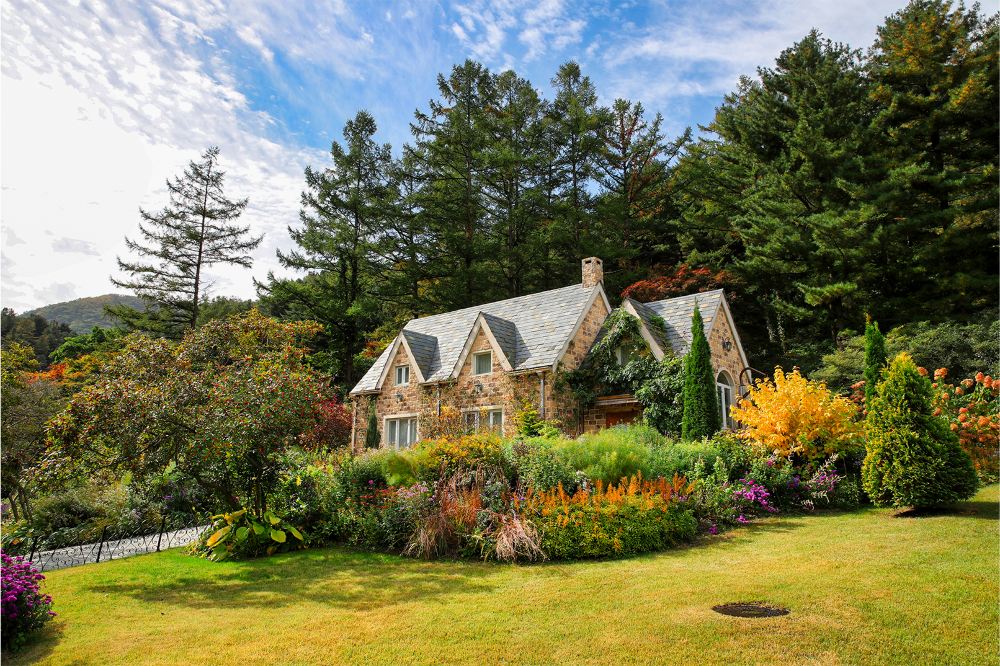
▲ Morning calm arboretum, a hidden paradise near Seoul, is a super popular botanical garden in Korea. "Morning calm" comes from a famous quote by Thai poet Tagore. The arboretum covers an area of 100,000 pyeong and consists of more than 10 themed gardens. It is also a filming location for many Korean dramas. Strolling through it feels like stepping into a fairy tale forest, with highlights in every season: in spring, flowers bloom in abundance, with tulips and azaleas vying for beauty, and cherry blossoms in early April; summer brings lush greenery and beautiful rose, hydrangea, and hibiscus festivals; in fall, maple leaves turn the valleys red, creating a fairy tale-like beauty; winter features a super romantic light festival, transforming the entire garden into a sparkling Fantasyland.
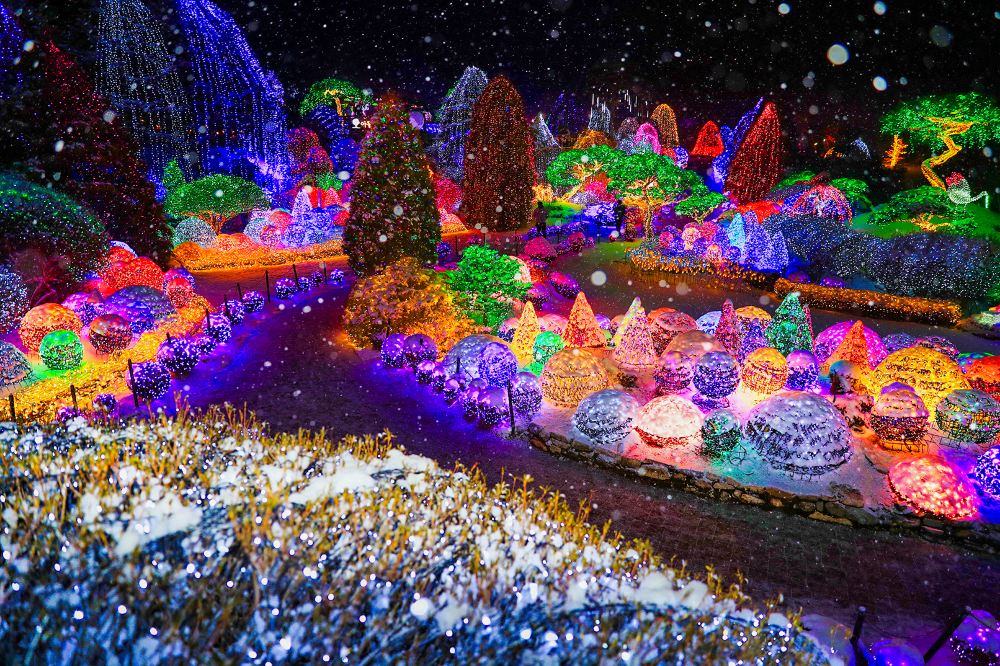
▲ The winter highlight of the morning calm arboretum, the five-color starlight garden light show—combining natural scenery with colorful LED lights—is truly spectacular. The entire garden is illuminated by millions of lights, as if falling into a galaxy. If it snows, the ice and snow intertwine with the lights, creating an unreal beauty.