Things to do in Hongya
Explore top experiences
Top 10 attractions in Hongya


Liu Jiang Ancient Town
Liujiang Ancient Town is located on both sides of Liujiang River, a tributary of Huaxi River. It was founded in the Southern Song Dynasty. The Zeng Family Courtyard is worth a visit. It is a famous large-scale courtyard in the ancient town. The whole courtyard is like a traditional Chinese character for longevity. There is a strange tree in the courtyard, and the tree is covered with slender and slender fruits like cowpeas. No one in the area knows its name or its origin. When visiting the ancient town, you can slowly taste the unique charm of the ancient town and experience the rhythm of slow life. The ancient banyan trees planted by the river and the street market built by the water form a landscape painting, showing the vicissitudes of the ancient town. In the evening, Liujiang Ancient Town has a different face, with bars, singing K, barbecues and other entertainment life.Hongya · 24.9 km from downtown

Elegant Woman Lake
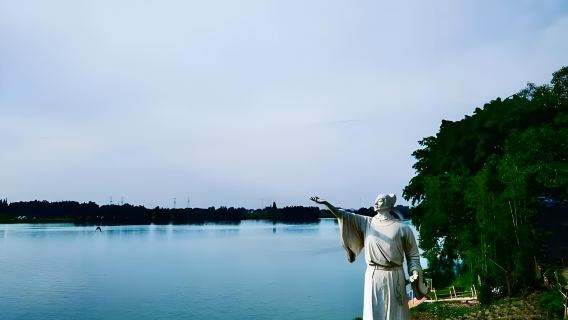
Elegant Woman Lake, also known as Wawushan Reservoir, is located in Wawushan Forest Park, Hongya County, Meishan City, on the western edge of Sichuan Province. It sits at an altitude of 1,080 m. The lake covers an area of 15 km², stretching 19.04 km in length and 13.31 km in width, with an average depth of 16 m. The reservoir has a capacity of 600 million cubic meters and a dam height of 143 m. Elegant Woman Lake is a multi-purpose reservoir primarily for flood control, combined with irrigation, power generation, aquaculture, and tourism. It is an excellent destination for travel and vacation.Hongya · 43.1 km from downtown

Caoyutan Scenic Spot
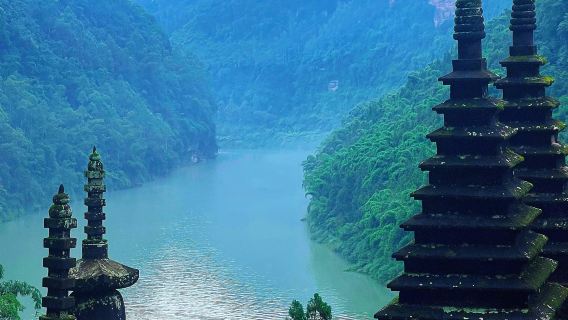
The Yutan Scenic Area is located in the upper reaches of the Qingyi River in Hongya, with an area of 18 square kilometers. In the scenic area, the group of ancient cypress trees reflects the green water surface, and the beautiful natural scenery and rich cultural history complement each other, forming a unique river gorge scenery. The scenic area is divided into 40 scenic spots in 6 major scenic spots, and you can enjoy a lot of natural and cultural landscapes: there is a national first-class protected plant, the cypress tree, which grew up at the same time as the dinosaurs; the lifelike turtles drink water from the same source and have their own characteristics. Characteristic, known as "Laughing Buddha"; the legendary "Cut Duo Mountain" and "Guidu House" left by Erlang God to control the flood; "Zhuqing Pass" ancient plank road, one of the ancient southern Silk Road passages, and many Ming and Qing Dynasties Ancient stone carvings and temples left over from the times; a large reclining Buddha with a length of 45.3 meters and a height of 12.5 meters was constructed by using natural rocks; more than 80 paintings of Buddha's life stories and motorcycle rock statues were carved and carved; There are 108 famous pagodas in China, forming a thousand pagodas. In addition, the scenic spot has also restored and reconstructed 4 ancient buildings such as the Hongya scenic spot "Kuixing Pavilion".Hongya · 17.8 km from downtown

Gaomiao Town
It is 16 kilometers away from Mount Emei. It is well preserved, with original taste and no strong commercial atmosphere. The Gaomiao liquor inside is relatively famous.Hongya · 36.5 km from downtown

Thousand Pagodas Buddha Kingdom in Caoyu Beach
The scenery of the Thousand Pagoda Buddha Country in Caoyutan is beautiful, and the scenery of Guanyin Temple is breathtaking and worth a visit.Hongya · 22.4 km from downtown

Yupingshan Resort
Yuping Mountain Forest Resort is located in Yuping Mountain, Hongya County, Sichuan. This mountain is about 1,300 meters above sea level, 162 kilometers away from Chengdu, 90 kilometers away from Leshan, 40 kilometers away from Mount Emei, 45 kilometers away from Wawu Mountain, and 38 kilometers away from Hongya County. On the golden section point of the Golden Triangle of Southwest Tourism of Leshan Giant Fochuan in Mount Emei.Hongya · 23.4 km from downtown

Dongfeng Weir-Qianfo Rock
The core Attraction Dongfengyan was built in the first year of Emperor Kangxi of the Qing Dynasty, that is, in 1662 AD, and has been in use for more than 350 years. It is the third world heritage site in Leshan City after Leshan Giant Buddha and Mount Emei. Qianfoyan was excavated in the Sui Dynasty, flourished in the Tang Dynasty, and continued to the Ming and Qing Dynasties. The statues are arranged in a staggered manner, with a few occupying a cave alone and hundreds of them gathered in one cave. The beautiful shapes, exquisite craftsmanship, different postures, and colorful colors show the high level of stone carving art in ancient China. In 2006, Jiajiang Qianfoyan Grottoes, as a Tang Dynasty cultural relic, was approved to be included in the sixth batch of national key cultural relics protection units. Irrigation projects and historical landscapes complement each other, and water control inscriptions and grotto statues coexist harmoniously, which not only spreads irrigation civilization, but also profoundly expresses the important connotation of irrigation culture. In addition to Dongfeng Weir and Qianfoyan Grottoes, the core Attraction also has a wide range of water culture inscriptions from past dynasties, Yuelangchang Wonderland, Cassia Stone, Lingyan Fairy Cave, Peiyu Mountain Spring, Daguan Cliff, and Tieshi Xiongguan. The Attraction is full of green mountains, clear springs and waterfalls, and lush bamboo forests, with a variety of scenery.Jiajiang · 23.8 km from Hongya

Baoguo Temple
The Baoguo Temple, not far from Mount Emei, was built in the Wanli Period of the Ming Dynasty and is the starting point for most tourists to visit the Emei Mountain Scenic Area. The plaque of the "Baoguo Temple" on the temple gate is from the hand of Emperor Kangxi of the Qing Dynasty. It is also the center of the Buddhist activities in the mountains. The main hall is the Maitreya Hall, the Daxiong Hall, the Seven Buddha Hall and the Puxian Hall. Today it is home to the Emeishan Buddhist Association, where many large ceremonies are held.Emeishan City · 38 km from Hongya

WenShuFang
WenShuFang is an antique-style cultural block in Qingyang District, Chengdu, adjacent to Wenshu Monastery. Opened in 2006, the Wenshu Monastery area, where it is located, is one of Chengdu's three major historical and cultural conservation zones, alongside Kuanzhai Alley and Daci Temple. The block primarily features architecture in the traditional Sichuanese residential style, with teahouses, snack shops, intangible cultural heritage workshops, and Hanfu stores nestled among gray-tiled roofs, wooden doors, and courtyards. It is also a popular spot for locals to drink tea and chat. The main streets in the district each have their own distinctive features: Wuyuegong Street is dedicated to intangible cultural heritage, with workshops showcasing traditional crafts like Shu brocade, Shu embroidery, lacquerware, bamboo weaving, and silver filigree, where artisans can often be seen working on-site; Nanyue Lane is a hub for Hanfu culture, with a constant stream of people dressed in Hanfu taking photos against the backdrop of ancient-style gate towers and red walls, and the street also offers Hanfu rental and makeup services; Jinma Lane is the heart of old Chengdu flavors, where time-honored snacks like imperial walnut cakes and Zhang Liangfen from Dongzikou can be enjoyed from one end of the street to the other. When you need a break, you can stop at a teahouse for a bowl of covered-bowl tea. The district also hosts Sichuan opera performances, where you can enjoy face-changing, fire-spitting, and long-spout tea art while sipping tea, fully immersing yourself in Chengdu's unique blend of leisure and liveliness. When touring, you might as well combine this place with the nearby Wenshu Monastery into one route, visiting the ancient temple first and then exploring the alleys, which can be completed in half a day. Travelers planning to take Hanfu photos are advised to allocate more time for makeup, styling, and framing.China · Chengdu

Chengdu Museum
Chengdu Museum is located on the west side of the city center, covering an area of approx. 17 acres with a total floor space of approx. 65,000m² and exhibition space of approx. 20,000m². The main building consists of south and north wings: the south wing's above-ground floors primarily house offices and research areas, while the basement level contains an auditorium (multi-function hall). The north wing mainly features exhibition areas, with the ground floor housing the lobby, screening room, and special exhibition hall. The basement level presents the "Man and Nature" thematic exhibition. Floors 2–3 showcase "Flourishing Chengdu - Ancient History and Culture of Chengdu," floor 4 displays modern history and folk customs, and floor 5 features the Chinese Shadow Puppetry and Marionette Exhibition. The museum boasts a collection of nearly 200,000 artifacts, forming a comprehensive chronological sequence from the Neolithic Age to the Republic of China period. The collection encompasses bronze ware, gold and silver artifacts, brick carvings, stone sculptures, ceramics, paintings and calligraphy, furniture, shadow puppets, marionettes, ritual paintings, masks, wood carvings, and more—establishing both quantitative significance and qualitative excellence within a systematic framework. Since its opening, the museum has hosted a series of highly acclaimed special exhibitions, including "The Restless Nostalgia: Zhang Daqian," "The Splendid Emperor: A Special Exhibition of Emperor Qianlong of the Qing Dynasty," "The Soul of the Silk Road: Dunhuang Art Exhibition & Cultural Relics of the Land of Abundance and the Silk Road," "Summer Palace of the Empire: Treasures from the Peterhof State Museum, Russia," "French Modern and Contemporary Painting Art Exhibition & 'Portrait·Metamorphosis' Photography Exhibition," "Echoes of Civilization: Ancient Treasures from Afghanistan," and "The Road of Qin and Shu: Bronze Civilization Special Exhibition."China · Chengdu
Experiences you can't miss in Hongya
Featured Cultural experiences in Hongya
View all Cultural experiences
Save AU$0.75
FromAU$73.89AU$74.64
Free cancellation
Instant confirmation
Book now for tomorrow
FromAU$63.75
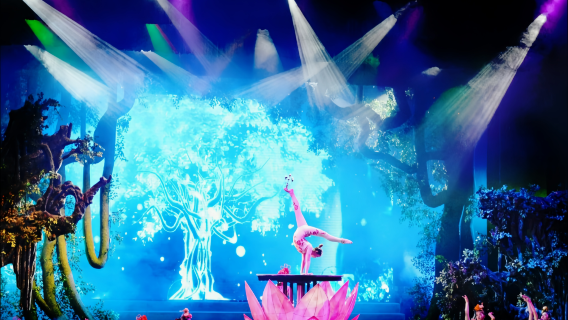
![[Leshan] Sacred Emei Evening Show Ticket (Intangible Cultural Heritage Emei Martial Arts Performance + Colorful Ethnic Dance Show + Immersive Landscape Stage Design + Audio-Visual Spectacle)](https://ak-d.tripcdn.com/images/0353c12000pntawrqAECD_C_568_320.png?_fr=wc)
FromAU$60.10
![Meishan San Su Shrine Museum in-park commentary [optional join-in tour/private tour|ticket package|multilingual]](https://ak-d.tripcdn.com/images/0351h12000r9w73yw8545_C_568_320.jpg?_fr=wc)
5.0/5
· 3 reviewsFree cancellation
Instant confirmation
Book now for tomorrow
FromAU$223.01
Featured Day tours in Hongya
View all Day tours![[Chengdu Downtown - Mt. Wawu of China] Direct Shuttle + Scenic Area Admission Ticket - Hassle-Free Departure](https://ak-d.tripcdn.com/images/0350y12000pd64kvlA02F_C_568_320.jpg?_fr=wc)
5.0/5
· 2 reviewsFree cancellation
Instant confirmation
FromAU$67.32
![Chengdu Wawu Mountain Group Day Tour: Marvel at the Spectacular Table-Shaped Landform [Includes Admission + Dual Cable Cars + Direct Shuttle]](https://ak-d.tripcdn.com/images/0352f12000pd66knv76E6_C_568_320.jpg?_fr=wc)
Free cancellation
Instant confirmation
FromAU$98.30
![Chengdu to Mount Wawu One-Day Tour: Rediscover Your Inner Peace [Tickets+Private Car]](https://ak-d.tripcdn.com/images//0585l12000n2icq11EE92_C_568_320.jpg?_fr=wc)
Free cancellation
Instant confirmation
Save AU$1.22
FromAU$120.98AU$122.2

Free cancellation
Instant confirmation
Save AU$1.63
FromAU$162.28AU$163.91
5% off
Limited-time sale
FromAU$590.87AU$621.97
5% off
Limited-time sale
FromAU$324.40AU$341.48
![Leshan Giant Buddha + Mount Emei Day Trip [Optional: Round trip from Leshan + boat tour of the Giant Buddha OR mountain climbing of the Giant Buddha]](https://ak-d.tripcdn.com/images/0356312000nzgw7z615D7_C_568_320.jpg?_fr=wc)

4.9/5
· 12.3k reviews· 11k bookedFree cancellation
Instant confirmation
69 consecutive positive reviews
FromAU$207.77
4.9/5
· 5.1k reviews· 12.6k bookedFree cancellation
Instant confirmation
98.9% of travelers recommend
FromAU$55.38
Featured Food & drink in Hongya
View all Food & drink
Free cancellation
Instant confirmation
FromAU$91.87

Free cancellation
Instant confirmation
FromAU$171.29
Free cancellation
Instant confirmation
Book now for tomorrow
FromAU$128.36

Free cancellation
Instant confirmation
FromAU$128.57
5% off
Limited-time sale
FromAU$532.94AU$560.99
Featured Outdoor experiences in Hongya
View all Outdoor experiences
Free cancellation
Instant confirmation
Save AU$1.93
FromAU$191.01AU$192.94

5.0/5
· 1 reviewFree cancellation
Instant confirmation
FromAU$44.45

Free cancellation
Instant confirmation
5% off
Limited-time sale
FromAU$507.45AU$534.16
Free cancellation
Instant confirmation
Save AU$0.81
FromAU$80.90AU$81.71

FromAU$365.87
Free things to do in Hongya
Liu Jiang Ancient Town
Hongya · 24.9 km from downtownElegant Woman Lake
Hongya · 43.1 km from downtownCaoyutan Scenic Spot
Hongya · 17.8 km from downtownGaomiao Town
Hongya · 36.5 km from downtownThousand Pagodas Buddha Kingdom in Caoyu Beach
Hongya · 22.4 km from downtownYupingshan Resort
Hongya · 23.4 km from downtownDongfeng Weir-Qianfo Rock
Jiajiang · 23.8 km from HongyaBaoguo Temple
Emeishan City · 38 km from HongyaWenShuFang
China · ChengduChengdu Museum
China · Chengdu
More ways to travel from Hongya
What travellers say about Hongya

林灵666September 2, 2026
5.0
I arrived at Ya'nv Lake at the foot of Wawu Mountain in early September, just in time to avoid the summer peak season. The lake area was surprisingly quiet and peaceful with few tourists. The daytime sunshine was bright and clear; the mountains had already shed their summer heat in September, and a gentle breeze made it incredibly comfortable.
The high-altitude lake had crystal-clear water, with the distant Wawu Mountain silhouetted clearly. Sunlight shimmered on the lake's surface, creating a beautiful reflection of the mountains and water, offering expansive views. Whether driving slowly along the road or stopping at the viewing platform to enjoy the fresh air and the fragrance of nature, there was no need to fight for a good photo spot; every snapshot was a clean and soothing picture of nature. The scenic area is free to enter and not overly commercialized, making it perfect for relaxation and rejuvenation.
Without the hustle and bustle of peak season, there was a tranquil and leisurely atmosphere amidst the mountains and water. Whether it's a short stop to take photos or staying overnight to watch the sunset and sunrise, it's a great place for a short, relaxing vacation. Traveling off-peak provides a fantastic experience, and I highly recommend it to those who appreciate quiet, natural scenery.
Elegant Woman Lake

老老倪August 23, 2022
5.0
Caoyutan Scenic Area is located on the bank of Qingyi River in Wucunba, Caoyutan Town, Hongya County, Meishan City, Sichuan Province, covering an area of 18 square kilometers. The scenic area is divided into 6 major scenic spots and more than 40 scenic spots, with convenient transportation. There are 4 hotels of various types with more than 1,100 beds; there is the "Yajiang Academy" with Qing Dynasty architectural style in the green mountains and green ridges; the 33-meter-high Kuixing Pavilion scenic spot has a panoramic view; the "Thousand Pagodas Buddha Country" is scattered in an orderly manner; The "Natural Laughing Buddha", "Jinshan Waterfall" and "Tongtian Cloud Stack" on the cliffs of Jinchuan Mountain are known as the "Three Wonders" of Caoyu Beach; the Arhats in Jinzhou Temple have different shapes and the king of heaven is majestic; the peak backwater in Jiaocheng Gorge Turning around, the cliffs on both sides of the strait penetrate the sky, majestic and precipitous. Caoyu Beach integrates beautiful scenery and is an ideal place for tourism, vacation and leisure.
Caoyutan Scenic Spot

印象西南February 24, 2025
5.0
- Profound historical and cultural heritage: Gaomiao Ancient Town has a history of nearly 700 years. The ancient buildings are well preserved. 125 of them were built in the late Ming and early Qing dynasties. They are representative of the architectural style of western Sichuan in the Ming and Qing dynasties. There are cultural relics protection units such as Jiangxi Guild Hall and Wushenggong Theater. It is an important post station on the main roads of Mount Emei, Leshan Giant Buddha and Wawu Mountain.
- Beautiful natural scenery: The ancient town is surrounded by mountains and beautiful scenery. The Li River and Zhang River are surrounded and converge at the bottom of the slope to form the source of Huaxi. From the opposite Baihu Mountain or Er'e Mountain, the ancient town looks like a plow or a dragon head sucking water; looking back at the bottom of the town, the mountains on both sides are majestic, the ancient bridges are in the air, and the forests are dense.
- The style of the ancient town is original: there is not much commercial development here, and the original and simple charm is maintained. The streets are paved with bluestone, and there are wooden ancient buildings on both sides. You can also see old people sitting in front of the door to bask in the sun and play mahjong, and children chasing and playing in the alleys, with a strong breath of life.
- Rich specialties: Gaomiao tofu pudding, ancient town candied haws, special snacks, Gaomiao liquor, rice candy, etc., as well as ecological native goats, old-style native steamed buns, etc., to satisfy tourists' taste buds.
- Poor transportation convenience: The location is relatively remote, and public transportation is not well developed. For tourists without private cars, it is not convenient to go to the ancient town. Although there are buses from Hongya Bus Station to Gaomiao Town, the number of buses may be limited.
- Imperfect tourist facilities: Most of the accommodation facilities in the ancient town are homestays, with relatively simple conditions, and lack of high-end hotels and large resorts. In terms of catering, except for some local snack bars and farmhouses, there is a lack of diversified restaurant options. In addition, there are relatively few public facilities for tourists to rest, such as benches and pavilions.
- Fewer things to do: The ancient town is small in scale, mainly focusing on sightseeing, lacking some participatory and experiential tourism projects, and tourists stay for a short time, which is easy to feel monotonous.
Gaomiao Town

每日少开一天车September 5, 2023
4.0
The Thousand Pagodas Buddha Kingdom in Caoyutan Scenic Area in Hongya County is a place that few tourists visit. It is located on the innermost hillside of the scenic area. You can only see the pagodas in the mountains and forests when you get closer, especially in the riverside area under the hillside and on the other side of the Qingyi River. It is hard to imagine how so many different pagodas were built in the past. No wonder this place is called the "Angkor Wat" of Sichuan.
Thousand Pagodas Buddha Kingdom in Caoyu Beach

衔春归玄燕May 1, 2026
5.0
Wenshu Fang, nestled against the ancient Wenshu Monastery, exudes the rustic charm of western Sichuan folk customs amidst its blue bricks and gray tiles. I strolled leisurely here with my dog, wandering through bamboo paths and red-walled, green corridors; even he couldn't resist frolicking on the stone slabs. There's none of the hustle and bustle of trendy shops, only the jasmine fragrance wafting from teahouses and the gentle sounds of artisans hammering bamboo – the atmosphere is simply divine!
Wenshu Fang is a hidden gem of a Chengdu food map! Just step outside and you can enjoy authentic "Dongzikou Zhang Lao Er" sweet water noodles, their sour, spicy, and savory flavors instantly awakening your taste buds. I squatted by the window and ordered a spicy hot pot for my dog, and he quietly devoured half the bowl! There's also freshly ground soy milk and ice jelly on the street corner; even my dog couldn't resist licking the soy pulp clean from the rim of the bowl!
Wenshu Fang is incredibly pet-friendly! I took photos with my dog in front of the "Wenshu Fang" cultural and creative shop; he posed on the bluestone slabs against the backdrop of the ancient buildings with their upturned eaves – every snapshot looked like a masterpiece of traditional Chinese style. The shop also thoughtfully provided a water station for pets, so you don't have to worry about your pet getting thirsty.
WenShuFang


