Huai'an

Things to do in Huai'an

Search attractions or local attractions & tours
Search

Explore top experiences

Top 10 attractions in Huai'an
View all Attractions
Shichahai Scenic Area
Selected for Best Things to Do in North China

Shichahai Scenic Area

8
4.7/5
3.1k reviews

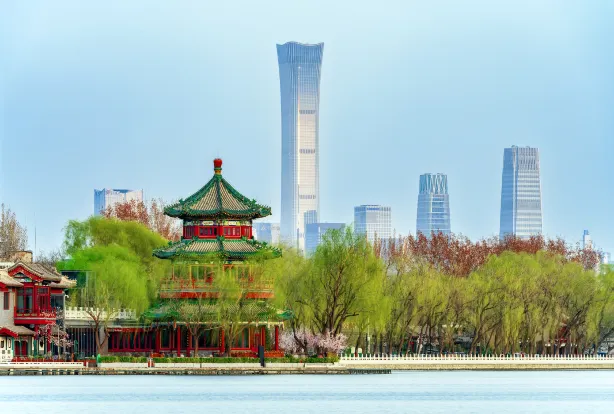
Shichahai Scenic Area refers to the front sea,Shichahai Scenic AreaAlong with the three lakes of Xihai and the adjacent areas, this place boasts vast stretches of beautiful lake surfaces and is also a famous historical district in Beijing, where numerous former residences of celebrities, princely mansions, and other historical sites are scattered, along with various delicacies close to the lives of ordinary people,Shichahai Scenic Area pub streetIt is also a long-standing hotspot for nightlife in the capital. Take a cruise in summer In summer, the lake is covered with lotus flowers. Cruise docks like the lotus market, wild duck island, and dreamlike Jiangnan line the shore, offering pedal boats and electric boats for self-rowing fun. Traditional punt boats are operated by boatmen in period costumes, who share old Beijing stories along the way. Ice skating on the lake in winter In winter when the lake freezes over, cruises stop operating, but you can still come to enjoy the winter scenery. Once the ice is solid, the Qianhai ice rink opens, offering skating and ice biking, a long-standing winter tradition in Beijing. Visit ancient architecture The ancient architecture around Shichahai Scenic Area keeps the attraction full of old Beijing characteristics. There areHuitong Temple, Deshengmen Arrow Tower, Prince Chun's Mansion,Guanghua Temple, Yinding Bridge, Bell and Drum Towers, and other attractions. Among the most famous is the residence of Heshen on Qianhai West Street—the Prince Gong Mansion. In addition to marveling at the lavish home of the corrupt Qing official Heshen, the mansion also houses over 10,000 hidden "fu" characters. The Kangxi Emperor's inscribed fu stele is particularly renowned, drawing travelers to queue for hours just to catch a glimpse. If interested, you can also detour to Yandai Byway to visit the Great Qing Post Office, which marks the birth of modern postal service in China. You can stamp a few beautifully patterned postmarks as souvenirs at the post office, though you'll need to purchase their postcards first to get the stamps. Try old Beijing snacks If you like to casually snack, you can buy a candied hawthorn stick, lean against the white marble railing of Shichahai Scenic Area, and enjoy the cruise boats coming and going on the lake while eating. If you want to specifically seek out Beijing snacks, you can go toJiumen snacks, in the traditional courtyard houses, you can find everything from soy-braised beef, dalian huoshao (a type of pancake), instant-boiled mutton, to tofu pudding; or head to the west side of the Mei Lanfang Memorial HouseHuguo Temple snack street, tube-shaped wings, palace cheese, and shoe sole pancakes, taste the delicious flavors from the hutong; additionally, there's a shop in the Lotus MarketQuanjude roast duck restaurant. Bars and nightlife When night falls, the lively time arrives. Around the Shichahai Scenic Area, numerous bars echo with singing, and some bar singers in the Shichahai Scenic Area truly perform well, with stories of the "Beijing drifters" behind the bars. Rock singer Dou Wei performed at the Shichahai Scenic Area for three years, and it is said that the restaurant Qingyunlou (Shichahai branch) in the Shichahai Scenic Area is now owned by him. Other famous bars include Hutong Sketch and Jiadingfang. Sitting in a bar, watching singers perform, you can almost hear the passion for music from the "Beijing drifters" in their songs. Nearby attractions Shichahai Scenic Area is adjacent to Nanluoguxiang to the east and Beihai Park to the south, with Jingshan Park, the Palace Museum, and Tiananmen Square a bit further south also within easy reach. Typically, visitors explore the Palace Museum or Tiananmen Square during the day and unwind at the bars in Shichahai Scenic Area in the evening. For those who prefer lakeside views over the Palace Museum or Tiananmen Square, combining a visit to Beihai Park with Shichahai Scenic Area is ideal. If shopping and sampling snacks are more appealing, one can head to nearby Nanluoguxiang after exploring Shichahai Scenic Area.

China · Beijing
Wu Tai Shan
No. 3 of Night Attractions in Shanxi

Wu Tai Shan

7.8
4.6/5
8.7k reviews

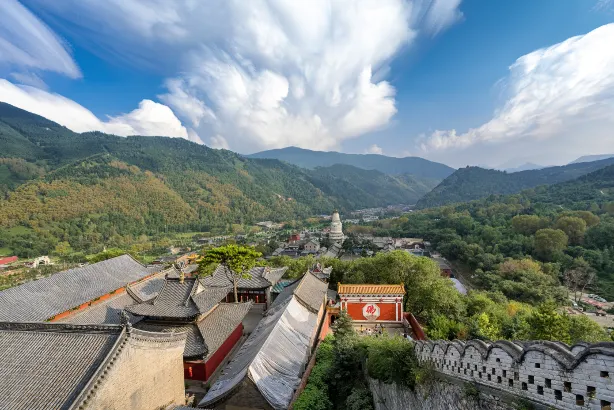
Wu Tai Shan is located in Wutai County, Xinzhou City. It is named for its five peaks, whose summits are flat like platforms and cluster together. As the sacred site of Bodhisattva Manjushri, it is dotted with numerous temples and is one of China's Four Sacred Buddhist Mountains. It is also a well-known summer resort, with a cool and pleasant climate in summer. What makes it unique is the coexistence of Yellow Temples (Tibetan Buddhism) and Blue Temples (Han Buddhism); visitors can see both Han Buddhist monks and Tibetan lamas, and this pattern of Han and Tibetan Buddhism coexisting is quite rare among China's sacred Buddhist mountains. If the five fingers are likened to the towering "Five Terraces," the palm is Taihuai Town—the geographic center of the attraction, where most temples are concentrated and which serves as the main base for visitors. To the northwest of the town lies a cluster of essential temples, which can be explored on foot or by the attraction's eco-friendly shuttle bus. The Great White Stupa of Tayuan Temple is the landmark structure of the attraction; in front of the gate of Luohou Temple stand a pair of ancient stone lions; Xiantong Temple is the largest Qingmiao (Chinese Buddhist) temple on the mountain; and Pusading is a highly representative Yellow Hat (Tibetan Buddhist) monastery. From Taihuai Town, crossing the Qingshui River to the north, you reach Dailuoding. Ascending the Dazhi Road with over a thousand stone steps, you can pay homage to the Five Directional Manjushri statues, known as the "Little Pilgrimage," or take a round-trip cable car. Heading south along the road, Bishan Temple is a Ten Directions Zen Monastery, housing a Burmese jade Buddha and a statue of the future Buddha Maitreya; Shuxiang Temple contains a tall painted clay statue of Manjushri; Nanshan Temple is renowned for its dazzling array of stone carvings and offers distant views of the South, North, and Central Terraces. Zhenhai Temple is serene and secluded, preserving painted murals within, and local folklore tells of legends related to Emperor Shunzhi's renunciation. In addition to the main temples above, there are also Nanchan Temple, Longquan Temple, Baiyun Temple, and others on the mountain, each with its own distinctive features. If you wish to reach the summit of the five terraces—known as the "Great Pilgrimage to the Terraces"—the East Terrace, Wanghai Peak, is a great place to watch the sunrise, with spectacular views of the sea of clouds and the rising sun; the South Terrace is covered with wildflowers in summer; on the West Terrace on an autumn night, the moon hangs like a mirror above the peak; the North Terrace is a high peak in North China and an excellent spot for enjoying snowy scenery, offering panoramic views of the surrounding mountains after snowfall.

China · Wutai County
Wulanhada Volcano Geopark

Wulanhada Volcano Geopark

7.8
4.3/5
1.6k reviews

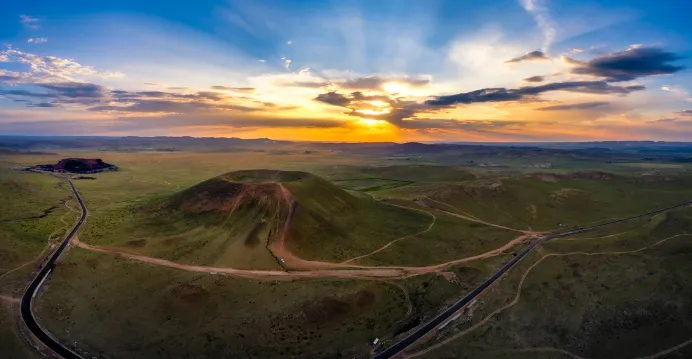
Wulanhada Volcano Geopark is hidden deep in the grasslands of Ulanqab. It is an exceptionally young volcanic chain, with geological surveys indicating eruption records within the last approx. 10,000 years. The park features a complete array of landscapes, including volcanic cones, lava flows, and barrier lakes, and is hailed as a natural "volcano museum," having even graced the cover of Chinese National Geography magazine. The volcanic cones are spread across the grassland like beads on a string, and local herdsmen have named them based on their shapes and colors: Red Mountain, Fire-Burning Mountain, North Alchemy Furnace, Black Brain Bag, Middle Alchemy Furnace, South Alchemy Furnace, North Sharp Mountain, and South Sharp Mountain. Half the fun of exploring this place lies in "finding the mountains by number." Popularity is concentrated on several "alchemy furnaces": Volcano no. 3 (North alchemy furnace) has a wooden boardwalk, allowing easy access to the summit for panoramic views of the entire volcanic chain and grasslands, with particularly photogenic light at sunset; Volcano no. 5 (Central alchemy furnace) features a well-preserved, rounded cone without boardwalks—hiking up the scree slope is more strenuous but rewards visitors with rare tranquility; Volcano no. 6 (South alchemy furnace), whose body was split open by early quarrying, exposes layers of reddish-brown and gray-black volcanic rocks, earning it the nickname "naked volcano." Combined with scattered volcanic debris, its desolate landscape resembles the surface of Mars. Renting a spacesuit to take "Mars landing" photos here is the park's highly popular signature activity. Further south, Volcano no. 7 and no. 8 are also called North and South pointy mountains. The base of Volcano no. 8 was once famous for its abundant agate deposits. The grassland is open and unobstructed, with strong winds, intense sunlight, and significant temperature differences between day and night. Windproof jackets and sun protection items are worth packing. On clear nights, there is little light pollution, and you can often see the Milky Way when looking up. The park and its surroundings have stargazing cabins and RV campsites, making it suitable to leave the itinerary for the night. The entire volcanic cluster is a protected geological heritage. Agates and volcanic rocks should only be admired, as digging them would damage the grassland. Vehicles should also stick to existing roads and avoid driving into the pastures.

China · Qahar Right Rear Banner
Beijing Wildlife Park
2027 Asia 100 - Family-friendly Attractions

Beijing Wildlife Park

7.8
4.7/5
34.1k reviews

Located in a vast forest of ten thousand mu by the banks of the Yongding River, Beijing Wildlife Park was established in 2001 and is a large wildlife park featuring immersive experiences. The park is home to rare wild animals from around the world, covering hundreds of species and thousands of animals. It abandons the traditional cage-and-fence exhibition method, allowing visitors to encounter animals up close in an open natural environment. The park features multiple themed exhibit areas, including the self-drive safari, beast kingdom, and cute bear habitat. The self-drive safari is the core visiting area, where visitors can drive their own cars or take a mini train through the animal exhibits, observing various animals roaming freely in their natural environments along the way. The beast kingdom is themed around predators such as lions, tigers, and bears. Brown bears will approach the tour vehicle with a sturdy gait, placing their furry giant paws on the vehicle body. Siberian tigers either lie quietly in the forest or pace around patrolling their territory. White tigers, with their white coats and black stripes, stand out strikingly in the sunlight. Visitors can also interact with the predators through safe feeding ports. The cute bear habitat brings together a variety of adorable animals and is a popular destination for families. In addition to the tram exhibit areas, the park has also created multiple walk-through ecological exhibits. The red panda garden, capybara swamp, Madagascar jungle, gibbon exhibit, and blue town each have their own distinctive features. Every exhibit is carefully designed based on the animals' native environments, emphasizing an open-concept approach with few visual barriers, and visitors can even interact with and feed some of the gentle animals. When visiting, it is recommended to experience the tram areas first, then explore the ecological exhibits on foot. The park is quite large, and the pavilions in the walking areas are spread out, so be careful not to miss popular interactive areas such as the red panda garden and capybara swamp.

China · Beijing
Shanhua Temple
Selected for Best Things to Do in Shanxi

Shanhua Temple

7.5
4.8/5
2.5k reviews

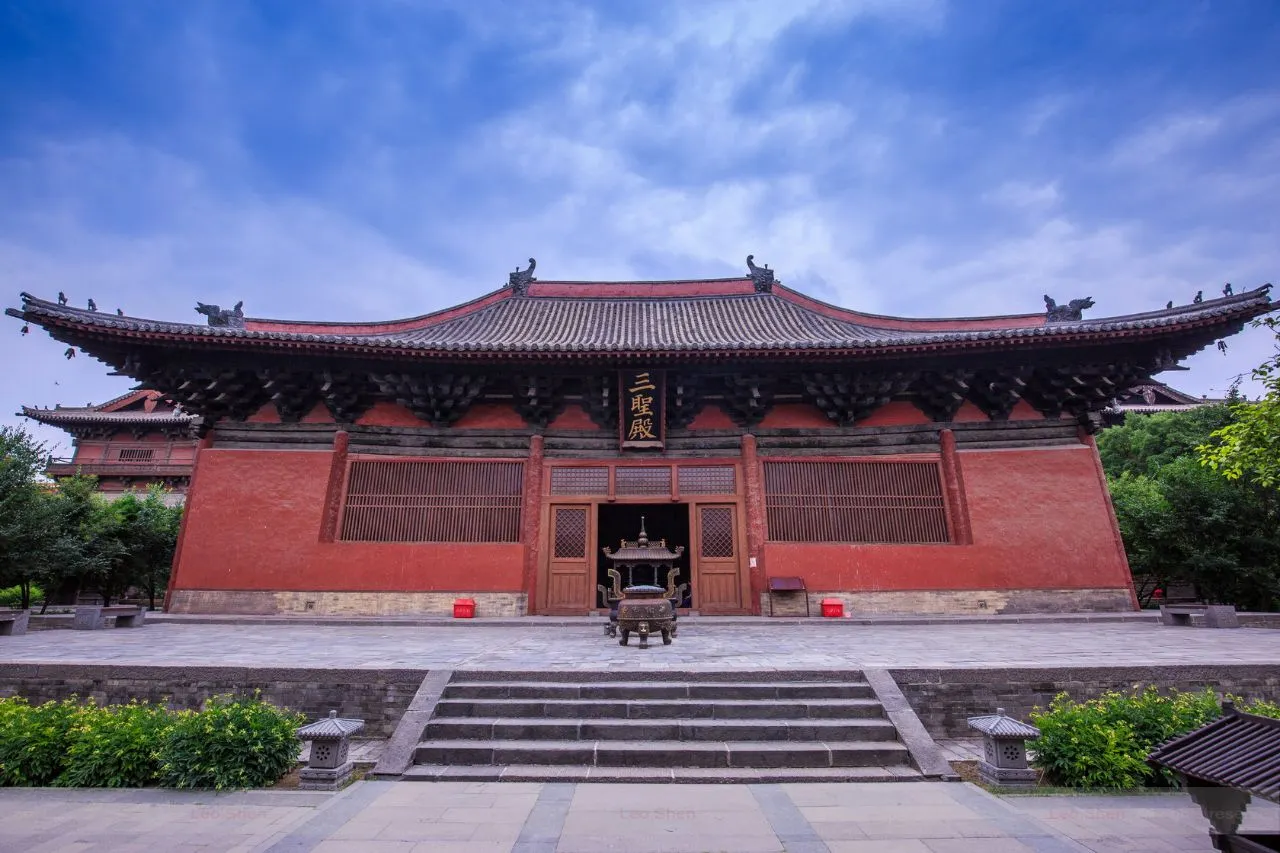
Shanhua Temple, commonly known as the "southern temple," is located in the southern corner of the ancient city of Datong. The temple was first built during the Kaiyuan era of the Tang Dynasty and was initially named Kaiyuan Temple. It was renamed Dapu'en Temple during the Later Jin Dynasty but was destroyed in the war at the end of the Liao Dynasty. It was rebuilt on the original site during the Jin Dynasty and was officially named Shanhua Temple in the Ming Dynasty, a name that has been used ever since. The temple's mountain gate, Three Saints Hall, Mahavira Hall, and Puxian Pavilion are all original structures from the Liao and Jin periods, making it one of the relatively well-preserved temple architectural complexes from that era in China. The halls are gradually elevated along the central axis from south to north, with the layout of the Tang Dynasty temple still faintly discernible. Unlike most temples, the mountain gate here combines with the heavenly king hall into one structure: the five-bay Jin dynasty gate houses Ming dynasty statues of the four heavenly kings, immediately visible upon entry with imposing majesty. The central three saints hall, also a Jin dynasty construction, features strikingly large and ornate bracket sets under its eaves that project in layers resembling blooming flowers—a distinctive hallmark of this hall. It enshrines the original Jin dynasty "Flower Adornment three saints": Vairocana Buddha at the center flanked by Manjusri and Samantabhadra bodhisattvas, their forms full and expressions serene. The main hall of the great hero on the northern high platform is the temple's principal hall, built during the Liao Dynasty and renovated in the Jin Dynasty. The altar enshrines the five wisdom buddhas arranged from east to west: Aksobhya in the east, Ratnasambhava in the south, Vairocana at the center, Amitabha in the west, and Amoghasiddhi in the north—all surviving Liao sculptures with Jin-era repainting. Twenty-four deva polychrome sculptures stand on brick platforms along the eastern and western walls, twelve on each side, representing masterpieces of Jin Dynasty sculpture. Some appear armored and weapon-wielding with fierce expressions, while others wear official robes with flowing sashes. Among them, the benevolent and graceful Sridevi particularly captivates viewers. The hall's western and southern walls preserve Buddhist narrative murals painted during the Kangxi era of the Qing Dynasty. Before entering the temple, consider viewing the glazed five-dragon wall in front of the mountain gate. This Ming dynasty Wanli-era relic was originally the screen wall of Xingguo Temple in the southern city, relocated here in the 1980s. Five coiling dragons surge amid turbulent clouds and waves on the wall, with the central "main dragon" holding a fire pearl and facing directly forward toward the ancient temple's gate. During your visit, pay special attention to the hall of three saints' diagonal arches and the Liao- and Jin-dynasty polychrome sculptures in the main hall. The dim lighting in these ancient halls invites slower observation of the statues' expressions and drapery details, allowing deeper appreciation of these Liao-Jin treasures.

China · Datong
Zhengding Ancient City
No. 2 of Night Attractions in Hebei

Zhengding Ancient City

7.6
4.7/5
594 reviews

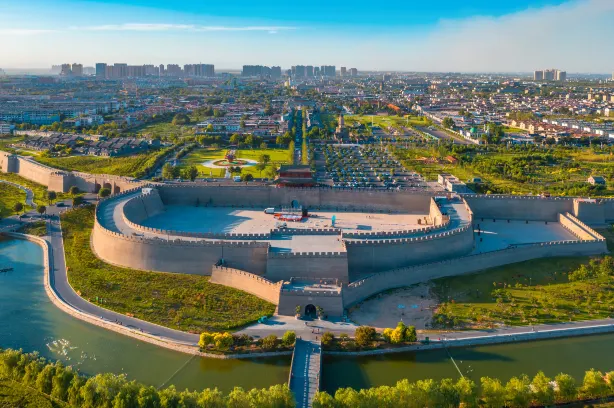
Zhengding Ancient City has a history of more than 1,600 years. The existing city wall is a relic of the Ming Dynasty. It was first built with earth in the Eastern Jin Dynasty and expanded into a brick city in the Ming Dynasty. Historically, it was known together with Baoding and Beijing as one of the "three great towns of the north." The south city gate still bears a stone plaque inscribed with "three passes great town." This is also the hometown of Zhao Zilong, a famous general of the Three Kingdoms period. The city has a dense concentration of historical sites, and Longxing Temple is a representative ancient temple. First built in the sixth year of the Kaihuang era of the Sui Dynasty (586), it was expanded by imperial order of Zhao Kuangyin, Emperor Taizu of Song, and was praised by the architectural historian Liang Sicheng as "the foremost famous temple outside the capital." The temple has many highlights: the Mani Hall has a cruciform plan and is a typical surviving example of Song Dynasty construction techniques; the reclining Guanyin wall sculpture behind the hall was called the "Beauty of the East" by Lu Xun; the revolving sutra repository in the Zhuanlunzang Pavilion is one of China's earliest surviving revolving sutra repositories; the Longzang Temple Stele, whose script evolved from Han clerical script to Tang regular script, was praised by Kang Youwei as "the finest Sui stele"; and the bronze Thousand-Handed and Thousand-Eyed Guanyin enshrined in the pavilion is one of China's earliest surviving large bronze Buddha statues. The ancient city is also home to four distinctive ancient pagodas: the Lingxiao Pagoda of Tianning Temple is a pavilion-style pagoda with a mixed brick-and-wood structure; the Hua Pagoda of Guanghui Temple combines the architectural features of both a vajra-throne pagoda and a flower pagoda; the Xumi Pagoda of Kaiyuan Temple and the Tang Dynasty Bell Tower are arranged symmetrically, reflecting the evolution of Buddhist temple layouts from tower-centered to hall-centered; and the Chengling Pagoda of Linji Temple is the robe-and-bowl relic pagoda of Master Yixuan, founder of the Linji School. The Rongguo Mansion inside the city was built according to the descriptions in "Dream of the Red Chamber," and most scenes of the TV series "Dream of the Red Chamber" were filmed here. The "Ningrong Street" beside the mansion recreates the street scene of the Qing Dynasty. When touring, it is recommended to connect the main attractions along the central axis of the ancient city. Longxing Temple is rich in content, and the architectural structures of the Mani Hall and the Zhuanlunzang Pavilion are worth a closer look; the four pagodas are distributed in different directions within the city and are suitable for visiting one by one on foot; the south city gate is relatively well preserved, and climbing the wall offers a panoramic view of the overall layout of the ancient city.

China · Zhengding

Experiences you can't miss in Huai'an

Featured Day tours in Huai'an

View all Day tours
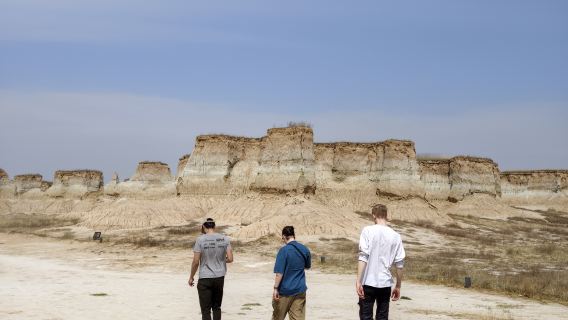
Datong: Datong Volcano Group & Earth Forest Day Hiking Tour
󱌍
Duration: 8.3 hrs
English
Free cancellation
Instant confirmation
Book now for tomorrow
FromMYR 301.46
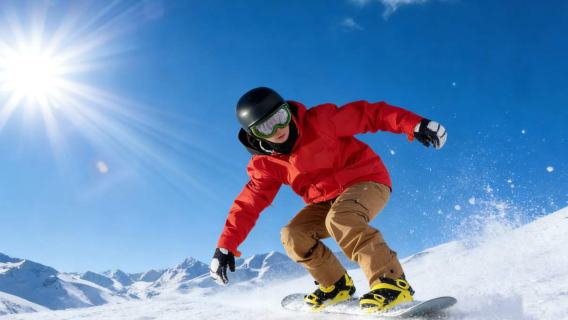
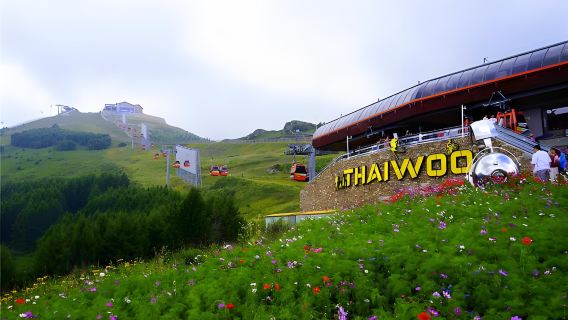
Thaiwoo Resort [Contracted snowboard/ski instructor]
󱌍
FromMYR 370.17
Beijing - Thaiwoo Ski Resort city hotel/airport - point-to-point/one-way pick-up/drop-off - private car
󱌍
10% off
Limited-time sale
FromMYR 1,787.00MYR 1,985.56
One-day tour of Zhangjiakou Zhangbei Grass Skyline and Thaiwoo Ski Resort in Hebei: Private chartered car + admission
󱌍
FromMYR 225.32
One-day tour of Zhangjiakou Zhangbei Grass Skyline and Gongbaolage Grassland in Hebei: Chartered car + admission
󱌍
FromMYR 150.22
One-day private tour of Zhangjiakou Zhangbei Grassland Sky Road and Thaiwoo Ski Resort in Hebei
󱌍
Duration: 3.5 hrs
English
Free cancellation
Instant confirmation
Book now for tomorrow
FromMYR 359.44
One-day private tour of Zhangjiakou Zhangbei Grassland Sky Road and Gongbaolage Grassland in Hebei
󱌍
Duration: 4 hrs
English
Free cancellation
Instant confirmation
Book now for tomorrow
FromMYR 285.01
Beijing round-trip: Hebei Zhangjiakou - Thaiwoo Ski Resort private chartered tour | Family custom trip
󱌍
10% off
Limited-time sale
FromMYR 2,552.86MYR 2,836.52
Huai'an Today's weatherClear -6-10℃
Huai'an weather for the next 2 days11/26: -3-9℃, 11/27: -8-3℃

Free things to do in Huai'an

What travellers say about Huai'an

user-avatar
DizplayNameNovember 1, 2026
4.0
Shichihai is worth a quick visit if you're already in the area, but there's honestly not much to see or do if you're not planning to shop or to eat.

Shichahai Scenic Area

user-avatar
Alessio_28November 22, 2026
5.0
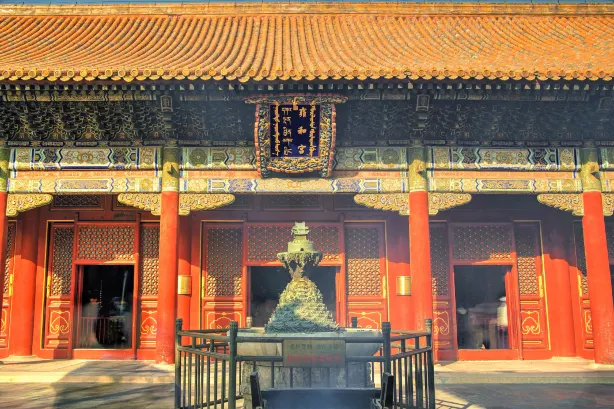
Beautiful experience in one of the best temples I’ve ever been. Is already the second time I visit it and is always a joy for the eyes. Highly recommended especially during week days when is not so crowded.

Lama Temple

user-avatar
行万里路不如读万卷书September 24, 2026
4.0
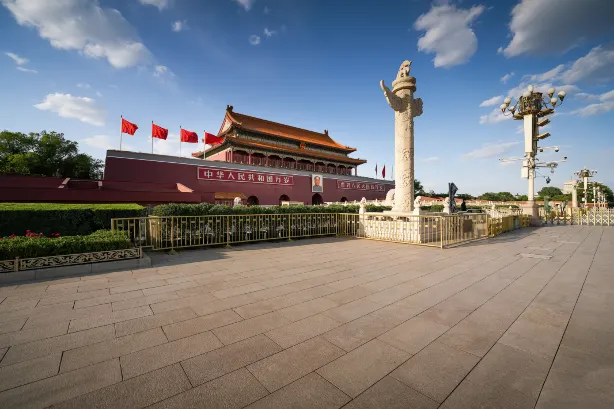
Tiananmen Square is a place that hundreds of millions of people yearn for; it is a symbol of the Republic, and every tourist visiting Beijing takes a photo in front of Tiananmen. However, advance reservations are essential, and security checks are a must. The only parts of the Tiananmen area open to the public are the Zhengyangmen Gate Tower, the Chairman Mao Memorial Hall, the Tiananmen Gate Tower, and the National Museum. Every year during the National Day holiday, Tiananmen Square is decorated with flowers for photos, and you can arrive early to watch the flag-raising ceremony. In short, a day trip to Beijing can include both Tiananmen and the Forbidden City, leaving a lasting impression of the capital's splendor.

Tiananmen Square

user-avatar
SNSD- SoneNovember 11, 2026
5.0
Overall, the Wutai Mountain scenic area was quite nice! There are many temples, and the routes are relatively simple; you can easily see everything by following the signs! The shuttle bus service was less frequent due to the off-season, but it didn't take too long! The fewer crowds made for a more comfortable experience, which was great!

Wu Tai Shan

user-avatar
蓝蓝姐姐October 16, 2026
4.0
The volcanoes were spectacular, especially number six. I didn't get a direct view of the others, only from a distance, so they weren't that impressive. The sunset was truly beautiful, definitely worth seeing. However, the signage inside was somewhat inadequate; there weren't enough, and sometimes it was easy to get lost. Also, the gravel road for parking wasn't ideal for low-chassis minivans, and the section from the ticket gate to the park was riddled with potholes.

Wulanhada Volcano Geopark

user-avatar
Anonymous userNovember 15, 2026
5.0
I've been there many times, and each time there's a surprise. I especially love the animals; the viewing experience is great. I particularly enjoy the new exhibits, especially the newly opened Tibetan macaque bear and white tiger theaters. The white tiger theater is similar in style to Chimelong and Yinji parks. I always go to see the adorable Kapibals; the Kapibals at Kitano are very well cared for. I'll definitely go again.

Beijing Wildlife Park

user-avatar
202***02October 21, 2026
5.0
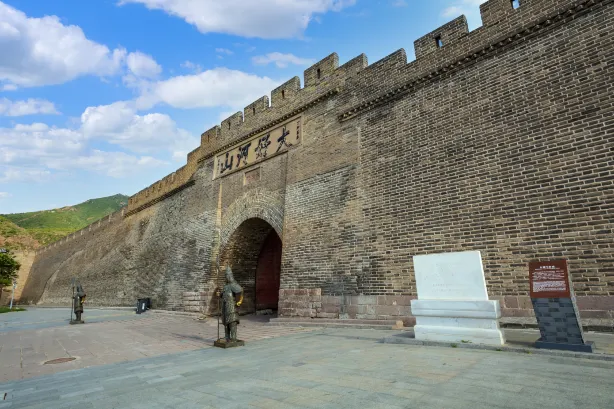
As you enter the scenic area, the Great Wall winds its way down the ridge from both the East and West Taiping Mountains, instantly conveying the strategic importance of Dajingmen. Further in is a bustling food street, teeming with life. Along the way, you pass three temples—the Mountain God Temple, the Temple of the Three Maidens, and the Temple of Guan Gong—each with murals to admire. Approaching Dajingmen, a scenic area stele stands by the roadside. Passing through the gate and looking back, the four large characters "大好河山" (Great Rivers and Mountains) inscribed by Gao Weiren come into view, while a constant stream of people flows beneath the gate. People a hundred years ago probably couldn't have imagined that these four characters would so vividly reflect the present. The Great Wall entrance is right next to the wall, offering panoramic views. Crossing the Laiyuan Bridge and entering the street, you'll see the two large characters "互市" (Mutual Market), evoking images of the bustling trade routes of the Zhangjiakou-Kuytun Road in bygone days.

Dajingmen Scenic Area

user-avatar
Envy the witch satellaNovember 15, 2026
5.0
The ancient city of Datong is a must-see attraction; the word "breathtaking" is the only way to describe it. Although the ancient temple isn't large, be sure to allow plenty of time to quietly appreciate the ancient Chinese Buddhist statues.

Shanhua Temple

user-avatar
Anonymous userOctober 5, 2026
5.0
This is a Buddhist holy site well worth visiting. The Thousand-Handed and Thousand-Eyed Buddha and the mural of the Reclining Guanyin are historical and artistic treasures that have been preserved intact for future generations to appreciate and understand history! An even greater gain was visiting the memorial hall of Mr. Liang Sicheng, where I learned about the contributions he and Lin Huiyin made to the preservation of historical sites in my country and their transmission in education, so that we, the later generations, can appreciate these historical sites!

Zhengding Ancient City

Popular cities near Huai'an

Frequently asked questions

What are the recommended tours and excursions in Huai'an?

When choosing a tour, start with how much time you have and the kind of experience you're looking for. Trending options right now include Datong: Datong Volcano Group & Earth Forest Day Hiking Tour, Thaiwoo Resort [Contracted snowboard/ski instructor], and Beijing - Thaiwoo Ski Resort city hotel/airport - point-to-point/one-way pick-up/drop-off - private car. Check the real-time availability and itinerary before you book.

As of November 25, 2026, the reference price for day tours and activities in Huai'an is around MYR 150.22 – MYR 2,552.86. Rates vary by duration, group size, transport, tickets, meals, and any special admission requirements. Before you book, please confirm the billing currency and whether the price is quoted per person or per group.

Get help anytime, anywhere within 30 secondsContact customer support

Change and cancellation policies vary by attractions and tours. Please check the product details page for more information.

Ticket prices may vary between weekdays and weekends, as well as during peak and off-peak seasons. When booking with Trip.com, you can also use Trip Coins to get extra savings. For more tips on booking discounted tickets, please visit Trip.com for the latest information.