Jiaocheng

Things to do in Jiaocheng

Search attractions or local attractions & tours
Search

Explore top experiences

Top 10 attractions in Jiaocheng
View all Attractions
Jinci Temple Museum
No. 1 of Family-friendly Attractions in Shanxi

Jinci Temple Museum

8.8
4.8/5
21.1k reviews

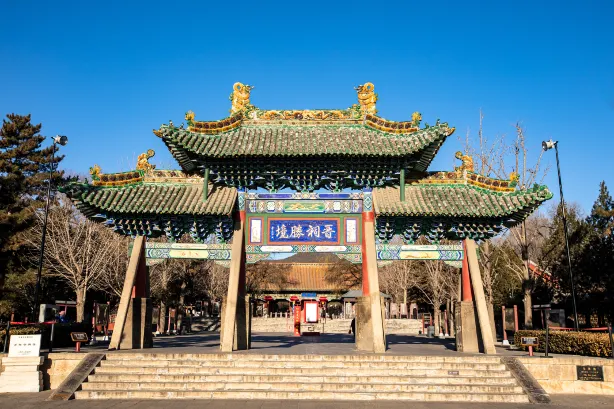
Jinci Temple Museum is located at the foot of Xuanweng Mountain by the banks of the Jin River. It is an ancestral temple built to commemorate Tang Shuyu, the founding feudal lord of the State of Jin, and is also one of the earlier surviving royal sacrificial gardens in China. There is a saying that "you have not truly visited Taiyuan until you have visited Jinci." The ancient buildings in the museum are arranged in sequence along the central axis, among which the Xian Hall, the Flying Bridge over the Fish Pond, and the Hall of the Holy Mother are known as the "three treasures," while the Zhou Cypress, the Never-Aging Spring, and the Song dynasty attendant statues are known as the "three wonders"—these are the core highlights of any visit. The "Three Treasures" are located on the central axis and can be visited together. Xian Hall is the place where sacrificial offerings are placed. The hall is surrounded by railings instead of walls, making it well-ventilated and bright, and its beam structure is simple and lightweight. The Flying Bridge Across Fish Pond is on the west side of Xian Hall. It is a cross-shaped ancient bridge built over a square pond, resembling a modern overpass in form, and this type of bridge structure is extremely rare among surviving ancient buildings. The west end of the bridge connects to Shengmu Hall, the oldest surviving building in the museum. Wooden carved dragons coil around the porch columns in front of the hall, making them relatively early surviving examples of wooden coiled dragons. The hall interior was built using the reduced-column method, creating a rather spacious interior. It houses dozens of Song Dynasty colored sculptures, with the main statue of Shengmu seated in the shrine and the remaining attendants arranged on both sides with varied expressions. One attendant statue is half joyful and half sorrowful, vividly lifelike and moving. With Shengmu Hall as the center, you can also seek out the "Three Wonders." The Zhou Cypress is located on the north side of Shengmu Hall. It is said to have been planted in the Western Zhou Dynasty, and its trunk leans south like a reclining dragon, full of ancient majesty. The Never-Aging Spring is located on the south side of Shengmu Hall and is the main source of the Jin River. The museum also houses the Stele of the Inscription and Preface to Jinci, composed and handwritten by Emperor Taizong of Tang, Li Shimin, whose running-script calligraphy is vigorous and forceful. In the southern part is the Shifang Fengsheng Zen Temple, said to have originally been the villa of the Tang Dynasty general Yuchi Gong. In the Futu Courtyard, the Sarira ShengSheng Pagoda can be climbed for a distant view. The Jinci temple fair has been passed down to the present day and has been included in the national-level intangible cultural heritage list. The Water Mirror Stage, an ancient theater stage in the museum, is an important venue for activities during the temple fair.

Taiyuan · 30.6 km from Jiaocheng
The Qiao's  Family Compound
No. 16 of Best Things to Do in Shanxi

The Qiao's Family Compound

7.8
4.7/5
15.1k reviews

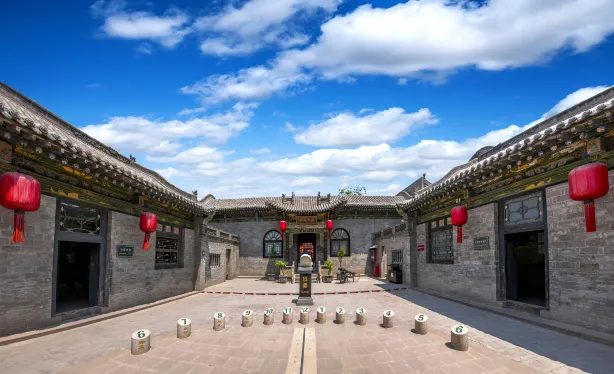
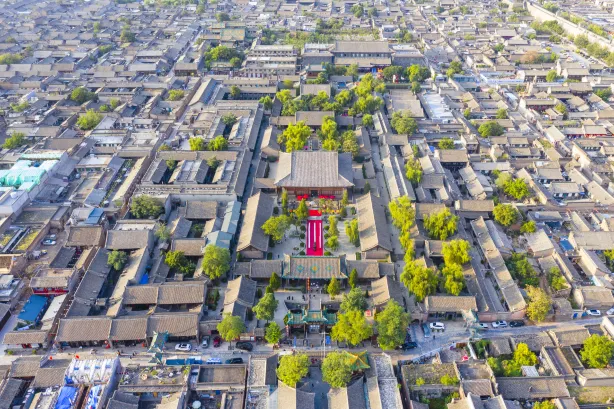
The Qiao's Family Compound is located in the center of Qiaojiapu village, Qi county, also known as "The Qiao Family CourtyardIt was the residence of Qiao Zhiyong, a renowned commercial and financial capitalist in the Qing Dynasty, and has served as a filming location for over 30 movies and TV series, including "The Qiao Family Courtyard" and "Raise the Red Lantern." If you've seen these films, you'll surely recognize the scenes here: rows of red lanterns hanging high, towering brick walls, exquisite carvings, beautiful bracket sets and upturned eaves, and deep alleys. This is the famous The Qiao Family Courtyard. This is a residential complex from the Ming and Qing dynasties, its architecture resembling a castle, imposing and grand, typical of the living style of a large northern family during the Ming and Qing periods. Viewed from above, the entire courtyard layout resembles the Chinese character "囍" (double happiness), symbolizing good fortune. The complex is meticulously laid out yet also varied; even the more than 140 chimneys on the rooftops are unique. It is said to have been built by the imperial family.The Forbidden CityThere's a saying that "for residential architecture, visit the Qiao family courtyard". Upon entering the Qiao family courtyard, a straight stone-paved path approx. 80 m long divides the six courtyards into two rows, north and south. According to traditional naming, the three courtyards on the north side of the Qiao family courtyard are called the old courtyard, northwest courtyard, and study courtyard from east to west. The three courtyards on the south side are called the southeast courtyard, southwest courtyard, and new courtyard, reflecting the construction sequence of each courtyard. The brick carvings, painted decorations, and inscribed plaques in each courtyard are exquisitely crafted. The standout is the "hundred longevity characters" screen wall at the main entrance, featuring 100 uniquely styled seal-script "longevity" characters, where art and culture blend seamlessly. The brick carvings at the land god shrine are also noteworthy. Under the eaves of every room in the Qiao family courtyard, you'll find genuine gold-painted decorations, notably created using the raised paste technique with meticulous layering and final gold application. Among the many inscribed plaques at the Qiao family courtyard, the one personally calligraphed by Fu Shan in the fourth courtyard is particularly remarkable.Danfeng pavilion“Plaque”, when visiting here, be sure to learn about the story behind this plaque. Additionally, there are three treasures in the Qiao Family Courtyard: the ten-thousand-people ball, the rhinoceros gazing at the moon mirror, and the nine-dragon lantern. The rhinoceros gazing at the moon mirror was the treasure that brought wealth to the Qiao family, while the nine-dragon lantern was a gift from Empress Dowager Cixi, located in the courtyard at the southern center. Today, the Qiao family courtyard also serves as a folk museum, with its six courtyards respectively displaying agricultural life through the seasons, life rituals, inner gardens, commercial customs, luxurious furnishings, and the history of the Qiao family. Visitors can explore while learning about the Qiao family's philosophy of life, household management, and business.

Qi County · 30 km from Jiaocheng
Pangquangou Canyon Rafting

Pangquangou Canyon Rafting

4
4.3/5
101 reviews

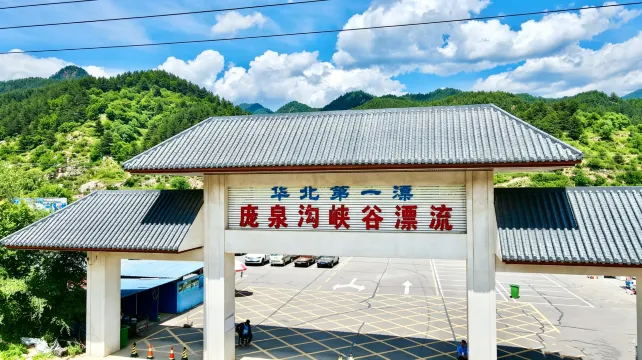
Pangquangou Canyon Rafting is located in Shizhuang Village, Pangquangou Town, Jiaocheng County, Shanxi Province. It was built by Jiaocheng County Jinyu Ecological Tourism Development Co., Ltd. at an investment of 80 million yuan. The rafting area is adjacent to the S320 Provincial Road of Shanxi Province, and the upper and lower docks are connected smoothly. The area is only 120 kilometers away from Taiyuan, the capital of Shanxi Province, and the Souvenir cities of Luliang, Xinzhou, Jinzhong, Jiexiu, etc. are all within 200 kilometers. The peripheral transportation G307 National Highway is connected to Qingyin Expressway, Taijia Expressway, and Dayun Expressway, with a superior location and convenient transportation. At the same time, Pangquangou Canyon Rafting is adjacent to the protected area - Pangquangou National Nature Reserve, which is rich in species and plants and animals. It is the habitat of the protected animal Brown Eared Pheasant and a well-preserved green treasure house on the vast Loess Plateau. There are towering mountains and lush forests on both sides of the river; on both sides of the river, there are green grass and red willows. The river is sometimes wide and sometimes narrow, and the water flow is sometimes fast and sometimes slow. There are rapids and dangerous shoals as well as slow-flowing lakes along the way, making it a high-quality rafting site in North China. In the early stage of planning and development, after a tourism planning expert inspection team inspected it, they gave it great affirmation on the spot, and the title of "North China's No. 1 Rafting" is well deserved. Pangquangou Canyon Rafting is divided into the upper dock service area and the lower dock service area, which are 8 kilometers apart, with a rafting length of 10 kilometers and a vertical drop of 130 meters. Both the upper and lower dock service areas are equipped with large parking lots, consulting service centers, ticket centers, Dining centers, shopping centers, Changing room, star-rated toilets and other service facilities. Pangquangou is a new highlight of tourism in Shanxi Province, providing a good choice for the wiring of Souvenir scenic spots in Shanxi Province, allowing tourists to truly experience "the benevolent enjoy the mountains, the wise enjoy the water".

Jiaocheng · 55.4 km from downtown
Xuanzhong Temple

Xuanzhong Temple

3.8
4.2/5
53 reviews

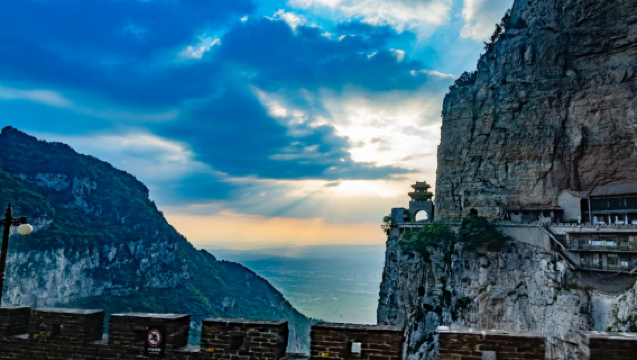
Xuanzhong Temple is located about 10 kilometers northwest of Jiaocheng County, and you can see a winding but flat mountain road that leads directly to the distant mountains. Following the mountain road through layers of mountains, you can enjoy the beautiful scenery along the way. When we reached a certain place, we saw a tall stone tablet standing by the roadside, with six characters written on it: Namo Amitabha. At this moment, it was as if a strong scent of sandalwood was blowing in our faces. Even if you had never been to this place, you would still guess that there must be an ancient temple in the mountains not far ahead. That's right, Xuanzhong Temple is at the end of the mountain road. Xuanzhong Temple is hidden in the green bushes of Shibi Mountain. If you are lucky, you will happen to see one or several brown pheasants taking a leisurely walk. Don't be surprised that brown pheasants don't hide when they see people, because for many years, they often come to the temple to find food and have long lived in harmony with the monks. This is also a unique scenery of Xuanzhong Temple. The mountain gate of Xuanzhong Temple is just under the cliff. Both ends of the gate are inscribed with "World Pure Land Ancestor Temple, Shenzhou Mahayana Holy Land". Going up a slope, you will see the temple's archway, which reads: Pure Land Ancient Temple. From this, the antiquity and important status of Xuanzhong Temple are clear at a glance. Who built this temple on the mountain? How did Xuanzhong Temple become the ancestral temple of the Pure Land Sect? In fact, the answer is not complicated. Xuanzhong Temple, also known as Shibi Xuanzhong Temple and Yongning Temple, was founded in the second year of Yanxing in the Northern Wei Dynasty (472 AD). The founder was Master Tanluan, the first ancestor of the Pure Land Sect who chanted the name of Buddha. Regarding Tanluan's founding of Xuanzhong Temple, some people have raised questions, believing that Tanluan's birth time does not match the founding time of Xuanzhong Temple. In the existing records, most people believe that Tanluan was born in the first year of Chengming of Emperor Xiaowen of the Northern Wei Dynasty, that is, in 476 AD, while Xuanzhong Temple was founded in 472 AD. Judging from this time, it is indeed contradictory to say that Tanluan founded Xuanzhong Temple. So the question is, was Xuanzhong Temple founded by Tanluan? The Northern Wei Dynasty is more than a thousand years away from today, and the history is long and ancient. All historical materials and historical records have survived endless ups and downs in the vastness of the smoke and waves to this day. Various inaccuracies, mistakes or losses are inevitable. For example, there are historical materials that Tanluan once wrote two volumes of "Anle Collection" and passed them on to the world. In fact, "Anle Collection" was written by his later disciple Daochuo, and Tanluan wrote "Notes on the Theory of Rebirth". Therefore, what we, the descendants, have to do is to find more detailed, more reasonable, and more rigorous evidence among the many complicated clues to restore the historical truth as much as possible. The "Maitreya Statue Ode Stele" currently preserved in Xuanzhong Temple was carved in the 26th year of the Kaiyuan Period of the Tang Dynasty (738 AD). The inscription on the stele records in detail that the founder of Xuanzhong Temple was Tanluan. Other historical records say that in the second year of the Yanxing Period of the Northern Wei Dynasty, that is, in 472 AD, Tanluan was already in charge of the initial construction of Xuanzhong Temple, which coincides with the inscription on the "Maitreya Statue Ode Stele". Therefore, it can be seen that Tanluan's birth year could not have been during the Chengming period, and should have been at least before the second year of the Yanxing Period of the Northern Wei Dynasty. There is also a more direct evidence, which is the "Record of the Four Boundaries of the Specially Granted Temple Farm, Mountains, Forests and Land" currently preserved in Xuanzhong Temple. The inscription reads: "In the second year of Yanxing of the sixth emperor Xiaowen of the Wei Dynasty, the founder Tanluan of Shibiyu first built the temple, and it was not completed until the first year of Chengming". The "Record of the Four Boundaries of the Specially Granted Temple Farm, Mountains, Forests and Land" was established by the monks Hui Miao and Hui Zhi of the temple and engraved on May 23, the third year of Changqing in the Tang Dynasty (823 AD). It records the whole process of the construction of Xuanzhong Temple by Tang Muzong's special grant of land and land. In summary, although Tanluan's exact birth year needs further verification, there is no need to doubt that Tanluan is the founder of Xuanzhong Temple. We already know that Master Tanluan met the Northern Indian Tripitaka Master Bodhiruci at the age of 51, and received from him the true Buddhist method of liberation from life and death, namely the fundamental doctrine of the Pure Land Sect, the "Amitābha Sutra", and decided to be a devout believer in the Pure Land and specialize in promoting the Pure Land. In fact, at that time, Tanluan was already a high monk. He called himself Wei Xuanjian Dazhu and was respected by the emperors of the Southern and Northern Dynasties and monks and laymen. Emperor Wu of Liang called him "Bodhisattva in the Flesh", and Emperor Xiaojing of Wei called him "Shenluan" and ordered him to live in the Bingzhou Grand Temple. Tanluan did not go to Shibi Mountain after leaving Bodhiruci. Instead, he left Bingzhou Temple after conducting in-depth research on Pure Land doctrines and ideas. His purpose was to promote Pure Land Buddhism and persuade sentient beings to believe in Pure Land Buddhism. At this time, it was natural for Master Tanluan to build a temple to realize his ambition. Therefore, Xuanzhong Temple, as a fundamental temple dedicated to promoting Pure Land Buddhism, came into being. Bingzhou is relatively close to Shibi Mountain in Jiaocheng, which is probably one of the main reasons why Tanluan chose Shibi Mountain to build the temple. In ancient times, Shibi Mountain was densely forested, with springs flowing all year round, deep valleys and steep cliffs, and towering mountains. A deep ditch of Emperor Wen was about 10 miles long, running from northwest to southeast. Master Tanluan chose to build the temple in the middle of the ditch, with the mountain behind and the ravine in front. The environment was very quiet and pleasant, which was very consistent with the artistic conception of "Pure Land".

Jiaocheng · 6.4 km from downtown
Pingyao Ancient City
2027 Asia 100 - Night Attractions

Pingyao Ancient City

8.4
4.6/5
27.4k reviews

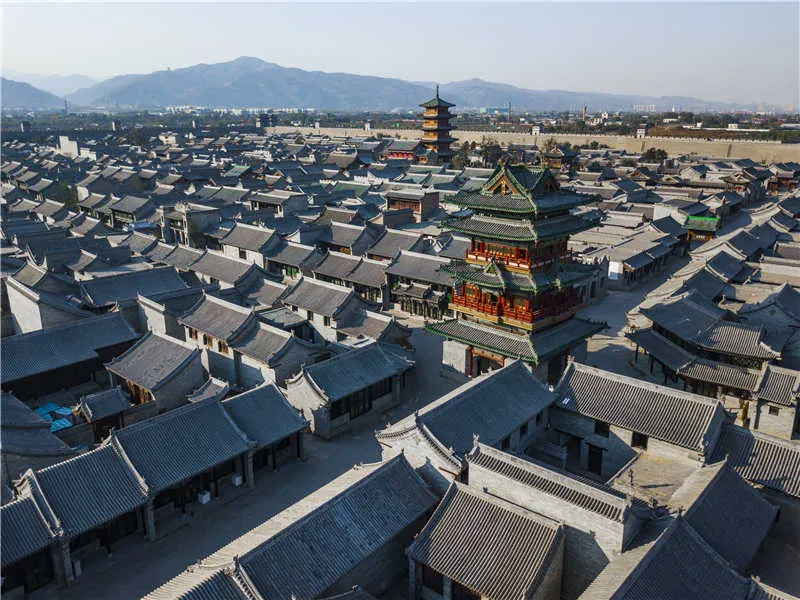
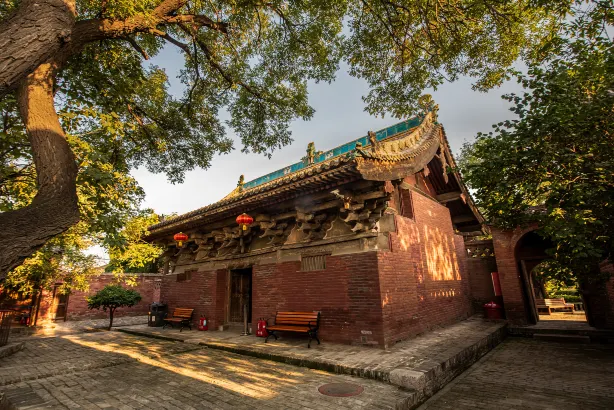
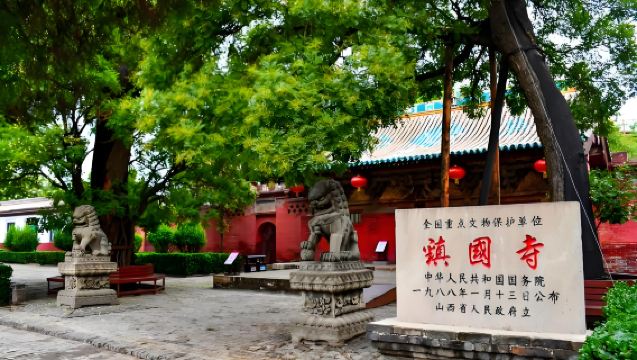
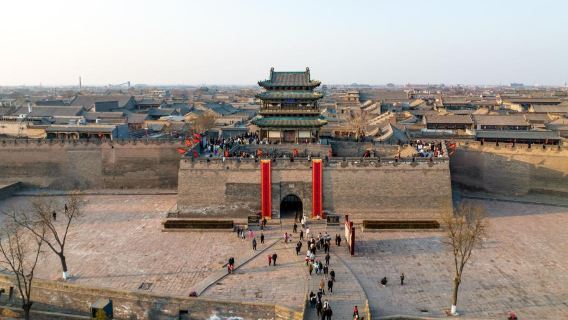
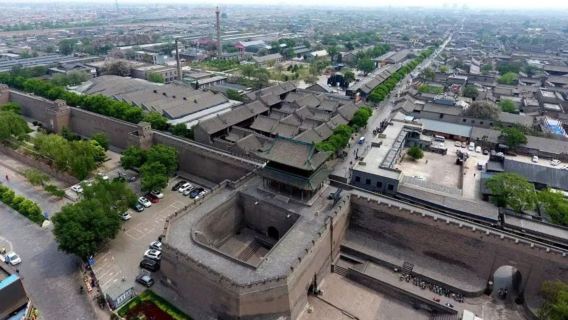
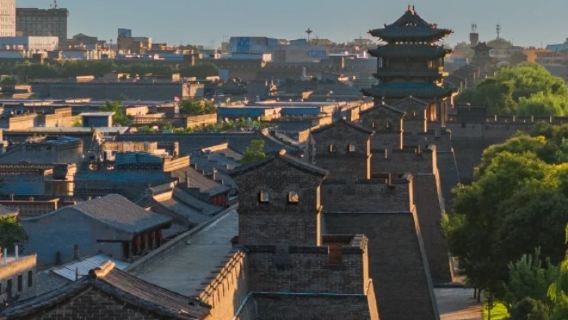
Pingyao Ancient City is one of the best-preserved ancient cities in China and, along with Lijiang Ancient City, is one of the two ancient cities in China to have successfully been designated as a World Cultural Heritage site in its entirety. Pingyao was once the financial center of China during the late Qing dynasty. Walking into this once-prosperous ancient city, you can feel the atmosphere of Shanxi merchant culture everywhere. The streets, shops, and residences within the ancient city still maintain their traditional layout and appearance. The overall street pattern is in the shape of the Chinese character 'tu', consisting of four main streets, eight small streets, and seventy-two lanes. The ancient city has six city gates in total, and the areas around the south gate and west gate are where visitors are concentrated. When touring, you usually enter the city through the lower west gate and walk along West Street to Rishengchang Exchange Shop, where you can learn about the development history of ancient banking and experience the legend of Shanxi merchants conducting business across the world. South Street, which runs north-south through the city, is the central axis of the ancient city. During the Ming and Qing dynasties, South Street gathered more than half of the country's financial institutions and was known as the "Wall Street of China" at the time. Today this street is called the Ming and Qing Ancient Street, and most of the ancient city's attractions are concentrated here. Centered on the landmark Market Tower, attractions such as Xietongqing Exchange Shop, Weitaihou Exchange Shop Museum, and the Chinese Escort Agency Museum are distributed around it, and a large number of shop buildings from the Ming and Qing periods are preserved along the street. At the Pingyao County Government Office in the south of the ancient city, you can see a large number of ancient documents and instruments of torture, and there is a daily performance of the county magistrate holding court; the City God Temple and the Confucian Temple in the east of the city have grand and refined architecture. The ancient city wall is very well preserved, and climbing the wall offers a panoramic view of the ancient city. The gate tower of Yingxun Gate at the south gate is especially exquisite, and watching the sunset from the city wall in the evening is a magnificent sight. In addition to the ancient city itself, the Zhenguo Temple and Shuanglin Temple outside the city are also part of the World Cultural Heritage. The Ten Thousand Buddha Hall of Zhenguo Temple is entirely made of wood, assembled with mortise and tenon joints without a single nail; Shuanglin Temple preserves painted sculptures from the Yuan to Ming dynasties, which are exquisite in form and renowned as a "treasure house of Eastern painted sculpture art."

Pingyao County · 38.7 km from Jiaocheng
Taiyuan Botanical Garden
2027 Asia 100 - Family-friendly Attractions

Taiyuan Botanical Garden

7.6
4.7/5
6k reviews

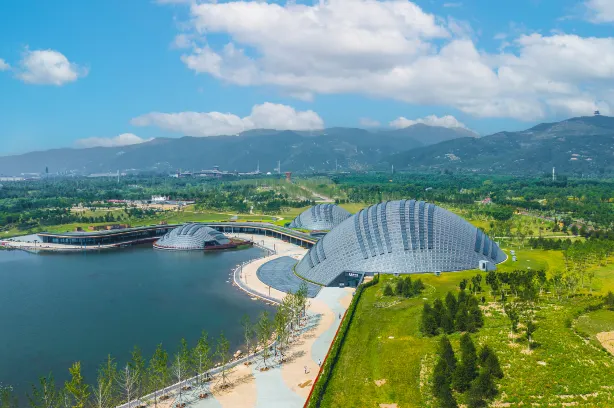
Overview of Taiyuan Botanical Garden The attraction is a landscaping project designated by the municipal party committee, was selected into the third batch of PPP demonstration projects by the Ministry of Finance, and won the Shanxi Province PPP Project Award for Improving the Living Environment. It is located at the foot of Taishan Attraction in Jinyuan District, starting from Fengyugou Mouth in the west, extending to Old Jinci Road in the east, from Fengyu Shahe in the north to Taigu Highway in the south, with a total area of approx. 2,730 mu and a total project investment of CNY 3.558 billion. The overall plan of the garden is divided into five functional areas: the entrance management area, the plant scientific classification area, the plant scientific application area, the plant evolution display area, and the scientific experiment area. The construction content includes five major building areas—the main entrance building, the exhibition conservatory, the potted plant museum, the waterfront restaurant, and the research center—as well as twenty-five specialized gardens. To date, more than 5,800 species of plants have been collected. The architectural design of the botanical garden project was completed by the internationally renowned design firms DMAA Architecture Design Co., Ltd. of Austria and Valentin Urban Planning and Landscape Design Office of Germany, and the landscape design was completed by the Beilin Landscape Planning and Design Institute of Beijing Forestry University. The attraction aims to protect species diversity, plant resources, and historical resources in Shanxi Province throughOwn responsibility, collectTaihang Mountains, Lüliang MountainsA comprehensive botanical garden in our province featuring temperate-zone plant resources dominated by distinctive plants, with introduced and domesticated new, superior, and specialty varieties suitable for the local area. It fully leverages its science education and educational functions, achieving an organic integration of beautiful garden landscapes, scientific substance, and distinctive local cultural resources. It is a comprehensive botanical garden integrating scientific research, science education, tourism, ecological leisure, and cultural tourism, adding to the city a great destination where residents can both systematically learn botanical science knowledge and enjoy leisure, entertainment, and vacation travel,At the same time, it connects with Jinci Temple, Tianlong Mountain Scenic Area, Taishan Longquan Temple Attraction, Mengshan Giant Buddha Attraction, Jinyang Lake Park, and Jinyang Ancient City Ruins Park to form a unique tourism brand for Taiyuan. In addition, its completion provides the necessary conditions for our city to consolidate its title as a "National Garden City" and to create an ecological garden city. At the same time, it has very important practical and strategic significance for improving the categories of parks in our city, promoting the rapid formation and development of the provincial capital's tourism area, improving the urban ecological environment, building a famous historical and cultural city, enhancing the city's quality, and constructing a city of green mountains and clear waters and a harmonious and livable city. Main entrance The main entrance building covers an area of 20,135 m² and incorporates the architectural style of Shanxi courtyard compounds. It is a comprehensive building integrating offices, the plant science popularization hall, the specimen hall, the lecture hall, the restaurant, and visitor reception. Visitors can stand on the cantilever of the main entrance to overlook the entire botanical garden, and in the distance, they can also gaze at the Taishan attraction, taking in the beautiful scenery at a glance. At the main entrance, there are also the Taiyuan Botanical Garden Plant Science Popularization Hall and the Insect Specimen Hall. The Taiyuan Botanical Garden Plant Science Popularization Hall covers an area of 4,300 square meters. All 118 educational science videos in the hall were independently directed and filmed by our garden. The exhibition is themed "Vivid Colors, Fragrant Life, Endless Vitality" and is divided into seven major thematic exhibition areas: Plant Evolution (exploring the origin of plants), Plant Mysteries (understanding plant structure), Plant Wisdom (discovering the wonders of plants), Plant Value (counting the contributions of plants), Plant Ecology (appreciating the influence of plants), Plant Culture (plants and traditional Chinese culture), and Shanxi's Botanical Beauty (distribution and conservation of plants in Shanxi). In the wonderful atmosphere of innovative integration between art and nature, light and shadow dance with flowers and leaves as visitors stroll through. The insect specimen museum displays more than 2,000 boxes (over 4,000) of rare insect and other arthropod specimens, and through the explanation of basic knowledge, it aims to help people understand nature, experience nature, and love nature, and enhance awareness of protecting insects, protecting plants, and protecting the environment. Insects are closely related to human life and are one of the most successfully evolved, diverse, and wonderfully fascinating groups of organisms on Earth. From colorful butterflies, flower-visiting honey-making bees, and loudly singing cicadas, to agile dragonflies and mantises wielding their "broadswords"; from marching ants in groups, to annoying mosquitoes, flies, cockroaches, and so on.The variety of insect species is unmatched by other animals. Insects are not only numerous in species, but the number of individuals within a single species is also astonishingly large. More than 1.1 million species of insects are known worldwide, and there may be several million more waiting to be discovered. Harmony between humanity and nature has become a consensus of human society in the present era. Only by living in harmony with the animals and plants of the natural world can humanity achieve sustainable development—this is the purpose and significance of our planning of the insect specimen science exhibition. Exhibition greenhouse The botanical garden conservatory complex consists of three individual conservatories—the Tropical Rainforest Hall, Taiyuan Botanical Garden - Succulent Plant Hall, and Rare Flowers Hall—as well as the conservatory energy center. All three exhibition conservatories are built with wooden dome structures with a span of 88 m. Their construction concept inherits the classical wooden structure construction theory of Shanxi on the basis of modern conservatory construction, representing a combination of the classical and the modern, and isBotanical gardenA simple tribute to this beloved land beneath our feet. The tropical rainforest conservatory covers an area of 5,521 m² and consists of the Tropical Rainforest Wonders Area, Tropical Rainforest Community Simulation Area, Flying Waterfall Viewing Area, Fun Botanical Garden, Palm Garden, and Tropical Aquatic Plant Garden; Taiyuan Botanical Garden - Succulent Plant Hall covers an area of 2,245 m² and collects and displays succulents from Africa, the Americas, and Australia; the Rare Plants and Four Seasons Flowers Exhibition Conservatory covers an area of 1,470 m² and mainly collects and displays tropical flowers, ferns, shade-loving plants, and more. For a long time, the exhibition greenhouses of botanical gardens have become charming places in the minds of visitors. The beautifully shaped large exhibition greenhouses, such as those at the Royal Botanic Gardens, Kew in the United KingdomPalm houseAlong with the Princess of Wales Conservatory, the grid-shell large-span hemispherical greenhouses at the Missouri Botanical Garden in the United States, the New York Botanical Garden conservatory, and the Longwood Gardens conservatory in Philadelphia, these structures are not only the diamonds in the crown of their botanical gardens but have also become landmarks of the architecture, culture, and civilization of their cities. To a certain extent, exhibition greenhouses can represent the level of cultural, scientific, and technological development of a city. Exhibition greenhouses originated during the European Renaissance. At that time, greenhouses served as cultivation and propagation bases for plant introduction, providing experimental materials and venues for scientific research, as well as places for cultivating flowers and plants for household use. With the improvement of economic and technological levels and humanity's understanding of nature, exhibition greenhouses have undergone significant transformations. Today's exhibition greenhouses are not only places for plant collection and display, scientific conservation and research, but also green spaces that integrate ecology and environment, science popularization and education, culture and art, and tourism and appreciation. Therefore, the exhibition greenhouse is a multi-level, multi-disciplinary, and multi-faceted field, whose construction and operation involve architecture, horticulture, ecology, aesthetics, and management, forming an indoor garden that is artificially controlled and displays plants growing in different regions and climatic conditions along with their living environments. Tropical rainforest hall The tropical rainforest hall covers an area of 5,521 m², relying on the existing mountain terrain on the north side and connecting to a water body on the south side. Through cliffs, precipices, gorges, caves, and flying waterfalls, it presents diverse landscape spaces. The mountain reaches a height of 12 m, with towering peaks and steep cliffs, while also featuring deep gorges, cascading waterfalls, and babbling streams. The overall layout combines openness and enclosure, creating a natural and varied topography. Bridges, plank roads, platforms, and stepping stones connect these nodal spaces. The exhibition hall is furnished with various typical tropical rainforest plants. The upper layer is dominated by tall trees whose crowns rise high above the other layers, standing out like a crane among chickens. The middle layer consists of small and medium-sized trees, interspersed with epiphytic and climbing plants that form hanging gardens. The lower layer contains ground cover and fern plants of varying density, while the large trees have gnarled and intertwined roots of diverse forms, making visitors feel as if they are walking through the beautiful and mysterious plant world of a tropical rainforest—sometimes striking and magnificent, sometimes elegant and peculiar, sometimes plain and tranquil, and always deeply evocative. The exhibition hall consists of six areas. Tropical rainforest wonder area The cliff and precipice terrain at the entrance leaves visitors entering the exhibition hall in awe, and stone carvings and rock paintings reflecting the regional culture of the rainforest can be seen everywhere on the cliff face. Following the direction of the cliff, the rumbling sound of water can be faintly heard in the distance, and the skywalk spanning the air comes into view, drawing visitors' footsteps irresistibly to explore. Visitors can also climb the steps to enter the 5 m high aerial viewing platform, where the beautiful scenery unfolds in full view. The plant arrangement in this area mainly focuses on presenting the typical landscape features of tropical rainforests, such as the eight major phenomena of tropical rainforests and the "five trees and six flowers" of Buddhist culture. Tropical rainforest community simulation area Clever use is made of the uneven terrain to display the typical views of Asian tropical rainforest, American tropical rainforest, and African tropical rainforest plant communities. Within the jungle, lush greenery abounds, with tall and dense tree crowns, and hanging gardens created by epiphytic plants can be seen everywhere, colorful and full of spring beauty. The root systems of various plants are also bizarre and distinctive, giving visitors an immersive tropical rainforest experience and feeling. Waterfall viewing area At the entrance, the waterfall is heard before it is seen, and after a winding path it suddenly comes into view before visitors. With the waterfall as the core view of the attraction, it has a drop of 9 m, cascading down in tiers and formed by stacked stone, with a pool of clear water below; the scene combines movement and stillness, blending plants with mountains and water. The viewing point for the waterfall is the viewing platform, from which visitors can gaze into the distance and let their imagination wander. On the ground level, a paved area is left in front of the waterfall as a space for visitors to stroll, enjoy the view, rest, and take photos. Tropical rainforest fruit tree area This area is located on the northwest side of the exhibition hall, where the mountain rises to a height of 12 m and streams flow gently. Various interesting rainforest fruits are planted according to the terrain, such as bananas, papayas, guavas, and jackfruit. Each fruit has different suitable growing conditions, but they generally share a preference for heat and intolerance of cold, so they grow in warm, humid places. In the tropical rainforest fruit tree area, this dazzling and unique phenomenon is displayed, opening up a rainforest world for visitors. Tropical rainforest style area This area is located at the western entrance, where the terrain is relatively flat. It features a concentrated planting of various tall and stately palm plants, graceful and upright in form. Beneath the palms, seasonal flowers are arranged in bright, vivid colors and are replaced periodically according to the season, creating a charming exotic landscape. Tropical aquatic botanical garden With the towering mountain as a backdrop, the water system of the entire mountain is designed to return to this water body. Travelers weave through the undulating tropical jungle, their eyes overwhelmed by the ever-changing scenery, until they arrive at the open water surface, calm and soothing, and stroll across the wooden bridge, connecting with the water and letting their spirits soar. Taiyuan Botanical Garden - Desert Plant House The Taiyuan Botanical Garden's Desert Plant House is a landscape greenhouse integrating species conservation, scientific research, and educational exhibition. The exhibition hall collects desert plants from Australia, Africa, Asia, and the Americas, showcasing the customs and cultures of different desert regions. Combining the existing terrain with a large-scale layout approach, the greenhouse is divided into regional exhibition zones based on the places of origin of cacti and succulents. American desert flora region The area covers approx. 600 m², making it the main exhibition area in this pavilion. The area features saguaros, golden barrel cacti with their all-over golden color, Ferocactus with eagle-claw-like spines, ponytail palms with bottle-shaped trunks, shaving brush trees with trunks resembling tortoise shells, and elegant yuccas as the backbone of the community, with other plants from the Agavaceae and Cactaceae families arranged in a balanced density, allowing visitors to truly experience the American desert scenery with a strong Native American flair. African desert flora region This area covers approx. 200 m² and focuses on showcasing representative desert plants native to the African desert and savanna desert zones. It features a community backbone of the silver-spined, commanding African milk barrel, the desert rose with its sturdy branches and fiery blooms, the awe-inspiring, intricately sculpted Aloe erinacea, and the solitary, leafless pencil cactus, complemented by a desert view of wind-eroded rocks and isolated walls of shifting sand,Among themDotting with other succulents such as aloes and sansevierias, it makes visitors feel as if they were in the vast and lonely African desert where eagles soar. Australian desert flora region This area covers 50 m² and features a community backbone of towering, majestic Queensland bottle trees shaped like giant bottles, elegant and handsome black ebony trees known as Australia's "Black Prince," and robust, formidable Australian Moore cycads, complemented by red soil and curved red rocks, along with other small and medium-sized desert plants arranged with a balanced density, showcasing a unique and charming Australian style. Premium desert plant display case Mainly, it shows that during the growth of desert plants, some species undergo abnormal variations in their form or epidermal color, primarily including variegation, cristation, and monstrose forms. Because the probability of occurrence is very low, they are generally difficult to see, so the mutated individuals appear particularly precious. On one side of the steps in the desert greenhouse, several groups of glass display cases are arranged, mainly used to display cristate golden barrel cactus, variegated golden barrel cactus, cristate African milk tree, and relatively rare premium desert plants such as the genus Lithops of the family Aizoaceae. The dry creek meanders and twists, narrowing from wide to narrow, passing through various exhibition areas to connect the entire desert plant hall before disappearing within the venue, symbolizing the longing for water in the desert and the long-standing historical culture. The echoing peak column in the middle of the venue uses driftwood to create a giant structure shaped like a bottle tree, serving as an extension of the entire venue's space, and the raised central section can display some folk culture specimens from various regions. Four seasons flower hall The greenhouse covers an area of 1,470 m² and incorporates the concept of a sunken garden, with pathways connecting three view levels—high, middle, and low—with a drop of 3 m, spiraling downward. The north entrance serves as the main viewing route, descending step by step through the second-floor viewing platform to reach the ground floor of the entire exhibition hall. The south side features an accessible pathway for people with special needs to reach the ground floor. For plants, tropical flowers, ferns, and shade-loving plants are used to create rich view layers. The varying-height retaining walls are a major feature of this exhibition hall, using materials such as stainless steel panels, stone, and plants to display rich facade effects. Greenhouse plant exhibition area This area covers 470 m² and features a concentrated display of rare plants, shade-loving plants, and ferns, with occasional accents of uniquely shaped, elegant landscape trees or rare plants. Carnivorous plant exhibition area Carnivorous plants use their own methods to make insects stay on their leaves and stems, then fall into their traps and be consumed. The exhibition area displays carnivorous plants through transparent glass display panels, which can both ensure the safety of visitors and allow visitors to observe the growth forms of carnivorous plants up close. Floral-themed attraction display area This area covers 235 m² and is built with walls and streams, using orchids as the main floral material to create a themed attraction. Here, visitors can admire different varieties of orchids and enjoy a feast of orchids. Throughout the year, different themed floral displays are presented here—flowers and scenery together, with flowers within the scenery and flowers blending into the scenery—making it a great spot for visitors to take photos. Premium flower exhibition area Display rare orchid varieties from around the world in a concentrated arrangement using racks, partitions, driftwood, and display cabinets. Examples include: Cattleya from the Americas, the "Queen of Orchids" Phalaenopsis from Southeast Asia, the "Rising Star of Orchids" Cymbidium from Korea, the "Greek Princess" Miltonia, and the "Elegant Dancer" Oncidium. Hanging plant exhibition area This area covers 50 m² and features various tropical orchids and other hanging foliage and flowering plants arranged in a concentrated display through various carriers. Three large-scale three-dimensional floral installations are arranged at varying heights, creating a delightful visual experience. Bonsai Hall One flower, one leaf, one bodhi; one pot, one landscape, one world. Bonsai originated in China, with a long history and a distant source. In the long river of human social history, during the primitive period, humans lived in groups in nature and depended on nature. With the development of human civilization, people living in cities, although residing in cities, still long for and deeply love every plant, every mountain, and every river of nature. This circular, streamlined building employs a technique that combines the solid and the ethereal, bridging the past and the present to showcase the long history, unique craftsmanship, innovative achievements, and cultural connotations of bonsai. Amid the tide of inheritance and innovation, it will remain true to its original aspiration and open a new chapter for Jin-style bonsai! The Bonsai Hall has two floors. Currently, the first floor displays scholar's rocks and landscape bonsai, while the second floor displays stump bonsai, succulents, and other plants. Screens, railings, tables, and other furniture are used to divide the space and display the bonsai and scholar's rocks, presenting the great art of Chinese bonsai through immersive scenes. Bonsai emphasizes the trinity of the scenery, the pot, and the stand. The three essential elements of bonsai complement one another and merge into a single whole, integrating multiple artistic elements to present the overall beauty and artistic beauty of the work. The artistic creations of bonsai craftsmen through the ages enable a small bonsai to reveal a vast world. The pot reveals the beauty of nature, and only through artistic conception can one appreciate the ingenuity of the craftsmanship. As the saying goes, bonsai and scholar's rocks are inseparable; many bonsai enthusiasts are also lovers of scholar's rocks. This is because stones are used when making root-over-rock bonsai and water-and-land bonsai, and if scholar's rocks can be used to complement them, the effect is even more striking. In addition, bonsai and scholar's rocks are both refined hobbies, and the two share much in common. Waterfront restaurant The waterfront restaurant has a building area of 2,822 m² and is built by the water. Its roof uses a traditional Chinese post-and-lintel timber structure, and the floor-to-ceiling glass offers a panoramic view of the botanical garden. Dining here is a feast for both the eyes and the palate. Research center The total area is approx. 54 mu. The research center has 7 individual buildings in total, namely the library and specimen museum, staff apartments, laboratory and office building, expert apartments, and garden waste treatment station. To facilitate plant resource introduction and domestication, ex situ conservation, and scientific research for researchers, the research center also features 300 mu of experimental fields. 25 specialized gardens In addition, there are 25 specialized gardens, including: the Plant Application Garden,Xuanqiu Garden, bamboo garden, APG taxonomy garden, rose garden, rare and endangered plant garden,Perennial flower garden, Lilac and Viburnum Garden, Taiyuan Botanical Garden - Chrysanthemum Garden, Taiyuan Botanical Garden - Rock Garden, Medicinal and Tea Garden,Pagoda, Taiyuan Botanical Garden - Arboretum, Ginkgo and Conifer Garden, Taiyuan Botanical Garden - Bonsai Garden, Taiyuan Botanical Garden - Sophora Garden, Climbing Plant Garden, Water Garden, Brownfield Restoration Demonstration Garden, Taiyuan Botanical Garden - Peach Blossom Garden, Cherry and Plum Garden, Taiyuan Botanical Garden - Crabapple Garden, Taiyuan Botanical Garden - Peony and Herbaceous Peony Garden, Willow and Linden Garden, Taiyuan Botanical Garden - Magnolia Garden. Throughout the year, the scenery is ever-changing. In spring, flowers bloom in abundance; in summer, lush greenery prevails; in fall, the entire garden turns golden; and in deep winter, pines and cypresses stand tall.

Taiyuan · 34.9 km from Jiaocheng

Experiences you can't miss in Jiaocheng

Featured Day tours in Jiaocheng

View all Day tours
Half-Day Tour of Pingyao Ancient City (English Guide)
󱌍
Duration: 5.5 hrs
English
Free cancellation
Instant confirmation
Book now for tomorrow
FromMXN$2,281.86
One-day private charter to Pingyao Ancient Town and Qiao Family Courtyard from Taiyuan
󱌍
5.0/5
· 1 review
Duration: 10.5 hrs
English
Free cancellation
Instant confirmation
FromMXN$1,339.78
Private Charter One-Day Tour to Mianshan Mountain, Jiexiu, Shanxi
󱌍
Duration: 11 hrs
English
Free cancellation
Instant confirmation
FromMXN$2,933.82
One-day tour to Pingyao Ancient City and Qiao Family Compound from Taiyuan (Jin merchant elegance · ancient city and compound tour)
󱌍
FromMXN$782.36
Shuanglin Temple, Wang Family Compound & Pingyao Ancient City Pingyao Private Day Tour
󱌍
Duration: 9.5 hrs
English
Free cancellation
Instant confirmation
FromMXN$2,258.56

Featured Culture & history in Jiaocheng

View all Culture & history


Jiaocheng Today's weatherClear -7-10℃
Jiaocheng weather for the next 2 days11/24: -6-9℃, 11/25: -4-14℃

Free things to do in Jiaocheng
What travellers say about Jiaocheng

user-avatar
wt草莓November 22, 2026
5.0
Jinci Temple in Shanxi Province is the most worthwhile place to visit. You absolutely must hire a guide; without one, you'll know nothing and just wander through without really understanding anything. Here, you'll witness the intricate craftsmanship and learn about intricate designs and the concepts of "e" and "pian" (a type of plaque).

Jinci Temple Museum

user-avatar
Anonymous userNovember 19, 2026
5.0
I saw online reviews didn't recommend it, but I still felt I had to come and see it, and it was quite good. Guides were scarce in the scenic area, probably because it was peak season; I managed to book one by chance. It's best to stroll around at a leisurely pace. The old restaurants outside the scenic area are also quite good.

The Qiao's Family Compound

user-avatar
Sanjin620801December 18, 2022
5.0
Guashan is located at the eastern foot of Jiaocheng Mountain in Luliang, Shanxi Province, 3 kilometers north of Jiaocheng County. Guashan is named after the surrounding peaks that resemble a hexagram. The pine and cypress trees on the mountain are in various shapes and are evergreen all year round. There are many mysterious folk legends. It is regarded as a natural Taoist temple by Taoists and has a profound cultural heritage. There are scenic spots such as Tianning Temple, Cast Iron Stele, Pilu Pavilion, and Tang Huai Mountain, which were founded in the first year of Zhenguan in the Tang Dynasty (627). It is a tourist attraction in Shanxi that integrates natural scenery and ancient temples. Mi Fu, a calligrapher and painter in the Song Dynasty, ranked it among the three mountains and five peaks and praised it as the "first mountain".

Hexagrams Mountain

user-avatar
_We***89June 18, 2022
5.0
Beautiful scenery, high play experience, thrilling

Pangquangou Canyon Rafting

user-avatar
首席监理December 24, 2021
4.0
Xuanzhong Temple is located on Shibi Mountain, 10 kilometers northwest of Jiaocheng County, Lüliang City. It was founded in the second year of Yanxing in the Northern Wei Dynasty (472 AD) and completed in the first year of Chengming (476 AD). Because the terrain is full of mountains and the mountain shape is like a wall, it was renamed "Shibi Temple". From the Northern Wei Dynasty to the Sui and Tang Dynasties, Xuanzhong Temple successively hosted the three great patriarchs of the Pure Land Sect of Chinese Buddhism. The belief in Amitabha Pure Land quickly spread from the scholar class to the Chinese people, and then established a sect and spread to Korea and Japan. Xuanzhong Ancient Temple became another ancestral temple of the Pure Land Sect of Chinese Buddhism after Donglin Temple in Mount Lu. In 1983, Xuanzhong Temple was listed as a national key Buddhist temple in the Han area by the State Council. In 2012, it was rated as an AAAA-level tourist attraction by the National Tourism Administration.

Xuanzhong Temple

user-avatar
滇国剑客October 5, 2021
5.0
The scenery in Pangquangou reflects a strong farming style in many places, providing a good place for leisure and travel to relax for people who have been depressed in the city for too long.

Pangquangou National Nature Reserve

user-avatar
Anonymous userNovember 22, 2026
4.0
Pingyao Ancient City charges a combined ticket of over 100 yuan, which includes many attractions, but it's impossible to see them all, nor is it necessary. The city walls close at 5:15 PM, which is inconvenient. Unique features include the county government office, a money exchange, a treasury, and a security escort agency.

Pingyao Ancient City

user-avatar
Anonymous userNovember 12, 2026
5.0
This was my first time visiting the botanical garden at night with my parents. The weather was slightly chilly, and there were far fewer people. The night view here felt like stepping into a time tunnel to another dimension. My beloved Taiyuan is truly beautiful.

Taiyuan Botanical Garden

user-avatar
楚云霁月August 21, 2026
4.0
The old town was rather deserted. The art exhibition was quite nice, though a bit over the top. But the park at the exit was absolutely gorgeous. Winding paths led to secluded spots, and unexpected beauty unfolded.

Taiyuan Ancient County

user-avatar
超酷的小王同学。October 24, 2026
5.0
Zhenguo Temple is a hidden gem of an ancient temple in Pingyao, not widely known but rich in historical significance. The Wanfo Hall is a rare example of a Five Dynasties wooden structure, over a thousand years old. Its imposing and simple bracket sets, constructed without a single nail, have stood the test of time, making it a living fossil of wooden architecture. The painted sculptures inside retain their original Five Dynasties appearance, with a dignified and weighty style, a stark contrast to the lively Ming Dynasty sculptures of Shuanglin Temple. The temple is serene and quiet, with few tourists, perfect for slowly appreciating the beauty of its ancient architecture. If you appreciate ancient architecture, after visiting Shuanglin Temple, a stopover at Zhenguo Temple offers a unique and worthwhile experience, allowing you to understand the architecture and sculptures of different eras.

Zhenguo Temple

Trip Moments in Jiaocheng
Popular cities near Jiaocheng

Frequently asked questions

What are the must-do things in Jiaocheng?

Don't miss these attractions in Jiaocheng: Jinci Temple Museum, The Qiao's Family Compound, and Hexagrams Mountain. If you like Day tours, try Half-Day Tour of Pingyao Ancient City (English Guide). If you enjoy Culture & history, try Jinzhong Jinyaoji ancient-style costume experience (multi-dynasty costume rental + ancient-style makeup and styling experience).

When choosing a tour, start with how much time you have and the kind of experience you're looking for. Trending options right now include Half-Day Tour of Pingyao Ancient City (English Guide), One-day private charter to Pingyao Ancient Town and Qiao Family Courtyard from Taiyuan, and Private Charter One-Day Tour to Mianshan Mountain, Jiexiu, Shanxi. Check the real-time availability and itinerary before you book.

As of November 23, 2026, the reference price for day tours and activities in Jiaocheng is around MXN 782.36 – MXN 4,465.92. Rates vary by duration, group size, transport, tickets, meals, and any special admission requirements. Before you book, please confirm the billing currency and whether the price is quoted per person or per group.

Get help anytime, anywhere within 30 secondsContact customer support

Change and cancellation policies vary by attractions and tours. Please check the product details page for more information.

Ticket prices may vary between weekdays and weekends, as well as during peak and off-peak seasons. When booking with Trip.com, you can also use Trip Coins to get extra savings. For more tips on booking discounted tickets, please visit Trip.com for the latest information.