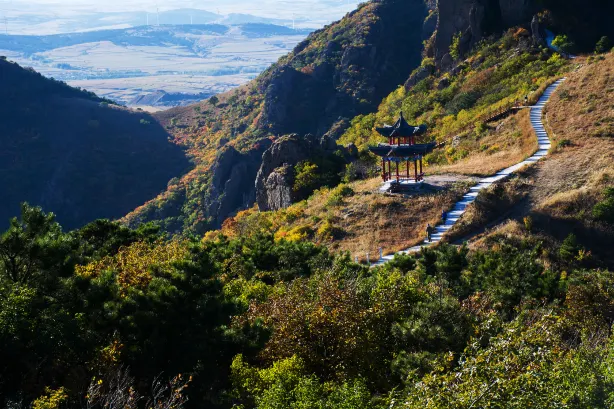
Jingyuan

Things to do in Jingyuan

Search attractions or local attractions & tours
Search

Explore top experiences

Top 10 attractions in Jingyuan

View all Attractions
Faquan Temple

Faquan Temple

3.1
4.9/5
70 reviews

The Faquan Temple Scenic Spot was built in the Northern Wei Dynasty and reached its peak in the Tang and Song Dynasties, with additions and repairs. In the early Tang Dynasty, the general Wei Chi Jingde once built Faquan Temple, and in the fifth year of Chongning in the Song Dynasty (1106), Faquan Temple and Xi'an Jingyun Temple were conferred as the upper and lower temples. After several battles, maintenance and additions began in 1988, and the building is basically well preserved. The total area of Faquan Temple Scenic Tourist Area is 3.86 square kilometers. The building area of the monastery is 5,200 meters. The buildings in the yard are distributed in the south and the north. It is built on the cliff and has a magnificent momentum. There are more than 60 cave palaces, including the Mountain Gate, the Gate Tower, the Ten Thousand Buddha Pagoda, the Five Hundred Arhats Hall, the Jade Emperor Cave, the Queen Mother Palace, the Eight Immortals Palace, the Wenchang Pavilion, the Tianfeng Pagoda, and the Kuixing Pavilion. In the meantime, the palaces and pavilions are splendid, the pagodas are high into the sky, the lakes are sparkling, the mountains are quiet and the forests are quiet, and the rocks and springs are clear. Peng Ze, Minister of Military Affairs of the Ming Dynasty, studied here, and cultural celebrities such as Zhang Daqian, Yu Youren and He Yu in modern times visited the ancient temple and left their calligraphy. In the 1960s, the national first-class cultural relic "Siku Quanshu" was collected here.

Jingyuan · 8.2 km from downtown
Shapotou Scenic Area
No. 1 of Best Things to Do in Ningxia

Shapotou Scenic Area

8.3
4.8/5
39.1k reviews

The scenic spot is located 16 kilometers west of Zhongwei City, Ningxia, on the southeastern edge of the Tengger Desert. The scenic spot has successively won honors such as "the first batch of national 5A-level tourist attractions", "the top 500 global environmental protection units", and "the first batch of national tourism standardization demonstration units". The three major cultural elements of the scenic area include the "Yellow River Culture" based on the intangible cultural heritage sheepskin rafts, the "Desert Culture" based on straw grids and Desert Legend Park, and the "Starry Sky Culture" based on the Desert Star Hotel. The tourism resources of these three elements have created a unique and magnificent landscape of "sunset over the long river and starry sky in the desert". The "six major ways to play" are highly praised and loved by tourists. Among them, the Yellow River projects include sheepskin rafting, Huangtengda, Yellow River speedboat, drift boat, passionate sandboarding and high-altitude bungee jumping, etc. The desert projects include Desert Camel, Desert Flying (Stepping into the Blue Clouds), and Sand Sea. Surfing, etc., starry sky projects include stargazing lectures, meteor feasts, sand therapy experiences, star cakes and other special products. In addition, there are also privately customized products for hiking, desert expansion, and educational and entertaining study experiences. The scenic area not only has diverse cultural elements and fun project experiences, but also multi-level accommodation experiences waiting for you: the butler-style Diamond Hotel, the quiet Desert Star Hotel for stargazing, the quiet Yellow River Courtyard in the bustling city, and finally the economical and affordable business-style Tourist Service Center Hotel and other differentiated tourist accommodations for you to choose from.

China · Zhongwei
Qinghai Tibetan Culture Museum
No. 2 of Best Things to Do in Qinghai

Qinghai Tibetan Culture Museum

8.2
4.8/5
10.3k reviews

Qinghai Tibetan Culture MuseumIt is a comprehensive museum themed on Tibetan medicine culture and featuring Tibetan culture.Qinghai Tibetan Culture Museum(also known as Qinghai Tibetan Culture Museum) is located in Xining, the capital of Qinghai Province in the eastern part of the Qinghai-Tibet Plateau. It officially opened in September 2006. The museum has basically formed a "one museum with two halls" layout, featuring 16 exhibition halls including the Silk Road and Tibetan civilization, the grand view of Chinese Tibetan art painting, and the history of Tibetan medicine.Qinghai Tibetan Culture MuseumThe collection is rich, historic, and diverse, possessing high historical, scientific, and artistic value. The museum houses the Guinness World Record-holding thangka masterpiece, "The Grand Thangka of Tibetan Culture and Art," which is 618 m long. It was planned by renowned thangka master Zongzhe Lajie and completed by 400 painters over four years. Its content encompasses the Tibetan understanding of the universe, the formation of the Qinghai-Tibet Plateau, history, religion, medicine, culture, art, and folklore. With its intricate details and brilliant colors, it is a magnificent sight and can be called an encyclopedia of Tibetan culture, hailed as a "contemporary national treasure." Through four major series—ancient books and documents, Tibetan medical thangkas, ancient Tibetan medical instruments, and Tibetan material specimens—the museum comprehensively displays the long history, profound theoretical system, clinical practice, and unique preparation techniques of Tibetan medicine, with four ancient books included in the National Catalogue of Precious Ancient Books. The Silk Road and Qinghai-Tibet Civilization exhibition hall uses history as its temporal dimension and the vast plateau landscape as its geographical dimension. Through thousands of precious cultural relics such as silk, gold and silver ware, and coffin paintings, it highlights Tibetan cultural elements and showcases the origin, inheritance, rise, and prosperity of the Qinghai-Tibet Plateau civilization throughout the long river of history. The Tibetan carpet exhibition hall is one of the largest exhibitions of ancient carpets in China, displaying more than 400 Tibetan carpet artifacts from different periods and eras, featuring magnificent patterns, intense colors, and unique ethnic styles and local characteristics. At the same time, there are also Tibetan-style architectural exhibition halls, Tibetan calligraphy art exhibition halls, as well as temporary exhibition halls, multimedia screening rooms, academic lecture halls, and cultural relic storage rooms, providing strong capabilities for inheritance, protection, and research, as well as conditions for cultural exchange.Qinghai Tibetan Culture MuseumIt will continuously improve the level of cultural relic preservation, exhibition design, scientific research, and management operations, becoming a platform for promoting ethnic unity and social development, a broad stage for cultural dissemination and academic exchange, a research center for cultural relic protection and Tibetan studies, and an exhibition center for treasured literature and collections, showcasing the splendid civilization and culture of the Tibetan Plateau to the world.

China · Xining
Kumbum Monastery
No. 3 of Best Things to Do in Qinghai

Kumbum Monastery

8.2
4.7/5
18.7k reviews

Kumbum Monastery is one of the important monasteries of the Gelug (Yellow Hat) sect of Tibetan Buddhism and the birthplace of Tsongkhapa, the founder of the Yellow Hat sect. The monastery features magnificent architecture, abundant treasures, and a strong religious atmosphere, making it one of the more popular travel destinations in Xining. Overview of the visit It has distinct differences in architectural layout compared to Han Chinese Buddhist temples in inland China: the complex here is not symmetrically arranged along a central axis. The monastery is an ancient architectural complex composed of numerous halls, scripture halls, stupas, and colleges, with each sutra hall, main hall, and stupa irregularly distributed on a small hill. Travelers can explore the site in a relatively free manner rather than following a straight path along a central axis. The Great Golden Roof Hall of Kumbum Monastery is the center of the entire architectural complex. It is said that Master Tsongkhapa was born here, and when he was born, his umbilical cord blood dripped on this spot, from which a bodhi tree grew. Later, a stupa was built around the tree, and a monastery was constructed, hence the name. Believers hold that this tree and stupa are the embodiment of the master. The three unique features of the attraction: butter sculptures, murals, and appliqué embroidery. Butter sculptures are made by mixing butter with various pigments to mold and carve into figures of Buddhas, people, flowers, birds, animals, and pavilions. Travelers can admire exquisite butter sculptures at the butter sculpture hall inside the temple (located far from the main gate). Vibrant centuries-old murals can be appreciated in the main halls, corridors, and front galleries of the temple. Appliqué embroidery involves cutting colored satin into desired shapes, such as Buddha figures or animals, stuffing them with wool or cotton, and embroidering them onto cloth hangings. In the temple's great sutra hall, two rare large appliqué embroidery pieces—"Sixteen Arhats Displaying Divine Powers" and "Eight Immortals Crossing the Sea"—hang on either side. The four major religious festivals (based on the lunar calendar): 1. Cham dance (14th day of the first month) and butter sculpture exhibition (15th day of the first month); 2. Cham dance (14th day of the fourth month), Buddha unveiling, and Cham dance (15th day of the fourth month); 3. Buddha unveiling, Cham dance (6th day of the sixth month), and golden Buddha procession (8th day of the sixth month); 4. Full-day Buddha unveiling (22nd day of the ninth month) and Cham dance (23rd day of the ninth month). During these festivals, activities like Buddha unveiling and ritual dances take place, attracting large crowds of devotees and travelers, creating a lively atmosphere.

China · Xining
Lanzhou Danxia Geological Park
No. 1 of Family-friendly Attractions in Gansu

Lanzhou Danxia Geological Park

8.1
4.5/5
3.7k reviews

Lanzhou Danxia Geological Park is a key cultural tourism project in Gansu Province and a comprehensive cultural tourism initiative prioritized by the Lanzhou Municipal Committee and Government. Located by the Yellow River, the park is just 13 km from downtown Lanzhou and 30 km from Lanzhou Zhongchuan International Airport, making it one of the closest Danxia landform clusters to a major urban center in China. With a total planned area of 400 sq km and a core visiting area of 25 sq km in its first phase, it ranks among the largest discovered landscapes of its kind in the country. The park primarily features red mountain bay formations, along with spectacular Danxia cliffs, isolated peaks, secluded valleys, narrow gorges, and balancing rocks. Its colorful mountains set against winding waterways create a masterpiece of Danxia landform scenery. The attraction features seven viewing platforms showcasing the Danxia landforms: Silk Road Glow, Silk Road Eagle, Flying Apsaras Exploration, Nine-Colored Danxia, Danxia Reflecting Sky, Emerald Peaks Rippling Sky, and Danxia Summit Scenic View. It also includes the Ancient Silk Road Gateway, Shajing Tribe Cultural Square, Desert Bells Scenic Boulevard, and a 2,550m Danxia boardwalk viewing area. As a key cultural tourism project in the province, Lanzhou Danxia Geological Park adheres to the principles of "ecological protection, green development, preserving original features, and moderate development." Leveraging Lanzhou's unique resource advantages and focusing on the domestic tourism market, it aims to cultivate new growth drivers for Lanzhou's cultural tourism industry and establish a new highland for cultural tourism in the city.

China · Yongdeng
Xixia Imperial Tombs
No. 1 of Best Things to Do in Yinchuan

Xixia Imperial Tombs

7.8
4.6/5
9.1k reviews

Xixia Imperial Tombs, located in the western suburbs of YinchuanHelan MountainsLocated at the foot of the mountain, it is the royal tomb complex of the Xixia dynasty, where several emperors of the Xixia dynasty were buried. The entire tomb area now contains 9 imperial tombs and about 270 satellite tombs, making it one of the largest royal tomb complexes in Chinese history. The shape of the tombs is different from that of other Chinese tombs, resembling an inverted steamed bun. In addition, the attraction also features facilities and venues such as the Xixia Imperial Tombs Museum, the Xixia Imperial Tombs - Xixia History and Art Gallery, and the Xixia Stele Forest, helping visitors understand the history and culture behind the tombs. The attraction currently has tomb no. 3 and others open for visitors. Tomb no. 3 (the "Tai Tomb" of Li Yuanhao, the founding emperor of Xixia) is relatively close to the Xixia Imperial Tombs - Xixia History and Art Museum and the Xixia Stele Forest. The Xixia dynasty was established by the Tangut people, whose writing and customs differed from those of the Han Chinese in the Central Plains. After the dynasty fell, the cities and history of Xixia mysteriously vanished into the Gobi Desert, becoming an enduring mystery of the ages, and were not discovered and deciphered until modern times. The Xixia Imperial Tombs Museum houses a rich collection of artifacts from the Xixia dynasty, among which many stone carvings in Xixia script and murals with Xixia style are treasures. The free guided tours inside the museum are also excellent, helping visitors understand the customs, culture, and rise and fall of the mysterious Xixia dynasty, and allowing for a more meaningful visit to the imperial tombs. On July 11, 2025, the Xixia Imperial Tombs were officially inscribed on the World Cultural Heritage List. Within the attraction, you can walk up close to visit the Haowang Tomb. The massive inverted semicircular mausoleum stands upon the barren land, bringing the weight of history vividly before your eyes, while in the distance theHelan MountainsThe foothills are crisscrossed by ravines and gullies, evoking a sense of desolate grandeur and the vicissitudes of time. The Xixia Imperial Tombs Museum within the attraction has newly opened. Its exhibits are divided into six sections: Xixia history, Xixia culture, Xixia religious art, Xixia social economy, the Xixia Imperial Tombs, and protection and inheritance. Nearly 5,000 items are on display, including thangkas, documents, clay sculptures, bronze and iron wares, textiles, and porcelain, among which are a large number of fine artifacts unearthed during archaeological research on the Xixia Imperial Tombs in recent years.

China · Yinchuan
Gansu Provincial Museum
No. 2 of Family-friendly Attractions in Gansu

Gansu Provincial Museum

7.6
4.6/5
4k reviews

Gansu Provincial Museum is a large comprehensive museum centered on the civilization of the Silk Road. Located at a strategic point along the Silk Road and a convergence zone of Han and Tibetan cultures, its collections embody the diverse characteristics of the Central Plains, Western Regions, and the Tibetan Plateau. The three treasured artifacts—the Galloping Bronze Horse, the mural brick of a courier, and the painted pottery vase with a human-head-shaped mouth—serve as iconic representations of the museum. The museum has three floors, featuring permanent exhibitions on themes such as the civilization of the Silk Road, Buddhist art of Gansu, painted pottery of Gansu, paleontological fossils, and revolutionary Gansu. The Silk Road civilization exhibition on the second floor is the museum's centerpiece: the bronze galloping horse unearthed in 1969 from the Leitai Han tomb in Wuwei is displayed here. The horse has three hooves in the air and one stepping on a flying bird, standing steadily on a single hoof. Its image is now the symbol of Chinese tourism. In the same hall, the mural brick depicting a courier from the Wei-Jin tombs in Jiayuguan shows a messenger galloping on horseback, notably without a mouth, symbolizing the need for couriers to "keep their mouths shut." This pattern was later adopted as the emblem of China Post. The exhibition also features a procession of chariots and horses excavated from the same tomb as the bronze horse, along with Han and Tang dynasty silk textiles, gold and silver artifacts, making the prosperity of Silk Road trade vividly tangible. The Buddhist art exhibition hall on the third floor features replicas of caves from the Mogao Grottoes and Maijishan Grottoes, alongside statues, ritual objects, white pagodas, and prayer wheels from both Han and Tibetan Buddhism. Stepping into the hall feels like entering a temple, and this harmonious blend of Han and Tibetan styles is rarely seen elsewhere. On the same floor, the painted pottery exhibition showcases ceramics from cultures such as Dadiwan, Yangshao, and Majiayao, with intricate and fluid patterns like spiral and sawtooth designs. Among them, the painted pottery bottle with a human-head-shaped spout unearthed at Dadiwan in Qin'an, which integrates facial sculpture with the pottery vessel, is a highly popular exhibit. If you're interested in natural history, the paleontological fossils exhibition hall features the impressive skeleton of the Yellow River ancient elephant unearthed in Heshui, and the dinosaur fossils and reconstructed models are also popular with children. The revolutionary Gansu exhibition hall showcases historical artifacts and materials from periods such as the Nanliang base area and the Shaan-Gan-Ning border region, narrating the modern history of this land. The museum houses a large quantity of exhibits, and even a quick tour would take half a day. It's recommended to start with the Silk Road exhibition on the second floor, then proceed to the third floor for Buddhist art and painted pottery, following a logical route. In the exhibition halls, you can scan to listen to the audio guide, and at certain times, volunteers also provide guided explanations.

Lanzhou · 98.4 km from Jingyuan
China West Film Studio
No. 1 of Family-friendly Attractions in Yinchuan

China West Film Studio

7.7
4.5/5
20.1k reviews

Zhenbeibao Western Cinema is located in Xixia District, Yinchuan City. In this studio, which is characterized by simplicity, roughness and desolation, classic films such as "Wrangler", "Red Sorghum", "Journey to the West", "Thorn Mausoleum", "Jin Yiwei" and hundreds of influential film and television films were filmed. In the remaining part, a large number of celebrities from the Chinese film industry have left their footprints here, such as Gong Li, Jiang Wen, Zhang Yimou, Ge You, Zhou Xingchi, Donnie Yen and so on. The cinema consists of three parts: Mingcheng, Qingcheng and Old Yinchuan Street. Tourists can visit the cinema along the "figure 8" route of Old Yinchuan Street. Here, you can see the appearance of Yinchuan in the first half of the 20th century, and eat local traditional snacks such as mutton soup. The Ming and Qing cities in the film city were rebuilt from the military castles left over from the Ming and Qing dynasties. In the Ming and Qing cities, you can see many familiar movie scenes, such as: the gate tower where Sun Wukong and Fairy Zixia are standing in "Journey to the West", the throne of the Bull Demon King, the torture platform of the Tang monk; and the movie "Journey to the West" The Moon Gate in "Red Sorghum", the winemaking workshop where "My Grandpa" urinated after being drunk, the sedan chair that Jiu'er took when he got married, the big vat for wine, and the bowls. There are costumes and props for rent in many places in the studio. Here, you can wear a set of costumes in the play, use the props in the movie, and walk around the scenes of the movie to live the addiction of being a star. Before going to Zhenbeibao Western Studios, you can revisit a few classic movies first, and then go to visit, you will have a different feeling.

China · Yinchuan

Experiences you can't miss in Jingyuan

Featured Culture & history in Jingyuan

View all Culture & history
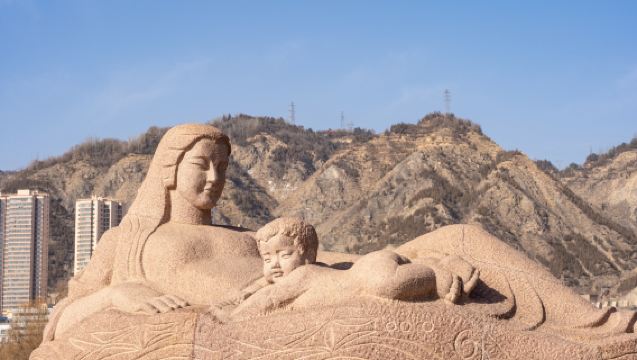
Private tour of Lanzhou's top attractions with an English-speaking guide
󱌍
Duration: 6.5 hrs
English
Free cancellation
Instant confirmation
Book now for tomorrow
9% off
Limited-time sale
FromSAR 139.68SAR 155.19
Lanzhou Highlights Day Tour | Statue of Mother Yellow River, White Pagoda Mountain, Zhongshan Bridge (Private Service)
󱌍
Duration: 6 hrs
English
Free cancellation
Instant confirmation
Book now for tomorrow
FromSAR 120.13

Featured Day tours in Jingyuan

View all Day tours
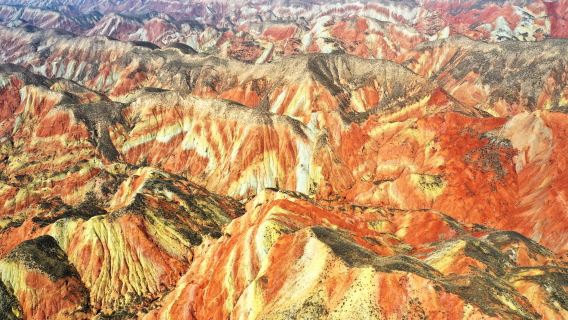
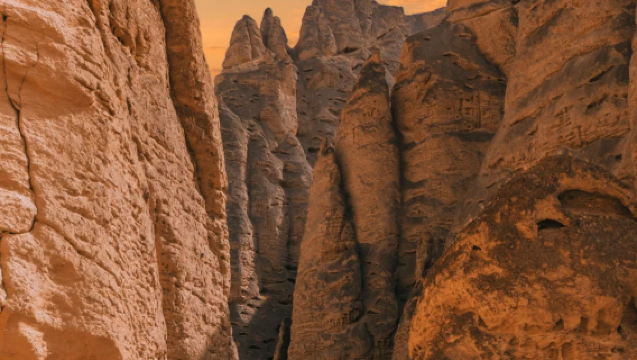
One-day tour to Lanzhou Danxia Geological Park and Yellow River Stone Forest National Geological Park
󱌍
Duration: 12.8 hrs
English
Free cancellation
Instant confirmation
Book now for tomorrow
FromSAR 223.64
Lanzhou Private Day Tour: Discover the Stone Peak Wonderland at Yellow River Stone Forest
󱌍
Duration: 6 hrs
English
Free cancellation
Instant confirmation
Book now for tomorrow
FromSAR 235.14
Private chartered tour to Yellow River Stone Forest + Yinmagou Canyon Chartered tour(departing from Lanzhou)
󱌍
Duration: 6 hrs
English
Free cancellation
Instant confirmation
Book now for tomorrow
9% off
Limited-time sale
FromSAR 158.91SAR 176.56
Lanzhou Private Half-Day Tour: Zhongshan Bridge + White Pagoda Mountain + Statue of Mother Yellow River - Classic Landmark Photo Spots
󱌍
FromSAR 98.40
[Depart from Lanzhou] Yellow River Stone Forest & Shuimo Danxia  Private Day Tour
󱌍
Duration: 8 hrs
English
Instant confirmation
Book now for tomorrow
FromSAR 541.83

More things to do

Group Tours in Jingyuan

View More Group Tours in Jingyuan
Jingyuan Today's weatherFoggy -1-14℃
Jingyuan weather for the next 2 days11/13: 0-15℃, 11/14: 0-14℃

Free things to do in Jingyuan

What travellers say about Jingyuan

user-avatar
M22***22May 9, 2022
5.0
Faquan Temple Scenic Area is a national AAA-level tourist attraction, a provincial cultural relic protection unit, and a provincial forest park. It ranks 39th among the top 100 Buddhist temples in China. There are three clear springs in the scenic area, namely "Dragon Bone", "Ink Pond" and "Crescent Moon". The Famen Temple in Shaanxi is the upper courtyard, and the Faquan Temple is the lower courtyard. The "Famen" and "Clear Spring" are the names of the temples, so it is named Faquan Temple. It was first built in the Northern Wei Dynasty and reached its peak in the Tang and Song Dynasties. It was expanded and repaired in succession. Yuchi Jingde, a general in the early Tang Dynasty, once built Faquan Temple. In the fifth year of Chongning in the Song Dynasty (1106), the emperor granted Faquan Temple and Xi'an Jingyun Temple as the upper and lower temples. After several wars, it began to be repaired and rebuilt in 1988, and the buildings are basically well preserved.

Faquan Temple

user-avatar
M30***57November 11, 2026
5.0
The Shapotou Scenic Area boasts a unique landscape where the Yellow River flows alongside the desert, creating stunning photo opportunities and vividly recreating the poetic imagery of Wang Wei. Enjoy a leisurely ride on sheepskin rafts on the Yellow River, accompanied by boatmen singing folk songs; a variety of activities are available, including sandboarding, zip-lining, camel riding, and desert buggy rides, offering both thrills and relaxation. The desert sunsets are breathtaking, making it a perfect spot for photos and family outings.

Shapotou Scenic Area

user-avatar
_We***18November 12, 2026
5.0
First, you should have seen the upper section of the South Wing and hired a guide; otherwise, the lower section of the North Wing and other exhibits won't be very beginner-friendly. Second, you need ample time; even a quick tour of the upper section of the South Wing takes half an hour, and the same goes for the lower section. Third, as a first-class museum, it naturally has its highlights and unique features. Fourth, please treat everything as folk art. Fifth, if you have some knowledge of Buddhist colleges and medical textbooks, you'll understand the value of the North Wing's collection—it contains items that are rarely seen, unless you become a lama.

Qinghai Tibetan Culture Museum

user-avatar
M40***12November 9, 2026
5.0
Time seemed to slow down amidst the sound of the prayer wheels turning. My body and mind received a baptism of light. The guide's explanations enhanced my understanding of religious culture.

Kumbum Monastery

user-avatar
Ana11sdNovember 9, 2026
5.0
It was surprisingly entertaining 😍 we went thinking it was just a beautiful natural scenario but had a lot of fun with the equipments also. The waterslide its a must try!

Lanzhou Danxia Geological Park

user-avatar
M33***80November 8, 2026
4.0
The park is quite large, but you can walk around the whole thing. Those who aren't very fit can take the shuttle bus. The animals have plenty of space to roam, and I didn't feel any sense of confinement among them; they all seemed to be living naturally. However, the park's signage is really poor. I hope they can improve it to make it clearer and more concise.

Qinghai-Tibet Plateau Wildlife Park

user-avatar
_We***91November 11, 2026
5.0
At the foot of the Helan Mountains, amidst desolate wilderness and rammed earth tombs, stand silently the legendary Eastern pyramids. Millennia of wind and sand have repeatedly eroded the rammed earth, the palaces long since vanished, leaving only mounds of earth, silently facing the Helan Mountains.

Xixia Imperial Tombs

user-avatar
_We***48October 29, 2026
5.0
If you're feeling bored lately and looking for a nearby place to relax, you can choose the Yellow River Stone Forest. Remember to go out on a nice day. The apples in the villages near the scenic area are ripe and quite delicious. The view from the observation deck is also breathtaking!

Yellow River Stone Forest National Geological Park

user-avatar
玖恩judyOctober 31, 2026
5.0
The Gansu Provincial Museum is an absolute must-see during your trip to Lanzhou! The museum's collection is breathtakingly rich, especially the painted pottery exhibition hall. The patterns from thousands of years ago still possess a remarkable beauty, a testament to the wisdom of the ancients. Of course, the most unmissable exhibit is the museum's crown jewel, the "Flying Horse of Gansu" (bronze galloping horse). Seeing it in person is a truly awe-inspiring experience that pictures can't capture. The row of adorable terracotta figurines is also incredibly photogenic. The entire visit is both educational and entertaining, and with free reservations, it's excellent value. I highly recommend setting aside half a day for a leisurely exploration, and definitely hire a guide or rent an audio guide – it will elevate your experience significantly!

Gansu Provincial Museum

user-avatar
月无痕gzNovember 5, 2026
4.0
Zhenbeibao Western Film Studio, nestled at the foot of Helan Mountain, exudes the unique desolation and ruggedness of Northwest China. The ancient rammed earth castle, weathered and imposing, served as a filming location for movies like "A Chinese Odyssey" and "Red Sorghum." Strolling through the Ming Dynasty city, Qing Dynasty city, and Old Yinchuan Street, every wall and tile holds stories from classic films. No need for elaborate filters; every snapshot is a masterpiece of atmosphere. Perfect for those who love nostalgia and photography, offering an immersive experience of the unique charm of the martial arts world.

China West Film Studio

Trip Moments in Jingyuan

Gansu travel list | Must-visit spots in each city

Gansu travel list | Must-visit spots in each city

“If you're planning a trip to Gansu, you can use this list of attractions to help plan your itinerary🍃 ✅ Lanzhou Gansu Provincial Museum, Zhongshan Bridge (Yellow River Iron Bridge), Baita Mountain Park, Lanzhou Shuimo Danxia, Yellow River Mother Sculpture ✅ Jiayuguan Jiayuguan Pass, Overhanging Great Wall, First Pier of the Great Wall, Jiayuguan Fantawild Adventure, Donghu Ecological Tourist Scenic Area ✅ Jinchang Mars Base 1, Zijin Flower City Scenic Area, Longshou Lake Park, Yushan Shengrong Temple, Yunzhuang Temple ✅ Baiyin Jingtai Yellow River Stone Forest, Yongtai Ancient City, Site of the Red Army Huining Meeting, Jingyuan Faquan Temple, Huoyanshan Mine Park ✅ Tianshui Maijishan Grottoes, Fuxi Temple, Tianshui Ancient City, Nanzhaizi, Yuquan Temple ✅ Wuwei Leitai, Tiantishan Grottoes, Wuwei Confucian Temple, Binggou River Scenic Area, Baita Temple ✅ Zhangye Colorful Danxia, Pingshanhu Grand Canyon, Shandan Horse Farm, Minle Biandukou, Sunan Yugur Autonomous County Folk Custom Resort ✅ Pingliang Kongtong Mountain, Wangmu Palace Grottoes, Dayun Temple, Yunya Temple National Forest Park, Zhuanglang Terraces ✅ Jiuquan Mingsha Mountain and Crescent Spring, Mogao Grottoes, Jinta Populus Euphratica Forest, Yangguan Scenic Area, Yumenguan Pass Ruins ✅ Qingyang Zhouzu Mausoleum, North Grotto Temple, Nanliang Revolutionary Base, Qingcheng Yaowangdong Town, Huachi Shuangta Forest Park ✅ Dingxi Guiqing Mountain, Weihe River Source, Zheyang Mountain, Lijiagong Palace, Tongwei Hot Spring Resort ✅ Longnan Guan'egou, Wanxiang Cave, Xixia Song, Yunping Three Gorges, Liangdang Uprising Site ✅ Linxia Hui Autonomous Prefecture Bingling Temple, Yellow River Three Gorges, Bafang Thirteen Alleys, Songmingyan, Fataishan Scenic Area ✅ Gannan Tibetan Autonomous Prefecture Labrang Monastery, Zhagana, Langmusi Town, Meiren Grassland, Yeliguan 💬 Gansu is vast, with diverse landscapes.”

@VoyagerVagabond · 27 days ago

Popular cities near Jingyuan

Frequently asked questions

What are the must-do things in Jingyuan?

Don't miss these attractions in Jingyuan: Faquan Temple, Shapotou Scenic Area, and Qinghai Tibetan Culture Museum. If you like Culture & history, try Private tour of Lanzhou's top attractions with an English-speaking guide. If you enjoy Day tours, try One-day tour to Lanzhou Danxia Geological Park and Yellow River Stone Forest National Geological Park.

When choosing a tour, start with how much time you have and the kind of experience you're looking for. Trending options right now include One-day tour to Lanzhou Danxia Geological Park and Yellow River Stone Forest National Geological Park, Lanzhou Private Day Tour: Discover the Stone Peak Wonderland at Yellow River Stone Forest, and Private chartered tour to Yellow River Stone Forest + Yinmagou Canyon Chartered tour(departing from Lanzhou). Check the real-time availability and itinerary before you book.

As of November 13, 2026, the reference price for day tours and activities in Jingyuan is around SAR 98.4 – SAR 541.83. Rates vary by duration, group size, transport, tickets, meals, and any special admission requirements. Before you book, please confirm the billing currency and whether the price is quoted per person or per group.

Get help anytime, anywhere within 30 secondsContact customer support

Change and cancellation policies vary by attractions and tours. Please check the product details page for more information.

Ticket prices may vary between weekdays and weekends, as well as during peak and off-peak seasons. When booking with Trip.com, you can also use Trip Coins to get extra savings. For more tips on booking discounted tickets, please visit Trip.com for the latest information.