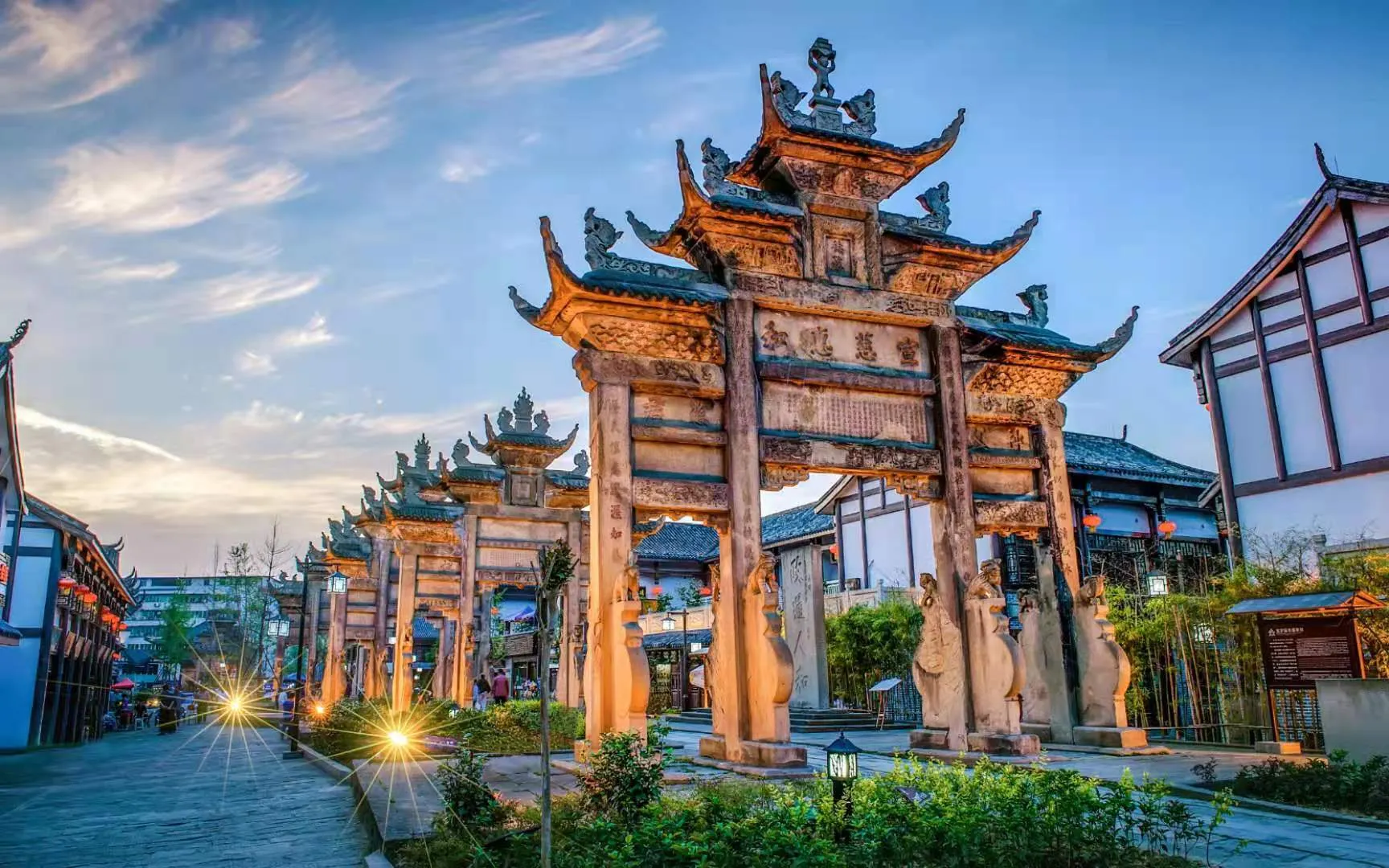
Longchang

Things to do in Longchang

Search attractions or local attractions & tours
Search

Explore top experiences

Top 10 attractions in Longchang

View all
Dazu Rock Carvings
No. 6 of Global Traveller-Picked Attractions in Chongqing

Dazu Rock Carvings

7.5
4.6/5
8.2k reviews

Dazu Rock Carvings is the collective name for the cliff carvings (grottoes) in Dazu District, Chongqing, primarily featuring Buddhist themes. It includes Baodingshan Scenic Area, Beishan Rock Carvings, Nanshan Rock Carvings, Shimenshan Rock Carvings, Shizhuanshan, and other sites, where well-preserved rock carving art from the Tang and Song dynasties can be appreciated. To date, 75 sites of rock carvings have been designated as cultural heritage protection units, with over 50,000 statues. The carvings at these attractions were first created in the early Tang dynasty, continued through the late Tang and Five Dynasties, flourished during the Northern and Southern Song dynasties, and extended into the Ming and Qing dynasties, spanning over a thousand years. They are a monument in the history of Chinese grotto art and a magnificent chapter in world grotto art from the late 9th to the mid-13th century. Rooted in the fertile soil of the long-standing Ba-Shu culture, the attraction builds on and integrates the essence of earlier grotto art, innovating and pursuing exhaustive transformation to open up new horizons in grotto art. With distinctive national, secular, and life-oriented characteristics, it has become a model of grotto art with Chinese style. It is a representative work of late Chinese grotto art, and together with the Dunhuang, Yungang, and Longmen grottoes, it forms a complete history of Chinese grotto art. The grottoes showcase, from different perspectives, the significant developments and changes in Chinese grotto art styles and folk religious beliefs between the 9th century and the mid-13th century, making important contributions to the innovation and development of Chinese grotto art, and possessing irreplaceable historical, artistic, scientific, and appreciative value compared with grottoes of earlier dynasties. On December 1, 1999, it was inscribed on the UNESCO World Heritage List as a cultural heritage site. Baodingshan attraction andBeishan Rock CarvingsRelatively concentrated Among the stone carving clusters, the more concentrated ones are the Baodingshan attraction and Beishan Stone Carvings. They sell tickets separately, and combo tickets are also available. The two are over ten km apart. The other three attractions in the stone carving cluster—Nanshan, Shimenshan, and Shizhuanshan—officially opened in July 2024. Dazu Rock Carvings Baodingshan Rock Carvings are located in the Baodingshan Scenic Area 15 km northeast of the urban area of Dazu. Centered on the Greater and Lesser Buddha Bays, they were carved under the supervision of the monk Zhao Zhifeng during the Chunxi to Chunyou reign periods of the Southern Song Dynasty (1174–1252). The Greater Buddha Bay of the Dazu Rock Carvings Scenic Area is a U-shaped mountain bay, with a cliff face of carvings about 500 m long and 8–25 m high. The carvings are cut on the east, south, and north cliff faces and are numbered consecutively as Nos. 1–31. The sculptures in the Baodingshan Grottoes exhibit several characteristics that distinguish them from earlier Chinese grottoes: First, the Baodingshan Grottoes are a rare large-scale Buddhist Esoteric sect grotto site in China, extending the history of Chinese Esoteric Buddhism by nearly four hundred years. Second, the expressive forms of the Baodingshan sculptures are unique in grotto art. In the Dafowan area of the Dazu Rock Carvings scenic site, the themes of thousands of sculptures do not repeat, and the niches and caves are both internally connected in doctrine and formally interlinked, forming an organic whole that resembles a magnificent historical scroll painting. All sculptures are accompanied by both images and texts, and the inscribed scriptures mostly differ from those in the Tripitaka; many are extra-canonical Buddhist stone inscription documents not included in previous editions of the Tripitaka, holding significant academic value for the study of Buddhist texts. Third, the sculptures emphasize philosophical exposition, integrating the basic doctrines of Buddhism with Confucian ethics, the mind-nature theory of Neo-Confucianism, and Daoist teachings, broadly incorporating and assimilating multiple traditions, and displaying the characteristics of Buddhist thought in Song dynasty China. Fourth, from content to form, the Baodingshan sculptures are a model of the nationalization and secularization of Chinese grotto art. The reverence for Confucian filial piety and the depiction of worldly urban life make it an art treasury with strong traditional Chinese cultural characteristics, marking the completion of the Sinicization process of grotto art that originated in India. Fifth, the Baodingshan sculptures are a culminating work of grotto art, with creative developments in many aspects. They take the ability to inspire awe in people as their creative principle, thereby arousing devotees' pious faith in the Buddhist Dharma. They also integrate scientific principles into artistic modeling; the sculptures, decorations, layout, drainage, lighting, support, and perspective all pay great attention to formal beauty and artistic conception. In addition, there are still 16 steles, 44 inscriptions, travel notes, and poems, and 49 records of repairs and adornments in the Baodingshan Grottoes sculptures. Among them, the stele "Biography of Liu Benzun of the Tang Dynasty," carved between 1174 and 1252 AD, and the "Record of reopening the Baoding stele" and other [texts] are of significant academic value for the study of the history of the Baodingshan Grottoes and even the history of Chinese Esoteric Buddhism. Beishan Rock Carvings Beishan Rock Carvings are located on the summit of Beishan (commonly known as Fo Wan) 1.5 km north of the main urban area of Dazu District. They were first carved in the first year of Jingfu of the Tang Dynasty (892) by Wei Junjing, then prefectural governor of Changzhou and commander of the four prefectures of Chang, Pu, Yu, and He. Subsequent construction by local officials, gentry, commoners, and monks and nuns continued until the final year of Shaoxing of the Southern Song Dynasty (1162), when the present scale was reached. The sculptures in the Beishan Grottoes were built against the rock, with the cliff face of the sculptures approximately 300 m long and 7–10 m high, shaped like a crescent moon. The niches and caves are as densely packed as honeycombs and are divided into the southern and northern sections, numbered consecutively as 290, including 264 niches and caves with sculptures, nearly ten thousand statues, 1 incised-line diagram, and 8 sutra pillars. The Beishan Grottoes sculptures were mainly carved with funds donated by laypeople praying to the Buddha, with rich themes, predominantly Esoteric Buddhist sculptures, accounting for more than approximately one-half of the total. The late Tang dynasty sculptures in the Beishan Grottoes feature 12 types of themes, with Guanyin and the combined niches of Guanyin and Ksitigarbha, as well as Amitabha accompanied by Guanyin and Ksitigarbha, being the most common. The late Tang sculptures are dignified and full-bodied, with a robust temperament, fine and dense drapery lines, and thin garments clinging to the body, bearing the legacy of the High Tang style. The Five Dynasties sculptures account for more than one third of the Beishan Grottoes, featuring 18 themes, including new content such as the Bhaisajyaguru Sutra transformation and the Dharani Sutra transformation, making it a region with a large number of sculptures from this period in China. The Five Dynasties sculptures are small and exquisite, with varied postures, free and natural expressions, and increasingly ornate clothing and adornments, presenting a transitional style from the Tang to the Song Dynasty. The Song dynasty sculptures in the Beishan Grottoes feature 21 types of themes, with Guanyin being especially prominent, earning it the title of "China's exhibition hall of Guanyin sculptures." The Song dynasty sculptures have distinct character personalities, elegant postures, well-proportioned figures, and brightly colored attire, possessing a rich decorative beauty. Seven steles and inscribed tablets are extant at the Beishan Grottoes. Among them, the "Stele of Wei Junjing," carved in 895 AD, holds significant value for filling gaps in Tang dynasty history; the "Spirit Way Stele of Lord Zhao Yijian," carved between 1163 and 1189 AD, was written by Cai Jing, one of the four great calligraphers of the Song dynasty, and is a treasure of calligraphic art; and the twenty-two-chapter "Stele of the Ancient Text Classic of Filial Piety" has been called by historians "the only carving of its kind in the world." The grottoes are renowned worldwide for their exquisite elegance, distinctive characteristics of the era, fine carving, superb craftsmanship, and excellent preservation. They also integrate works from the late Tang, Five Dynasties, and Northern and Southern Song dynasties, showcasing the different styles and evolutionary development of grotto art across various periods from the late Tang to the Song dynasty, and are hailed as a "museum of Tang and Song stone carving art."

Chongqing · 67.7 km from Longchang
Longnao Bridge

Longnao Bridge

3.4
4.4/5
42 reviews

Longnaoqiao is located in Longnaoqiao Town, Lu County, and is erected on Jiuqu River. It was built from the eleventh to thirty-one years of Ming Hongwu (1378-1398). Dipenao Bridge is famous for its exquisite stone carvings, and the stone carving art is named after the leading position of the dragon head. The bridge is a flat-beam stone bridge with an original height of 5 meters, a length of 54 meters and a width of 1.9 meters. It has 14 piers, which divide the bridge into 13 holes. The stone carvings are huge dragons, lions, elephants and unicorns and other beasts distributed on the 8 bridge piers in the middle. The image is well-proportioned, the shape is simple and dignified, and the body is vivid and natural. The faces are the bodies of animals. In the mouths of the four dragons, each holds a "stone jewel" weighing dozens of kilograms, and each dragon's nostrils can blow bright sounds. Some of the other beasts have sashes in their mouths, some tread on hydrangea, and some tread on jade jade, all of which are flexible and expressive, each with its own characteristics. The whole shape is unique, the axe is exquisite and generous, the lines are concise and smooth, and the whole stone bridge constitutes an exquisite, magnificent and lively artistic whole. In the spring of 1990, Sichuan Province allocated funds to upgrade, protect and repair the bridge body, so that this precious cultural relic was effectively protected. On November 20, 1996, the State Council announced it as a national key cultural relics protection unit.

Lu County · 19.1 km from Longchang
WenShuFang
No. 1 of Night Attractions in Sichuan

WenShuFang

8.1
4.8/5
486 reviews

WenShuFang is an antique-style cultural block in Qingyang District, Chengdu, adjacent to Wenshu Monastery. Opened in 2006, the Wenshu Monastery area, where it is located, is one of Chengdu's three major historical and cultural conservation zones, alongside Kuanzhai Alley and Daci Temple. The block primarily features architecture in the traditional Sichuanese residential style, with teahouses, snack shops, intangible cultural heritage workshops, and Hanfu stores nestled among gray-tiled roofs, wooden doors, and courtyards. It is also a popular spot for locals to drink tea and chat. The main streets in the district each have their own distinctive features: Wuyuegong Street is dedicated to intangible cultural heritage, with workshops showcasing traditional crafts like Shu brocade, Shu embroidery, lacquerware, bamboo weaving, and silver filigree, where artisans can often be seen working on-site; Nanyue Lane is a hub for Hanfu culture, with a constant stream of people dressed in Hanfu taking photos against the backdrop of ancient-style gate towers and red walls, and the street also offers Hanfu rental and makeup services; Jinma Lane is the heart of old Chengdu flavors, where time-honored snacks like imperial walnut cakes and Zhang Liangfen from Dongzikou can be enjoyed from one end of the street to the other. When you need a break, you can stop at a teahouse for a bowl of covered-bowl tea. The district also hosts Sichuan opera performances, where you can enjoy face-changing, fire-spitting, and long-spout tea art while sipping tea, fully immersing yourself in Chengdu's unique blend of leisure and liveliness. When touring, you might as well combine this place with the nearby Wenshu Monastery into one route, visiting the ancient temple first and then exploring the alleys, which can be completed in half a day. Travelers planning to take Hanfu photos are advised to allocate more time for makeup, styling, and framing.

China · Chengdu
Jiefangbei Pedestrian Street
No. 2 of Night Attractions in Chongqing

Jiefangbei Pedestrian Street

7.9
4.7/5
5.6k reviews

Jiefangbei Pedestrian Street is the long-established core commercial district in Chongqing, located on the Yuzhong Peninsula. Centered around the Monument to the People's Liberation at its heart, it extends along several streets including Minquan Road, Minzu Road, Zourong Road, and Bayi Road. The monument is an octagonal tower-shaped structure, originally built to commemorate the victory in the War of Resistance Against Japanese Aggression and later renamed the Monument to the People's Liberation. Its four-sided clock at the top makes it a highly recognizable landmark in Chongqing, and most travelers visiting here take photos in front of it. Shopping and food are the two main themes of the pedestrian street: the area around the monument is densely packed with shopping malls and traditional department stores. When tired from shopping, visitors can turn into Bayi Road Snack Street, where sour and spicy noodles, small glutinous rice balls, and wontons line the street, allowing them to sample all of Chongqing's snacks while strolling. Hidden around the commercial district are Luohan Temple and Nengren Temple on Zhonghua Road, two ancient temples nestled among skyscrapers, offering a peaceful retreat amidst the bustling city. At night, the pedestrian street takes on a different vibe: building screens and neon lights illuminate the area, and the square in front of the monument becomes a popular spot for night photography. Every New Year's Eve, many locals gather under the monument to listen to the New Year's bell and count down together—a tradition that has continued for years. The crowd is enormous that night, so those wishing to experience the atmosphere should plan ahead. A short 15-minute walk from the monument leads to Hongya Cave, making it ideal to combine both locations into a nightlife route.

China · Chongqing
EYE IN THE CLOUDS
No. 6 of Best Things to Do in Chongqing

EYE IN THE CLOUDS

7.8
4.8/5
7.1k reviews

The eye in the clouds stands at a romantic height of 520 m in the core of Chongqing Yuzhong Peninsula, offering a 360° unobstructed panoramic view and a vast visual field of 9000 m. From this god's-eye perspective, it captures the two iconic views of the 8D magical Chongqing—the mountain city and its nightscape. It has served as a filming location for multiple variety shows, including the CCTV Spring Festival Gala and Keep running. At your feet, the Yangtze River meets the Jialing River; around you, landmark skyscrapers stand tall. By day, the landscape and high-rises complement each other; by night, the dazzling city lights outline the urban skyline. Visit the EYE IN THE CLOUDS and check out the viral suspended red staircase, where a 520 m stroll instantly creates life-highlight photos. Nearby attractions include the Yangtze River Cableway, Liberation Monument, and Hongya Cave, making it the perfect first stop for Chongqing travel to experience the essence of this mountain-river city that never sleeps!  EYE IN THE CLOUDS features a VIP private viewing area, offering a comfortable rest zone at an altitude of 520 m to unlock a unique elevated viewing experience in Chongqing. Above the mountain city, it's the exclusive prime viewing spot just for you.  Standing above the clouds with the city behind. Perched atop Chongqing's skyline, Yuntai offers a panoramic view of the mountain city, capturing the rivers, bridges, and urban landscape from a breathtaking aerial perspective. The project provides customized photo services, allowing travelers to immerse themselves in the 8D magical skyline and unlock a variety of themed photo shoots—from traditional Chinese styles to anime and sci-fi—all in one place.

China · Chongqing
Chengdu Museum
2026 Asia 100 - Family-friendly Attractions

Chengdu Museum

7.8
4.8/5
5.5k reviews

Chengdu Museum is located on the west side of the city center, covering an area of approx. 17 mu, with a total floor area of approx. 65,000 m² and an exhibition area of approx. 20,000 m². The main building is divided into the South Building and the North Building: above ground, the South Building mainly houses office and research areas, while underground it contains an academic lecture hall (multifunction hall); the North Building is mainly the exhibition area, with the lobby, screening room, and special exhibition hall on the first floor, the "Man and Nature" thematic exhibition on the basement level, the ancient section of "Splendid Brocade City: Chengdu History and Culture Exhibition" on the second and third floors above ground, the modern section and folk customs section on the fourth floor, and the Chinese shadow puppet exhibition on the fifth floor. The total collection numbers nearly 300,000 items, forming a relatively complete sequence of collections spanning from the Neolithic Age to the modern era. The types cover bronzes, gold and silver wares, pictorial bricks, stone carvings, ceramics, calligraphy and paintings, furniture, shadow puppets, marionettes, Daoist ritual paintings, masks, wood carvings, and more, having achieved scale and systemization in both quantity and quality. Since its opening, the museum has successively hosted a series of temporary and special exhibitions, including "Lingering Nostalgia: Zhang Daqian," "Son of Heaven in a Prosperous Age: Special Exhibition of Emperor Qianlong of the Qing Dynasty," "Soul of the Silk Road: Dunhuang Art Exhibition and Special Exhibition of Cultural Relics from the Land of Abundance and the Silk Road," "Imperial Summer Palace: Special Exhibition of Cultural Relics from the Peterhof State Museum-Reserve of Russia," "French Modern and Contemporary Painting Art Exhibition and 'Chen Xiang: Metamorphosis' Photography Exhibition," "Echoes of Civilization: Ancient Treasures from Afghanistan," and "The Road of Qin and Shu: Special Exhibition of Bronze Civilization," all of which have been widely acclaimed by visitors.

China · Chengdu
Longchang Today's weatherFoggy 13-16℃
Longchang weather for the next 2 days11/12: 12-15℃, 11/13: 12-17℃

Free things to do in Longchang

What travellers say about Longchang

user-avatar
M42***38November 7, 2026
5.0
When visiting Luzhou, you absolutely must visit Luzhou Laojiao to immerse yourself in the millennium-old culture of strong-aroma liquor. You'll see firsthand the 1573 National Treasure Cellar, where brewing has continued for over 400 years, along with a wealth of antique wine vessels on display. The explanations are very detailed, and you can even sample the original brew at the end – a truly fantastic experience! 👍

Luzhou Laojiao Tourist Area

user-avatar
Anonymous userNovember 7, 2026
5.0
Wulong boasts stunning scenery, a testament to the breathtaking artistry of nature. With its fresh air, spectacular views, excellent visitor experience, and attentive service, it's definitely worth a visit to experience the unique charm of karst landforms.

Chongqing Zoo

user-avatar
Anonymous userNovember 7, 2026
5.0
Wulong boasts stunning scenery, a testament to the breathtaking artistry of nature. With its fresh air, spectacular views, excellent visitor experience, and attentive service, it's definitely worth a visit to experience the unique charm of karst landforms.

Dazu Rock Carvings

user-avatar
王仍春(高原风)October 14, 2026
4.0
Located in the Xiqin Guild Hall, the ancient Chinese architectural style, with its carved beams and painted rafters, vividly presents the history and culture of Zigong's salt industry. The process of well digging, water pumping, transportation, and salt production is explained in a concise and vivid way. The innovative use of natural gas and gravity well technology, based on operations research, allows you to extract the salt volume. It's a worthwhile experience!

Zigong Salt Industry History Museum

user-avatar
路上50June 15, 2021
4.0
The Longnao Bridge was built in the Hongwu Period of the Ming Dynasty to cross the Jiuqu River. The stone dragon head is uniquely shaped, making the entire stone bridge a delicate, magnificent and lively artistic whole... The scenic area is not far from Lu County. It takes about 20 minutes to get there after getting off the highway. There are not many people in the scenic area. Navigate directly to the Longnao Bridge. After parking on a flat plain, walk down to the riverside and you can see the Longnao Bridge. It is indeed very exquisite. I have to sigh at the skills of the ancients...

Longnao Bridge

user-avatar
Anonymous userNovember 10, 2026
5.0
The show was amazing. Exceeded my expectations. You definitely won't regret going. Come half an hour early to get the first row.

WenShuFang

user-avatar
Ruhaida OmarNovember 11, 2026
4.0
Worth it with price but not friendly to senior citizen. Need walk far and hilly road.

Panda Valley

user-avatar
Nemo666999October 31, 2026
5.0
Çongçing'in kalbi Jiefangbei Pedestrian Street; devasa gökdelenleri, lüks alışveriş merkezleri, sokak lezzetleri ve enerjik atmosferiyle şehrin en canlı noktası. Gündüzü ayrı, rengarenk neon ışıklarıyla gecesi ayrı büyüleyici!

Jiefangbei Pedestrian Street

user-avatar
M2x***3sNovember 8, 2026
5.0
On-site staff were stationed at key points to guide pedestrians, providing double assurance with both signage and human assistance. If you encountered any unclear points, you could simply ask and get an answer; the service was excellent.

EYE IN THE CLOUDS

user-avatar
大U婶婶November 8, 2026
5.0
I must commend the guided tour service at the Chengdu Museum. The service was very well-organized, the staff were warm and attentive, the price was reasonable, and the explanations were engaging. It's definitely worth a try.

Chengdu Museum

Trip Moments in Longchang

Popular cities near Longchang

Frequently asked questions

How can I contact Trip.com customer support?

Get help anytime, anywhere within 30 secondsContact customer support

Change and cancellation policies vary by attractions and tours. Please check the product details page for more information.

Ticket prices may vary between weekdays and weekends, as well as during peak and off-peak seasons. When booking with Trip.com, you can also use Trip Coins to get extra savings. For more tips on booking discounted tickets, please visit Trip.com for the latest information.