Things to do in Minhe
Explore top experiences
Top 10 attractions in Minhe


Tiantishan Grottoes
Tiantishan Grottoes, also known as the Great Buddha Temple, is located in Dengshan Village, Zhonglu Township, approx. 50 km south of the city. Established during the Northern Liang period of the Sixteen Kingdoms in the Eastern Jin Dynasty, it has a history of about 1,600 years. Tiantishan Mountain stands majestic and steep, towering into the clouds. With stone steps carved into the mountain, the rugged path winds upward like a suspended ladder, hence its name "Heavenly Ladder Mountain." Now the Tiantishan Grottoes only have 3 remaining tiers with 17 caves of varying sizes. The larger caves stand 30 m in residual height, 19 m in width, and 6 m in depth. Inside the caves, there is a 15 m tall and 10 m wide statue of Sakyamuni, flanked by six other statues including Manjusri, Samantabhadra, Virupaksha, Vaisravana, Kasyapa, and Ananda. These sculptures are vividly shaped, exuding solemn expressions and distinct appearances. The north and south walls of the cave are adorned with large murals. The south wall features a cloud-patterned azure dragon, with an elephant and sika deer in the middle section—the elephant carries glowing scriptures on its back—while the lower section depicts fierce tigers amid trees and flowers. The north wall's upper part shows another azure dragon, its middle section portrays a white horse and black tiger (with shining scriptures on the horse's back), and the lower part displays peony blossoms. The entire mural exhibits fresh brushwork, vibrant colors, majestic momentum, and lifelike imagery. The Tiantishan Grottoes are representative of China's early cave-temple complexes. In 2001, the Tiantishan Grottoes were designated as a fifth-batch national cultural heritage site. The attraction features the Tiantishan Villa and a grotto cultural relics exhibition hall.China · Wuwei

Lanzhou Old Street
Lanzhou Old Street is located in the center of Lanzhou city, gathers Chinese branded products, nightlife, trendy fashion brands, retail centers, experiential businesses, catering and entertainment, leading the trend and creating a place for eating, drinking, fun and entertainment in Lanzhou.Lanzhou · 84.8 km from Minhe

Yongjing Liujiaxia Tourist Resort
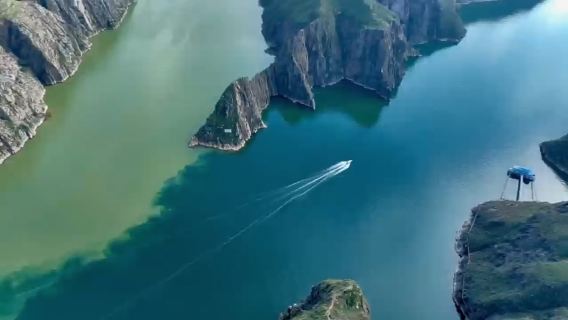
Located in Yongjing County, Linxia City, Gansu Province, Liujiaxia is home to the Liujiaxia Hydropower Station, Bingling Temple Grottoes and Tai Chi Island, as well as Liujiaxia Reservoir. Beginning from Liujiaxia Dam, Liujiaxia Reservoir reaches the narrows of Bingling Temple in the west, connects to Jiedong County and Linxia County in the south, and borders Yongjing County in the north. Liujiaxia Reservoir occupies a vast area. The reservoir sits on plateaus and in canyons, allowing visitors to return to the beauty of nature.Yongjing · 63.3 km from Minhe

Zhongshan Bridge
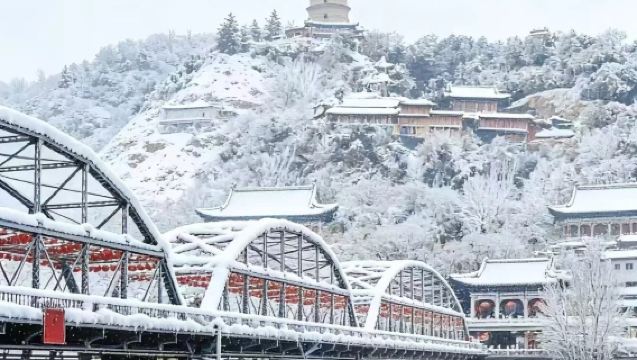
Zhongshan Bridge, also known as the Lanzhou Yellow River Iron Bridge, spans the Yellow River with White Pagoda Mountain to its north and serves as a city landmark of Lanzhou. Completed in the late Qing Dynasty, it was built by the German firm Telge & Schroeter. The bridge materials, including steel beams and cement, were shipped from Germany across the ocean and then transported to Lanzhou via railway and horse-drawn carriage. It is one of the earliest permanent bridges built across the Yellow River in Lanzhou's history. It was later renamed Zhongshan Bridge in memory of Dr. Sun Yat-sen, a name that remains in use today. The bridge is over 200m long, and its gray-black steel truss structure is simple and substantial. The several arched steel ribs added above the bridge body during reinforcement in the 1950s give the entire structure a more imposing appearance. Today, the iron bridge is open only to pedestrians. Walking onto the bridge deck, you can see the Yellow River flowing slowly eastward beneath your feet. On the south bank lies the lush Binhe Road, while the north bank is home to White Pagoda Mountain Park. Climbing to the top of the mountain and looking back, the view of the iron bridge, the Yellow River, and the streetscape on both banks framed together is particularly beautiful. People often line up to take photos in front of the golden "Zhongshan Bridge" inscription at the south end of the bridge. In the pavilion on the east side of the south bridgehead stands a Ming Dynasty "General Pillar," a relic from the earlier Zhenyuan Floating Bridge that is easy to miss if you just walk past. After nightfall, the iron bridge offers a different scene: the bridge's colorful lights turn on, and the entire outline of the bridge is clearly illuminated. On one side are the bustling lights of Binhe Road, and on the other are the lights shining on the mountain, making it a great place to experience and photograph the night view of Lanzhou.Lanzhou · 93 km from Minhe

Lanzhou Yellow River Cruise
The Lanzhou Yellow River Cruise offers a unique waterborne sightseeing experience, showcasing the majestic beauty of the Yellow River and the urban charm of Lanzhou. This tour combines natural views with city culture, providing travelers with a comfortable and distinctive perspective to admire both the grandeur and tranquility of this Mother River. The Lanzhou Yellow River Cruise glides along the Yellow River, where travelers can admire the scenic views from the deck and experience the river's mighty flow alongside the city's vibrant energy. Along the way, it passes byZhongshan Bridge (Yellow River Iron Bridge),BaitashanLandmark attractions like these offer the best spots for photography and sightseeing. Professional guides will share the historical stories and cultural background along the way, allowing you to appreciate the beauty while gaining a deeper understanding of Lanzhou's history and development. The nighttime cruise is especially unique, where the glittering city lights and the tranquil river create a mesmerizing scene. Board the Lanzhou Yellow River Cruise and drift along the Mother River. This is not just a place to admire nature and the cityscape, but also an ideal spot to experience the Yellow River culture and the charm of Lanzhou.Lanzhou · 93 km from Minhe

Tengger Desert
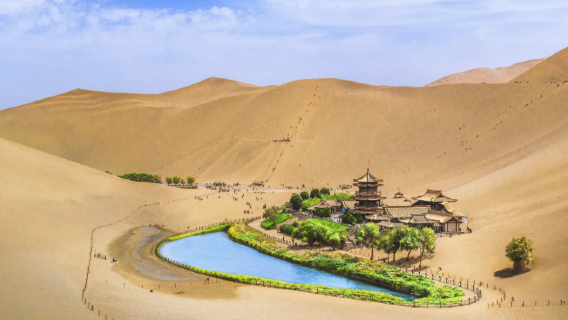
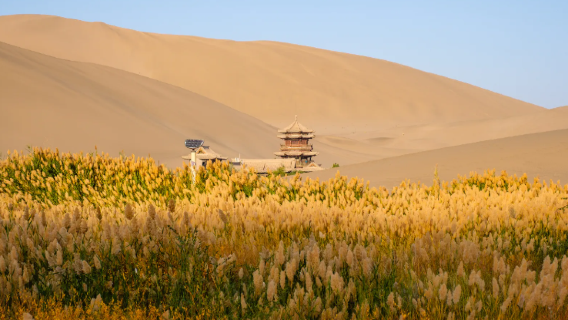
The Tengger Desert is located in the southwest of Alxa Left Banner in Inner Mongolia Autonomous Region and the border in the central part of Gansu Province. Here you can experience starry sky camping in the Tengger Desert, ride a camel in the sandy sea, or ride an off-road vehicle in the desert to feel the passion. The sand peaks of the Tengger Desert are magnificent, the sand grains are fine and smooth, and the color is golden and shiny. Walking into the depths of the desert, in addition to the golden sand sea, there are many lakes. From a distance, the piles of salt chimneys by the lake are like ice and snow, and the lake is glowing with silver light, like a sand sea glaciers.China · Zhongwei

Lanzhou Wildlife Park
Lanzhou Wildlife ParkIt's a fun-filled destination suitable for all ages, home to adorable animals like alpacas, sika deer, wallabies, and ostriches. Visitors can not only observe these animals but also feed them and interact up close, experiencing the harmony between humans and nature. The park features a sightseeing train where visitors can leisurely ride around the grounds while enjoying the natural scenery and wildlife. These activities are perfect for family trips, especially with children, allowing kids to learn while having fun and sparking their love for nature.Lanzhou · 84.9 km from Minhe

Kanbula Global Geopark
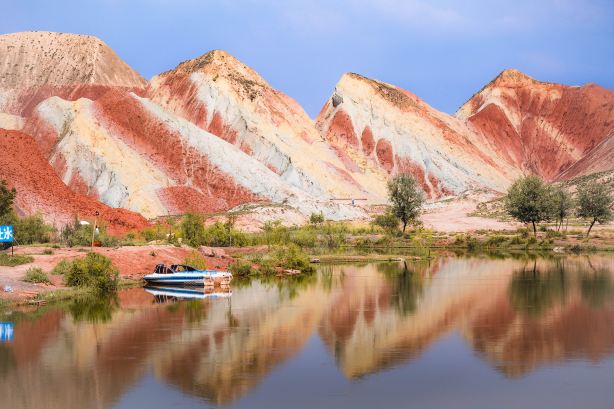
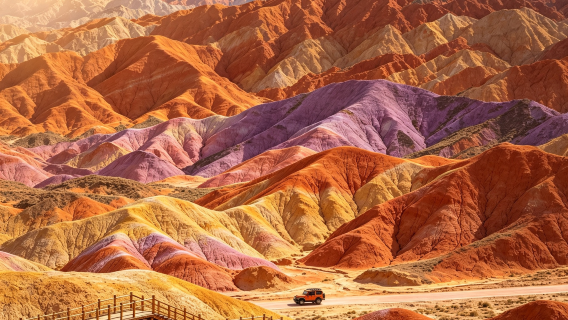
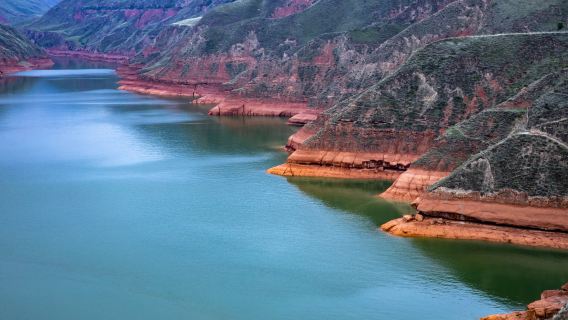
Kanbula National Forest Park is located in Jianzha County, Huangnan Prefecture, Qinghai Province, about 110 kilometers away from Xining. The Attraction is centered on the Yellow River Reservoir formed by the Lijiaxia Dam. The reservoir is emerald green and clear, surrounded by red and steep Danxia landform peaks. The scenery is very spectacular and it is a popular niche tourist destination in Qinghai. Kanbula Forest Park is very large, with a depth of dozens of kilometers. The main entrance of the Attraction is on the east side. After entering, you can take a shuttle bus or a Cruise to visit, which is divided into water and land tours and lake tours. In addition, if you come from Guide, you can also enter from the back door of the Attraction on the west side, which is more convenient.China · Jainca

Ganjia Secret Realm
The "Gangjia Secret Realm" is located in Gangjia Town, Xiahe County, Gannan Tibetan Autonomous Prefecture, with a total area of 131.23 square kilometers. The altitude difference between the north and south of the Attraction is 1,300 meters. The unique geological structure contains a variety of geological resources such as cliffs, grasslands, plateau lakes, stone forests, canyons, prehistoric caves, and rivers. The Bajiao Ancient City, Zuohai Temple, Baishiya Temple, and the Denisovan Site Cave have become the imprints of the Attraction profound historical and cultural heritage. Academic masters and eminent monks such as Guru Padmasambhava, Tsongkhapa, Gongtang Cang, and Gendun Gumpel have successively studied, practiced, and preached in the Gangjia area.China · Xiahe

Qutan Temple
Qutan Temple, known in Tibetan as "Zhuocang Laguo Dande" or "Zhuocang Duojie Qiang," meaning "Ledu Vajradhara Temple." The temple is nestled against mountains and by water, with a rectangular overall layout covering 1.5 hectares. It is a surprising anomaly among the many Tibetan Buddhist temples in the Amdo region, reminiscent of the Han-style Tibetan Buddhist temples in Beijing and Chengde. If you only have time to visit one temple in eastern Qinghai and are interested in ancient architecture and mural art, then Qutan Temple is your best choice. The temple is one of the larger ones in the Ledu Nanshan area and is also one of the best-preserved Ming Dynasty architectural complexes in Northwest China. Its overall structural layout is similar toThe Palace Museum, which is why it is known as the "Little Forbidden City." Qutan Temple has stood for over 600 years since its founding during the Hongwu era of the Ming Dynasty. This temple is famous throughout the Northwest for its majestic simplicity, precious cultural relics, and massive, highly artistic colored murals. It is revered as a sacred Buddhist site by Tibetan, Mongolian, Tu, and other ethnic groups who practice Tibetan Buddhism, drawing pilgrims from afar to offer incense and worship. It is also one of the famous venues for the Hua'er Festival in Qinghai Province.Haidong · 47.8 km from Minhe
Traveller favourites curated for you



Experiences you can't miss in Minhe
Featured Cultural experiences in Minhe
View all Cultural experiences
Free cancellation
Instant confirmation
Book now for tomorrow
9% off
Limited-time sale
FromSGD 47.72SGD 53.02

FromSGD 218.30

5.0/5
· 3 reviewsFree cancellation
Instant confirmation
FromSGD 192.10
FromSGD 316.53

FromSGD 316.53
Free cancellation
Book now for tomorrow
FromSGD 308.32
Featured Day tours in Minhe
View all Day tours
4.3/5
· 7 reviews· 79 bookedFree cancellation
Instant confirmation
Book now for tomorrow
FromSGD 92.34

4.9/5
· 62 reviews· 353 bookedFree cancellation
Book now for today
96.8% of travelers recommend
FromSGD 22.10

5.0/5
· 10 reviews· 56 bookedFree cancellation
Book now for tomorrow
FromSGD 64.93

5.0/5
· 5 reviews· 22 bookedFree cancellation
Instant confirmation
Book now for tomorrow
FromSGD 97.15

4.9/5
· 80 reviews· 494 bookedFree cancellation
Instant confirmation
Book now for tomorrow
97.5% of travelers recommend
FromSGD 70.70
5.0/5
· 16 reviews· 95 bookedFree cancellation
Instant confirmation
Book now for tomorrow
77 travellers saved
FromSGD 80.30
5.0/5
· 9 reviews· 29 bookedFree cancellation
Instant confirmation
Book now for tomorrow
FromSGD 66.47

Free cancellation
Instant confirmation
Book now for tomorrow
FromSGD 78.15
Featured Outdoor experiences in Minhe
View all Outdoor experiences
Free cancellation
Instant confirmation
Book now for tomorrow
9% off
Limited-time sale
FromSGD 39.25SGD 43.61
Free cancellation
Instant confirmation
Book now for tomorrow
FromSGD 58.94
FromSGD 622.14
5.0/5
· 2 reviewsFree cancellation
Book now for tomorrow
FromSGD 76.46
More things to do
Minhe Cruises
See all cruises








Private Tours in Minhe
View More Private Tours in Minhe


Group Tours in Minhe
View More Group Tours in Minhe
Free things to do in Minhe
Lanzhou Old Street
Lanzhou · 84.8 km from MinheYongjing Liujiaxia Tourist Resort
Yongjing · 63.3 km from MinheZhongshan Bridge
Lanzhou · 93 km from MinheTengger Desert
China · Zhongwei
Ganjia Grassland
China · Xiahe
Qilian Mountain Grassland
China · Qilian
White Pagoda Mountain Park
Lanzhou · 92.3 km from Minhe
Yellow River Mother Sculpture
Lanzhou · 91.3 km from Minhe
Qinghai Province Museum
China · Xining
What travellers say about Minhe

慢步地球October 18, 2026
4.0
The scenery at Tianti Mountain is delightful, with the Huangyang Reservoir's shimmering blue waters sparkling in the sunset. The view of the Buddha statue from the sky bridge is excellent; the setting sun casts its shadow on the Buddha, creating unique photographic opportunities. The overall tour route is short, making it easy for seniors and children to hike.
Tiantishan Grottoes

大叔的星辰大海!April 21, 2026
4.0
Lanzhou Old Street is quite close to the Yellow River Tower. We walked there after visiting the Yellow River Tower. The old street area isn't small, and it feels like a newly built commercial district. In the afternoon during the off-season, there were very few people. I wonder if it will be more crowded at night? The shops are mainly restaurants, plus souvenir shops. If you're passing by, you can check it out!
Lanzhou Old Street

M10***51July 2, 2026
5.0
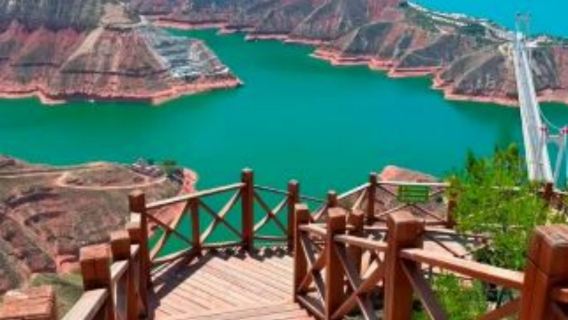
The Liujiaxia Reservoir is a large-scale hydroelectric power station built independently during the First Five-Year Plan. The green Yellow River and the earthy yellow mountain valleys complement each other beautifully, and the scenery along the bridge is also stunning. It's definitely worth a visit!
Yongjing Liujiaxia Tourist Resort

Jamie NingJuly 20, 2026
4.0
Before coming to Lanzhou, I had no idea what this bridge was like.
I arrived around 3 PM; the sun was still blazing, and the iron railings on the bridge felt hot to the touch. This iron bridge, built in 1909, spans the Yellow River, looking sturdy yet silent. Standing on the bridge, the Yellow River surged beneath my feet, carrying the scent of silt. Speedboats darted out from under the arches, splashing up waves, and children on the bank screamed excitedly—their jubilation was unstoppable.
I didn't rush up the mountain; instead, I found a seat at a teahouse under the bridge. I ordered a cup of "Sanpaotai" (a type of local tea), 15 yuan, with refills. The bamboo chair was a bit old, but just the right amount of comfortable. Several local old men around me were cracking sunflower seeds and playing chess, occasionally glancing up at the river and saying, "The water's risen again." That relaxed feeling is rare in tourist spots.
You absolutely must try the Sanpaotai at the teahouse. Don't rush; sit for at least half an hour, just gazing at the river and daydreaming—that's the real deal.
The cruise ticket is only a few dozen yuan, not expensive at all, and worth experiencing the view from under the bridge.
Speedboats and sheepskin rafts are available on the shore; thrill-seekers can give them a try.
Regarding photography: the "Zhongshan Bridge" stone monument on the south side of the bridge is a classic spot for photos.
Take your time; although the sun is strong 🌞, the river breeze is very pleasant.
Zhongshan Bridge

M54***53June 29, 2026
4.0
I took the 7:30 train, and only saw the Zhongshan Bridge lights come on during the last few hours. However, since Lanzhou is still very bright at this time, it looked almost like daytime. I recommend taking a later train if you want to see the night view.
Lanzhou Yellow River Cruise

绿色大白鲨September 1, 2025
5.0
The Tengger Desert is one of the famous scenic spots in Zhongwei, Ningxia. It is very close to Shapotou and has beautiful and charming scenery. It is very suitable for family travel. Riding a camel in the desert feels very comfortable and is many times better than the experience of gravel roads. The thrilling desert assault car and the fun of sliding down the sand on a plastic board from the slope are also very enjoyable. Overall, the desert play experience is still good. Pay attention to sun protection and safety, stay with your children all the time, capture the beautiful and happy moments, and embrace nature.
Tengger Desert

游客11111111May 19, 2026
5.0
I was so happy to see pandas 🐼 and raccoons 🐻! The park is so big 😎 with two areas! Both driving 🚗 and walking 🚶🏻♀️ are so much fun 😆! In the drive-through area, you can interact with the animals 😏! Just turn around and there are adorable ❤️ animals walking right up to your car 😃!
It was my first time getting so close to large animals! So exciting 💗! Even I, a kid, was thrilled! The walking area is very user-friendly 🙂 with escalators and sightseeing vehicles. A well-planned tour of the entire area 😎! You can see all sorts of animals you've seen on TV 📺 🦬
Lanzhou Wildlife Park

135***20September 13, 2026
4.0
It's changed a lot; I haven't been here for ten years, but the scenery is still beautiful. The reservoir is azure, the Danxia landforms are magnificent, and the peaks stand tall. There are now man-made walking trails, which adds to the fun, and shuttle buses and escalators have been installed, making things much more convenient. Overall, it's quite good, and it's still the scenery I love!
Kanbula Global Geopark
M41***91October 3, 2026
4.0
As the first stop in Gannan from Linxia, it's a pretty good tourist attraction, with all three viewing platforms worth taking photos at. However, even during the off-season holidays, the shuttle buses are hard to find, so I can only imagine how ridiculous the queues will be during the summer peak season.
Ganjia Secret Realm

M49***27July 18, 2021
4.0
In the mountains 20 kilometers south of Ledu City, an ordinary Lama temple on the Qinghai-Tibet Plateau won the favor of Zhu Yuanzhang. Compared with the Taer Temple, which was established earlier, spontaneously planned and built by believers, and had no influence in the Ming Dynasty, the Qutan Temple is particularly prominent.
During the Hongwu period of the Ming Dynasty, the country had been settled, but there were occasional riots on the border. The abbot of the temple, Sanluo Zang, came forward to persuade the various tribes in the area to submit to the Ming Dynasty and was granted by the emperor: Sanluo Zang was the chief of the Xining Seng Gang, in charge of 13 tribes, and was granted a golden plaque of Qutan (Qutan, meaning Gautama in Tibetan). Since then, successive emperors of the Ming Dynasty have been rewarded, and the temple has become more prosperous.
The temple basically adopts the Han-style temple system, and the stele pavilion, bell and drum tower and treasure hall constitute a typical official building complex in the early Ming Dynasty. Although it is located in the mountains, the landscape is excellent - it is backed by Luohan Mountain and faces the Qutan River. The Han-style central axis is symmetrically arranged, which is rare in Tibetan Buddhism. Based on the royal bloodline, the overall pattern is calm and majestic, imitating the royal architectural style and main pattern, which is a great gift and status symbol in the class-strict imperial society.
Today, the temple presents the ancient building as its original appearance, with a strong sense of time. The two wings are arched upwards and connected with the unique corridors. The treasure is the huge colorful murals - 2,300 square meters of Ming and Qing murals with rich and gorgeous colors, delicate and vivid brushwork, clear and natural layers, and a strong sense of realism, which is extremely precious.
Qutan Temple


