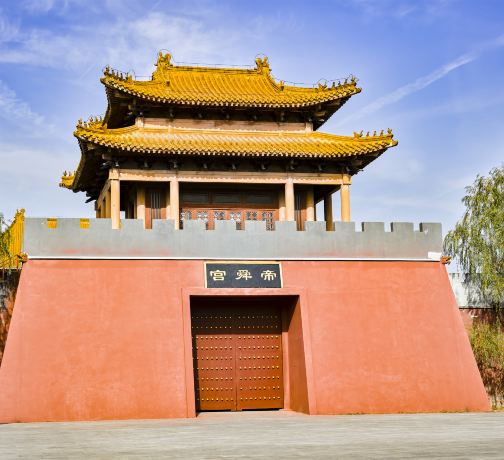
Puyang County

Things to do in Puyang County

Search attractions or local attractions & tours
Search

Explore top experiences

Top 10 attractions in Puyang County

View all Attractions
Puyang Museum

Puyang Museum

3.5
4.6/5
61 reviews
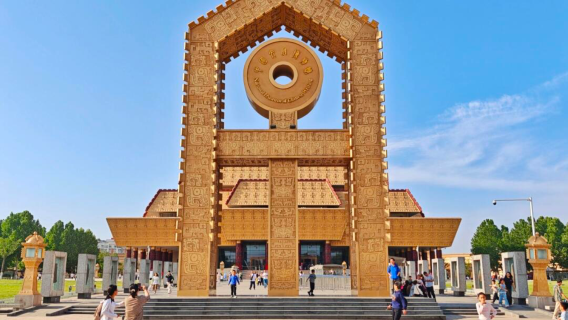
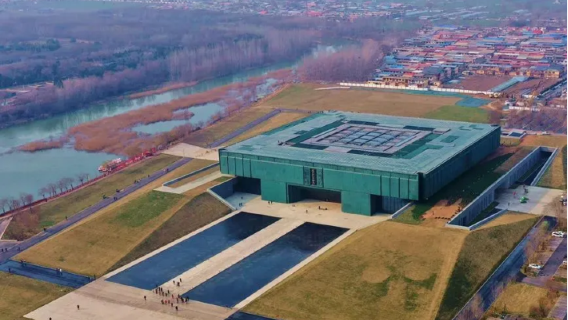
The Puyang City Museum is located in Puyang City, Henan Province and was established in 1984. It includes 16 categories including ceramics, calligraphy and painting, coins, stone tools, bone clams and bronzes. The cultural relic warehouse is a three-story cement brick building with a construction area of 1020 square meters; the office building is a corner two-story cement brick building with a construction area of 1000 square meters. There are six departments and one room: the storage department, the exhibition department, the exhibition department, the publicity and education department, the security department and the office. There are seven exhibition halls in the museum: "Li Wenxiang, Li Liancheng, Li Quanfang's Advanced Deeds Exhibition", "Li Fangyu Painting and Calligraphy Art Museum", "Li Quanqing's Advanced Deeds Exhibition", "Basic History Exhibition", "Red Puyang", "Dragon Vessel and Dragon Rhyme". In addition, there are a variety of temporary exhibitions. The exhibition reproduces the civilization achievements and vicissitudes of modern revolution in Puyang from ancient times to the Spring and Autumn and Warring States Periods and even since the Qin and Han dynasties in a panoramic and multi-angle manner, as well as the "Three Li" spirit with a very modern flavor. As of 2012, Puyang City Museum has successively won the honorary titles of "Puyang City Patriotism Education Demonstration Base" and "City Party Member and Cadre Training Base".Puyang · 6.8 km from Puyang County
Mount Taishan
2026 Asia 100 - Best Things to Do

Mount Taishan

9
4.7/5
62.7k reviews
Mount Taishan is centered around Mount Taishan, the first of the Five Great Mountains, with steep and towering peaks, and the views of sunrise and sunset from the summit are breathtaking. Sea of clouds often appear among the mountains, and in winter there are spectacular rime ice views. In addition to natural scenery, the mountain also has numerous historical sites, stone inscriptions, religious temples, and other cultural views, with cliff inscriptions and steles scattered throughout the mountain, which is a major feature of Mount Taishan. Mount Taishan has its own highlights in each of the four seasons: in spring, peach and pear blossoms bloom across the mountains; in summer, the mountaintop is lush green and cool, making it a great summer retreat; in fall, the leaves are a mix of red and yellow, dyeing the layered forests in brilliant colors. There are multiple routes to the summit of Mount Taishan. The hiking trail at the Hongmen entrance is the traditional route opened during Emperor Qin Shi Huang's Fengshan ceremony, consisting mainly of stone steps. Walking from Hongmen to Zhongtianmen, you will pass by numerous attractions along the way, including Wanxian Tower, Doumu Palace, Huima Ridge, and Hutiange. This area is also where stone inscriptions are concentrated. After reaching Zhongtianmen, you can take a cable car or walk to Nantianmen and the summit area, where you can see attractions such as Eighteen Bends, Shengxian Archway, Duisong Mountain, Chaoyang Cave, and Wudafu Pines. The Tianwaicun route is a road leading from Tianwaicun to Zhongtianmen, accessible by tour bus, passing by Heilong Pool, Fanzhi Cliff, and Feng Yuxiang's Tomb. After reaching Zhongtianmen, it merges with the latter half of the Hongmen route. Travelers who prefer not to hike can choose this route. The Tianzhufeng route is relatively steep with few visitors, and is a hiking route often taken by outdoor enthusiasts. It features beautiful mountain scenery, including attractions such as Liyu Back, and at the starting point there is also the large-scale live performance "Chinese Mount Taishan: Grand Ceremony of Fengshan." The Taohuayu route is mostly chosen by travelers when descending the mountain. From Tianjie at the summit, take the ropeway to the mountainside, then transfer to a tour bus down to Taohuayu at the foot of the mountain. Along the way, you can enjoy the Colorful Stone Stream scenic area, where the colorful stone patterns at the bottom of the stream are quite magical. Dongyudao is also a walking hiking route, with attractions such as Qingyang Hall, Hanque Gate, and Dongtianmen along the way. Each route ultimately leads to the Daiding tourist area at the summit. Daiding features the main peak of Mount Taishan, Jade Emperor Peak, the Tianjie Scenic Area, as well as attractions such as Sun Viewing Peak, Daguan Peak, Zhanlu Terrace, Bixia Temple, and Confucius Temple. On clear days at the summit, you can gaze at the Yellow River in the distance and admire the wonder of the "Golden Belt of the Yellow River." The Houshiwu area is rich in varied pines and rocks, and there is a cableway leading to the North Heavenly Gate. Many visitors who want to watch the sunrise choose to climb Mount Taishan at night, usually setting off from the Hongmen route, and it is advisable to depart around 11 pm. This route is well lit at night, and a hike of about seven to eight hours will allow you to reach Sun Viewing Peak or Jade Emperor Peak at the summit before sunrise, which are ideal spots for watching the sunrise.China · Tai'an
Longmen Grottoes
2026 Asia 100 - Best Things to Do

Longmen Grottoes

8.9
4.7/5
62.2k reviews
Longmen Grottoes are located in the southern suburbs of Luoyang, Henan Province, on the cliffs along both banks of the Yi River. As one of China's three major grotto art treasures, they were inscribed on the World Cultural Heritage list in 2000. The grottoes were first carved when Emperor Xiaowen of Northern Wei moved the capital to Luoyang, and construction continued through the Eastern Wei, Western Wei, Northern Qi, Sui, and Tang dynasties, with the vast majority of niches and statues left from the Northern Wei and Tang periods. Today, more than 2,000 niches and over 100,000 statues remain, along with a large number of inscriptions and steles, making the site an important representative of Chinese stone carving art. The attraction is divided by the Yi River into two parts: West Hill and East Hill. The West Hill Grottoes are the essence of the site, carved from the Northern Dynasties through the Sui and Tang periods. Famous caves include Guyang Cave, Binyang Cave, Lotus Cave, Wanfo Cave, and Fengxian Temple. The Lushena Buddha at Fengxian Temple stands about 17 m tall, making it one of the larger Buddha statues at Longmen Grottoes. Its face is dignified and serene, with a faint smile, and legend holds that it was modeled on the appearance of Wu Zetian, earning it the name "Oriental Mona Lisa." The inner walls of Wanfo Cave are densely covered with about 15,000 small Buddha statues, each only a few cm tall, neatly arranged and finely crafted. Guyang Cave is the earliest cave carved at Longmen, and its inscription calligraphy is exquisite; the selected "Twenty Masterpieces of Longmen" are representative works of Wei stele calligraphy. Binyang Cave consists of the South, Middle, and North caves and took more than twenty years to complete. Its original reliefs depicting emperors and empresses worshipping the Buddha were looted and lost overseas in the 1930s. In Binyang North Cave, a Buddha statue has a distinctive hand gesture, with the right index and middle fingers raised in a shape resembling the modern "scissors hand," though it is actually a Buddhist mudra, and it once sparked heated discussion online. The East Hill Grottoes are mostly Tang dynasty works and are smaller in scale than those on West Hill, but from the opposite bank visitors can enjoy panoramic views of West Hill from different angles, especially distant views of the Lushena Buddha. The attraction also includes Xiangshan Temple and Bai Juyi Memorial Park (Bai Garden). The Tang dynasty poet Bai Juyi lived in Luoyang in his later years and once praised it, saying, "Of the scenic splendors of Luoyang's surrounding mountains and waters, Longmen ranks first." When visiting, simply follow the route West Hill—East Hill—Xiangshan Temple—Bai Garden, proceeding in one direction without backtracking. The West Hill Grottoes are densely packed with content, so it is advisable to set aside ample time for a closer look; East Hill is quieter and more secluded, suitable for a brief visit and gazing across the river when energy is limited.China · Luoyang
Millennium City Park
2026 Asia 100 - Night Attractions

Millennium City Park

8.8
4.6/5
29k reviews
Millennium City Park is located by the shores of Longting Lake in Kaifeng. It is a large-scale historical and cultural theme park of the Song Dynasty, recreated one-to-one based on the famous painting Along the River During the Qingming Festival by Song Dynasty painter Zhang Zeduan. The park is divided into two sections by the Shuangting Bridge: the South Garden recreates the bustling street life of the Bianjing city, with taverns, eateries, teahouses, and pharmacies lined up along the streets; the North Garden is an imperial garden, with waterside halls, the Sifang Courtyard, and other palace buildings standing by the lake. Performers and street vendors in the park mostly wear Song Dynasty costumes, with ancient music lingering and bells and drums sounding, so that after a few steps visitors can easily fall under the illusion of "stepping into a painting in one morning, dreaming back a thousand years in one day." Architecture is the intuitive and tangible highlight here: the Rainbow Bridge spanning the Bian River is a replica of the famous bridge in the painting, shaped like a long rainbow, and standing on the bridge watching the grain boats pass by feels much like being inside the painting; the Fuyun Pavilion towers above all the other pavilions in the garden, with its tiered red towers and golden tiles on all four eaves, inviting one to climb from afar; the Shangshan Gate is rebuilt after the Northern Song dynasty Dongjing city gate, tall and majestic with brilliant painted decorations, making it the most imposing gate tower in the garden; and the Shuixin Xie, Shuangting Bridge, Jiulong Bridge, and other pavilions and waterside structures are scattered among the blue waves. The main attraction of the day is the immersive performances staged throughout the park: "Bao Zheng Inspects the Bian River Grain Transport" unfolds on the water on both sides of the Rainbow Bridge; "Squire Wang Seeks a Son-in-Law" features a decorated tower erected in front of Squire Wang's house where a silk ball is tossed to choose a groom; "Yue Fei Challenges Prince Xiao Liang" raises dust on the Song dynasty parade ground as horses gallop; and folk performances such as cockfighting, stilt walking, and pan drumming are interspersed throughout. To step into the action yourself, head to the Four Directions Courtyard to don traditional costumes and enter the examination cells for a hands-on Song dynasty imperial exam experience; families with children can enjoy carousel rides, roller coasters, and other amusement facilities wrapped in Song dynasty storytelling at the Song Dynasty·Royal Pleasure Ground; and in the entertainment quarters, face-changing, qigong fire-breathing, ancient magic, and other Song dynasty variety acts take turns on stage, with intangible cultural heritage feats ready to break out at any moment right beside you. After nightfall, the park takes on a different face: red lanterns light up one after another, the market streets are brightly illuminated, and it feels like a completely different park from the daytime. The large-scale water-based live performance "The Great Song Dynasty's Eastern Capital: A Dream of Splendor" is staged on the surface of Jinglong Lake. The entire show is woven together from eight classic Song ci poems and the painting Along the River During the Qingming Festival, drawing the audience back to the Northern Song dynasty's Eastern Capital a thousand years ago. The performance runs about 70 minutes, and many visitors deliberately plan their itinerary to stay until the evening to catch this show. Dining in the park is also convenient: the snack street at Dongjing Food Court brings together Kaifeng snacks such as fried liangfen, tongzi chicken, and almond tea, perfect for eating while strolling; if you want to sit down for a proper meal, you can visit the reconstructed Sun Yang Zheng Dian in the park, which was originally one of the seventy-two official restaurants of Bianjing in the Northern Song Dynasty, where you can taste traditional Henan dishes such as soup dumplings and carp with baked noodles.China · Kaifeng

Experiences you can't miss in Puyang County

Puyang County Today's weatherFoggy 6-21℃
Puyang County weather for the next 2 days11/6: 6-17℃, 11/7: 7-18℃

Free things to do in Puyang County

What travellers say about Puyang County

user-avatar
M31***67March 8, 2025
5.0
It is worth recommending to everyone, you can go and have a look.

Lishui Town

user-avatar
M32***80September 20, 2024
5.0
The transportation is convenient, and every performance is wonderful, with stories, content, and thrills. I experienced an unprecedented visual impact, and I like the professionalism of the actors. The staff are also very friendly.

Shuixiu International Theater

user-avatar
esther_baiMarch 16, 2026
4.0
The State of Wei, founded in the early Zhou Dynasty, had its capital at Chaoge. Qicheng was a small city located in the heart of Wei. In 629 BC, Duke Cheng of Wei moved the capital to Diqiu (present-day Puyang), which served as the political, economic, and cultural center of Wei for 388 years. Later, as the state's power declined, Qicheng became a key military stronghold on the northern border. The name "Qi" appears more than 40 times in the Spring and Autumn Annals. The *Zuo Zhuan* records that from 626 BC to 531 BC, feudal lords and high officials from various states held seven alliance meetings in Qicheng. The ruins of Qicheng contain a 20-meter-long, 16-meter-wide, and 4-meter-high platform, a rammed-earth platform built during the Spring and Autumn Period. The Qicheng ruins are located in the southern part of Puyang city. The city wall has a circumference of 1520 meters, with the highest remaining section reaching 8.5 meters and the widest section 16 meters. There are gaps of 30-40 meters wide on all four sides, likely remnants of ancient city gates. Admitted free of charge, this site, besides its historical significance, is also a popular spot for locals to relax. It has four gates: east, west, south, and north; parking is available outside the east gate.

Puyang Qicheng Cultural Relics Scenic Spot

user-avatar
是张笑笑呀November 24, 2024
5.0
Puyang Museum, a palace carrying a profound historical and cultural heritage, shows the world the brilliant civilization achievements and unique charm of the Puyang area with its rich collection of cultural relics, careful exhibition layout and in-depth historical interpretation.

Puyang Museum

user-avatar
M54***33March 9, 2025
5.0
You can walk on the ground, it's very chill, if there are few people, it's very quiet, the scenery is also beautiful, it's very suitable for the park for 20 minutes

Pushang Park

user-avatar
念霄May 23, 2025
5.0
这里的动物不少,特别适合带着孩子来看动物,喂体验喂食动物,不过养动物的环境稍微差点,老虎不少,大象长颈鹿太少

Dongbeizhuang Yesheng Zoo

user-avatar
Anonymous userNovember 4, 2026
5.0
Mount Tai, the most revered of the Five Sacred Mountains, is a must-see. Remember to bring a five-yuan ticket to check it off your list. The natural grandeur and millennia-old cultural heritage blend seamlessly. The winding stone steps are dotted with cliff carvings, and the Eighteen Bends offer a challenging and treacherous experience. Only by reaching the summit of Jade Emperor Peak can you truly appreciate the awe-inspiring feeling of "Ascending to the highest peak, all mountains appear small." For sunrise and sea of ​​clouds views, consider a night climb; be prepared for the wind at the summit. If your stamina is average, you can take a bus and cable car from Tianwai Village, choosing your route flexibly. Although the climb is arduous, the expansive feeling at the summit makes all the fatigue worthwhile. Everyone should climb Mount Tai at least once in their life.

Mount Taishan

user-avatar
NicangNovember 3, 2026
5.0
It is worth visiting. The place is huge but I find the number of visitors huge. It's kinda hard to see the grottoes up cup close. There are other things to see aside from the grottoes like the temple (forgot the name though), river viewing and of course you can also ride the boats with extra charge. Thus, the amount you pay is actually worth it.

Longmen Grottoes

user-avatar
_TT***33November 3, 2026
5.0
Wonderful theme park with lots of activities and performances

Millennium City Park

user-avatar
206***76August 15, 2023
5.0
1. Dinosaur Park: Introducing dozens of large and medium-sized dinosaurs, all kinds of dinosaurs in various shapes and forms, allowing you to be in the Jurassic era. 2. Rocking Flying Chair: Romantic couple tour, youth challenge tour. 3. Pirate Ship: Romantic couple tour, youth challenge tour. 4. Self-controlled Airplane: Romantic couple tour, youth challenge tour. 5. Jungle Knight: Family parent-child tour. 6. Jungle Flying Squirrel: Various preferential activities and preferential packages are launched during the festival.

Zhongyuan Green Estates

Trip Moments in Puyang County

Popular cities near Puyang County

Frequently asked questions

How can I contact Trip.com customer support?

Get help anytime, anywhere within 30 secondsContact customer support

Change and cancellation policies vary by attractions and tours. Please check the product details page for more information.

Ticket prices may vary between weekdays and weekends, as well as during peak and off-peak seasons. When booking with Trip.com, you can also use Trip Coins to get extra savings. For more tips on booking discounted tickets, please visit Trip.com for the latest information.