Quwo

Things to do in Quwo

Search attractions or local attractions & tours
Search

Explore top experiences

Top 10 attractions in Quwo

View all Attractions
Jinguo Museum

Jinguo Museum

4.9
4.7/5
320 reviews

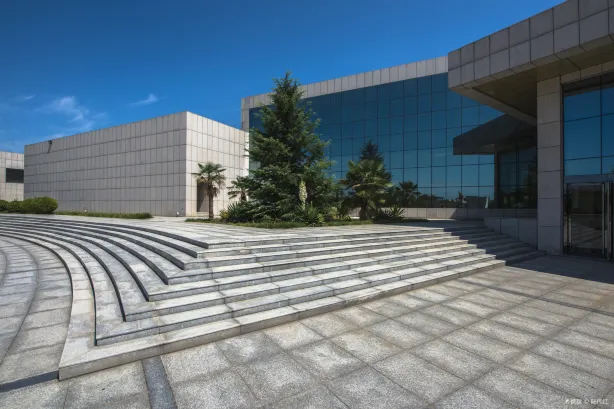
Located in Qucun Town, Quwo County, Jin State Museum is the first site museum in the province with Jin culture as its theme, built on the basis of the national key cultural relic protection unit "Qucun-Tianma Site". It was officially opened to the public on National Day in 2014. It is the first large-scale site museum in Shanxi Province that integrates cultural relic collection, protection, research and cultural relic display, and is a platform that fully displays the historical and cultural features of Jin State. The Jin State Museum takes Jin culture as its theme and has created three highlights: the history of Jin State, the history of excavation, and the site exhibition. The History and Culture Exhibition Hall uses the history of Jin State as a clue and, through a large number of precious cultural relics unearthed from the tombs of Jin Hou, shows a series of major events that have influenced the course of ancient Chinese history, including the enfeoffment of Tang by Shu Yu, the change of Tang to Jin by Xie Fu, the loyalty of Wen Hou to the king, the expansion of territory by Xiangong, the hegemony of Wen Gong, the dictatorship of the six nobles, and the division of Jin by the three families. The Site Excavation History Exhibition Hall shows the hardships, extensive reading of geography, and search for evidence by three generations of archaeologists from the School of Archaeology and Museum Studies of Peking University and the Shanxi Provincial Institute of Archaeology, as well as a series of major achievements in archaeological excavation; the Site Exhibition Hall adopts a method of one site and one display method, focusing on the four groups of tombs of Jin Hou and his wives and three chariot pits, presenting the audience with a panoramic picture of the tombs of kings and princes of the state during the Western Zhou period. The "Qucun-Tianma Site" where the Jin State Museum is located is large in scale, starting from Tianma Village in Yicheng County in the east, Qucun Town in Quwo County in the west, starting from the bank of Fu River in the south, and reaching Qiaoshan slope in the north. The site is 3,800 meters long from east to west, 2,800 meters wide from north to south, and covers an area of ​​nearly 11 square kilometers. After more than ten consecutive large-scale explorations and excavations by Peking University and the Shanxi Institute of Archaeology, a total area of ​​12,000 square meters was revealed, and more than 1,000 tombs were excavated, including more than 800 tombs from the Zhou Dynasty. Especially in the core area of ​​the site, nine groups of 19 tombs of early Jin monarchs and their wives, ten chariot pits, and more than 12,000 precious cultural relics of various types were discovered. The excavation results provided support for the solution of the chronicle of the Western Zhou kings in my country's "Xia, Shang and Zhou Chronology Project". It was listed as one of the top ten archaeological discoveries in China in 1992 and 1993, and was rated as one of the 100 major archaeological discoveries in China in the 20th century in 2001.

Quwo · 13.5 km from downtown
Emperor Qinshihuang's Mausoleum Site Museum
2026 Global 100 - Best Things to Do

Emperor Qinshihuang's Mausoleum Site Museum

10
4.7/5
150.5k reviews

Emperor Qinshihuang's Mausoleum Site Museum is a large site museum built on the site of the Terracotta Army pits, which are located approx. 1.5 km east of the mound of Emperor Qinshihuang's Mausoleum. In March 1974, farmers from Xiyang Village accidentally unearthed fragments of terracotta figures while digging a well, and archaeological exploration confirmed Pit 1; in 1976, Pits 2 and 3 were successively discovered to the north of Pit 1. This army, which had slumbered for over 2,000 years, was thus brought back to light, and the discovery of the Terracotta Army has been hailed as "one of the great discoveries in the history of 20th-century archaeology." Pit 1 is the main military formation among the three pits, stretching over 200 m from east to west, with an estimated 6,000 pottery figurines and horses buried inside. Standing at the edge and looking down, armored warrior figurines, war chariots, and pottery horses are arrayed eastward in battle formation. A closer look at each figure reveals different facial shapes, hairstyles, beards, and even hand gestures. The figurines were originally painted all over, but most of the paint has peeled off and discolored due to fire and long burial. Pit 2 is L-shaped, with crossbowmen, cavalry, and charioteers arranged in a mixed formation; the vividly expressive kneeling archer was unearthed here. Pit 3 is small in scale, and scholars believe the ceremonial guard figurines and war chariots unearthed there indicate it served as the command center—known in ancient times as a "military tent"—directing the formations in Pits 1 and 2. The bronze swords, pi halberds, spears, crossbow triggers, and large quantities of arrowheads unearthed from the pits—many still sharp after more than 2,000 years—demonstrate the sophistication of Qin dynasty metallurgy. The Emperor Qinshihuang's Mausoleum Site Museum and the Qin Shi Huang Mausoleum at the foot of Mount Li were originally one integrated whole. After Qin Shi Huang ascended the throne at the age of 13, he began constructing the mausoleum, conscripting hundreds of thousands of laborers over a period spanning more than 30 years; the terracotta army, which replaced human sacrifice with figurines, served as the underground guard for this imperial mausoleum. To avoid the crowds during your visit, you might want to see Pit 3 and Pit 2 first, and then take your time to experience the awe-inspiring scene of Pit 1 last. After viewing the terracotta pits, you can also take the attraction's shuttle bus to Lishan Garden, where Emperor Qinshihuang's mausoleum is located; the Acrobats Pit, the Civil Officials Pit, and the Bronze Chariots and Horses Museum are all within the garden. The two painted bronze chariots and horses, cast at half the scale of real chariots, are exquisitely crafted with brilliantly gleaming gold and silver fittings, and are well worth a special trip to see.

China · Xi'an
Shaanxi History Museum
2026 Asia 100 - Family-friendly Attractions

Shaanxi History Museum

9.5
4.8/5
35.3k reviews

Shaanxi History Museum is a large modern museum built after China's reform and opening up and officially opened in 1991. The building was designed by architect Zhang Jinqiu and adopts a Tang-style architectural layout of "central hall and four corner towers," with a symmetrical central axis and a clear hierarchy of primary and secondary structures; in 2016 it was included in the first batch of the "Chinese Architectural Heritage of the 20th Century" list. Shaanxi was once the political center of dynasties such as the Zhou, Qin, Han, and Tang, and the museum's collection spans a million years of history, covering categories such as Shang and Zhou bronzes, pottery figurines of successive dynasties, Han and Tang gold and silver wares, and Tang tomb murals, with a total of over one million items. The permanent exhibition "Ancient Civilization of Shaanxi" follows a chronological main line and presents the historical process from prehistoric Lantian Man to the eve of the Opium War across three galleries, with the Zhou, Qin, Han, and Tang periods as the focus. The east and west sides of the central hall each host a thematic exhibition: on the west side, "Treasures of the Great Tang: Hejiacun Hoard Unearthed Artifacts Exhibition" concentrates on fine gold and silver wares of the High Tang, while on the east side, the "Tang Dynasty Mural Treasures Gallery" displays authentic murals removed from Tang tombs, with subjects covering figures, architecture, ceremonial guards, and more, making it a uniquely distinctive category of the museum's collection. Among the many artifacts in the museum, several are particularly notable. The agate cup with gold-inlaid beast head, from the Hejiacun hoard, is carved from a single piece of banded agate into the form of a curved-horn beast head, resembling Central Asian rhyton cups, and is one of the first batch of cultural relics prohibited from being exhibited abroad. The tri-color glazed camel carrying musicians figurine vividly recreates the lively scene of musicians playing and singers performing on a camel's back, with bright glaze colors and figures with distinct expressions. The Empress's Seal is made of Western Han Hetian mutton-fat jade and carved with a chi-tiger knob, and is the only known actual jade seal of a Han dynasty empress discovered to date. In addition, the gilt silver flask with a dancing horse holding a cup design, the celadon ewer with an overhead handle and bottom-filling design, and the black-glazed oil-spot bowl each have their own distinctive features. The gold and silver wares unearthed from the Hejiacun hoard are concentrated in the thematic gallery and are a highlight of any visit; visitors are advised to allow time to examine them closely.

China · Xi'an

Experiences you can't miss in Quwo

Quwo Today's weatherClear -4-11℃
Quwo weather for the next 2 days11/9: -3-9℃, 11/10: -3-12℃

Free things to do in Quwo

What travellers say about Quwo
user-avatar
许泱流October 18, 2026
5.0
The Jin State Museum, which recently reopened after renovations for the Mid-Autumn Festival, is divided into three main sections: the first section displays the history and ancient artifacts of the Jin State and the pre-Qin period; the second section features a realistic display of Jin State tombs; and the third section showcases porcelain. The overall flow of the exhibits is well-organized, providing a comprehensive experience from understanding and reading about history to witnessing it firsthand.

Jinguo Museum

user-avatar
清风若溪September 8, 2023
4.0
Jin State Ancient Capital Museum: Located in Jinbo Park, Fuxi Road, Houma City, Shanxi Province, it is a thematic museum that focuses on displaying the Xintian Culture of the Jin State. The museum is divided into two parts, with four exhibition halls, and exhibits nearly 500 cultural relics of various types.

Houma Jinguo Gudu Museum

user-avatar
JieyuFebruary 18, 2026
4.0
The overall area is quite large, and the planning and design are generally well done. It features mountains, water, and cultural elements. The water area is substantial, and the reservoir capacity is also very large. However, it appears to have undergone secondary development, with several submerged buildings in the water. There are quite a few businesses operating there, offering a variety of dining and entertainment facilities. The biggest drawback is the extreme inconvenience of parking during holidays. The parking lot is quite far from the scenic area, and it costs 10 yuan per vehicle.

Quwoxian Chunqiu Jin Guocheng Sceneic Area
user-avatar
孤独的隐者February 11, 2026
5.0
The Longxing Temple, a national key cultural relics protection unit, boasts a rich historical atmosphere. We even happened to be there during lunchtime at the pagoda. Climbing up using both hands and feet provided an excellent view and a fantastic experience. It's truly a treasure trove of a temple – highly recommended!

Longxing Temple

user-avatar
行走毛毛July 8, 2026
4.0
Although it's just a gate located on the street and still serves as a passageway, it's a key cultural relic. Many people who love cultural relics will come here specifically to take a set of photos. Locals, seeing this, are very curious about what's so special about it. That's the essence of tourism, I guess.

Nanfan Stone Memorial Archway
user-avatar
汉唐风October 28, 2025
5.0
It is definitely worth a visit for lovers of ancient architecture. Go early so that you can still feel the vicissitudes of history. I am afraid that in a few years it will be overcrowded and you will never be able to feel the same as today.

Fencheng Ancient Building Complex

user-avatar
Justin & AnnaNovember 7, 2026
5.0
We had a great time here. Our guide, Zhang, has been coming here for over 20 years and so he knows the place inside and out (including things like which bathrooms are the VIP ones lol). I highly recommend booking him as he speaks several languages and even helped us get tickets for another show.

Emperor Qinshihuang's Mausoleum Site Museum

user-avatar
翱翔的大鲨鱼June 13, 2026
4.0
Since I was there, I decided to take a look, but there really wasn't much to see. The buildings were too obviously constructed. Aside from the architecture, I couldn't see any of the original structures. The residential area behind it is worth exploring at a slower pace, but unfortunately, I was in a rush and didn't have time to appreciate it properly.

Jiangzhou Prefecture Scenic Area

user-avatar
M51***32October 26, 2026
5.0
The Most Beautiful Guanyin Crossing the Sea – The Past and Present of Fusheng Temple in Xinjiang County Said to be the inspiration for Wu Cheng'en's novel *Journey to the West*, Fusheng Temple boasts a history of over 1400 years. Originally built during the Northern Qi Dynasty, it was commissioned by Emperor Taizong of Tang (627-649 AD) to be a temple dedicated to the upright and honest Lin Xiangru, a high-ranking official in the village. This is also the origin of the temple's name, "Little Leiyin." The temple enshrines Confucianism, Buddhism, and Taoism. During the Jin Dynasty, it was officially named "Fushengyuan," later changed to Fusheng Temple. Imperial edicts and inscriptions record this within the temple grounds. The main hall of Fusheng Temple, the Amitabha Hall, enshrines the Three Western Saints—Amitabha Buddha as the main deity, flanked by Bodhisattvas Guanyin and Mahasthamaprapta, forming the Western Paradise. The statues are all original works from the Yuan Dynasty. The altar is surrounded by the Sixteen Arhats and the Four Heavenly Kings, which were added during the Ming and Qing Dynasties. Inside the Heavenly Kings Hall were the two generals Heng and Ha, namely Zheng Lun and Chen Qi, who were responsible for guarding the mountain gate and protecting the safety of the temple, but they are no longer there, and the temple is also... alas... The back of the Buddha statue is adorned with statues of Guanyin of the South Sea, Sudhana, and the Bright King, which are also original works from the Yuan Dynasty. Guanyin of the South Sea is especially praised as the most beautiful and is included in the "Complete Collection of Chinese Art". Below, there were originally statues of Tang Sanzang and his disciples, but now only the monkey-shaped fragments remain: with a pointed mouth and fiery eyes, wearing a rat-head hat, and a lively posture, very similar to Sun Wukong. The mount under Guanyin's feet is the Golden-haired Roar, the original form of Sai Tai Sui in "Journey to the West". The sculpture's details (antlers, eagle claws, fish scales) are exactly as described in the novel. The money-scattering boy at the feet is an image of Red Boy, and the Dragon King and Turtle Prime Minister below recreate the scene of the East Sea Dragon Palace. The three-headed, six-armed Ming Kings on either side, riding on wind-fire wheels, are artistic representations of the two generals Heng and Ha. The film *Black Myth: Wukong* directly uses these as character prototypes. Fuksheng Temple, also known as Little Leiyin Temple, has an inscription at its entrance, which is also attributed to the Yellow-haired Monster impersonating Leiyin Temple. The sculpture predates Wu Cheng'en's *Journey to the West* by 300 years. It is widely believed that Wu Cheng'en saw this sculpture during his travels in Shanxi, which inspired his creation of *Journey to the West*. Although there is no definitive record, it seems authentic to me; otherwise, how could it be such a coincidence? The scene also depicts Guanyin crossing the sea to deliver all beings, which aligns with Wu Cheng'en's depiction of Guanyin of the South Sea. It's incredibly beautiful!

Fusheng Temple

user-avatar
晗晗守护神November 7, 2026
5.0
As the saying goes, a trip to Shaanxi is 30% sightseeing and 70% explanation. A good guide can make visiting a museum with a rich history less tiring and less aimless. Guide Xiao Liu is such a friendly and professional person. He explained everything in detail and took care of the children's feelings. We benefited a lot. Shaanxi History Museum truly deserves to be a place that gathers the treasures of Chinese culture!

Shaanxi History Museum

Trip Moments in Quwo

Popular cities near Quwo

Frequently asked questions

How can I contact Trip.com customer support?

Get help anytime, anywhere within 30 secondsContact customer support

Change and cancellation policies vary by attractions and tours. Please check the product details page for more information.

Ticket prices may vary between weekdays and weekends, as well as during peak and off-peak seasons. When booking with Trip.com, you can also use Trip Coins to get extra savings. For more tips on booking discounted tickets, please visit Trip.com for the latest information.