
Things to do in Shou County
Explore top experiences
Top 10 attractions in Shou County


Shouxian Ancient City
Shouxian Ancient City, known as Shouzhou and Shouchun in ancient times, served as the capital for the State of Chu at the end of the Warring States period and for the Huainan Kingdom during the Western Han Dynasty. For over 2,000 years, it has been an important town on the Huai River. The core highlight of the ancient city is the wall surrounding the old town. The existing wall was rebuilt during the Southern Song Dynasty and has been continuously repaired by subsequent dynasties, and some of the bricks still bear inscriptions such as "Jiankang." It has been continuously renovated throughout the ages, with bricks added to the exterior, serving the dual purpose of military defense and flood control. Stories closely related to the city wall include "The deep love of a cow for its calf," "The person inside the gate," and "The insatiable heart swallows an elephant." A moat surrounds the city wall, and the northern part runs along theHuai River. Taking a walk on the city wall offers some nice scenery. Inside the ancient city, ancient buildings stand in rows, and local people still live here, creating a rich atmosphere of daily life.Shou County · 690m from downtown

Anhui Chu Culture Museum (Shouxian County Museum)
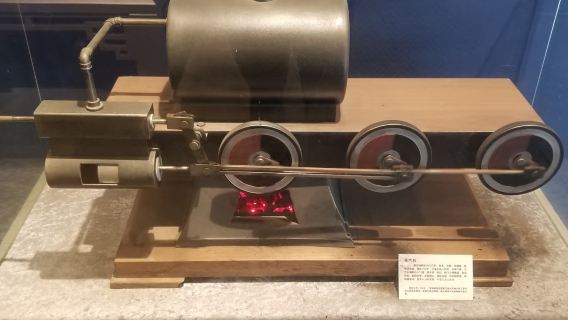
Shou County Museum, a quite early museum of Anhui province, is located on the south of the West Street, Shouchun Town, and its original site was within the Baoen Temple. Main collections of the museum include historical relics unearthed in the local area, as well as cultural relics of the Chu cultural system. The museum also collects classic relics and revolutionary relics of the recent and modern times, with the age of collections ranging from the Neolithic Age to the recent and modern times.Shou County · 1.7 km from downtown

Baoen Temple
Baoen Temple is located on the east side of the ancient city of Shouxian, known locally as the Great Temple, and is the main attraction in the ancient city of Shouxian. Baoen Temple was built in Tang Dynasty. According to legend, it was built by Emperor Xuanzang of Tang Dynasty and has a long history. The monastery discovered the underground palace during the demolition of the dangerous pagoda in the Northern Song Dynasty. The precious gold and silver coffins and relics were unearthed in the underground palace, which are now hidden in the Shou County Museum. The existing 18 Arhat clay statues in the temple are also artistic treasures, so you can take a good look here. Bao'en Temple is a typical traditional temple building with three entrances. From Zhaobi, from south to north, there are Shanmen, Daxiong Hall and Pilu Pavilion. There are green plants in the courtyard, including ancient ginkgo trees that are more than 1,300 years old. The environment is beautiful, and you can visit them one by one after entering the temple. The precious 18 Arhat statues in the temple are located on both sides of the Daxiong Hall. They were built during the Qianlong period. They are exquisite in craftsmanship and have their own characteristics.Shou County · 922m from downtown

Anfengtang
Shou County · 33.7 km from downtown

Shou County Confucius Temple
It is located on West Street in the city and was built in the Yuan Dynasty. From the first year of Taiding in the Yuan Dynasty (1324) to the sixth year of Guangxu in the Qing Dynasty (1880), it has been repaired and expanded 42 times, forming a large-scale and complete architectural group. The temple faces south and covers an area of about 20,000 square meters. There are Dazhaobi, Wenmingfang, and Wenbi Pavilion in front, Wenchang Palace in the east, and loyalty words, festival filial piety words and festival filial piety in the west. On the central axis is the five-level courtyard: in front of the first courtyard, there are "Floating Palace", "Quick View" and "Yanggao", followed by "Genxing", "Golden Sound" and "Yuzhen". , the left and right "De Pei Tian Di", "Dao Guan Ancient and Modern" two squares facing each other; the center of the second courtyard is "Banchi", Donglimen, Xiyi Road. On the central axis of Chibei is the "front door", and its ear room is named after the official word. The west is the Xiangxianxian; the main body of the three-entry courtyard is the Dacheng Hall, and the two sides are the east and west points. The rear of the Dacheng Hall is composed of the fourth courtyard, which is composed of the "Salvation" Square and the left and right "Shengtang" and "Entry" gates; behind the Minglun Hall, the east side is the Chongsheng Feed, and the left and right are connected to the wall to form the fifth courtyard. Courtyard. In recent years, due to municipal construction, some buildings have been demolished one after another. There are three existing "Floating Palace", "Quick View" and "Yanggao", as well as Banchi, Qianmen, Mingguan Ci, Xiangxian Ci, Dacheng Hall, Minglun Hall, Kuiguang Pavilion, etc.Shou County · 708m from downtown

Jiaogang Lake National Wetland Park
Jiaogang Lake National Wetland Park is located in the comprehensive Maoji Experimental Zone in the southwest of Anhui Province's Huainan City; it is known as the "Baiyangdian of the East." The waters of Jiaogang Lake are fed from rivers such as the Yingshang and Lu'an. Jiaogang Lake is pretty as a jasper embedded in the Huaibei Plain. With many reeds and lotuses, the wetland plants found here are flourishing and abundant. It is one of Anhui Province's areas with an especially high level of ecological environment protection. Jiaogang Lake National Wetland Park is known as the “Earth's Kidney."Fengtai · 16.7 km from Shou County

Nanjing Museum
Nanjing Museum is located at the southern foot of Purple Mountain and north of Zhongshan Gate. The museum is one of the earliest to be established in China. Here, you can see ancient artifacts like gold-threaded robes such as those depicted in “Grave Robbers' Chronicles” and you can enjoy exquisite painting and calligraphy and Ming treasures such as a gold-plated stupa. You can take a trip through time and even walk along the streets of the Warlord Era.China · Nanjing

Nanjing Confucius Temple
The Confucius Temple was originally built in the Song Dynasty to commemorate Confucius. It is located beside Gongyuan Street on the north bank of Qinhuai River. However the temple was destroyed and rebuilt several times. The current temple was rebuilt in 1987 after it was destroyed by Japanese Aggressors during WWII. Currently, the temple is the main scenic spot of the Qinhuai River Scenery. It also includes the China Imperial Examination Museum and Xue Gong (The Imperial Academy). At the Confucius Temple, you can admire a 6 meter high huge portrait of Confucius and 38 mural paintings reflecting the life story of Confucius.China · Nanjing

Confucius Temple-Qinhuai Scenic Area
The Confucius Temple-Qinhuai Scenic Area refers to the Qinhuai River area centered around the Confucius Temple, where the streets, alleys, residences, and historical sites along both banks form a continuous stretch. It has been a bustling and lively part of Nanjing since ancient times. The line "The swallows that skimmed by painted eaves in bygone days are dipping now among the humble homes' doorways" by Liu Yuxi describes this very place. The Wuyi Lane mentioned in the poem still lies hidden among the alleys near the Confucius Temple. Exploring history along the river is the highlight of this area: The Dacheng hall of Confucius temple stands by the water, with a towering screen wall across the Pan pond in front; the nearby Jiangnan examination hall was the imperial testing site for provincial exams during the Ming and Qing dynasties, now replaced by the China imperial examination museum; Zhan garden and Egret isle park both originated from the mansion gardens of Xu Da's family, a founding general of the Ming dynasty—the former also houses the Taiping heavenly kingdom history museum; scattered along both banks within walking distance are historical sites like Meixiang tower (former residence of "Peach blossom fan" heroine Li Xiangjun), the well-preserved Zhonghua gate with its urn-shaped defense system, Wu Jingzi's residence (author of "The scholars"), and ancient ferry relics like Taoye crossing, easily connected into a historical walking trail. Cuisine is also a signature feature of this area: "The eight Qinhuai delicacies" refer to sixteen famous dishes from eight time-honored snack restaurants, including Yongheyuan's crab-shell yellow sesame cakes and dried shrimp shreds, Qifangge's duck oil crispy cakes and sesame oil dried shreds, Jiangyouji's beef pot stickers, and Lianhu pastry shop's osmanthus-filled glutinous rice balls. The Confucius Temple area and Laomendong are lined with teahouses, snack shops, and various stores, offering plenty of opportunities to rest and grab a bite when tired, along with the chance to pick up some souvenirs. The highlight comes after nightfall: board a painted boat from the pier in front of the Confucius Temple, listen to the guide while admiring the white walls and black tiles illuminated by riverside lanterns—this is the classic "night mooring on the Qinhuai" experience. From Chinese New Year to the Lantern Festival each year, the Qinhuai River Lantern Festival (also known as the Jinling Lantern Festival), listed as a national intangible cultural heritage, takes place here. The Confucius Temple, Laomendong, and along the Qinhuai River are adorned with lanterns and decorations. "Visiting the Confucius Temple to see lanterns during New Year" remains a cherished tradition for Nanjing locals. Even on ordinary days, the area buzzes with cultural temple fairs, food festivals, and other celebrations, offering unique surprises in different seasons.China · Nanjing

Sanhe Ancient Town
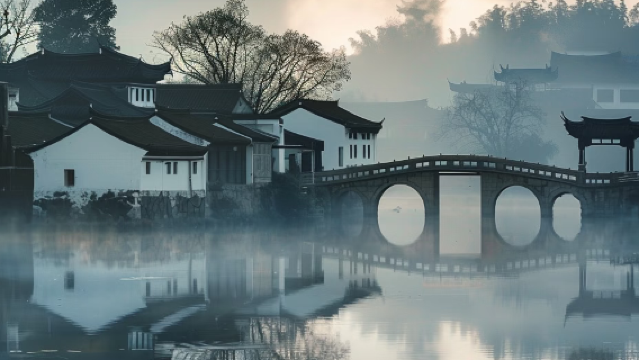
Sanhe Ancient Town is situated at the southern tip of Feixi County in Hefei, where the Fengle River, Hangbu River, and Xiaonan River converge. The town derives its name from these three waterways, with the name "Sanhe" appearing as early as the Ming Dynasty and officially becoming Sanhe Town during the Qing Dynasty. In 1858, Taiping Rebellion generals Chen Yucheng and Li Xiucheng achieved a decisive victory over the Xiang Army here, historically known as the "Great Victory of Sanhe." The triumphal arch at the town entrance, Yingwang Mansion, and ancient city walls still bear witness to this turbulent period. The old bluestone-paved streets stretch along the river, lined with contiguous Huizhou-style residences featuring gray brick walls and soaring horse-head gables, blending water-town alleys with Huizhou-style markets seamlessly. Most tours begin at Sanxian Bridge in the town center. To its northwest stands the seven-story Guocui Tower, offering panoramic views of the town and displaying Huizhou artifacts like sedan chairs, inscribed tablets, carved beds, and stone carvings. Nearby, the Dafu Mansion (Sanhe Folk Museum) recreates an official residence's hall with exquisite wood carvings, including an oversized abacus over one meter long. Northeast of the bridge, Xiangu Tower is a Huizhou-style temple funded by merchants including the owner of the time-honored pastry shop "Zhonghexiang." Heading north along the east bank of Xiaonan River leads to ancient West Street, paved with bluestones and once bustling with shops—Liutongxinglongzhuang still maintains its original commercial layout. South along the west bank brings you to Quezhu Covered Bridge, named after Sanhe's ancient moniker "Quezhu," featuring a two-tiered eaves corridor with "beauty's seat" railings perfect for resting and enjoying the waterfront. The southern area around Old South Street and Wannian Street clusters notable former residences, including those of physicist Chen-Ning Yang, general Sun Liren, and Helu. During the Anti-Japanese War, young Chen-Ning Yang sheltered here with his family. Nearby, the famous "One-Person Alley" narrows to barely accommodate a single visitor, making it a popular photo spot. Further south stand Wannian Temple, Chenghuang Temple, and the historic Wannian Stage—Sanhe being the birthplace of Lu Opera, whose authentic melodies often grace the stage during festivals. Local snacks concentrate near Sanxian Bridge: freshly fried Sanhe rice dumplings with crispy shells, shrimp paste, crispy duck, and various river delicacies represent regional cuisine, while tea-flavored dried tofu makes for perfect street-side nibbling. Rice wine and feather fans serve as portable souvenirs. In 2026, Sanhe became a key filming location for CCTV's Spring Festival Gala Hefei segment, with its night scenes of a thousand fish lanterns captivating nationwide audiences.China · Feixi
Experiences you can't miss in Shou County
Featured Cultural experiences in Shou County
View all Cultural experiences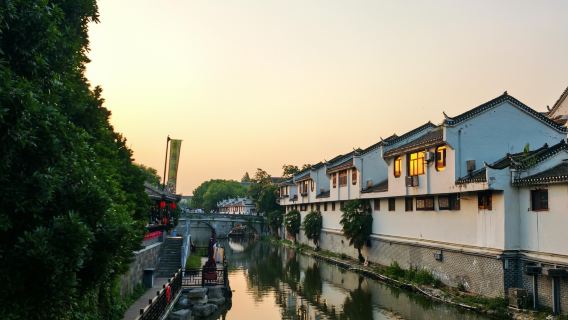
FromSGD 189.34

FromSGD 304.77


Featured Day tours in Shou County
View all Day tours

Free things to do in Shou County
Shouxian Ancient City
Shou County · 690m from downtownAnhui Chu Culture Museum (Shouxian County Museum)
Shou County · 1.7 km from downtownBaoen Temple
Shou County · 922m from downtownAnfengtang
Shou County · 33.7 km from downtownShou County Confucius Temple
Shou County · 708m from downtownJiaogang Lake National Wetland Park
Fengtai · 16.7 km from Shou CountyNanjing Museum
China · NanjingNanjing Confucius Temple
China · NanjingImmediate access, Book now for today, Cancel anytimeConfucius Temple-Qinhuai Scenic Area
China · NanjingSanhe Ancient Town
China · Feixi
What travellers say about Shou County

帕夫 go365March 6, 2025
5.0
寿县古城历史悠久,文化底蕴深厚。古城墙是寿县古城的一大亮点,沿着古城墙漫步,欣赏城墙上的砖瓦和箭楼,感受古代军事防御的场景。此外,寿县古城的特色小吃种类繁多,口味独特,如寿县大救驾、寿县牛肉汤等,都很有特点。
Shouxian Ancient City

清风若溪November 24, 2025
4.0
The Anhui Chu Culture Museum, located in Shouxian County, Huainan City, is the only national first-class museum in China named after Chu culture. Formerly known as the Shouxian County Museum, it houses over 10,000 artifacts, including more than 230 sets of national first-class cultural relics. Among them, seven pieces, including the Three-Legged Ram Zun and the Sword bestowed by King Zhi of Yue, are considered the museum's most prized possessions.
Anhui Chu Culture Museum (Shouxian County Museum)

辰宁在心October 28, 2021
4.0
Shou County Baoen Temple is located near the east gate of Shou County. It is a thousand-year-old temple built during the Zhenguan period of the Tang Dynasty. The famous monk Xuanzang presided over the construction. There are two thousand-year-old ginkgo trees in the temple, which are estimated to have been planted when the temple was built.
Baoen Temple

听爵士的流氓兔November 14, 2022
5.0
Anfengtang is the earliest large-scale pond irrigation project in the history of Chinese water conservancy. It has a scientific site selection, reasonable project layout and abundant water resources. Its construction has provided valuable experience for large-scale pond irrigation projects in later generations. For thousands of years, Anfengtang has played an important role in irrigation, shipping, and military support.
Anfengtang

ColinPNovember 16, 2019
5.0
There are 11 national treasure-level ginkgo trees in Shouxian Ancient City, two of which are in the Confucius Temple of Shouxian. The Confucius Temple of Shouxian is located on West Street of the ancient city, opposite the museum. The two ginkgo trees in the Confucius Temple have a history of 740 years and have not yet turned yellow.
Shou County Confucius Temple

伊莱雯October 7, 2026
5.0
Jiaogang Lake National Wetland Park exceeded my expectations! The 60,000-mu (approximately 4,000 hectares) lake stretches out in a vast expanse of misty waves. Boating through reed beds and lotus ponds, a gentle breeze carries the delicate fragrance of lotus blossoms, and waterbirds occasionally skim the surface – a truly pristine wetland landscape. The park boasts excellent facilities, clean boardwalks, and an immersive boat trip, where you can also savor authentic lake delicacies. Slow down, appreciate the beauty of the lake, relax and rejuvenate – a perfect weekend getaway! Highly recommended!
Jiaogang Lake National Wetland Park

Anonymous userOctober 16, 2026
5.0
We were very fortunate that our top guide today was Ms. Dong Ling. Her professional expertise was solid; she didn't just recite from memory. She eloquently explained the stories and archaeological backgrounds behind each of the museum's treasures, making dry history vivid and easy to understand. My son and I deeply experienced the thousand-year history of Nanjing. Highly recommended!
Nanjing Museum

青水月September 19, 2026
4.0
The Confucius Temple and Jiangnan Examination Hall along the Qinhuai River in Nanjing offer stunning nighttime views. A stroll through them in the gentle autumn breeze is incredibly pleasant. There are free performances and some attractions that charge admission, so you can choose what to do. In short, anyone visiting Nanjing should definitely check them out.
Nanjing Confucius Temple
Anonymous userOctober 7, 2026
4.0
If you haven't been there, it's worth a visit. It's a famous spot in Nanjing, always packed with people. As for the boat tour, if you haven't been before, you can take a ride, but it's probably a one-time thing, so the price isn't great. It's a 40-minute round trip on the boat, listening to the announcements, watching the night view of the Qinhuai River, with its many bridges along the banks. You can learn about history, see the waterscape and night view, and soak in the atmosphere.
Confucius Temple-Qinhuai Scenic Area

爱旅行的溪姐October 7, 2026
5.0
Sanhe Ancient Town is a free ancient town near Hefei that's well worth visiting. With its charming canals, ancient streets, and alleys, it exudes a captivating atmosphere. You can stroll along the cobblestone paths, visit historical residences, and sample local delicacies such as rice dumplings, rice wine, and dried tea. It's not overly commercialized, making for a relaxed and enjoyable experience. Overall, it offers great value for money and is perfect for a short trip to experience the charm of a Jianghuai water town.
Sanhe Ancient Town


