Suide

Things to do in Suide

Search attractions or local attractions & tours
Search

Explore top experiences

Top 10 attractions in Suide

View all Attractions
Jinci Temple Museum
2026 Asia 100 - Family-friendly Attractions

Jinci Temple Museum

8.7
4.8/5
21k reviews

Jinci Temple Museum is located at the foot of Xuanweng Mountain by the banks of the Jin River. It is an ancestral temple built to commemorate Tang Shuyu, the founding feudal lord of the State of Jin, and is also one of the earlier surviving royal sacrificial gardens in China. There is a saying that "you have not truly visited Taiyuan until you have visited Jinci." The ancient buildings in the museum are arranged in sequence along the central axis, among which the Xian Hall, the Flying Bridge over the Fish Pond, and the Hall of the Holy Mother are known as the "three treasures," while the Zhou Cypress, the Never-Aging Spring, and the Song dynasty attendant statues are known as the "three wonders"—these are the core highlights of any visit. The "Three Treasures" are located on the central axis and can be visited together. Xian Hall is the place where sacrificial offerings are placed. The hall is surrounded by railings instead of walls, making it well-ventilated and bright, and its beam structure is simple and lightweight. The Flying Bridge Across Fish Pond is on the west side of Xian Hall. It is a cross-shaped ancient bridge built over a square pond, resembling a modern overpass in form, and this type of bridge structure is extremely rare among surviving ancient buildings. The west end of the bridge connects to Shengmu Hall, the oldest surviving building in the museum. Wooden carved dragons coil around the porch columns in front of the hall, making them relatively early surviving examples of wooden coiled dragons. The hall interior was built using the reduced-column method, creating a rather spacious interior. It houses dozens of Song Dynasty colored sculptures, with the main statue of Shengmu seated in the shrine and the remaining attendants arranged on both sides with varied expressions. One attendant statue is half joyful and half sorrowful, vividly lifelike and moving. With Shengmu Hall as the center, you can also seek out the "Three Wonders." The Zhou Cypress is located on the north side of Shengmu Hall. It is said to have been planted in the Western Zhou Dynasty, and its trunk leans south like a reclining dragon, full of ancient majesty. The Never-Aging Spring is located on the south side of Shengmu Hall and is the main source of the Jin River. The museum also houses the Stele of the Inscription and Preface to Jinci, composed and handwritten by Emperor Taizong of Tang, Li Shimin, whose running-script calligraphy is vigorous and forceful. In the southern part is the Shifang Fengsheng Zen Temple, said to have originally been the villa of the Tang Dynasty general Yuchi Gong. In the Futu Courtyard, the Sarira ShengSheng Pagoda can be climbed for a distant view. The Jinci temple fair has been passed down to the present day and has been included in the national-level intangible cultural heritage list. The Water Mirror Stage, an ancient theater stage in the museum, is an important venue for activities during the temple fair.

China · Taiyuan
The Hukou Waterfall Scenic Area
No. 4 of Best Things to Do in Shanxi

The Hukou Waterfall Scenic Area

8.5
4.7/5
22.7k reviews

The Hukou Waterfall Scenic Area is located in the Jin-Shaan Grand Canyon in the middle reaches of the Yellow River and is the Shanxi-side section for viewing Hukou Waterfall. As the Yellow River rushes here, its surface suddenly narrows from several hundred meters wide to just a few dozen meters. The water, laden with silt, churns and pours down like water being poured into a giant kettle, which is how the name "Hukou" (Kettle Mouth) came to be. This is a rare yellow waterfall on the Yellow River, with muddy waves surging skyward and a roar like thunder, displaying magnificent momentum. The attraction is located on the east side of the waterfall, where the bank is relatively low, allowing visitors to look up and take in the full panorama of the Yellow River plunging downward. Below the waterfall, mist rises and fills the air, appearing like smoke or clouds from afar and creating the wondrous sight known as "smoke rising from the water"; on clear days, sunlight refracts through the mist to form a rainbow arching across the river, called "rainbow reaching the heavens." Within the attraction, Dragon Cave is a natural stone cave; following the stone steps down leads to a viewing platform close to the waterfall, where you can look up as the river pours down from above—an ideal spot to feel the force of the waterfall up close. Downstream from the waterfall, the Ten-Mile Dragon Trough is a deep channel formed by the river's long-term erosion of the riverbed; in the dry season, the trough floor is wide and flat, and ancients once used this terrain to haul boats along the bank, leaving behind the unique scene known as "sailing on dry land." Further downstream is Mengmen Mountain, where two huge rocks in the river split the Yellow River in two before the streams merge again; carved on the rock face are the four characters "Wo Zhen Kuang Liu" (Resting Here, Quelling the Raging Flow). The view of Hukou Waterfall is distinctive in each of the four seasons. Every year between April and May, peach blossoms bloom and the ice melts, coinciding with the "March peach blossom flood," when the abundant water volume makes the waterfall particularly spectacular. From September to November, the air is crisp in fall, and rainbows often appear in the mist, a phenomenon known as the "Hukou fall wind." Water volume is greater in spring and fall, and the sound of the water striking the rocks is like thunder, making these the best periods to admire the waterfall. The image of Hukou Waterfall once appeared on the CNY 50 banknote of the fourth series of the renminbi, making it a widely recognized classic symbol of Yellow River culture.

China · Ji County
Pingyao Ancient City
2026 Asia 100 - Night Attractions

Pingyao Ancient City

8.4
4.6/5
27.3k reviews

Pingyao Ancient City is one of the best-preserved ancient cities in China and, along with Lijiang Ancient City, is one of the two ancient cities in China to have successfully been designated as a World Cultural Heritage site in its entirety. Pingyao was once the financial center of China during the late Qing dynasty. Walking into this once-prosperous ancient city, you can feel the atmosphere of Shanxi merchant culture everywhere. The streets, shops, and residences within the ancient city still maintain their traditional layout and appearance. The overall street pattern is in the shape of the Chinese character 'tu', consisting of four main streets, eight small streets, and seventy-two lanes. The ancient city has six city gates in total, and the areas around the south gate and west gate are where visitors are concentrated. When touring, you usually enter the city through the lower west gate and walk along West Street to Rishengchang Exchange Shop, where you can learn about the development history of ancient banking and experience the legend of Shanxi merchants conducting business across the world. South Street, which runs north-south through the city, is the central axis of the ancient city. During the Ming and Qing dynasties, South Street gathered more than half of the country's financial institutions and was known as the "Wall Street of China" at the time. Today this street is called the Ming and Qing Ancient Street, and most of the ancient city's attractions are concentrated here. Centered on the landmark Market Tower, attractions such as Xietongqing Exchange Shop, Weitaihou Exchange Shop Museum, and the Chinese Escort Agency Museum are distributed around it, and a large number of shop buildings from the Ming and Qing periods are preserved along the street. At the Pingyao County Government Office in the south of the ancient city, you can see a large number of ancient documents and instruments of torture, and there is a daily performance of the county magistrate holding court; the City God Temple and the Confucian Temple in the east of the city have grand and refined architecture. The ancient city wall is very well preserved, and climbing the wall offers a panoramic view of the ancient city. The gate tower of Yingxun Gate at the south gate is especially exquisite, and watching the sunset from the city wall in the evening is a magnificent sight. In addition to the ancient city itself, the Zhenguo Temple and Shuanglin Temple outside the city are also part of the World Cultural Heritage. The Ten Thousand Buddha Hall of Zhenguo Temple is entirely made of wood, assembled with mortise and tenon joints without a single nail; Shuanglin Temple preserves painted sculptures from the Yuan to Ming dynasties, which are exquisite in form and renowned as a "treasure house of Eastern painted sculpture art."

China · Pingyao County
Little Western Paradise
No. 8 of Best Things to Do in Shanxi

Little Western Paradise

8.2
4.8/5
7k reviews

Little Western Paradise is perched atop Phoenix Mountain in Xi County, Linfen, Shanxi Province. This Buddhist temple, originally named the Thousand Buddha Nunnery, was established during the Chongzhen era of the Ming Dynasty. It earned its initial name from the thousand Buddha statues enshrined in its Main Hall of the Great Hero. Later, it was renamed due to the inscription "Entering the Western Paradise" above its gate and to distinguish it from another ancient temple, "Great Western Paradise," located south of the city. Surrounded by mountains on three sides and facing a river in front, the temple is compact yet ingeniously laid out across its upper and lower courtyards. Ascending the stone steps and passing through the secluded "Heavenly Grotto" corridor evokes a sense of gradually entering a Buddhist paradise. The upper courtyard centers around the Main Hall of the Great Hero, flanked by the Manjusri Hall and Samantabhadra Hall. The Main Hall is the temple's crowning jewel: within its modest 100-square-meter space, nearly 2,000 suspended sculptures adorn niches, gables, beams, and rafters, transforming the hall into a museum of suspended sculpture art. Five interconnected niches dominate the rear wall, housing the Medicine Buddha, Amitabha, Sakyamuni, Vairocana, and Maitreya seated on lotus thrones, with ten principal disciples standing beside them. The southern wall depicts Buddhist narratives featuring the Four Sages and Four Heavenly Kings, while the northern wall portrays the 33 celestial palaces of Mount Sumeru. Flying apsaras, divine birds, and musician bodhisattvas dance among clouds on the beams, their gilded polychrome surfaces retaining vibrant hues after centuries. This rare collection of late Ming to early Qing suspended sculptures has gained wider recognition since the temple became a filming location for the popular game Black Myth: Wukong, attracting many travelers for dedicated visits. The lower courtyard also rewards exploration: the Immeasurable Hall faces east, where dozens of bronze Buddha statues interplay with wooden celestial palaces in what was once the monks' meditation hall. Opposite stands the Skanda Hall, housing a single nanmu-carved statue of Skanda. The temple also preserves thousands of volumes from the Yongle Northern Canon, a Ming imperial gift. Visitors are advised to spend extra time in the Main Hall—dim lighting requires slow, upward gazes to appreciate the intricate details of the high-placed sculptures. After exploring both courtyards, one can ascend Solitary Paulownia Peak via the "Seemingly No Path" route behind Skanda Hall, where the Cloud-Touching Pavilion offers panoramic views of the rural landscape below.

China · Xi County
Suide Today's weatherClear -3-13℃
Suide weather for the next 2 days11/12: -2-13℃, 11/13: 0-15℃

Free things to do in Suide

What travellers say about Suide

user-avatar
早春二月November 6, 2024
5.0
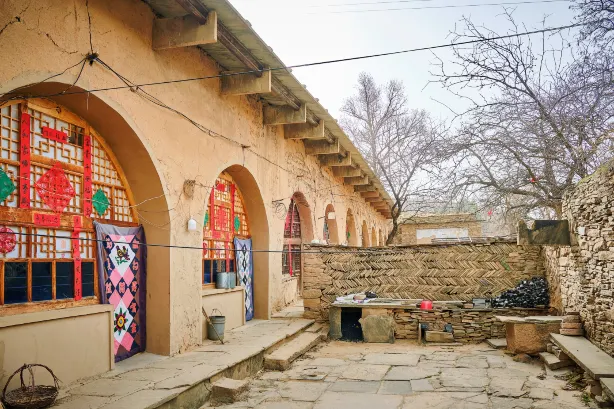
Great, it seems to be a stone slab village hidden for a thousand years. Every inch of land in the village is telling the changes of the times. The quaint cave houses and the uneven stone slabs have experienced the vicissitudes of time. Tall ginkgo trees and wild flowers blooming everywhere. There is a tall tree in front of almost every courtyard. It is the Garden of Eden in my dreams.

Suide Shuangshui Village
user-avatar
E50***89October 27, 2021
5.0
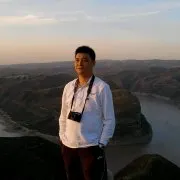
The tomb of Fusu, the crown prince of Qin, is located on Shushu Mountain in the county seat. In the 35th year of Emperor Qin Shihuang (212 BC), Fusu, the eldest son of Qin, was demoted to Shangjun. After being killed in 210 BC, he was buried on the top of Shushu Mountain. The mound of the tomb is an irregular rectangular shape, 30 meters long, 6 meters wide and 8 meters high, and the tomb area covers an area of ​​6,500 square meters. There is a poem that says: The mountain is majestic and connected to the blue sky, and Fusu's tomb is on the dangerous top; until now, the resentment has been lingering day and night, turning into a wisp of smoke.

Tomb of Meng Tian
user-avatar
扶疏子February 19, 2020
5.0
The villa is a typical residence of a wealthy family in northern Shaanxi, with cave dwellings arranged in rows and orderly on the hillside. Each courtyard is relatively independent but interconnected. Each courtyard has a prism gate, a courtyard wall, and a corridor with stone. The courtyard has a stone kiln in the front, left and right wing rooms, a horse shed in the back, and a mill. The gate, inner and outer screen walls, wing rooms, doors and windows are decorated with exquisite stone carvings, brick carvings, and wood carvings. The entire villa is fully functional, with a temple on the mountain and a well in the ditch, forming a self-contained system.

Suide Dangshi Manor
user-avatar
朱丽叶的旅行September 3, 2020
5.0
Suide Stone Lion Museum Square is right next to the road. It is free. The museum is in the belly of the big lion. You can go in, but it is closed now. Suide is known as the "Hometown of Chinese Stone Sculptures". There are Thousand Lions Bridge, the No. 1 Stone Archway in the World, and Shihun Square. There are 34 6.6-meter-high stone lions on Shihun Square, with different shapes, rigorous formations, and staggered arrangements. It is very spectacular! The two tallest stone lions in Shihun Square are 19.5 meters high, with different styles and unparalleled in the world. This pair of stone lions is mainly in the style of Tang and Song Dynasty stone lions, and also incorporates the style of Ming and Qing Dynasties. The whole square is magnificent and very spectacular!

Suide Stone Lion Museum

user-avatar
Ye735November 10, 2026
5.0
Having visited Jinci Temple twice, I personally believe it's absolutely the most worthwhile tourist attraction in Taiyuan. Hiring a professional guide is essential for a better understanding of this historically significant royal sacrificial garden. The exquisite carvings of dragons on the pillars of the Holy Mother Hall and the intricate details of the statues inspire genuine admiration for the wisdom and craftsmanship of the ancients. The 3,000-year-old Zhou Cypress is truly awe-inspiring up close! Every fold in its trunk tells a story spanning the Shang and Zhou dynasties. In the Zhenguan Baohan Pavilion, Li Shimin's self-written and inscribed "Inscription and Preface of Jinci" stands silently. The bluestone is silent, yet the ink flows, the spirit of a thousand years ago still vividly present.

Jinci Temple Museum

user-avatar
M42***07November 17, 2020
5.0
Architectural style, design, reasonable matching and elegant configuration

Suide Museum

user-avatar
Anonymous userNovember 7, 2026
5.0
The awe-inspiring power of Hukou Waterfall can only be truly appreciated in person. Gazing at the roaring Yellow River, the melody of the Yellow River Cantata involuntarily echoes in my mind.

The Hukou Waterfall Scenic Area

user-avatar
小宝1979November 9, 2026
5.0
Pingyao Ancient City is truly worth the trip! As the best-preserved ancient county town from the Ming and Qing dynasties, walking on the city walls and overlooking the panoramic view, one is overwhelmed by the weight of history. The underground vaults of Rishengchang Exchange House and Xietongqing Exchange House are eye-opening, allowing one to deeply appreciate the wisdom of Shanxi merchants in "connecting the world through finance." The courtroom performance at the county government office is very interesting and highly interactive. Although commercialization is inevitable, the core cultural charm remains rich. The atmosphere is even better when the lights come on at night, and the local delicacies, such as Pingyao beef and bowl-shaped rice cakes, are also very authentic. It is well worth spending two days slowly exploring and savoring this "living ancient city."

Pingyao Ancient City

user-avatar
Anonymous userNovember 7, 2026
5.0
Although the suspended sculptures at Xiaoxitian are only works from the late Ming and early Qing dynasties, they are still breathtaking when you visit in person. I entered the hall in the morning and saw the sunlight shining on the sculptures, making the trip worthwhile. I recommend visiting when there are fewer people and more sunshine, so you can take your time to appreciate them. The experience is definitely different from that during peak season.

Little Western Paradise

Trip Moments in Suide

Popular cities near Suide

Frequently asked questions

How can I contact Trip.com customer support?

Get help anytime, anywhere within 30 secondsContact customer support

Change and cancellation policies vary by attractions and tours. Please check the product details page for more information.

Ticket prices may vary between weekdays and weekends, as well as during peak and off-peak seasons. When booking with Trip.com, you can also use Trip Coins to get extra savings. For more tips on booking discounted tickets, please visit Trip.com for the latest information.