Tianjun

Things to do in Tianjun

Search attractions or local attractions & tours
Search

Explore top experiences

Top 10 attractions in Tianjun

View all Attractions
Qinghai Lake
No. 9 of Best Things to Do in Gansu-Qinghai Area

Qinghai Lake

8
4.5/5
7.6k reviews

Qinghai Lake is called "Qinghai Lake" in Tibetan (meaning "blue sea"). Located in the northeastern part of the Qinghai-Tibet Plateau, within Qinghai Province, it is formed byQilian MountainsDatong Mountain,Riyue Mountain and South Qinghai MountainFormed by fault subsidence, it is one of China's largest inland lakes and the origin of Qinghai Province's name. The lake covers a vast area, with a circumference of approx. 360 km. Its waters are boundless, azure, and ethereal. Surrounded by mountains, the lakeshore blends into expansive grasslands. Qinghai Lake boasts spectacular views and numerous attractions, making it a key destination in Qinghai. Natural environment: Qinghai Lake features a plateau continental climate with abundant sunlight and intense radiation. Winters are cold, summers are cool, warm seasons are brief, and cold seasons are prolonged. Spring brings frequent strong winds and sandstorms. Rainfall is scarce, concentrated in the warm season, with distinct wet and dry periods. This climate creates unique beauty in each season. The lake's color shifts with weather and light, sometimes displaying multiple hues in a single day. Scenery varies by season, with the ideal visiting period from April to August. July and August are particularly stunning, as vast rapeseed fields bloom along the shore, their golden yellow contrasting beautifully with the endless blue waters. In addition, when Qinghai Lake is frozen for thousands of miles in winter, you can also experience a different kind of natural grandeur. Historical legend: It is said that over 1,000 years ago, the Tang Dynasty and Tibet formed a marriage alliance, with Princess Wencheng marrying the Tibetan king Songtsen Gampo. Before her departure, the Tang emperor gave her a sun-moon treasure mirror that could reflect images of her hometown. On the journey, the princess missed her hometown and took out the mirror, indeed seeing the long-lost Chang'an. Tears welled up in her eyes. However, she suddenly remembered her mission and resolutely threw the mirror away. Unexpectedly, when it hit the ground, a golden light flashed, and it transformed into Qinghai Lake. Attraction introduction: Some attractions have been developed around Qinghai Lake. South of the lake is the main attraction, Qinghai Lake Erlangjian scenic area, where you can take a boat tour. East of the lake lies the famousRiyue Mountain and Daotang Riveretc.; to the north there areJinyintan and the atomic cityand other attractions. In addition, when touring around Qinghai Lake, nearby attractions such as those west of the lake are usually included.Chaka Salt Lake, Hubei'sRapeseed flowers in MenyuanEtc. Ways to explore: You can visit just one side of Qinghai Lake or take a circular tour around it. Most travelers choose the south side for a simple lake view, where the grassland is lush and the scenery is stunning. For a circular tour, you can take a private charter from Xining and travel clockwise, which is also the direction local Tibetans follow for their lake pilgrimage.

China · Gonghe
Zhangye Colorful Danxia Scenic Spot
No. 7 of Best Things to Do in Northwestern District of China

Zhangye Colorful Danxia Scenic Spot

8.7
4.7/5
36.3k reviews

Zhangye Colorful Danxia Scenic Spot is located in Linze and Sunan counties at the northern foot of Qilian Mountain. The attraction is 40 km east of Zhangye city and 20 km north of Linze county. Covering a total area of 50 sq km with 4 sq km accessible to visitors, it's currently recognized as a UNESCO Global Geopark and a national 5A-level tourist attraction. The attraction features seven viewing spots, including Colorful Cloud Sea, Colorful Fairyland, Colorful Splendor, Colorful Rainbow Glow, Crouching Tiger Gorge, Colorful Ao River, and Wanxiang Earth Forest Valley, along with over 30 scenic views such as Dragon Playing with Fire (colorful hills), Monkey Gazing at the Sea, Turtle Asking the Sky, Golden Toad Seeking the Way, Giant Scallop, Colorful Screen, Sleeping Beauty, and Crouching Tiger. It is a highly integrated area of colorful hills and Danxia landforms. The colorful hills amaze visitors with their vibrant hues, intricate layered patterns, majestic scale, and breathtaking vistas. The Danxia landform area of Wanxiang Earth Forest Valley features towering peaks resembling a forest, with a harmonious yet dramatic arrangement of sparse and dense formations. These extraordinary shapes, carved by nature's artistry, combine grandeur, peril, wonder, elegance, and serenity in one spectacular landscape. After being promoted to a national 5A-level attraction and global geopark, Zhangye Colorful Danxia Scenic Spot aims to become an international travel destination. By deeply exploring and optimizing regional cultural resources, the scenic spot will leverage its unique tourism assets and cultural heritage to transform into a western China-based international resort with scientific research appeal. Centered around colorful hills and Danxia landforms, it highlights the aesthetic and scientific value of geological resources while prioritizing their protection and development. The composite attraction primarily offers geological sightseeing and recreation, complemented by cultural experiences, folk customs, and leisure vacations.

China · Zhangye
Qinghai Tibetan Culture Museum
No. 2 of Best Things to Do in Qinghai

Qinghai Tibetan Culture Museum

8.2
4.8/5
10.3k reviews

Qinghai Tibetan Culture MuseumIt is a comprehensive museum themed on Tibetan medicine culture and featuring Tibetan culture.Qinghai Tibetan Culture Museum(also known as Qinghai Tibetan Culture Museum) is located in Xining, the capital of Qinghai Province in the eastern part of the Qinghai-Tibet Plateau. It officially opened in September 2006. The museum has basically formed a "one museum with two halls" layout, featuring 16 exhibition halls including the Silk Road and Tibetan civilization, the grand view of Chinese Tibetan art painting, and the history of Tibetan medicine.Qinghai Tibetan Culture MuseumThe collection is rich, historic, and diverse, possessing high historical, scientific, and artistic value. The museum houses the Guinness World Record-holding thangka masterpiece, "The Grand Thangka of Tibetan Culture and Art," which is 618 m long. It was planned by renowned thangka master Zongzhe Lajie and completed by 400 painters over four years. Its content encompasses the Tibetan understanding of the universe, the formation of the Qinghai-Tibet Plateau, history, religion, medicine, culture, art, and folklore. With its intricate details and brilliant colors, it is a magnificent sight and can be called an encyclopedia of Tibetan culture, hailed as a "contemporary national treasure." Through four major series—ancient books and documents, Tibetan medical thangkas, ancient Tibetan medical instruments, and Tibetan material specimens—the museum comprehensively displays the long history, profound theoretical system, clinical practice, and unique preparation techniques of Tibetan medicine, with four ancient books included in the National Catalogue of Precious Ancient Books. The Silk Road and Qinghai-Tibet Civilization exhibition hall uses history as its temporal dimension and the vast plateau landscape as its geographical dimension. Through thousands of precious cultural relics such as silk, gold and silver ware, and coffin paintings, it highlights Tibetan cultural elements and showcases the origin, inheritance, rise, and prosperity of the Qinghai-Tibet Plateau civilization throughout the long river of history. The Tibetan carpet exhibition hall is one of the largest exhibitions of ancient carpets in China, displaying more than 400 Tibetan carpet artifacts from different periods and eras, featuring magnificent patterns, intense colors, and unique ethnic styles and local characteristics. At the same time, there are also Tibetan-style architectural exhibition halls, Tibetan calligraphy art exhibition halls, as well as temporary exhibition halls, multimedia screening rooms, academic lecture halls, and cultural relic storage rooms, providing strong capabilities for inheritance, protection, and research, as well as conditions for cultural exchange.Qinghai Tibetan Culture MuseumIt will continuously improve the level of cultural relic preservation, exhibition design, scientific research, and management operations, becoming a platform for promoting ethnic unity and social development, a broad stage for cultural dissemination and academic exchange, a research center for cultural relic protection and Tibetan studies, and an exhibition center for treasured literature and collections, showcasing the splendid civilization and culture of the Tibetan Plateau to the world.

China · Xining
Kumbum Monastery
No. 3 of Best Things to Do in Qinghai

Kumbum Monastery

8.2
4.7/5
18.7k reviews

Kumbum Monastery is one of the important monasteries of the Gelug (Yellow Hat) sect of Tibetan Buddhism and the birthplace of Tsongkhapa, the founder of the Yellow Hat sect. The monastery features magnificent architecture, abundant treasures, and a strong religious atmosphere, making it one of the more popular travel destinations in Xining. Overview of the visit It has distinct differences in architectural layout compared to Han Chinese Buddhist temples in inland China: the complex here is not symmetrically arranged along a central axis. The monastery is an ancient architectural complex composed of numerous halls, scripture halls, stupas, and colleges, with each sutra hall, main hall, and stupa irregularly distributed on a small hill. Travelers can explore the site in a relatively free manner rather than following a straight path along a central axis. The Great Golden Roof Hall of Kumbum Monastery is the center of the entire architectural complex. It is said that Master Tsongkhapa was born here, and when he was born, his umbilical cord blood dripped on this spot, from which a bodhi tree grew. Later, a stupa was built around the tree, and a monastery was constructed, hence the name. Believers hold that this tree and stupa are the embodiment of the master. The three unique features of the attraction: butter sculptures, murals, and appliqué embroidery. Butter sculptures are made by mixing butter with various pigments to mold and carve into figures of Buddhas, people, flowers, birds, animals, and pavilions. Travelers can admire exquisite butter sculptures at the butter sculpture hall inside the temple (located far from the main gate). Vibrant centuries-old murals can be appreciated in the main halls, corridors, and front galleries of the temple. Appliqué embroidery involves cutting colored satin into desired shapes, such as Buddha figures or animals, stuffing them with wool or cotton, and embroidering them onto cloth hangings. In the temple's great sutra hall, two rare large appliqué embroidery pieces—"Sixteen Arhats Displaying Divine Powers" and "Eight Immortals Crossing the Sea"—hang on either side. The four major religious festivals (based on the lunar calendar): 1. Cham dance (14th day of the first month) and butter sculpture exhibition (15th day of the first month); 2. Cham dance (14th day of the fourth month), Buddha unveiling, and Cham dance (15th day of the fourth month); 3. Buddha unveiling, Cham dance (6th day of the sixth month), and golden Buddha procession (8th day of the sixth month); 4. Full-day Buddha unveiling (22nd day of the ninth month) and Cham dance (23rd day of the ninth month). During these festivals, activities like Buddha unveiling and ritual dances take place, attracting large crowds of devotees and travelers, creating a lively atmosphere.

China · Xining
Jiayuguan Guancheng
No. 4 of Best Things to Do in Gansu

Jiayuguan Guancheng

8.1
4.5/5
17.9k reviews

Jiayuguan Guancheng is located in the western section of the Ming Great Wall and was first built during the Ming Dynasty. Upon entering, you will first see the Heishan stone carving group, a collection of stone carvings replicated by modern stonemasons that showcases the history and culture of Jiayuguan. The stone carving group consists of seven parks available for visiting: the Celebrity Inscription Park, the Ancient Poetry Park, the Chronicle Park, the Story Park, the Guerrilla General Stone Carving Park, the Wei and Jin Brick Mural Stone Carving Park, and the Heishan Stone Carving Park. Continuing forward, you will see the Jiayuguan Great Wall Museum, a museum dedicated to the history and culture of the Great Wall, displaying the history, culture, artifacts, and scenery of the Great Wall and Jiayuguan. Proceeding further ahead brings you to the western core area. Before entering Jiayuguan Guancheng, you can first visit the Jiayuguan Cultural Relics Scenic Area - Jiuyanquan Lake on your left. "Jiuyan Spring"Beside it, the water and grass are abundant and the scenery is pleasant, making it a good place in ancient times for stationing troops, raising horses, and guarding the frontier against threats. The currentJiuyan SpringThe water ripples in emerald waves, so clear you can see the bottom."Jiuyan Spring” lies in its tranquility, unruffled by waves. The pass city is divided into an inner city and an outer city, with three main large gate towers. On the walls, there are also structures such as arrow towers, watchtowers, corner towers, pavilions, and sluice gate towers. Inside the pass city, there are the Youji General's Mansion, Jiayuguan Guancheng Scenic Area - Well Pavilion, and Jiayuguan Guancheng Scenic Area - Wenchang Pavilion. Outside the east gate, there are the Jiayuguan Guancheng Scenic Area - Guandi Temple, memorial archway, and opera tower, each with its own history and characteristics, worth visiting one by one. Climbing onto the wall and gazing into the distance, the Qilian Mountains stretch continuously afar, and the vast Gobi grassland lies beneath your feet, evoking a sudden sense of historical solemnity.

China · Jiayuguan
Tianjun Today's weatherClear -11-6℃
Tianjun weather for the next 2 days11/12: -13-6℃, 11/13: -13-7℃

Free things to do in Tianjun

What travellers say about Tianjun

user-avatar
M40***52November 8, 2026
5.0
This group tour experience was much better than I expected. The guides didn't just read from a script; they told historical stories in a conversational style. The itinerary was well-paced with no forced shopping. If you want a hassle-free trip, this tour is worth considering.

Qinghai Lake

user-avatar
吴青芸October 9, 2024
3.0
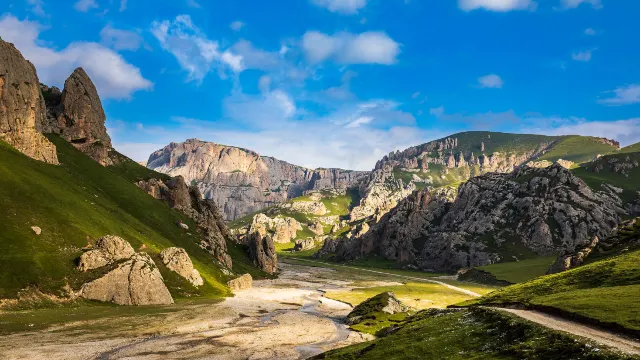
Tianjun Stone Forest is located in the Delingha area of ​​Qinghai Province. The stone forest here is the same as the stone forest in Yunnan, which was formed in the karst landform during the Carboniferous period 350 million years ago. Tianjun Stone Forest is currently open to the public for free, and there are farmers around. Unfortunately, I didn't get yak milk to try it after asking around that day. There are a lot of pikas, and they will stick their heads out from time to time to observe the surrounding situation. The vultures in the sky are very big, and the clouds feel close and within reach~

Tianjun Stone Forest

user-avatar
_TI***41November 9, 2026
5.0
It was a bit windy that day, but this place is outof this world. And the train trip from Xinning makes it even more unique. The train rides along the shores of Qinghei Lake. Vast lands with mostly grass, lambs and yaks. The high mountains always in the background. Chaka Salt Lake is visually very impressive, a dream for any photographer. It is never really clear if it is salt or if you are lost in an Arctic region. The whole place is like a mirage. In retrospect, the whole trip feels like a day dream.

Chaka Salt Lake

user-avatar
M46***79November 10, 2026
5.0
It was a truly spectacular sight. We happened to be there during the snowfall, witnessing the Rainbow Mountains in their seven colors. Arriving at Exit 4 at sunset, the colors were absolutely breathtaking. As we left on the park shuttle, the sky was still a gradient of pink and blue; I felt incredibly happy.

Zhangye Colorful Danxia Scenic Spot

user-avatar
M40***12November 9, 2026
5.0
Stepping into this space brimming with Tibetan culture, I was speechless at the beauty of the Thangka paintings covering the walls—the colors were simply breathtaking! Taking the time to appreciate the religious aesthetics hidden in the details, the landscapes, figures, and various patterns, it was truly visually stunning! I highly recommend that everyone visiting Xining make a point of visiting this place.

Qinghai Tibetan Culture Museum

user-avatar
M26***77November 2, 2026
5.0
I hadn't originally planned to go, but I spent an extra day in Xining. Aside from being far from the city center, it was quite nice. I took bus 909 directly from Xining Station. At the entrance, I shared a guided tour with other tourists; there were quite a few unlicensed guides in the square. Their explanations were alright. At the butter sculpture museum, I encountered a little white cat and learned how to identify Master Tsongkhapa.

Kumbum Monastery

user-avatar
Anonymous userNovember 10, 2026
5.0
Under the scorching sun of the Gobi Desert, the scenic area is quite far away. The electric shuttle bus service is convenient and saves energy, allowing you to travel without being exposed to the blazing sun. It makes it much easier to visit the pass with the elderly and children. The vehicles run smoothly and effectively save energy, making it a very practical service.

Jiayuguan Guancheng

user-avatar
薛定谔的鳄梨October 18, 2026
5.0
Buy tickets for the 9:00 AM bus from Xining Bus Station to Qinghai Lake. You can buy tickets through the Xining Bus Station's WeChat mini-program! The journey takes about 2.5 hours, with a stop at a service station for restroom use. Arrive around 11:30 AM. (There will be grasslands along the way; you can see them from the window.) The tour guide will assist with buying tickets on the bus, or you can buy them at the ticket center. Upon arrival, take a fast cruise to the island, then either the cruise ship to the island or a small train or bus to the lake. On the island, you can play in the sand and see seagulls and yaks. Plan your itinerary carefully; less than 4 hours for sightseeing will feel rushed.

Qinghai Lake Erlangjian Scenic Area

user-avatar
M33***80November 8, 2026
4.0
The park is quite large, but you can walk around the whole thing. Those who aren't very fit can take the shuttle bus. The animals have plenty of space to roam, and I didn't feel any sense of confinement among them; they all seemed to be living naturally. However, the park's signage is really poor. I hope they can improve it to make it clearer and more concise.

Qinghai-Tibet Plateau Wildlife Park

user-avatar
E43***69November 3, 2026
5.0
If you have the time and resources, I highly recommend the in-depth tour! Walking through the canyon is a completely different experience! Overall Itinerary: After the park shuttle bus arrives at the end, explore the three viewing platforms on your own. Return to the starting point for the in-depth tour. Take an off-road truck, then transfer to a minibus, ride a camel, then a camel-drawn cart, hike through the canyon, and finally (either the "One Line Sky" or "Lingzhi Valley") to the summit. After reaching the summit, take the park shuttle bus back to the main entrance to exit the park. Riding camels is fun and doesn't smell bad, with a gentle swaying motion. The camel carts clang and rattle, creating a unique atmosphere in the canyon. I even recorded an audio clip of the camel bells. I chose the Lingzhi Valley route, which was beautiful all the way. The final long staircase didn't seem difficult at all 🤔, but it might be tiring for older people, children, or those who aren't used to exercise. I heard you can do both routes, but I was carrying valuables, so I didn't climb the "One Line Sky" – I didn't want to risk damaging them 🫨 By the way, I went during the off-season, and I was the only one on the in-depth tour. The staff in the canyon were very friendly and greeted me politely as I passed by.

Pingshan Lake Grand Canyon

Trip Moments in Tianjun

Popular cities near Tianjun

Frequently asked questions

How can I contact Trip.com customer support?

Get help anytime, anywhere within 30 secondsContact customer support

Change and cancellation policies vary by attractions and tours. Please check the product details page for more information.

Ticket prices may vary between weekdays and weekends, as well as during peak and off-peak seasons. When booking with Trip.com, you can also use Trip Coins to get extra savings. For more tips on booking discounted tickets, please visit Trip.com for the latest information.