Wuwei

Things to do in Wuwei

Search attractions or local attractions & tours
Search

Explore top experiences

Top 10 attractions in Wuwei

View all Attractions
Slender West Lake
2026 Global 50 - Spring Outings

Slender West Lake

8.5
4.7/5
83.7k reviews

"In March when flowers bloom, head to Yangzhou." When visiting Yangzhou in spring, a trip to Slender West Lake is a must. This narrow stretch of waterway offers the perfect blend of natural beauty and cultural heritage. Stroll along the banks to admire scenic views, explore historic pavilions adorned with classical poetry and paintings, or cruise the lake by boat to experience the leisurely pleasure Emperor Qianlong once enjoyed during his royal visits. The attraction is quite expansive, stretching from the Great Rainbow Bridge in the southeast all the way north along the lake to Guanyin Mountain, passing dozens of attractions along the way. There are four main entrances (east, south, west, and north), with most visitors starting their tour at the south entrance on Great Rainbow Bridge Road. This renowned lakeside garden boasts breathtaking natural views. In spring, the area is shaded by lush willows and adorned with camellias, pomegranates, azaleas, and peach blossoms, attracting visitors from across the country to enjoy the seasonal blooms. For centuries, countless literati have lingered here, composing poetry and creating paintings that left behind numerous artistic treasures and stories. The site also features many landscape structures ingeniously designed to harmonize with its natural surroundings. The Five Pavilion Bridge in Shugang Slender West Lake Scenic Area is the iconic attraction with over 200 years of history. Featuring five wind pavilions atop, each of the bridge's fifteen arches cradles a moon during full moon nights. Another renowned attraction is the Twenty-Four Bridge, inspired by Du Mu's poetic line "Where is the jade-like beauty teaching flute-playing on the moonlit Twenty-Four Bridge?" While the original bridge no longer exists, visitors can admire its reconstructed version today. This was also a stop during Emperor Qianlong's southern tours in the Qing Dynasty. Architectural views like the Great Rainbow Bridge, Slender West Lake Scenic Area's Fishing Terrace, White Pagoda, and the Twenty-Four Bridges' Xichun Platform all bear inseparable historical anecdotes connected to Emperor Qianlong. During summer nights, the illuminated pavilions and moonlit reflections on the lake create a magical atmosphere. The nightlife experience here is entirely boat-based, offering a relaxing way to beat the summer heat while enjoying gentle lake breezes.

China · Yangzhou
Taoyangli Historical and Cultural District
No. 1 of Family-friendly Attractions in Jiangxi

Taoyangli Historical and Cultural District

8.4
4.6/5
11.9k reviews

Taoyangli Historical and Cultural District is located in the heart of Jingdezhen's old town, a historic neighborhood that grew around the ruins of the imperial kiln from the Ming and Qing dynasties. The old saying "Taoyang thirteen li, with tens of thousands of households" refers to this area. The imperial porcelain used by the royal families of the Ming and Qing dynasties was exclusively produced by the imperial kiln here, while rejected tribute items were shattered and buried on-site. The layers of underground porcelain fragments share the same origin as the collections in the Palace Museum, making this place often referred to as the key to understanding the porcelain capital. The core attractions of the district are concentrated around the ruins of the Taoyangli Historical and Cultural District and the imperial kiln museum. The ruins of the Taoyangli Historical and Cultural District have now been transformed into an archaeological site park, preserving relics such as kilns and workshops. The Longzhu pavilion, perched atop Zhushan hill, has been the iconic structure of the imperial kiln since the Ming dynasty and later became the symbol of Jingdezhen. The Zhushan hill beneath it was formed by layers of discarded porcelain fragments from imperial kilns throughout history. Nearby, the imperial kiln museum draws inspiration from traditional egg-shaped wood-fired kilns, featuring multiple brick arches arranged in a staggered layout. Many exhibits in the museum are restored from porcelain fragments unearthed at the site, including the Ming dynasty blue-and-white dragon jar—a signature exhibit pieced together from tons of discarded dragon jar fragments. Adjacent to the museum, the Xu family kiln, an old wood-fired kiln, still operates periodic firings. During kiln openings, the gate is wide open, allowing visitors to watch artisans retrieve freshly fired porcelain from saggars. The district also features winding alleyways lined with kiln-brick residences, guild halls, porcelain shops, and remnants of modern ceramic industry. The restored South goods street and Red shop street now host old teahouses, taverns, music bars, and craft workshops where you can observe traditional processes like clay throwing and porcelain painting, with some workshops offering hands-on experiences. It's recommended to set aside half a day for the visit—start with the kiln site and museum, then meander through the streets around Zhongshan north road and Longgang lane, where many historic courtyard houses hidden in deep alleys await patient discovery.

China · Jingdezhen
Nanjing Hongshan Forest Zoo
2026 Global 100 - Family-friendly Attractions

Nanjing Hongshan Forest Zoo

8.3
4.7/5
25k reviews

Nanjing Hongshan Forest Zoo is located in the north of Nanjing, built along three hills: Dahongshan, Fangniushan, and Xiaohongshan. With a green coverage rate of over 85%, the rolling hills form a unique forest view. The zoo brings together rare wild animals from around the world and adopts an immersive multi-species mixed-housing model, allowing animals to naturally express their instincts in environments that simulate their native habitats. The nearly 30 venues in the park are divided into three major zones by hill. The Dàhóngshān zone is mainly home to fierce beasts and native species, including the Tiger Area, Bear Area, Chinese Felid House, Felid Planet, Wolf Area, Native Species Conservation Area, Meerkat House, Monkey Hill, and Giraffe House; the Fàngniúshān zone brings together the Koala House, Gaoligong Exhibition Area, Gondwana Exhibition Area, Asian Primate Area, Orangutan House, and Hippo House; the Xiǎohóngshān zone is mainly composed of bird exhibition areas, including the Tropical Bird House, Hornbill Garden, Muntjac and Reeve's Muntjac Slope, Parrot House, Pheasant Garden, and Rare Bird Garden. Among them, the Gondwana Exhibition Area is themed on the ancient continent of Gondwana, presenting the ecological landscape of species from the Southern Hemisphere; the Gaoligong Exhibition Area focuses on the biodiversity of Gaoligong Mountain in Yunnan; and the Native Species Conservation Area is dedicated to the conservation and wild release of China's native wildlife, making it one of the park's signature exhibition areas. Both the Koala House and the Giant Panda House are popular venues in the park. Nanjing Hongshan Forest Zoo was among the first domestic zoos to cancel animal performances and stop visitor feeding activities. With the core philosophy of "everything for the animals," it focuses on ecological renovation of venues and improvement of animal welfare. The park also undertakes the rescue and rehabilitation of wildlife in the Jiangsu region, rescuing a large number of injured and stray wild animals every year.

China · Nanjing
Hangzhou Songcheng Show Park
No. 2 of Family-friendly Attractions in Zhejiang

Hangzhou Songcheng Show Park

8.3
4.7/5
38k reviews

Give me one day, and I'll give you a thousand years! Hangzhou Songcheng Show Park is an attraction that transcends time and defies imagination, with twenty theaters and hundreds of shows. You can't see it all in one day, but there's always something for you. The attraction features crisscrossing streets like East Street, West Street, North Street, Shijing Street, Rainbow Bridge, and Fenghua Lane, presenting a bustling Song Dynasty atmosphere with pervasive Chinese and ancient styles. Every step offers a new view at Punk Street, Song City Gate, Sky Tree, Time Tree, Love Tree, Cloud Ladder Walk, and Performance Square, creating a time-travel experience. Boating on Song River feels like wandering through a painting, immersing in the rich Jiangnan charm. Revel at the Forest Theater or harmonize with the wind at the Cliff Theater. The main show, Hangzhou Songcheng Show Park, is a must-see performance in one's lifetime. Featuring scenes of ancient battles and beautiful dancers, it is ranked alongside Las Vegas's "O" show and the Moulin Rouge in Paris as one of the "world's three famous shows." Performances like "Lijiang love song", "Captain Cook", "Cliff concert", "Tossing the embroidered ball", "Guozhuang dance" and "Flash mob" showcase diverse styles. Large-scale experiential projects such as the light and shadow museum, "Liaozhai haunted house", "Virtual space" and "Dream space" offer thrilling adventures. Immersive plays like "The earthquake", "Battle of Triangle Hill" and "Azaleas" depict earth-shattering scenes and war-torn landscapes, providing a soul-stirring red-themed journey. Hangzhou Songcheng Show Park is a family-friendly destination for creating cherished memories. Children can explore the fairy valley and take on aerial adventures to unleash their nature. Seniors can stroll through rows of workshops to rediscover childhood memories. The attraction is entirely traveler-centric, with covered walkways connecting major theaters and attractions to provide comfortable experiences in all weather conditions. It is a photogenic check-in destination integrating travel, performances, and vacation. The Romance Hotel adjacent to the attraction offers you a convenient vacation experience. Purchase the attraction and hotel package for multiple entries and more discounts. Hangzhou Songcheng Show Park, give me one day, and I'll give you a thousand years!

China · Hangzhou
Nanjing Museum
No. 2 of Family-friendly Attractions in Jiangsu

Nanjing Museum

8.2
4.7/5
4.1k reviews

The Nanjing Museum is located at the southern foot of Purple Mountain, on the north side of Zhongshan Gate. Here, you can see ancient artifacts such as the jade burial suit sewn with silver thread, appreciate painting and calligraphy art, and even take a stroll down old streets for a journey through time. Museum historyThe museum was established in 1933 and completed in 1948, with its main hall modeled after the mountain gate of Dule Temple in Tianjin. After expansion in 2009 and opening to the public on November 6, 2013, it became the second largest museum in China after the National Museum of China, featuring six halls: the History Hall, Special Exhibition Hall, Digital Hall, Art Hall, Republican Era Hall, and Intangible Cultural Heritage Hall. Museum layoutThe museum's main buildings are divided into two sections, left and right. After walking a short distance on the right side, you will reach the museum's old main hall, modeled after the Dule Temple. Behind the "Dule Temple" is the History Gallery, while the other five galleries are all on the left side. You can either tour from the five galleries on the left to the History Gallery on the right, or from the History Gallery to the five galleries on the left. It is recommended to visit the History Gallery first, because the special exhibition hall housing the "treasure of the museum" is located to the left of the History Gallery. You can follow the order of History Gallery - Special Exhibition Hall - Digital Gallery - Republican Era Gallery - Art Gallery - Intangible Cultural Heritage Gallery to tour the entire museum. History exhibition hallThe history museum displays cultural relics arranged in chronological order from ancient times to the Ming and Qing dynasties. Walking through it feels like strolling through five thousand years of Jiangsu's civilization. Highlights include: the jade burial suit sewn with silver thread, a wall built brick by brick during the Southern and Northern Dynasties with brick carvings faintly depicting the "Seven Sages of the Bamboo Grove" upon closer inspection, and more. Special exhibition hallThe "Splendors of the Prosperous Age" area of the special exhibition hall displays official kiln porcelain from the Qing Dynasty, the "Fine Clocks and Watches Exhibition" displays ancient Chinese timekeeping devices and Western clocks and watches, and "Approaching Buddhist Statues" features resplendent, exquisitely crafted Buddhist statues. As for the "treasure of the museum," the gilt Tibetan-style stupa from the early years of the Zhengtong reign of the Ming Dynasty (1436–1439 CE), a single exhibit occupies an entire room, and its sheer grandeur alone is stunning enough. This museum treasure was unearthed from the underground palace of the Hongjue Temple Pagoda on Niushou Mountain in Nanjing. On a square red sandstone base, four blue-and-white porcelain vases surround a golden stupa in the center, and in front of the stupa is a small gold coffin and silver outer coffin, upon which lies a golden reclining statue of Shakyamuni. Digital galleryThe digital pavilion uses modern technology to present ancient themes, with exhibits such as the animation "Picture Scroll of Scenes in the Southern Capital" (similar to the Along the River During the Qingming Festival in the China Pavilion at the World Expo). What is quite interesting is that there are many interactive games here, and you can touch the screen to play games set in ancient times. Art venueThe art museum displays sculptures, calligraphy, and paintings. The exhibited paintings by Fu Baoshi, which use Chinese ink painting techniques to depict Eastern European red-roofed buildings, squares, and sculptures, are quite distinctive. Republic of China galleryThe Republic of China Gallery has transformed the entire indoor space into a street scene from the Republic of China period. Trams are displayed on the street, and shops with Republic-era style line both sides, open for business and selling items that evoke nostalgia. At a general store, you can buy "mouse droppings" (also known as kumquat pills), a snack from childhood. The post office offers Nanjing Museum postmarks, and at the Librairie Avant-Garde upstairs, the staff wear period clothing; if you want to mail a postcard, the bookstore also sells stamps. Intangible cultural heritage museumThe intangible cultural heritage museum displays folk handicrafts such as woodblock prints, paper cuttings, gold foil, and festive lanterns. Here you can enjoy performances such as Kunqu opera, Baiju, and Pingtan. Reference performance times: 14:00-16:00.In the small theater, you can watch 3D films for free, and the film is about 20 minutes long.The small theater in the intangible cultural heritage museum will also be open to the public on weekends and public holidays at 19:00 if there are traditional Chinese opera performances, and tickets are required.

China · Nanjing
Tai Hu Yuantouzhu Scenic Spot
2026 Global 50 - Spring Outings

Tai Hu Yuantouzhu Scenic Spot

8.1
4.6/5
44.2k reviews

Tai Hu Yuantouzhu Scenic Spot is a peninsula in northern Lake Tai, named for its resemblance to a turtle raising its head. Here you can explore expansive garden complexes, cruise across Lake Tai's misty waters, discover hidden wonders on Taihu Fairy Island, or admire cherry blossoms in spring - truly experiencing why it's called "the finest spot of Lake Tai".Tai Hu Yuantouzhu Scenic Spotthe artistic conception. Every spring, the spectacular cherry blossom display becomes a major attraction here, complemented by the lively cherry blossom festival. Tai Hu Yuantouzhu Scenic Spot in Wuxi is surrounded by water on three sides, offering both the natural beauty of vast lakes dotted with sailing boats and the idyllic charm of rural landscapes with small bridges and flowing streams. It showcases the most breathtaking scenery of Taihu Lake. Taihu Fairy Island isTai Hu Yuantouzhu Scenic SpotMust-experience highlights include the Taoist celestial palace and grotto statues blending Taoist and Buddhist elements. Ascending Luding Mountain on the peninsula offers panoramic views of the lakeside greenery, with graceful boat silhouettes visible on sunny days, showcasing Taihu Lake's vast beauty. As a premier cherry blossom destination, Tai Hu Yuantouzhu Scenic Spot offers two unique experiences: first, a "land-water-air" panoramic viewing approach, and second, enchanting night blossoms illuminated by artistic lighting. The early cherry blossoms here typically bloom in early March, featuring mostly single or semi-double petals. Blossoms are categorized by season - early varieties last about one week from first bloom to petal fall, while late varieties bloom for 7–10 days. Temperature variations create 5–12 day gaps between these phases, when hybrid varieties flourish. The iconic Somei Yoshino cherries usually reach peak bloom in mid-to-late March (optimal viewing period), though exact timing depends on weather conditions - cold snaps may delay this floral spectacle. Summer is the perfect time to admire beautiful lotus blossoms. Tai Hu Yuantouzhu Scenic Spot in Wuxi features numerous historical sites and private gardens built by former elites, including Hengyun Villa with its "Finest Spot of Tai Lake" archway and Changchun Bridge, as well as Wuxi's ancient temples.Guangfu TempleMoreover, savoring the traces left by literati and artists throughout history—such as inscriptions, calligraphy, and paintings scattered throughout the site—adds another layer to your visit.Tai Hu Yuantouzhu Scenic SpotOne of the great pleasures here. If time permits, don't miss Wanlang Bridge - it's the perfect spot to catch a stunning sunset over Lake Tai. The Chongshan Gate (main entrance, located in the southeast of the attraction) at Tai Hu Yuantouzhu Scenic Spot in Wuxi serves as both entrance and exit, while the Dushan Gate (northern section) is exit-only. The attraction primarily consists of Yuantouzhu Peninsula and Taihu Fairy Island.Zhongdu MountainIt consists of multiple attractions, which typically take a full day to explore. For most visitors, we recommend the highlights tour:Cruise pier- Taihu Fairy Island - The Finest Scenery of Taihu Lake - Hengyun Villa -Spring Tides at Turtle Head-Guangfu Temple- Luding Hill.

China · Wuxi
Hanshan Temple
No. 7 of Best Things to Do in Jiangsu

Hanshan Temple

8.1
4.6/5
27.2k reviews

Hanshan Temple is located in the western suburbs of Suzhou and has a history of over 1,500 years. It gained worldwide fame through the famous line "Outside Gusu City, Hanshan Temple; midnight bell sounds reach the traveler's boat" from the Tang Dynasty poet Zhang Ji's poem "Mooring by Maple Bridge at Night." Every day, countless devotees come to the temple to strike the bell, offer incense, and pray for peace. Hanshan Temple primarily consists of structures such as the Mahavira Hall, bell tower, stele corridor, and scripture repository. The Mahavira Hall features a tall white marble Sumeru pedestal, atop which sits a gilded statue of Sakyamuni. Flanking the walls are 18 exquisitely crafted gilded iron arhat statues cast during the Chenghua era of the Ming Dynasty, relocated here from the sacred Buddhist site of Mount Wutai. In the stele corridor, visitors can see fragments of inscriptions by Wen Zhengming and Tang Yin—two of the "Four Great Talents of Jiangnan"—as well as poetic steles by notable figures like Yue Fei and Kang Youwei. Particularly iconic is the poetic stele "Mooring by Maple Bridge at Night," inscribed by the renowned late Qing scholar Yu Yue. The bell tower in the temple is the source of the "midnight bell sound," and the resonant, melodious chime is a symbol of Hanshan Temple. Every December 31st, Hanshan Temple holds a bell-ringing ceremony to ring in the new year, striking the bell 108 times to symbolize the dispelling of worries in the coming year. Although the current bell is no longer the one mentioned in Tang poetry but rather a relic from the late Qing dynasty, it is an enormous rarity that requires three people to embrace it fully.

China · Suzhou
Huizhou Ancient City
No. 1 of Family-friendly Attractions in Anhui

Huizhou Ancient City

8.1
4.2/5
2.7k reviews

The ancient city of Huizhou is located in Shexian County.LianjiangNorth Bank, originally built in the Qin Dynasty, became the seat of the ancient Huizhou Prefecture after the Tang Dynasty. Tang Xianzu's line, "My life's most cherished dream, yet I never dreamt of Huizhou," has captivated countless hearts. The city gates, archways, and the unique prefectural government offices still allow visitors to experience the ancient charm.Huizhou PrefectureThe legacy of the past. There are several roads leading into the ancient city, and it doesn't really matter which road you choose. The ancient city isn't very big; you can visit all the main attractions by walking around. It's near Renhe Tower in the north.Huiyuan GardenTicket offices are available at both the Nanqiao Tower and the Duojingyuan visitors Center outside the southern barbican. Among the several city gates of Huizhou Ancient City, the Nanqiao Tower is quite unique, with 13 pairs of pillars forming the gate frame, arranged in a row inside the gate opening to support the tower. It is said that this "row of pillars" is the authentic city gate style of the Northern Song Dynasty. The Xu Guo Stone Archway, located inside the East Watchtower (Yanghe Gate), is the essence of the entire ancient city, built in the twelfth year of the Wanli reign of the Ming Dynasty (1584 AD). The archway has eight pillars, with a cross-section shaped like the Chinese character "口" (kou), creating a three-dimensional structure. Both the four exterior and four interior sides can be viewed. Twelve stone lions guard the base of the pillars, and the upper part features exquisite stone carvings. Currently, this is the only ancient archway of its kind, highlighting the distinguished status of its owner, Xu Guo, a veteran of three reigns. Many attractions in the ancient city radiate from the Xu Guo Stone Archway. To the west, you can visit the Huizhou Prefectural Government Office, a modern reconstruction modeled after the Ming Dynasty government office; to the east, you can visit the memorial hall of Tao Xingzhi, a native of Shexian County; and to the north, you can visit...Huiyuan Garden,butHuiyuan GardenThe area is filled with antique-style buildings. Doushan Street, located in the northeast of the ancient city, brings together Hui-style ancient residences, archways, and ancient wells. Strolling along the ancient street paved with bluestone slabs and cobblestones is a truly delightful experience. Leaving the ancient city from the barbican, cross the "Taiping Bridge," a stone bridge built during the Hongzhi era of the Ming Dynasty, and you will arrive at...LianjiangSouth bank, here isTaibai TowerHe Xin'an Stele Garden.Taibai TowerBuilt to commemorate Li Bai, the Xin'an Stele Garden houses the Ming Dynasty calligraphic works *Yu Qingzhai Tie* and *Qingjiantang Tie*, which are worth visiting for calligraphy visitors. Along...LianjiangHeading east, the Changqing Temple Pagoda, built in the second year of the Xuanhe era of the Northern Song Dynasty (1119 AD), is rarely visited. However, it offers a truly unexpected surprise to visitors who get close: each layer of the outer pagoda has colorful murals, which have become blurred over the years and cannot be seen from a distance. The last attraction, Yuliang Scenic attraction, is located 2 kilometers east of the ancient city. The entrance is at...LianjiangThe north bank is the only way to get back to the north bank after visiting Changqing Temple Pagoda; if you're coming from the south bank, you'll need to cross Taiping Bridge again.Yuliang DamYou have to go around to Ziyang Bridge to cross the river. The main attractions of Yuliang attraction areLianjiangMing DynastyYuliang DamWhether or not you can walk up to the dam depends on...LianjiangThe water level is high; if it floods the ancient dam, it becomes impossible to climb it. When you reach the dam, remember to look for the small stone slabs, called "ingot locks," embedded horizontally between the long stone slabs; these help stabilize the dam. Also, look for the sluice gate in the center of the dam for drainage. If you'd like to take a ride on one of the locals' small boats along the shore...LianjiangThe price is negotiable. Residents still live on Yuliang Old Street on the north bank, and as always, they hang their bedsheets to dry in front of the ancient buildings; time seems to stand still here. The ancient city is lit up at night, offering stunning night views. (The text abruptly shifts to a description of the ancient city.)Tao Xingzhi Memorial HallThe nearby Shexian Jiuyue Huizhou Inn (Huizhou Ancient City Branch) offers accommodation, and there are more options outside the ancient city. Restaurants are concentrated in...Huiyuan GardenIn addition, local specialties include Huizhou Yipin Guo (a type of hot pot), a large pot layered with chicken, duck, meat, and fried tofu, garnished with egg dumplings, which is very tempting. Other dishes worth trying include hairy tofu and stinky mandarin fish. If you come across a vendor selling preserved vegetable pancakes, you can buy some to eat while you stroll around; they are very delicious.

China · She County

Experiences you can't miss in Wuwei

Featured Culture & history in Wuwei

View all Culture & history

Featured Day tours in Wuwei

View all Day tours
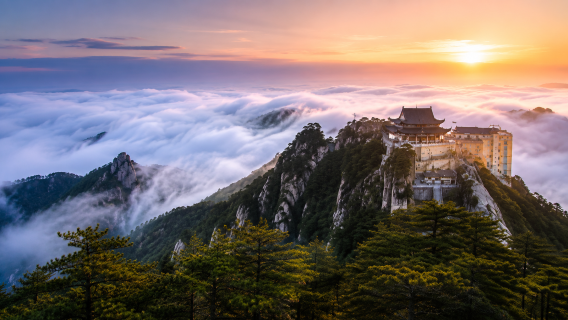
Private guided day tour to Jiuhua Mountain from Chizhou, Anhui
󱌍
Duration: 3.3 hrs
English
Free cancellation
Instant confirmation
FromCAD 293.26
[Tracing Jiuhua Mountain] Private Day Tour to Jiuhua Mountain from Chizhou, Anhui with Private Car & Tickets Included
󱌍
FromCAD 202.97
[Journey to Mount Jiuhua] Anhui Chizhou Private 1-Day Tour with Transfer & Tickets
󱌍
Duration: 4.2 hrs
English
Free cancellation
Instant confirmation
FromCAD 202.97

More things to do

Wuwei Today's weatherFoggy 3-13℃
Wuwei weather for the next 2 days11/9: 5-14℃, 11/10: 8-18℃

Free things to do in Wuwei

What travellers say about Wuwei

user-avatar
黄海大智若愚November 6, 2026
5.0
A stretch of clear water connects scenic spots such as the Long Causeway with its willow-lined banks, Xu Garden, Little Golden Mountain, Five Pavilion Bridge, White Pagoda, and Twenty-Four Bridges, offering ever-changing views like a long scroll painting of mountains and rivers. Driven by the saying "Fireworks in March descend on Yangzhou," I visited Slender West Lake for the second time.

Slender West Lake

user-avatar
M49***67November 8, 2026
5.0
It's a fun attraction, and although there's an entrance fee, it's definitely worth a visit. The museum inside is beautifully designed, and its artistic atmosphere blends perfectly with Jingdezhen. The pottery workshop is very interesting, and you can browse and buy some small items you like. The downside is that many alleys on the west side are locked by hotels, preventing visitors from venturing out and limiting access to hotel guests. This negatively impacts the experience. In the off-season, especially at night when it's deserted, you might even end up in a dead end, making the experience quite unpleasant. Ideally, the navigation should clearly indicate which areas are inaccessible and which entrances are open, preventing visitors from wasting time wandering through the alleys.

Taoyangli Historical and Cultural District

user-avatar
M46***49November 8, 2026
5.0
The animals at Hongshan Zoo were quite active. We first went to the African Song show, then to see the koalas, but the koala enclosure was too crowded 😥. Later in the trip, the kids got tired and weren't as enthusiastic, but overall it was still a good experience.

Nanjing Hongshan Forest Zoo

user-avatar
Anonymous userNovember 3, 2026
5.0
Watching "Romance of the Song Dynasty" is like traveling through a thousand years of time. The light of Liangzhu, the banquet dance of the Song Dynasty, the Yue Family Army's resistance against the Jin Dynasty, and the legend of Liang Shanbo and Zhu Yingtai and the White Snake unfold in succession. The sound, light, electricity and water curtain stage intertwine, creating a breathtaking experience. In just one hour, you can witness the splendor of Hangzhou from ancient times to the present. It is truly a "must-see performance in a lifetime".

Hangzhou Songcheng Show Park

user-avatar
M27***51November 7, 2026
5.0
Wunvzhou is truly a treasure trove of a scenic area. Its iconic buildings are truly breathtaking, and the iron flower performance is also very beautiful. The carnival is especially worth experiencing, which is why I came here. Of course, I also saw the "Encounter Wuyuan" performance, which was very impressive. It was definitely worth the trip.

Wunvzhou Resort

user-avatar
M26***34November 7, 2026
5.0
I give a five-star review to Ms. Dong Ling, the guide at the Nanjing Museum. Ms. Dong was very well-prepared, using hundreds of color pictures and props, and her explanations were both informative and engaging. She explained all the museum's prized artifacts and 195 cultural relics on display in Halls 1 through 6, as well as the special exhibition halls. I learned a great deal about the knowledge and stories behind these artifacts.

Nanjing Museum

user-avatar
136***74October 21, 2026
5.0
Thank you, Ms. Yu, for your professional, meticulous, and engaging lecture. In just two hours, we learned about the history of porcelain development from the Song, Yuan, Ming, and Qing dynasties, as well as the Republic of China and the founding of the People's Republic of China, and appreciated exquisite porcelain pieces from each dynasty. Furthermore, Ms. Yu used her extensive professional knowledge to introduce various methods for identifying the age, type, use, style, and quality of porcelain, opening a new world for us. She even thoughtfully reminded us of the precautions for taking photos with the Silent Buddha. Her lecture was truly sincere and packed with valuable information. This trip was incredibly rewarding and I'm full of energy! 🥰

Jingdezhen China Ceramics Museum

user-avatar
lih***ghNovember 5, 2026
5.0
Positive review. The only downside is the inconvenient transportation, especially after the event when crowds surge out. The free shuttle bus took us to a dark, dingy place, and getting a taxi was extremely difficult.

Tai Hu Yuantouzhu Scenic Spot

user-avatar
天道循环November 2, 2026
5.0
Thirty years later, when I returned to Hanshan Temple, the scenery was completely different. I had to take a shuttle bus from the parking lot to the mountain gate. It was still very crowded, but too many modern elements had ruined the original atmosphere. You can't have your cake and eat it too, alas.

Hanshan Temple

user-avatar
田园生香菜August 14, 2026
5.0
The Huizhou Prefectural Government Office truly lives up to its reputation as the core government office of ancient Huizhou. Restored to its original site according to Ming Dynasty regulations, its central axis layout is orderly and solemn, with the ceremonial gate, main hall, and second hall unfolding in sequence, showcasing the grandeur of an ancient government office. The exquisite Hui-style wooden structure and intricate carvings add to its charm. Visitors can also watch live court performances, gaining a direct experience of the ancient government office system. The office exudes a rich historical atmosphere, making it more than just a place for taking photos; it's a perfect opportunity to quietly appreciate the cultural heritage of Huizhou and a must-see cultural highlight in the ancient city of Huizhou.

Huizhou Ancient City

Trip Moments in Wuwei

Popular cities near Wuwei

Frequently asked questions

When choosing a tour, start with how much time you have and the kind of experience you're looking for. Trending options right now include Chizhou Jiuhua Mountain sea of clouds + Pingtian Lake 1-day tour with private charter and bilingual service in Anhui, Multi-Location Pickup | Private 1-Day Charter Tour to Jiuhua Mountain | Entry Tickets & Shuttle Bus Service including | Solo Travelers Welcome, and Private guided day tour to Jiuhua Mountain from Chizhou, Anhui. Check the real-time availability and itinerary before you book.

As of November 9, 2026, the reference price for day tours and activities in Wuwei is around CAD 126.53 – CAD 516.65. Rates vary by duration, group size, transport, tickets, meals, and any special admission requirements. Before you book, please confirm the billing currency and whether the price is quoted per person or per group.

Get help anytime, anywhere within 30 secondsContact customer support

Change and cancellation policies vary by attractions and tours. Please check the product details page for more information.

Ticket prices may vary between weekdays and weekends, as well as during peak and off-peak seasons. When booking with Trip.com, you can also use Trip Coins to get extra savings. For more tips on booking discounted tickets, please visit Trip.com for the latest information.