Things to do in Yicheng
Explore top experiences
Top 10 attractions in Yicheng

Jinguo Museum
Located in Qucun Town, Quwo County, Jin State Museum is the first site museum in the province with Jin culture as its theme, built on the basis of the national key cultural relic protection unit "Qucun-Tianma Site". It was officially opened to the public on National Day in 2014. It is the first large-scale site museum in Shanxi Province that integrates cultural relic collection, protection, research and cultural relic display, and is a platform that fully displays the historical and cultural features of Jin State. The Jin State Museum takes Jin culture as its theme and has created three highlights: the history of Jin State, the history of excavation, and the site exhibition. The History and Culture Exhibition Hall uses the history of Jin State as a clue and, through a large number of precious cultural relics unearthed from the tombs of Jin Hou, shows a series of major events that have influenced the course of ancient Chinese history, including the enfeoffment of Tang by Shu Yu, the change of Tang to Jin by Xie Fu, the loyalty of Wen Hou to the king, the expansion of territory by Xiangong, the hegemony of Wen Gong, the dictatorship of the six nobles, and the division of Jin by the three families. The Site Excavation History Exhibition Hall shows the hardships, extensive reading of geography, and search for evidence by three generations of archaeologists from the School of Archaeology and Museum Studies of Peking University and the Shanxi Provincial Institute of Archaeology, as well as a series of major achievements in archaeological excavation; the Site Exhibition Hall adopts a method of one site and one display method, focusing on the four groups of tombs of Jin Hou and his wives and three chariot pits, presenting the audience with a panoramic picture of the tombs of kings and princes of the state during the Western Zhou period. The "Qucun-Tianma Site" where the Jin State Museum is located is large in scale, starting from Tianma Village in Yicheng County in the east, Qucun Town in Quwo County in the west, starting from the bank of Fu River in the south, and reaching Qiaoshan slope in the north. The site is 3,800 meters long from east to west, 2,800 meters wide from north to south, and covers an area of nearly 11 square kilometers. After more than ten consecutive large-scale explorations and excavations by Peking University and the Shanxi Institute of Archaeology, a total area of 12,000 square meters was revealed, and more than 1,000 tombs were excavated, including more than 800 tombs from the Zhou Dynasty. Especially in the core area of the site, nine groups of 19 tombs of early Jin monarchs and their wives, ten chariot pits, and more than 12,000 precious cultural relics of various types were discovered. The excavation results provided support for the solution of the chronicle of the Western Zhou kings in my country's "Xia, Shang and Zhou Chronology Project". It was listed as one of the top ten archaeological discoveries in China in 1992 and 1993, and was rated as one of the 100 major archaeological discoveries in China in the 20th century in 2001.Quwo · 13.6 km from Yicheng

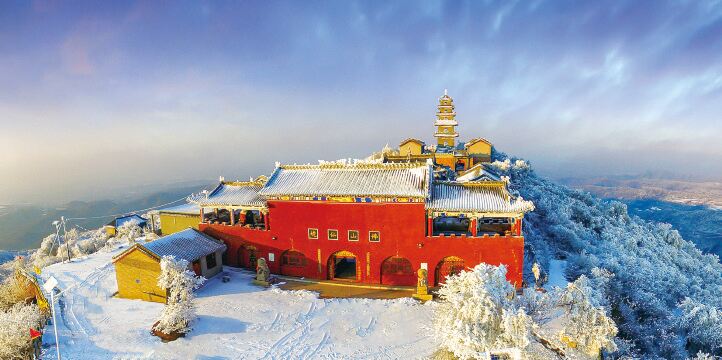
Mian Mountain
Yicheng · 6.3 km from downtown


Emperor Qinshihuang's Mausoleum Site Museum
Emperor Qinshihuang's Mausoleum Site Museum, also known as the Terracotta Army, is located about 1.5 kilometers east of the Mausoleum of the First Qin Emperor and forms part of the extensive necropolis. There were more than a thousand terracotta soldiers unearthed here, each with a different facial expression. Standing before the massive underground army, you will feel the extraordinary might of the Qin Emperor that enabled him to unify six warring states two thousand years ago. The Qin Emperor Ying Zheng began building the mausoleum for himself at the age of 13. Nearly 720000 men and 38 years were required to complete this vast project.China · Xi'an

Nanfan Stone Memorial Archway
Jiang County · 17.4 km from Yicheng

Quwoxian Chunqiu Jin Guocheng Sceneic Area
The Spring and Autumn Jin State City, located in the scenic tourist area of the Huihe River in Shicun Town, Quwo County, is one of the key cultural industry projects of the provincial government and an important part of the county's "six districts, four parks, one city and one stadium" overall tourism space layout. The Attraction covers an area of about 800 acres. It aims to rescue, protect, collect, study and display Jin culture, and aims to relax, sightsee and perceive the Spring and Autumn Jin culture. It makes full use of the terrain and plans to display the architecture, film and television city, history, residence, food and folk art of the Three Jins near the water. The Attraction is mainly divided into four major sections: the Spring and Autumn Jin State Film and Television Exhibition Hall, the Ming and Qing Dynasty Royal Palace, the Snack Street, and the Special Amusement Park. It is a comprehensive tourist Attraction integrating the display of Jin State culture, the promotion of the Huihe River spirit, the experience of folk customs in southern Shanxi, ecological agricultural sightseeing, leisure culture and entertainment.Quwo · 17 km from Yicheng

Longmen Grottoes
One of the four major grottoes of China and a UNESCO World Heritage Site, the Longmen Grottoes are a trove of 1000 years of Buddhist art treasures. Bounded by the Yi River, the caverns are divided into two sections at East Hill and West Hill. The caverns at East Hill contain mostly Tang dynasty (618-907) works, while the caverns at West Hill were cut out during the Northern, Sui, and Tang dynasties and contain the carvings that are most representative of the site. The Buddha and bodhisattva sculptures that inhabit the caverns are carved into an endless variety of poses and expressions of mercy and kindness, while the caves themselves lend a stately and dignified atmosphere. The artistry of these sculptures is truly a priceless inheritance of Buddhist art.China · Luoyang

Millennium City Park
Millennium City Park is located by the Longting Lake in Kaifeng, a large-scale historical and cultural theme park that faithfully recreates the Northern Song Dynasty's capital based on the famous painting "Along the River During the Qingming Festival" by artist Zhang Zeduan, following the original layout at a 1:1 scale. The park is divided into two sections by the Shuangting Bridge: the southern area recreates the bustling urban life of Bianjing, with taverns, teahouses, pawnshops, and artisan workshops lining the streets, where peddlers with shoulder poles and shouting shop assistants move about; while the northern area features imperial gardens, with lakeside halls and quadrangular courtyards standing by the water. Staff and vendors throughout the park wear Song-style attire, accompanied by ancient music and the rhythmic sounds of bells and drums, creating the illusion of "stepping into a painting and traveling back a thousand years in a single day." The architecture here offers visually striking highlights: the Rainbow Bridge spanning the Bian River replicates the famous bridge from ancient paintings, arching like a rainbow—watching grain barges pass beneath recreates the painting's ambiance. Fuyun Pavilion towers above all other structures with its crimson facade and golden-roofed eaves, offering panoramic garden views. The reconstructed Shangshan Gate mirrors Kaifeng's Northern Song dynasty city gates, standing majestic with resplendent paintings as the garden's most imposing structure. Waterside pavilions like Shuixin Xie, Double Pavilion Bridge, and Nine Dragons Bridge dot the emerald waters in picturesque harmony. The daytime highlight is the scattered live performances throughout the park: "Judge Bao inspecting the Bian River grain transport" unfolds on the water by Rainbow Bridge, "Squire Wang's daughter seeking a husband" brings the embroidered ball tossing matchmaking to the streets, and "Yue Fei unhorsing Prince Xiao Liang" stirs up dust with galloping hooves in the drill ground. Folk performances like cockfighting, stilt walking, cuju (ancient football), and pan drumming are interspersed throughout. Families with children can visit Fun Garden and Great Song Games to try archery, dart throwing, rope climbing, and hoop diving—experiencing every Song dynasty game from a thousand years ago—or dress in period costumes at Square Courtyard to take mock imperial exams. Street-side workshops showcase folk crafts like Bian embroidery, Zhuxian Town woodblock prints, official kiln porcelain, and dough figurines, where visitors can watch artisans at work. The park takes on a different face after nightfall: red lanterns light up one after another, and the streets are ablaze with lights, making it seem like a completely different place from daytime. The large-scale water show "Northern Song Dynasty: Splendid Dreams of Dongjing" is performed on Jinglong Lake. The entire show is connected by eight classic Song Dynasty poems and a scroll of "Along the River During the Qingming Festival," transporting the audience back to Dongjing of the Northern Song Dynasty a thousand years ago. The performance lasts approx. 70 minutes, and many travelers specifically reserve their itinerary for the evening to wait for this show. After the performance, you might as well climb the Shangshan Gate tower to overlook the park scenery and the night view of Kaifeng under the lights. Dining in the park is also convenient: the snack street and night market around the Dongjing food area gather Kaifeng snacks like soup dumplings and mutton pancake, perfect for eating while strolling; for a proper sit-down meal, head to Sunyang Restaurant, a recreation of the "main shop" depicted in paintings, and try traditional Henan dishes such as soup dumplings and carp with noodles.China · Kaifeng

Huaqing Palace
Huaqing Palace attraction is located 30 km east of Xi'an, adjacent to the Terracotta Warriors. Renowned for its timeless hot spring resources and numerous historical events, it has become an iconic cultural tourism attraction of Tang Dynasty palaces in China. Palace scenic spots Huaqing Palace boasts a long history, serving as an imperial retreat for emperors from the Zhou, Qin, Han, Sui, and Tang dynasties. The palace features cultural zones like the Tang Imperial Hot Spring Relics Museum, the Xi'an Incident site—Five-Room Hall, Nine Dragon Lake and Lotus Lake scenic areas, and the Tang Pear Garden Museum. Notable architectural complexes include Feishuang Hall, Wanshou Hall, Changsheng Hall, Huanyuan Garden, and Yuwang Hall. The stele of "hot spring ode" Mount Li hot springs, developed early and favored by emperors throughout history, enjoy the reputation of being "the imperial hot springs under heaven." As far back as the Yangshao culture period 6,000 years ago, the ancient Jiangzhai people began utilizing these springs. With their profound cultural heritage spanning millennia, Mount Li hot springs represent an indispensable part of Chinese historical culture. The stele of hot spring ode in the attraction stands 154 cm tall, 72 cm wide, and 19 cm thick, featuring a coiled dragon design and a trapezoidal base. Engraved by Yuan Chang, the governor of Yongzhou during the Northern Wei Dynasty, the inscription reads, "The hot spring is nature's prescription and the primordial healer of the universe. People from all nations and those suffering from ailments come with provisions to seek relief in its waters." This stele is the earliest surviving written artifact at Huaqing Palace. Tang Imperial Hot Spring Relics Museum This is the site of the bathing pool described in the "Song of Everlasting Sorrow" where Yang Guifei emerged from her bath. After the An Lushan Rebellion, little remained of the original structure. In 1982, while constructing the "Guifei Pavilion," the Lintong County Government accidentally discovered the ruins of a Tang Dynasty bathing pool. After excavation and restoration, the Huaqing Palace imperial hot spring ruins museum was established. This small yet exquisitely designed pool measures 3.6 meters east-west and 2.9 meters north-south, with an oval-like shape. The pool walls are entirely built with bluestone slabs, featuring a two-tiered terrace structure composed of 18 arched stone sections. Inside the pool lies a dedicated bathing stone for Yang Guifei, engraved with the character "Yang." At the center of the pool bottom is a 10 cm diameter water inlet. A white marble lotus pedestal was unearthed here, connecting to both a showerhead above and ceramic water pipes below that linked to the main water source. Due to natural pressure, hot spring water would spray outward through the lotus showerhead, creating a mist effect remarkably similar to modern showers. Adjacent to the Guifei Pool to the east lies Emperor Xuanzong's exclusive imperial hot spring. During the Tang Dynasty, the Nine Dragon Hall stood above this pool, featuring nine white jade-carved dragons spouting water outside. This pool's surface resembles a realistic lotus shape, hence its alternate name "Lotus Pool." Xi'an incident site The five-room hall at the Xi'an incident site in Huaqing Palace is where the Xi'an incident took place. To this day, the glass windows and walls of the five-room hall still bear bullet marks from the fierce battle during the military remonstrance. The desks, chairs, beds, sofas, tea sets, stoves, carpets, telephones, and other office items in each room are replicated and arranged according to their original appearance. Historical events: Beacon fire to deceive the feudal lords In 779 BC, King You of Zhou obtained the beautiful Bao Si, yet she never smiled. To solve this, the king conspired with the treacherous minister Guo Shifu and lit the beacon fires at the Huaqing Palace attraction. The feudal lords across the land saw the signals.Beacon fireHe quickly led his troops to rescue the king, but King You told the feudal lords, "I lit the beacon fires just to make my queen laugh," upon which Bao Si burst into laughter. The feudal lords arrived valiantly but left resentfully. Seeing King You's incompetence and the people's discontent, the Quanrong tribe seized the opportunity to launch an attack. As the enemy troops approached the mountain, King You urgently raised the beacon fires.Beacon fireHe mobilized troops, but none of the feudal lords came to his rescue. King You fled with Bao Si toMount LiHe was later killed by the Quanrong tribe, leaving behind historical anecdotes such as "a smile worth a thousand gold," "losing the kingdom for a smile," and "playing with beacon fires to deceive the feudal lords." And this beacon tower at Huaqing Palace attraction towers at an altitude of 913.6 m.Mount LiThe beacon tower at Huaqing Palace attraction on the first peak of Xixiu Ridge. Su Dongpo composing poetry at Mount Li During the Jiayou era of the Northern Song Dynasty, the Lishan hot springs, meticulously restored by Liu Ziyong and others, became breathtakingly beautiful, attracting crowds of visitors who composed poems and essays to express their nostalgia. Among the countless poetic works, the emerging literary giant Su Shi stood out with his masterpieces like "Lady of Guo's night outing" and "Lishan" during his visit to the hot springs. Xi'an incident The Xi'an incident, also known as the "double-twelfth incident". Zhang Xueliang and Yang Hucheng launched a mutiny at Huaqing Palace, detaining the then chairman of the Military Commission of the National Government. Performance items You can watch a large-scale dance drama at the attraction. ▲ The Song of Everlasting Sorrow is China's first large-scale live historical dance drama created by Shaanxi Tourism Group. Based on Bai Juyi's timeless poem of the same name, it fully utilizes the attraction's resources and employs high-tech stage lighting to combine historical storytelling with live performances, recreating the love story of Emperor Li Longji and Yang Guifei at Huaqing Palace over 1,300 years ago. ▲There is also the historical adaptation "12-12 Xi'an Incident," which vividly and authentically recreates the lesser-known details of the "Xi'an Incident."China · Xi'an

Jinci Temple Museum
Jinci Temple is located on the banks of the Jin River at the foot of Xuanweng Mountain, 25 km southwest of Taiyuan. It was built by later generations to commemorate Tang Shuyu, the founding feudal lord of the Jin State, and served as the ancestral temple of the Jin State. It is often said that "a visit to Taiyuan is incomplete without seeingJinci Templethe saying "a wasted trip to Taiyuan". After getting off at Jinci Temple, the first place you'll reach isJinci MuseumThis is a free park with a pleasant environment, perfect for casual strolling. After about a 10-minute walk through the park, you'll reach the main area of Jinci. Inside Jinci Museum,Jinci TempleThe "Three Treasures" (Xian Hall, Flying Bridge Across Fish Pond, and Shengmu Hall) and "Three Wonders" (Zhou-bai, Nanlao Spring Pavilion, and painted clay sculptures) are must-sees for every visitor toJinci Templeview that everyone must see. Jinci TempleThe "Three Treasures" are connected and located atJinci Templeon the central axis, allowing for a combined visit. Xian Hall is a place for offering sacrifices, with fence-like walls on all four sides, providing good ventilation and coolness. Notably, not a single iron nail was used in the beams and pillars throughout the hall. The Flying Bridge Across Fish Pond is located in front of Xian Hall and was built during the Song Dynasty. The entire view resembles a modern overpass, making it the only existing example among ancient bridges in China. One end of the "Flying Bridge" connects to Shengmu Hall, which is the earliest existing main building in Jinci Museum. The main hall is spacious, and a major highlight is its beam-and-pillar structure without internal columns. Eight wooden carved coiled dragons, appearing ready to fly, are carved on the eight corridor pillars in front of the hall, which, together with the "Flying Bridge Across Fish Pond," present a magnificent sight. Centered around the Hall of the Holy Mother, it's easy to find the "Three Wonders." The painted clay figurines are located inside the Hall of the Holy Mother, with the main statue of the Holy Mother seated majestically in a wooden shrine, dignified and resplendent, while the other 42 attendant statues stand on either side. These figurines are dressed in vibrant colors with varied expressions, including one maidservant dressed as a flower-dan (young female role in Chinese opera), her face half joyful and half sorrowful, evoking complex emotions in viewers. Master Mei Lanfang once stood before this maidservant statue for a long time, carefully studying her posture and inner emotions, and praised it highly. The Zhou Cypress, located north of the Hall of the Holy Mother, was planted during the Western Zhou Dynasty and is over 3,000 years old. The Pavilion of the Never-Aging Spring stands south of the Hall of the Holy Mother, where the source of the Jin River flows continuously year-round. In addition,Jinci TempleInside, there is also the extremely precious "Jinci Inscription" stele, personally composed and handwritten by Emperor Taizong of Tang, Li Shimin. At the southernmost part, you can find the Shifang Fengsheng Zen Temple, which is said to have originally been the villa of Yuchi Gong, a founding general of the Tang Dynasty. In the northern part of the temple complex, the Futu Courtyard houses the Sheli Shengsheng Pagoda. Climbing the pagoda offers a panoramic view.Jinci TempleThe panoramic view is clearly visible.China · Taiyuan

Mount Hua
Mount Hua, formerly known as "Xiyue", is one of the five famous mountains in China. It is located in Huayin City, Shaanxi Province. Huashan is also known as "Taihuashan". It is the birthplace of Chinese civilization. The "Hua" in "Zhonghua" and "Huaxia" comes from Huashan. The words "strange and dangerous" are the essence of Huashan's scenery. "Since ancient times, there has been only one road to Huashan" describes the steepness of Huashan. The Attraction has many thrilling attractions such as Changkong Plank Road, Kitesurfing, Qianchi Chuang, Baichi Gorge, Laojun Ligou, etc., which are carved out on the steep cliffs. Those who visit them in person will be amazed. Huashan Attraction covers a vast area, including the Main Peak Attraction, Xiyue Temple Attraction, Xianyu Attraction, etc. The Main Peak Attraction is the core Attraction of Huashan, including "Huashan One Road" and the five main peaks in the southeast, northwest, and center. Huashan in most people's minds refers to the Main Peak Attraction. Five main peaks The East Peak is about 2,100 meters above sea level and is named for its location in the east. There is a platform on the top of the peak, which is high and dangerous with a wide view. It is a good place to watch the sunrise. It is called Chaoyang Terrace, and the East Peak is also called Chaoyang Peak. The East Peak consists of four peaks, one main peak and three s-ervant peaks. The peak where Chaoyang Terrace is located is higher, the Yunv Peak is in the west, the Shilou Peak is in the east, and the Botai is in the south. There are more than dozens of landscapes on the East Peak. There is a natural stone pattern on the cliff on the side of the East Shilou Peak, which looks like a giant palm print. This is the Huayue Immortal Palm, which is listed as the first of the eight scenic spots in Guanzhong. The story of the giant spirit opening the mountain and guiding the river originated from this. The West Peak is about 2,000 meters above sea level. Because there is a huge rock on the top of the peak that looks like a lotus petal, ancient literati often called it Lotus Peak or Hibiscus Peak. Xu Xiake wrote in his "Diary of Traveling to Mount Taihua": "There is a rock rising on the peak, and there are stone pieces covering it, like a lotus flower." This stone must be referring to it. There are many landscapes on the West Peak, including Cuiyun Palace, Lotus Cave, Giant Spirit Foot, Axe-Split Stone, Sheshen Cliff, etc., and there are many beautiful myths and legends. Among them, the well-known story of Chenxiang splitting the mountain to save his mother is circulated here. The South Peak is over 2,100 meters above sea level and is the highest peak of Huashan. The ancients called it the "Head of Huashan". On one side of the South Peak is a thousand-foot cliff, standing straight like a knife, and below is a deep ravine, which is separated from Sangong Mountain and Sanfeng Mountain. The South Peak consists of one peak and two peaks. The east side is called Songhui Peak, and the west side is Luoyan Peak. The origin of the name of Luoyan Peak is said to be because the migrating wild geese often land here to rest. The North Peak is about 1,600 meters above sea level, with cliffs on all sides, covered with clouds above and connected to the earth veins below. It stands tall and unique, and is also called Yuntai Peak because it looks like a cloud platform. Li Bai of the Tang Dynasty wrote in his poem "A Song of the Cloud Platform of Mount Xiyue to Complimentary Danqiuzi": "Three peaks stand as if about to collapse, and the green cliffs and red valleys are high. The golden essence of the White Emperor mobilizes his vitality, and the stones become lotus flowers and the clouds become platforms." The famous story of "Taking Huashan by Strategy" took place here. There are many landscapes on the mountain, including the Zhenwu Hall, Jiaogong Stone Chamber, Changchun Stone Chamber, and the place where Laojun hung the plow. The Middle Peak is the only way to the other four peaks. It is located in the middle of the East, West and South Peaks. The forests on the peak are lush and green, and the environment is quiet. There is a Taoist temple named Yunu Temple on the top of the peak. It is said that it was the place where Qin Mu Gong's daughter Nong Yu cultivated herself in the Spring and Autumn Period, so it is also called Yunu Peak. Main landscape: There are more than 210 famous Attraction in Huashan. From ancient times to the present, countless literati and poets have left various classic poems here. Skywalk The Changkong Plank Road is located on the east side of the Huashan South Peak. It was built by the master of the Huashan School, Taoist He Zhizhen of the Yuan Dynasty, who wanted to get away from the world and practice Taoism. He built it by inlaying stone piles on the cliffs and paving wooden boards. At the end of the plank road, you can see the "Hezu Cave" where Master He practiced self-cultivation. The road builders chiseled stone holes on the cliffs, wedged stone piles into the holes, and laid wooden boards about 40 cm wide between the stone piles. Visitors must stick to the cliff wall, pull the iron chain with their hands, step on the wooden boards, and move forward slowly sideways. Xiyue Temple Xiyue Temple, also known as Huayue Temple, is a temple where emperors of all dynasties worshipped and offered sacrifices to Shaohao, the Great Emperor of Xiyue. It was first built during the Yuanguang period of Emperor Wu of the Han Dynasty (134-129 BC) at the entrance of Huangshengu (now Huangfuyu) at the foot of Huashan Mountain. It was moved to its current location during the reign of Emperor Huan of the Eastern Han Dynasty (147-167 AD) and renamed today. It was rebuilt many times during the Tang, Song, Ming and Qing dynasties. Canglong Ridge The steps on Canglong Ridge are only 2 feet wide, with deep ravines on both sides, as steep as a knife. The height difference between the ridge and the top is about 500 meters, and the slope is more than 45 degrees. Looking at the green pines and white clouds in the distance and hearing the sound of the wind is dizzying. Jinsuoguan Jinsuoguan is one of the five passes of Huashan Mountain. It is built on a stone archway at the entrance of the three peaks. It is the throat of the Wuyun Peak to the four peaks of East, West, South and Center. There is no way to pass after the pass, so it is also called Tongtianmen. Taoists believe that Huashan is the fairyland of gods. Only after passing Tongtianmen can you enter the fairyland. Therefore, there is a folk song that "after passing Jinsuoguan, there is another world". There has been only one road to Mount Huashan since ancient times "There has been only one road to Mount Hua since ancient times" refers to the "Huashan Valley" hiking trail, which includes various scenic spots along the Huashan hiking trail since ancient times. When connected together, it is what is commonly referred to as "There has been only one road to Mount Hua since ancient times." How to visit Huashan has two mountain gates (entrances): East Gate and West Gate (also known as Huashan Gate). Take the cable car up the mountain and go to the East Gate; if you climb the mountain on foot, enter from the West Gate. Huashan currently has two cable cars, the East and West Lines, which reach the North Peak and the West Peak respectively (please plan the climbing route in advance before purchasing the ticket and purchase the corresponding ticket type, and you cannot change it midway.). Route 1: Hiking route There has been only one road on Mount Huashan since ancient times. It is an ancient mountaineering road with a total length of 12.5 kilometers and 9,567 steps. It takes about 4 hours to hike from Yuquanyuan, through Wuli Pass, Shaluoping (night climbing), Qianchi Chuang, Baichi Gorge, etc. to the North Peak, and then start the tour from the North Peak. Route 2: "Up West and Down West", a mountaineering route suitable for the Seniors and tourists with children This route goes up the West Peak Cableway of Mount Huashan and down the West Peak Cableway, that is, going up from the west and down from the west. The whole route takes a relatively short time, about 4 hours, and is also more energy-saving, making it more friendly to the Seniors and tourists with children. Route 3: "Up West and Down North", a one-day mountaineering route chosen by 80% of tourists This route goes up by cable car from the West Peak of Mount Huashan and down by cable car from the North Peak, that is, going up from the west and down from the north. The entire route is a classic one-day tour route, which takes about 6 hours. You can visit all the attractions without backtracking. Most tourists choose this route because this road almost goes straight down, which is easier and faster than the uphill road. Route 4: "North up and north down", a time-saving, economical and panoramic mountaineering route This route goes up by cable car at the North Peak of Huashan and down by cable car at the North Peak, that is, going up from the north and down from the north. The whole route is a relatively low-cost cable car mountaineering route. If your sightseeing time is limited, you can choose this route and visit the North Peak, which has the Memorial Pavilion, Ear-Crushing Cliff, Canglong Ridge, Huashan Sword Contest Monument, panoramic Huashan and other attractions.China · Huayin
Free things to do in Yicheng
Nanfan Stone Memorial Archway
Jiang County · 17.4 km from Yicheng
Song Du Huangcheng Cultural Tourism Resort
China · Kaifeng
Luoyang Museum
China · Luoyang
Shanxi Museum
China · Taiyuan
Henan Museum
China · Zhengzhou
Fencheng Ancient Building Complex
Xiangfen · 40.6 km from Yicheng
Kaifeng Museum
China · Kaifeng
Guangfu Ancient City
China · Handan
What travellers say about Yicheng

许泱流October 18, 2026
5.0
The Jin State Museum, which recently reopened after renovations for the Mid-Autumn Festival, is divided into three main sections: the first section displays the history and ancient artifacts of the Jin State and the pre-Qin period; the second section features a realistic display of Jin State tombs; and the third section showcases porcelain. The overall flow of the exhibits is well-organized, providing a comprehensive experience from understanding and reading about history to witnessing it firsthand.
Jinguo Museum

沧桑老妖October 9, 2020
5.0
Mianshan Scenic Area in Jiexiu, Shanxi Province, is probably the largest 5A-level scenic area I have ever seen. If you drive, you can park your car at the parking lot at the entrance of the scenic area, and then take the scenic bus to enter the scenic area. The road is very dangerous. The scenic area is very large. My family and I only went to the innermost ditch, which is the end point called Water Curtain Cave. It took two hours to walk. The scenery along the way is very beautiful.
Mian Mountain

_TI***j0October 22, 2026
5.0
Incredible sight and truly impressive cultural heritage site. Highly recommend!
Emperor Qinshihuang's Mausoleum Site Museum

行走毛毛July 8, 2026
4.0
Although it's just a gate located on the street and still serves as a passageway, it's a key cultural relic. Many people who love cultural relics will come here specifically to take a set of photos. Locals, seeing this, are very curious about what's so special about it. That's the essence of tourism, I guess.
Nanfan Stone Memorial Archway

JieyuFebruary 18, 2026
4.0
The overall area is quite large, and the planning and design are generally well done. It features mountains, water, and cultural elements. The water area is substantial, and the reservoir capacity is also very large. However, it appears to have undergone secondary development, with several submerged buildings in the water.
There are quite a few businesses operating there, offering a variety of dining and entertainment facilities.
The biggest drawback is the extreme inconvenience of parking during holidays. The parking lot is quite far from the scenic area, and it costs 10 yuan per vehicle.
Quwoxian Chunqiu Jin Guocheng Sceneic Area

M22***86October 22, 2026
5.0
The Longmen Grottoes are most worth seeing at night. Try to enter the park a little later. If you're tired, you can take the sightseeing shuttle bus. If you're fit, walking is also good; the scenery along the way is beautiful. Be sure to wait until the night view is released; it's definitely worth seeing.
Longmen Grottoes

盼望明天October 19, 2026
5.0
Pavilions stand by the water, green trees surround the streets, and houses stretch endlessly. Without excessive hustle and bustle, it is a vivid scene of bustling city life unfolding from the scroll of "Along the River During the Qingming Festival" right before our eyes, with the gentle smoke of cooking fires and the charm of ancient times.
Millennium City Park

賢賢君October 21, 2026
5.0
Teacher Ma was incredibly patient with us tourists (we arrived half an hour late) and provided detailed explanations and arrangements for each attraction, ensuring a smooth trip to Huaqing Palace. She also promptly informed us about nearby accommodations and hot springs. Furthermore, she thoughtfully helped us exchange our tickets for the "Song of Everlasting Regret" performance and even sent us some information and photos of Huaqing Palace after the tour. She was so kind and we were so lucky to have met Teacher Ma.
Huaqing Palace

M15***37October 22, 2026
5.0
🏮Jinci Temple Highlights|Three Wonders + Three Treasures + Three Plaques
🔥【Jinci Temple Three Wonders】
1. Song Dynasty Painted Sculptures: The Holy Mother Hall contains 43 sculptures, with the Holy Mother Yi Jiang at the center and 33 attendant statues on either side being the most striking! Each attendant has a different expression, vividly portraying joy, anger, sorrow, and happiness. These are the pinnacle of Song Dynasty sculpture, with most being original Northern Song Dynasty sculptures.
2. Three-Thousand-Year-Old Zhou Cypress: Approximately 3000 years old, this ancient cypress from the Western Zhou Dynasty leans and leans, bearing the weight of a thousand years of wind and rain, exuding a profound sense of history.
3. Nanlao Spring: The source of the Jin River, named after the phrase "May you be blessed with longevity" from the Book of Songs. The spring water flows at a constant temperature year-round, never drying up, and is the soul of Jinci Temple.
🏛️【The Three Treasures of Jinci Temple】
✅Holy Mother Hall: The main hall of Jinci Temple, a classic Song Dynasty wooden structure, ingeniously reducing columns; the hall is constructed entirely of mortise and tenon joints without a single iron nail.
✅Fish Pond Flying Bridge: The only existing cross-shaped ancient bridge in China, spanning a spring, with a unique design.
✅Offering Hall: An ancient Jin Dynasty building, combining pavilion and hall, with openwork lattice walls, used in ancient times to display sacrificial offerings.
✍️【The Three Plaques of Jinci Temple】
The "Nanlao" Plaque (inscribed by Fu Shan), the "Water Mirror Terrace" Plaque, and the "Duiyue" Plaque.
Jinci Temple Museum

Passport & PilatesOctober 22, 2026
5.0
Known as one of the most precipitous mountains in the world, this journey was the test of fear of heights, and stamina.As first time traveler recommend to take the West Cable Car up. If you want to save your knees for the actual peaks, take the cable car up and hike the loops between the summits. It still offers plenty of challenge without destroying your joints on the lower ascent. You will still be able to cover all the 5 peaks. Each peak has its own profound moment and beauty. The terrain are somewhat rugged but well maintained stone paths making it manageable . Also highly recommend to experience the vertical stone staircase. There are a few around Mount Hua . Some are much shorter in length but I would suggest to challenge yourself by going for the hardest climb stairs. The other experience I would recommend is the plank road in the sky. Finally get a pair of gloves unless you don’t mind touching the cold, rough iron chains lining the paths in Mount Hua. Pack light.
Mount Hua


