OverviewReviewsWin PrizesTrip MomentsDetailsNearby
Share to
Show all
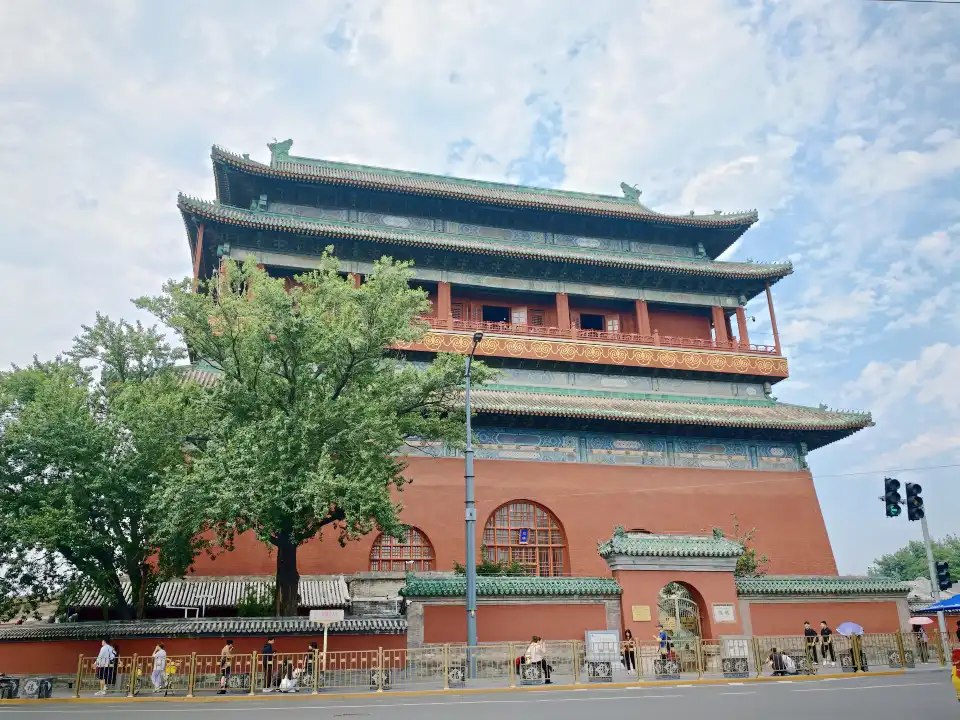
Drum Tower
鼓楼
5.6
4.7/5
584 reviews
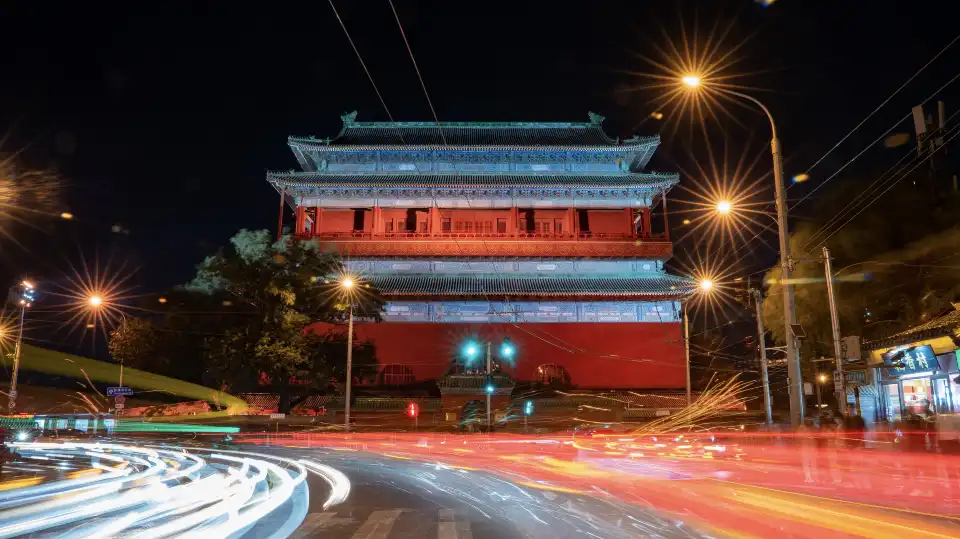
 Selected for Night Attractions in Beijing
Closed for the day Opening hours of Drum Tower
Recommended sightseeing time: 1–2 hours
Address:
Di'anmenwai Street, Dongcheng District, Beijing
Map
Phone:Ticket inquiry: +86-10-84036706|+86-10-84028113|+86-10-84027869
Drum Tower attraction highlights
Some information may have been translated by Google Translate
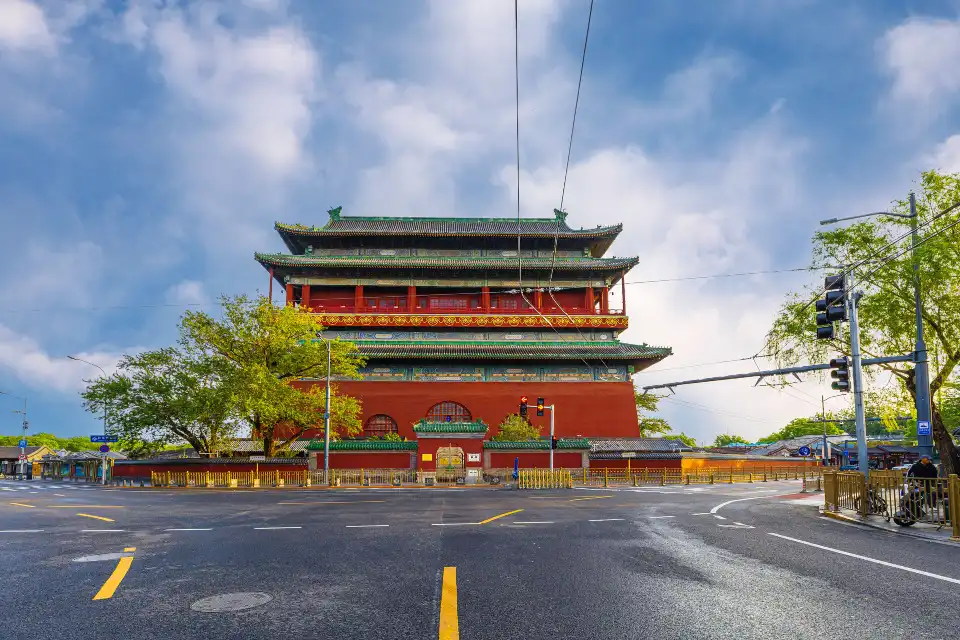
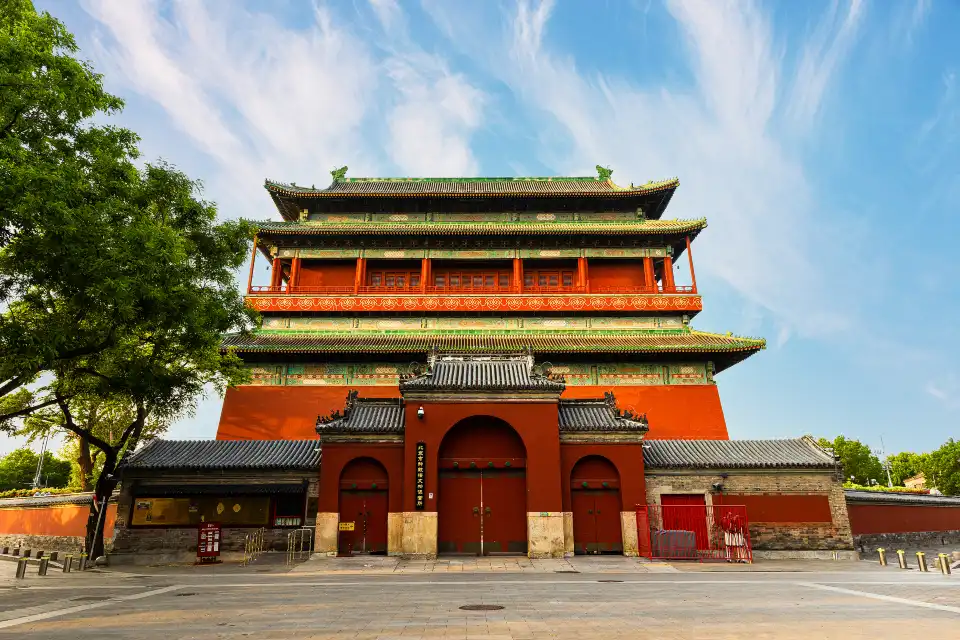
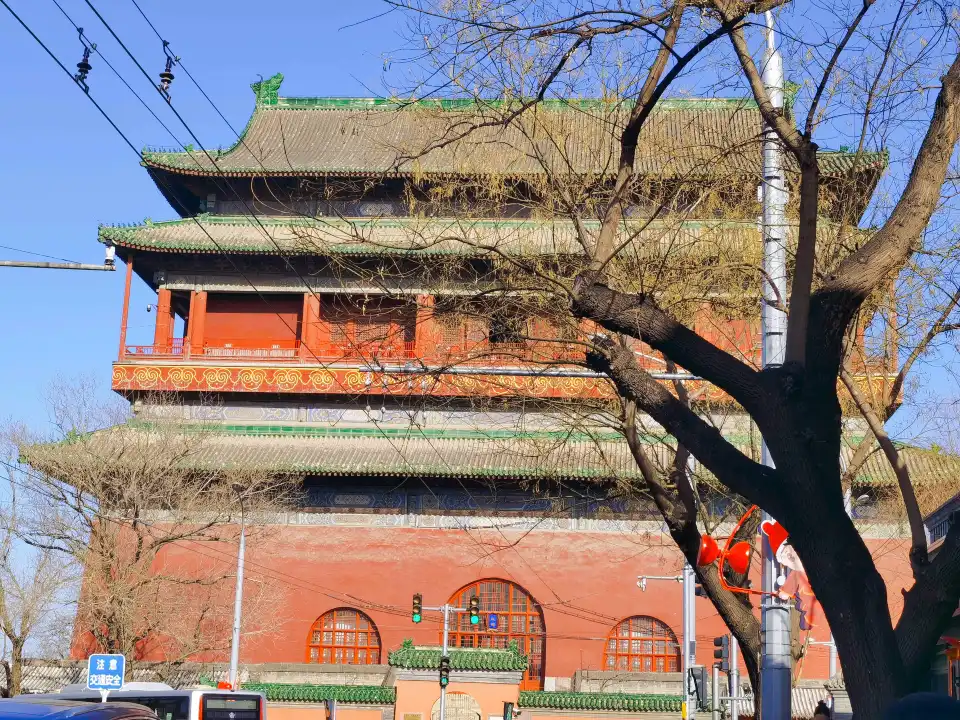
It was built in the eighteenth year of Yongle in the Ming Dynasty (1420) and rebuilt in the fifth year of Jiaqing in the Qing Dynasty (1800). Below is a city platform with a height of about 4 meters. The floor is five rooms wide, with double eaves and three drops of water, ash and tiles on the top of the mountain. The Drum Tower is where the Ming and Qing dynasties played drums to announce the time to the whole city. In 1924, it was changed to "Ming Shame Building" to display the real objects related to national humiliation when the Eight-Power Allied Forces invaded Beijing. The existing upstairs side is even more drum, with knife marks on it, that is, it was cut by the Eight-Power Allied Forces.
Surrounding area map of Drum Tower

Trip.com picks
Popular cities in China
Popular Beijing Tours
Best Beijing Experiences
Popular Destinations
Things to do in JiuzhaigouThings to do in SuzhouThings to do in ShanghaiThings to do in SanyaThings to do in BeijingThings to do in TaipeiThings to do in GuangzhouThings to do in ChinaThings to do in HarbinThings to do in ChongqingThings to do in ZhuhaiThings to do in DujiangyanThings to do in YangshuoThings to do in ChengduThings to do in Hangzhou
9 Hours Private Mutianyu Great Wall Deluxe Tour Mutianyu Great Wall Day Trip | ZANBUS | 7:30-11:45 TourMutianyu Great Wall Bus Tour with Tickets | EN/ES/RU | 5-Hour Visit | No Booking, Skip the LineMutianyu Great Wall + Summer Palace Day Trip Return trip ends at Bird's NestMutianyu Great Wall + Summer Palace One-Day Tour Beijing: Mutianyu Great Wall Self-Guided Tour: Private Transfer & TicketsBeijing Mutianyu Great Wall 1-Day Tour Beijing Private Airport Transfer: From PEK/PKX Airport to Downtown Hotels and Vice VersaForbidden City Ticket with Optional Guide Beijing Mutianyu Great Wall Day Trip | Daily 7:30-11:45 | Round Trip + Entrance TicketMutianyu Great Wall 15-Person Premium Small Group Tour. 3 Time Slots & 3 Combo packageForbidden City Tour with Entry Ticket Included Private Mutianyu Great Wall Trip With English-speaking DriverBeijing Mutianyu Great Wall Day Trip & Includes Open-Air Chairlift and Toboggan Run | Private Group Transfer OptionalMutianyu Great Wall Private Self-Guide Trip With English Speaking Driver Beijing Connectivity SolutionsBeijing Spa & MassageBeijing Travel EssentialsBeijing TransportationBeijing ClassesBeijing SIM CardBeijing ActivitiesBeijing Bus TicketsBeijing Sports & AdventureBeijing Cultural ExperienceBeijing Travel ServicesBeijing Day ToursThings to do in ShanghaiThings to do in BeijingThings to do in Hong KongThings to do in OsakaThings to do in ZhangjiajieThings to do in SingaporeThings to do in ChongqingThings to do in TokyoThings to do in GuangzhouThings to do in Xi'anThings to do in ChinaThings to do in JapanThings to do in ThailandThings to do in VietnamThings to do in South KoreaMore recommendations
Popular Types of Attractions in Beijing
Sightseeing tours | Night view | Boat tour | Cable car | Historical attractions | Nature and wildlife | Natural scenery | Mountain climbing | Beaches and shores | Outdoor activities | Mountain climbing | Shooting | Parks | Amusement parks | Ice and snow parks | Film and television bases | Exhibitions & events | Performances | Concerts | Exhibitions | Cultural institutions | Themed exhibition halls | Museums | Science & technology museums | Water sports | Rafting | Boating/Sailing | Leisure activities | Farms and pastures | Spa/massage
Popular Restaurants in Beijing
RI TAN SHUAN ROU | PEKING CHAMBER | ZIJIN MANSION | TRB Hutong | SHENG YONG XING ROAST DUCK RESTAURANT | Country Kitchen | HUA'S RESTAURANT | NAN MEN HOTPOT | Bianyifang Restaurant | Xiaodiaolitang Beijing Cuisine & Roast Duck (Bird's Nest Branch) | Bei Jing Dou Yi Chu Shao Mai Guan (Qian Men) | Bai Kui LaoHao Restaurant (Jiao DaoKou) | Chenji Braised Intestine Restaurant | Yin San Douzhi (Tiantan Branch) | F Bistronome | HUDA RESTAURANT | BRASSERIE 1893 | King's Joy | Gastro Esthetics at DaDong(Nanxincang) | Yaoji Chao Gan (Gulou Branch) | Ciqikou Old Bean Juice Shop (Shop The Temple) | The Horizon Chinese Restaurant | Ju De Lou Fan Zhuang Roast Duck & Beijing-Shandong Cuisine (Jinsong Branch) | 天兴居(鲜鱼口街店) | Niu Jie Ju Bao Yuan (Niujie Original Branch) | QUANJUDE | HaiWan Ju (ZengGuang Road Main Branch) | Huguo Temple Snacks (Huguo Temple Flagship Store) | HeHua Tai Cai (ShuangZiZuo) | HWH CHAOZHOU CUISINE RESTAURANT
Recommended attractions at popular destinations
Popular Attractions in Bangkok | Popular Attractions in City of Manila | Popular Attractions in Tokyo | Popular Attractions in Taipei | Popular Attractions in Hong Kong | Popular Attractions in Seoul | Popular Attractions in Kuala Lumpur | Popular Attractions in Los Angeles | Popular Attractions in Shanghai | Popular Attractions in New York | Popular Attractions in Shenzhen | Popular Attractions in Osaka | Popular Attractions in Singapore | Popular Attractions in London | Popular Attractions in Guangzhou | Popular Attractions in San Francisco | Popular Attractions in Beijing | Popular Attractions in Macau | Popular Attractions in Bali | Popular Attractions in Jakarta | Popular Attractions in Paris | Popular Attractions in Ho Chi Minh City | Popular Attractions in Istanbul | Popular Attractions in Phuket | Popular Attractions in Chicago | Popular Attractions in Seattle | Popular Attractions in Toronto | Popular Attractions in Orlando | Popular Attractions in Cebu | Popular Attractions in Chiang Mai
Popular Ranked Lists
Top 20 Global Traveller-Picked Hotels in Qingyuan | Top 50 Global Traveller-Picked Hotels in Sanya | Top 50 Global Traveller-Picked Restaurants in Haikou | Top 50 Global Traveller-Picked Hotels in Chengdu | Top 50 Global Traveller-Picked Restaurants in Fuzhou | Top 20 Global Traveller-Picked Hotels in Dalian | Top 50 Global Traveller-Picked Restaurants in Foshan | Top 20 Global Traveller-Picked Hotels in Shangri-La | Top 50 Global Traveller-Picked Restaurants in Chongqing | Top 50 Global Traveller-Picked Restaurants in Zhongshan | Top 10 Global Traveller-Picked Attractions in Zhangye | Popular Luxury Hotels Near Clonmel | Top 20 Global Traveller-Picked Hotels in Nanjing | Popular Luxury Hotels Near Wexford | Top 50 Global Traveller-Picked Restaurants in Huangshan City | Top 50 Global Traveller-Picked Hotels in Zhangjiajie | Top 50 Global Traveller-Picked Restaurants in Hangzhou | Top 50 Global Traveller-Picked Restaurants in Wuxi | Top 10 Global Traveller-Picked Attractions in Jingdezhen | Top 50 Global Traveller-Picked Restaurants in Chengdu | Top 20 Global Traveller-Picked Hotels in Guilin | Top 50 Global Traveller-Picked Hotels in Shanghai | Popular Global Traveller-Picked Attractions in Chaozhou | Top 50 Global Traveller-Picked Restaurants in Changsha | Top 10 Global Traveller-Picked Attractions in Dongguan | Top 50 Global Traveller-Picked Restaurants in Nanjing | Top 50 Global Traveller-Picked Restaurants in Shantou | Top 50 Global Traveller-Picked Restaurants in Zhuhai | Popular Luxury Hotels Near Baden | Top 20 Global Traveller-Picked Hotels in Yangshuo
More Things To Do in Beijing
Beijing Mutianyu Great Wall Bus Tour with Tickets | EN/ES/RU | 5-Hour Visit | No Booking, Skip the Line | Tiananmen Square, Forbidden City &Treasure Museum Small-Group Tour( Eng or Esp Optional) | Mutianyu Great Wall Day Trip | ZANBUS | 7:30-11:45 Tour | Beijing The Palace Museum guide tour *including admission ticket (optional English, Russian, Spanish) | Mutianyu Great Wall Day Trip & Includes Chairlift/Toboggan Ticket / Private Car Rental Available for 2 People or More | Beijing Forbidden City & Tiananmen Square Half-Day Guided Tour | Guide Exp & Admission | Beijing Temple of Heaven + Hall of Prayer for Good Harvests + Yuanqiutan + Echo Wall half-day tour - combo ticket - multiple group types available | Beijing Mutianyu Great Wall 1-Day Tour [VIP Private Charter ◆ Door-to-Door Pickup/Includes Admission Ticket & No Shopping] | The Beijing Mutianyu Great Wall round-trip bus departs from 7:00 to 13:30, covering the entire area and including shuttle bus and guided tour. | Mutianyu Great Wall 1-day tour | Bus departure between 7 am-2 pm + optional guide in English, Chinese, Russian or Spanish + no shopping | Forbidden City Tour with Entry Ticket Included (English speaking guide) | Forbidden City Half-day Tour(Tickets Included) & Tiananmen Square Tickets Reservation | Beijing BEIJING W TOWN + Great Wall at Simatai 1-day tour ◆ optional private tour transfer within the fifth ring road hotels | Beijing Mutianyu Great Wall round-trip bus [departure time slots 7:30 | 8:30 | 9:30 | 12:00 | 15:30 optional multilingual Russian/Spanish + includes shuttle ticket + upgrade to private charter available] | Mutianyu Great Wall + Summer Palace One-Day Tour [BUSDA Sightseeing Bus | In-depth Guided Tour] | Beijing Prince Kung's Palace Museum Half-day Tour|Tickets included + optional small group/private tour with guides available in English/Cantonese/Russian and other languages | 65km Beijing Suburb Tour | Zhuozhou Old Town, Local Market & Folk Culture Day Trip | BEIJING WTOWN + Simatai Great Wall 1-day tour [shuttle bus · includes admission ticket/optional private chartered tour] | Universal Beijing Resort 1-day tour express VIP fast track butler service optional | Tianjin: Highlights Day Tour from Beijing by High-Speed Train with ZANBUS | Temple of Heaven combo ticket + specialty snacks/multilingual guide optional | Beijing Mutianyu Great Wall - private chartered tour - includes admission ticket + includes shuttle bus ticket + includes round-trip cable car | "Mutianyu Great Wall Day Tour: UNESCO Hike with Cable Car & Toboggan Options" | Experience royalty: The Forbidden City + palace banquet | From knowing royalty to becoming royalty (exclusive English guide) Beijing Palace Museum | Beijing: Travel to the Badaling Great Wall by bullet train. | Follow the Rabbit Cooking Experience - Traditional Chinese Mooncake Baking - Eatwith | Beijing Forbidden City (Palace Museum) Day Tour | Admission Ticket & Optional 10/20-Person Small Group | Beijing Imperial Feast at Yuxiandu: Royal Banquet & Grand Live Show – Optional Hanfu Makeup & Styling | Explore Badaling Great Wall + The Ming Tombs Changling 1-day itinerary [private tour with English-speaking driver] | Beijing Badaling Great Wall 1-day tour [VIP private tour ◆ includes admission ticket + round-trip cable car]
Some content is uploaded by users, and specific information is subject to actual conditions
Other visitors' reviews of Drum Tower
Show More ReviewsThe Drum Tower is more than just a city gate; it's the "time heart" of old Beijing. Climbing to the top offers a unique experience, providing panoramic views of the hutongs and the opportunity to hear the intangible cultural heritage of drumming. If your physical condition allows, it's well worth a visit while exploring the central axis. Its beam-less arched structure features an immersive light and shadow exhibition, "Resonance," ancient timekeeping devices (sundial and water clock), and interactive sound installations that fully explain the ancient "morning bell and evening drum" timekeeping system. A touchscreen map allows you to simulate listening to the drumbeats that once resonated throughout the city, helping you understand the logic behind the central axis's urban layout.