OverviewReviewsWin PrizesNearby
Share to
Show all
Reshui Tombs
热水墓群
3.6
4.5/5
10 reviews
Open Opening hours of Reshui Tombs
Recommended sightseeing time: 1 hour
Address:
Tombs of Shuihui, Dulan County, Haixi Mongolian and Tibetan Autonomous Prefecture (north of Heishan Highway in Shuihui)
Map
Reshui Tombs attraction highlights
Some information may have been translated by Google Translate
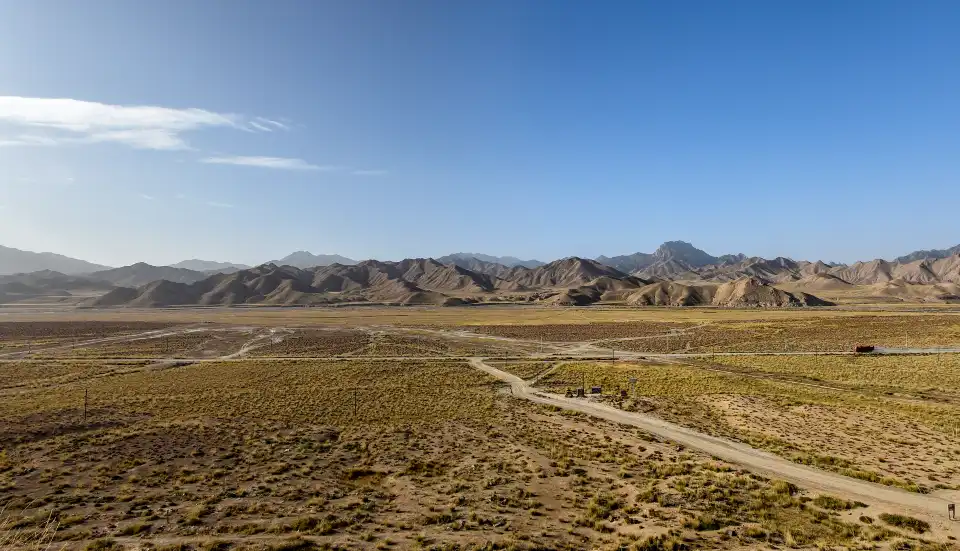
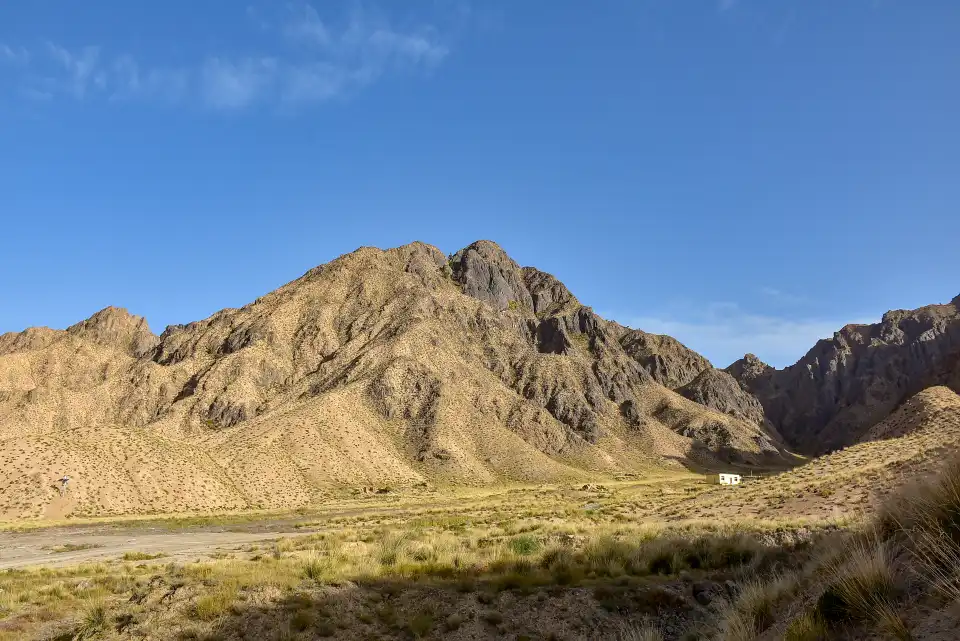
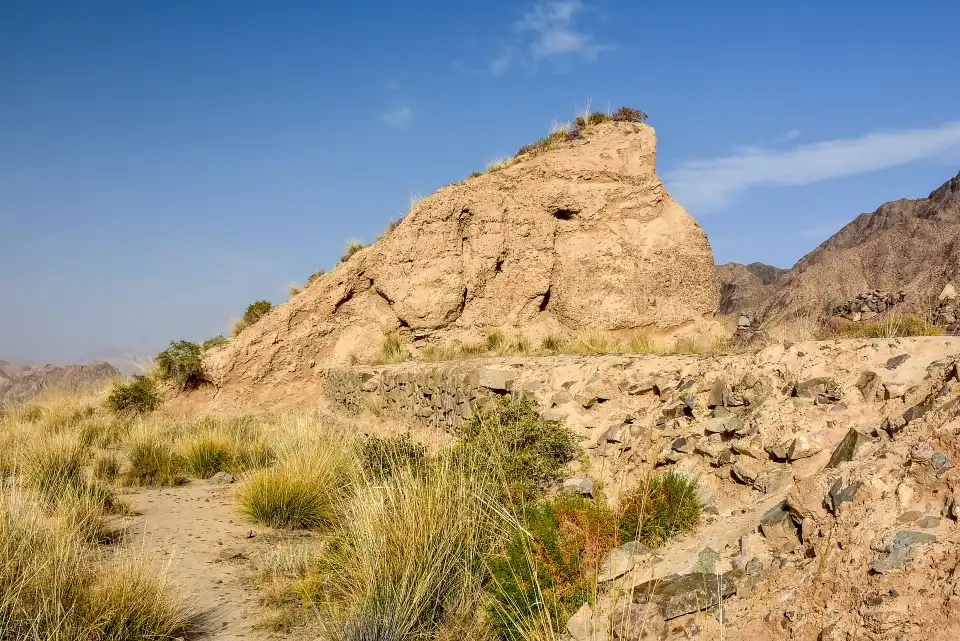
The Hot Water Tomb Group is a large-scale Tubo tomb group in the early Tang Dynasty, and it is the first Tubo tomb discovered in my country. It is distributed in 4 natural villages about 7 kilometers long: Hot Water, Zamari, Shaertang and Xiewei. From 1982 to 1986, the Qinghai Provincial Institute of Cultural Relics and Archaeology conducted excavations and cleanups here, most of which have been stolen. There are two types of tombs, trapezoidal and circular. The rammed earth is covered with rammed earth or piled with gravel. Sand willow branches are laid between the rammed layers. Below the rammed earth, a stone wall with an isosceles trapezoid plane is built. With red stone powder. The tomb is made of stone and consists of a tomb passage, a middle room, left and right side rooms and a back room. In front of the mound, there are huge sacrifice pits, wooden carts, wooden slips, glassware and gold and silver utensils. There are more than 130 kinds of Buddha statues, Pegasus and various non-repeating patterns on silk fabrics. Some cultural relics and patterns have strong Central Asian style characteristics. There are more than 200 tombs in total, one of which is located on a natural hill. The tomb is backed by the Hushui Mountain and faces Chahan Wusuhe. It is about 30 meters above the ground and looks like a city tower from a distance. Generally majestic. The tomb is 11 meters high, 55 meters long from east to west, and 37 meters wide from north to south. There are 3 layers of stone walls rammed with mud and stone under the tomb, 1 meter high and 3 meters wide. The tomb is from top to bottom, and every 1 meter or so, there is a layer of wood passing through the mound in a neat row. There are as many as 9 layers, all of which are cypress wood of general thickness. This kind of construction form and style of the mound is only seen in previous archaeological excavations in my country. There are burial pits and burial remains in the south of the tomb. Through archaeological excavations, the unearthed cultural relics include leather boots, gold ornaments, wooden bowls, wooden plates, wooden birds and animals, pottery pots, ancient Tibetan wooden slips, and colorful cypress wood chips. In particular, a number of colorful silk fabrics have been unearthed. The silk materials are good, the patterns are clear, and the colors are bright, which are rare and rare treasures. The silk varieties are cotton, silk, silk, embroidery and so on. In the pattern, there are rare birds and animals, flowers, trees, horses and horses, characters hunting, images of people from the Western Regions, cotton socks, etc. for me? Frames?/p>
Surrounding area map of Reshui Tombs
Trip.com picks
Popular cities in China
Popular Destinations
Things to do in QingdaoThings to do in JiuzhaigouThings to do in HangzhouThings to do in KeelungThings to do in GuangzhouThings to do in ZhuhaiThings to do in Hong KongThings to do in ChengduThings to do in SuzhouThings to do in BeijingThings to do in Xi'anThings to do in MacauThings to do in DujiangyanThings to do in ChinaThings to do in Zhangjiajie
Things to do in ShanghaiThings to do in BeijingThings to do in Hong KongThings to do in OsakaThings to do in ZhangjiajieThings to do in SingaporeThings to do in ChongqingThings to do in TokyoThings to do in GuangzhouThings to do in Xi'anThings to do in ChinaThings to do in JapanThings to do in ThailandThings to do in VietnamThings to do in South KoreaMore recommendations
Popular Types of Attractions in Dulan
Popular Restaurants in Dulan
清真燕兰楼(和平街店) | 老字号东乡手抓王 | 小辣椒餐饮(香日德商业步行街广场店) | 马俊炕锅肉(锦都广场店) | 红灯笼火锅(香日德店) | 小成都菜馆 | 万里马酒楼 | 川西秘制嫩牛馆(建设街店) | 蜀湘味道 | 马穆萨餐厅 | 回坊居茶餐厅 | 乐山大众串串香(香日德店) | 顺遂小锅米线 | 靖远炒肉片椒麻鸡清真餐厅 | 西宁老地方烧烤(好好爱家购物中心店) | 萨拉尔手抓面食王 | 海红馄饨(新华街店) | 新疆大盘鸡清炖羊肉 | 穆茗轩喜宴楼 | 华莱士·全鸡汉堡(都兰县店) | 重庆特色鱼 | 成俊清雅老炒(锦都广场店) | 霁月阁茶餐厅 | 占富蒸汽牛肉面(新华街店) | 家乐面食馆 | 民和川垣餐厅 | 鲜品羊汤馆 | 都兰服务区-餐厅 | 育才原味磨坊
Recommended attractions at popular destinations
Popular Attractions in Bangkok | Popular Attractions in City of Manila | Popular Attractions in Tokyo | Popular Attractions in Taipei | Popular Attractions in Hong Kong | Popular Attractions in Seoul | Popular Attractions in Kuala Lumpur | Popular Attractions in Los Angeles | Popular Attractions in Shanghai | Popular Attractions in New York | Popular Attractions in Shenzhen | Popular Attractions in Osaka | Popular Attractions in Singapore | Popular Attractions in London | Popular Attractions in Guangzhou | Popular Attractions in San Francisco | Popular Attractions in Beijing | Popular Attractions in Macau | Popular Attractions in Bali | Popular Attractions in Jakarta | Popular Attractions in Paris | Popular Attractions in Ho Chi Minh City | Popular Attractions in Istanbul | Popular Attractions in Phuket | Popular Attractions in Chicago | Popular Attractions in Seattle | Popular Attractions in Toronto | Popular Attractions in Orlando | Popular Attractions in Cebu | Popular Attractions in Chiang Mai
Popular Ranked Lists
Top 10 Global Traveller-Picked Attractions in Haikou | Top 20 Global Traveller-Picked Attractions in Shenyang | Top 50 Global Traveller-Picked Restaurants in Fenghuang County | Top 50 Global Traveller-Picked Restaurants in Guangzhou | Top 50 Global Traveller-Picked Attractions in Chongqing | Popular Premium Hotels in Durango | Top 50 Global Traveller-Picked Restaurants in Nanjing | Top 10 Global Traveller-Picked Attractions in Leshan | Top 10 Global Traveller-Picked Attractions in Qinhuangdao | Top 50 Global Traveller-Picked Restaurants in Urumqi | Top 20 Global Traveller-Picked Hotels in Lijiang | Top 20 Global Traveller-Picked Attractions in Guiyang | Top 50 Global Traveller-Picked Restaurants in Huangshan City | Top 20 Global Traveller-Picked Hotels in Qingdao | Top 50 Global Traveller-Picked Restaurants in Guilin | Top 50 Global Traveller-Picked Restaurants in Yantai | Top 50 Global Traveller-Picked Restaurants in Lijiang | Top 10 Global Traveller-Picked Attractions in Yulong | Top 20 Global Traveller-Picked Hotels in Dalian | Top 50 Global Traveller-Picked Restaurants in Dali City | Popular Premium Hotels in Meta | Top 20 Global Traveller-Picked Attractions in Dunhuang | Top 10 Global Traveller-Picked Attractions in Jinan | Top 50 Global Traveller-Picked Restaurants in Yiwu | Top 50 Global Traveller-Picked Hotels in Shanghai | Top 20 Global Traveller-Picked Hotels in Dali City | Top 50 Global Traveller-Picked Restaurants in Quanzhou | Top 50 Global Traveller-Picked Restaurants in Wuhan | Top 20 Global Traveller-Picked Hotels in Zhongshan | Top 20 Global Traveller-Picked Hotels in Shangri-La
Popular Trip Moments
Filming location for Pegasus 3: Danxia and Yardang landforms, Qinghai-Gansu loop travel guide | 1. Delingha is the ultimate free gem of the Northwest | After traveling across the vast Northwest, I finally discovered this nearly unadvertised hidden valley | Dulan's Wild Hu Yang: Qaidam Salt-Gobi Edge | Rainbow Danxia · Star Valley Encounter the mysterious colorful Danxia, the origin of rainbow dreams. This fairytale, where vibrant mountains intertwine with the beauty of the starry sky, is this | Was it worth flying all the way to Qinghai just for these 18 photos? | The Dulan Flower Sea Scenic Area, located in Dulan County, Haixi Prefecture, Qinghai Province, is a natural landscape combining alpine meadows and wildflowers. The peak blooming season is July and August. The mountainsides are covered in wildflowers. | Qinghai secret realm | This museum holds the secrets of a millennium-old tomb! | August summer escapes you must visit, super off the beaten path | The most unexpected hidden gem on the Qinghai-Gansu loop! Few people, stunning views | Don’t turn on the air conditioner this summer! These four cities have natural air conditioning, with average temperatures around 20℃ for a laid-back summer | Everyone in my social circle is asking about this! This hidden rainbow gem in Qinghai is stunning beyond words! | Qinghai Dulan | The secret place that 99% of tourists miss, it is a National Geographic blockbuster! | Qinghai, a severely underrated place, hides a beautiful secret place. It is not a popular photo spot, but it quietly stuns the time with its natural wonders. If you like niche attractions, close this guide now! 🌟 | Qinghai always surprises you, and this time I discovered a seriously underrated gem! There were no crowds here, only the breathtaking artistry of nature—absolutely stunning. | May 21, 2026. The Qinghai Provincial Museum, a national first-class museum, is located on the east side of Xinning Square in the Chengxi District of Xining City. The museum has 19... | A special trip to the Great Northwest! Romance is never desolate | Don’t just rush through the Qinghai-Gansu loop! It’s a 1.5-hour drive east from Chaka to a highland secret few have explored | The destination is within reach, but looking back, I find the memories of every step more stunning, and that sweet, light bite was perfect. | Giving up on Hoh Xil, this place is too amazing! | I flew 4,000 kilometers just for these 18 photos. Was it worth it? | Dulan rainbow Danxia · star valley | a magical world of seven colors under sun and shade Who says Danxia is only in Zhangye? The rainbow Danxia in Dulan, Qinghai, where God spilled the palette | I flew 4,000 km just for this rainbow Danxia. It was totally worth it | Sisters, listen up for the northwest loop! This is 100 times more beautiful than Dachaidan | Hanhai Pearl—Haixi Prefecture Museum | It’s rare to describe a landscape as breathtaking, but Qinghai Rainbow Danxia Star Valley truly is | The hidden gem of the Qinghai-Gansu loop! Colorful canyon by day, star-filled sky by night | Traveling across northwest China, you finally encounter the Valley of Stars, a flowing natural palette | This wild rainbow secret land in Qinghai heals my mental exhaustion | Breaking into Qinghai’s “desert blue eye”
More Things To Do in Dulan
Dulan Trip Moments[Xiangride Temple/Shell Ridge/Translation Photographer for Wedding, Portrait, and Aerial Photography] | Mainland China 5G eSIM | Day Pass/Total Data Package | ChatGPT Available | 24-Hour Billing | 1-365 Days | QR Code | Mainland China 5G eSIM | Supports Google Maps / ChatGPT | Daily/Total Data Plans | 24-Hour Billing | 1–365 Days | QR Code | China Mainland 5G eSIM | Three Networks Supported, Supports All AI & TikTok | 500MB/Day - 100GB Total | 1-60 Days | 24-Hour Billing | QR Code | Global (77 Countries) 5G/4G eSIM | Supports Google Maps/TikTok/ChatGPT | Total Data Plan | 24-Hour Billing | 1–30 Days | QR code | 5G/4G eSIM in 8 Asian countries | Multi-network support, supports All AI & TikTok | 500MB/day - 50GB total | 1-30 days | 24-hour billing | QR code | Mainland China/Hong Kong/Macau 5G eSIM | Dual Network | Day Pass/Total Data Package | 24-Hour Billing | QR Code | Mainland China · Hong Kong · Macau 5G eSIM | All AI & TikTok | 1–365 Days | QR Code | Mainland China 5G eSIM | Dual Network • All AI & TikTok | 1–365 Days | QR Code | Mainland China/Hong Kong/Macau/Taiwan 5G/4G eSIM | Supports Google Maps / ChatGPT | Daily/Total Data Plans | 24-Hour Billing | 1–30 Days | QR Code | Asia 10 Regions 5G eSIM | Multi-Network • All AI Supported | 1–30 Days | QR Code | Asia-Pacific eSIM | 5G/4G | High-speed data | Daily data/data plan | 24-hour service | 1-30 days | QR code | Orange World 4G/LTE eSIM | Calls + SMS | 31 Days Total 50MB–20GB | Calendar-Day Billing | QR code | Mainland China 5G eSIM | Dual Net | Daily/Total Data Package | 1–30 Days | 24-Hour Billing | QR Code | Mainland China 5G eSIM | 2GB/day - 50GB total | Some plans include voice calls | AI & TikTok available | 1-365 days | Natural | QR Code | Mainland China/Hong Kong/Macau 5G/4G eSIM | Daily/Total Data Package | 24-Hour Billing | 1-30 Days | QR Code | Asia (12 Countries) | 4G/5G eSIM | Data Package | 365 Days Ultra-long Validity | 24-hour Billing | Real-name Registration Required for Hong Kong & Taiwan | QR Code | Global 77 Countries 4G/5G eSIM | Day Pass/Total Data Package | 24-Hour Billing | QR Code | 5G SIM Card: China 5G Universal SIM Card with 30GB/80GB of unlimited 5G data and a free Shanghai PASS (Pick up at Shanghai Pudong Airport) for unlimited travel in Shanghai | Global 108 Countries 5G eSIM | All AI & TikTok | 1–30 Days | QR Code | Chinese Mainland / Hong Kong / Macau 5G eSIM | Daily Plan / Total Data Plan | 1-180 Days | Calendar Day Billing | QR Code | Global coverage (100 countries) 5G/4G eSIM | Supports all AI & TikTok | 500MB/day - total 50GB | 1-90 days | 24-Hour Billing | QR code | China Unicom Nihao 5G SIM Card – Local China Number for Calls, Data, SMS & App Registration | Beijing / Shanghai / Guangzhou / Chengdu Airport Pickup | [Mainland China] China Unicom 5G SIM Card | Daily Necessities | Pick-up at Shanghai/Beijing/Dalian Airports | 7/10 Days | Supports Local Calls & SMS + App Registration + Internet Access | 1-day tour to Chaka salt lake with private charter (departing from Xining) | Mainland China/Hong Kong/Macau 4G/5G eSIM | Daily Package/Data Package | 24-Hour Billing | QR Code | China (Mainland and Macau) 5G/4G eSIM|China Unicom official product | [Mainland China / Hong Kong / Macau] 5G & WiFi Rental | Unlimited Data | High-speed Network | Pick-up & Return at Hong Kong Airport | Supports Google Maps | Multi-user Sharing | 24-hour Customer Service | [5G SIM Card] China 5G Universal SIM Card Total 10GB/15GB/30GB/45GB High-speed 5G Unlimited Data (Pick up at Shanghai Pudong Airport) | Trip moments in Ulan[Follow-up shooting services including photography, videography, photos, short videos, mobile and camera appointments, aerial photography, action direction with all raw images provided / translation]
Some content is uploaded by users, and specific information is subject to actual conditions
Other visitors' reviews of Reshui Tombs
Show More ReviewsThe Reshui Cemetery, located in Xuewei Grassland, Reshui Township, Dulan County, Haixi Mongolian and Tibetan Autonomous Prefecture, Qinghai Province, is a large-scale early Tang Dynasty cemetery. The cemetery is distributed along both banks of the Chahanwusu River in Reshui Township. The tombs are generally situated on gentle slopes at the foot of mountains and on alluvial fan terraces with deep loess layers, mostly at an altitude of 3400 to 3500 meters. Among them, the Xuewei No. 1 Tomb, the 2018 Xuewei No. 1 Tomb, and the "Sheepfold Tomb" are the three largest tombs, located on the north bank of the Chahanwusu River. These three tombs are connected in an east-west line, roughly symmetrically distributed with the 2018 Xuewei No. 1 Tomb as the center. The Xuewei No. 1 Tomb is on the west side, and the "Sheepfold Tomb" is on the east side, with a distance of approximately 400 meters between them. The Reshui Cemetery is an important cemetery complex dating from the 6th to 8th centuries. The large number of artifacts unearthed there strongly proves that during the Northern Dynasties to the Sui and Tang Dynasties, the Qinghai Road was an important trunk line of the Silk Road, and Dulan was a transit point for trade between East and West. The Reshui Tombs are important cemetery remains along the Qinghai section of the Silk Road, serving as crucial evidence of cultural contact, penetration, collision, and exchange between East and West. The archaeological excavation of the Reshui Tombs is significant for understanding the tomb structures and customs of ancient Qinghai-Tibet Plateau, and will also provide a clearer understanding of the history of the Qinghai section of the Silk Road. On November 20, 1996, the Reshui Tombs were designated as a fourth batch of National Key Cultural Relics Protection Units by the State Council of the People's Republic of China. The No. 1 Reshui Tomb is located at an altitude of approximately 3436 meters, nestled at the foot of the Xuewei Mountain to the north and bordered by the Chahanwusu River to the south. The tomb mound is trapezoidal in both plan and elevation, superimposed on a trapezoidal platform formed by the underlying natural mountain. Its northern part connects to the natural rock face, while its southern part protrudes beyond the mountainside. The mound is wider in the south and narrower in the north, measuring approximately 58 meters in length from north to south, 65 meters wide on the south side, 55 meters wide on the north side, and 12 meters high. The lower platform is approximately 160 meters wide on the south side and narrows to about 60 meters at its narrowest point on the north side. The mound rises 35 meters from the top of the upper layer to the southern ground level. The mound is composed of loess, gray sand, gravel, and boulders, with a three-layered stone wall at the base, each layer approximately 1 meter high and 3 meters wide. Above these are layers of rammed earth and stone, as well as layers of rammed sand and earth. Every meter or so from top to bottom, a layer of flat, neatly arranged timber surrounds the mound. 4.5 meters below the top of the mound is a rectangular animal burial pit, surrounded by stones, with several large cypress logs lining the entrance. Buried within are over 70 individual animals, including cattle, sheep, dogs, deer, and horses. The No. 1 Reshui Tomb is located 11.5 meters below the burial mound, at its center, and built on a lower trapezoidal platform, with a cruciform plan. It measures approximately 21 meters east-west and 18.5 meters north-south, and consists of a sealing stone, a screen wall, a wooden cover, a tomb passage, a tomb door, a corridor, an east chamber, a west chamber, a central chamber, and a south chamber, forming a cross shape. The interior walls of each chamber are neatly stacked with stones, interspersed with cypress logs. The screen wall is built on the cypress log beams of the tomb door. The entire tomb chamber is covered with 61 large cypress logs, all charred, ranging in length from 3 to 5 meters. The tomb passage is a rectangular vertical shaft located in the northern part of the tomb and sealed with large stones. To its south is the sealed door, south of which is a passageway connecting to the corridor and opposite the central chamber's door.