Things to do in Jiexiu
Explore top experiences
Top 10 attractions in Jiexiu


Experiences you can't miss in Jiexiu
Featured Culture & history in Jiexiu
View all Culture & history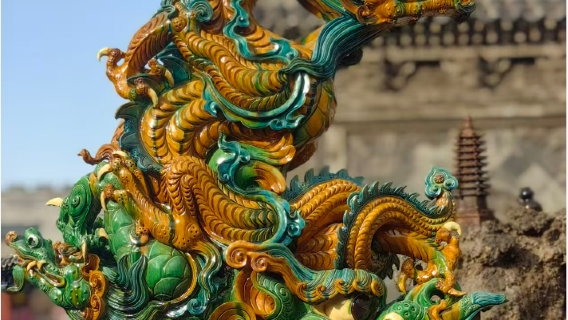
Free cancellation
Instant confirmation
From£78.39

Free cancellation
Instant confirmation
Book now for tomorrow
From£12.24

From£12.24
Free cancellation
Instant confirmation
Book now for tomorrow
From£101.15
5.0/5
· 1 reviewFree cancellation
Instant confirmation
From£51.97

Free cancellation
Book now for today
From£29.93
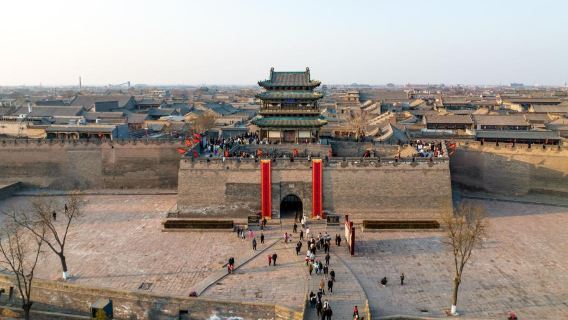
Free cancellation
Instant confirmation
Book now for tomorrow
From£30.35
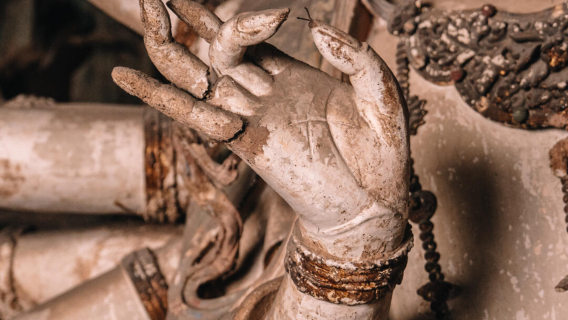
Free cancellation
Instant confirmation
From£87.64
Jiexiu Today's weatherClear 2-17℃
Jiexiu weather for the next 2 days11/6: 3-17℃, 11/7: 4-11℃
Free things to do in Jiexiu

What travellers say about Jiexiu

行走毛毛November 12, 2024
5.0
Xiaojin Dongyue Temple, a small national heritage site only 10km away from the downtown of Jiexiu
Route 203 on Baidu Maps has been discontinued, and taking a taxi is a waste
It's only 10km, so I should ride there, but I was wrong
It's uphill all the way from the downtown of Jiexiu, which reminds me of the 318 of the year
But when I walked into the temple and sang a song on the stage, it was really worth it
Note: 1. Cultural relics protector: The old man is a nice person, he will open the door enthusiastically but there will be incense money
2. Offering Pavilion: The essence of this temple, there are four big characters "厯代登封" on the top, and there are animals and stone carvings on the fence below, which are particularly exquisite , observe carefully, they are symmetrical on both sides
3. Main Hall: Ask the old man to open the door, there are murals and coiled dragons inside, but I prefer the clay sculpture with a big belly that is not the protagonist, the curve is very vivid, and there is a fallen Dongyue Temple sign in the corner of the main hall
4. Colored glaze: There are stairs on the side of the stage to go up to the second floor, and see the beautiful colored glaze, which is very exquisite
5. Mountain Gate: If you really can't get in, the strong man outside the mountain gate is also worth seeing. The old man often sits on the steps outside the gate and watches the few people coming and going in the village
6. On the way: You will pass by a reservoir along the way, and you can watch from a high place. It is worth stopping to see it in good weather
Xiaojin Dongyue Temple

M37***45October 4, 2026
4.0
The Jiexiu City God Temple is located at No. 285, East Street, Jiexiu City. Don't miss these details! The main entrance is actually on the right. You need to register manually upon entering. The main attraction is the glazed tile art on the roof, which is breathtakingly beautiful. Remember to go up to the second floor for a panoramic view – the perspective is amazing! The screen wall on the right side outside the temple is also exquisite and a must-visit for photos.
cheng huang miao

滇国剑客September 24, 2021
5.0
As the whole country celebrates the Mid-Autumn Festival and the full moon, Chongningbao Hot Spring also exudes a unique national charm. The clear pool water, in tune with the rhythm of the Mid-Autumn Festival, welcomes the arrival of all friends who want to soak in the hot spring.
Chongning Fort Hot Spring

killua_小狮王October 21, 2026
5.0
Hongmenbao is essentially a miniature city, resembling a sturdy fortress with a complete outer wall that can be walked around. The courtyards, arranged like neat squares, rise layer by layer up the hillside, exuding a strong sense of order—a delight for those with obsessive-compulsive tendencies. The lanes are clearly defined, forming a "王" (Wang) character pattern hidden in the mountains when viewed from above. Its orderly and awe-inspiring appearance from afar is the most distinctive feature of the Wang Family Compound.
Hongmen Fortress

Anonymous userMay 23, 2026
5.0
What makes it special is that it's rare to find a temple that worships all three emperors together. The stage inside has a glass panel, hence its name, the "Glass Stage." However, the ticket price is quite expensive, making it not very cost-effective.
Sanhuang Temple

提琴G大调September 22, 2020
4.0
Longtou Temple is also known as Tayantou, named after the Kongwang Pagoda Courtyard on the loess slope under the rock. Along the way, there are Bailongbi, Fushi Pavilion, Puji Temple, Nantianmen, Guandi Temple, Longmen Stone Archway, etc., which are all good attractions. Climb up the steps from the entrance of the scenic area, pass the plaque of Longtou Temple Archway, and look back at the mountain wall on the left. You will see a wide mountain with sculptures of many dragons circling around. This is the Bailongbi. Opposite to the Bailongbi, there is a landscape called Fushi Pavilion. Nantianmen is a pavilion-style building with a hip roof. The three-story landscape is different. It is a wonderful place to watch the sunset, sunset, and sea of clouds. At the exit of Longtou Temple, there is a Longmen Stone Archway with exquisite craftsmanship and exquisite shape. The archway is located at a strategic pass and stands in the air. It is one of the landmark buildings of Mianshan. Turn back from the stone archway to the Fushi Pavilion, and there is Puji Pavilion not far down, which is the entrance to the underground palace below.
Longtou Temple

超酷的小王同学。October 24, 2026
5.0
Zhenguo Temple is a hidden gem of an ancient temple in Pingyao, not widely known but rich in historical significance. The Wanfo Hall is a rare example of a Five Dynasties wooden structure, over a thousand years old. Its imposing and simple bracket sets, constructed without a single nail, have stood the test of time, making it a living fossil of wooden architecture. The painted sculptures inside retain their original Five Dynasties appearance, with a dignified and weighty style, a stark contrast to the lively Ming Dynasty sculptures of Shuanglin Temple. The temple is serene and quiet, with few tourists, perfect for slowly appreciating the beauty of its ancient architecture. If you appreciate ancient architecture, after visiting Shuanglin Temple, a stopover at Zhenguo Temple offers a unique and worthwhile experience, allowing you to understand the architecture and sculptures of different eras.
Zhenguo Temple

jingtao98771February 23, 2026
5.0
The scenery is antique and full of historical charm. There are many scenic spots inside, and I especially recommend the county government office, the security escort agency, and the money exchange. There is also a light show at night, but it gets very crowded on holidays, and the scenic area is probably overwhelmed. You can have to wait for half an hour to get into the county government office.
Rishengchang Draft Bank
Anonymous userNovember 3, 2026
5.0
Jinci Temple boasts a rich cultural heritage, truly a gem of Shanxi culture. The ancient cypress trees stand strong and vigorous, the Nanlao Spring flows gently, the Song Dynasty painted sculptures of maidens in the Holy Mother Hall are lifelike, and the Fish Pond Flying Bridge is exquisitely unique. Ancient architecture and gardens blend seamlessly, creating a tranquil environment. A guided tour is highly recommended to allow for a leisurely exploration and immersion in history. A must-see in Taiyuan, five-star recommendation!
Jinci Temple Museum

NicangNovember 3, 2026
5.0
It is worth visiting. The place is huge but I find the number of visitors huge. It's kinda hard to see the grottoes up cup close. There are other things to see aside from the grottoes like the temple (forgot the name though), river viewing and of course you can also ride the boats with extra charge. Thus, the amount you pay is actually worth it.
Longmen Grottoes
Trip Moments in Jiexiu


